Navigating the Spring-to-Summer HVAC Transition: A Safe Homeowner's Maintenance Guide
Why do HVAC systems fail on the first 80-degree day? See what belongs on your seasonal home maintenance checklist and when to call a pro before summer hits.



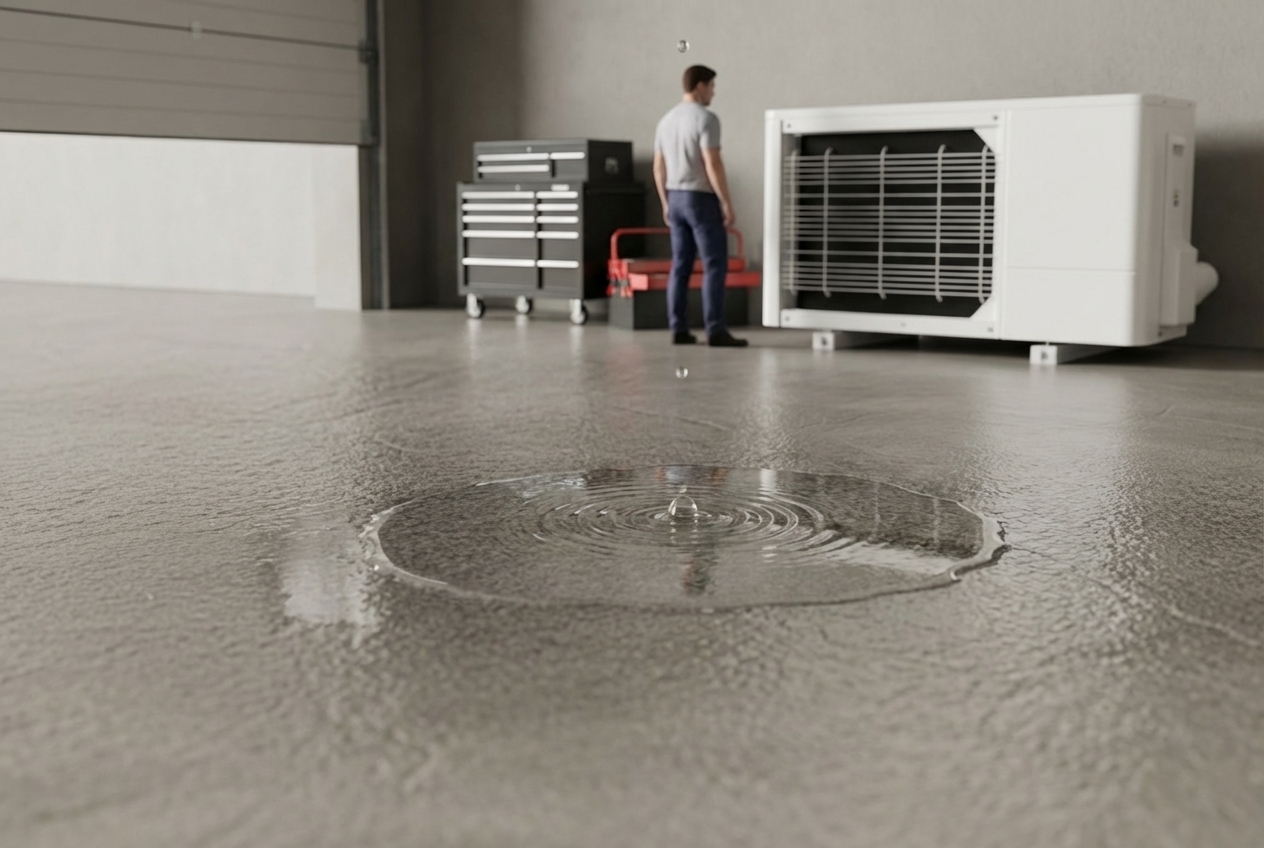
If you've finded your ac unit leaking water in garage, you're facing a common but urgent issue that needs attention. While air conditioners naturally produce condensation as they cool your home, water pooling on your garage floor signals something has gone wrong with the drainage system. Most often, the culprit is a clogged condensate drain line, a dirty air filter causing frozen coils, or a cracked drain pan—but the good news is many of these issues can be fixed quickly.
For homeowners in Sacramento, CA, dealing with a leaking AC unit in the garage can feel alarming, especially during our hot summers when you rely on cooling the most. The water you're seeing is condensation that should be draining away from your system, but instead it's backing up and overflowing. Left unchecked, this leak can damage stored belongings, create slip hazards, and even promote mold growth.
Quick Diagnosis Guide:
1. Clogged drain line - Most common cause; water backs up when algae or debris blocks the pipe
2. Frozen evaporator coils - Dirty air filter or low refrigerant causes ice buildup that melts and overflows
3. Damaged drain pan - Cracks or rust in the pan let water escape onto your floor
4. Improper installation - Unit not level causes water to pool instead of drain
5. Faulty condensate pump - Pump failure prevents water from being removed
If you need expert help with your AC system, learn more about professional air conditioning maintenance or contact Always Affordable Plumbing & HVAC for immediate assistance.
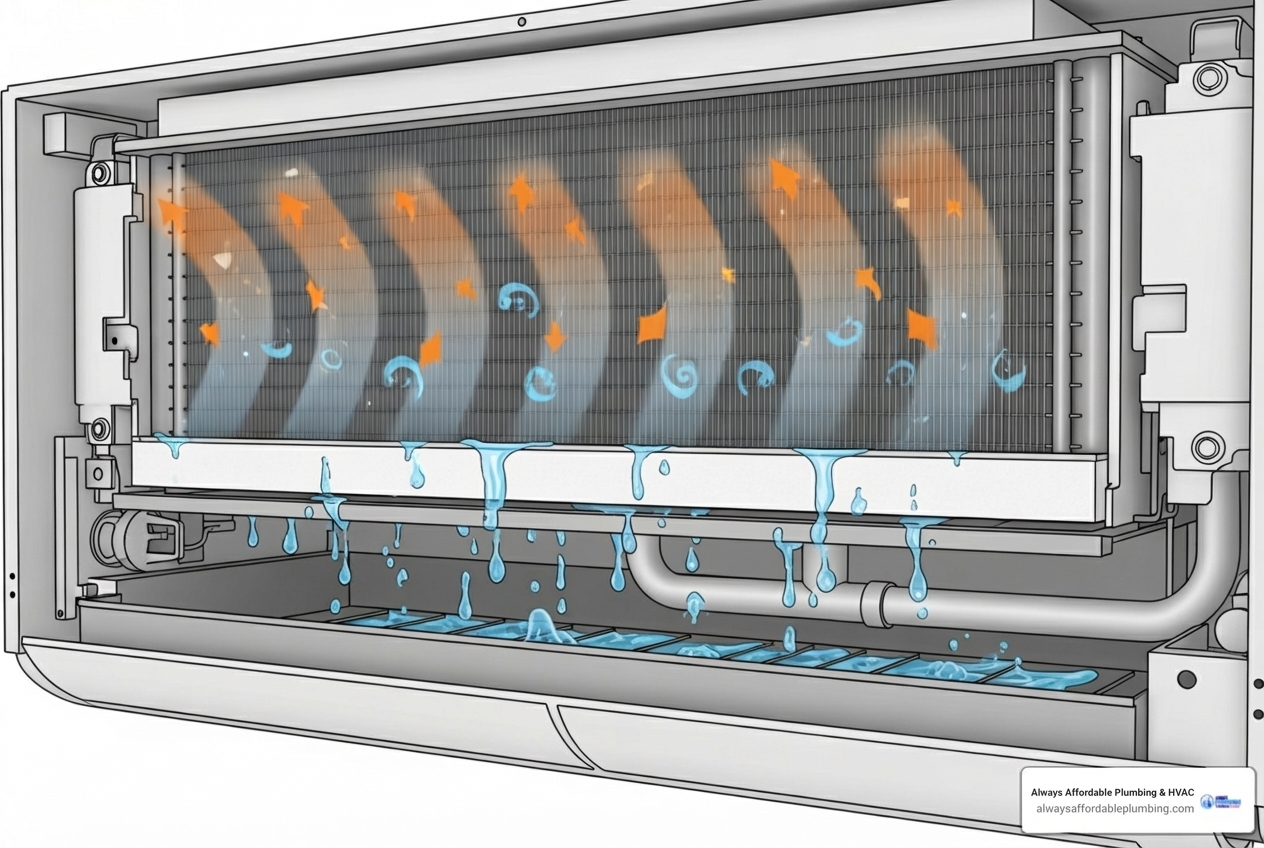
Finding an ac unit leaking water in garage can be quite a shock, but understanding why it happens is the first step toward a dry and comfortable home. The primary reason our AC units leak water is because the condensation process, a natural and essential part of cooling, has been disrupted.
Air conditioners don't just cool the air; they also act as dehumidifiers. As warm, humid air from your home (including the garage, if the unit is located there) passes over the cold evaporator coils, the moisture in the air condenses into water droplets, much like how a cold glass of water "sweats" on a hot day. This is a completely normal and healthy function of your AC. This collected water then drips into a condensate drain pan, which is designed to channel it away from your unit and out of your home through a condensate drain line, often a PVC pipe.
When this system works as intended, you shouldn't see any water pooling inside your garage. However, if any part of this delicate balance is thrown off, you end up with an ac unit leaking water in garage. It's crucial to address this promptly, not just for the sake of your garage floor, but for the health of your AC system and your home.
Finding a puddle under your AC unit can be startling, but don't panic! Your immediate actions can prevent further damage and ensure safety. Here’s what we recommend doing right away:
1. Turn Off the AC Immediately: This is the most critical first step. Go to your thermostat and switch your AC system from "Cool" to "Off." This stops the unit from producing more condensation and prevents additional water from accumulating.
2. Cut Power at the Breaker Box: For an extra layer of safety, especially since water and electricity don't mix, locate the circuit breaker that controls your AC unit (both the indoor and outdoor components) and switch it off. This eliminates any risk of electrical hazards while you investigate.
3. Mop Up Standing Water: Clean up any water on the floor. This prevents potential slip hazards and reduces the risk of water damage to your garage floor, walls, and any belongings stored nearby.
4. Place a Bucket to Catch Drips: Once the standing water is cleared, position a bucket or a large container directly under the source of the leak to catch any remaining drips. This will help you monitor how much water is still leaking and prevent new puddles from forming.
Taking these immediate steps will give you a safe and clean environment to begin diagnosing the root cause of why your ac unit leaking water in garage.
To truly understand why your ac unit leaking water in garage is a problem, let's dive a little deeper into how your AC unit handles moisture. As we mentioned, your air conditioner is a master of dehumidification. It works by drawing warm, humid air into your system and passing it over the cold evaporator coils. These coils are intentionally kept at a very low temperature. When the warm, moist air meets these cold surfaces, it's like tiny clouds forming on the outside of a chilled drink: the moisture in the air condenses into liquid water.
This newly formed water, or condensate, then drips off the evaporator coils and collects in a component called the condensate drain pan, which sits directly beneath the coils. The drain pan's job is to collect all this moisture and funnel it into the condensate drain line. This line, typically a PVC pipe, then uses gravity to carry the water safely away from your unit and out of your home, usually to an outdoor area or a floor drain.
When this entire system is working perfectly, you'll never see a drop of water where it shouldn't be. However, if any part of this intricate pathway gets obstructed or damaged, that collected water has nowhere to go but out, leading to an ac unit leaking water in garage. Keeping this process in mind will help us identify what might be going wrong. For more details on this process, you can check out Why Is My Air Conditioner Leaking Water and How to Fix It.
Now that we understand the basics of AC condensation, let's play detective and figure out why your ac unit leaking water in garage has decided to cry a river. Identifying the source of the leak is key to fixing it. Most AC water leaks stem from a handful of common issues, and a visual inspection can often point us in the right direction. We'll look at the usual suspects, from clogged drain lines to frozen coils and other potential problems.
If your ac unit leaking water in garage, the number one culprit we usually encounter is a clogged condensate drain line. This isn't just a guess; it's a frequently observed fact in our industry. This drain line, often a white PVC pipe, is responsible for carrying away all the water that condenses on your evaporator coils. But over time, especially here in areas like Sacramento, Elk Grove, and Roseville where humidity can fluctuate, this line can become a perfect breeding ground for algae, mold, sludge, and other debris.
Think of it like a plumbing pipe in your home: if enough gunk builds up, the water can't flow through. When the condensate drain line gets blocked, the water backs up into the drain pan. If the pan overflows, that water has nowhere to go but out of your AC unit and onto your garage floor.
Signs of a clogged drain line include:
• Water consistently pooling in the drain pan.
• Water leaking or accumulating on the floor around the base of your AC unit.
• A musty or moldy smell coming from your AC vents, which can indicate algae growth in the line.
A blocked condensate drain line is frequently the main reason behind an air conditioner leaking water inside the house, and your garage is no exception. It's often an issue we can address with some DIY effort, but understanding its role is crucial.
Another common reason your ac unit leaking water in garage could be a case of the "cold shoulder" – specifically, frozen evaporator coils. When these coils, which are designed to be cold, get too cold, ice can form on them. This isn't a problem until the ice starts to melt. When a large amount of ice melts quickly, it can overwhelm the condensate drain pan, causing water to spill out and create a leak.
What causes these coils to freeze? We usually point to two main culprits:
1. Dirty Air Filter: A dirty air filter is surprisingly problematic. It restricts the airflow over the evaporator coils. With less warm air passing over them, the coils get excessively cold, causing ice to build up. A clogged air filter may seem minor, but it can lead to significant problems, including water leakage.
2. Low Refrigerant Levels: Refrigerant is the lifeblood of your AC system, responsible for absorbing heat. If your system is low on refrigerant, often due to a leak, the pressure in the evaporator coils drops. This causes the coils to become much colder than they should be, leading to ice formation. A refrigerant leak can be a serious issue and is best left to professionals.
Water leaks in air conditioners frequently originate from frozen evaporator coils, often caused by restricted airflow or low refrigerant levels. If you notice ice on your coils, addressing the underlying cause is essential to stop the leak. If you see ice, cleaning or replacing your air filter may solve the problem. Most filters are cleanable; if so, run water through it from the faucet while you scrub out the dirt with a sponge. Let the filter dry while the ice on the coils melts, then put it back in and start the unit. For more information on dealing with frozen coils and dirty filters, this resource on cleaning or replacing your air filter can be helpful.
While clogged drain lines and frozen coils are the most common reasons for an ac unit leaking water in garage, they're not the only possibilities. Sometimes, the problem lies with other components or even the initial setup of your system:
• Damaged or Rusted Drain Pan: Over time, especially in older AC units (we often see this in systems 12-15 years old), the condensate drain pan can become damaged, crack, or rust through. A compromised pan can't hold water effectively, allowing it to drip onto your garage floor.
• Improper AC Installation: If your AC unit wasn't installed correctly, it might not be level. The condensate pan needs a slight tilt to ensure water flows efficiently into the drain line. If the unit isn't level, water can pool in the pan and eventually overflow. An improperly installed unit might result in inadequate drainage and subsequent water leakage issues.
• Malfunctioning Condensate Pump: Not all AC units rely solely on gravity for drainage. Some systems, particularly those installed in basements or where gravity drainage isn't feasible (such as an AC unit in a garage that's below the level of the outdoor drain), use a condensate pump to push the collected water out. If this pump malfunctions, gets clogged, or its float switch fails, it can cause the water to back up and overflow.
• Disconnected or Damaged Drain Pipe: The drain line that carries condensation away from the unit can sometimes become loose, disconnected, or physically damaged. If the connection isn't secure, water will simply leak out at the point of disconnection instead of flowing through the pipe.
These issues might require a bit more investigation or even professional help, but knowing they exist can help you understand the full picture of why your ac unit leaking water in garage.
Good news! Many common causes for an ac unit leaking water in garage can be tackled with a bit of DIY spirit and some basic tools. Before you begin any repairs, remember to always follow the safety steps we outlined earlier: turn off your AC at the thermostat and the circuit breaker. We want you to stay safe while getting your garage dry!
As the most frequent offender, a clogged condensate drain line is often the easiest to fix yourself. Here's our step-by-step guide:
1. Locate the Drain Line Access: Your condensate drain line usually exits your indoor AC unit as a PVC pipe. Somewhere along this pipe, there might be a small T-shaped vent or an access cap. This is where you'll typically work.
2. Use a Wet/Dry Vacuum to Suction the Clog: If you have a wet/dry vacuum, this is your best friend for clearing a clog. Attach the hose to the end of the condensate drain line (usually where it exits your home, often near the outdoor condenser unit). Create a tight seal around the pipe and turn on the vacuum for a few minutes. The suction should pull out the clog, which might be a slimy, algae-filled mess.
3. Flush the Line with Distilled Vinegar: After suctioning, it's a good idea to flush the line to prevent future clogs. Pour about a cup of distilled white vinegar into the access point of the drain line (the T-vent or cap you found earlier). Let it sit for about 30 minutes to break down any remaining buildup. Vinegar is excellent for killing algae and mold.
4. Flush with Water: Follow the vinegar with a cup or two of plain water to rinse the line.
— Important Note: We recommend using distilled white vinegar, not bleach. While bleach can kill mold, too much can be detrimental to metal components in your system over time. Also, never mix bleach and vinegar, as this creates dangerous chlorine gas.
With these steps, you can often clear the blockage and stop your ac unit leaking water in garage. For more DIY tips, check out If Your AC Is Leaking, You Can Usually Fix It Yourself—Here's How.
If your investigation revealed a dirty air filter or ice on your evaporator coils, you're on the right track! These are common and often straightforward fixes:
1. Locate and Inspect Your Air Filter: Your AC's air filter is typically located in the return air duct, often near the indoor unit in your garage, or behind a large return air vent inside your home. Pull it out and inspect it. If it's covered in a thick layer of dust, dirt, and debris, it's definitely restricting airflow.
2. Replace Disposable Filters: Most air filters are disposable and should be replaced every 1 to 3 months, depending on usage, pets, and household dust levels. A clean filter ensures proper airflow, which is critical for preventing coil freeze-up.
3. Clean Reusable Filters: If you have a reusable filter, you can clean it. Run water through it from the faucet to rinse out the dirt, and use a soft brush or sponge for stubborn grime. Make sure the filter is completely dry before reinstalling it.
4. Allow Frozen Coils to Thaw Completely: If you found ice on your evaporator coils, you must allow them to thaw completely before restarting your AC unit. This can take several hours, so be patient. Place a bucket underneath the unit to catch the melting ice. Rushing this step can damage your system. Once thawed, ensure the new or cleaned air filter is in place, and then you can restore power and restart your AC.
By keeping your air filter clean, you'll ensure proper airflow, which prevents your evaporator coils from getting too cold and freezing. This simple maintenance step is crucial for preventing an ac unit leaking water in garage due to frozen coils.
While we love empowering homeowners with DIY solutions, there are times when an ac unit leaking water in garage warrants professional attention. Knowing when to call in the experts can save you from more costly repairs down the line and prevent significant damage to your home and belongings.
We encourage you to try the DIY fixes for common problems like clogged drain lines and dirty filters. However, if the leak persists, or if you encounter any of these red flags, it's time to call a professional HVAC technician from Always Affordable Plumbing & HVAC:
• Suspected Refrigerant Leak: If you hear a hissing or bubbling noise near your AC unit, or if your system isn't cooling effectively despite a clean filter and clear drain line, you might have a refrigerant leak. Low refrigerant levels cause coils to freeze and can be a health hazard. Refrigerant leaks require specialized tools and expertise to detect and repair safely.
• Persistent Leaks After DIY Fixes: If you've diligently followed all the DIY steps and your ac unit leaking water in garage continues, it indicates a deeper, more complex issue that requires professional diagnosis.
• Cracked or Severely Rusted Drain Pan: While some small drain pan holes might be temporarily patched (if accessible), a significantly cracked or rusted drain pan needs to be replaced. This is often a job for an experienced technician.
• Electrical Problems: If you notice flickering lights, tripped breakers, or any strange electrical smells when your AC is running (or trying to run), turn it off immediately and call a professional. Water leaks can sometimes lead to electrical shorts, creating a dangerous situation.
• Improper Installation Issues: If you suspect the unit isn't level or was improperly installed, a professional can assess and correct the installation to ensure proper drainage.
• Malfunctioning Condensate Pump: If your AC uses a condensate pump and you suspect it's the issue, a technician can diagnose whether it's clogged, faulty, or needs replacement.
For these more serious issues, or if you're ever uncomfortable performing an AC repair yourself, don't hesitate to reach out to us. We serve Sacramento, Citrus Heights, Folsom, Roseville, and many surrounding areas, and we're ready to help.
Ignoring an ac unit leaking water in garage is like ignoring a small cavity—it will only get worse and cause more pain (and expense!) down the road. The potential damages extend far beyond a simple puddle:
• Mold and Mildew Growth: Garages, especially in humid climates like ours, are already susceptible to moisture issues. Add a continuous AC leak, and you've created a perfect breeding ground for mold and mildew. This can spread rapidly, causing unpleasant odors, damaging surfaces, and potentially affecting indoor air quality. Excessive moisture over time can promote the growth of mold and mildew around your unit.
• Damage to Stored Belongings: Most of us use our garages for storage. Water leaks can ruin cardboard boxes, wooden furniture, electronics, and other sensitive items. Imagine finding sentimental items or valuable tools damaged by an unexpected flood!
• Structural Damage to Walls and Flooring: While a concrete garage floor might seem impervious, prolonged exposure to water can lead to staining, erosion, and even compromise the integrity of the slab over time. If the leak reaches drywall or wooden studs, it can cause warping, rot, and weaken the structure of your garage. An air conditioner unit leaking water in the house can damage the walls and flooring.
• Slip and Fall Hazards: A wet garage floor is a dangerous one. Water puddles create a significant risk of slips and falls, which can lead to serious injuries.
• Electrical Shorts: As we mentioned, water and electricity are a hazardous combination. If water from a leak comes into contact with electrical components or wiring, it can cause short circuits, damage your AC unit, and even pose a fire risk. AC water leaks can cause dangerous after-effects like electrical and insulation issues.
Promptly addressing an ac unit leaking water in garage isn't just about comfort; it's about protecting your property and your family's safety.
We know that dealing with an ac unit leaking water in garage can bring up a lot of questions. Here are some of the most common ones we hear from homeowners, along with our expert answers:
This often indicates frozen evaporator coils. When you turn the unit off, the built-up ice melts and overflows the drain pan, causing a leak that continues long after the AC has stopped running. If you find ice on your coils, leave the unit off to melt the ice and put a bucket underneath to catch the water. Once thawed, investigate why the coils froze in the first place (often a dirty air filter or low refrigerant).
An AC unit is designed to remove moisture from the air, so some water dripping from the outdoor unit or through the condensate line is normal. This is simply the condensation being properly drained away. However, an ac unit leaking water in garage or anywhere inside your home is a sign of a problem. Water dripping from an air conditioner is normal due to condensation, but excessive dripping suggests a problem that needs fixing.
Regular maintenance is key to a healthy, leak-free AC system. This includes:
• Changing Your Air Filter: We recommend checking and changing your air filter every 1-3 months (or more frequently if you have pets or allergies). A clean filter ensures proper airflow and helps prevent coils from freezing.
• Having the Condensate Drain Line Flushed Annually: Even with regular DIY cleaning, a professional annual flushing can keep your drain line clear of stubborn algae and debris, preventing clogs.
• Scheduling a Professional HVAC Tune-Up Each Year: An annual tune-up allows our technicians to inspect all components, check refrigerant levels, ensure proper installation (like the unit being level), and catch potential problems like a failing condensate pump or a rusting drain pan before they lead to a leak. This proactive approach helps us prevent your ac unit leaking water in garage before it even starts.
Finding your ac unit leaking water in garage can be a frustrating experience, but as we've seen, it's often a solvable problem. By understanding the AC's condensation process, knowing the common culprits behind leaks, and taking appropriate action—whether it's a DIY fix or calling in the pros—you can keep your garage dry and your home comfortably cool.
Remember the key steps: diagnose the issue, fix it promptly, and prevent future problems through regular maintenance. Don't let a small leak turn into a big headache. For reliable, expert assistance with your AC system in Sacramento, Elk Grove, Roseville, or any of our service areas, we're always here to help. Our team at Always Affordable Plumbing & HVAC is dedicated to providing quality, transparent, and affordable solutions to keep your home running smoothly.
For comprehensive support and peace of mind, consider a professional HVAC tune-up to ensure your system is performing optimally and to prevent future leaks. You can find a full troubleshooting guide for AC leaks at AC leaking water: Full troubleshooting guide.
Contact us for professional air conditioning services today and let us help you keep your cool, and your garage, perfectly dry.
See what our satisfied customers have to say about their experience with Always Affordable
Plumbing & HVAC.

"Chappy was very skilled in his knowledge of my HVAC unit. I greatly appreciate the quick response and experienced tech. The whole endeavor was made less stressful by his humor and honest conversation. I find comfort in knowing I now have a shop i trust for the next time."
"Tony, James, Ronnie did an amazing job setting up our new AC! They were quick, efficient, considerate, and polite! We appreciate them scheduling us in on such short notice. Definitely recommend this company!"
"Prompt, professional service with kindness and care. They came out to address both plumbing and AC issues. I received a courtesy call before they arrived. All issues were resolved the same day with integrity and respect. Thankful for businesses like this. Absolutely recommend to those that I love."
"Excellent service! Jason came out promptly and in addition to doing my outside faucet he also put in new irrigation equipment! All done perfectly! Jason was lovely"
"Honest with the assessment; friendly and good manners. No high pressure sales. Just good to honest "tell it like you see it" Thought my kitchen disposer needed an overhaul. But Jason, there Plumber gave me an honest lesson on what was really happening. Saved me hundreds, if I went the route of replacing. Thank you!"
"Absolutely 5 stars. If you are looking for affordable ,professional and kind. Chappy was excellent and very knowledgeable . I called in the morning because my air conditioner stopped working he was here within hours and fixed my air with a smile. I highly recommend Chappy and Always Affordable plumbing and Hvac."
"Scott and James were great. They got there quickly and diagnosed the problem with my A/C.They did a very thorough job testing everything. Sent me pictures and called to keep me informed. Got it done the next day and everything is working fine. Be glad when I get home so I can enjoy my new system. Thanks guys for a great job."
"Chappy was very helpful. He knew our issue right away, cleaned our coils. He also came on the same day we called and got our AC blowing cold air again."
"After some timing ’curfuffles’ the Tech Jason arrived and not only completed a speedy install on my toilet, he was personable & professional. Because of the timing issues Jason was attentive and showed up with everything needed! No extra store runs 😊 I was very comfortable with having this Tech in my Daughter’s home. We will definitely use this Service again."