Seasonal Home Maintenance Checklist: Preventing HVAC and Plumbing Emergencies
Prevent HVAC emergencies with a seasonal home maintenance checklist. Why proactive scheduling beats waiting for sudden failures. See what needs attention now.



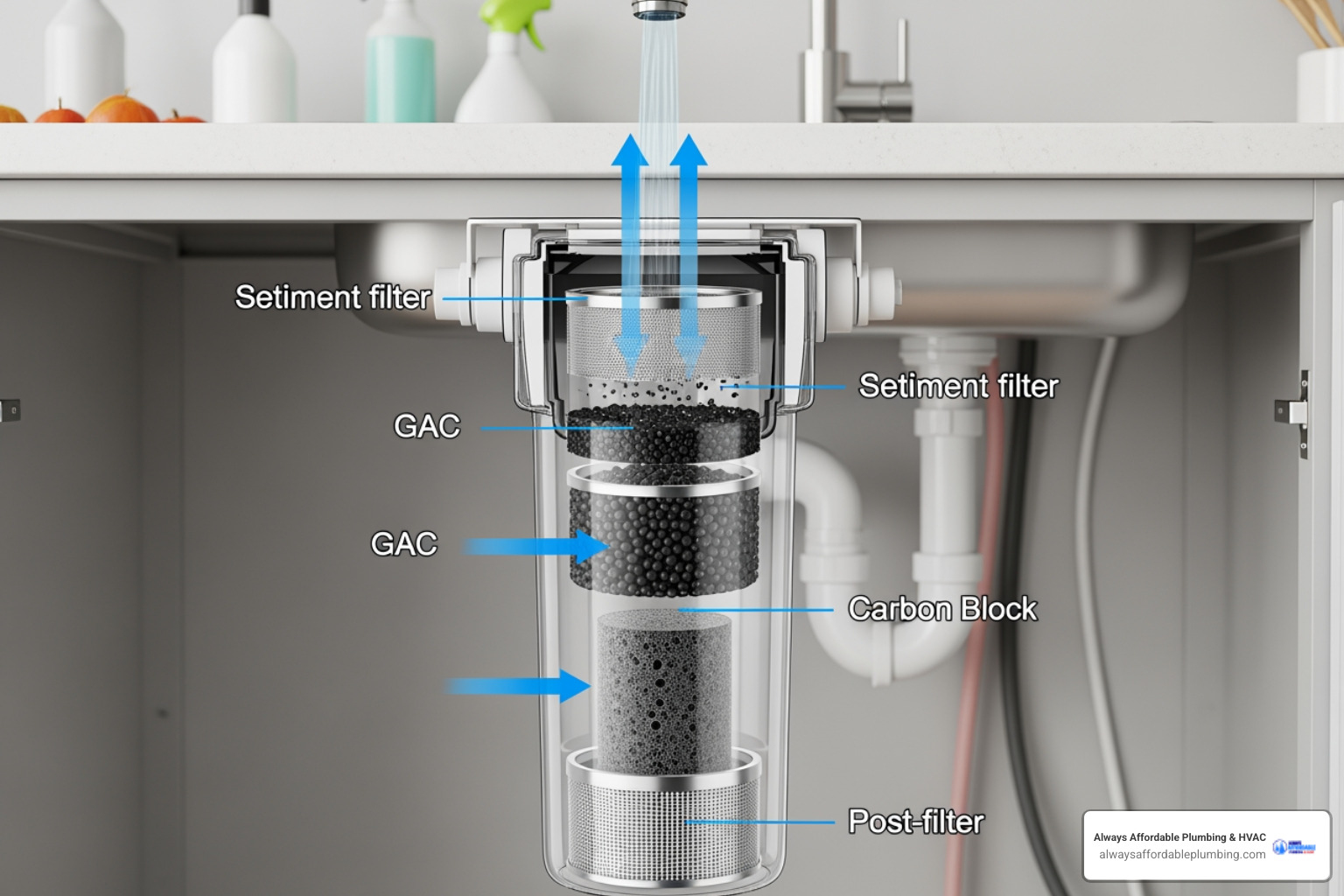
Carbon water filters for home are designed to remove chlorine, chloramines, and volatile organic compounds (VOCs) from your tap water, improving taste, odor, and overall water quality throughout your entire house. These systems use activated carbon media installed at your main water line to treat water before it reaches any faucet, shower, or appliance.
What You Need to Know About Home Carbon Filters:
• How They Work: Activated carbon traps contaminants through adsorption, where chemicals stick to the porous carbon surface as water flows through
• What They Remove: Chlorine, chloramines, VOCs, pesticides, herbicides, and compounds causing bad taste and odor
• Types Available: Granular Activated Carbon (GAC) for chlorine and Catalytic Carbon for chloramine reduction
• Best For: Homes with municipal water that has chlorine taste/smell or well water with organic contaminants
• Won't Remove: Minerals (hardness), dissolved solids, or most microorganisms
If you've noticed a chlorine smell in your shower, a chemical taste in your drinking water, or concerns about what's flowing through your taps, you're not alone. Many Sacramento-area homeowners face water quality issues from municipal treatment chemicals or well water contaminants. The good news? A whole house carbon filtration system can transform every drop of water in your home—from the kitchen sink to the bathroom shower—into cleaner, better-tasting water.
Looking to understand all your water quality options? Check out our guide on tap water safety, or if you're ready to explore solutions, learn more about professional water filtration installation.
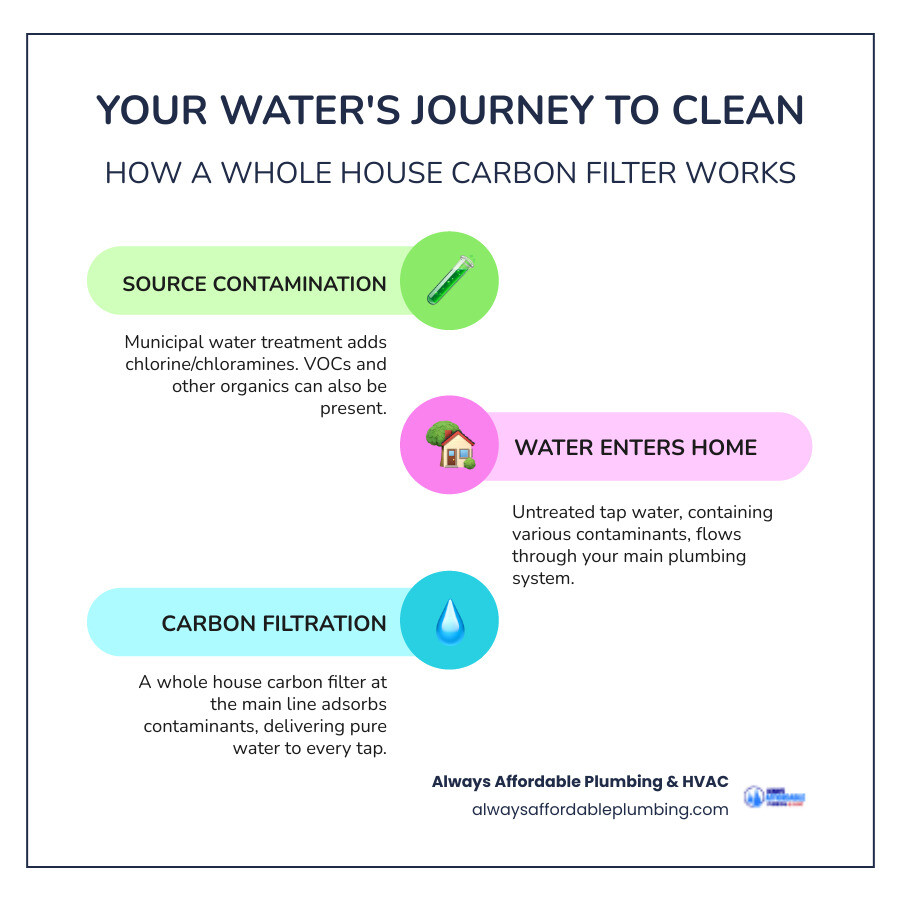
At the heart of every effective carbon water filter for home is a fascinating process called adsorption. Unlike absorption, where one substance soaks into another, adsorption is where contaminants literally stick to the surface of the carbon. Think of it like tiny, super-sticky sponges designed to trap unwanted elements in your water. Activated carbon is specially processed to create an incredibly porous material with a massive internal surface area. This high surface area is crucial because it provides countless sites for contaminants to adhere to as water flows through the filter. It's this chemical bonding that allows activated carbon to effectively remove a wide range of impurities.
This innovative technology means that when water from your main supply enters your home, it first passes through a bed of activated carbon. As it travels through this media, the carbon grabs hold of the contaminants, leaving behind cleaner, clearer water to flow to every tap and appliance. It's a simple yet powerful way to upgrade your home's water quality. For more insights into what makes tap water safe (or not), you can explore our detailed guide on Is Tap Water Safe to Drink? Best Solano Plumber.
One of the most compelling reasons to install carbon water filters for home is their ability to tackle a broad spectrum of common water contaminants. Our local municipal water, while treated for safety, often contains chemicals that affect its taste and smell. This is where carbon filters shine.
Primarily, carbon filters are highly effective at removing:
• Chlorine: This common disinfectant gives water that distinct, sometimes unpleasant, swimming pool odor and taste. Carbon filters are excellent at eliminating it, improving the aesthetic qualities of your water for drinking, cooking, and bathing.
• Chloramines: A combination of chlorine and ammonia, chloramines are another disinfectant used in municipal water treatment. Catalytic carbon, which we'll discuss shortly, is particularly adept at reducing chloramines.
• Volatile Organic Compounds (VOCs): These are a large group of chemicals that can find their way into water supplies from various sources, including industrial discharges and agricultural runoff. Many VOCs are associated with health concerns and can impart unpleasant tastes and odors. Granular activated carbon (GAC) filters are incredibly efficient, capable of removing up to 99.9% of many VOCs and reducing target contaminants to concentrations below 1 µg/l.
• Pesticides and Herbicides: These agricultural chemicals can sometimes leach into water sources. Activated carbon is effective at adsorbing many of these organic compounds.
• Bad Taste and Unpleasant Odors: Beyond specific chemicals, activated carbon is a champion at removing general compounds that contribute to taste and odor concerns, ensuring your water is more enjoyable.
Activated carbon can remove a wide range of organic contaminants, making your water not just safer, but significantly more pleasant to use throughout your home.
The magic behind activated carbon's effectiveness lies in its unique structure and how it's made. Activated carbon isn't just any charcoal; it's a specially processed material, often derived from sources like bituminous coal, lignite coal, peat, wood, or, commonly, coconut shells. The activation process involves heating the carbon material in a low-oxygen environment and then exposing it to steam or chemicals. This creates a vast network of tiny pores and channels, dramatically increasing the carbon's surface area. Imagine a sponge, but on a microscopic level, with countless nooks and crannies. This porous nature is what makes it so effective.
As water flows through the filter, contaminants are trapped within these pores. This process, as we mentioned, is called adsorption. It's different from absorption where a substance is soaked up. Instead, contaminants literally stick to the surface of the carbon through chemical bonds. The larger the surface area, the more contaminants the carbon can hold before it becomes saturated. Coconut shell carbon, for instance, is highly valued for its dense, microporous structure, which makes it excellent at removing smaller organic molecules and improving taste and odor. This intricate design is what allows carbon water filters for home to deliver such a noticeable improvement in water quality.
Deciding on the right water filtration system for your home often comes down to choosing between a whole house system and a point-of-use (POU) filter. Both have their merits, but they serve different purposes. Let's break down the key differences to help you determine which solution best fits your needs.
• Treatment Scope — Whole House Filters: Treats all water entering your home (kitchen, bathrooms, laundry, outdoor faucets) — Point-of-Use Filters: Treats water at a single tap or fixture (e.g., kitchen faucet, showerhead, filtering pitcher)
• Contaminant Removal — Whole House Filters: Addresses general water quality issues throughout the home, such as chlorine, VOCs, sediment — Point-of-Use Filters: Often provides more targeted or aggressive filtration for drinking/cooking water, including some PFAS or lead
• Plumbing/Appliance — Whole House Filters: Protects all plumbing, water heaters, and appliances from chlorine damage and sediment buildup — Point-of-Use Filters: Does not protect plumbing or appliances
• Installation — Whole House Filters: Installed at the main water line; typically requires professional installation — Point-of-Use Filters: Easy DIY installation for most types (faucet filters, pitchers); under-sink systems may require minor plumbing
• Cost (Initial) — Whole House Filters: Higher initial investment — Point-of-Use Filters: Lower initial investment
• Maintenance — Whole House Filters: Filter media replacement varies (months to years); backwashing systems may require less frequent media changes — Point-of-Use Filters: Cartridge replacement typically every 2-6 months; varies by type
• Water Pressure — Whole House Filters: Minimal impact if sized correctly; undersized systems can affect flow — Point-of-Use Filters: Generally no impact on main house pressure; some faucet filters can reduce flow at that tap
• Convenience — Whole House Filters: Filtered water from every tap, every shower, every appliance — Point-of-Use Filters: Filtered water only where the device is installed
When considering convenience, a whole house system truly offers unparalleled ease. Imagine stepping into a shower free of chlorine smell or doing laundry with water that's gentler on fabrics. While POU filters are excellent for targeted drinking water solutions, they simply can't provide that comprehensive coverage. Over time, the cost-effectiveness of a whole house system can also become apparent, as it protects your entire home's infrastructure and reduces the need for multiple smaller filters.
For Sacramento homeowners, the benefits of installing a whole house carbon filter extend far beyond just better-tasting drinking water. These systems transform your entire home's water experience, offering advantages that POU filters simply can't match:
• Filtered Shower Water: Say goodbye to that harsh chlorine smell and dry, itchy skin after a shower. With a whole house system, every shower becomes a more refreshing and enjoyable experience. Cleaner water for bathing can also be gentler on your hair and skin.
• Better Tasting Water from Every Tap: Whether you're filling a glass in the kitchen, washing vegetables, or getting water from a bathroom faucet, you'll notice a significant improvement in taste and odor. This means more enjoyable drinking water throughout your entire home. For more on improving your drinking water, read our article Water Filter Cleaner Drinking Water.
• Protects Plumbing from Chlorine Damage: Chlorine, while essential for disinfecting municipal water, can be corrosive over time, potentially damaging your home's pipes and fixtures. By removing chlorine at the main entry point, a whole house carbon filter helps protect your entire plumbing system, extending its lifespan and preventing costly repairs.
• Extends Appliance Life: Appliances that use water, such as dishwashers, washing machines, and water heaters, can suffer from the long-term effects of chlorine and sediment. Cleaner water means less wear and tear, helping your appliances last longer and operate more efficiently. Find more about how this works in our guide: How a Home Water Filter Helps Your Appliances.
• Addresses Specific Water Problems Throughout the Home: Whole house filters are designed to address individual water problems impacting the whole home—not just drinking water. This includes issues like chlorine, iron, hydrogen sulfide (that rotten egg smell), and more, ensuring comprehensive water quality improvement wherever water is used.
While carbon water filters for home offer impressive benefits, it's important to understand their limitations. No single filter type is a magic bullet for all water issues, and carbon filters are no exception.
Here's what carbon filters typically don't effectively remove:
• Minerals (Hardness): Carbon filters do not remove minerals like calcium and magnesium, which are responsible for hard water. If you're dealing with scale buildup on fixtures or appliances, a water softener would be needed in addition to or instead of a carbon filter.
• Most Dissolved Solids: While they tackle organic compounds, carbon filters are not designed to remove most inorganic dissolved solids such as salts, nitrates, fluoride, or heavy metals like arsenic. For these contaminants, other filtration technologies like reverse osmosis or ion exchange are usually required. Activated carbon filters do not remove common inorganic pollutants such as arsenic, fluoride, hexavalent chromium, nitrate, and perchlorate.
• Microorganisms: Carbon filters are generally not designed to remove bacteria, viruses, or cysts. If you're concerned about microbial contaminants, especially with well water, you would need additional treatment like a UV disinfection system. These systems are not intended to reduce microorganisms, and a UV system is the appropriate solution for that specific concern.
• Potential for Bacterial Growth if Unmaintained: This is a critical point. Improperly maintained filters can actually degrade water quality. If filters aren't replaced on schedule, microbial growth and biofilms can develop on the carbon media, potentially leading to higher bacterial counts than the original tap water. This underscores the importance of regular maintenance.
Choosing the right carbon water filter for home can feel like a big decision, but with a little guidance, we can help you find the perfect fit for your Sacramento residence. There are several key factors to consider to ensure you select a system that effectively meets your household's demands.
When selecting a whole house carbon filter, we primarily look at:
• Water Usage: This relates to the size of your home and the number of people living there. A larger household with more water consumption will require a system with greater capacity and flow.
• Flow Rate (GPM): Measured in gallons per minute, the flow rate indicates how much water the filter can process without causing a noticeable drop in your home's water pressure. Quality systems offer flow rates that are ample for most homes, ensuring your showers still feel invigorating.
• Port Size: This refers to the size of the plumbing connections on the filter, which should match your home's main water line (typically 3/4-inch or 1-inch).
• Home Size (Number of Bathrooms): This is often a good proxy for overall water demand. Many systems are sized according to the number of bathrooms in your home (e.g., 1-2 bathrooms, 3-4 bathrooms, or 4-6 bathrooms). A common recommendation is a 1.5 cubic foot model for homes with 3 bathrooms or less, and a 2.0 cubic foot model for larger homes or those with multiple shower heads.
Not all carbon is created equal, especially when it comes to filtering your water. The two main types of carbon media you'll encounter in carbon water filters for home are Granular Activated Carbon (GAC) and Catalytic Carbon. Understanding the difference is key to choosing the right filter for your specific water issues.
• Granular Activated Carbon (GAC): This is the most common type of carbon filter. It consists of loose granules of activated carbon. GAC is highly effective at adsorbing chlorine and a wide range of organic compounds that cause bad tastes and odors. It's an excellent choice for general chlorine reduction in municipal water supplies, as high-quality GAC significantly improves water quality by adsorbing these compounds.
• Catalytic Carbon: This is a specially processed form of activated carbon that has improved catalytic properties. While GAC primarily adsorbs chlorine, catalytic carbon goes a step further and reduces chloramines. Chloramines are a combination of chlorine and ammonia, and they require a more robust filtration method than standard GAC. If your local water utility in the Sacramento area uses chloramines for disinfection (which is common), a catalytic carbon filter would be our recommendation. Catalytic granular activated carbon is specifically designed to target chloramine reduction.
To determine which type of carbon is best for your home, it's helpful to know if your municipal water is treated with chlorine or chloramines. A quick call to your local water provider or a water test can reveal this crucial information.
When investing in carbon water filters for home, certifications are your best friend. Since there are no federal regulations for household water treatment products in the US, independent, third-party certifications provide assurance that a product performs as advertised. The National Sanitation Foundation (NSF) and the American National Standards Institute (ANSI) have developed rigorous voluntary standards that we always look for.
The two most relevant standards for carbon filters are:
• NSF/ANSI 42 (Aesthetic Effects): This standard verifies that a filter reduces non-health-related contaminants, primarily those affecting the taste, odor, and clarity of water. This is the standard you'll typically see for filters designed to remove chlorine and improve the overall palatability of your water.
• NSF/ANSI 53 (Health Effects): This is a more stringent standard, verifying that a filter reduces specific health-related contaminants. This can include volatile organic compounds (VOCs), lead, mercury, and certain other harmful chemicals. If you're concerned about specific health contaminants beyond just taste and odor, look for a filter certified to NSF/ANSI 53.
The importance of third-party certification cannot be overstated. It means that an independent organization has tested the product to ensure it meets strict performance, material safety, and structural integrity requirements. Always check product packaging or the manufacturer's website for these certifications. For example, you can find whole home carbon filters certified by organizations like IAPMO R&T to NSF/ANSI 42 for chlorine reduction, providing peace of mind about their performance.
This is the million-dollar question, and the answer often starts with understanding your water. While many Sacramento-area homes can benefit from a carbon filter, the best way to determine your specific needs is through a professional water test.
• Importance of a Water Test: Our team at Always Affordable Plumbing & HVAC can conduct a comprehensive water test to identify exactly what's in your water. This goes beyond what your municipal water report might tell you, giving you a detailed snapshot of your home's unique water profile. We strongly recommend this first step, as outlined in our guide Why You Need a Water Test Today.
• Signs of Chlorine/Chloramines: If you consistently notice a "swimming pool" smell or taste in your tap water, especially after heavy rain or during certain times of the year, it's a strong indicator that chlorine or chloramines are present and impacting your water quality. Dry skin or faded clothes after laundry can also be subtle signs.
• Local Water Quality Reports: You can often find annual water quality reports (sometimes called Consumer Confidence Reports) from your local water provider. These reports detail the source of your water and the contaminants detected, as well as the treatment methods used. This can help you understand if chlorine or chloramines are used in your area.
• Addressing Specific Concerns: If you're generally concerned about the presence of VOCs, pesticides, or other organic compounds in your water, even without obvious taste or odor issues, a carbon filter is an excellent preventative measure. For custom advice on the best solutions for our community, consult our article on the Best Water Filtration System for Sacramento.
If you desire cleaner, better-tasting water from every tap and want to protect your plumbing and appliances from common disinfectants, a whole house carbon filter is very likely the right solution for you.
Investing in carbon water filters for home is a commitment to better water quality, and like any home system, it requires proper installation and ongoing care to perform optimally. Understanding the lifespan of your filter and its maintenance needs is crucial for enjoying continuous clean water.
The lifespan of a whole house carbon filter varies significantly based on its type and usage. Cartridge-based systems will have filters that need regular replacement, while media-bed systems (often backwashing units) have granular carbon that lasts much longer. Regardless of the type, professional installation is always recommended for whole house systems. This ensures the filter is correctly integrated into your main water line, preventing leaks, maintaining proper water pressure, and optimizing performance. For expert installation services, our team is ready to help, as detailed in our guide on Water Filtration System Installation.
Proper maintenance is the secret sauce to ensuring your carbon water filters for home continue to deliver clean, fresh water day in and day out. Neglecting maintenance can lead to reduced effectiveness, or worse, potential water quality issues. As research shows, improperly maintained filters can lead to microbial growth and biofilms, potentially degrading water quality.
Here are our essential maintenance tips:
• Regular Backwashing Schedule (for media-bed systems): If you have a backwashing carbon filter, it periodically reverses water flow to flush out trapped contaminants and redistribute the carbon media. This process helps extend the life of the carbon. Follow the manufacturer's recommended backwashing schedule, which is often programmable on the system's control valve.
• Cartridge Replacement Frequency (for cartridge-based systems): For whole house filters that use replaceable cartridges, stick strictly to the manufacturer's recommended replacement schedule. This could be every 3-6 months for pre-filters and annually for main carbon cartridges, depending on water quality and usage.
• Checking for Pressure Drops: A noticeable drop in your home's water pressure can be a sign that your filter is becoming clogged with sediment or exhausted. This indicates it's time for maintenance or replacement.
• Professional Servicing: We recommend scheduling periodic professional servicing, especially for more complex backwashing systems. Our technicians can inspect the system, ensure it's functioning correctly, and handle media replacement when necessary. This also helps ensure that your system is always appropriately sized for your home, preventing any noticeable impact on water pressure.
A well-maintained filter is an effective filter!
The lifespan of carbon water filters for home isn't a one-size-fits-all answer; it depends significantly on the type of system, the quality of your water, and your household's water usage.
• Media Bed Lifespan (Years): For whole house carbon filters that use a large bed of granular activated carbon (often in backwashing systems), the carbon media can last for several years. The filtration media in many whole house systems can last for years before needing replacement. A typical filter life can be up to five years for municipal water, but may be shorter (e.g., 12 months) for well water, highlighting the impact of the water source. This longer lifespan makes these systems a convenient and cost-effective long-term solution.
• Cartridge Lifespan (Months): If you have a whole house system that uses replaceable filter cartridges, the carbon cartridges will need to be changed more frequently, typically every 6-12 months. This is similar to the replacement schedule for other multi-stage filters. Pre-filters in these systems might need even more frequent replacement, perhaps every 3-6 months, to protect the main carbon filter.
• Factors Affecting Lifespan:
— Water Quality: Heavily chlorinated water, water with high levels of sediment, or water with numerous organic contaminants will exhaust the carbon media faster.
— Household Water Usage: A larger family that uses a lot of water for bathing, laundry, and drinking will naturally deplete the filter's capacity more quickly than a smaller household.
— Media Type: As discussed, catalytic carbon might have a different lifespan than standard GAC when dealing with specific contaminants like chloramines.
Always refer to your system's manufacturer guidelines for specific recommendations on filter replacement. Regular monitoring and timely replacement ensure that your filter continues to provide the clean water you expect.
We've taken a deep dive into carbon water filters for home, exploring how these remarkable systems work, what contaminants they effectively remove, and the significant benefits they bring to your entire household. From eliminating unpleasant chlorine tastes and odors to protecting your plumbing and appliances, a whole house carbon filter is an investment in your home's health and comfort.
Imagine stepping into a shower that feels truly clean, enjoying a glass of water straight from the tap that tastes crisp and pure, or knowing that every drop of water used for cooking and cleaning is free from unwanted chemicals. This is the peace of mind that a quality carbon filtration system provides. It’s about more than just drinking water; it's about an improved quality of life throughout your entire home.
For expert advice on choosing the right system for your Sacramento-area home and professional installation that ensures optimal performance, trust the specialists at Always Affordable Plumbing & HVAC. We're here to help you experience the difference that truly clean water can make. Ready to upgrade your home's water quality? Contact us today to learn more about our Water Filtration System Installation Granite Bay CA and surrounding areas.
See what our satisfied customers have to say about their experience with Always Affordable
Plumbing & HVAC.

"Chappy was very skilled in his knowledge of my HVAC unit. I greatly appreciate the quick response and experienced tech. The whole endeavor was made less stressful by his humor and honest conversation. I find comfort in knowing I now have a shop i trust for the next time."
"Tony, James, Ronnie did an amazing job setting up our new AC! They were quick, efficient, considerate, and polite! We appreciate them scheduling us in on such short notice. Definitely recommend this company!"
"Prompt, professional service with kindness and care. They came out to address both plumbing and AC issues. I received a courtesy call before they arrived. All issues were resolved the same day with integrity and respect. Thankful for businesses like this. Absolutely recommend to those that I love."
"Excellent service! Jason came out promptly and in addition to doing my outside faucet he also put in new irrigation equipment! All done perfectly! Jason was lovely"
"Honest with the assessment; friendly and good manners. No high pressure sales. Just good to honest "tell it like you see it" Thought my kitchen disposer needed an overhaul. But Jason, there Plumber gave me an honest lesson on what was really happening. Saved me hundreds, if I went the route of replacing. Thank you!"
"Absolutely 5 stars. If you are looking for affordable ,professional and kind. Chappy was excellent and very knowledgeable . I called in the morning because my air conditioner stopped working he was here within hours and fixed my air with a smile. I highly recommend Chappy and Always Affordable plumbing and Hvac."
"Scott and James were great. They got there quickly and diagnosed the problem with my A/C.They did a very thorough job testing everything. Sent me pictures and called to keep me informed. Got it done the next day and everything is working fine. Be glad when I get home so I can enjoy my new system. Thanks guys for a great job."
"Chappy was very helpful. He knew our issue right away, cleaned our coils. He also came on the same day we called and got our AC blowing cold air again."
"After some timing ’curfuffles’ the Tech Jason arrived and not only completed a speedy install on my toilet, he was personable & professional. Because of the timing issues Jason was attentive and showed up with everything needed! No extra store runs 😊 I was very comfortable with having this Tech in my Daughter’s home. We will definitely use this Service again."