Navigating the Spring-to-Summer HVAC Transition: A Safe Homeowner's Maintenance Guide
Why do HVAC systems fail on the first 80-degree day? See what belongs on your seasonal home maintenance checklist and when to call a pro before summer hits.



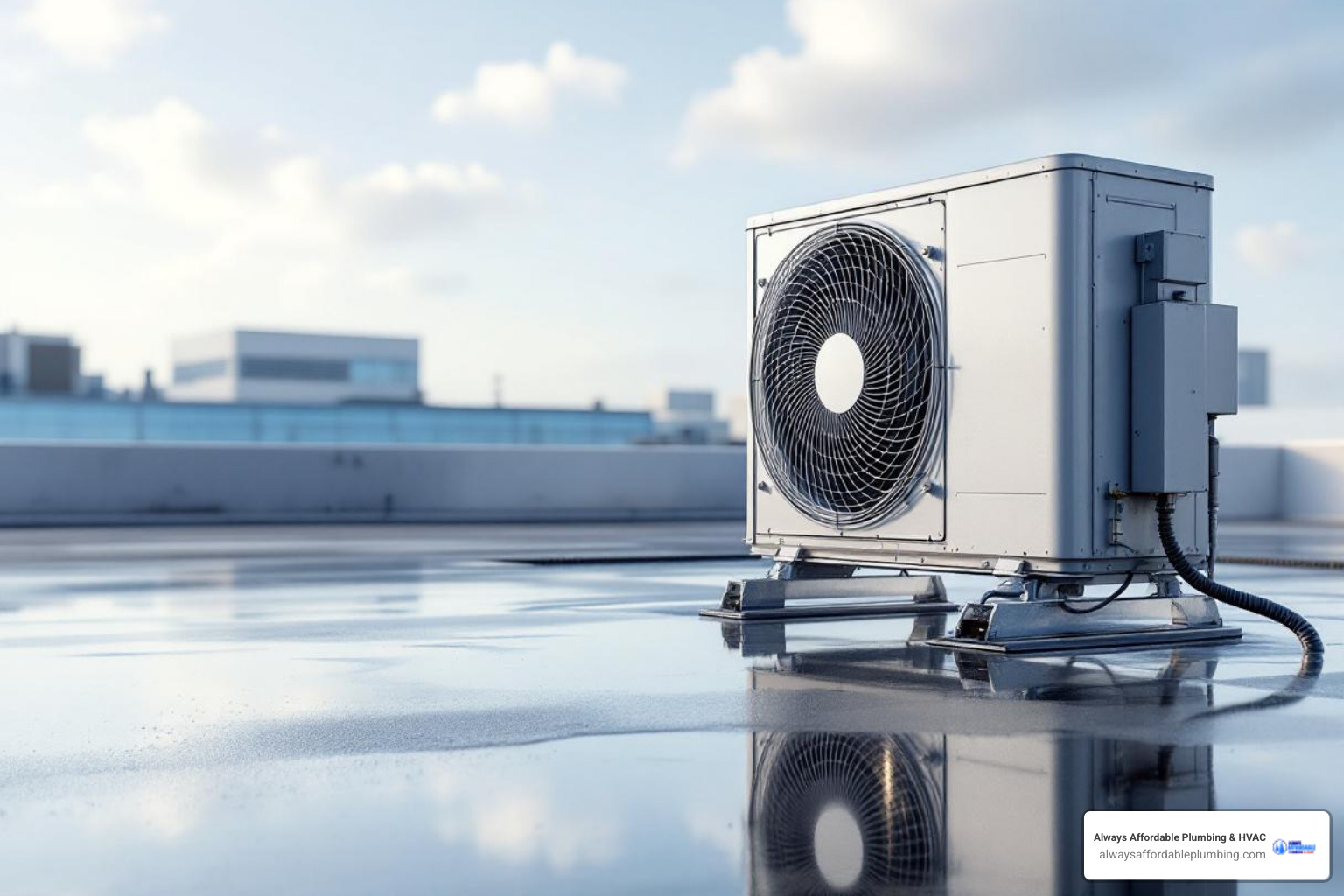
Commercial ac unit leaking water is never normal and always signals a problem that needs fixing. When water pools around your AC system, it typically means something in the condensation removal process has failed—whether that's a clogged drain line, a damaged drain pan, a broken condensate pump, or frozen evaporator coils. This isn't just an unsightly puddle; unchecked leaks can damage your building's structure, foster dangerous mold growth, create electrical hazards, and even force your entire system to shut down during peak business hours.
If you're managing a commercial property in Sacramento, CA, a leaking AC unit threatens employee comfort, equipment integrity, and your bottom line. For comprehensive air conditioning services in Sacramento, visit our main AC services page, or if you need immediate help, contact Always Affordable Plumbing & HVAC to schedule an inspection.
Quick Diagnosis Guide: Why Your Commercial AC is Leaking
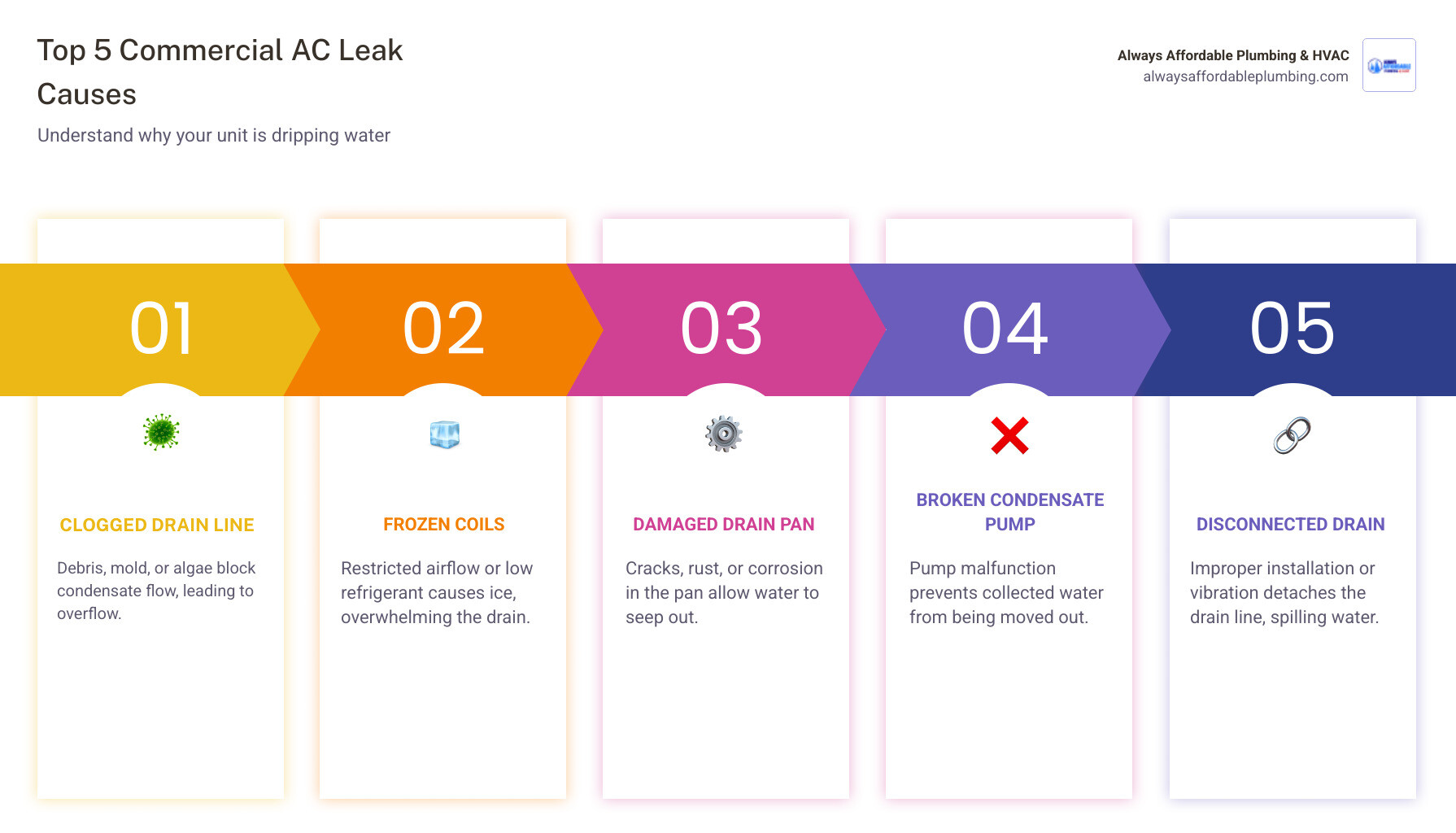
1. Clogged condensate drain line – Dirt, algae, and mold block water flow, causing backup and overflow
2. Frozen evaporator coils – Dirty air filters or low refrigerant create ice that melts and overwhelms the drain pan
3. Damaged or rusted drain pan – Cracks and corrosion allow water to escape instead of draining properly
4. Broken condensate pump – Pump failure prevents water from being moved out of the system
5. Disconnected drain line – Vibrations or improper installation cause the drain line to work loose
6. High humidity overload – Excessive moisture production exceeds your system's drainage capacity
Understanding these common culprits helps us identify the problem quickly and take appropriate action. Most issues require professional diagnosis and repair, especially when refrigerant levels, electrical components, or internal coils are involved.
When your commercial AC unit starts to drip, it’s not just a minor inconvenience; it’s a symptom of an underlying issue that needs our attention. Water pooling around your commercial ac unit leaking water can indicate a serious problem that could lead to significant damage if left unaddressed. Let's explore the most frequent reasons why your commercial AC might be springing a leak.
One of the most common culprits behind a commercial AC leak is a clogged condensate drain line. As your AC system cools the air, it extracts moisture, which then condenses into water. This water collects in a drain pan and is channeled away through the condensate drain line. Over time, dirt, dust, and even biological growth like mold and algae can accumulate inside this line.
This sludge acts like a dam, blocking the water's path. When the drain line is clogged, the water has nowhere to go but to back up and overflow the drain pan. This overflow can then leak out of your AC unit, often appearing as a puddle on the floor or water stains on your ceiling. A clear sign of a condensate line problem is water leaking from the AC’s indoor unit. Regular maintenance is key to preventing these clogs and ensuring a smooth flow of condensation out of your system.
Our commercial AC units work hard to keep our business spaces comfortable, but they need clean air filters to do their job effectively. A dirty air filter restricts the airflow over the evaporator coils. Think of it like trying to breathe through a very stuffy nose—it's much harder! This reduced airflow causes the evaporator coils to get too cold, leading to ice formation on their surfaces.
When the AC unit eventually cycles off, or the ice buildup becomes too significant, these frozen coils begin to thaw. The melting ice produces a large amount of water, often more than the drain pan and line can handle, leading to an overflow and a leak. Dirty air filters aren’t the only culprit when it comes to frozen evaporator coils; low refrigerant levels can also cause this issue.
The drain pan, also known as the condensate pan, is designed to collect all the water condensed by your AC system. While often made of durable materials, over time, constant exposure to water, along with vibrations and age, can take their toll.
If the drain pan becomes cracked, corroded, or rusted, it can no longer hold the water effectively. Instead of flowing into the drain line, water will seep through the damaged areas and leak from the unit. Signs of a damaged drain pan might include visible cracks, rust spots, or water pooling directly beneath the indoor unit. If left unchecked, a damaged drain pan can also foster mold and mildew growth, posing health risks to employees and customers alike.
For many commercial AC units, especially those where the evaporator coil is located below the level of the main drain line, a condensate pump is used to move the collected water uphill or horizontally out of the building. This little pump is a critical component in ensuring proper drainage.
If the condensate pump malfunctions, becomes clogged, or simply breaks down, the water it's supposed to transport will accumulate. When the pump stops working correctly, water can back up in the drain line and overflow the drain pan, leading to significant water damage to your business's walls, floors, and furniture. A malfunctioning or clogged condensate pump is a specific reason for leaks in systems that use one, and it's a problem that requires prompt attention.
Sometimes, the problem isn't wear and tear, but rather how the unit was installed in the first place or how it has shifted over time. If your commercial ac unit leaking water is relatively new, improper installation is a high possibility. If the unit is not installed correctly or isn’t level, the condensate pan may not be positioned properly to catch all the water. This can lead to the pan overflowing, causing water to leak out of the unit.
Similarly, a disconnected drain line is another possible cause of water leakage. Over time, the constant flow of water, general vibrations within the building, or even accidental bumps can cause the drain line to work loose from its connection point. When this happens, water simply drains out onto whatever is under the drain pan or the loose connection, rather than being channeled away properly.
We know Sacramento summers can get quite warm, and with that warmth often comes humidity. Your AC's primary job is to cool the air, but it also plays a crucial role in removing moisture. In areas with high humidity, your AC might be generating more condensation than it can effectively handle.
If your system isn’t sized properly for your commercial space, or if it's struggling to dehumidify effectively due to other issues, excess moisture can accumulate. This can overwhelm the drainage system, leading to leaks even if all other components are functioning correctly. It's a bit like having a bucket under a leaky faucet—if the faucet drips too fast, the bucket will eventually overflow.
We touched on this briefly, but low refrigerant levels deserve their own spotlight as a distinct cause of leaks. Refrigerant is the lifeblood of your AC system, responsible for absorbing heat from your indoor air and releasing it outside. When refrigerant levels are low, often due to a leak in the system, the evaporator coil cannot properly absorb heat. This causes the coil's temperature to drop significantly, below freezing, leading to ice formation.
When this ice eventually melts, it creates an excessive amount of water that the drain pan and line cannot manage, resulting in a leak. A refrigerant leak is a serious issue that not only causes water leaks but also reduces your AC's cooling efficiency and can damage the compressor if not addressed. Hissing or bubbling sounds from your unit can sometimes indicate a refrigerant leak.
Beyond just freezing, evaporator coils can become blocked or dirty with a layer of grime, dust, and debris. Even if not completely frozen, this layer acts as an insulator, reducing the coil's ability to absorb heat and transfer it to the refrigerant. This inefficiency can lead to increased condensation because the air isn't being cooled as effectively, and the moisture isn't being properly managed.
The dirt and debris on the coils can also impede the smooth flow of condensed water off the coil and into the drain pan. Instead, water might bead up and drip off in unintended places, bypassing the drain pan entirely and leading to leaks. Keeping these coils clean is essential for both efficiency and leak prevention.
Finding a commercial ac unit leaking water can be alarming, but taking immediate, calm action can prevent further damage and ensure safety.
Our first priority is always safety. If you find a leak from your commercial AC unit, here are the immediate steps we recommend:
1. Turn Off AC Power: The very first thing to do is to switch off the power to the AC unit. This prevents further operation that could exacerbate the leak, reduces the risk of electrical hazards (especially if water is near electrical components), and allows any frozen coils to begin thawing.
2. Shut Off Water Supply (If Applicable): While AC units primarily deal with condensation, if the leak appears to be from a water supply line (rare for pure AC, but possible in HVAC systems with humidifiers or chiller lines), shut off the main water supply to that area.
3. Clean Up Standing Water: Promptly clean up any pooling water to prevent slip-and-fall accidents, minimize water damage to your flooring or furnishings, and deter mold growth. Use towels, mops, or a wet/dry vacuum.
4. Document the Damage: Take photos or videos of the leak and any resulting water damage. This documentation can be helpful for insurance claims or when explaining the situation to your HVAC technician.
It's important for us to distinguish between a problematic leak and normal operational condensation. While any water inside your commercial space from the AC is a problem, some outdoor dripping can be normal.
• Normal Outdoor Dripping: Our AC systems are designed to remove moisture from the air, and this moisture has to go somewhere. It's perfectly normal for an AC unit to drip water outside, especially on hot and humid days in Sacramento. The cooling process produces condensation, which collects in the base pan and drains to the outside. A small puddle of condensation near the drain pipe or under the condenser unit (the outdoor part) is usually nothing to worry about, as it should typically dry up on a hot day.
• Problematic Signs: However, if you notice a persistent water leak for more than a day, or if water is leaking from the indoor unit, that's a clear sign of an issue. Water pooling indoors, water stains on walls or ceilings, or a musty odor are all indicators that your AC unit is experiencing a problematic leak, not just normal condensation. An AC unit should never leak water when it’s turned off—that's a huge warning sign.
Ignoring a commercial ac unit leaking water can lead to a cascade of problems that are far more costly and disruptive than addressing the initial leak. We've seen the damage that unchecked AC leaks can cause:
• Structural Damage: Water can seep into walls, ceilings, and flooring, weakening structural components, rotting wood, and damaging drywall. This can lead to costly repairs and even compromised building integrity.
• Mold and Mildew Growth: Water creates a perfect breeding ground for mold and mildew. These fungi can spread rapidly, causing unsightly stains, unpleasant odors, and, more importantly, posing serious health risks to employees and customers. Mold exposure can lead to respiratory problems, allergies, and other health issues.
• Electrical Hazards: When water comes into contact with electrical wiring or components within the AC unit or your building, it creates a dangerous electrical hazard. This can lead to short circuits, power outages, and even fire risks.
• Complete System Failure: A continuous leak puts undue stress on your AC system. Components can rust, seize up, or fail entirely, potentially leading to a complete breakdown of your unit. This often means a much more expensive repair or even premature replacement of the entire system.
• Business Interruptions: Any of these damages can lead to significant disruptions for your business, whether it's closing for repairs, dealing with uncomfortable indoor conditions, or managing health and safety concerns.
An ounce of prevention is truly worth a pound of cure, especially when it comes to your commercial AC system. Proactive care is the best way for us to avoid unexpected and damaging leaks, ensuring your system runs smoothly and efficiently.
We cannot overstate the importance of regular, professional HVAC check-ups for your commercial property in Sacramento, Elk Grove, Roseville, or any of our service areas. These routine inspections are crucial for preventing AC water leaks and maintaining the overall health of your system.
During a professional check-up, our technicians will:
• Conduct Thorough Inspections: We'll examine all components of your AC system, looking for early signs of wear, corrosion, or potential issues before they escalate into major problems.
• Clean Internal Components: This includes cleaning evaporator coils, drain pans, and drain lines to prevent the buildup of dirt, dust, mold, and algae that can cause clogs and leaks.
• Ensure Proper Function: We'll verify that all parts, including condensate pumps and drain lines, are functioning correctly and that your unit is properly leveled for effective drainage.
• Extend System Lifespan: Regular maintenance helps your AC unit operate at peak efficiency, reducing stress on components and ultimately extending the life of your valuable investment.
Regular maintenance is crucial for preventing AC leaks and damage. It helps keep your system running optimally, reduces energy waste, and protects your property from water damage.
While professional check-ups are essential, there are also some simple, in-house maintenance tasks we can perform to help prevent a commercial ac unit leaking water:
• Regularly Change Air Filters: This is perhaps the easiest and most impactful DIY task. Dirty air filters restrict airflow and can lead to frozen evaporator coils, which in turn cause leaks when they thaw. Timely replacement of clogged air filters ensures proper airflow and prevents coil freezing. We recommend checking your filters monthly and replacing them as needed, typically every one to three months for commercial settings, depending on usage and air quality.
• Visually Inspect the Unit: Periodically, take a moment to visually inspect your AC unit. Look for any signs of water pooling, rust on the drain pan, or disconnected drain lines. Early detection can prevent minor issues from becoming major headaches.
• Clear Debris from Outdoor Units: Ensure that the outdoor condenser unit is free from leaves, dirt, and other debris that can obstruct airflow or clog the base pan's drain holes. Maintain at least 12 inches of clearance around the unit.
• Pour Vinegar in Drain Line: To prevent mold and algae growth in your condensate drain line, pour a cup of undiluted white vinegar into the access opening of the drain line every month or so. This helps inhibit biological growth that can lead to clogs. Never use bleach, as it can be corrosive to some metal components, and never mix bleach and vinegar, as it creates dangerous fumes.
While some minor issues can be addressed with simple DIY steps, many problems that cause a commercial ac unit leaking water require the expertise of a professional HVAC technician. Knowing when to call us can save you time, prevent further damage, and ensure your system is repaired correctly.
We always encourage business owners to be observant, but we also know when to step in. Here are the clear signs that indicate it’s time to call Always Affordable Plumbing & HVAC for your commercial AC leak:
• Persistent Leaks After Basic Troubleshooting: If you've tried cleaning filters, checking for obvious clogs, and ensuring connections are secure, but the leak persists, it's time for an expert diagnosis. Large amounts of water leaking for more than 24 hours is a definitive call for professional help.
• Frozen Evaporator Coils: While a dirty filter can cause coils to freeze, if you're regularly changing filters and still seeing ice, it could indicate a more serious issue like low refrigerant levels or a problem with the fan motor. These require professional assessment.
• Suspected Refrigerant Leak: If you hear hissing or bubbling sounds coming from your AC unit, it could be a sign of a refrigerant leak. Refrigerant is a hazardous substance, and its handling and recharging should only be done by certified professionals.
• Major Drain Line Clogs: If the drain line is severely clogged and you can't clear it with simple methods like pouring vinegar or using a wet/dry vacuum, the blockage might be deep or stubborn. Our technicians have specialized tools to clear these effectively.
• Broken Condensate Pump or Damaged Drain Pan: While some handy business owners might attempt to replace these components, it often requires specific knowledge of AC systems and electrical connections. If you're not comfortable or confident with these repairs, it’s best to call us.
• Improper Installation or Leveling Issues: If your unit was recently installed and is leaking, or if you suspect the unit isn't properly leveled, these issues require professional adjustment to ensure correct drainage and system function.
Delaying professional repair for a commercial ac unit leaking water can turn a manageable problem into a catastrophic one for your business. We've seen the consequences, and they are never pleasant:
• Escalating Water Damage: What starts as a small drip can quickly become a significant flood, leading to extensive damage to your property's infrastructure, inventory, and valuable equipment.
• Increased Mold Growth: Moist environments are perfect for mold. The longer a leak persists, the more time mold has to establish and spread, creating a health hazard and requiring costly mold remediation.
• Higher Utility Bills: A leaking AC unit is often an inefficient one. Issues like low refrigerant or dirty coils make your system work harder to achieve desired temperatures, leading to increased energy consumption and higher utility bills.
• Catastrophic System Failure: Ignoring a leak puts immense strain on your AC unit's components. This can lead to premature wear and tear, component failure, and ultimately, a complete breakdown of your entire HVAC system, necessitating an expensive replacement.
• Business Interruptions: A failed AC unit means an uncomfortable business environment, potentially leading to lost productivity, unhappy employees, and even temporary closure of your business during critical operating hours.
An AC leak is a clear sign your system needs attention. By understanding the causes and taking swift action, you can protect your property and ensure your system runs efficiently. Regular maintenance is the most effective strategy to prevent leaks before they start. For comprehensive service and peace of mind, trust the experts at Always Affordable Plumbing & HVAC to keep your commercial system in top condition. We proudly serve businesses in Sacramento, Elk Grove, Roseville, Citrus Heights, Davis, Carmichael, Folsom, Rancho Cordova, Rocklin, North Highlands, Orangevale, Fair Oaks, Antelope, Lincoln, Woodland, West Sacramento, Galt, Granite Bay, Rio Linda, Elverta, Auburn, Loomis, Penryn, Wilton, Herald, Newcastle, Winters, Mather, Yolo, Mcclellan, Represa, and Sloughhouse.
See what our satisfied customers have to say about their experience with Always Affordable
Plumbing & HVAC.

"Chappy was very skilled in his knowledge of my HVAC unit. I greatly appreciate the quick response and experienced tech. The whole endeavor was made less stressful by his humor and honest conversation. I find comfort in knowing I now have a shop i trust for the next time."
"Tony, James, Ronnie did an amazing job setting up our new AC! They were quick, efficient, considerate, and polite! We appreciate them scheduling us in on such short notice. Definitely recommend this company!"
"Prompt, professional service with kindness and care. They came out to address both plumbing and AC issues. I received a courtesy call before they arrived. All issues were resolved the same day with integrity and respect. Thankful for businesses like this. Absolutely recommend to those that I love."
"Excellent service! Jason came out promptly and in addition to doing my outside faucet he also put in new irrigation equipment! All done perfectly! Jason was lovely"
"Honest with the assessment; friendly and good manners. No high pressure sales. Just good to honest "tell it like you see it" Thought my kitchen disposer needed an overhaul. But Jason, there Plumber gave me an honest lesson on what was really happening. Saved me hundreds, if I went the route of replacing. Thank you!"
"Absolutely 5 stars. If you are looking for affordable ,professional and kind. Chappy was excellent and very knowledgeable . I called in the morning because my air conditioner stopped working he was here within hours and fixed my air with a smile. I highly recommend Chappy and Always Affordable plumbing and Hvac."
"Scott and James were great. They got there quickly and diagnosed the problem with my A/C.They did a very thorough job testing everything. Sent me pictures and called to keep me informed. Got it done the next day and everything is working fine. Be glad when I get home so I can enjoy my new system. Thanks guys for a great job."
"Chappy was very helpful. He knew our issue right away, cleaned our coils. He also came on the same day we called and got our AC blowing cold air again."
"After some timing ’curfuffles’ the Tech Jason arrived and not only completed a speedy install on my toilet, he was personable & professional. Because of the timing issues Jason was attentive and showed up with everything needed! No extra store runs 😊 I was very comfortable with having this Tech in my Daughter’s home. We will definitely use this Service again."