Seasonal Home Maintenance Checklist: Preventing HVAC and Plumbing Emergencies
Prevent HVAC emergencies with a seasonal home maintenance checklist. Why proactive scheduling beats waiting for sudden failures. See what needs attention now.




Personal water treatment systems are portable devices that remove contaminants from water sources, making them safer to drink when you are away from treated tap water. Whether you're hiking in the Sierra Nevada, preparing for emergencies in Sacramento, or traveling internationally, these systems help protect you from bacteria, protozoa, viruses, and other waterborne threats that can cause illness.
Quick Answer: Best Personal Water Treatment Systems by Use Case
• Solo Hiking/Trail Running: Squeeze filters (LifeStraw, Sawyer Squeeze) - lightweight and fast
• Group Camping: Gravity filters (Platypus GravityWorks) - high volume, hands-free
• Murky Water Sources: Pump filters (MSR Guardian) - effective in challenging conditions
• International Travel: UV purifiers (SteriPEN) - kills viruses without chemicals
• Emergency Backup: Chemical tablets (Aquatabs) - ultralight, long shelf life
• All-Purpose: Bottle press purifiers (Grayl GeoPress) - convenient, effective against viruses
For homeowners in Sacramento and surrounding areas, understanding water treatment starts at home. Learn about what contaminants might be in your local water supply, and when you're ready to improve your home's water quality, explore professional water filtration system installation options.
Untreated water can harbor invisible dangers. Bacteria like E. coli and Salmonella may cause digestive distress. Protozoan parasites such as Giardia and Cryptosporidium can lead to severe gastrointestinal illness lasting weeks. Viruses like norovirus and Hepatitis A pose serious health risks, especially in developing countries. Even seemingly pristine mountain streams can contain livestock runoff, wildlife waste, and increasingly, microplastics that may accumulate in your body over time.
The water flowing through your Sacramento home receives municipal treatment, but backcountry streams, foreign tap water, and emergency situations require a different approach. Understanding the contaminants you face helps you choose the right protection level for your specific adventure or emergency preparedness needs.
When we talk about making water safer to drink on the go, we generally refer to three main types of personal water treatment systems: filters, purifiers, and chemical treatments. While all aim to deliver cleaner water, they each tackle different threats and offer varying levels of protection.
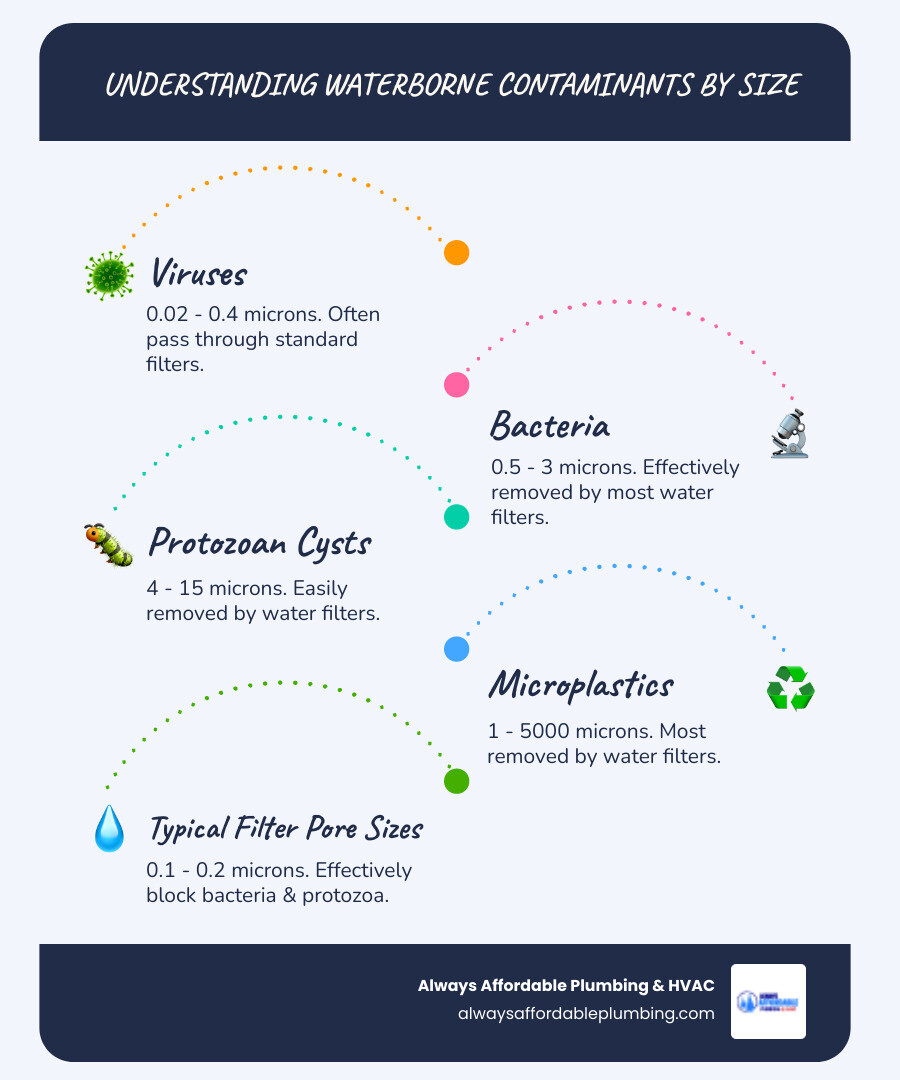
• Water Filters: These systems physically remove contaminants from water by passing it through a porous material. Most filters use hollow fiber membranes with tiny pores, typically around 0.1 to 0.2 microns. This pore size is highly effective at trapping larger pathogens like bacteria (for example, E. coli and Salmonella) and protozoa (such as Giardia and Cryptosporidium). However, viruses, which are much smaller (around 0.02-0.4 microns), can often pass through these pores. Filters are excellent for improving taste, odor, and removing sediment and microplastics. A widely used example is the LifeStraw Personal Water Filter, which uses a 0.2-micron membrane microfilter.
• Water Purifiers: Purifiers go a step further than filters. They are designed to remove or inactivate all three classes of microbiological contaminants: bacteria, protozoa, and viruses. This can be achieved through extremely fine filtration (like reverse osmosis or nanofiltration, with pore sizes as small as 0.0001 to 0.001 microns) or by using chemical or UV light treatments that destroy or neutralize pathogens. The MSR Guardian Purifier, for instance, is designed to remove viruses, bacteria, and protozoa, offering a more comprehensive level of protection.
• Chemical Treatments: These methods use chemical agents, typically iodine or chlorine-based compounds, to kill or inactivate microorganisms in water. They can be highly effective against bacteria, protozoa, and viruses when used correctly. Chemical treatments are often ultralight and have a long shelf life, making them useful for emergency kits or as a backup. However, they require a waiting period for the chemicals to work, can leave an aftertaste, and do not remove sediment or improve clarity.
The effectiveness of these methods against various contaminants is crucial. No single filter can remove all contaminants, and some filtering is not always necessary or beneficial, as beneficial substances like chlorine might be removed.
Here is a quick comparison:
• Filters — Removes Bacteria: Yes — Removes Protozoa: Yes — Removes Viruses: No — Removes Chemicals (some): No — Improves Taste/Odor: Yes
• Purifiers — Removes Bacteria: Yes — Removes Protozoa: Yes — Removes Viruses: Yes — Removes Chemicals (some): Some (depending on type) — Improves Taste/Odor: Yes
• Chemicals — Removes Bacteria: Yes — Removes Protozoa: Yes — Removes Viruses: Yes — Removes Chemicals (some): No — Improves Taste/Odor: No (can add taste)
Different filtration technologies have varying pore sizes that dictate what they can remove. Microfiltration (0.05 to 5 microns) primarily targets parasites and bacteria. Ultrafiltration (0.001 to 0.05 microns) is effective against parasites and bacteria, and moderately effective against viruses. Nanofiltration (0.008 to 0.01 microns) and Reverse Osmosis (around 0.0001 microns) offer broad protection, removing parasites, bacteria, viruses, and some chemicals. Distillation also removes a wide range of contaminants by boiling and condensing water.
When we're choosing a personal water treatment system, it helps to know whether it actually does what it claims. This is where certifications and standards come into play. Reputable organizations like the Environmental Protection Agency (EPA) and NSF International set guidelines for water treatment devices.
• EPA Standards: The U.S. EPA establishes drinking water standards that manufacturers aim to meet, particularly for purifiers that claim to remove viruses. These standards help ensure that devices are effective against a broad spectrum of waterborne pathogens.
• NSF/ANSI Standards: NSF International is an independent organization that develops public health standards for products. When a filter or purifier is NSF certified, it means it has been tested and verified to perform as claimed. For personal water treatment, key standards include:
— NSF P231: This protocol evaluates microbiological water purifiers for backcountry use, checking that they effectively reduce bacteria, viruses, and protozoa. Devices like the LifeStraw Personal Water Filter meet US EPA and NSF P231 drinking water standards for the removal of bacteria and parasites.
— NSF 53: Addresses filters that reduce specific health-related contaminants, such as Cryptosporidium, Giardia, lead, and volatile organic compounds.
— NSF 58: Applies to reverse osmosis drinking water treatment systems.
Verifying performance claims and understanding the importance of certifications is vital. Always look for these certifications on product labels and research specific products in the NSF database to see what contaminants they are certified to protect against. This helps ensure you're investing in a system that provides reliable protection for your adventures and emergencies.
Now that we have covered the basics, we can look at different types of personal water treatment systems available. Each has its strengths and ideal use cases, so the best choice depends on your specific needs.
Squeeze filters are among the most popular and versatile personal water treatment systems for hikers and backpackers. They typically consist of a lightweight filter cartridge that screws onto a soft water bottle or hydration reservoir. To use them, you fill the bottle with untreated water, screw on the filter, and squeeze the bottle to force water through the filter directly into your mouth, another bottle, or a cooking pot.
• How they work: Most squeeze filters use hollow fiber membrane technology. Water is forced through tiny pores (often 0.1 or 0.2 microns) in the fibers, trapping bacteria, protozoa, and microplastics while allowing cleaner water to pass through.
• Pros: They are very lightweight, often weighing less than 3 ounces. They offer a relatively fast flow rate, allowing you to drink directly or fill bottles quickly. Their compact size makes them easy to pack. The Sawyer Squeeze filter, for example, is designed for an impressive lifespan of up to 100,000 gallons (378,541 L), while the LifeStraw Peak Squeeze filter lasts up to 2,000 L / 500 gal. The original LifeStraw personal water filter lasts up to 1,000 gallons (4,000 L) and has an unlimited shelf life.
• Cons: Squeezing can require some effort, especially as the filter ages or if the water is very silty. They can also clog over time, reducing flow rate. Most squeeze filters are filters, not purifiers, meaning they typically do not remove viruses unless explicitly stated.
• Best for: Solo hikers, trail runners, ultralight backpackers, or as a lightweight backup for any trip.
• Maintenance: Regular backflushing (forcing clean water back through the filter) is essential to maintain flow rate and extend lifespan. Many users also blow air through the filter after use to help clear remaining water.
For group camping or basecamps, gravity filters are a game-changer. These systems use gravity to do the work for you, eliminating the need for pumping or squeezing. They typically consist of two bags: one for dirty water and one for clean water, with a filter cartridge suspended between them.
• How they work: You fill the "dirty" bag with untreated water and hang it from a tree or other liftd point. Gravity then pulls the water down through the filter and into the "clean" bag or directly into a container.
• Pros: They are ideal for larger volumes of water and group use, making them hands-free once set up. They generally have a good flow rate, especially for their volume. The Platypus GravityWorks filter is rated for up to 1,500 L / 396 gal.
• Cons: They tend to be bulkier and heavier than squeeze filters, and setting them up can take a bit longer. The flow rate can be slow if the dirty bag is not high enough or if the filter starts to clog.
• Best for: Group camping, basecamps, canoe trips, or situations where you need to process larger quantities of water for cooking, cleaning, and drinking without constant effort.
Pump filters and purifiers are robust, reliable options for a variety of backcountry scenarios, especially when dealing with murky water sources or when you need a higher level of purification.
• How they work: These devices feature a pump mechanism that you manually operate to draw water through a filter cartridge. Some models are filters (removing bacteria and protozoa), while others are purifiers (also targeting viruses).
• Pros: They are effective in challenging water conditions, including silty or turbid sources, as their design can handle more sediment. Many models offer fast flow rates. The MSR Guardian Purifier, for example, is designed to remove 99.9999% of bacteria, 99.999% of viruses, and 99.9% of protozoa, with a filter cartridge rated for over 10,000 liters.
• Cons: Pump filters are generally heavier and bulkier than squeeze or gravity filters. They require manual effort to operate, which can be tiring for large volumes. They also have more moving parts, which adds potential points of wear.
• Best for: All-purpose backcountry use, international travel to areas with questionable water quality, emergency preparedness, or situations where you anticipate very dirty water sources and need reliable purification.
Ultraviolet (UV) light purifiers offer a chemical-free way to inactivate microorganisms in water, making them a popular choice for travelers and those who dislike chemical aftertastes.
• How they work: These devices use a UV-C light bulb to emit germicidal radiation into water. This radiation disrupts the DNA of bacteria, viruses, and protozoa, rendering them unable to reproduce and cause illness.
• Pros: UV purifiers can be highly effective against all three classes of pathogens, including viruses. They are fast, typically treating water in under two minutes, and leave no chemical taste or odor. They are also relatively lightweight.
• Cons: They require batteries to operate, which means you need to carry spares or have a charging method. UV light only works on clear water; sediment can shield microorganisms from the light, so pre-filtering murky water is essential. They also do not remove sediment or improve clarity.
• Best for: International travel where tap water quality is uncertain, emergency kits, or as a lightweight, taste-free purification method for clear water sources.
Chemical treatments are an ultralight and often very compact option for water treatment, serving as excellent backups or primary systems for those prioritizing minimal weight.
• How they work: These treatments use active ingredients like chlorine dioxide (drops) or iodine (tablets, less common now) to oxidize and inactivate bacteria, viruses, and protozoa.
• Pros: They are extremely lightweight and compact, taking up almost no space in a pack. They are effective against all major pathogens, including viruses, when used as directed. They have a long shelf life, making them a practical choice for emergency kits.
• Cons: Chemical treatments require a waiting period, typically 15 minutes to 4 hours, depending on the chemical and water temperature, for the treatment to work. They can leave a noticeable aftertaste, and some people are sensitive to the chemicals. They do not remove sediment or improve clarity. It is important to understand how much chlorine is appropriate for drinking water. Find out if your drinking water should have more chlorine than a pool.
• Best for: Ultralight backpacking, emergency preparedness kits, or as a reliable backup to other filtration systems.
Choosing the right personal water treatment system can feel overwhelming, but by considering a few key factors, you can narrow down the options and find the best fit for your adventures and emergency plans.
The ideal system depends heavily on where you're going and what you'll be doing.
• Intended Use: Are you going on a short day hike, a multi-day backpacking trip, group camping, or international travel?
— Ultralight Backpacking: Squeeze filters (like the Sawyer Squeeze or LifeStraw Peak Squeeze) or chemical tablets are excellent for their minimal weight and packability.
— Group Camping: Gravity filters (such as the Platypus GravityWorks) work well here, offering high volume with less effort.
— International Travel: UV purifiers or pump purifiers (like the MSR Guardian or Grayl GeoPress) are often preferred due to their effectiveness against viruses and ease of use with varied tap water sources. The Grayl GeoPress is designed to remove 99.9999% of viruses, 99.9999% of bacteria, and 99.99% of protozoa.
— Emergency Preparedness: Durability, long shelf life, and broad contaminant removal are key. Chemical tablets, robust pump filters, or simple straw filters can all play a role in an emergency kit.
• Water Source Quality: Will you be drawing water from clear mountain streams, silty rivers, or potentially contaminated taps?
— Clear Water: Squeeze filters, gravity filters, UV purifiers, and chemical treatments can all work well.
— Murky/Silty Water: Pump filters (like the MSR Guardian) are designed to handle more particulate matter. Pre-filtering with a bandana or cloth is always a good practice, especially before using UV purifiers or chemical treatments.
— High Risk (for example, areas with agricultural runoff or international taps): A purifier that targets viruses is essential.
• Group Size: How many people will be relying on the system?
— Solo: Squeeze filters, personal straw filters, or a single bottle press purifier are ideal.
— Small Group (2-4 people): A gravity filter or a pump filter can efficiently provide enough water.
— Large Group/Basecamp: A large-capacity gravity filter or multiple pump filters will be most practical.
Beyond the type of system, several features contribute to a good user experience and reliable performance.
• Weight and Packability: For ultralight adventures, every ounce matters. Consider the packed dimensions and weight.
• Flow Rate: How quickly can the system deliver clean water? This is especially important for staying hydrated on the go or for cooking.
• Filter Lifespan: How many liters or gallons can the filter process before needing replacement? The Sawyer Squeeze filter is rated for up to 100,000 gallons, while the LifeStraw membrane microfilter lasts up to 1,000 gallons (4,000 L). The MSR Guardian Purifier's filter cartridge is designed for over 10,000 liters.
• Field Maintainability: Can you easily clean or backflush the filter in the field to restore flow? This is a major advantage, especially for longer trips.
• Ease of Use: Some systems are simpler to operate than others. Consider how much effort you're willing to put in, especially when tired or in cold conditions.
While this guide focuses on personal water treatment systems for adventures, the principles of clean water extend to your home in Sacramento and the surrounding areas. Municipal water undergoes treatment, but home water quality can still be affected by aging pipes, local contaminants, or the desire for even purer, better-tasting water.
• Home Water Quality: Even if your water comes from a municipal system, you can still benefit from home water treatment. Learn more about home water quality and filtration to understand what might be present in your tap.
• Point-of-Use Systems: These systems treat water at a specific tap, like an under-sink filter for drinking water or a shower filter. Reverse osmosis systems, for example, can remove a broad range of contaminants, including lead, copper, and chlorine, providing very clean water for drinking and cooking.
• Whole-House Systems: For comprehensive treatment, a whole-house filtration system treats all water entering your home. This can address issues like hard water, chlorine, and sediment, protecting appliances and improving water quality throughout the entire house.
Whether on the trail or at home, understanding your water and having the right treatment system in place supports peace of mind and healthy hydration. When it comes to home water solutions, you can always reach out for professional water filtration system installation.
Investing in personal water treatment systems is not just about immediate safety; it is also about long-term value and environmental responsibility. Understanding how long systems last, how to care for them, and their ecological impact helps you make informed choices.
The lifespan of a personal water treatment system is typically measured in gallons or liters of water it can process before the filter media wears out or becomes too clogged to function effectively.
• Filter Capacity: This varies by product. As noted earlier, the LifeStraw membrane microfilter lasts up to 1,000 gallons (4,000 L), enough for an individual for several years in many use scenarios. The Sawyer Squeeze filter is rated for up to 100,000 gallons, while the MSR Guardian Purifier cartridge is rated for over 10,000 liters.
• End-of-Life Indicators: Most filters give a clear signal. For mechanical filters, water will simply stop flowing, or the flow rate will become very slow. For chemical treatments, it is about the expiration date. UV purifiers will indicate when their bulb needs replacing.
• Proper Storage: To maximize lifespan, always store filters dry and clean. After each trip, backflush or clean your filter thoroughly according to manufacturer instructions.
• Avoiding Freezing: Freezing can damage the delicate membranes in hollow fiber filters, potentially rendering them unusable. If you're out in freezing temperatures, keep your filter close to your body to reduce the chance of ice crystal formation.
• Backwashing: This maintenance step is crucial for many filters. By forcing clean water in reverse through the filter, you can dislodge trapped particles and restore flow rate, significantly extending the filter's life.
One of the often-overlooked benefits of using personal water treatment systems is their positive environmental impact.
• Reducing Plastic Waste: Every time you fill your reusable bottle from a stream or tap using a filter, you avoid another single-use plastic bottle that might end up in a landfill or pollute natural spaces. Learn more about why you should stop drinking bottled water.
• Long-Term Value: While there is an initial investment, the effectiveness of these systems over their lifespan means you can process thousands of liters of water for a fraction of a cent per liter compared with repeatedly purchasing bottled water.
• Sustainability: Choosing a durable, maintainable water treatment system aligns with sustainable practices. When a filter reaches its end of life, disposing of it properly (often through manufacturer recycling programs where available or as general waste, depending on the material) is the final step in managing your environmental impact.
By embracing personal water treatment systems, you are not just supporting your health; you are also making a conscious choice to reduce your environmental footprint and support a more sustainable approach to everyday hydration.
Choosing the right personal water treatment system is an important step in supporting your safety and comfort, whether you're exploring the wilderness of California or navigating a new city abroad. This guide has explored the differences between filters, purifiers, and chemical treatments, along with the fact that each offers a distinct level of protection against the invisible threats in untreated water.
From the lightweight efficiency of squeeze filters to the robust capabilities of pump purifiers and the hands-free convenience of gravity systems, there is a solution that fits almost every adventure and group size. The best system is not a one-size-fits-all answer; it is situational. It depends on your intended use, the quality of your water source, and the specific contaminants you need to guard against.
Remember the value of certifications like NSF P231 to verify performance and the importance of regular maintenance to extend the life of your chosen system. Beyond personal safety, using these systems is also a practical way to reduce plastic waste and contribute to a more sustainable planet.
Access to clean water is fundamental to health and well-being. By equipping yourself with the right knowledge and tools, you can explore, travel, and prepare for emergencies knowing that safe drinking water is always within reach. For comprehensive home water solutions in the Sacramento area, Always Affordable Plumbing & HVAC can help with a professional water filtration system installation.
See what our satisfied customers have to say about their experience with Always Affordable
Plumbing & HVAC.

"Chappy was very skilled in his knowledge of my HVAC unit. I greatly appreciate the quick response and experienced tech. The whole endeavor was made less stressful by his humor and honest conversation. I find comfort in knowing I now have a shop i trust for the next time."
"Tony, James, Ronnie did an amazing job setting up our new AC! They were quick, efficient, considerate, and polite! We appreciate them scheduling us in on such short notice. Definitely recommend this company!"
"Prompt, professional service with kindness and care. They came out to address both plumbing and AC issues. I received a courtesy call before they arrived. All issues were resolved the same day with integrity and respect. Thankful for businesses like this. Absolutely recommend to those that I love."
"Excellent service! Jason came out promptly and in addition to doing my outside faucet he also put in new irrigation equipment! All done perfectly! Jason was lovely"
"Honest with the assessment; friendly and good manners. No high pressure sales. Just good to honest "tell it like you see it" Thought my kitchen disposer needed an overhaul. But Jason, there Plumber gave me an honest lesson on what was really happening. Saved me hundreds, if I went the route of replacing. Thank you!"
"Absolutely 5 stars. If you are looking for affordable ,professional and kind. Chappy was excellent and very knowledgeable . I called in the morning because my air conditioner stopped working he was here within hours and fixed my air with a smile. I highly recommend Chappy and Always Affordable plumbing and Hvac."
"Scott and James were great. They got there quickly and diagnosed the problem with my A/C.They did a very thorough job testing everything. Sent me pictures and called to keep me informed. Got it done the next day and everything is working fine. Be glad when I get home so I can enjoy my new system. Thanks guys for a great job."
"Chappy was very helpful. He knew our issue right away, cleaned our coils. He also came on the same day we called and got our AC blowing cold air again."
"After some timing ’curfuffles’ the Tech Jason arrived and not only completed a speedy install on my toilet, he was personable & professional. Because of the timing issues Jason was attentive and showed up with everything needed! No extra store runs 😊 I was very comfortable with having this Tech in my Daughter’s home. We will definitely use this Service again."