AC Compressor Repair vs. Heat Pump Replacement: Evaluating Your Options
When a 10-year-old AC compressor fails, making the right choice matters. See clear options comparisons for homeowners weighing repair vs replacement today.



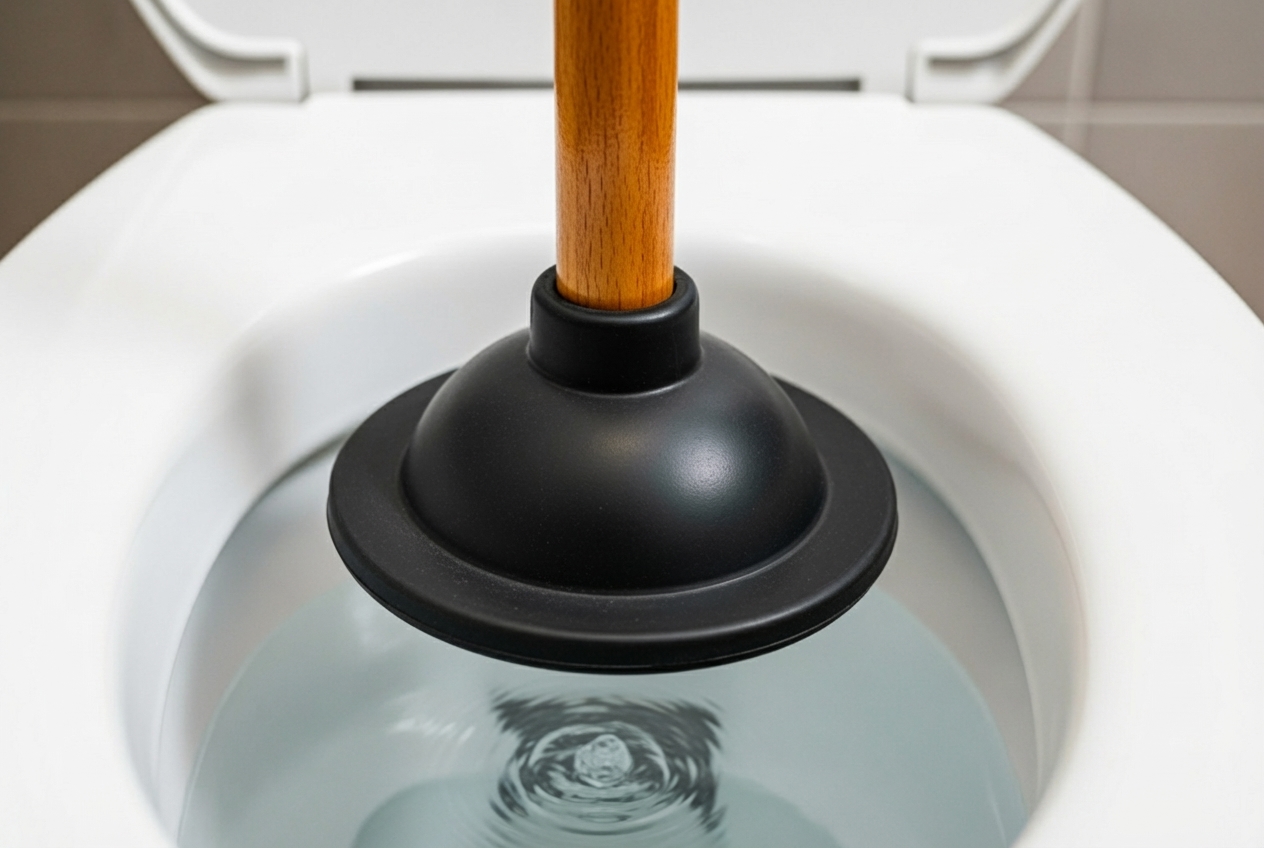
A plunger for clogged toilet issues is the most effective first tool you should reach for when your toilet backs up. Most homeowners will face a clogged toilet at some point, and knowing how to use a plunger correctly can save you time, money, and the embarrassment of an overflowing bathroom. According to professional plumbers, a properly used plunger can clear 95% to 99% of toilet clogs without the need for harsh chemicals or expensive service calls. The key is understanding which type of plunger to use and mastering the simple technique that creates enough pressure and suction to break through the blockage.
Quick Answer: Using a Plunger for a Clogged Toilet
1. Use a flange plunger (not a cup plunger) - it has an extended rubber flap designed to fit toilet drains
2. Ensure the water level covers the plunger cup - add or remove water as needed
3. Create a tight seal over the drain opening
4. Plunge firmly for 20-30 seconds with push-and-pull motions
5. Check drainage before flushing to confirm the clog is cleared
If you're dealing with frequent clogs or plumbing concerns in Sacramento, learn more about maintaining your home's plumbing system or contact Always Affordable Plumbing & HVAC for professional help.
A plunger works by using the incompressibility of water to transfer force directly to the clog. When you push down, you create pressure that forces the blockage forward. When you pull up, you create suction that pulls debris back toward the bowl. This push-pull action, repeated vigorously while maintaining a seal, breaks apart most common toilet clogs caused by excess toilet paper or waste. The entire process usually takes less than a minute when done correctly, making it far faster and safer than chemical drain cleaners or waiting for a plumber.
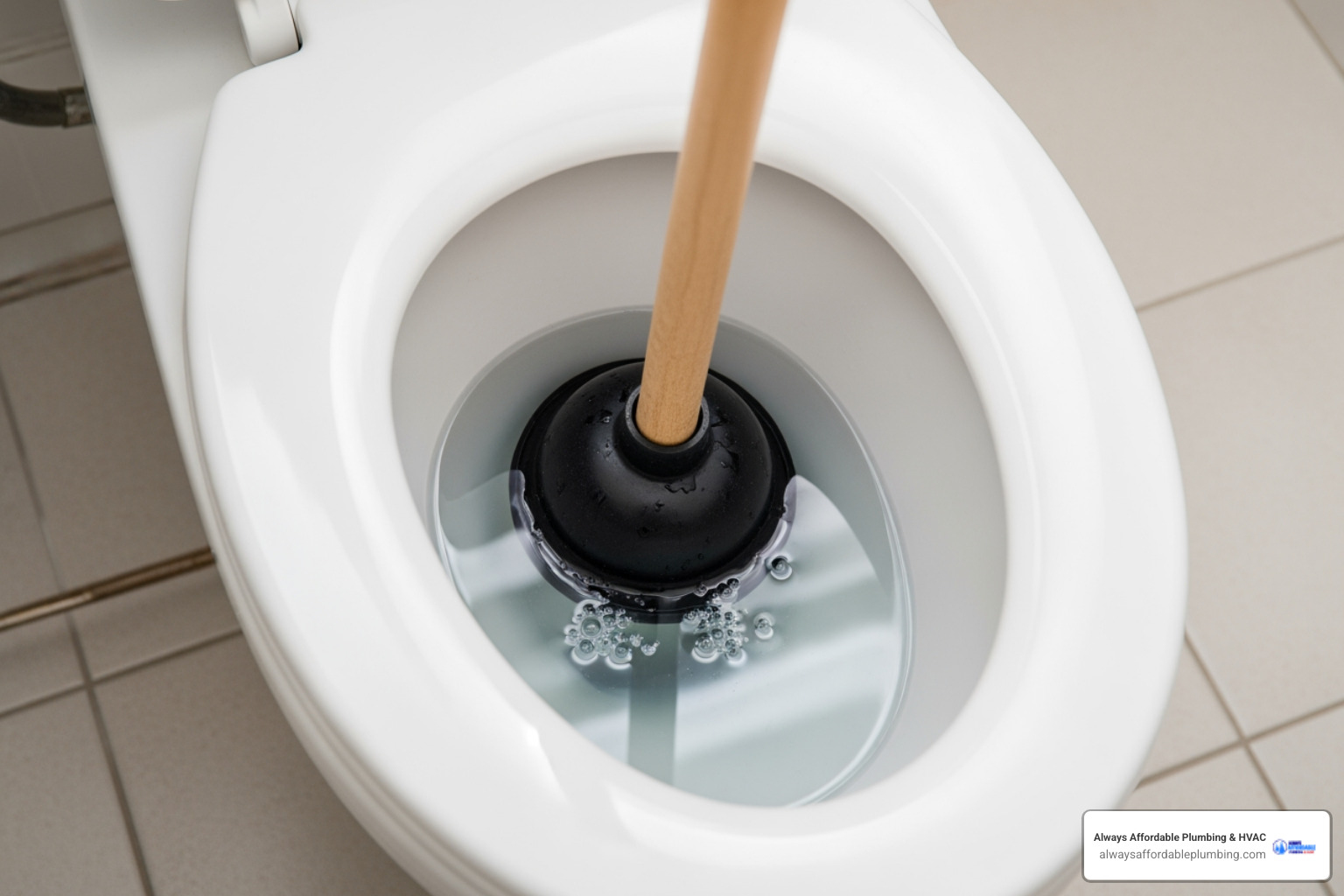
When it comes to tackling a stubborn clog, not all plungers are created equal. In fact, using the wrong type of plunger can be as ineffective as using no plunger at all. The design of a plunger is crucial to its ability to create the necessary seal and force to dislodge blockages. We want to make sure you're equipped with the best tool for the job, especially when it comes to your toilet.
Let's explore the common types of plungers you might encounter:
• Cup Plunger (or Standard Plunger): This is the classic plunger with a flat rubber cup. It's designed for flat surfaces, making it ideal for sink, shower, or bathtub drains. The flat rim creates a seal against a flat surface, but it struggles to form a tight seal around the curved opening of a toilet bowl. If you've ever tried to unclog a toilet with one of these and found it frustratingly ineffective, now you know why!
• Flange Plunger (or Toilet Plunger): This is your go-to hero for toilet clogs. It features a bell-shaped rubber cup with an extended, softer rubber flap (the "flange") that folds out from the main cup. This flange is specifically designed to fit snugly into the unique, curved drain opening at the bottom of a toilet bowl, creating an airtight seal that is essential for effective plunging.
• Accordion Plunger (or Bellows Plunger): These plungers are made of hard plastic and have a series of ridged folds that resemble an accordion. They are known for generating a powerful thrust, making them very effective for toilet clogs. However, they can be a bit more challenging to use, as creating and maintaining a seal can be trickier than with a flange plunger, and they aren't suitable for other drain types.
To give you a clearer picture, here's a quick comparison:
• Flange Plunger — Use Case: Toilet drains (fits the curve perfectly) — Effectiveness (for Toilets): Excellent — Ease of Use: Easy (once you understand the technique)
• Cup Plunger — Use Case: Sinks, bathtubs, shower drains (flat surfaces) — Effectiveness (for Toilets): Poor — Ease of Use: Easy (for appropriate drains)
• Accordion Plunger — Use Case: Toilet drains (can be very powerful) — Effectiveness (for Toilets): Excellent — Ease of Use: Moderate (can be hard to get a good seal)
The design of the flange plunger for clogged toilet situations is no accident. Its unique shape is specifically engineered to interact with the geometry of your toilet bowl's drain. Unlike the flat bottom of a sink or bathtub drain, a toilet's drain opening is curved and recessed. The extended rubber flap, or flange, on this type of plunger fits perfectly into this opening. This creates a secure, airtight seal that allows you to effectively direct the hydraulic force and suction generated by your plunging efforts directly to the clog.
Without this tight seal, much of your effort would be wasted as air and water escape around the edges of a standard cup plunger. This is why a well-performed plunge creates suction through the tight seal between plunger and drain, minimizing mess and maximizing effectiveness. When you're dealing with a toilet clog, you want every bit of power to go towards dislodging that blockage, and the flange plunger ensures just that.
Before you dive into the heroic task of unclogging your toilet, it's wise to gather a few essential tools and materials. Preparation is key to a successful (and less messy) operation!
Here's our recommended checklist:
• Flange Plunger: As we've discussed, this is non-negotiable for toilet clogs. You can find a good selection at local hardware stores like The Home Depot, which offer various options for toilet plungers.
• Rubber Gloves: Trust us on this one. Clogged toilets are not the cleanest affair, and a good pair of sturdy rubber gloves will protect your hands from contaminated water.
• Old Towels or Newspaper: Lay these down around the base of the toilet. They'll protect your floor from any splashes or overflows, which, let's be honest, are always a possibility when plunging.
• A Bucket: This is useful for two reasons: If your toilet bowl is dangerously full, you can use the bucket to bail out some water. It also comes in handy for holding your plunger after use, especially if you need to transport it for cleaning.
Having these items ready will make the process much smoother and less stressful.
Alright, tools in hand, it's time to become the plumbing hero your home deserves! Using a plunger for clogged toilet issues isn't rocket science, but there's a technique to it that can significantly increase your chances of success. Our goal is to create maximum force and suction to dislodge that pesky clog.
Before you even touch the plunger to the water, a little setup goes a long way.
• Lay Down Towels: As mentioned, place old towels or newspaper on the floor around the toilet. This acts as a splash guard and makes cleanup easier.
• Put on Gloves: Don't forget your rubber gloves! Hygiene first, always.
• Turn Off Water Supply: This is a crucial step to prevent overflow. Locate the small shut-off valve, usually on the wall behind or to the side of the toilet, and turn it clockwise until the water stops. This ensures that if your plunging efforts don't immediately clear the clog, the bowl won't refill and overflow.
• Avoid a Second Flush: If the toilet bowl is full, resist the urge to flush again. This will only add more water and increase the risk of an overflow.
• Ensure Bowl is Half-Full: The effectiveness of your plunging depends on having the right amount of water in the bowl.
— If the water level is too high and near overflowing: Use a small cup or disposable container to carefully bail water out into your bucket until the bowl is about halfway full. This prevents splashing and gives you room to work.
— If the water level is too low and doesn't cover the plunger cup: Add water from a nearby sink or bathtub (not the toilet tank) until the plunger's rubber cup is fully submerged. Water is incompressible, so submerging the plunger allows it to move water, not just air, directly against the clog, making your efforts far more powerful.
Now for the main event! The key here is creating and maintaining a tight seal.
• Insert Plunger at an Angle: Gently place your flange plunger for clogged toilet use into the toilet bowl at an angle. This helps to fold the flange correctly into the drain opening.
• Expel Air from the Cup: Before you start plunging vigorously, slowly push the plunger down once. This initial, gentle push expels any air trapped in the plunger cup and allows the flange to settle into the drain. If you start with a hard push, you'll just splash dirty water everywhere – trust us, we've seen it!
• Fit Flange into the Drain: Once the air is expelled, maneuver the plunger to ensure the flange forms a complete, airtight seal over the toilet's drain opening. This is the most critical part. You should feel a slight suction, indicating a good seal.
• Gentle First Push, Then Vigorous Plunging Motion: Start with a few gentle pushes and pulls. Once you're confident in your seal, begin to plunge vigorously. Use your body weight, pushing down and pulling up with strong, consistent force. The goal is to create a powerful push-pull action against the clog.
• Push and Pull for 20-30 Seconds: Continue plunging for about 20 to 30 seconds, or even up to a full minute, without breaking the seal. You might feel the clog begin to loosen or hear gurgling sounds as it shifts.
• Maintain the Seal: Throughout the process, ensure you maintain that tight seal. Breaking it will release the pressure and suction, requiring you to start over.
After about 20-30 seconds, pull the plunger away from the drain quickly. If the water level drops and drains away, congratulations, you've won!
You've done the hard part, now it's time for the payoff and a bit of tidying up.
• Remove Plunger: Carefully remove the plunger from the toilet bowl.
• Check for Drainage: Observe if the water level in the bowl drops and drains normally. If it does, great! If not, you might need to repeat the plunging process or consider alternative methods.
• Flush to Test: If the water has drained, turn the water supply back on (counter-clockwise). Then, flush the toilet. Watch carefully to ensure the water swirls and drains properly without backing up. If it does, your clog is cleared! If it's still slow or struggling, it might be a partial clog that needs more attention.
• Disinfect Toilet and Plunger: Don't forget this important step! Clean the toilet bowl with your usual toilet cleaner and disinfect your plunger. You can rinse the plunger in the toilet bowl by plunging clean water a few times, then spray it with a disinfectant cleaner and let it air dry in your bucket before storing it away. This keeps things hygienic for the next time (which hopefully isn't too soon!).
Sometimes, even with the perfect technique and the right plunger for clogged toilet issues, that stubborn blockage just won't budge. Don't despair! This doesn't mean you're doomed to a life of toilet troubles. It simply means it's time to escalate your efforts or consider when it's best to call in the professionals.
When your trusty plunger has given its all and the toilet remains clogged, we have a few more tricks up our sleeves you can try before reaching for the phone.
• Hot Water and Dish Soap: This method can be surprisingly effective for clogs caused by organic matter or excess toilet paper.
1. First, remove enough water from the toilet bowl so it's only about half-full.
2. Pour about half a cup of liquid dish soap into the toilet. The soap acts as a lubricant, helping the clog slide down.
3. Follow with a gallon of hot (not boiling!) water. Boiling water can crack your porcelain toilet bowl, so stick to very hot tap water.
4. Let this mixture sit for 10 to 15 minutes, or even up to an hour. The hot water helps break down the clog, and the soap lubricates it.
5. After waiting, try plunging again.
• Baking Soda and Vinegar: This classic science experiment can also work wonders on clogs.
1. Again, adjust the water level to about half-full.
2. Pour one cup of baking soda into the toilet.
3. Slowly pour two cups of white vinegar after it. The mixture will fizz and bubble.
4. Let this concoction work its magic for at least 30 minutes, or even overnight if the clog is particularly stubborn.
5. Follow up with hot water (again, not boiling) and then try plunging.
• Toilet Auger (Closet Snake): If the plunger and home remedies fail, a toilet auger is your next best friend. This specialized tool is designed to reach deeper into the trap and drainpipe without scratching the porcelain. It typically has a crank handle and a flexible cable with a corkscrew tip, often protected by a rubber sleeve.
1. Feed the auger cable into the toilet drain until you feel resistance.
2. Crank the handle to rotate the cable, allowing the tip to bore through or hook onto the clog.
3. Once you've either broken through or hooked the clog, carefully pull the auger back out, hopefully bringing the blockage with it.
4. Flush the toilet to check if the clog is cleared.
Knowing what not to do is just as important as knowing what to do when faced with a clogged toilet.
• Using Chemical Drain Cleaners: We cannot stress this enough: do not use caustic drain cleaners like Drano in your toilet! They are dangerous, can damage your pipes, and are often ineffective on solid toilet clogs. Even the Drano website itself recommends plunging first for toilet clogs. These chemicals can also be hazardous if they sit in standing water and then splash during subsequent plunging attempts. If you're looking for a chemical solution, use products like Drano Max Buildup Remover for prevention, not for active clogs.
• Plunging Too Aggressively from the Start: While vigorous plunging is needed, an initial uncontrolled plunge can send dirty water flying, creating an unnecessary mess. Always start gently to establish a seal and expel air.
• Not Using Enough Water: As discussed, water is key. Plunging air is largely ineffective. Ensure your plunger cup is fully submerged to create the necessary hydraulic force.
• Using the Wrong Type of Plunger: Trying to clear a toilet clog with a flat-bottomed cup plunger is like trying to fit a square peg in a round hole – it just won't work effectively. Always opt for a flange plunger for clogged toilet issues.
While a plunger for clogged toilet problems can handle most blockages, there are times when it's best to wave the white flag and call in the experts. Recognizing these signs can save you from further damage, frustration, and a potentially bigger mess.
Here are the key indicators that it's time to contact a professional plumber:
• Recurring Clogs: If your toilet clogs frequently, even after successful plunging, it's a sign of an underlying issue that a plunger can't fix. This could be anything from a faulty toilet mechanism to a deeper problem in your drain lines.
• Multiple Drains Affected: Is your toilet clogged, but you're also noticing slow drainage in your sink, shower, or bathtub? This often points to a clog in the main sewer line, which affects all fixtures connected to it. A plunger won't reach that far!
• Slow Draining: Even if the toilet isn't completely blocked, if it consistently drains slowly, it suggests a partial clog or a systemic issue that's restricting flow. While plunging might offer temporary relief, a professional can properly diagnose and clear the obstruction for a permanent fix.
• Strange Gurgling Sounds: Hearing gurgling noises from other drains (like your shower or sink) when you flush the toilet, or from the toilet itself when other fixtures are used, can indicate a problem with your plumbing vent system or a significant clog downstream.
• Suspected Foreign Object: If you know (or suspect) that a non-flushable item like a child's toy, a cell phone, or a large amount of "flushable" wipes has been flushed, a plunger is unlikely to help and might even push the object further into the pipes. A plumber has specialized tools like drain cameras to locate and remove such obstructions.
For persistent issues or when you're simply unsure, it's always better to call a professional. Our team at Always Affordable Plumbing & HVAC serves Sacramento, Elk Grove, Roseville, Citrus Heights, Davis, Carmichael, Folsom, Rancho Cordova, Rocklin, North Highlands, Orangevale, Fair Oaks, Antelope, Lincoln, Woodland, West Sacramento, Galt, Granite Bay, Rio Linda, Elverta, Auburn, Loomis, Penryn, Wilton, Herald, Newcastle, Winters, Mather, Yolo, McClellan, Represa, and Sloughhouse. We're equipped with the expertise and tools to tackle any drain cleaning or plumbing repair challenge, ensuring your plumbing system runs smoothly.
Contact Always Affordable Plumbing & HVAC for expert drain cleaning and plumbing services.
We understand that dealing with a clogged toilet can bring up a lot of questions. Here are some of the most common ones we hear, along with our expert answers.
Our strong recommendation is no, you should not use chemical drain cleaners in your toilet. There are several compelling reasons for this:
• Chemical Dangers: These products contain harsh, caustic chemicals that can cause severe burns to your skin and eyes if they splash. They can also release toxic fumes that are dangerous to inhale. If these chemicals sit in standing toilet water and you later attempt to plunge, you risk them splashing back on you.
• Ineffectiveness on Solid Clogs: Toilet clogs are often caused by solid objects or large amounts of paper that chemical cleaners struggle to dissolve. They are designed more for grease and hair clogs in sinks, not for the types of blockages typically found in toilets. You'll likely just end up with a toxic pool of water that still won't drain.
• Potential Pipe Damage: Over time, these corrosive chemicals can eat away at your pipes, especially older ones, leading to leaks and more extensive, costly repairs down the line. We often see pipes damaged by repeated use of these products.
Instead of a harsh chemical cleaner, stick to your trusty plunger for clogged toilet issues, or try the alternative DIY methods we discussed. However, it's worth noting that products like Drano Max Buildup Remover are designed for preventative maintenance to keep drains clear, not for clearing existing, severe clogs.
Prevention is always better than cure, especially when it comes to plumbing! Here are our top tips for keeping your toilet flowing freely:
• Only Flush Human Waste and Toilet Paper: This is the golden rule. Your toilet is designed for these two things and nothing else.
• Avoid Flushing "Flushable" Wipes: Despite what the packaging says, most "flushable" wipes do not break down in water like toilet paper. They are a major cause of clogs, especially when they accumulate over time. Dispose of them in the trash.
• Keep the Toilet Lid Closed: This simple habit can prevent accidental flushing of small objects like toys, dental floss, cotton swabs, or even your phone.
• Be Mindful of Excessive Toilet Paper: While toilet paper is designed to dissolve, using excessive amounts in a single flush can still lead to clogs, especially in older or low-flow toilets. Encourage lighter flushes or multiple flushes for larger needs.
• Regular Maintenance: Occasionally, pour a bucket of hot (not boiling) water down the toilet to help clear any minor buildup that might be starting.
Having the correct water level in the toilet bowl is crucial for effective plunging.
• If the water level is too high (near overflowing): Don't panic! First, make sure the water supply valve is turned off. Then, carefully use a small cup or a disposable container to bail out some of the excess water into a bucket. You want the water level to be about halfway full in the bowl, ensuring enough room for the plunger and preventing splashes.
• If the water level is too low (not covering the plunger head): Again, ensure the water supply is off. Then, simply add water to the toilet bowl from a nearby sink or bathtub faucet until the rubber cup of your plunger for clogged toilet is fully submerged. Water is incompressible, so plunging water (not air) is what generates the necessary force to clear the clog.
While the trusty plunger for clogged toilet issues is an indispensable tool for every homeowner, it's important to know your limits. Most minor clogs in your Sacramento, Elk Grove, Roseville, Citrus Heights, Davis, Carmichael, Folsom, Rancho Cordova, Rocklin, North Highlands, Orangevale, Fair Oaks, Antelope, Lincoln, Woodland, West Sacramento, Galt, Granite Bay, Rio Linda, Elverta, Auburn, Loomis, Penryn, Wilton, Herald, Newcastle, Winters, Mather, Yolo, McClellan, Represa, and Sloughhouse homes can be resolved with a properly used flange plunger. It's a quick, affordable, and highly effective first line of defense that can prevent a small problem from becoming a major headache.
However, for persistent, recurring, or complex clogs, or when you notice other troubling signs like slow drainage in multiple fixtures or strange gurgling sounds, it's time to call in the professionals. Attempting to force a deep or stubborn clog can sometimes worsen the problem, potentially damaging your pipes or even the toilet itself.
At Always Affordable Plumbing & HVAC, we're your local experts for all things plumbing. We pride ourselves on offering quality, transparent, and affordable full-service solutions, including comprehensive drain cleaning services and plumbing repairs. Our team is ready to tackle any plumbing challenge, ensuring your home's systems are running smoothly and efficiently. Don't let a stubborn clog disrupt your day – when the plunger isn't enough, we're here to help.
Contact us for expert plumbing services or explore our membership options for discounts and priority service.
See what our satisfied customers have to say about their experience with Always Affordable
Plumbing & HVAC.

"Chappy was very skilled in his knowledge of my HVAC unit. I greatly appreciate the quick response and experienced tech. The whole endeavor was made less stressful by his humor and honest conversation. I find comfort in knowing I now have a shop i trust for the next time."
"Tony, James, Ronnie did an amazing job setting up our new AC! They were quick, efficient, considerate, and polite! We appreciate them scheduling us in on such short notice. Definitely recommend this company!"
"Prompt, professional service with kindness and care. They came out to address both plumbing and AC issues. I received a courtesy call before they arrived. All issues were resolved the same day with integrity and respect. Thankful for businesses like this. Absolutely recommend to those that I love."
"Excellent service! Jason came out promptly and in addition to doing my outside faucet he also put in new irrigation equipment! All done perfectly! Jason was lovely"
"Honest with the assessment; friendly and good manners. No high pressure sales. Just good to honest "tell it like you see it" Thought my kitchen disposer needed an overhaul. But Jason, there Plumber gave me an honest lesson on what was really happening. Saved me hundreds, if I went the route of replacing. Thank you!"
"Absolutely 5 stars. If you are looking for affordable ,professional and kind. Chappy was excellent and very knowledgeable . I called in the morning because my air conditioner stopped working he was here within hours and fixed my air with a smile. I highly recommend Chappy and Always Affordable plumbing and Hvac."
"Scott and James were great. They got there quickly and diagnosed the problem with my A/C.They did a very thorough job testing everything. Sent me pictures and called to keep me informed. Got it done the next day and everything is working fine. Be glad when I get home so I can enjoy my new system. Thanks guys for a great job."
"Chappy was very helpful. He knew our issue right away, cleaned our coils. He also came on the same day we called and got our AC blowing cold air again."
"After some timing ’curfuffles’ the Tech Jason arrived and not only completed a speedy install on my toilet, he was personable & professional. Because of the timing issues Jason was attentive and showed up with everything needed! No extra store runs 😊 I was very comfortable with having this Tech in my Daughter’s home. We will definitely use this Service again."