
Why Your AC Runs Constantly: Understanding Heat Transfer Degradation and Cooling Cycles
Why is your AC running constantly? We explain heat transfer degradation. Use our local service expertise and area tips to decide when to call a pro on this.




The best way to clean drain pipes depends on what's causing the blockage. For minor clogs, start with boiling water or a baking soda and vinegar mixture. For tougher blockages, use a plunger or drain snake. Avoid chemical drain cleaners—they damage pipes and harm the environment.
Quick Reference: Best Drain Cleaning Methods
MethodBest ForEffectivenessBoiling WaterGrease, soap buildupMinor clogsBaking Soda + VinegarOrganic matter, odorsLight to moderatePlungerMost sink/tub clogs90% of clogsDrain Snake (Auger)Deep blockages, hairModerate to severeProfessional ServiceMain line, recurring issuesAll clogs
If you've ever stood in ankle-deep shower water or watched your kitchen sink refuse to drain, you know how frustrating clogged pipes can be. In Sacramento, where older homes meet modern living, drain issues are among the most common plumbing problems homeowners face. Hair, grease, soap scum, food waste, and even small objects regularly conspire to block your pipes and disrupt your daily routine.
Most clogs announce themselves with telltale signs: water that drains slower than usual, unpleasant odors wafting from your sink, or strange gurgling sounds when you run the tap. The good news? Many of these blockages can be cleared without harsh chemicals or expensive service calls—if you know the right approach.
For comprehensive help with stubborn blockages, explore our guide to hydro jetting vs snaking vs chemical drain cleaners, or contact Always Affordable Plumbing & HVAC for professional drain cleaning in Sacramento and surrounding areas.
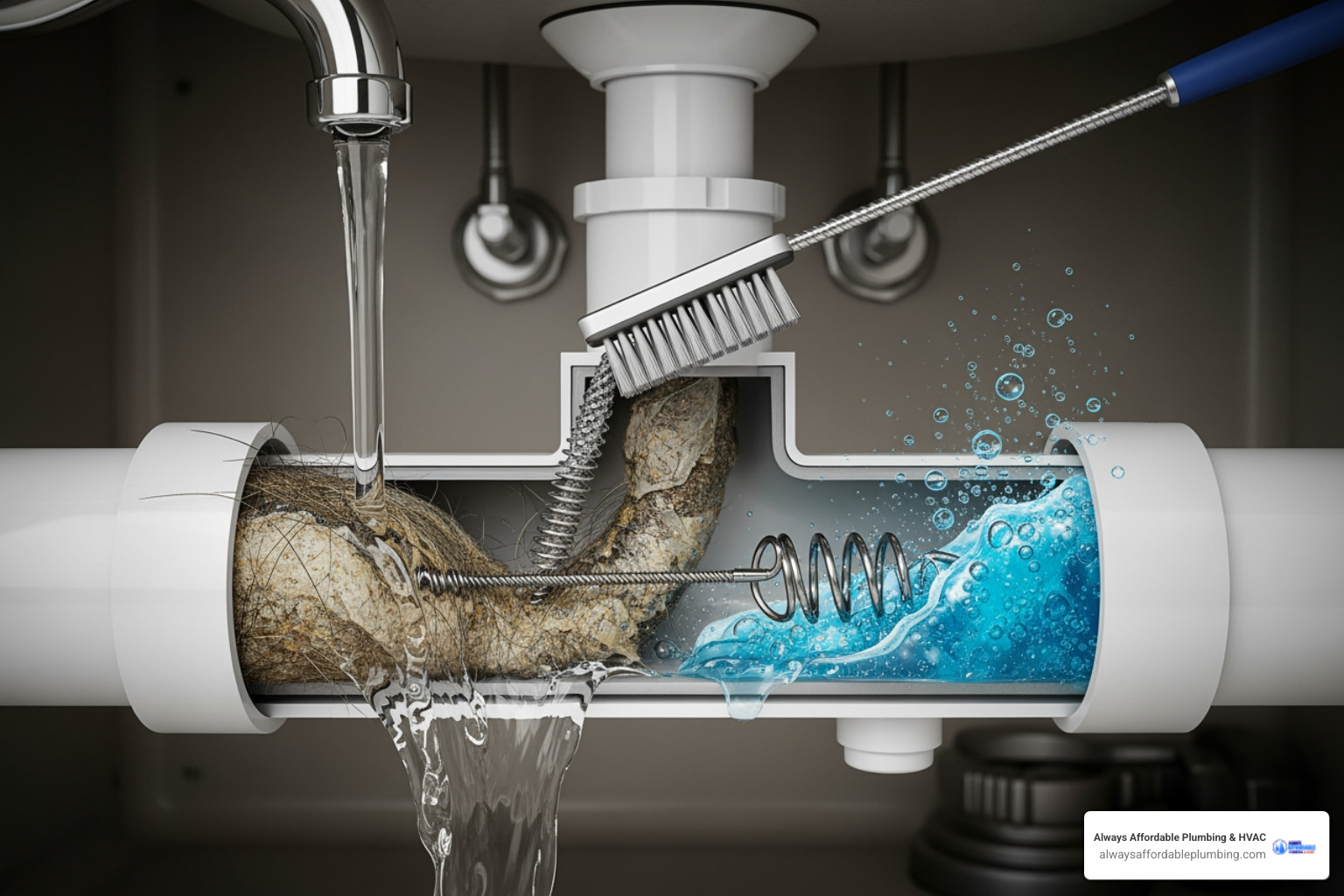
When a drain slows down or stops completely, it's tempting to reach for a bottle of chemical drain cleaner. These products promise quick fixes, but as plumbing experts, we strongly advise against their use. The dangers associated with chemical drain cleaners far outweigh any perceived convenience, and they can often lead to more trouble than they solve.
First and foremost, chemical drain cleaners are aggressive. They contain harsh chemicals like sodium hydroxide (lye) or sulfuric acid that generate heat to dissolve clogs. While this might sound effective, this heat can melt PVC pipes, which are common in many homes, or corrode metal pipes over time. Professional plumbers universally advise against using chemical drain cleaners because they can cause significant damage, not just to the pipes themselves, but also to your garbage disposal, septic system, or sewer line.
Beyond pipe damage, these chemicals pose serious health risks. They emit toxic fumes that can be dangerous if inhaled, and if they splash back, they can cause severe skin burns or eye injuries. If you've used a chemical cleaner and it hasn't worked, plunging afterward can be particularly hazardous, as it could cause the corrosive liquid to splash onto you. Furthermore, if these chemicals mix with other substances in your pipes, they can create dangerous gases, or even react with aluminum pipes to make you sick.
From an effectiveness standpoint, chemical cleaners often fall short. They typically target small blockages and are largely ineffective on major clogs. In fact, they can sometimes cause partial clogs to harden, making them even more difficult to remove. This leaves a dangerous, caustic residue in your pipes that poses a risk to anyone (including professional plumbers) who later works on the drain. Plumbers never rely on chemicals for clogged drain cleaning; they use mechanical methods because they are safer and more effective.
For a deeper dive into why mechanical methods are superior, check out our article on hydro jetting vs snaking vs chemical drain cleaners.
When it comes to the best way to clean drain pipes, we believe in empowering homeowners with safe and effective DIY methods. For persistent issues, or when DIY solutions aren't enough, we're always here to help with professional tools and expertise. But before we dive into the specifics, a quick word on safety: always wear protective gloves and safety goggles when attempting any drain cleaning, especially when dealing with potential splash-back from standing water or debris.
For minor clogs and regular maintenance, natural solutions are often the best way to clean drain pipes. They're safe for your plumbing, kind to the environment, and won't expose you to harsh chemicals.
This classic household remedy is fantastic for loosening organic clogs and neutralizing odors. Here's how it works:
1. Start with Hot Water: Pour a pot of boiling water down the drain. This helps to loosen any grease or soap scum.
2. Add Baking Soda: Pour 1 cup of baking soda directly down the drain.
3. Follow with Vinegar: Immediately pour a mixture of 1 cup white vinegar and 1 cup hot water down the drain.
4. Cover and Wait: Cover the drain with a stopper or plug. You'll hear a fizzing sound—that's the chemical reaction! Baking soda (sodium bicarbonate, a base) and vinegar (acetic acid, an acid) react to create carbon dioxide gas. This gas bubbles through the clog, helping to break it up. Let it sit for 5 to 10 minutes, or even longer for tougher clogs (some suggest 15 minutes, or even overnight for stubborn issues).
5. Flush Again: Pour another pot of boiling water down the drain. This adds pressure to help flush out the loosened material.
This method is especially effective for minor clogs in bathroom sinks, where hair and soap scum often accumulate. For more tips on clearing slow bathroom sinks, check out our guide on the easiest way to clear a slow bathroom sink. You can also find more natural unclogging methods in this resource: How to unclog a drain without harsh chemicals.
If you're dealing with recurring clogs, especially from organic matter, enzyme-based drain cleaners can be a safer alternative to caustic chemicals. These cleaners use beneficial bacteria and enzymes to digest organic materials like food particles, grease, and hair that cause clogs. They work slowly, but they are much safer for your pipes and septic system. For example, for hair clogs, you might pour in some enzymatic cleaner, wait several hours or overnight, and then flush with hot water.
Before reaching for anything more complex, we always recommend trying a plunger. A basic plunger can remove up to 90 percent of clogs, making it one of the most effective and safest DIY tools.
1. Choose the Right Plunger: Not all plungers are created equal!
— Cup Plunger: This is the standard plunger with a rubber cup, ideal for flat drains like sinks, bathtubs, and showers.
— Flange Plunger: This plunger has an extended flange (a narrower rubber ring) below the cup, designed to create a tight seal in toilet bowls. Using a toilet plunger on a sink often won't create a good seal.
2. Prepare the Area: Remove any drain stoppers or strainers. If there's an overflow drain (common in sinks and tubs), block it with a wet rag or a plastic bag to ensure all the pressure from plunging is directed at the clog.
3. Create a Seal: For sinks, tubs, and showers, fill the basin with enough water to cover the plunger's rubber cup. Position the plunger squarely over the drain opening, ensuring a tight seal.
4. Plunging Technique: Start with a few gentle pushes to expel air, then use a rapid, firm up-and-down motion for 15-20 seconds without breaking the seal. The goal is to create strong suction and pressure to dislodge the clog.
5. Check Drainage: Remove the plunger and see if the water drains. If not, repeat the process. You might need to plunge several times.
A properly used plunger is a powerful tool for clearing many common blockages. For more details on this essential tool, see our guide on how to clear out a drain monster with this simple tool.
When plungers and natural remedies aren't enough, a drain snake (also known as a plumbing auger) is often the next step in finding the best way to clean drain pipes. These mechanical tools physically break up or retrieve blockages that are deeper in your pipes.
A drain snake consists of a long, flexible metal cable with a small auger or corkscrew tip at one end and a handle or crank at the other. You feed the cable into the drain until it reaches the clog. By rotating the cable, the tip can either break through the obstruction, or snag onto it (like hair or debris) allowing you to pull it out.
• Manual Crank Augers: These are handheld tools with a cable typically 25 feet long, coiled inside a drum. You manually feed and crank the cable. Great for most household clogs.
• Electric Augers: Some handheld augers can be attached to a drill for powered rotation, making them easier to use for tougher clogs. Larger, freestanding electric drum augers are used by professionals for main line clogs, with cables up to 100 feet or more.
• Toilet Augers: These are specifically designed for toilets. They have a shorter, rigid shaft and a curved end to protect the porcelain bowl while navigating the toilet's trap.
1. Preparation: Place a bucket under the P-trap (the U-shaped pipe under the sink) to catch any water or debris.
2. Access: For most sink clogs, you'll need to remove the P-trap. Use a wrench to loosen the slip nuts on either side of the trap, then carefully remove it. Clean out any visible gunk from the P-trap itself.
3. Insert the Snake: Feed the snake cable directly into the drainpipe opening that goes into the wall. Push it in until you feel resistance.
4. Engage the Clog: Once resistance is met, tighten the thumbscrew on the snake to lock the cable in place. Turn the crank handle clockwise while gently pushing the cable forward. This rotation helps the auger head chew through the clog or snag onto it.
5. Clear and Retrieve: Continue working the snake back and forth, pushing and pulling, until you feel the clog break up or you're able to pull it out.
6. Flush and Reassemble: Retract the snake, cleaning off any debris as you go. Reassemble the P-trap, run hot water to flush the drain, and check for leaks.
1. Access: For showers, remove the drain cover or strainer. For tubs, you might be able to remove the strainer, or you may need to access the drain via the overflow plate. Remove the screws on the overflow plate (often near the faucet) and pull it away. This often gives you a direct path into the drainpipe, bypassing the tub's internal trap.
2. Snake Insertion: Insert the snake cable into the drain opening or the overflow opening. Feed it in, rotating the handle to help it steer bends in the pipe, until you hit the clog.
3. Clear the Clog: Follow the same engagement and retrieval steps as you would for a sink drain. Hair is a common culprit here, so you might feel the snake snagging onto it.
4. Test and Clean: Once cleared, retract the snake, clean it thoroughly, and run hot water to flush the drain.
Using a drain snake takes a bit of practice, but it's an invaluable skill for homeowners. For visual guidance and more expert tips, check out How to Snake a Clogged Drain. And if you're in the Sacramento area and need professional drain snaking services, we offer specialized assistance for drain snaking sacramento ca.
While individual drain clogs are annoying, a main drain line clog is a much more serious problem, often requiring professional attention. This happens when the primary pipe that carries all wastewater from your home to the municipal sewer system (or septic tank) becomes blocked.
How do you know if it's a main line issue rather than just a local clog?
• Multiple Backed-Up Drains: If more than one fixture (e.g., toilet, shower, and kitchen sink) backs up or drains slowly simultaneously, it's a strong indicator of a main line clog.
• Toilets Gurgling When Sinks Drain: If your toilet gurgles when you run water in a nearby sink or shower, it suggests pressure issues in the main line.
• Water Backing Up in Unusual Places: For example, flushing a toilet causes water to back up into the shower or bathtub.
• Foul Odors: Persistent sewer gas smells coming from multiple drains can signal a main line blockage.
If you suspect a main line clog, it's crucial to stop using your plumbing system immediately. Continuing to run water can cause wastewater to back up into your home, leading to significant damage and health hazards.
Attempting to clear a main drain line clog can be a complex and messy job. If you're comfortable, here's the general approach:
1. Locating the Cleanout Plug: The main cleanout plug is usually a large, threaded cap on a pipe, often found outside your home near the foundation, in the basement, crawl space, or garage.
2. Safety First: Wear heavy-duty gloves and eye protection. Have a large bucket and towels ready for the inevitable rush of water and debris that will come out once the plug is removed.
3. Remove the Plug: Use an adjustable wrench to carefully remove the cleanout plug. Be prepared for a surge of wastewater.
4. Using a Larger Auger: You'll need a heavy-duty, often electric, drain auger with a long cable (50-100 feet). Feed the cable into the main drain line. Push it until you feel resistance, then engage the motor (if electric) or crank the handle, slowly feeding the cable forward to break up the clog.
5. Work Both Directions: Once the clog is cleared, it's often a good idea to work the auger in both directions of the drain line – towards the house and away from the house – to ensure the entire pipe is clear.
6. Flush and Reinstall: Once the line is clear, run water from various fixtures to flush the line. Reinstall the cleanout plug tightly.
For more detailed instructions, you can refer to How to Unclog the Main Household Drain. However, due to the complexity and potential for damage, we often recommend calling a professional for main line clogs. They have specialized equipment and expertise to handle these situations safely and effectively. For insights into preventing these major headaches, check out our guide on preventing main drain issues.
The absolute best way to clean drain pipes is to prevent them from getting clogged in the first place! A little proactive care can save you a lot of headaches and expense. Here are our top tips:
• Use Drain Screens: This is one of the simplest yet most effective preventative measures. Install screens or strainers in all your kitchen sinks, bathroom sinks, showers, and bathtubs. These inexpensive devices catch hair, food particles, and soap scum before they can enter your pipes and form clogs.
• Be Mindful of What Goes Down Kitchen Drains:
— No Grease or Oil: Never pour cooking grease, fat, or oil down the drain. As it cools, it solidifies and clings to pipe walls, building up over time to create stubborn blockages. Instead, pour it into a disposable container and throw it in the trash.
— Scrape Plates: Scrape food scraps into the trash can before washing dishes. Even with a garbage disposal, large quantities of starchy foods like rice and pasta, or fibrous items like celery and fruit peels, can cause problems.
— Run Cold Water with Garbage Disposal: When using your garbage disposal, always run a strong stream of cold water for at least 30 seconds before, during, and after use. This helps flush food particles completely through the drain and into the main line.
• Watch What You Flush: The only things that should be flushed down your toilet are human waste and toilet paper. "Flushable" wipes are not flushable; they don't break down like toilet paper and are a top cause of toilet and sewer line clogs. Avoid flushing feminine hygiene products, paper towels, cotton balls, dental floss, or anything else besides toilet paper.
• Regular Flushing with Hot Water: Make it a habit to regularly flush your drains with boiling water. This simple act can help melt away minor grease buildup and wash away soap scum before it accumulates into a problem.
• Annual Drain Cleaning: Consider professional annual drain cleaning as part of your home maintenance routine. This proactive approach can catch potential issues before they escalate.
By following these preventative measures, you can significantly reduce the frequency and severity of drain clogs, keeping your plumbing system running smoothly in your Sacramento home.
While many minor clogs can be tackled with DIY methods, there are times when calling a professional plumber is the smartest and safest option. Knowing when to call us can save you from costly damage, frustration, and a lot of mess.
Here's a comparison to help you decide:
TABLE
FeatureDIY Drain CleaningProfessional Drain CleaningClog TypeMinor clogs (hair, soap scum, small food particles) in individual fixtures.Recurring clogs, multiple drains affected, main line clogs, suspected pipe damage, tree root intrusion.Tools UsedPlunger, baking soda/vinegar, small manual drain snake.Industrial-grade augers, hydro-jetting equipment, video inspection cameras.EffectivenessOften provides temporary relief; may not address the root cause of recurring clogs.Provides long-term solutions; thoroughly clears clogs and cleans pipes; identifies underlying issues.SafetyGenerally safe if proper precautions are followed; risk of injury with harsh chemicals or improper tool use.Highly safe; technicians are trained and equipped to handle complex issues and hazards.CostLow initial cost for materials/basic tools.Higher upfront cost, but prevents future costly repairs and water damage.Time/EffortCan be time-consuming and messy; requires homeowner effort.Saves homeowner time and effort; performed efficiently by experts.Pipe HealthGentle methods (natural solutions, plunging) are good; harsh chemicals damage pipes.Gentle on pipes (hydro-jetting); preserves plumbing integrity; extends pipe lifespan.
• Recurring Clogs: If the same drain keeps clogging despite your best efforts, it indicates a deeper problem that DIY methods can't reach, or an issue with the pipe itself.
• Multiple Drains Affected: As discussed, if several fixtures are backing up simultaneously, it's a strong sign of a main sewer line clog, which requires professional equipment and expertise.
• Foul Sewer Gas Odor: A persistent smell of raw sewage often points to a break in the sewer line, a main line clog, or a dry P-trap. This needs immediate professional attention.
• Clog Resists All DIY Methods: You've tried plunging, baking soda and vinegar, and even a drain snake, but the clog remains. It's time to call in the cavalry.
• Suspected Pipe Damage: If you hear strange noises (like grinding or banging), see water stains, or suspect a pipe has burst or corroded, a professional can diagnose and repair the issue.
• Tree Root Intrusion: Tree roots are notorious for infiltrating sewer lines through tiny cracks, causing significant blockages. This requires specialized tools like powerful augers or hydro-jetting to cut through and remove the roots.
Professional plumbers have access to advanced tools that homeowners typically don't. These include:
• Video Inspection Cameras: These tiny cameras are snaked into your pipes to provide a real-time view of the interior. This allows us to pinpoint the exact location and nature of the clog, inspect for pipe damage, or identify tree root intrusion without guesswork.
• Hydro-Jetting: This is a highly effective method that uses high-pressure water streams to blast away stubborn clogs, grease buildup, and even tree roots from the inside of your pipes. It not only clears the blockage but also thoroughly cleans the pipe walls. To learn more, check out what is hydro jetting sacramento.
• Heavy-Duty Augers: For tough clogs, professional-grade electric augers are far more powerful and have longer cables than homeowner versions, capable of reaching deep into main lines.
If you're experiencing any of these issues in Sacramento, Elk Grove, Roseville, Citrus Heights, or any of our service areas, don't hesitate to call. We're equipped to handle even the toughest drain problems. For more information on when to seek professional help, read our article on what are the signs you need professional drain cleaning services.
Dealing with clogged drains is an inevitable part of homeownership, but it doesn't have to be a nightmare. We've explored the best way to clean drain pipes, from understanding the common culprits behind blockages to utilizing effective DIY methods like baking soda and vinegar, plungers, and drain snakes. We've also highlighted the dangers of chemical drain cleaners and emphasized the importance of preventative measures to keep your pipes flowing freely.
Prevention is your best defense against clogs. By being mindful of what goes down your drains and incorporating simple habits like using drain screens and regular flushing, you can significantly reduce the frequency of blockages.
Remember to know your limits. While many clogs can be resolved with a bit of elbow grease and the right tools, some problems are best left to the professionals. Recurring clogs, multiple backed-up drains, or suspected main line issues are clear signals to call in the experts.
At Always Affordable Plumbing & HVAC, we're dedicated to providing quality, transparent, and affordable full-service solutions for all your plumbing needs in Sacramento, Elk Grove, Roseville, and beyond. For persistent clogs, routine maintenance, or any drain issue you're not comfortable tackling yourself, trust our experienced team.
For expert drain cleaning services, visit our website today: Expert Drain Cleaning Services
See what our satisfied customers have to say about their experience with Always Affordable
Plumbing & HVAC.

"Chappy was very skilled in his knowledge of my HVAC unit. I greatly appreciate the quick response and experienced tech. The whole endeavor was made less stressful by his humor and honest conversation. I find comfort in knowing I now have a shop i trust for the next time."
"Tony, James, Ronnie did an amazing job setting up our new AC! They were quick, efficient, considerate, and polite! We appreciate them scheduling us in on such short notice. Definitely recommend this company!"
"Prompt, professional service with kindness and care. They came out to address both plumbing and AC issues. I received a courtesy call before they arrived. All issues were resolved the same day with integrity and respect. Thankful for businesses like this. Absolutely recommend to those that I love."
"Excellent service! Jason came out promptly and in addition to doing my outside faucet he also put in new irrigation equipment! All done perfectly! Jason was lovely"
"Honest with the assessment; friendly and good manners. No high pressure sales. Just good to honest "tell it like you see it" Thought my kitchen disposer needed an overhaul. But Jason, there Plumber gave me an honest lesson on what was really happening. Saved me hundreds, if I went the route of replacing. Thank you!"
"Absolutely 5 stars. If you are looking for affordable ,professional and kind. Chappy was excellent and very knowledgeable . I called in the morning because my air conditioner stopped working he was here within hours and fixed my air with a smile. I highly recommend Chappy and Always Affordable plumbing and Hvac."
"Scott and James were great. They got there quickly and diagnosed the problem with my A/C.They did a very thorough job testing everything. Sent me pictures and called to keep me informed. Got it done the next day and everything is working fine. Be glad when I get home so I can enjoy my new system. Thanks guys for a great job."
"Chappy was very helpful. He knew our issue right away, cleaned our coils. He also came on the same day we called and got our AC blowing cold air again."
"After some timing ’curfuffles’ the Tech Jason arrived and not only completed a speedy install on my toilet, he was personable & professional. Because of the timing issues Jason was attentive and showed up with everything needed! No extra store runs 😊 I was very comfortable with having this Tech in my Daughter’s home. We will definitely use this Service again."


