Seasonal Home Maintenance Checklist: Preventing HVAC and Plumbing Emergencies
Prevent HVAC emergencies with a seasonal home maintenance checklist. Why proactive scheduling beats waiting for sudden failures. See what needs attention now.



Late summer in the Central Valley brings a welcome evening cooldown, but it also ushers in a hidden threat to your home's comfort. When you look closely at the buildup of dust and debris: how dry Sacramento winds choke your outdoor AC condenser becomes incredibly clear. As the dry season peaks, fine agricultural particulate matter sweeps through the area, suffocating exterior cooling equipment. When this happens, your system works twice as hard just to pull heat out of your home. Navigating this seasonal challenge means knowing exactly what exterior debris you can safely clear away yourself and when it is time to rely on professional Sacramento HVAC services. Proactive air conditioning maintenance is the key to protecting your investment before the final heat waves of the year arrive and force a struggling system into total failure.
The transition into the late-summer harvest season changes the very air outside your home. While spring and early summer bring pollen and larger organic matter, the late season is defined by dry, pulverized soil. This fine dirt bypasses standard yard fences and settles directly into the delicate fins of your outdoor cooling unit. Understanding this shift is the first step in defending your home's comfort. By recognizing the concrete problem of agricultural dust suffocating your condenser, you can make informed decisions about your system's upkeep.
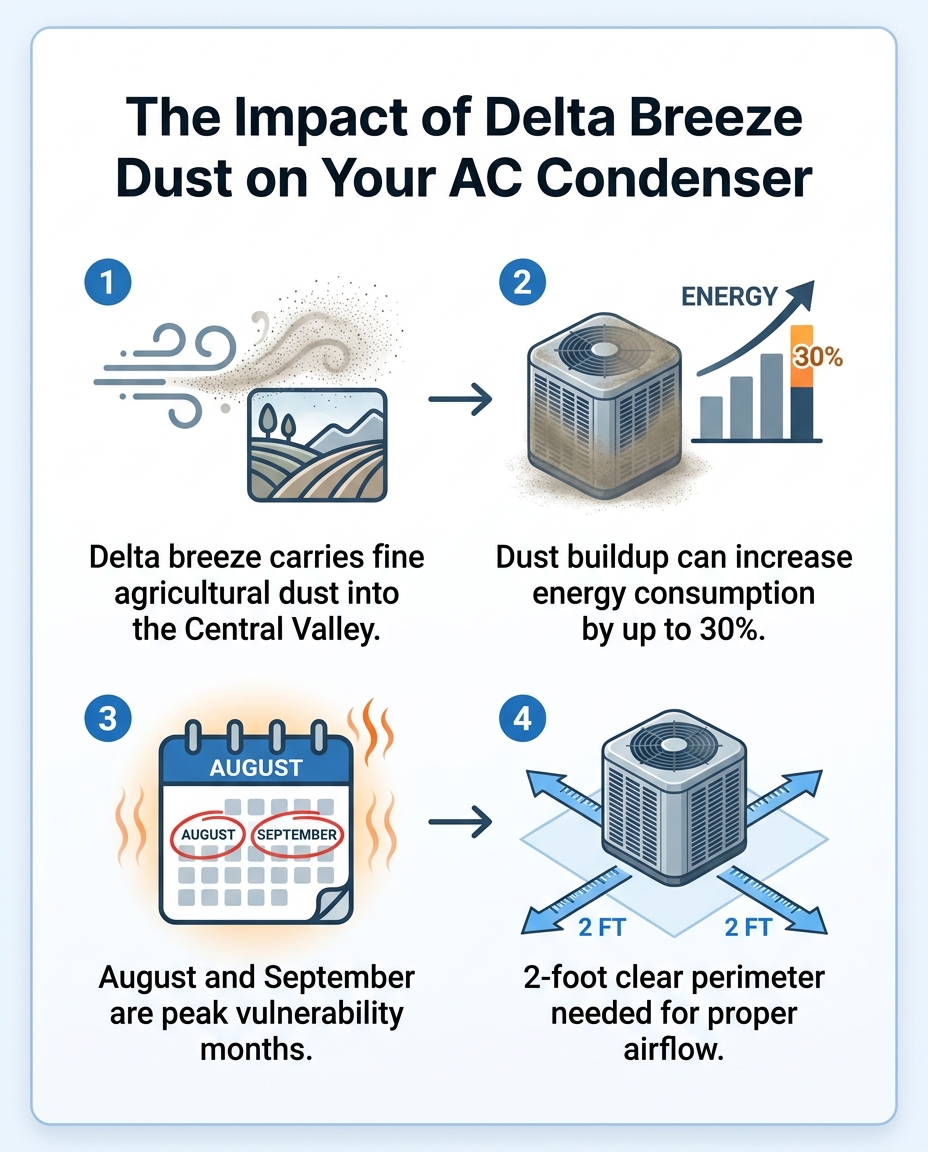
To understand why your outdoor unit struggles so much during this specific time of year, you have to look at the local weather patterns. The famous Delta breeze originates from the San Francisco Bay, pulling cool marine air through the Carquinez Strait and directly into the Central Valley. While this breeze provides immense relief to residents during sweltering evenings, it acts as a massive transport mechanism for regional particulates.
As this coastal wind moves through the dry, agricultural expanses of the Sacramento and Delta region, it picks up loose, dry soil and harvest dust. Your outdoor AC unit, which requires massive amounts of air to function, acts like a giant vacuum cleaner. It constantly pulls this airborne debris directly into its condenser fins, turning a refreshing weather pattern into a slow-moving hazard for your HVAC equipment.
The journey of the marine air fundamentally changes its composition. What starts as clean, moist ocean air transforms as it enters the sun-baked valley. The velocity of the breeze gives it the capacity to carry thousands of pounds of fine particulates across the region every single day. By the time this air reaches your backyard, it is heavily laden with microscopic dirt that is perfectly sized to wedge itself between the narrow aluminum fins of your condenser.
This creates a frustrating paradox for homeowners. The very breeze that allows you to finally open your windows in the evening is the same wind that is quietly suffocating the equipment you rely on during the heat of the day. The constant airflow required by the outdoor exhaust fan ensures that this dust is continuously drawn deep into the system's core.
Harvest season exacerbates this issue dramatically. As massive agricultural operations in the surrounding valley disturb the dry earth, an excess of airborne debris is released into the atmosphere. This is not standard backyard dirt; it is a highly refined, powdery silt.
Because this silt is so fine, it easily bypasses standard yard barriers, privacy fences, and landscaping screens. It stays suspended in the air longer and penetrates deeper into the mechanical components of your home. Recognizing the unique nature of this agricultural silt is essential for understanding why standard cleaning methods often fail to protect your cooling system.
Not all dirt is created equal when it comes to the health of your cooling system. Everyday landscaping debris—like fallen leaves, grass clippings, and small twigs—is highly visible. You can see a leaf stuck to the side of your unit and simply brush it away. Fine agricultural dust, however, presents a much more insidious threat because of how it interacts with the local climate.
During the late-summer months, cool overnight temperatures often create morning condensation on the metal surfaces of your outdoor unit. When the fine, powdery agricultural dust mixes with this moisture, it transforms into a dense, cement-like paste. This paste coats the delicate condenser coils and bakes hard in the afternoon sun, severely restricting the vital heat transfer process that allows your home to cool down.
• Grass Clippings & Leaves — Visibility on Unit: Highly visible on the exterior casing — Impact on Condenser Coils: Blocks surface airflow but rarely penetrates deep into fins — Typical Removal Method: Hand removal or gentle brushing
• Standard Yard Dirt — Visibility on Unit: Visible as a loose, dry coating — Impact on Condenser Coils: Reduces efficiency mildly if left unchecked — Typical Removal Method: Standard exterior hose rinsing
• Agricultural Silt — Visibility on Unit: Often hidden deep between aluminum fins — Impact on Condenser Coils: Forms a cement-like paste with morning dew, blocking heat transfer — Typical Removal Method: Professional chemical coil cleaning
There is a common misconception that a quick spray with a garden hose will wash away this fine silt. In reality, applying water to deep-seated agricultural dust without the proper lifting agents often makes the problem worse. The water can push the fine dirt deeper into the center of the coil block, where it compacts and dries into an even harder barrier. What looks clean on the surface may actually be completely suffocated on the inside.
The financial impact of this hidden buildup is staggering. According to the U.S. Department of Energy (DOE), dirty condenser coils can increase a system's energy consumption by up to 30%. Because the thick layer of baked-on dust acts as an insulator, the system cannot release heat into the outside air. This efficiency drop forces the compressor to run longer and hotter, driving up your monthly utility bills and significantly shortening the overall lifespan of the equipment.

Homeowners often do not realize their outdoor unit is suffocating until the system completely breaks down on a 100-degree day. By learning to identify the physical and operational symptoms of a dirty outdoor unit early, you can intervene before expensive damage occurs. The signs are usually a mix of performance drops, rising costs, and physical changes to the equipment itself.
Here are the primary warning signs that late-summer dust has compromised your system:
• Constant running cycles: The system runs for hours without ever reaching the temperature set on your thermostat.
• Spiking utility bills: Unusually high energy costs that correspond with the late-summer harvest season, even if your usage habits haven't changed.
• Weak airflow at the exhaust: When you place a hand carefully above the outdoor unit's fan, the air feels weak or trapped rather than blowing forcefully upward.
• Visible grime buildup: A noticeable layer of mud or baked-on dirt coating the thin metal fins on the sides of the cabinet.
• Strange mechanical noises: Unusual sounds caused by system strain. If you hear an AC making a buzzing noise, it often indicates the compressor is overworking due to restricted airflow.
The most common symptom of a choked condenser is a system that simply will not stop running. Because the dust prevents heat from escaping the outdoor unit, the refrigerant returns to the house still warm. The thermostat registers that the house hasn't reached the target temperature, so it commands the system to keep working. This places immense, continuous strain on both the indoor blower motor and the outdoor compressor.
When airflow is restricted, mechanical components have to work outside of their designed parameters. You might notice the outdoor unit vibrating more than usual, or hear a loud humming, rattling, or buzzing sound from the cabinet. These sounds are the audible result of electrical and mechanical overwork. Ignoring these noises usually leads to a blown capacitor or a seized compressor motor.
While deep coil cleaning requires specialized knowledge, there are several crucial maintenance steps homeowners can—and should—perform safely. Providing clear boundaries for do-it-yourself maintenance protects both your equipment and your personal safety. The goal of homeowner maintenance is to ensure the area around the unit is free of obstructions so the system can breathe as freely as possible.
Follow these safe exterior maintenance steps to support your cooling system:
1. Establish a clear perimeter: Safely clear a 2-foot perimeter around the entire outdoor unit, removing encroaching weeds, tall grass, patio furniture, and stored yard tools.
2. Inspect vertical clearance: Ensure there are no low-hanging branches or tarps blocking the vertical airflow directly above the exhaust fan.
3. Turn off the power: Always locate the outdoor disconnect box and pull the plug, or turn off the system at the main breaker panel, before performing any exterior washing.
4. Rinse with low pressure: Use a standard garden hose on a gentle shower setting to rinse loose, dry dust off the outer casing. Angle the spray downward to avoid forcing dirt deeper into the unit.
5. Support indoor airflow: Check and change your indoor air filters regularly. A clean indoor filter ensures the blower motor can push enough air over the evaporator coil to match the outdoor unit's workload.
Your outdoor unit needs space to pull in fresh air and expel hot exhaust. When weeds or yard items encroach on this space, the system ends up recycling its own hot exhaust air. By maintaining a strict 2-foot clear zone around all four sides of the cabinet, you give the system the breathing room it requires to operate efficiently during the hottest parts of the day.
If you choose to rinse the outside of the cabinet, safety is the top priority. Water and high-voltage electricity are a dangerous combination, which is why disconnecting the power is non-negotiable. Furthermore, explicitly avoid using pressure washers. The aluminum fins on the condenser are incredibly thin and delicate; a pressure washer will flatten them instantly, permanently destroying the unit's ability to transfer heat. Stick to a gentle, downward rinse with a standard hose.
There comes a point where DIY maintenance reaches its absolute limit. When deep-seated agricultural dust turns into a baked-on paste, a garden hose is no longer sufficient. Transitioning from DIY limits to professional intervention is necessary to truly restore your system's efficiency. Professional coil cleaning involves specialized tools, chemical knowledge, and a deep understanding of HVAC mechanics.
Deep-seated dirt requires specialized, foaming chemical cleaners that are specifically formulated to be safe for aluminum fins. These cleaners actively bubble and lift the embedded silt out from the center of the coil block. Furthermore, a thorough cleaning requires safely removing the heavy exterior casing and fan motor to clean the coils from the inside out—a process that involves handling high-voltage wiring and working closely with pressurized refrigerant lines.
Real-world situations often highlight the need for fast, professional intervention. One local customer in a mobile home park reached out when their cooling system required immediate attention for a renter. The technician responded quickly, provided a transparent quote, and completed the repair despite system downtime, going above and beyond to resolve the renter's issue safely and effectively. This level of service is backed by a 100% satisfaction guarantee and transparent pricing, ensuring that when you call for a professional cleaning, you know exactly what to expect.
Attempting to disassemble the outdoor cabinet yourself introduces severe risks. Beyond the obvious electrical hazards of working near high-voltage capacitors, improper disassembly can easily kink or rupture the copper refrigerant lines. Additionally, using incorrect tools to scrape or brush the coils will permanently bend the fragile aluminum fins. Any of these mistakes will instantly void the manufacturer's warranty and result in massive repair bills.
When professionals use foaming coil cleaners, they are restoring the unit to factory-level airflow. The foaming action pushes the dirt outward, rather than packing it deeper inside. Once the coils are thoroughly rinsed and reassembled, the system can once again reject heat efficiently. This process immediately reduces the strain on the compressor, lowers operating temperatures, and restores the cooling capacity you expect inside your home.
As the late-summer season progresses, the accumulation of dust only accelerates. August and September are historically the most vulnerable months for condenser buildup in the Sacramento valley. Your system has already worked hard through June and July; heading into the harvest season with dirty coils is a recipe for a late-season breakdown.
Securing your comfort means looking ahead and taking proactive steps. Scheduling a professional cleaning before the final, brutal heat waves of September hit ensures your system has the stamina to finish the season strong. Catching airflow restrictions early prevents minor dust issues from cascading into major mechanical failures.
Timing is everything when it comes to seasonal maintenance. Late summer is the critical intervention point because the combination of high temperatures, maximum system wear, and peak agricultural dust creates a perfect storm for equipment failure. Preparing for unexpected heat spikes now saves you from enduring a sweltering house while waiting for an emergency repair.
The most effective way to protect your equipment year after year is to remove the guesswork entirely. Joining a routine HVAC maintenance plan provides worry-free protection. Regular, scheduled check-ups ensure that your coils are cleaned, electrical components are tested, and refrigerant levels are verified before the extreme weather arrives, keeping your energy bills predictable and your home consistently comfortable.
Dust acts as a thick insulating blanket over the condenser coils. When the coils are coated in dirt, the system cannot release the heat it absorbed from inside your home into the outside air. This forces the compressor to run longer and harder, which drives up energy consumption and accelerates wear and tear on the mechanical parts.
Yes, severe dirt buildup can absolutely cause a total system shutdown. If the condenser cannot release heat, the compressor overheats and triggers internal safety switches to shut the system down. Repeated overheating will eventually cause the compressor motor to burn out completely, resulting in a catastrophic and expensive failure.
You can safely perform basic exterior maintenance, such as clearing a 2-foot perimeter of weeds and gently rinsing loose dirt off the outer casing with a low-pressure hose. However, you should never attempt to open the cabinet, use pressure washers, or apply chemical cleaners yourself. Deep coil cleaning requires professional disassembly and specialized foaming agents to avoid damaging the delicate aluminum fins.
This is a classic symptom of restricted airflow at the outdoor unit. In late summer, heavy agricultural dust can completely clog the condenser coils, preventing the system from rejecting heat. Because the air returning to your home isn't cold enough, the thermostat never reaches its target temperature, forcing the unit to run continuously without ever cooling the house.
The most common symptoms include weak airflow from the outdoor exhaust fan, unusually high utility bills, and a system that runs constantly. You may also notice the air coming from your indoor vents feels lukewarm instead of crisp and cold. Visually, you will often see a thick layer of grime or mud caked onto the thin metal fins of the outdoor cabinet.
Given the heavy agricultural dust and dry winds native to the region, outdoor units should be professionally cleaned at least once a year. For homes located very close to active farming operations or in areas with high wind exposure, having the coils checked twice a year—once in spring and once in late summer—provides the best protection against efficiency drops.
Addressing choked condenser coils is not just about keeping the outside of your equipment looking nice; it is about restoring the vital heat transfer process that keeps your home comfortable. Letting agricultural dust accumulate forces your system to work harder, driving up costs and risking premature failure during the hottest days of the year in the Sacramento / Delta region. Do not wait for a complete breakdown to give your system the attention it needs. Take action today to protect your equipment by scheduling an inspection and professional air conditioning maintenance with local experts who understand exactly what your system is up against.
See what our satisfied customers have to say about their experience with Always Affordable
Plumbing & HVAC.

"Chappy was very skilled in his knowledge of my HVAC unit. I greatly appreciate the quick response and experienced tech. The whole endeavor was made less stressful by his humor and honest conversation. I find comfort in knowing I now have a shop i trust for the next time."
"Tony, James, Ronnie did an amazing job setting up our new AC! They were quick, efficient, considerate, and polite! We appreciate them scheduling us in on such short notice. Definitely recommend this company!"
"Prompt, professional service with kindness and care. They came out to address both plumbing and AC issues. I received a courtesy call before they arrived. All issues were resolved the same day with integrity and respect. Thankful for businesses like this. Absolutely recommend to those that I love."
"Excellent service! Jason came out promptly and in addition to doing my outside faucet he also put in new irrigation equipment! All done perfectly! Jason was lovely"
"Honest with the assessment; friendly and good manners. No high pressure sales. Just good to honest "tell it like you see it" Thought my kitchen disposer needed an overhaul. But Jason, there Plumber gave me an honest lesson on what was really happening. Saved me hundreds, if I went the route of replacing. Thank you!"
"Absolutely 5 stars. If you are looking for affordable ,professional and kind. Chappy was excellent and very knowledgeable . I called in the morning because my air conditioner stopped working he was here within hours and fixed my air with a smile. I highly recommend Chappy and Always Affordable plumbing and Hvac."
"Scott and James were great. They got there quickly and diagnosed the problem with my A/C.They did a very thorough job testing everything. Sent me pictures and called to keep me informed. Got it done the next day and everything is working fine. Be glad when I get home so I can enjoy my new system. Thanks guys for a great job."
"Chappy was very helpful. He knew our issue right away, cleaned our coils. He also came on the same day we called and got our AC blowing cold air again."
"After some timing ’curfuffles’ the Tech Jason arrived and not only completed a speedy install on my toilet, he was personable & professional. Because of the timing issues Jason was attentive and showed up with everything needed! No extra store runs 😊 I was very comfortable with having this Tech in my Daughter’s home. We will definitely use this Service again."