Home Maintenance Tips and Troubleshooting: What to Do When Your AC Blows Warm Air
AC blowing warm air? Review essential home maintenance tips and troubleshooting to spot simple airflow issues. Decide with confidence when to call a pro.



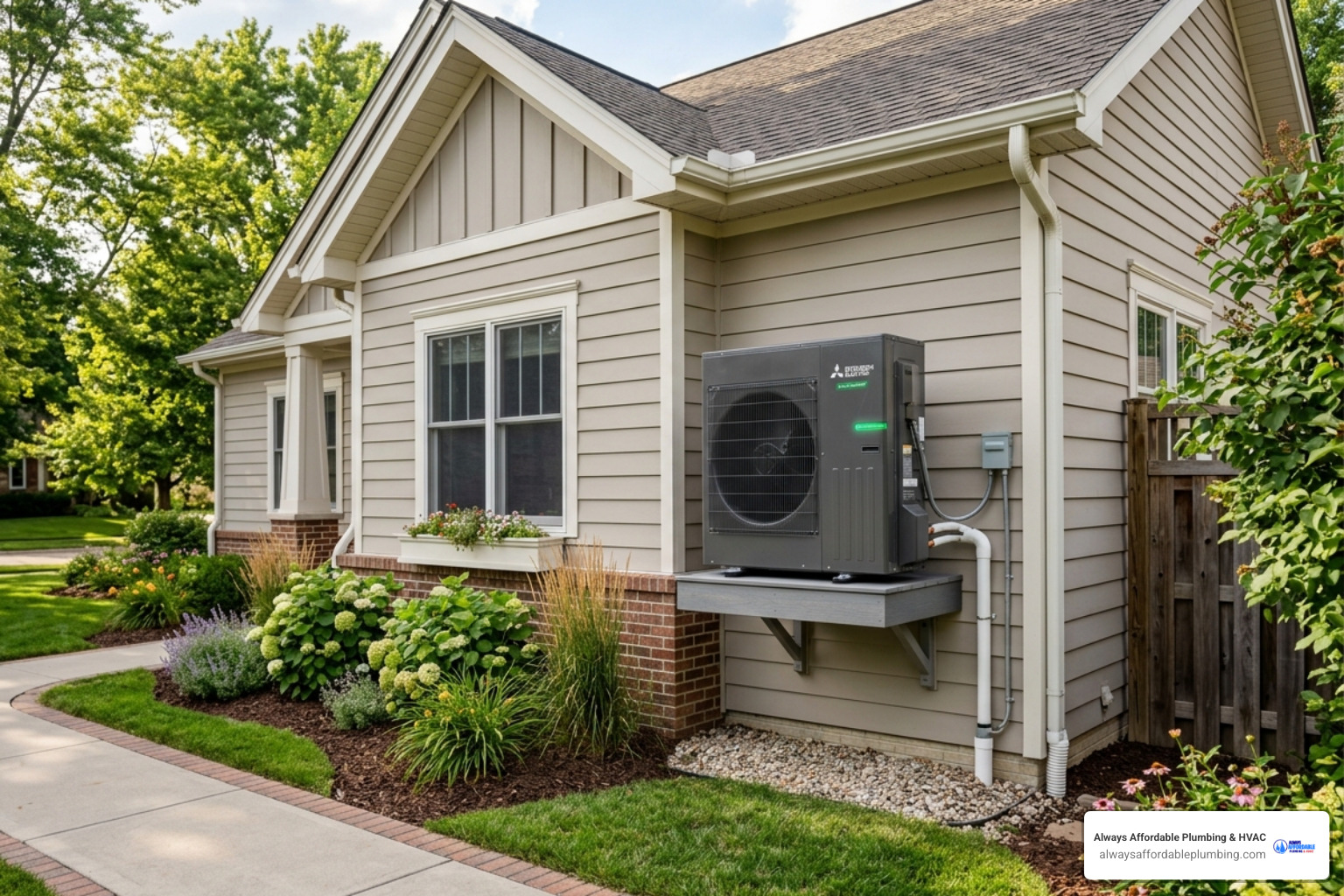
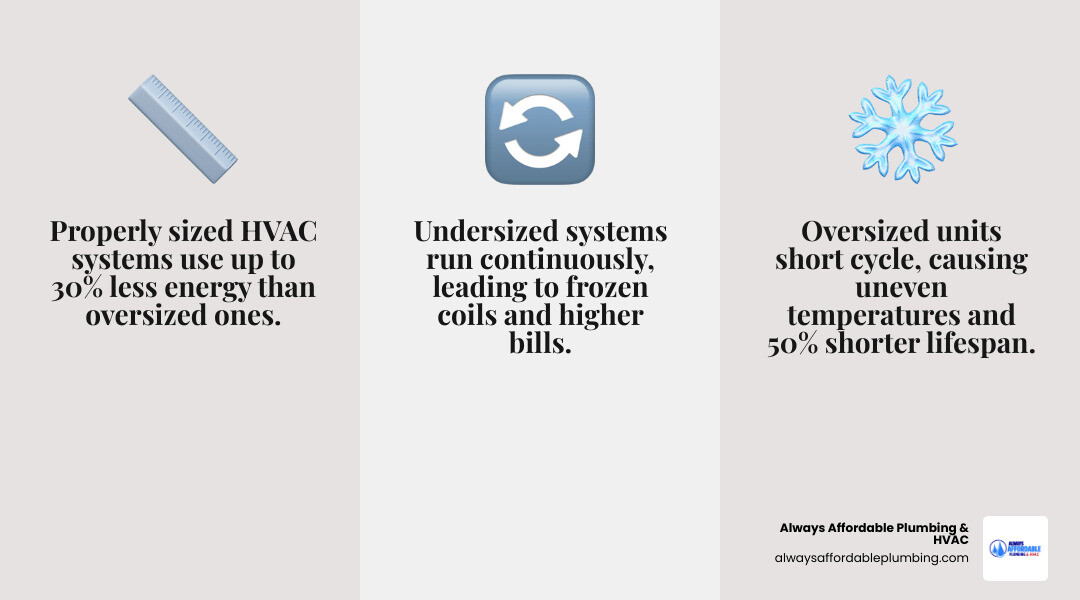
How proper hvac sizing affects comfort and efficiency comes down to one simple idea: a system that's too big or too small for your home will waste energy, struggle to keep you comfortable, and wear out faster than it should.
Here's a quick look at what sizing gets right — and what goes wrong when it doesn't:
Properly sized HVAC systems:
• Maintain steady, even temperatures throughout your home
• Remove humidity effectively, preventing that sticky, clammy feeling
• Run in efficient cycles — not too short, not too long
• Use up to 30% less energy than an oversized system
• Last significantly longer with less wear on components
Improperly sized systems cause:
• Short cycling (turning on and off too frequently) from oversized units
• Continuous running and higher bills from undersized units
• Temperature swings of up to 10°F between rooms
• Poor humidity control and increased mold risk
• Equipment lifespan cut by up to 50%
More than half of U.S. homes have HVAC systems that are either too big or too small. That's a staggering number — and it means millions of homeowners are paying more than they should every month without even knowing why.
Think of it like the Goldilocks principle: your system needs to be just right. Not too powerful, not too weak. When the match is correct, your home stays comfortable, your energy bills stay reasonable, and your equipment lasts for years. When it's off — even by one size — you feel it in your comfort and your wallet.
In Sacramento, where summers can push temperatures well past 100°F and winters bring their own cold snaps, getting that sizing right isn't just a nice-to-have. It's essential.
When we talk about "sizing" a system, we aren't just looking at the square footage of your house and making a guess. In the professional HVAC world, we use a set of industry standards developed by the Air Conditioning Contractors of America (ACCA). These are known as Manual J, Manual S, and Manual D.
This is the most critical step. A Manual J calculation determines exactly how much heat your home loses in the winter and gains in the summer. We don't just look at the floor plan; we examine the "thermal envelope." This includes your insulation levels, the type of windows you have, which direction those windows face (orientation), and even how much air leaks through your doors and walls (air infiltration). Whether you need HVAC Installation in Sacramento, CA or a system for a drafty older home, Manual J is the only way to get an accurate number.
Once we know the "load" (the amount of heating and cooling needed), we use Manual S to select the specific equipment. Not all 3-ton units are the same. Some perform better in high humidity, while others are designed for extreme dry heat. Manual S ensures the equipment we choose actually meets the requirements found in the Manual J report.
You can have the most perfectly sized furnace or AC in the world, but if your ducts are too small, the air can't get to your rooms. Manual D is the blueprint for your ductwork. It ensures that the "static pressure" and airflow (CFM) match your equipment perfectly. If you are considering HVAC Installation in Davis, CA, making sure the ducts are sized correctly is just as important as the unit itself.
The relationship between system size and your daily life is direct. A system that is accurately matched to your home’s needs operates in the "sweet spot" of its design.
• Cycle Length — Oversized System: Very short (5-7 mins) — Undersized System: Almost never stops — Properly Sized System: Steady (15-20 mins)
• Energy Use — Oversized System: High (frequent starts) — Undersized System: High (constant running) — Properly Sized System: Optimized (lowest cost)
• Comfort — Oversized System: Hot/Cold spots — Undersized System: Never reaches set temp — Properly Sized System: Even temperatures
• Humidity — Oversized System: High (Sticky air) — Undersized System: Varies — Properly Sized System: Balanced (30-50%)
• Lifespan — Oversized System: Reduced by 50% — Undersized System: Reduced by 30% — Properly Sized System: Maximum (15-20 years)
When we perform HVAC Maintenance in Rio Linda, CA, we often find that the biggest source of energy waste isn't a dirty filter—it's a system that was never sized correctly to begin with. A properly sized unit can use up to 30% less energy than an oversized one. Furthermore, a regular HVAC Tune-Up in Auburn, CA ensures that a correctly sized system stays efficient throughout its life.
Temperature is only half the battle. Your air conditioner has two jobs: lowering the temperature (sensible heat) and removing moisture from the air (latent heat).
If a system is too large, it cools the house so fast that the thermostat clicks off before the unit has a chance to pull moisture out of the air. This results in "clammy air"—where the room is 72°F but feels damp and sticky. Keeping indoor humidity between 30% and 50% is vital for mold prevention and better indoor air quality. If you find your home feels stuffy despite the AC running, you might need a professional HVAC Service in Fair Oaks, CA to evaluate your system's capacity.
In the Sacramento Valley, we deal with intense heat waves where temperatures can stay in the triple digits for days. An undersized system will simply give up during these periods, running 24/7 while your indoor temperature creeps up into the 80s.
Modern variable-speed technology has changed the game. These systems can adjust their output based on the current weather. Instead of being "all on" or "all off," they can run at 40% capacity on a mild day and 100% during a North Highlands heat wave. This can boost energy efficiency by up to 40%. If you're looking for HVAC Service in North Highlands, CA, we highly recommend discussing variable-speed options.
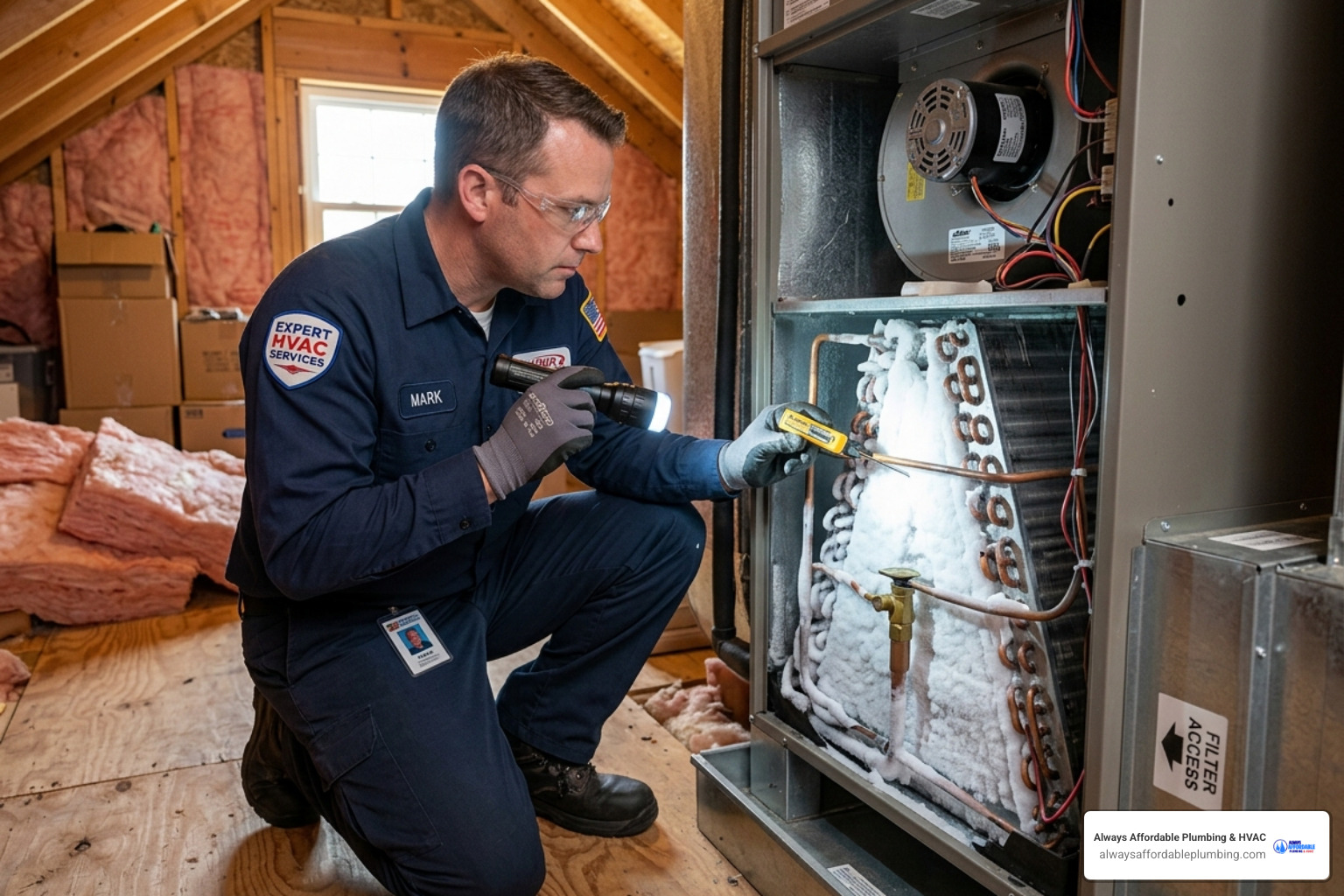
Improper sizing isn't just an inconvenience; it's a mechanical threat to your investment. When a system is forced to operate outside of its intended parameters, parts fail prematurely.
• Frozen Evaporator Coils: Common in undersized units that run constantly without enough airflow.
• Stressed Compressors: The "heart" of your AC. Oversized units kill compressors through "short cycling," while undersized units wear them out through heat and friction from never stopping.
• Shortened Lifespan: An oversized system can have its lifespan cut by 50% because the most wear occurs during the startup phase.
If your system is constantly breaking down, it might not be a "lemon"—it might just be the wrong size. In such cases, HVAC Replacement in Granite Bay, CA with a correctly sized unit is often more cost-effective than constant repairs. Even if you just need a minor HVAC Repair in Wilton, CA, our technicians always check if sizing issues contributed to the failure.
The "bigger is better" myth is one of the most expensive mistakes a homeowner can make. Oversized units cause:
1. Rapid Cycling: The unit kicks on, blasts air for five minutes, and shuts off. This creates a noisy environment and uses massive amounts of electricity during the "startup spike."
2. Uneven Cooling: The air near the vents gets cold, but the air in the corners of the room stays warm because the cycle ended too soon to circulate the air.
3. High Bills: Frequent starts are the most expensive part of an HVAC cycle.
If you are looking for HVAC Replacement in Orangevale, CA, don't let anyone sell you a larger unit just because they "have one in stock."
Undersized units are equally frustrating. They lead to:
1. Continuous Operation: The system never reaches the set temperature on the thermostat, so it runs all day and night.
2. Premature Motor Failure: Fans and motors aren't designed to run 24/7 for months on end.
3. Inability to Comfort: You'll face 10-degree temperature fluctuations between the upstairs and downstairs.
For those needing HVAC Replacement in Shingle Springs, CA, ensuring the unit can actually handle your home's square footage and insulation levels is paramount.
How do you know if your system is the wrong fit? Look for these red flags:
• Skyrocketing Energy Bills: If your bills are 30% higher than your neighbor’s for a similar-sized house, sizing is a likely culprit.
• Frequent On-Off Cycles: If the unit cycles more than 3-4 times an hour, it’s probably oversized.
• Hot and Cold Spots: Rooms at the end of the duct run never get comfortable.
• High Indoor Humidity: Your skin feels "tacky" or "sticky" even when the air is cool.
• Excessive Noise: A system that is too big for the ducts will often "whoosh" or whistle loudly.
If you notice these signs, it's time for an HVAC Tune-Up in Elk Grove, CA. We also recommend checking out our guides on Signs Your AC Compressor Is Failing and End of Summer AC Issues in Folsom to see if your issues are size-related.
In the HVAC world, "tonnage" doesn't refer to the weight of the unit. It refers to its cooling capacity. One ton of cooling is equal to 12,000 BTUs (British Thermal Units) per hour. The term actually comes from the pre-electric days: it’s the amount of cooling power required to melt one ton (2,000 lbs) of ice in a 24-hour period. Most residential homes need between 2 and 5 tons. If you need HVAC Service in Yolo, CA, we can help you determine the exact tonnage your home requires.
Yes, it is a total myth. As we've discussed, an oversized unit won't make you "more comfortable." It will make your home feel damp, cause your energy bills to spike, and lead to an early system failure. You want a system that is "right-sized"—large enough to handle the hottest day of the year, but small enough to run long, efficient cycles that dehumidify your air. This is especially true for HVAC Heating and Air Conditioning in North Highlands, CA.
While online calculators can give you a "ballpark" estimate, they are notoriously inaccurate. They don't know if you have brand-new dual-pane windows or 50-year-old single-pane glass. They don't know if your attic has R-38 insulation or nothing at all. Relying on a DIY calculator is a recipe for a decade of discomfort. Professional assessment is the only way to ensure accuracy. Check out our post on How to Choose the Best HVAC Company in Sacramento to find a team that takes Manual J calculations seriously.
At Always Affordable Plumbing & HVAC, we believe that your home should be your sanctuary. Whether you are in Sacramento, Elk Grove, or Auburn, the key to that comfort lies in the science of proper sizing. By investing in a professional load calculation and a correctly sized system, you aren't just buying a piece of equipment—you are investing in lower utility bills, a longer-lasting system, and a home that feels "just right" all year round.
Don't settle for "close enough" when it comes to your home's climate. If you're ready for a system that truly fits your needs, we are here to help.
Schedule your professional HVAC sizing today or contact us for expert HVAC Installation in Elk Grove, CA. Let’s get your comfort back on track!
See what our satisfied customers have to say about their experience with Always Affordable
Plumbing & HVAC.

"Chappy was very skilled in his knowledge of my HVAC unit. I greatly appreciate the quick response and experienced tech. The whole endeavor was made less stressful by his humor and honest conversation. I find comfort in knowing I now have a shop i trust for the next time."
"Tony, James, Ronnie did an amazing job setting up our new AC! They were quick, efficient, considerate, and polite! We appreciate them scheduling us in on such short notice. Definitely recommend this company!"
"Prompt, professional service with kindness and care. They came out to address both plumbing and AC issues. I received a courtesy call before they arrived. All issues were resolved the same day with integrity and respect. Thankful for businesses like this. Absolutely recommend to those that I love."
"Excellent service! Jason came out promptly and in addition to doing my outside faucet he also put in new irrigation equipment! All done perfectly! Jason was lovely"
"Honest with the assessment; friendly and good manners. No high pressure sales. Just good to honest "tell it like you see it" Thought my kitchen disposer needed an overhaul. But Jason, there Plumber gave me an honest lesson on what was really happening. Saved me hundreds, if I went the route of replacing. Thank you!"
"Absolutely 5 stars. If you are looking for affordable ,professional and kind. Chappy was excellent and very knowledgeable . I called in the morning because my air conditioner stopped working he was here within hours and fixed my air with a smile. I highly recommend Chappy and Always Affordable plumbing and Hvac."
"Scott and James were great. They got there quickly and diagnosed the problem with my A/C.They did a very thorough job testing everything. Sent me pictures and called to keep me informed. Got it done the next day and everything is working fine. Be glad when I get home so I can enjoy my new system. Thanks guys for a great job."
"Chappy was very helpful. He knew our issue right away, cleaned our coils. He also came on the same day we called and got our AC blowing cold air again."
"After some timing ’curfuffles’ the Tech Jason arrived and not only completed a speedy install on my toilet, he was personable & professional. Because of the timing issues Jason was attentive and showed up with everything needed! No extra store runs 😊 I was very comfortable with having this Tech in my Daughter’s home. We will definitely use this Service again."