How to Unclog a Toilet: Safe DIY Methods and Home Maintenance Boundaries
HVAC or plumbing acting up? Use our home maintenance tips and troubleshooting to see which DIY fixes are safe and when to call a pro. Decide with confidence.


When your AC is running nonstop but the house still feels uncomfortably warm, having reliable home maintenance tips and troubleshooting strategies can save you from a major breakdown. That strange, lukewarm breeze coming from your vents is incredibly frustrating, especially when you need relief the most. You check the thermostat, listen to the outdoor unit humming away, and wonder why the indoor temperature simply refuses to drop. This is a critical decision point for any homeowner. You have to determine whether you are dealing with a simple airflow restriction that you can fix yourself, or a complex sealed-system failure that requires a licensed expert.
During peak summer heat, ignoring these warning signs is never an option. Responsible homeownership means knowing exactly where your do-it-yourself boundaries lie across all major household systems, from your central air conditioning unit to your essential plumbing fixtures. Pushing past those boundaries can turn a minor adjustment into a catastrophic failure.
For comprehensive property care, explore our residential plumbing services or reach out for professional sewer and drain clearing.
Before you pick up the phone to call a technician, there are several safe, immediate steps you can take to diagnose the problem. Often, feeling warm air from supply registers is the direct result of a severe airflow restriction rather than a broken compressor. By ruling out the basic airflow components, you protect your system and potentially save yourself the cost of a service call.
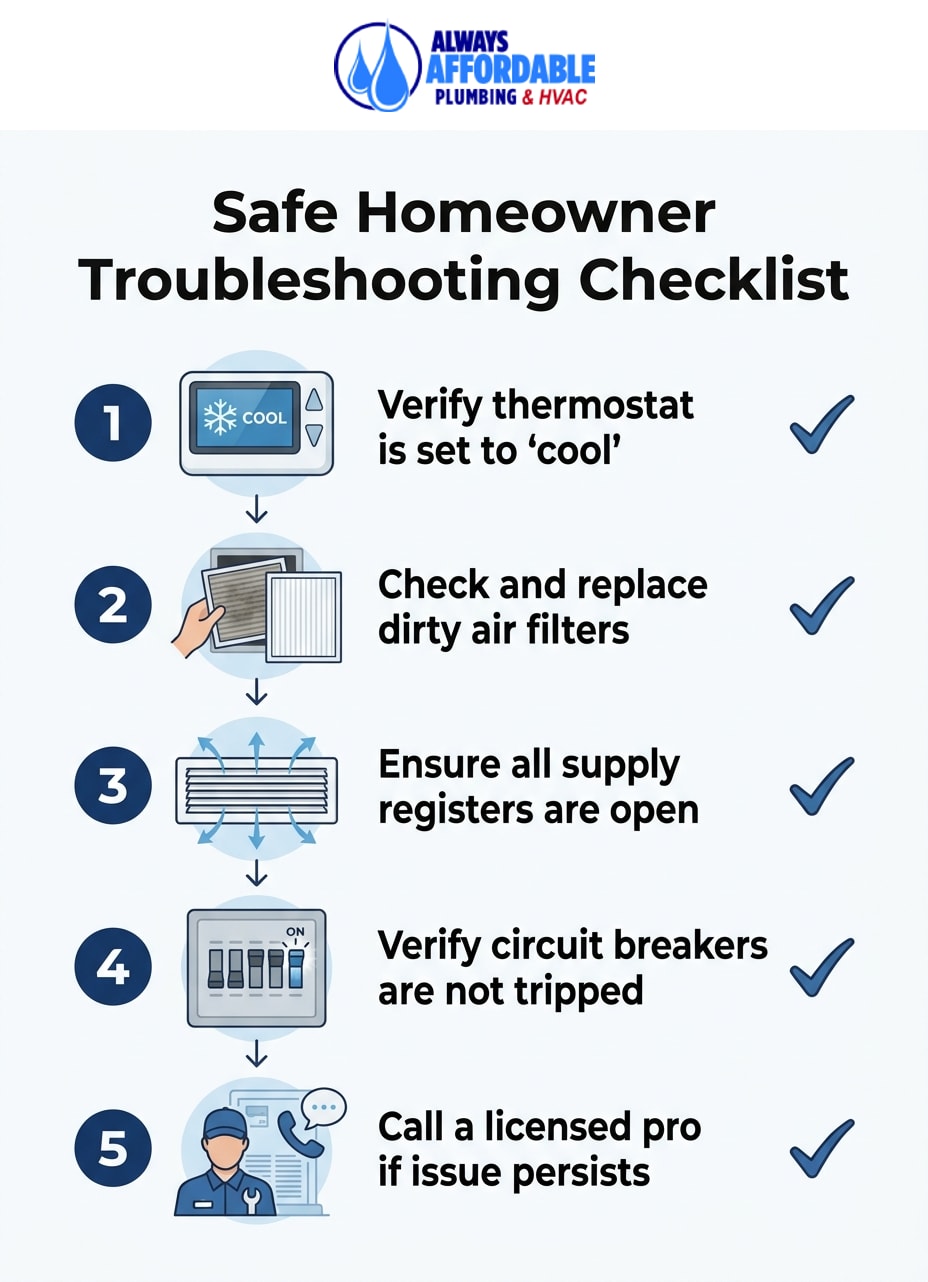
The very first place to look is your thermostat and your electrical panel. Homeowners frequently overlook these basic controls.
1. Check the thermostat settings: Ensure the system is actually set to "cool" and not accidentally bumped to "heat." Additionally, verify that the fan setting is on "auto" rather than "on." If the fan is set to "on," it will blow air constantly, even when the outdoor compressor is resting, resulting in warm air circulating through the house.
2. Inspect the circuit breakers: Head to your main electrical panel. Your HVAC system usually has two breakers—one for the indoor air handler and one for the outdoor condenser. If the outdoor unit's breaker is tripped, the indoor fan will still run, but no cooling will take place. Reset the breaker once. If it trips again immediately, stop and call a professional, as this indicates a serious electrical short.
Dirty air filters are a leading cause of residential HVAC failures. When a filter becomes completely clogged with dust and pet hair, the system cannot pull enough air over the indoor coils to cool your home.
1. Evaluate the air filter: Locate your return air filter. Pull it out and hold it up to a light source. If you cannot see light passing through the material, the filter is severely restricted and must be replaced immediately.
2. Check the supply registers: Walk through every room in your house and inspect the supply vents. Ensure they are fully open and not obstructed by heavy furniture, thick rugs, or curtains. Closing vents in unused rooms actually increases static pressure inside your ductwork, forcing the blower motor to work harder and reducing overall cooling capacity.
The Problem: When your system is blowing warm air, your first instinct might be to leave it running, hoping it will eventually catch up to the thermostat setting. However, forcing a compromised air conditioner to run continuously during peak summer heat is one of the most damaging things you can do to the equipment.
The Cause: If the root issue is restricted airflow (like a severely clogged filter) or low refrigerant, the indoor evaporator coil will drop below freezing. Without enough warm household air blowing over that coil to absorb the cold, the condensation on the metal fins will literally freeze into a solid block of ice. Once the coil freezes, liquid refrigerant can travel backward down the line and enter the outdoor compressor. Compressors are designed to pump gas, not liquid. When liquid hits the compressor, it can cause catastrophic mechanical failure, transforming a minor maintenance task into a massive system replacement.
The Solution: If your troubleshooting steps do not restore cold air within a few minutes, you must power down the system immediately at the thermostat. Leaving a compromised system running invites disaster. One local homeowner experienced a sudden waterline leak during a dishwasher repair on a Friday afternoon—a potential disaster that was averted when a technician arrived within an hour and a half to repair the leak and provide helpful advice. Much like that urgent plumbing situation required fast action to prevent property damage, an AC struggling to cool requires you to take immediate action by shutting it off to protect the compressor.
Knowing when to stop your DIY efforts is just as important as knowing where to start. The U.S. Department of Energy (DOE) provides clear guidelines on proper HVAC maintenance boundaries, separating the tasks homeowners can safely perform from the tasks that require specialized training.
If you are feeling warm air from supply registers and you have already confirmed your filter is clean and your breakers are on, the problem likely lies within the sealed system. This system includes the outdoor compressor, the indoor evaporator coils, and the copper lines carrying chemical refrigerant between them.
Handling HVAC refrigerants safely and legally requires an Environmental Protection Agency (EPA) Section 608 certification. Refrigerant operates under extreme pressure and poses severe environmental and physical safety hazards if mishandled. Air conditioners do not "consume" or burn up refrigerant over time. If your system is low on refrigerant, it means there is a physical leak in the copper lines or coils that must be located, brazed shut, pressure-tested with nitrogen, and vacuumed out before new refrigerant can be added.
Attempting to recharge refrigerant yourself, or opening the compressor casing to poke around, is highly dangerous. Furthermore, tampering with these sealed components will instantly void any active manufacturer warranties on your equipment.
• Airflow (DIY Safe) — System Parts Included: Air filters, supply registers, return grilles — Maintenance Boundary: Safe for homeowners to inspect, clean, replace, or unblock.
• Electrical (Basic DIY) — System Parts Included: Circuit breakers, thermostat batteries — Maintenance Boundary: Homeowners can reset tripped breakers once and change batteries safely.
• Sealed System (Pro Only) — System Parts Included: Compressor, evaporator coils, refrigerant lines — Maintenance Boundary: Strictly requires EPA Section 608 certification and specialized tools to service.
The local climate plays a massive role in how quickly a small maintenance oversight turns into a full system breakdown. Sacramento's extreme summer temperatures put maximum load on AC systems. When the outdoor thermometer climbs past 100 degrees, your air conditioner has to work incredibly hard to reject heat into an already scorching environment.
Under these maximum load conditions, every single component is stressed. A minor airflow restriction—like a slightly dusty filter that went completely unnoticed during the mild days of spring—becomes a critical failure point when temperatures spike during peak summer heat. The system simply does not have the operating margin to overcome the restriction, leading to frozen coils, overheated blower motors, or blown capacitors.
This regional reality emphasizes the absolute necessity of proactive, pre-season maintenance. Having a professional clean the outdoor condenser coils, test the electrical draw of the compressor, and verify the refrigerant charge before the extreme heat arrives is the most effective way to handle Sacramento weather extremes without sudden interruptions in your comfort.
The Problem: Extreme weather and increased home usage do not just stress your HVAC equipment; they put significant pressure on all your home's vital systems, including your plumbing. Just as you might face an AC blowing warm air, you are equally likely to encounter stubborn toilet clogs or slow drains during busy seasons.
The Cause: In the Sacramento area, hard water is a common issue. Over time, the dissolved minerals in hard water cause scale buildup in the small siphon jets under the rim of your toilet bowl. This mineral buildup restricts the flow of water during a flush, leading to a much weaker flush overall. When a weak flush is combined with heavy waste or excessive toilet paper, the toilet becomes significantly more susceptible to severe clogs. If you are curious about the mechanics of this issue, you can read more about what happens when you leave a waste-clogged toilet overnight.
The Solution: You need to know how to tackle these plumbing issues safely without relying on harsh chemical drain cleaners, which generate intense heat and can actually melt or warp PVC pipes over time.
• Choose the right tool: A standard cup plunger (flat bottom) is meant for sinks and bathtubs. For a toilet, you must use a flange plunger, which has an extended rubber flap that fits directly into the toilet drain to create a tight seal.
• Create proper pressure: Submerge the plunger so the bell fills with water, not air. Push down gently to establish the seal, then pull up forcefully. The upward suction is often what dislodges the heavy waste.
Just like your HVAC system, your plumbing has clear DIY limits. If water begins backing up into your bathtub or shower while you are plunging the toilet, you are no longer dealing with a localized clog. This indicates a deeper blockage in the main sewer line. Continuing to force pressure down the drain can damage pipe joints or push the blockage deeper into the system.
Multiple system failures can happen at once. One local customer dealt with this exact combination last fall, facing both severe clogged plumbing and a broken faucet simultaneously. Technicians arrived on schedule to unclog the system and replace the fixture, restoring normal operation. Recognizing when a problem exceeds a plunger is the key to preventing water damage.
Once you have completed your safe airflow checks and verified that the problem persists—whether it is warm air from supply registers or a toilet that refuses to clear—the smartest move is to transition from DIY troubleshooting to professional diagnostics.
A professional HVAC diagnostic is thorough. A licensed technician will attach digital gauges to measure the precise subcooling and superheat of your refrigerant, test the microfarad readings on your electrical capacitors, and inspect the contactor for pitting or burn marks. They have the training to safely open the equipment cabinet and identify exactly why the system is failing under load.
We understand that homeowners sometimes hesitate to call a professional because they fear hidden fees or aggressive sales tactics. Emphasizing transparent pricing and a 100% satisfaction guarantee removes that hesitation. You should always know exactly what a repair will cost before any work begins. To keep all your home systems running smoothly and catch these issues before they escalate, consider the long-term value of a preventative plumbing maintenance membership.
Maintaining a comfortable home during peak summer heat requires a balance of proactive homeowner habits and professional expertise. By respecting the clear troubleshooting boundaries we have discussed, you protect your valuable equipment from further damage and keep your family safe from electrical or chemical hazards.
Whether you are dealing with a frozen evaporator coil, a stubborn plumbing clog, or simply want to stay ahead of the weather curve, relying on local experts is the most reliable path forward. Implementing these home maintenance tips and troubleshooting strategies will give you peace of mind, but when you hit the limit of what you can safely handle, do not wait for the situation to worsen. Reach out and contact a professional plumber or HVAC technician to restore your home's comfort today.
Why is my AC running but blowing warm air?
This usually happens due to a severe airflow restriction or a problem within the sealed refrigerant system. A clogged air filter, a tripped breaker for the outdoor unit, or a frozen evaporator coil can all cause the system to run without actually cooling the air.
How do you fix an AC that blows warm air?
The first step is to check your thermostat settings and replace any dirty air filters. If the filter is clean and the outdoor unit is receiving power but the air remains warm, you must turn the system off immediately and call a licensed professional to inspect the refrigerant levels and compressor.
What should I check before calling an HVAC technician?
You should verify that your thermostat is set to "cool" with the fan on "auto," and ensure that your main circuit breakers are not tripped. Additionally, check your return air filter for heavy dust buildup and confirm that all supply registers in your home are fully open and unobstructed.
When should I stop troubleshooting and call an HVAC professional?
You should stop troubleshooting and call a professional as soon as you have ruled out basic airflow and electrical issues like a dirty filter or a tripped breaker. Any repairs involving the compressor, evaporator coils, or chemical refrigerants legally require an EPA-certified technician.
Can Sacramento's hard water make my toilet more likely to clog?
Yes, hard water contains dissolved minerals that create scale buildup inside the small siphon jets of your toilet bowl over time. This mineral buildup restricts the water flow during a flush, resulting in a weaker flush that struggles to clear heavy waste effectively.
Why is it dangerous to leave a clogged toilet unresolved?
Leaving a clogged toilet unresolved can lead to severe water damage if the bowl overflows, and it allows harmful bacteria to multiply in the standing water. Furthermore, the pressure from a deep blockage can eventually compromise the wax ring seal at the base of the toilet, causing hidden leaks beneath your flooring.
See what our satisfied customers have to say about their experience with Always Affordable
Plumbing & HVAC.

"Chappy was very skilled in his knowledge of my HVAC unit. I greatly appreciate the quick response and experienced tech. The whole endeavor was made less stressful by his humor and honest conversation. I find comfort in knowing I now have a shop i trust for the next time."
"Tony, James, Ronnie did an amazing job setting up our new AC! They were quick, efficient, considerate, and polite! We appreciate them scheduling us in on such short notice. Definitely recommend this company!"
"Prompt, professional service with kindness and care. They came out to address both plumbing and AC issues. I received a courtesy call before they arrived. All issues were resolved the same day with integrity and respect. Thankful for businesses like this. Absolutely recommend to those that I love."
"Excellent service! Jason came out promptly and in addition to doing my outside faucet he also put in new irrigation equipment! All done perfectly! Jason was lovely"
"Honest with the assessment; friendly and good manners. No high pressure sales. Just good to honest "tell it like you see it" Thought my kitchen disposer needed an overhaul. But Jason, there Plumber gave me an honest lesson on what was really happening. Saved me hundreds, if I went the route of replacing. Thank you!"
"Absolutely 5 stars. If you are looking for affordable ,professional and kind. Chappy was excellent and very knowledgeable . I called in the morning because my air conditioner stopped working he was here within hours and fixed my air with a smile. I highly recommend Chappy and Always Affordable plumbing and Hvac."
"Scott and James were great. They got there quickly and diagnosed the problem with my A/C.They did a very thorough job testing everything. Sent me pictures and called to keep me informed. Got it done the next day and everything is working fine. Be glad when I get home so I can enjoy my new system. Thanks guys for a great job."
"Chappy was very helpful. He knew our issue right away, cleaned our coils. He also came on the same day we called and got our AC blowing cold air again."
"After some timing ’curfuffles’ the Tech Jason arrived and not only completed a speedy install on my toilet, he was personable & professional. Because of the timing issues Jason was attentive and showed up with everything needed! No extra store runs 😊 I was very comfortable with having this Tech in my Daughter’s home. We will definitely use this Service again."