Seasonal Home Maintenance Checklist: Preventing HVAC and Plumbing Emergencies
Prevent HVAC emergencies with a seasonal home maintenance checklist. Why proactive scheduling beats waiting for sudden failures. See what needs attention now.



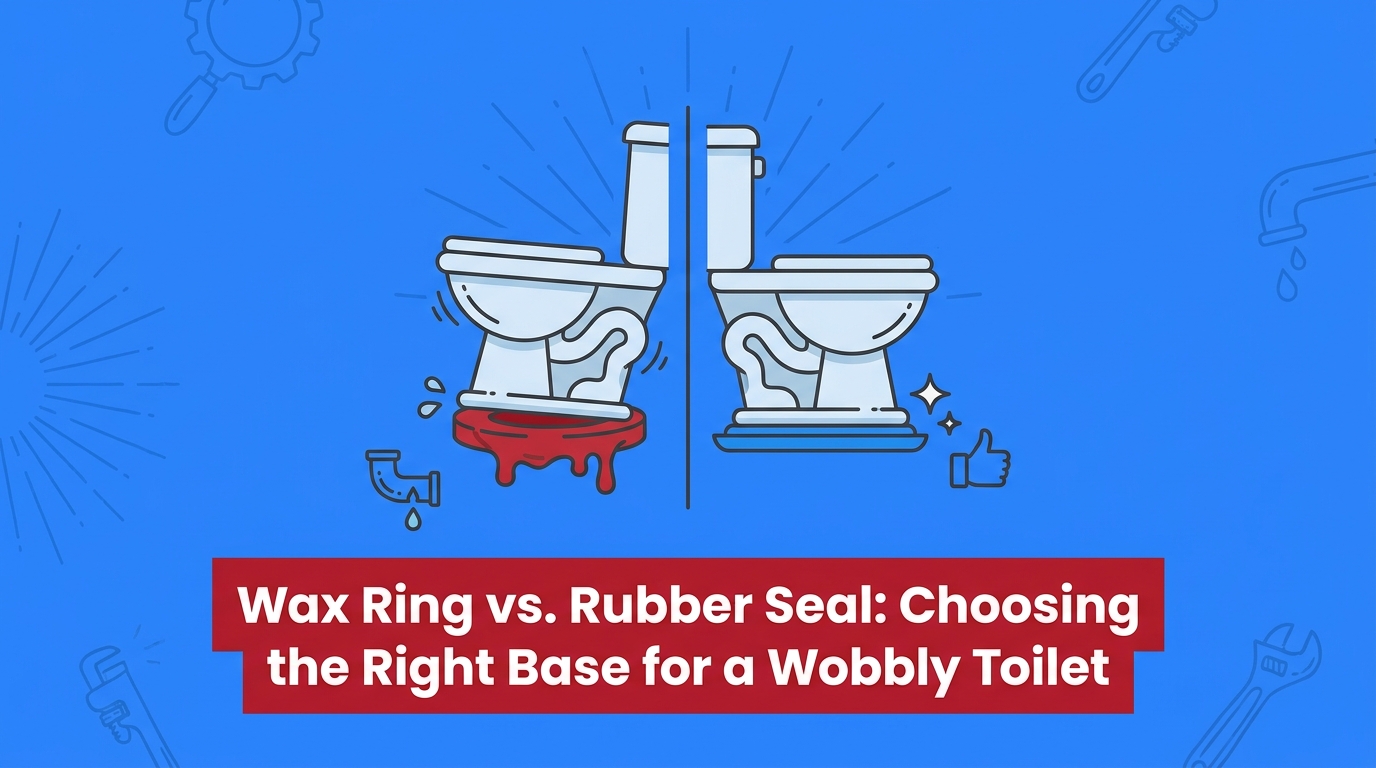
Are you noticing a slight rock or wobble every time you sit down after having a major blockage cleared from your bathroom plumbing? If you are researching a wax ring vs. rubber seal, choosing the right base for a wobbly toilet is often the most critical decision you must make before resetting the fixture. Pulling a toilet off the floor is a standard procedure when accessing severe, deep-seated blockages in the main drainage line. However, putting that fixture back in place requires a flawless, airtight, and watertight seal to protect your home from severe structural damage.
The core decision point for this reset process involves selecting between a traditional beeswax vs. modern rubber gasket to secure the base of the fixture. Both materials serve the exact same purpose—bridging the gap between the porcelain horn of the toilet and the drainage pipe in the floor—but they operate using entirely different mechanical principles. The right choice is rarely a matter of simple preference. Instead, it depends heavily on the condition of your bathroom's subfloor, the angle of the closet flange, and the stability of the fixture itself. Because evaluating these structural components requires a trained eye, this decision highlights the importance of relying on professional plumbing services for all your residential plumbing repairs.
To understand why the seal material matters so much, you first need to understand the physical mechanics of a rocking toilet base. A toilet is not simply bolted to the finished tile or linoleum; it is anchored to a circular plumbing fitting called a closet flange, which connects directly to the home's drainage system. The seal sits sandwiched between the toilet and this flange. When a toilet wobbles, it exerts uneven, shifting pressure on that delicate seal.
During one summer service call at a commercial clinic, same-day service was required to address unspecified plumbing odors and minor pooling water that ultimately traced back to a compromised fixture base. Once professionals arrived to explain the issues and present options, it became clear that a wobbly base is rarely just a loose bolt issue. It often indicates an uneven finished floor, a degraded subfloor, or a broken closet flange that can no longer hold the anchor bolts under tension. Resolving severe blockages, like backed-up sewer and drain services, often precedes the discovery of these underlying structural issues because the fixture must be removed, revealing the hidden damage beneath.
When a toilet rocks back and forth, it physically breaks the watertight and airtight barrier. This allows two things to escape into your home: raw wastewater and hazardous sewer gases. Because the seal is hidden beneath the porcelain base, this failure can go unnoticed for months, leading to catastrophic consequences for the surrounding building materials.
Ignoring a wobbly toilet base is a guaranteed recipe for extensive property damage. The consequences of a broken seal compound rapidly over time:
1. Water seeping under finished flooring: Every time the toilet is flushed, small amounts of wastewater escape the broken seal and travel outward, seeping under the bathroom tile, laminate, or linoleum.
2. Deterioration of the wooden subfloor: As the water sits trapped beneath the flooring, the wooden subfloor absorbs the moisture, causing the wood to rot, swell, and lose its structural integrity, which eventually requires extensive carpentry work to repair.
3. Mold growth in unconditioned spaces: The constant dampness creates an ideal environment for toxic mold and mildew to thrive, often spreading into the joists and unconditioned spaces directly below the bathroom floor.
Traditional wax rings have served as the trusted plumbing industry standard since the mid-20th century. Composed primarily of petroleum wax or beeswax, these rings are designed to be highly malleable. When the heavy porcelain fixture is set down onto the flange, the sheer weight of the toilet compresses the wax, forcing it to spread outward and squeeze into every microscopic gap, scratch, and uneven surface between the horn and the drain.
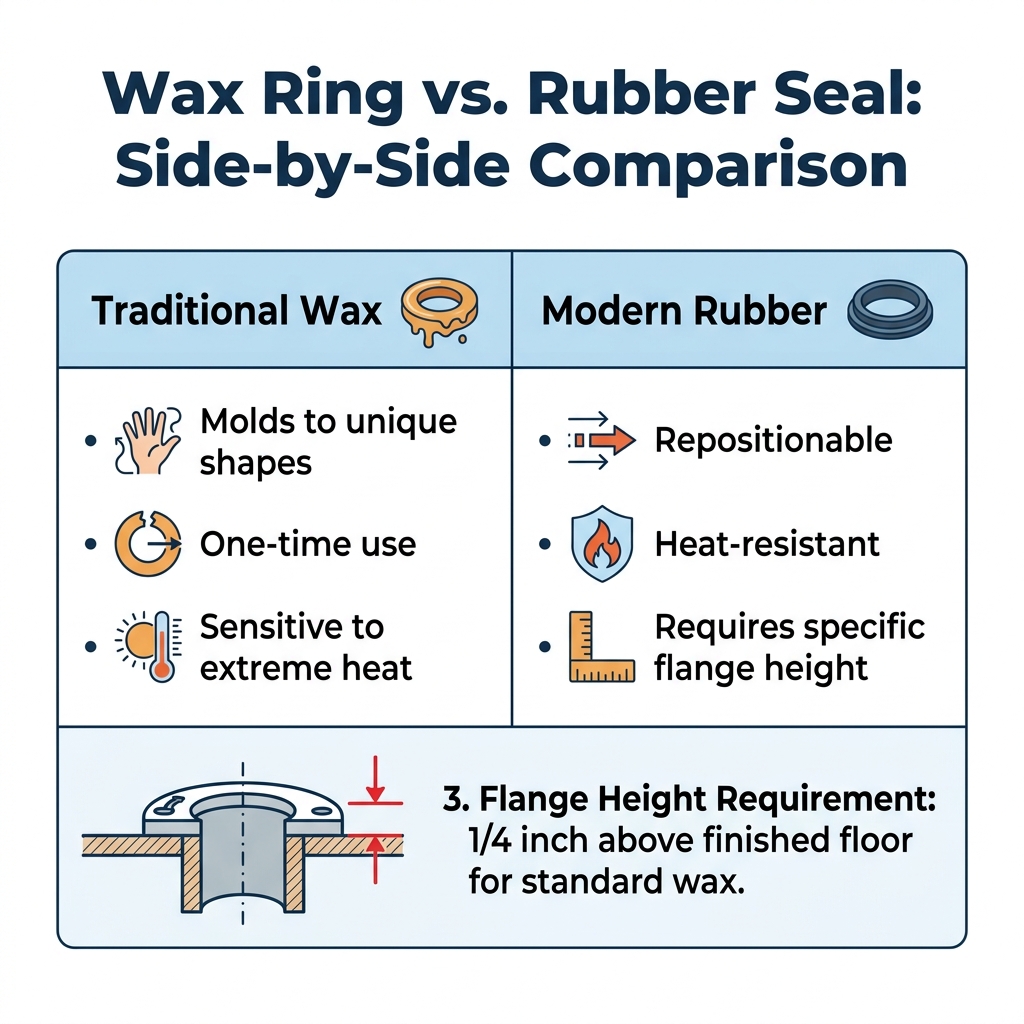
The primary advantage of traditional beeswax is its ability to create a custom, perfectly molded, watertight, and airtight seal that conforms to the exact, unique shape of your specific plumbing setup. However, this same characteristic is also its greatest drawback. A wax ring is strictly a one-time-use product. If the toilet shifts, tilts, or wobbles during the installation process—or if it rocks even slightly after it has been bolted down—the wax is permanently deformed. It does not possess any structural memory, meaning it will not bounce back to fill the newly created gap, and the seal is instantly broken.
Environmental factors also play a massive role in the performance of this material prior to installation. For example, extreme Sacramento summer heat, especially in unconditioned storage spaces or during transport in a service vehicle, can drastically soften traditional beeswax rings. This makes their handling, preparation, and installation highly temperature-dependent, requiring a skilled professional to ensure the material is at the correct viscosity before the heavy fixture is set in place.
Pros and Cons of Traditional Wax Rings:
• Pro: Molds perfectly to highly irregular flanges and uneven porcelain horns.
• Pro: Compresses into microscopic gaps for a guaranteed airtight barrier against sewer gas.
• Pro: Extremely long lifespan if the toilet base remains perfectly stationary.
• Con: Strictly one-time use; any wobble permanently destroys the seal.
• Con: Highly sensitive to temperature variations before installation.
• Con: Messy to remove and clean up during future fixture replacements.
In recent years, modern rubber and elastomer toilet seals have emerged as a highly popular alternative to traditional wax. These modern gaskets utilize advanced elastomer and PVC blends designed to retain their shape under immense pressure while remaining flexible enough to bridge the gap between the toilet and the flange. Unlike wax, rubber has structural memory, meaning it actively pushes back against the porcelain and the flange to maintain a tight connection.
The absolute greatest benefit of a modern rubber gasket is its reusability and repositionability. If a plumber is dealing with a tricky reset on an uneven floor, they can set the toilet down, test the stability, pull the toilet back up to make adjustments, and set it down again without destroying the seal. This makes rubber an incredibly forgiving material for complex installations where shims or spacer rings are required to level the fixture.
Furthermore, in contrast with wax, rubber gaskets remain dimensionally stable regardless of high summer temperatures. They do not melt, soften, or become sticky in the heat, making them much cleaner and easier to handle during hot weather service calls. However, they do have distinct limitations. Because rubber does not deform and flow like wax, it can struggle to create a perfect seal on deeply recessed closet flanges or highly irregular, older porcelain horns that have deep pitting or manufacturing defects.
Pros and Cons of Modern Rubber Gaskets:
• Pro: Can be repositioned multiple times during a difficult fixture reset.
• Pro: Structural memory allows the seal to flex slightly if the toilet experiences a minor bump.
• Pro: Completely dimensionally stable and heat-resistant in extreme summer temperatures.
• Pro: Clean, dry installation with zero sticky residue left on the floor or flange.
• Con: May fail to seal properly if the closet flange is set too deep below the floor line.
• Con: Cannot flow into deep scratches or gouges in older, damaged plumbing fittings.
While the debate between a traditional beeswax vs. modern rubber gasket often centers on messiness and reusability, the actual deciding factor comes down to the technical specifications of your bathroom floor. Specifically, the choice is dictated by the flange height relative to finished floor materials.
The closet flange is the crucial anchoring point for the entire toilet system. According to standard plumbing guidelines, for a standard wax ring to seal properly without the need for modification, the closet flange should ideally sit exactly 1/4 inch above the finished floor. When the flange is at this optimal height, either wax or rubber will perform exceptionally well. However, in many homes—especially those that have undergone bathroom remodels where new tile was laid over old flooring—the flange ends up sitting flush with, or even below, the finished floor line.
When a flange sits below the floor level, a standard rubber gasket often cannot reach high enough to compress against the bottom of the toilet. In these scenarios, a professional plumber must utilize either a jumbo extra-thick wax ring, a series of hard plastic flange extenders, or a highly specialized, elongated rubber gasket system to safely bridge the gap.
• Flange 1/4" Above Floor — Traditional Wax Ring Performance: Excellent. Standard compression creates a perfect, long-lasting seal. — Modern Rubber Gasket Performance: Excellent. Ideal height for elastomer compression and rebound.
• Flange Flush with Floor — Traditional Wax Ring Performance: Good. May require an extra-thick (jumbo) wax ring to ensure contact. — Modern Rubber Gasket Performance: Fair. Often requires a specialized foam or rubber extension piece.
• Flange Recessed Below Floor — Traditional Wax Ring Performance: Requires flange extenders paired with wax to prevent blowout. — Modern Rubber Gasket Performance: Not recommended unless using a specific extra-long gasket kit.
• Uneven / Sloped Floor — Traditional Wax Ring Performance: Superior. Wax molds into the uneven angles without pushing back. — Modern Rubber Gasket Performance: Challenging. Rubber may push back unevenly, causing the toilet to tilt.
Wax remains the champion for older homes with settled subfloors where the bathroom floor is no longer perfectly level. Because wax has the unique ability to compress into microscopic gaps without exerting any upward pressure, it allows the toilet to sit dead-flat on an uneven surface once properly shimmed. It accommodates imperfect flange angles better than any other material on the market.
Rubber is the superior choice when a plumber needs structural memory to provide pushback against a slightly wobbly base. If a spacer ring is being utilized to correct a low flange, or if the toilet must be test-fitted multiple times to find the perfect balance point on a difficult tile layout, the repositionable nature of the rubber gasket prevents the homeowner from having to purchase multiple wax rings during the trial-and-error phase.

Choosing the correct seal material is only half the battle when resetting a wobbly fixture. Securing a rocking toilet requires ensuring that the closet flange is firmly screwed into healthy, dry, structurally sound wood. If the previous seal was leaking, the subfloor beneath the flange is likely compromised, soft, or actively rotting.
Attempting to fix a rocking toilet with DIY quick fixes is highly discouraged. Homeowners often try to stabilize the fixture by over-tightening the closet bolts. This is a dangerous mistake that frequently results in cracking the porcelain base of the toilet, turning a simple reset into a costly replacement. Other times, homeowners will use excessive plastic shims to stop the wobble without addressing the underlying broken flange, which only masks an active leak while water continues to destroy the floor joists.
A licensed professional evaluates the integrity of the subfloor and ensures the setup meets the Uniform Plumbing Code (UPC) guidelines for closet flanges before ever attempting to reset the fixture. They have the expertise to determine if the flange needs to be replaced, if the wood needs reinforcement, or if there are signs it's time for a toilet replacement entirely due to hairline fractures in the trapway.
When summarizing the traditional beeswax vs. modern rubber gasket debate, the reality is that neither material is universally "better" than the other. The right choice is entirely dictated by your specific flange height relative to the finished floor, the angle of your plumbing connections, and the levelness of your bathroom tile.
At Always Affordable, we believe that true affordability comes from guiding homeowners toward long-lasting leak prevention rather than temporary, risky DIY quick fixes. The cheapest seal is always the one that successfully prevents a catastrophic subfloor leak down the road. A professional plumber weighs all these structural factors to provide the most reliable, long-lasting solution tailored to your home.
Investing in a proper, professionally executed toilet reset today prevents thousands of dollars in extensive water damage, mold remediation, and carpentry repairs in the future. By ensuring the flange is secure, the floor is level, and the correct seal is applied, your bathroom remains protected for years to come.
A wobbly toilet is more than just an annoyance; it is a clear warning sign that the watertight barrier protecting your home's subfloor is at risk of failure. Fortunately, a rocking fixture can be permanently stabilized with the right approach and the correct materials.
Don't wait for a hidden leak to cause major structural damage. Seek a professional assessment to determine the exact condition of your closet flange and discover the best seal for your specific bathroom floor. Reach out to a licensed expert today to evaluate your plumbing situation and secure your home against future water damage.
Are rubber toilet seals better than wax?
Rubber toilet seals are not inherently better than wax; they simply serve different use cases. Rubber is highly beneficial because it is repositionable, less messy, and retains its shape, making it ideal for tricky installations. However, wax remains superior for highly uneven floors or irregular flanges because it can compress into microscopic gaps to form a custom, airtight barrier.
See what our satisfied customers have to say about their experience with Always Affordable
Plumbing & HVAC.

"Chappy was very skilled in his knowledge of my HVAC unit. I greatly appreciate the quick response and experienced tech. The whole endeavor was made less stressful by his humor and honest conversation. I find comfort in knowing I now have a shop i trust for the next time."
"Tony, James, Ronnie did an amazing job setting up our new AC! They were quick, efficient, considerate, and polite! We appreciate them scheduling us in on such short notice. Definitely recommend this company!"
"Prompt, professional service with kindness and care. They came out to address both plumbing and AC issues. I received a courtesy call before they arrived. All issues were resolved the same day with integrity and respect. Thankful for businesses like this. Absolutely recommend to those that I love."
"Excellent service! Jason came out promptly and in addition to doing my outside faucet he also put in new irrigation equipment! All done perfectly! Jason was lovely"
"Honest with the assessment; friendly and good manners. No high pressure sales. Just good to honest "tell it like you see it" Thought my kitchen disposer needed an overhaul. But Jason, there Plumber gave me an honest lesson on what was really happening. Saved me hundreds, if I went the route of replacing. Thank you!"
"Absolutely 5 stars. If you are looking for affordable ,professional and kind. Chappy was excellent and very knowledgeable . I called in the morning because my air conditioner stopped working he was here within hours and fixed my air with a smile. I highly recommend Chappy and Always Affordable plumbing and Hvac."
"Scott and James were great. They got there quickly and diagnosed the problem with my A/C.They did a very thorough job testing everything. Sent me pictures and called to keep me informed. Got it done the next day and everything is working fine. Be glad when I get home so I can enjoy my new system. Thanks guys for a great job."
"Chappy was very helpful. He knew our issue right away, cleaned our coils. He also came on the same day we called and got our AC blowing cold air again."
"After some timing ’curfuffles’ the Tech Jason arrived and not only completed a speedy install on my toilet, he was personable & professional. Because of the timing issues Jason was attentive and showed up with everything needed! No extra store runs 😊 I was very comfortable with having this Tech in my Daughter’s home. We will definitely use this Service again."