Seasonal Home Maintenance Checklist: Preventing HVAC and Plumbing Emergencies
Prevent HVAC emergencies with a seasonal home maintenance checklist. Why proactive scheduling beats waiting for sudden failures. See what needs attention now.



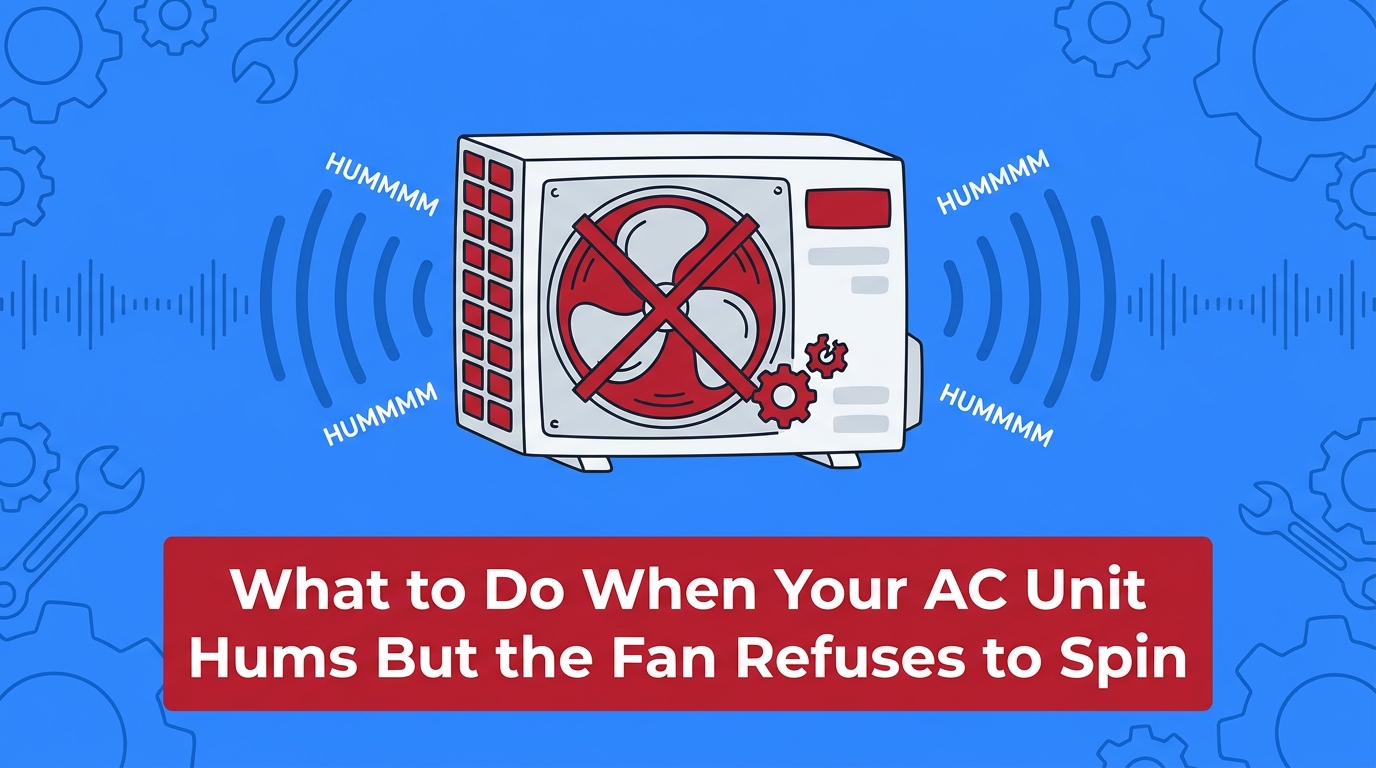
You walk outside to check your cooling system because the house feels warm, and you notice something alarming. A loud, electrical buzzing noise is coming from the outdoor condenser, but the metal blades sitting at the top of the unit are completely still. If you are wondering what to do when your AC unit hums but the fan refuses to spin, the most critical step you can take is to shut the system off immediately.
If you need professional assistance right away, explore our air conditioning services or schedule HVAC repair and diagnostics.
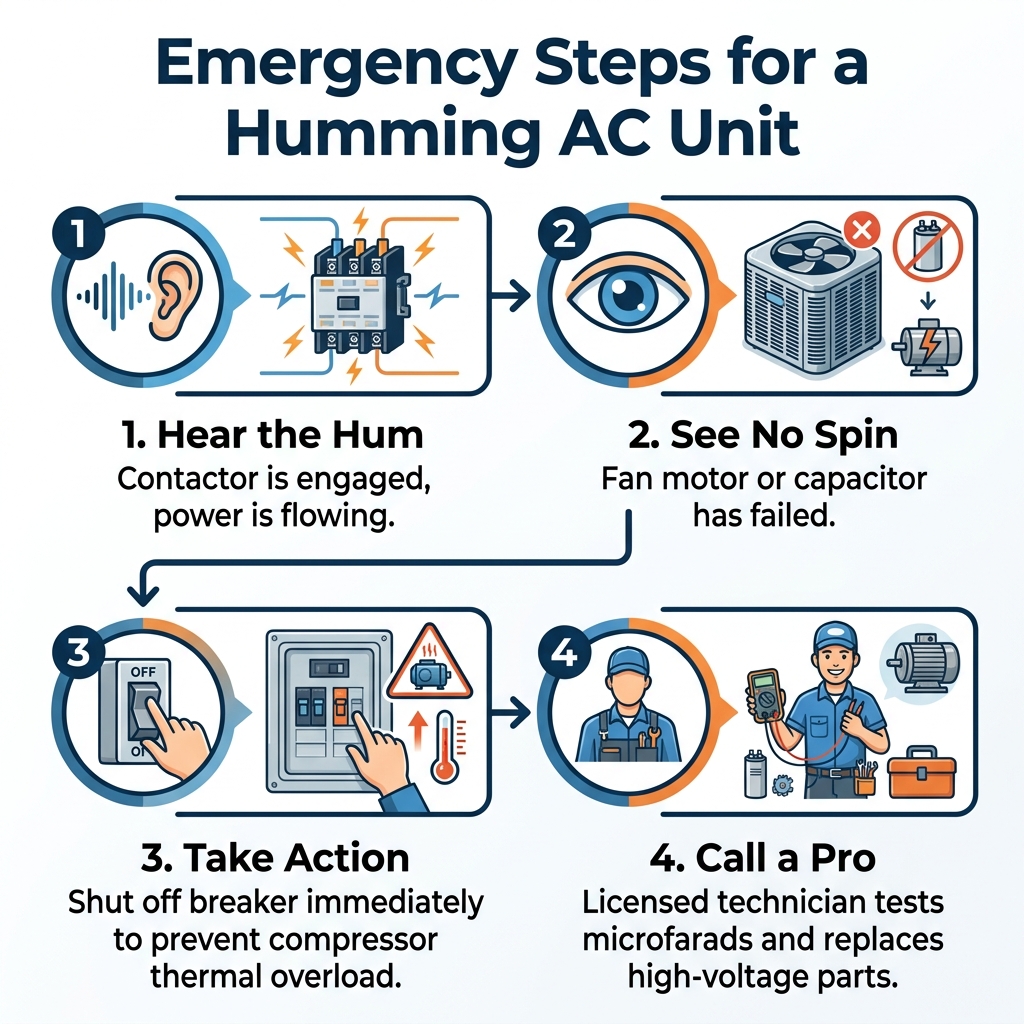
That distinct humming sound is actually a sign that high-voltage electricity is actively flowing into your outdoor unit. It means the contactor—the heavy-duty switch that controls power to the condenser—has successfully engaged. The compressor is receiving power and trying to run, but the fan mechanism that supports it has failed. When the fan does not turn, the system loses its ability to exhaust the heat it pulls from your home.
Ignoring this symptom, especially during peak summer cooling demand, is a fast track to catastrophic equipment failure. Your air conditioner is not designed to operate without active airflow across the outdoor coils. The moment you notice the fan is stationary while the unit buzzes, you must intervene to protect the internal components.
Time is of the essence when your outdoor fan stops working. Follow these immediate steps to cut the power and prevent secondary damage:
• Turn off the thermostat: Switch your indoor thermostat from "Cool" to the "Off" position. This stops the primary call for cooling.
• Flip the breaker: Locate your home's main electrical panel and find the dedicated breaker for the air conditioner. Switch it to the "Off" position to ensure no high-voltage electricity continues to reach the outdoor condenser.
• Check the outdoor disconnect: If you cannot locate the breaker, pull the outdoor disconnect switch located in the gray box mounted on the wall near your condenser unit.
Once the power is fully secured, you have successfully stopped the immediate threat to your system. The next step is understanding exactly why this failure happens and why professional intervention is required to get your cooling restored.
Many homeowners assume that a broken fan simply means the house won't cool down as quickly. The reality is far more severe. The condenser fan and the compressor share a critical mechanical relationship. Understanding this relationship reveals why leaving a humming unit running is one of the most expensive mistakes you can make.
The compressor is the heart of your cooling system. Its job is to pump chemical refrigerant through the lines, pressurizing it so it can absorb heat from inside your home and release it outside. This pressurization process generates an immense amount of internal heat. The fan's sole responsibility is to pull cooler outside air through the metal fins of the condenser coil, rapidly dispersing that heat into the atmosphere.
With summer temperatures regularly exceeding 100°F in the Sacramento Valley, ambient heat accelerates this overheating process. Our technicians at Always Affordable Plumbing & HVAC see firsthand how quickly this extreme weather takes a toll on equipment. When the fan stops spinning, the heat has nowhere to go. The temperature inside the compressor spikes rapidly.
1. The Contactor Closes: The thermostat calls for cooling, sending voltage to the outdoor unit. The contactor snaps shut, delivering high voltage to both the compressor and the fan motor.
2. The Compressor Runs Hot: Because the fan is dead, the compressor operates without any cooling airflow. The internal temperature of the motor windings begins to climb dangerously high.
3. Thermal Overload Trips: Modern compressors have a built-in safety switch called a thermal overload protector. When the heat exceeds safe limits, this switch opens to cut power and save the compressor from melting.
4. Permanent Damage Occurs: If the system is left on, the compressor will cool down, the thermal switch will reset, and the cycle will start again. Repeatedly tripping the thermal overload degrades the internal wiring insulation, eventually leading to a grounded or completely burned-out compressor.
Replacing a fan motor or a starting component is a standard, manageable repair. Replacing a burned-out compressor often comes with a massive replacement cost and frequently leads to replacing the entire outdoor unit. Shutting off the power immediately is the absolute best way to protect your budget.

In our extensive experience troubleshooting cooling systems across the local area, when an air conditioner hums but fails to spin, the most common culprit our technicians find is a failed dual-run capacitor. To understand why this part causes such a specific symptom, you have to look at how outdoor fan motors operate.
A dual-run capacitor acts like a powerful, short-term battery. Air conditioning components require a massive jolt of electricity to start moving—often three to five times more energy than they need to keep running. The "dual" in the name refers to the fact that this single cylinder provides the starting jolt for two separate components: the compressor and the condenser fan motor.
When the fan side of the capacitor fails, the fan motor still receives its baseline voltage from the contactor (which creates the humming sound), but it lacks the heavy electrical torque required to overcome inertia and start spinning. The motor is essentially stuck in place, vibrating with electrical current but unable to rotate.
Because capacitors deal with immense amounts of stored energy, they are highly sensitive to heat, power surges, and age. If you want to learn more about the early warning signs, you can read about identifying the sound of a failing AC capacitor before it completely gives out.
Testing a capacitor is not a safe DIY project. Capacitors store lethal amounts of high-voltage energy, and they retain this electrical charge long after the main breaker has been turned off. Touching the wrong terminals can result in a severe electrical shock.
Licensed technicians carry specialized tools to safely discharge the stored energy before performing any work. Once the component is safe to handle, they use a specialized multimeter to check the dual-run capacitor microfarad rating against the manufacturer's exact specifications. If the microfarad reading falls outside the acceptable tolerance range (usually plus or minus 5%), the capacitor is effectively dead and must be replaced with a perfectly matched part to restore the system.
While a dead capacitor is the most frequent cause of a humming, stationary fan, mechanical failures can produce the exact same symptom. Even if the capacitor is sending the perfect electrical jolt, the fan cannot spin if it is physically restricted.
Over years of operation, the bearings inside the fan motor endure massive amounts of friction. If the motor loses its internal lubrication, is exposed to extreme weather, or simply reaches the end of its mechanical lifespan, the bearings can seize. A seized motor will hum as it tries to turn, but the internal friction is too great for the electrical torque to overcome.
Alternatively, the issue might not be internal at all. Debris from severe weather can easily jam the fan blades. Heavy sticks, thick accumulations of wet leaves, or even ice buildup during off-season heat pump operation can physically wedge against the metal blades, locking them in place while the motor hums in protest.
With the breaker completely turned OFF, you can perform a safe visual inspection of the top grille. Look down into the unit with a flashlight to see if a branch or heavy debris is blocking the blades. If the path is clear, the issue is internal.
• Electrical (Capacitor) — Underlying Cause: Component lost ability to store high-voltage starting charge. — Resolution Required: Professional discharge and replacement of the dual-run capacitor.
• Mechanical (Motor) — Underlying Cause: Internal bearings have seized due to heat, age, or lack of lubrication. — Resolution Required: Professional replacement of the condenser fan motor (and usually the capacitor).
• Physical (Obstruction) — Underlying Cause: Debris, sticks, or ice wedged against the fan blades. — Resolution Required: Safe removal of debris with power completely disconnected.
If you search online forums for advice on a humming air conditioner, you will inevitably encounter the "stick test." In our years of providing emergency HVAC repairs, our team has seen countless homeowners try taking a long stick or a screwdriver and pushing the fan blade through the top grille while the unit is humming to "jumpstart" the motor. This is incredibly dangerous advice that should never be followed.
The logic behind the stick test is that if the capacitor has failed, manually spinning the blades will provide the physical momentum needed to bypass the missing electrical start jolt. While this sometimes forces the fan to spin, the risks far outweigh any temporary cooling relief.
First and foremost, you are exposing yourself to rapidly moving metal blades and high-voltage electrical components. Slipping or dropping the tool into the unit while it is energized can cause severe injury or trigger a massive electrical short.
Beyond personal safety, jumpstarting a failing motor forces your cooling system to run outside of its designed electrical parameters. When a motor runs with a failed capacitor, its amp draw skyrockets. It pulls more electricity than the internal wiring is rated to handle. This excessive amp draw creates intense heat, which melts the insulation on the wires, damages the contactor, and can permanently fry the fan motor. What could have been a simple capacitor replacement quickly escalates into a multi-component electrical failure.
Any high-voltage diagnostics and troubleshooting must be left to licensed professionals who can measure the electrical draw safely and replace the failing parts before they cause systemic damage.
One of the most frustrating experiences for a homeowner is calling for an emergency repair, only to be told that a simple humming noise means the entire air conditioner needs to be replaced. Unfortunately, some contractors use a seized motor or a blown capacitor as an excuse to push for a full, expensive system replacement.
A humming condenser with a stationary fan is almost always a localized component failure, not a death sentence for the equipment. At Always Affordable Plumbing & HVAC, our team believes that working with a company that prioritizes transparent pricing and honest diagnostics ensures you aren't oversold. Replacing a capacitor or swapping out a seized fan motor is often a straightforward, highly cost-effective repair that can extend the life of your unit by several years.
Reliable emergency service focuses on fixing the immediate issue rapidly and transparently, rather than leveraging your discomfort to make a massive sale. One recent example involved a renter in a local mobile home park who faced an immediate cooling emergency when their system failed. A technician responded in record time that same day, provided a clear and honest quote, and worked directly with the client's specific needs to get the urgent repair completed efficiently.
Whether you rely on traditional air conditioning or modern heat pump systems, accurate diagnostics are the key to protecting your investment. A professional will isolate the exact cause of the hum, test the electrical tolerances, and provide a targeted repair that restores your comfort without draining your savings.
The hum indicates power is reaching the unit and the contactor is closed, but the starting component has failed. The lack of spin means either the dual-run capacitor cannot provide the necessary electrical jolt, or the fan motor bearings have completely seized. Because the compressor is still trying to run, it generates a loud, vibrating hum.
Absolutely not. Running the AC without the fan will cause the compressor to overheat rapidly. Without airflow to disperse the heat generated by the refrigerant cycle, the compressor will reach thermal overload, which can lead to permanent, catastrophic damage to the most expensive part of your system.
A humming outdoor unit with a stationary fan is the primary symptom of a failed capacitor. Other signs include a clicking noise from the cabinet, a system that struggles to start, or a bulging and leaking capacitor casing. However, confirming the failure requires a professional to test the microfarad rating with a multimeter.
While technically possible, it is highly discouraged due to severe safety risks. Pushing the blades forces the motor to run outside its designed electrical parameters, causing massive amp draw and overheating. It masks the underlying electrical problem and puts the entire system at risk of further electrical damage.
If the AC unit is not turning on at all (no hum, no click, complete silence), it usually indicates a thermostat issue, a tripped main breaker, or a blown fuse preventing power from reaching the unit. A hum proves high voltage is successfully present at the outdoor unit, narrowing the problem down to the motor or the capacitor.
Professionals discharge the stored high voltage safely before testing to prevent electrical shock. Once the unit is safe, they use a specialized multimeter to measure the exact microfarads and compare the reading against the manufacturer's rating to determine if the part has failed.
When you are faced with the stressful scenario of what to do when your AC unit hums but the fan refuses to spin, remember that the noise is an urgent cry for help, not a DIY project. Shutting off the power at the breaker was the absolute right first step to protect your compressor from thermal overload and save yourself from a massive replacement bill.
With the power safely disconnected, the next step is bringing in an expert who can accurately pinpoint the failure. Our team at Always Affordable Plumbing & HVAC is ready to help. Whether it is a worn-out fan motor or a drained capacitor, our licensed professionals have the tools to safely test the high-voltage components and replace them with precision. Schedule a comprehensive diagnostic inspection today to get your cooling system back online safely, efficiently, and correctly.
See what our satisfied customers have to say about their experience with Always Affordable
Plumbing & HVAC.

"Chappy was very skilled in his knowledge of my HVAC unit. I greatly appreciate the quick response and experienced tech. The whole endeavor was made less stressful by his humor and honest conversation. I find comfort in knowing I now have a shop i trust for the next time."
"Tony, James, Ronnie did an amazing job setting up our new AC! They were quick, efficient, considerate, and polite! We appreciate them scheduling us in on such short notice. Definitely recommend this company!"
"Prompt, professional service with kindness and care. They came out to address both plumbing and AC issues. I received a courtesy call before they arrived. All issues were resolved the same day with integrity and respect. Thankful for businesses like this. Absolutely recommend to those that I love."
"Excellent service! Jason came out promptly and in addition to doing my outside faucet he also put in new irrigation equipment! All done perfectly! Jason was lovely"
"Honest with the assessment; friendly and good manners. No high pressure sales. Just good to honest "tell it like you see it" Thought my kitchen disposer needed an overhaul. But Jason, there Plumber gave me an honest lesson on what was really happening. Saved me hundreds, if I went the route of replacing. Thank you!"
"Absolutely 5 stars. If you are looking for affordable ,professional and kind. Chappy was excellent and very knowledgeable . I called in the morning because my air conditioner stopped working he was here within hours and fixed my air with a smile. I highly recommend Chappy and Always Affordable plumbing and Hvac."
"Scott and James were great. They got there quickly and diagnosed the problem with my A/C.They did a very thorough job testing everything. Sent me pictures and called to keep me informed. Got it done the next day and everything is working fine. Be glad when I get home so I can enjoy my new system. Thanks guys for a great job."
"Chappy was very helpful. He knew our issue right away, cleaned our coils. He also came on the same day we called and got our AC blowing cold air again."
"After some timing ’curfuffles’ the Tech Jason arrived and not only completed a speedy install on my toilet, he was personable & professional. Because of the timing issues Jason was attentive and showed up with everything needed! No extra store runs 😊 I was very comfortable with having this Tech in my Daughter’s home. We will definitely use this Service again."