Seasonal Home Maintenance Checklist: Preventing HVAC and Plumbing Emergencies
Prevent HVAC emergencies with a seasonal home maintenance checklist. Why proactive scheduling beats waiting for sudden failures. See what needs attention now.



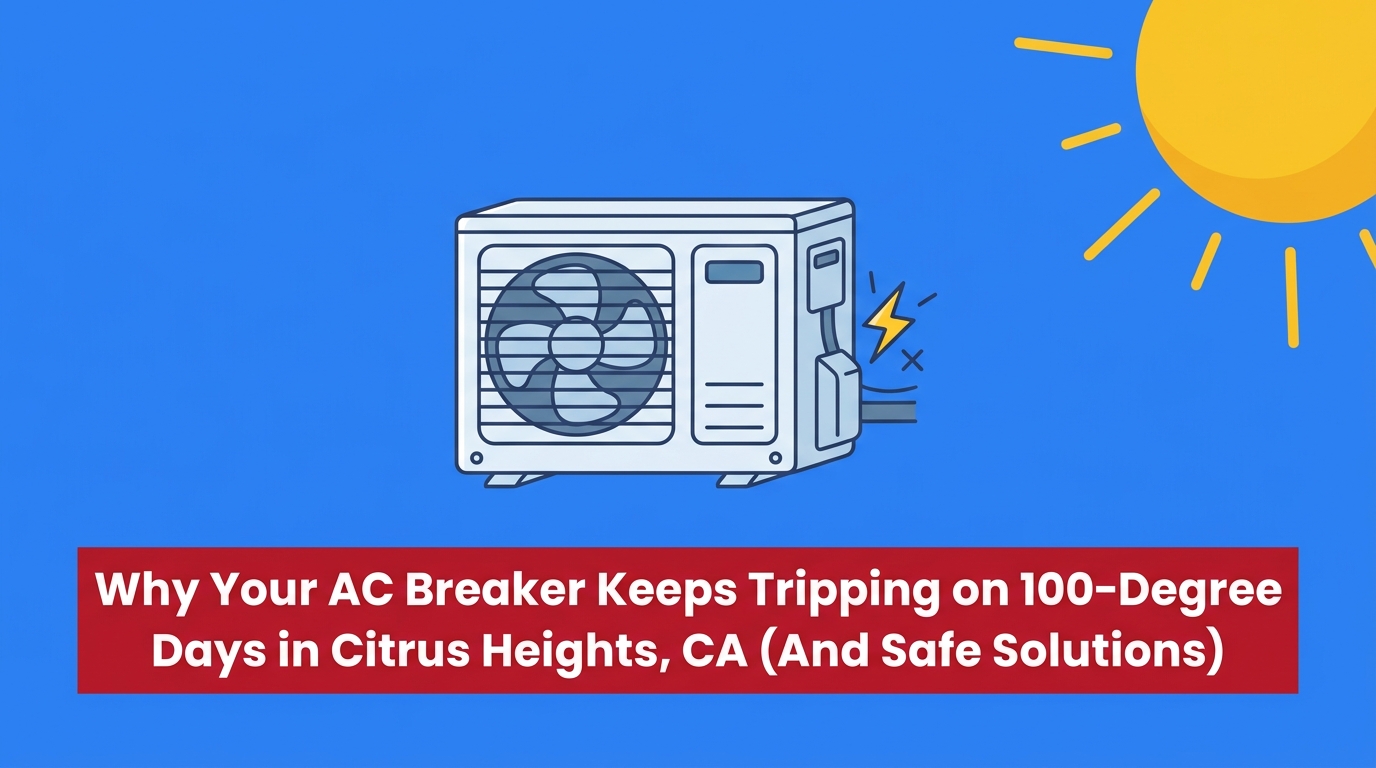
Summer in the Sacramento Valley is relentless, and figuring out exactly why your AC breaker keeps tripping on 100-degree days in Citrus Heights is the last thing you want to deal with when the house is already sweltering. At Always Affordable Plumbing & HVAC, our team typically sees a massive spike in emergency calls the moment these heatwaves hit. It is a deeply frustrating, sweaty moment for any homeowner. The vents suddenly stop blowing cold air, the outdoor condenser unit falls completely silent, and you realize the inside of your home is quickly turning into an oven. 100-degree summer heatwaves push every single structural and mechanical component of your property to its absolute limit, and your cooling equipment bears the brunt of that extreme weather.
If your cooling equipment is failing when you need it most, ensuring your HVAC system is properly evaluated is critical.
You walk out to the hot garage, open the metal door of the electrical panel, and see that familiar black switch flipped halfway to the middle position. The immediate temptation is incredibly obvious: just flip the switch back to the "on" position and get the cold air flowing again. However, that breaker tripping is never just a random glitch or a minor inconvenience. It is a loud, clear, and urgent symptom of a much larger mechanical or electrical strain happening within your system. Your air conditioner is crying out for help because it cannot handle the load it is being asked to carry. Resetting that switch without understanding the underlying root cause is a dangerous gamble with your home's electrical safety.
You are hot, tired, and understandably annoyed that the air conditioner decided to quit on the hottest afternoon of the year. It feels like a massive failure of your home's comfort system. In reality, however, that tripped breaker is actually a massive mechanical success. The primary, life-saving role of an electrical breaker is to protect your home and your family from devastating electrical fires.
Think of the breaker as a strict, uncompromising traffic cop for your home's electrical current. It constantly and precisely monitors the exact amount of electricity flowing from the main panel through the thick wires out to your cooling equipment. The breaker has a specific rating—usually 20 to 40 amps for a central air conditioner—and it will not allow the system to pull a single drop of electricity beyond that strict limit.
When the system pulls more power than the circuit is rated to safely handle, the breaker deliberately cuts the connection. This excessive amperage draw from an overworked compressor forces the breaker to snap shut. It essentially sacrifices your immediate indoor comfort to prevent the copper wires inside your walls from overheating and melting.
• Normal Operation — Amperage Draw: Within rated limits (e.g., 20-30 amps) — Breaker Response: Remains engaged, power flows freely — Wire Temperature Risk: Cool to warm, completely safe
• Startup Spike — Amperage Draw: Brief surge, within safety threshold — Breaker Response: Holds steady, absorbs the brief spike — Wire Temperature Risk: Warm, normal operating condition
• Overload Condition — Amperage Draw: Sustained pull above rated limits — Breaker Response: Trips immediately, completely cuts power — Wire Temperature Risk: Spikes rapidly, extremely high fire risk
If that mechanical safety switch did not exist, the excessive electrical draw would quickly overheat the wiring, melt the protective rubber insulation, and potentially ignite the dry wooden building materials surrounding the wires. When you find yourself needing professional air conditioning repair, it is very often because this crucial safety mechanism did exactly what it was designed to do.
The mechanical reality of Sacramento Valley triple-digit heatwaves is brutal on outdoor equipment. The prolonged nature of these local heatwaves means that ambient temperatures stay dangerously high even long after the sun goes down. Your outdoor condenser unit never gets a chance to properly cool off overnight, leading to severe, cumulative thermal stress that builds up day after day.
When your system is fighting these relentless temperatures, the compressor—which acts as the heavy-lifting heart of your entire cooling system—has to work incredibly hard. As the compressor struggles against the extreme heat and the high internal pressure of the refrigerant gas, it demands massive power spikes just to get its internal motors turning. HVAC professionals call this measurement Locked Rotor Amps (LRA). If the compressor is seizing up, stalling, or fighting against swollen internal parts, the LRA skyrockets, drawing far more electricity than the circuit can safely provide.
Furthermore, extreme ambient temperatures cause a phenomenon known as thermal expansion. The metal components inside the outdoor unit physically swell in the heat, and the internal pressure of the refrigerant rises significantly. This forces the electrical motors to push much harder against actual physical resistance. The continuous operation without adequate cooldown periods eventually pushes the electrical draw right past the breaker's tipping point.
Your outdoor unit relies on hundreds of very thin, fragile aluminum fins to release the heat it pulls from the inside of your house. When those coils are choked with dust, pollen, or yard debris, the heat simply cannot escape into the outside air.
• Blocked airflow: A blanket of dirt acts like a winter coat on your air conditioner, trapping the intense heat inside the metal cabinet where the compressor lives.
• Trapped heat: Because the heat cannot dissipate, the system runs hotter and longer, desperately trying to achieve the cool temperature you set on your indoor thermostat.
• Electrical strain: There is a direct, undeniable correlation between this poor airflow and increased electrical draw. The hotter the compressor runs, the more electricity it consumes, eventually triggering that safety shutoff in your garage.
Sometimes the root of the problem isn't just the air conditioner itself; it is the infrastructure of the house. In our years of servicing the local area, we often find that many Citrus Heights homes with older electrical panels are simply not equipped to handle the sustained, heavy power demands of modern, high-capacity cooling systems.
When many of these local homes were originally built decades ago, the electrical grids and main breaker panels were designed for a very different era of energy consumption. A brand-new, high-efficiency air conditioner might run longer, slower cycles to properly dehumidify the air, maintaining a steady but continuous draw on the electrical panel that older infrastructure wasn't designed to support.
Over decades of heavy summer use, aging electrical components naturally degrade. The internal springs, clips, and metal contacts inside the breaker switches weaken over time. As these physical components weaken, their threshold for tripping lowers. A breaker that was originally rated to hold 30 amps might start tripping at 22 amps simply because it is old, worn out, and overly sensitive to normal electrical flow.
Additionally, older panels frequently suffer from loose wire connections. Electricity flowing through a loose or corroded connection generates excess heat at the terminal. The breaker senses this ambient heat and trips, assuming there is a dangerous electrical overload happening, even if the air conditioner is actually operating normally. This hidden conflict between new cooling technology and old wiring is a major source of summer breakdowns.
When the house is sweltering and your family is uncomfortable, the urge to just keep resetting the breaker is incredibly strong. You must resist this urge at all costs. Repeatedly forcing the breaker back into the "on" position is one of the most dangerous things a homeowner can do.
Each time you force a reset, you degrade the delicate internal mechanisms of the breaker switch. You are actively breaking down the one safety device standing between your home and an electrical fire. When you override the safety shutoff, you force raw, high-voltage electricity through overheated, stressed wires. If the root cause is a short circuit or a completely seized compressor, you are essentially pumping fuel into a potential fire hazard.
If you notice an AC making a buzzing noise accompanied by a tripped breaker, you have a serious mechanical failure on your hands that requires immediate professional attention.
Our technicians recommend following this strict "one reset rule" to protect your home before calling for professional help:
1. Turn off the indoor thermostat: Before you even touch the electrical panel in the garage, switch your indoor thermostat completely to the "off" position to stop the system from calling for cooling.
2. Locate the tripped breaker: Find the correct switch in your main panel. It will be resting loosely in the middle position, neither fully on nor fully off.
3. Firmly reset it exactly once: Push the switch completely to the "off" position until you feel a firm click, then push it decisively to the "on" position.
4. Turn the thermostat back on: Set the system back to cool and listen carefully to how the outdoor unit sounds when it tries to start.
5. Stop immediately if it trips again: If the breaker trips immediately upon startup, or trips again after just a few minutes of running, leave it off entirely. Do not reset it a second time under any circumstances.


What exactly is happening inside that large metal box sitting outside your house to cause such a massive electrical spike? When our technicians arrive at a sweltering home, a pattern we see often is that beyond just the extreme weather, there are several common mechanical failures that require professional attention to resolve.
Failing Capacitors: The capacitor is essentially a massive, heavy-duty battery that stores energy to give the compressor a powerful jolt during startup. If the capacitor is weak, bulging, or completely dead, the compressor tries to start without that necessary extra boost. It stalls, hums loudly, and pulls a massive amount of electricity directly from the panel, instantly tripping the breaker.
Grounded Compressors: Inside the heavy steel shell of the compressor, electrical windings are tightly packed and heavily insulated. Over time, due to extreme heat, friction, and wear, that protective insulation can break down. If the bare electrical wire touches the copper or steel casing of the compressor, it creates a "grounded" state. This is a catastrophic failure that causes an immediate and dangerous electrical short, instantly throwing the breaker to protect the rest of the house.
Short Circuits in Wiring: The outdoor unit is exposed to the harsh elements year-round. Vibrations from the large fan motor can slowly rub wires against sharp metal edges, wearing away the rubber insulation. Pests like mice or insects frequently chew through wiring or build nests inside the electrical contactor. These short circuits bypass the normal, safe flow of electricity, causing a massive power surge that trips the safety switch.
Staying on top of routine AC maintenance is the absolute best way to catch these failing parts—like weak capacitors or frayed, exposed wires—before they leave you stranded and sweating on a 100-degree day.
A tripped breaker leaves you in the dark, both literally and figuratively. You know the system is pulling too much power, but you cannot safely determine if the fault lies in the outdoor compressor, the indoor wiring, or the electrical panel itself. Diagnosing high-voltage electrical issues requires specialized tools, protective gear, and years of hands-on training. Guessing at the problem or swapping parts blindly is incredibly dangerous and often very expensive.
Professional technicians use calibrated multimeters to safely test the exact amperage draw of the compressor while it runs. They can measure the precise microfarad output of the capacitor to see if it is failing under load. More importantly, a trained expert knows exactly how to isolate the electrical panel from the HVAC unit to pinpoint the exact point of failure safely, ensuring no electricity is flowing where it shouldn't be.
When you call Always Affordable Plumbing & HVAC for emergency AC service, you deserve a transparent, honest evaluation. Our team provides transparent, budget-friendly emergency repairs to get the system running safely without hidden costs. We focus on finding the actual root cause—whether that is a simple, inexpensive electrical component or a necessary panel upgrade—rather than using a tripped breaker as a high-pressure scare tactic to force a system replacement.
A tripping breaker during a Sacramento Valley heatwave is a serious safety warning, never a weekend DIY project. It is your home's way of telling you that the electrical current has reached a highly dangerous level. Ignoring this warning or repeatedly forcing the system to run puts your property and your family at severe risk. Understanding why your AC breaker keeps tripping on 100-degree days in Citrus Heights is the first step toward a permanent, safe solution.
Do not wait until the house becomes dangerously hot or the wiring inside your walls suffers permanent, irreversible damage. We highly encourage immediate professional intervention to restore safe, reliable cooling before the situation escalates. Contact your local experts today for a thorough, honest diagnostic, so you can stop sweating and start enjoying a cool, comfortable home with total peace of mind.
Why does my AC trip the breaker when it's hot outside?
When outside temperatures soar, your air conditioner has to work much harder and run much longer cycles to cool your home. This continuous, heavy operation increases the internal pressure and heat within the compressor. As the compressor struggles against this extreme thermal stress, it draws significantly more electricity, eventually exceeding the electrical circuit's safe capacity and tripping the breaker to prevent a fire.
Is it safe to reset an AC breaker?
It is generally safe to reset an AC breaker exactly one time. Sometimes a brief, random power fluctuation from the utility grid can cause a nuisance trip. However, if the breaker trips again immediately or shortly after restarting the system, it is no longer safe to reset it, as this indicates a serious mechanical or electrical fault that requires a professional.
How long should I wait to reset my AC breaker?
You should wait at least 15 to 30 minutes before attempting to reset a tripped AC breaker. This brief waiting period allows the severely overheated internal components of the outdoor compressor to cool down slightly. It also allows the delicate internal mechanisms of the breaker switch itself to return to a normal, safe operating temperature before handling electrical current again.
Why is my AC unit not turning on after a power outage?
After a neighborhood power outage, your home's electrical grid often experiences a massive surge of electricity when the power is finally restored. This sudden, violent spike can easily trip the dedicated breaker for your air conditioner in order to protect the sensitive equipment from frying. Check your main electrical panel and reset the breaker once if it has tripped.
Can a severely clogged air filter cause my breaker to trip?
Yes, a severely clogged air filter can absolutely cause your breaker to trip. When the filter is completely blocked by dust and pet hair, the indoor blower motor has to work much harder to pull air through the system, causing it to overheat and draw excess amperage. Replacing your filter regularly ensures proper airflow and prevents this unnecessary electrical strain on your panel.
See what our satisfied customers have to say about their experience with Always Affordable
Plumbing & HVAC.

"Chappy was very skilled in his knowledge of my HVAC unit. I greatly appreciate the quick response and experienced tech. The whole endeavor was made less stressful by his humor and honest conversation. I find comfort in knowing I now have a shop i trust for the next time."
"Tony, James, Ronnie did an amazing job setting up our new AC! They were quick, efficient, considerate, and polite! We appreciate them scheduling us in on such short notice. Definitely recommend this company!"
"Prompt, professional service with kindness and care. They came out to address both plumbing and AC issues. I received a courtesy call before they arrived. All issues were resolved the same day with integrity and respect. Thankful for businesses like this. Absolutely recommend to those that I love."
"Excellent service! Jason came out promptly and in addition to doing my outside faucet he also put in new irrigation equipment! All done perfectly! Jason was lovely"
"Honest with the assessment; friendly and good manners. No high pressure sales. Just good to honest "tell it like you see it" Thought my kitchen disposer needed an overhaul. But Jason, there Plumber gave me an honest lesson on what was really happening. Saved me hundreds, if I went the route of replacing. Thank you!"
"Absolutely 5 stars. If you are looking for affordable ,professional and kind. Chappy was excellent and very knowledgeable . I called in the morning because my air conditioner stopped working he was here within hours and fixed my air with a smile. I highly recommend Chappy and Always Affordable plumbing and Hvac."
"Scott and James were great. They got there quickly and diagnosed the problem with my A/C.They did a very thorough job testing everything. Sent me pictures and called to keep me informed. Got it done the next day and everything is working fine. Be glad when I get home so I can enjoy my new system. Thanks guys for a great job."
"Chappy was very helpful. He knew our issue right away, cleaned our coils. He also came on the same day we called and got our AC blowing cold air again."
"After some timing ’curfuffles’ the Tech Jason arrived and not only completed a speedy install on my toilet, he was personable & professional. Because of the timing issues Jason was attentive and showed up with everything needed! No extra store runs 😊 I was very comfortable with having this Tech in my Daughter’s home. We will definitely use this Service again."