Seasonal Home Maintenance Checklist: Preventing HVAC and Plumbing Emergencies
Prevent HVAC emergencies with a seasonal home maintenance checklist. Why proactive scheduling beats waiting for sudden failures. See what needs attention now.



The late August / pre-fall transition is finally approaching, and while you might be ready for a break from the heat, prioritizing pre-fall HVAC inspections: catching summer wear before heating season begins is the most effective way to protect your home. Your air conditioner has been working overtime for months, battling intense temperatures to keep your living space comfortable. However, the relief you feel indoors masks a hidden reality: your equipment is exhausted. In our years of keeping local homes comfortable, the team at Always Affordable Plumbing & HVAC frequently sees a dangerous misconception: many homeowners assume that once the cooling season ends, the air conditioner simply powers down and the furnace takes over with a fresh start. This is a dangerous misconception that leads to unexpected mid-winter breakdowns.
Your heating and cooling equipment does not operate as two entirely separate entities. Instead, they function as a combined HVAC system that shares critical internal components. The blower motor, the ductwork, the air handler, and the filtration mechanisms endure year-round stress. When these shared parts accumulate fatigue during the grueling summer months, that strain directly transfers into the winter season. The transition from heavy cooling to heavy heating requires a professional assessment to ensure these overlapping parts survive the shift in weather.
The mechanical bridge: Think of the late summer window as a mechanical bridge between two extreme seasons. Proper heating system preparation is not just about turning on the furnace to see if it sparks; it is about evaluating the toll the summer heat took on the shared infrastructure. Ignoring this transition period forces a dormant, potentially compromised furnace to fire up and push air through a system that is already struggling. Catching undetected summer heat stress now is the only way to prevent a complete system failure during the first major cold snap of the year.
To truly protect your home, you have to understand how your system operates as a cohesive unit. The furnace and the air conditioner are not isolated appliances sitting next to each other in the garage or attic; they are deeply integrated. The air handler and your home's ductwork serve as the respiratory system for both heating and cooling. The fatigue that builds up in these shared pathways does not magically reset when you switch your thermostat from 'cool' to 'heat'.
Preventive maintenance during the pre-fall window is largely about protecting the dormant furnace from the overworked air conditioner's residual strain. When you skip this assessment, you force your heating equipment to compensate for summer-induced wear and tear. Here is how that seasonal transition impacts your equipment:
1. Continuous operation strain: The components responsible for moving air never get a day off. They run constantly from May through September, accumulating thousands of hours of wear.
2. Vibration and loosening: Months of continuous fan operation cause electrical connections, belts, and mounting hardware to vibrate loose over time.
3. Friction and lubrication loss: Moving parts lose their essential lubrication after heavy summer usage, leading to metal-on-metal friction just as the furnace needs those parts to distribute heat.
The blower motor is the most critical shared component in your entire system. Whether your air conditioner is chilling the air or your furnace is heating it, the blower motor is the engine that pushes that treated air through your ductwork and into your rooms. It operates continuously, bearing the brunt of the workload all year long.
When this motor spends the entire summer pushing against dirty filters, closed vents, or restricted airflow, it overheats and accumulates microscopic wear. Heading into winter with a fatigued blower motor leaves your furnace highly vulnerable. If the motor fails in December, your furnace cannot distribute heat, and safety switches will shut the entire system down to prevent a fire hazard.
• Blower Motor — Summer Function (Cooling): Pushes chilled air through ducts — Winter Function (Heating): Pushes heated air through ducts — Impact of Skipped Maintenance: Motor burnout, complete loss of airflow, system shutdown
• Air Filter — Summer Function (Cooling): Traps summer dust and pollen — Winter Function (Heating): Traps winter dust and pet dander — Impact of Skipped Maintenance: Restricted airflow, overheating heat exchanger, higher bills
• Ductwork — Summer Function (Cooling): Delivers cold air to rooms — Winter Function (Heating): Delivers warm air to rooms — Impact of Skipped Maintenance: Poor temperature balance, wasted energy, strained blower
• Thermostat — Summer Function (Cooling): Signals AC to cycle on/off — Winter Function (Heating): Signals furnace to cycle on/off — Impact of Skipped Maintenance: Short-cycling, inaccurate room temperatures, wasted fuel
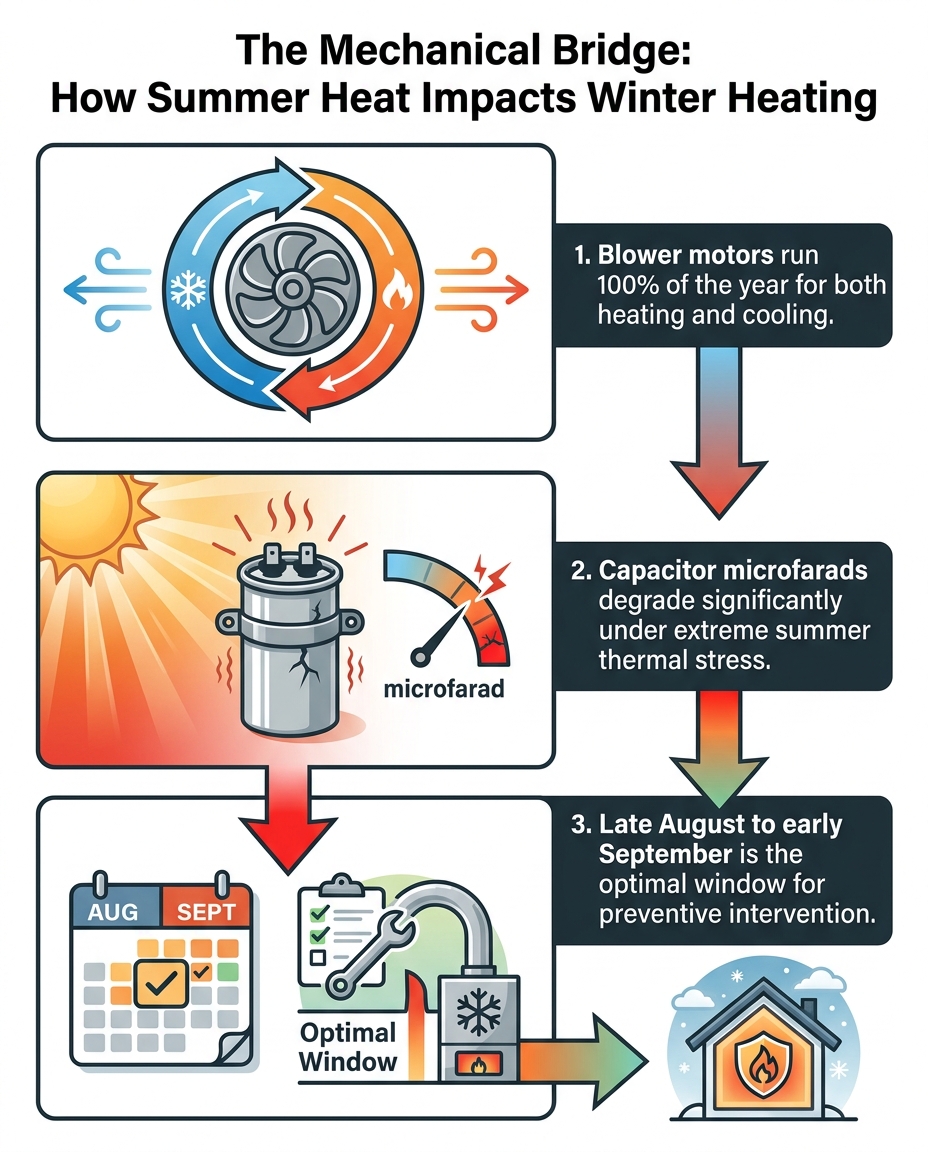

While moving parts like the blower motor suffer from physical friction, your system's electrical components face an entirely different enemy: extreme thermal stress. Capacitors are among the most vulnerable parts in your entire setup. These small, cylindrical components act like massive batteries, storing electricity and delivering a powerful jolt of energy to start the heavy motors inside your system. Without a functioning capacitor, your motors simply cannot draw enough power from your home's electrical grid to start spinning.
Extreme ambient outdoor temperatures, combined with the intense internal heat generated by continuous operation, create a hostile environment for these electronics. This continuous thermal assault degrades the component's internal structure over the summer months. As the capacitor breaks down, it loses its ability to store and deliver the necessary electrical charge. This forces the motors to struggle during startup, drawing excess electricity, running hotter, and accelerating air conditioning wear and tear. By the time fall arrives, a heat-damaged capacitor is often hanging on by a thread.
The health of a capacitor is measured in microfarads. In simple terms, a microfarad rating indicates how much electrical charge the component can hold. During our routine service calls across the local area after a long, hot summer, our technicians frequently see severe capacitor microfarad degradation from summer heat. A capacitor rated for 45 microfarads might drop to 30 or lower after months of thermal stress.
Warning signs of a failing capacitor include:
• Hard starting: The system struggles, stutters, or hesitates before finally turning on.
• Clicking noises: A distinct clicking sound from the outdoor unit when the thermostat calls for cooling or heating.
• Humming motors: The motor hums loudly but the fan blades refuse to spin.
• Random shut-offs: The system powers down unexpectedly before reaching the target temperature.
A critical safety warning: Assessing and testing these electrical parts requires specialized professional tools like a digital multimeter. Capacitors store lethal amounts of high-voltage electricity, even when the main power to the unit is turned off. Measuring the drop in microfarads to catch a failing component before it leaves your system stranded is strictly a job for a licensed professional. This should never be attempted as a DIY project.
Beyond mechanical friction and electrical degradation, your system battles physical accumulation. Continuous summer airflow pulls vast amounts of airborne debris through your return vents. Dust, pollen, pet dander, and microscopic pollutants are constantly cycled through the internal cabinet. While your air filter catches a large portion of this debris, a heavily used system will inevitably experience internal buildup.
A clogged, dirty system forces the blower motor to work significantly harder just to push the same amount of air. This increases energy consumption and drives up your monthly utility costs. More importantly, this summer buildup directly threatens your furnace's ability to operate safely in the winter. Resetting your system's baseline efficiency through annual HVAC maintenance is the only way to clear this debris before the heating season begins.
The process of clearing summer buildup involves several critical seasonal steps:
1. Evaluating the blower wheel: Technicians inspect the cup-shaped blades of the blower wheel. Even a tiny layer of dust on these blades drastically reduces the fan's ability to scoop and move air.
2. Clearing the condensate drain: Summer humidity causes gallons of water to flow through the condensate line. Algae and sludge build up over time, risking water damage if not flushed before winter.
3. Cleaning the internal cabinet: Removing accumulated debris from the air handler prevents that dust from burning off and creating foul odors when the furnace ignites.
4. Replacing saturated filters: Upgrading to a clean, high-quality filter ensures the furnace has the unrestricted airflow it needs to breathe properly.
The heat exchanger is the heart of your furnace. It is a series of metal coils or tubes that safely separate the toxic combustion gases (like carbon monoxide) from the clean air blowing into your home. The burner flames heat the metal exchanger, and the blower motor pushes air over the hot metal to warm your house.
When summer dust buildup coats the internal components, it acts as a thick blanket of insulation. Furthermore, if the blower motor is weakened or the filter is clogged, there is not enough airflow passing over the heat exchanger to keep the metal cool. This causes the furnace to overheat and short-cycle (turn off rapidly for safety). Persistent overheating causes the metal heat exchanger to expand and contract violently, eventually leading to stress cracks. A cracked heat exchanger compromises your home's safety by allowing carbon monoxide to leak into the airstream, resulting in a mandatory system shutdown and major, expensive repairs.
The window between the end of peak cooling and the beginning of heavy heating is narrow. Identifying the specific transitional weeks as the optimal time for a professional assessment gives you a strategic advantage. The late August / pre-fall transition is the ideal moment to strike, allowing you to address wear and tear on your own terms rather than during a midnight emergency.
With Sacramento and Central Valley triple-digit heat waves pushing outdoor equipment to its absolute breaking point, the extreme thermal stress placed on components here makes this transitional inspection far more urgent than in milder climates. Based on what our technicians see in the field every day, our regional weather doesn't just warm up the equipment; it bakes the wiring, dries out the capacitors, and thickens the lubricants. We know firsthand that when you subject a system to 105-degree days for weeks on end, the internal damage is real, even if the unit is still technically blowing cold air.
The risk of waiting: Waiting until the first freezing night to turn on your furnace is a gamble. When the first major cold snap hits, every homeowner in the area discovers their heating problems at exactly the same time. This leads to competing with hundreds of emergency calls, enduring a freezing home for days, and paying premium rates for urgent repairs. Catching minor wear now prevents catastrophic failure when the system is under maximum load. Framing the inspection as a strategic, proactive move ensures seamless comfort as the seasons change.
The most reliable way to extend the lifespan of your HVAC system is through consistent, scheduled check-ups. Catching summer wear early is always vastly more affordable and less stressful than paying for emergency winter repairs. When a professional technician evaluates your system during the pre-fall window, they are looking for the microscopic signs of fatigue that the average homeowner cannot see or hear.
A structured maintenance plan takes the guesswork out of these seasonal transitions. Instead of trying to remember to call for service every August and March, a dedicated program ensures your equipment receives the exact care it needs, precisely when it needs it. Proactive care ensures the system operates at peak efficiency, which lowers utility costs, reduces the likelihood of sudden breakdowns, and keeps your manufacturer warranties fully valid.
The smart solution: The Always Affordable Membership Club is the ideal, budget-friendly way to ensure this critical pre-fall inspection happens automatically every year. By joining a routine HVAC maintenance plan, you prevent expensive surprises, secure priority scheduling, and gain the confidence that your system has been professionally cleared to handle whatever winter weather comes your way.
What happens if I don't service my furnace before winter?
Skipping pre-winter service leaves your furnace vulnerable to sudden breakdowns during the first cold snap. Dust buildup from the summer restricts airflow, which can cause the system to overheat and shut down automatically for safety. Additionally, minor issues like weakened blower motors or loose electrical connections can quickly escalate into expensive, catastrophic failures when the system is put under heavy heating demand.
Why do HVAC capacitors fail in the summer?
Capacitors fail primarily due to extreme thermal stress and continuous operation. These components are highly sensitive to heat, and the combination of triple-digit outdoor temperatures and internal operating heat degrades their ability to store electrical charge. Over time, this heat exposure causes the microfarad rating to drop, eventually leaving the capacitor too weak to start the system's heavy motors.
When is the best time for fall HVAC maintenance?
The best time for fall maintenance is during the late August to early September transitional window. Scheduling during this period allows technicians to assess and resolve the wear and tear caused by heavy summer cooling before the furnace is needed. It also ensures your system is fully prepared and safe to operate before the first freezing night arrives, helping you avoid the rush of emergency calls.
What is included in a fall HVAC tune up?
A comprehensive fall tune-up includes a thorough inspection of both shared components and dedicated heating parts. Technicians will test electrical connections, measure capacitor microfarads, inspect the blower motor for wear, and evaluate the heat exchanger for dangerous cracks. They will also clean internal debris, check safety limit switches, and ensure the thermostat is properly calibrated for the heating season.
How do I prepare my HVAC for winter?
Preparing your system for winter starts with replacing your air filter to guarantee unrestricted airflow. You should also ensure all indoor vents are fully open and unblocked by furniture, and clear any leaves or debris away from your outdoor unit. Most importantly, scheduling a professional inspection is critical to verify that the internal mechanical and electrical components are safe and ready for heavy heating loads.
Can extreme summer heat cause my furnace to fail in the winter?
Yes, extreme summer heat can absolutely cause a winter furnace failure because the two systems share critical parts. If the blower motor, ductwork, or internal wiring is damaged or fatigued by heavy summer cooling demands, that damage carries over into the winter. When the furnace attempts to use those same weakened components to distribute heat, the entire system can fail under the strain.
See what our satisfied customers have to say about their experience with Always Affordable
Plumbing & HVAC.

"Chappy was very skilled in his knowledge of my HVAC unit. I greatly appreciate the quick response and experienced tech. The whole endeavor was made less stressful by his humor and honest conversation. I find comfort in knowing I now have a shop i trust for the next time."
"Tony, James, Ronnie did an amazing job setting up our new AC! They were quick, efficient, considerate, and polite! We appreciate them scheduling us in on such short notice. Definitely recommend this company!"
"Prompt, professional service with kindness and care. They came out to address both plumbing and AC issues. I received a courtesy call before they arrived. All issues were resolved the same day with integrity and respect. Thankful for businesses like this. Absolutely recommend to those that I love."
"Excellent service! Jason came out promptly and in addition to doing my outside faucet he also put in new irrigation equipment! All done perfectly! Jason was lovely"
"Honest with the assessment; friendly and good manners. No high pressure sales. Just good to honest "tell it like you see it" Thought my kitchen disposer needed an overhaul. But Jason, there Plumber gave me an honest lesson on what was really happening. Saved me hundreds, if I went the route of replacing. Thank you!"
"Absolutely 5 stars. If you are looking for affordable ,professional and kind. Chappy was excellent and very knowledgeable . I called in the morning because my air conditioner stopped working he was here within hours and fixed my air with a smile. I highly recommend Chappy and Always Affordable plumbing and Hvac."
"Scott and James were great. They got there quickly and diagnosed the problem with my A/C.They did a very thorough job testing everything. Sent me pictures and called to keep me informed. Got it done the next day and everything is working fine. Be glad when I get home so I can enjoy my new system. Thanks guys for a great job."
"Chappy was very helpful. He knew our issue right away, cleaned our coils. He also came on the same day we called and got our AC blowing cold air again."
"After some timing ’curfuffles’ the Tech Jason arrived and not only completed a speedy install on my toilet, he was personable & professional. Because of the timing issues Jason was attentive and showed up with everything needed! No extra store runs 😊 I was very comfortable with having this Tech in my Daughter’s home. We will definitely use this Service again."