Seasonal Home Maintenance Checklist: Preventing HVAC and Plumbing Emergencies
Prevent HVAC emergencies with a seasonal home maintenance checklist. Why proactive scheduling beats waiting for sudden failures. See what needs attention now.



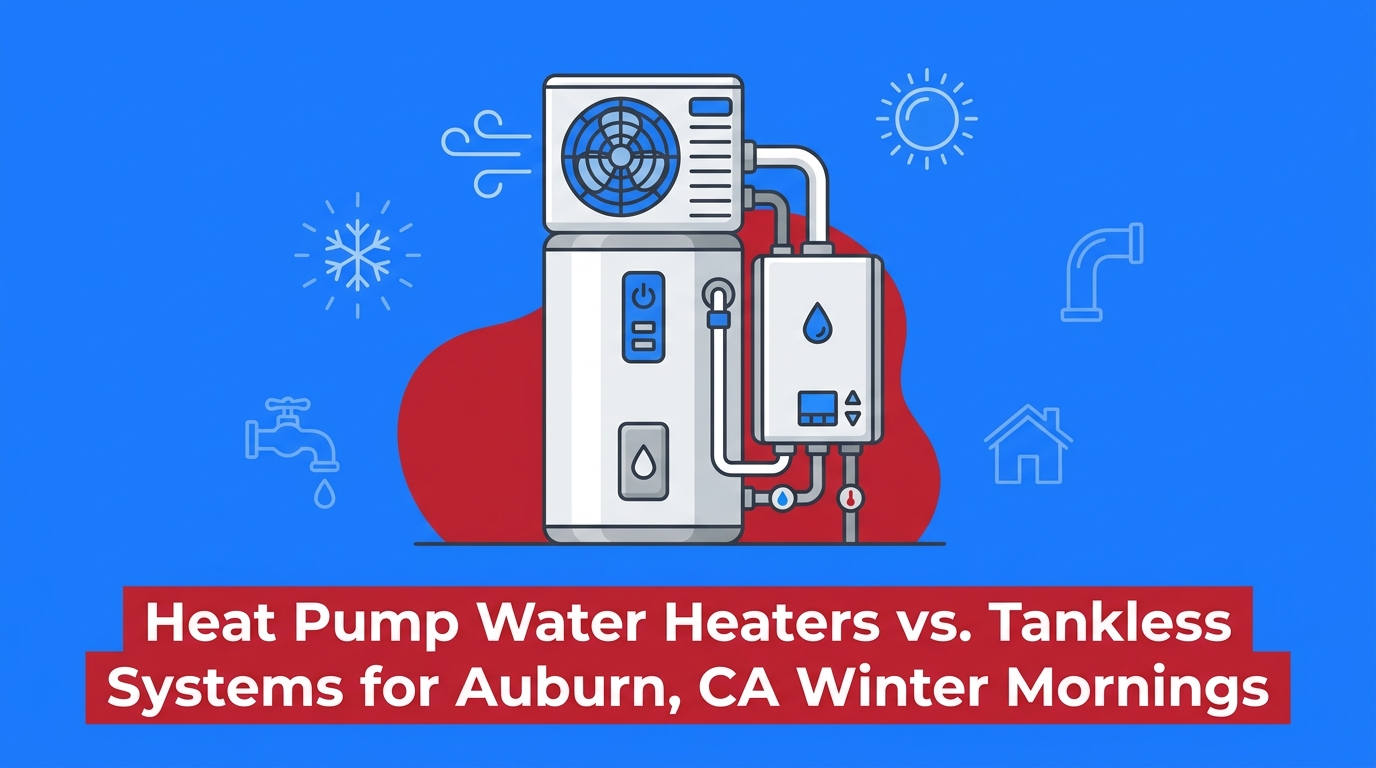
A common misconception in home improvement is that high-efficiency appliances deliver the exact same performance year-round, regardless of what the weather is doing outside. When evaluating Heat Pump Water Heaters vs. Tankless Systems for Auburn's Colder Winter Mornings, our team at Always Affordable Plumbing & HVAC has found that assumption quickly falls apart. The truth is, the environment directly surrounding your water heating equipment dictates how well it performs, how much energy it consumes, and most importantly, how fast it can deliver a hot shower when you need it most. If you are exploring water heater options, understanding how our local climate impacts performance is the critical first step.
Year after year, we see many Auburn homeowners facing a concrete problem as the seasons change: balancing the slower recovery time of a hybrid system against the unlimited, on-demand flow of a tankless unit when winter weather hits. The primary decision point comes down to prioritizing high-efficiency electric operation versus guaranteeing unlimited hot water for busy morning family routines. You have to look beyond the generic energy efficiency stickers on the side of the tank. To make the right choice for your home, you need a technical understanding of how local microclimates dictate system performance, especially when the temperature drops below freezing.
The environmental factors surrounding your home play a massive role in how hard your plumbing appliances have to work. The Auburn microclimate presents unique challenges that you will not find down on the Sacramento valley floor. In our extensive experience working throughout the local area, we know firsthand that during the winter months, the groundwater temperatures in the Sierra foothills drop significantly. This means the water entering your home from the municipal supply or your private well is substantially colder than it is during the summer. Your water heater has to work much harder to bridge the gap between that frigid incoming water and the comfortable 120-degree output you expect at the showerhead.
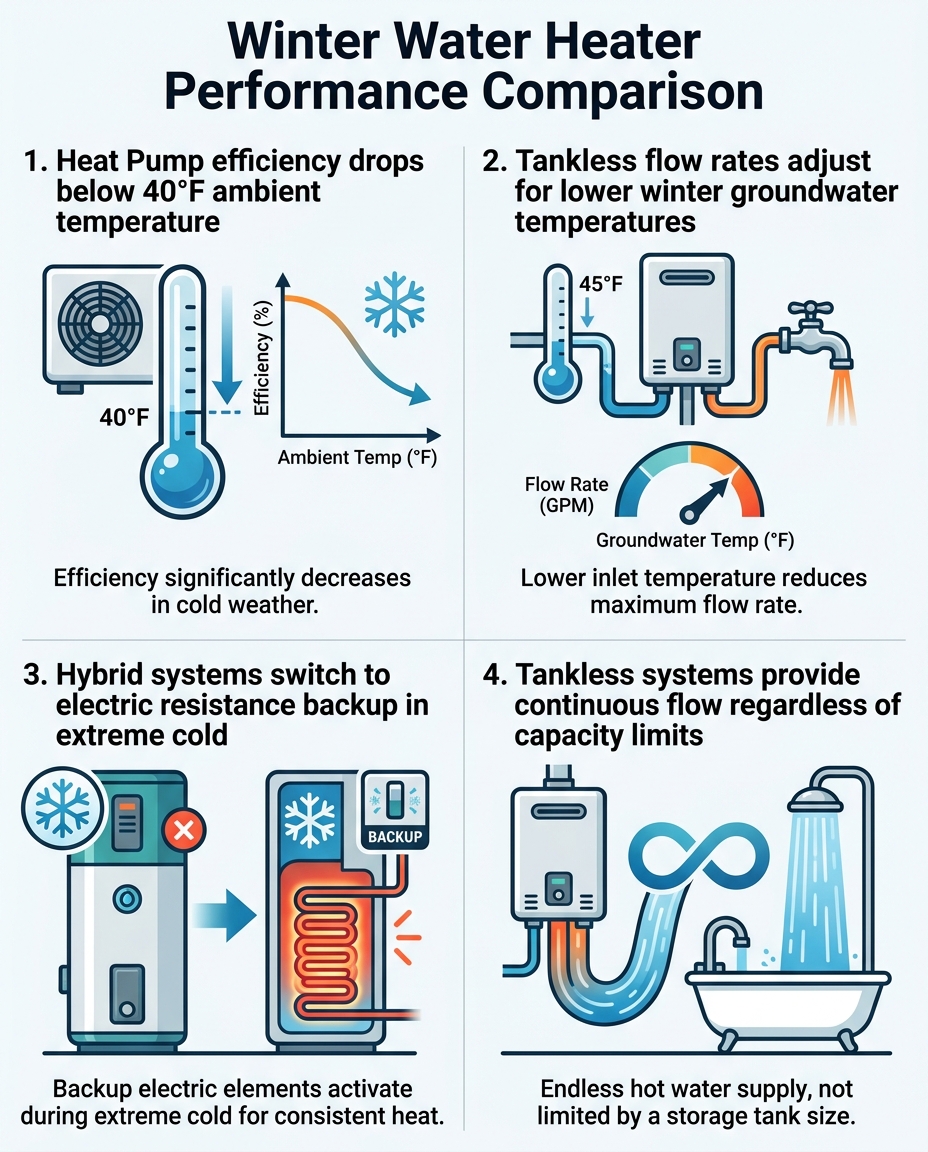
As we often discuss when explaining how extreme temperatures affect your water heater performance, the baseline environment is everything. In our area, it is not just the groundwater that gets cold. Many water heaters are installed in unconditioned spaces, such as garages or unfinished basements. During local frost events, the ambient air temperature in these spaces frequently drops below 40 degrees Fahrenheit.
These two environmental drops—colder incoming water and near-freezing ambient air—create a compounded workload for any water heating system. The unit must generate more heat to warm the colder water, while simultaneously fighting against the cold air pulling heat away from the tank or the surrounding pipes. This specific combination of factors uniquely affects different water heating technologies, forcing them to adapt their operation to keep up with your household demand.
To understand how hybrid systems operate during Auburn's colder winter mornings, you have to look at the mechanics of the technology. Heat pump water heaters do not generate heat directly the way a traditional gas burner or electric coil does. Instead, they operate like a refrigerator in reverse. They use a compressor and refrigerant to draw ambient heat from the surrounding air, compress it to increase the temperature, and then transfer that heat into the water stored inside the tank.
The cold weather shift: This highly efficient process works beautifully when the surrounding air is warm. However, when your garage temperature drops below 40 degrees Fahrenheit, there is very little ambient heat left in the air to extract. When this happens, the system recognizes that the heat pump alone cannot keep up with the demand. To prevent you from taking a cold shower, the unit automatically switches into standard electric resistance backup mode.
The recovery time impact: Operating in backup mode fundamentally changes the performance profile of the unit. Standard electric resistance heating is much slower than the heat pump process under optimal conditions, and it consumes significantly more electricity. This means that after the first person in your family takes a morning shower, the tank will take considerably longer to reheat the incoming cold water. Based on the heat pump installations our team has performed locally, this winter performance trade-off is a crucial factor. While the generic energy efficiency benefits over the course of a full year are substantial, you must be prepared for slower recovery times during the coldest weeks of the year.
Gas tankless systems approach the cold weather challenge using a completely different mechanical strategy. Because they do not store a large volume of pre-heated water, they must heat the water instantly as it flows through the unit's heat exchanger. To understand how they perform in the Auburn microclimate, you need to understand a concept called Delta-T, or temperature rise.
Delta-T is simply the difference between the cold incoming winter groundwater and your target shower temperature. If your target temperature is 120 degrees Fahrenheit, and the incoming groundwater drops to 45 degrees in the winter, the tankless unit must achieve a Delta-T of 75 degrees in a matter of seconds.
While gas tankless systems are famous for providing unlimited hot water, the laws of physics still apply. To ensure the water reaches that steep 75-degree temperature rise, the unit's internal sensors may slightly decrease the physical flow rate of the water. This keeps the water inside the heat exchanger just a fraction of a second longer, ensuring it gets fully up to temperature.
The real-world experience: One local homeowner reached out to us in the dead of winter dealing with a complete lack of hot water from an aging unit. Our dispatch team sent a technician to provide the necessary service to restore their hot water, and the situation perfectly illustrated how heavy winter usage taxes older equipment. With a modern, properly sized gas tankless system, you will never run out of hot water, but if multiple people are showering simultaneously on a freezing morning, you might notice a slight reduction in water pressure as the system manages the steep Delta-T. This contrasts with traditional tank systems, where the pressure remains constant, but the volume of hot water is strictly limited to what is stored in the tank.
When you place these two technologies side-by-side, the contrast in how they handle Auburn's colder winter mornings becomes stark. The right choice depends entirely on which performance metric matters most to your daily routine.
To make an informed decision, let's break down exactly how these systems compare when the frost sets in and the garage temperature drops.
• Winter Recovery Speed — Hybrid Heat Pump Water Heater: Slower in cold garages; relies heavily on backup electric elements to reheat the tank. — Gas Tankless Water Heater: Instant heating; no recovery time needed between back-to-back showers.
• Capacity Limits — Hybrid Heat Pump Water Heater: Strictly limited to the stored volume of the tank (e.g., 50 or 80 gallons). — Gas Tankless Water Heater: Unlimited continuous volume, though maximum flow rate may slightly adjust for steep Delta-T.
• Space & Venting in Garages — Hybrid Heat Pump Water Heater: Requires significant cubic air space to draw heat; needs condensate drainage. — Gas Tankless Water Heater: Compact wall-mounted design; requires dedicated gas lines and specific exhaust venting.
• Ideal Household Profile — Hybrid Heat Pump Water Heater: Smaller families or households with spaced-out morning routines who prioritize maximum annual efficiency. — Gas Tankless Water Heater: Large families with heavy, simultaneous morning hot water demands and back-to-back showers.

Technical specifications and Delta-T calculations are only useful if you apply them to your actual daily life. Over our years of serving the local area, we've found that the best water heater for your home is the one that seamlessly supports your family's specific morning routine without causing frustration. Here is how to evaluate your household demand.
1. Evaluate your household size and shower spacing: If you have four people who all need to shower between 6:30 AM and 7:30 AM, the slower recovery time of a heat pump water heater in a cold garage will likely result in a lukewarm shower for the last person in line. In this scenario, a tankless system is vastly superior. Conversely, if your household is smaller, or if showers are naturally spaced out between morning and evening, a hybrid system can easily keep up.
2. Consider simultaneous appliance usage: Take note of what else is running while people are showering. Are you running the dishwasher or the washing machine on hot at the same time? Simultaneous usage pushes the flow rate limits of a tankless system, especially when it is already working hard to overcome cold winter groundwater.
3. Assess your existing infrastructure: Your home's current setup plays a major role in what makes sense. Installing a heat pump water heater often requires checking your electrical panel capacity to ensure it can handle a 240-volt dedicated circuit. Upgrading to a gas tankless system requires verifying that your existing gas line is large enough to deliver the sudden surge of fuel required for instant heating, as well as ensuring proper venting pathways.
As part of our commitment to the community, Always Affordable Plumbing & HVAC provides honest, budget-conscious guidance to align the system choice with your actual morning hot water demand, rather than just upselling you on the highest efficiency rating. We want to ensure the system fits your life. If you need an expert assessment of your home's infrastructure, reaching out for professional plumbing services is the best way to get a clear picture of your options.
When our plumbing experts sit down with homeowners to discuss a major home upgrade, it is vital to look past the initial installation day and consider the long-term value of the equipment. Both technologies offer substantial benefits, but they achieve their long-term value in different ways. Understanding these differences will help you make a confident decision for Auburn's colder winter mornings.
Lifespan and maintenance differences: With proper annual maintenance, gas tankless units generally boast a longer operational lifespan than traditional or hybrid tank systems. Because tankless units do not hold standing water, they are not subject to the constant corrosive pressure that eventually compromises storage tanks. However, tankless units require strict annual descaling to remove mineral buildup from the heat exchanger, especially if you have hard water. Hybrid heat pump tanks have a slightly shorter average lifespan, but their maintenance focuses more on cleaning the air filters to ensure the compressor can breathe, along with standard anode rod inspections.
Efficiency and incentives: Operational efficiency translates directly to long-term value. While winter mornings alter the short-term performance of a hybrid heat pump, its extreme efficiency during the warmer months often makes it highly economical over the course of a full year. Additionally, generic energy rebates and federal tax credits may apply to qualifying heat pump installations. We always advise readers to check current utility programs and consult with a tax professional, as these incentives can significantly improve the long-term return on investment.
Ultimately, the long-term value of either system hinges on professional sizing and proper installation. An undersized tankless unit will frustrate you every winter, and an improperly ventilated heat pump will suffocate and fail prematurely. By taking the time to match the technology to your home's footprint and your family's routine, you secure a reliable hot water supply for years to come. If you are ready to explore the logistics of upgrading, reviewing flexible financing options can help make the transition to high-efficiency equipment smooth and manageable.
How does cold weather affect heat pump water heater recovery time?
Cold weather significantly increases the recovery time for heat pump water heaters. When ambient temperatures drop below 40 degrees Fahrenheit, the unit struggles to pull heat from the air and switches to a slower electric resistance backup mode. This means the tank takes much longer to reheat after a long shower.
Can a tankless water heater keep up with cold groundwater in winter?
Yes, a properly sized tankless water heater can easily keep up with cold winter groundwater. However, to achieve the necessary temperature rise, the system may slightly reduce the water's flow rate. You will never run out of hot water, but you might notice a small drop in water pressure if multiple fixtures are running at once.
Do heat pump water heaters work in cold climates?
Heat pump water heaters do work in cold climates, but their efficiency profile changes. In freezing unconditioned spaces like garages, they rely heavily on standard electric heating elements rather than the heat pump compressor. This ensures you still get hot water, though the unit will consume more energy during those cold periods.
Will I run out of hot water with a heat pump water heater on a frosty morning?
You will not run out of hot water instantly, but you can deplete the tank faster than it can recover. If multiple family members take back-to-back showers on a frosty morning, the slower recovery time of the backup heating mode means the last person may experience lukewarm water until the tank fully reheats.
What is the required temperature rise (Delta-T) for winter water heating?
The required temperature rise, or Delta-T, is the difference between your cold incoming groundwater and your desired output temperature (usually 120 degrees Fahrenheit). During winter, when groundwater can drop into the 40s, the required Delta-T often exceeds 70 degrees, forcing the water heater to work much harder.
Upgrading your water heater is about securing reliable comfort for your family, regardless of what the weather brings. By understanding how Auburn's microclimate impacts both hybrid and tankless technologies, you can confidently choose a system that meets your morning demands without compromise. A clear, objective evaluation of your household's routine is all it takes to ensure you never have to face a cold shower on a freezing morning again.
See what our satisfied customers have to say about their experience with Always Affordable
Plumbing & HVAC.

"Chappy was very skilled in his knowledge of my HVAC unit. I greatly appreciate the quick response and experienced tech. The whole endeavor was made less stressful by his humor and honest conversation. I find comfort in knowing I now have a shop i trust for the next time."
"Tony, James, Ronnie did an amazing job setting up our new AC! They were quick, efficient, considerate, and polite! We appreciate them scheduling us in on such short notice. Definitely recommend this company!"
"Prompt, professional service with kindness and care. They came out to address both plumbing and AC issues. I received a courtesy call before they arrived. All issues were resolved the same day with integrity and respect. Thankful for businesses like this. Absolutely recommend to those that I love."
"Excellent service! Jason came out promptly and in addition to doing my outside faucet he also put in new irrigation equipment! All done perfectly! Jason was lovely"
"Honest with the assessment; friendly and good manners. No high pressure sales. Just good to honest "tell it like you see it" Thought my kitchen disposer needed an overhaul. But Jason, there Plumber gave me an honest lesson on what was really happening. Saved me hundreds, if I went the route of replacing. Thank you!"
"Absolutely 5 stars. If you are looking for affordable ,professional and kind. Chappy was excellent and very knowledgeable . I called in the morning because my air conditioner stopped working he was here within hours and fixed my air with a smile. I highly recommend Chappy and Always Affordable plumbing and Hvac."
"Scott and James were great. They got there quickly and diagnosed the problem with my A/C.They did a very thorough job testing everything. Sent me pictures and called to keep me informed. Got it done the next day and everything is working fine. Be glad when I get home so I can enjoy my new system. Thanks guys for a great job."
"Chappy was very helpful. He knew our issue right away, cleaned our coils. He also came on the same day we called and got our AC blowing cold air again."
"After some timing ’curfuffles’ the Tech Jason arrived and not only completed a speedy install on my toilet, he was personable & professional. Because of the timing issues Jason was attentive and showed up with everything needed! No extra store runs 😊 I was very comfortable with having this Tech in my Daughter’s home. We will definitely use this Service again."