Common Homeowner Questions Answered: Troubleshooting AC Cooling Failures and Stubborn Clogs
Is your AC running nonstop but your house is still hot? We get these common homeowner questions answered. See when to check a filter vs when to call a pro.



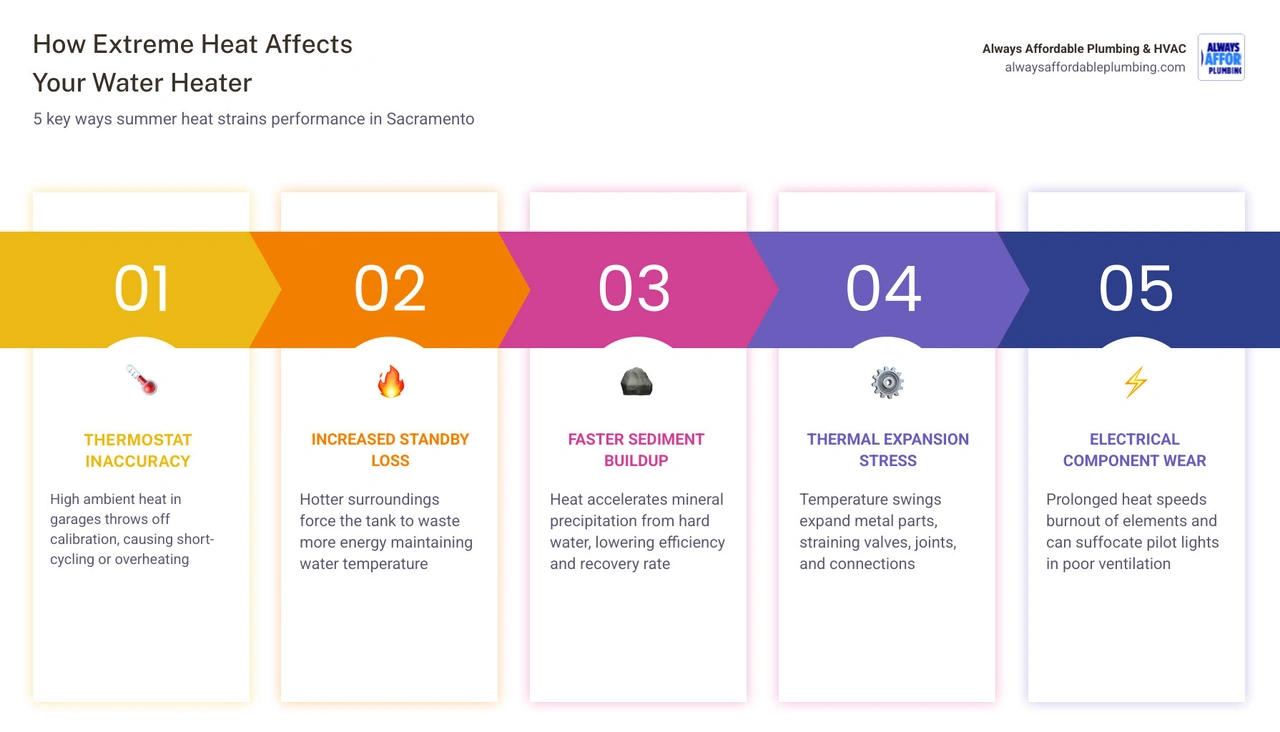
How extreme heat affects your water heater performance is something most Sacramento homeowners never think about — until they're stuck with lukewarm showers, sky-high energy bills, or a unit that gives out in the middle of July. Here's a quick breakdown of what's actually happening inside your water heater when temperatures climb:
• Thermostat accuracy drops — High ambient heat in garages and attics throws off your water heater's thermostat, causing it to short-cycle or overheat
• Standby heat loss increases — The hotter it is around your tank, the more energy it wastes just keeping water warm
• Sediment builds up faster — Heat speeds up mineral precipitation from Sacramento's hard water, reducing efficiency and recovery rate
• Thermal expansion puts pressure on the tank — Temperature swings cause metal components to expand and contract, stressing joints, valves, and connections
• Electrical components wear out sooner — Prolonged heat accelerates burnout on heating elements and can even suffocate pilot lights in poorly ventilated spaces
Sacramento summers regularly push past 100°F, and the spaces where most water heaters live — garages, attics, utility closets — can get significantly hotter than that. Your water heater is already working hard. Add extreme ambient heat on top of increased summer demand from kids home from school, extra showers, and more laundry, and you have a system that's being pushed close to its limits every single day.
The good news is that most heat-related water heater problems are preventable with the right maintenance. This guide walks you through exactly what's happening, what to watch for, and what to do about it.
How extreme heat affects your water heater performance glossary:
• how triple digit temperatures stress your ac and plumbing
• how wildfire smoke affects your indoor air quality
When the summer sun beats down on Sacramento, Elk Grove, and Roseville, we naturally focus on keeping our air conditioning running. However, your plumbing system experiences its own quiet crisis. Many homeowners assume water heaters get a "break" in the summer because the incoming municipal water is warmer than it is in January. While it is true that the temperature rise required is lower, the environmental conditions surrounding the unit create unique, severe stressors.
Extreme heat directly impacts the mechanical, physical, and electrical properties of your water heating system. As the outdoor temperature climbs, unconditioned spaces like garages or attics turn into absolute ovens, sometimes exceeding 120°F to 140°F. This high ambient temperature triggers a cascade of issues, from skewed thermostat readings to intense thermal expansion. If your system is already dealing with minor wear and tear, these summer conditions will quickly expose those vulnerabilities. To understand what is happening under the hood, check out our comprehensive Water Heater Repair Sacramento CA Guide.
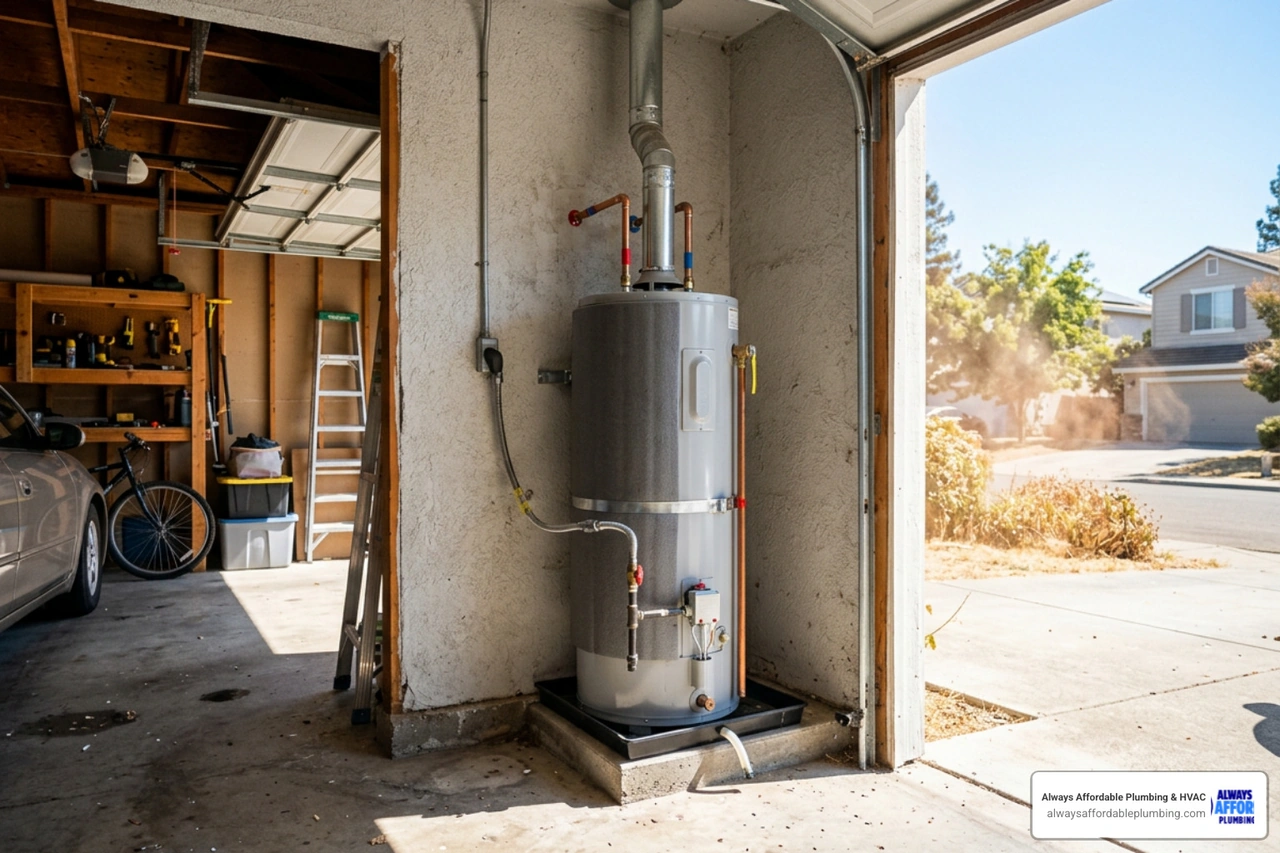
In most Central Valley homes, the water heater is tucked away in the garage or a dedicated outdoor utility closet. During a June 2026 heatwave, these unconditioned spaces act like saunas. This intense external heat directly interferes with the unit's thermostat calibration.
Your water heater relies on internal sensors to determine when to ignite the gas burner or energize the electric heating elements. When the air surrounding the tank is incredibly hot, the external casing of the heater absorbs that ambient thermal energy. This can trick the thermostat into registering that the water inside is hotter than it actually is, leading to premature shut-offs or "short-cycling."
Conversely, if the internal thermostat gets stuck or miscalibrated due to extreme heat stress, the system might fail to recognize that the water has already reached its target temperature. It may continue heating indefinitely until the safety high-limit switch (also known as the Energy Cut-Off, or ECO) trips to prevent an explosion. This leaves you with zero hot water and a tripped circuit breaker or disabled gas valve that requires professional intervention to reset.
Standby loss refers to the heat that escapes from the water inside your tank into the surrounding air. To minimize this, modern water heaters are manufactured with insulated walls. However, standard insulation can only do so much when the ambient temperature fluctuates wildly.
Interestingly, standby loss is directly tied to the "Delta T"—the temperature difference between the hot water inside the tank (usually set to 120°F or 140°F) and the air outside it. While a superheated garage reduces this temperature difference, the intense ambient heat and high humidity degrade the overall efficiency of the appliance over time.
Consider these industry facts:
• Water heaters account for roughly 18% of total residential energy use.
• A standard 50-gallon electric resistance water heater experiences about 240 kWh of standby losses per year in a 70°F space.
• In unconditioned spaces during extreme summer heatwaves, overall system efficiency can drop by 10% to 20% due to component strain and cycling issues.
When your water heater has to navigate these high-temperature environments, its electrical and mechanical efficiency plunges. The unit has to cycle on and off in unpredictable patterns, driving up your monthly utility bills during the exact months when you are already paying to run your air conditioner.
Many families notice that their household water usage spikes dramatically during the summer. With kids home from school, frequent laundry loads of sweaty clothes and beach towels, and multiple showers a day after trips to the local pool, your water heater works overtime.
This high demand, combined with the chemical reactions triggered by extreme heat, accelerates one of the water heater's worst enemies: sediment buildup. If you haven't flushed your tank recently, the summer heat will make the problem significantly worse. For a step-by-step walkthrough on how to handle this yourself, read our guide on How to Flush Your Water Heater.
Sacramento, Folsom, and the surrounding Valley areas are notorious for having hard water. Hard water contains high concentrations of dissolved minerals, primarily calcium and magnesium.
Heat acts as a powerful catalyst for mineral precipitation. When hard water is heated, the calcium and magnesium ions bind together and settle out of the liquid as solid scale. Because your water heater is cycling constantly to keep up with summer demand in a high-temperature environment, this chemical reaction occurs at an accelerated rate.
The minerals settle at the bottom of the tank, forming a thick, rocky crust. For electric water heaters, this scale coats the lower heating element. For gas units, it forms an insulating barrier directly over the burner at the bottom of the tank.
As the mineral crust grows thicker, it begins to restrict the internal water flow and severely limits the unit's recovery rate (the amount of hot water the unit can heat in one hour).
Because the sediment acts as an insulator, the heat from the burner or element cannot easily reach the water. The burner has to stay on much longer and burn much hotter just to heat the same volume of water. This extra thermal stress can cause the metal tank to overheat, fatigue, and eventually crack.
If you start hearing strange popping, rumbling, or banging noises coming from your garage in July, that is the sound of steam bubbles pockets exploding through the thick layer of sediment at the bottom of the tank. Overheating caused by sediment is a primary cause of tank failure. If your tank develops a crack, it will begin to pool water rapidly. For residents in our southern service areas, a failing tank can quickly lead to a situation requiring urgent attention, as detailed in our guide on Water Heater Leaking Elk Grove CA.
Extreme heat is not just an outdoor ambient issue; it causes physical changes to the water and metal inside your plumbing system. When water is heated, it undergoes thermal expansion, meaning it physically expands in volume.
In older "open" municipal water systems, this expanded water could push back out into the city main. However, modern plumbing systems in Sacramento, Citrus Heights, and Roseville are "closed" systems equipped with backflow preventers. This means the expanding water has nowhere to go, causing rapid pressure spikes inside your tank that are exacerbated by high summer temperatures. To keep your system safe, regular Water Heater Maintenance is absolutely essential.
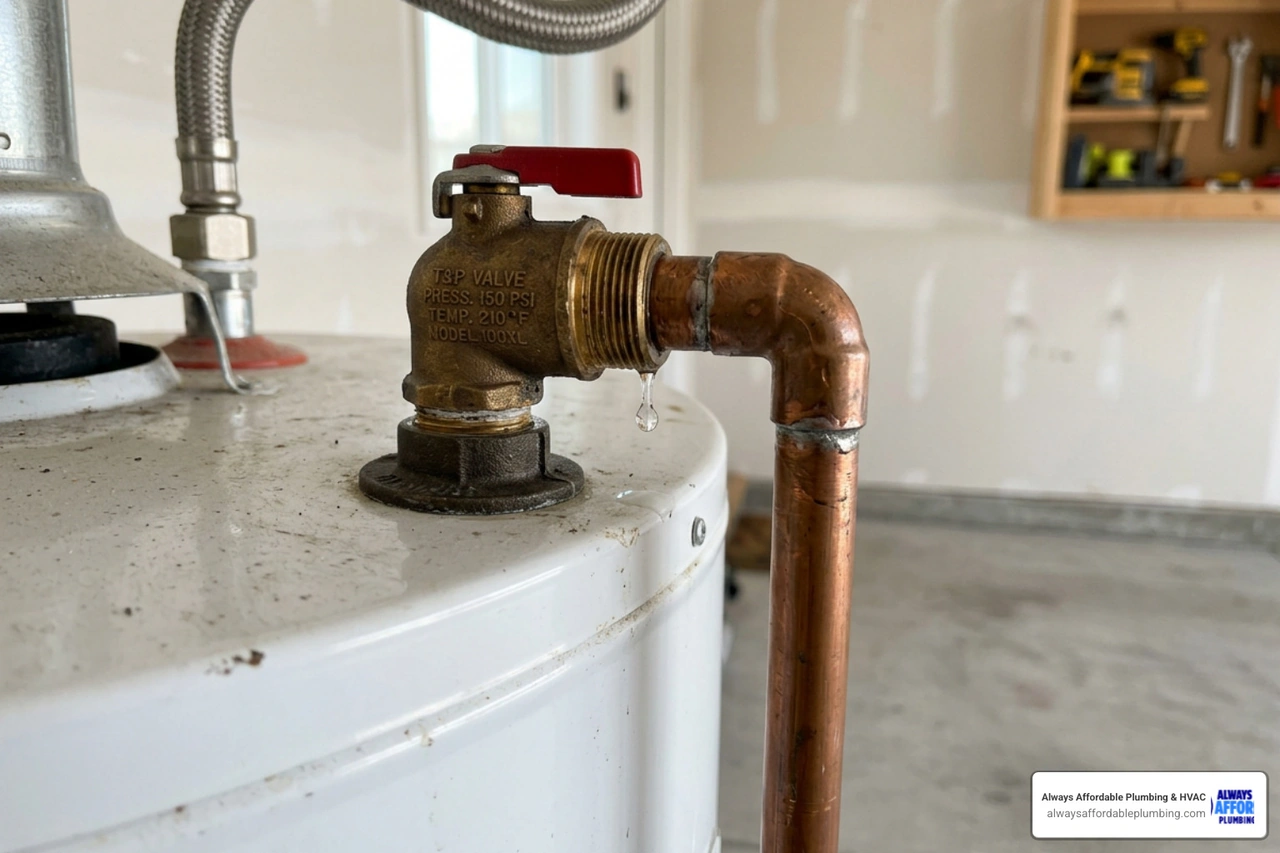
Every water heater is equipped with a critical safety device called the Temperature and Pressure (T&P) relief valve. This valve is designed to open and release water if the internal temperature exceeds 210°F or if the pressure exceeds 150 PSI.
When high ambient summer temperatures combine with rapid heating cycles, the pressure inside your tank can spike dangerously. If you do not have a functional thermal expansion tank installed—or if your expansion tank has a ruptured internal bladder—your T&P valve will begin to drip or spray water continuously to prevent the tank from bursting.
A constantly dripping T&P valve is a major warning sign. It indicates that your system is operating under extreme, unsafe pressure levels. If the valve itself is old, corroded, or blocked by hard water sediment, it may fail to open entirely, creating a severe safety hazard.
Electric and gas water heaters both have vulnerable components that are prone to failing under summer heat stress:
• Electric Water Heaters: The upper and lower heating elements are designed to operate completely submerged in water. However, if sediment buries the lower element, or if high ambient temperatures cause electrical connections to expand and loosen, the elements can short-circuit and burn out. The high-limit safety switch may also trip repeatedly due to the elevated ambient heat in your garage or utility room.
• Gas Water Heaters: If your gas water heater is located in a hot, unventilated attic or tight closet, summer temperatures can exceed 140°F. At these extreme temperatures, the air becomes less dense, and oxygen levels drop. This lack of fresh oxygen can literally suffocate the standing pilot light, causing it to go out repeatedly. Additionally, modern gas control valves feature thermal sensors that will shut down the entire unit if the external temperature of the control box rises too high.
You don't have to sit back and wait for the summer heat to destroy your water heater. Taking a few proactive, preventative steps can protect your plumbing, extend the lifespan of your appliance, and keep your utility bills under control.
Before the next major heatwave hits, we highly recommend reviewing our Water Heater Replacement Guide Roseville CA to understand the lifespan of your current unit and plan for future upgrades.
To help your water heater survive the scorching summer months, follow this simple maintenance checklist:
1. Flush the Tank: Drain your water heater tank completely to wash away the accumulated calcium and mineral sediment. If you live in a hard water area like Sacramento or Folsom, this should be done at least once a year.
2. Lower the Thermostat to 120°F: Most water heaters are factory-set to 140°F, which is hotter than necessary for residential use and accelerates scale buildup. Lowering the setting to 120°F reduces standby losses, saves energy, and prevents scalding.
3. Test the T&P Relief Valve: Gently lift the lever on the T&P valve to ensure water flows out of the discharge pipe, then release it to make sure it seals tightly. If it continues to drip, it needs to be replaced immediately.
4. Insulate the First Six Feet of Pipes: Use foam pipe insulation on the cold water inlet and hot water outlet pipes emerging from the top of the tank. This reduces heat loss and keeps the surrounding air slightly cooler.
5. Clear the Area: Ensure there is at least two feet of clear space around your water heater. Proper ventilation is crucial for gas units to prevent pilot light suffocation.
For professional assistance with any of these steps, you can schedule an expert Water Heater Installation Folsom CA or maintenance service with our team.
If your traditional tank-style water heater is approaching the end of its lifespan (typically 8 to 12 years in our region), the stress of summer is the perfect time to consider an upgrade. Modern water heating technology has advanced significantly, offering solutions that are highly resilient to extreme environmental heat.
• Standby Heat Loss — Traditional Storage Tank: High (constantly heats water) — Tankless Water Heater: None (heats on demand) — Heat Pump (Hybrid) Water Heater: Very Low
• Susceptibility to Heat — Traditional Storage Tank: High (thermostat drift, expansion) — Tankless Water Heater: Low (no stored water volume) — Heat Pump (Hybrid) Water Heater: Extremely Low (utilizes ambient heat)
• Sediment Buildup — Traditional Storage Tank: High (settles at bottom of tank) — Tankless Water Heater: Moderate (requires periodic flushing) — Heat Pump (Hybrid) Water Heater: High (settles at bottom of tank)
• Summer Energy Efficiency — Traditional Storage Tank: Drops by 10-20% under stress — Tankless Water Heater: Remains consistently high — Heat Pump (Hybrid) Water Heater: Increases (pulls heat from warm air)
Upgrading to a tankless system is one of the best ways to eliminate summer heat issues entirely. Because tankless units do not store hot water, they are completely immune to standby heat loss and the extreme thermal expansion pressures associated with large storage tanks. To learn more about how these systems work, read about the Benefits of a Tankless Water Heater and check out our Tankless Water Heater Installation Guide Roseville CA.
Alternatively, Heat Pump Water Heaters (HPWH) are an incredibly smart choice for Sacramento garages. These hybrid systems work by pulling heat from the surrounding air and transferring it into the water. In a hot garage, a heat pump water heater operates at peak efficiency, essentially acting as a minor air conditioner for your garage while using up to 75% less energy than a conventional electric resistance heater!
The popping or rumbling noise you hear in the middle of summer is caused by steam bubbles exploding through a thick layer of mineral sediment at the bottom of your tank. As the burner heats the metal bottom of the tank, water trapped underneath the sediment layer boils and turns to steam.
When these steam bubbles escape through the crust into the cooler water above, they collapse and make a loud popping sound. This is a clear warning sign that your water heater is struggling with heavy sediment buildup and needs to be flushed immediately to prevent overheating and tank failure.
Yes, we highly recommend lowering your water heater's thermostat setting to 120°F during the summer. Since the incoming groundwater is already warmer during the summer months (often 70°F+ compared to the 50°F range in winter), your water heater does not have to work as hard to reach your target temperature. Lowering the setting to 120°F reduces standby energy losses, slows down hard water scale precipitation, and can save you up to 5% on your water heating costs for every 10-degree reduction.
High outdoor humidity does not directly cause an internal tank leak, but it can cause heavy condensation to form on the cold metal surfaces of your water heater and its connected pipes. This condensation can drip down the sides of the tank, pooling on the floor and mimicking a real leak.
Over time, persistent condensation and moisture can lead to rust and corrosion on the outer steel shell, electrical controls, or gas burner assemblies, which will eventually cause the system to fail prematurely. Keeping the area well-ventilated is key to preventing this issue.
How extreme heat affects your water heater performance is a critical consideration for keeping your home comfortable and efficient during the dry, triple-digit Sacramento summers. From thermostat calibration errors and rapid sediment buildup to dangerous thermal expansion pressure, the summer heat puts your entire plumbing system to the test.
Fortunately, simple preventative maintenance—like annual tank flushing, lowering your thermostat to 120°F, and checking your safety valves—can keep your hot water flowing reliably all summer long.
If your water heater is making strange noises, dripping from the safety valve, or struggling to keep up with your family's summer demands, do not wait for a complete system failure. At Always Affordable Plumbing & HVAC, we are proud to provide honest, high-quality, and transparent plumbing and cooling services across Sacramento, Roseville, Elk Grove, Folsom, and the surrounding areas. Contact us today to ensure your home remains comfortable, efficient, and safe.
Schedule service with Always Affordable Plumbing & HVAC
See what our satisfied customers have to say about their experience with Always Affordable
Plumbing & HVAC.

"Chappy was very skilled in his knowledge of my HVAC unit. I greatly appreciate the quick response and experienced tech. The whole endeavor was made less stressful by his humor and honest conversation. I find comfort in knowing I now have a shop i trust for the next time."
"Tony, James, Ronnie did an amazing job setting up our new AC! They were quick, efficient, considerate, and polite! We appreciate them scheduling us in on such short notice. Definitely recommend this company!"
"Prompt, professional service with kindness and care. They came out to address both plumbing and AC issues. I received a courtesy call before they arrived. All issues were resolved the same day with integrity and respect. Thankful for businesses like this. Absolutely recommend to those that I love."
"Excellent service! Jason came out promptly and in addition to doing my outside faucet he also put in new irrigation equipment! All done perfectly! Jason was lovely"
"Honest with the assessment; friendly and good manners. No high pressure sales. Just good to honest "tell it like you see it" Thought my kitchen disposer needed an overhaul. But Jason, there Plumber gave me an honest lesson on what was really happening. Saved me hundreds, if I went the route of replacing. Thank you!"
"Absolutely 5 stars. If you are looking for affordable ,professional and kind. Chappy was excellent and very knowledgeable . I called in the morning because my air conditioner stopped working he was here within hours and fixed my air with a smile. I highly recommend Chappy and Always Affordable plumbing and Hvac."
"Scott and James were great. They got there quickly and diagnosed the problem with my A/C.They did a very thorough job testing everything. Sent me pictures and called to keep me informed. Got it done the next day and everything is working fine. Be glad when I get home so I can enjoy my new system. Thanks guys for a great job."
"Chappy was very helpful. He knew our issue right away, cleaned our coils. He also came on the same day we called and got our AC blowing cold air again."
"After some timing ’curfuffles’ the Tech Jason arrived and not only completed a speedy install on my toilet, he was personable & professional. Because of the timing issues Jason was attentive and showed up with everything needed! No extra store runs 😊 I was very comfortable with having this Tech in my Daughter’s home. We will definitely use this Service again."