Seasonal Home Maintenance Checklist: Preventing HVAC and Plumbing Emergencies
Prevent HVAC emergencies with a seasonal home maintenance checklist. Why proactive scheduling beats waiting for sudden failures. See what needs attention now.



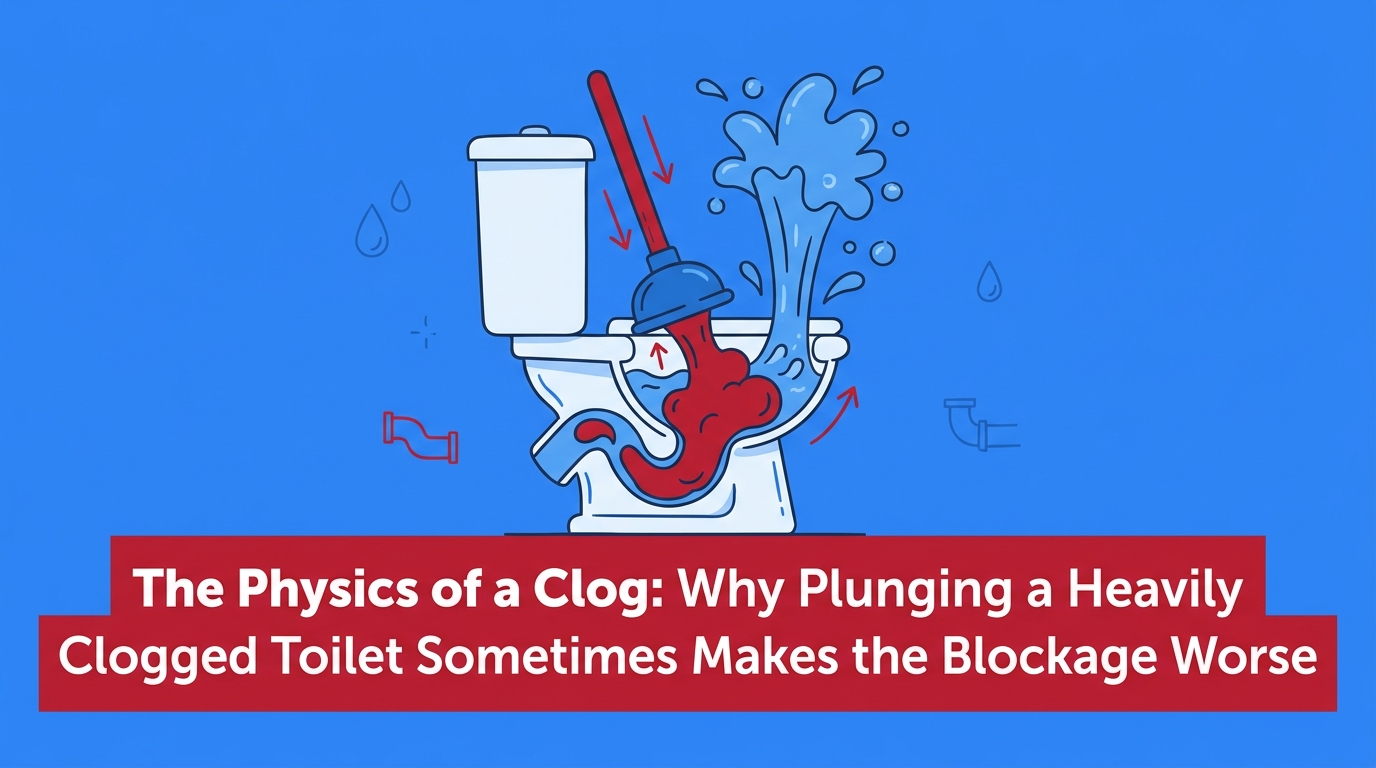
You are standing in your bathroom, pushing down on a plunger with all your might, wondering why plunging a heavily clogged toilet sometimes makes the blockage worse instead of clearing the drain. The water level refuses to drop, your arms are getting tired, and panic is starting to set in. It is a deeply frustrating situation that almost every homeowner faces at some point. However, as our team at Always Affordable Plumbing & HVAC frequently sees on service calls, failing to clear that stubborn clog is rarely just a matter of poor plunging technique. More often than not, it comes down to the unforgiving laws of physics.
When a large mass of solid waste and paper becomes wedged in your plumbing, applying excessive downward force can actually compact the material further into the pipe. Instead of breaking the clog apart, aggressive plunging can turn a loose blockage into a dense, immovable plug. Understanding the exact threshold where your do-it-yourself efforts shift from helpful to hydraulically damaging is critical for protecting your bathroom fixtures.
For expert help with this and other residential plumbing services, reaching out to a professional is always the safest choice for your home.
To understand why a clog becomes so tightly wedged, we often explain to our customers that you first have to look at the internal structure of your toilet. A toilet is not just a straight pipe leading to the sewer. It features a curved channel built directly into the porcelain, designed to hold a small amount of standing water at all times. This standing water acts as a barrier, preventing dangerous and foul-smelling sewer gases from rising out of the underground pipes and entering your home.
While this curved trap is a brilliant and necessary design feature, it also creates a natural bottleneck. When too much solid waste or excessive toilet paper enters the bowl, it has to navigate these tight porcelain turns. If the mass is too large, it hits the curve, loses momentum, and gets stuck.
Depending on the age and design of your home, your toilet utilizes specific internal configurations to manage waste flow.
• Standard S-trap configurations: Common in older plumbing setups, the S-trap creates a distinct "S" shape that drops directly down through the floor. The sharp bends in this design create significant friction, which can easily slow down solid waste.
• Standard P-trap configurations: Modern fixtures more commonly use a P-trap, which exits through the wall. While slightly more efficient, it still requires waste to navigate a tight, restrictive curve before reaching the main drain line.
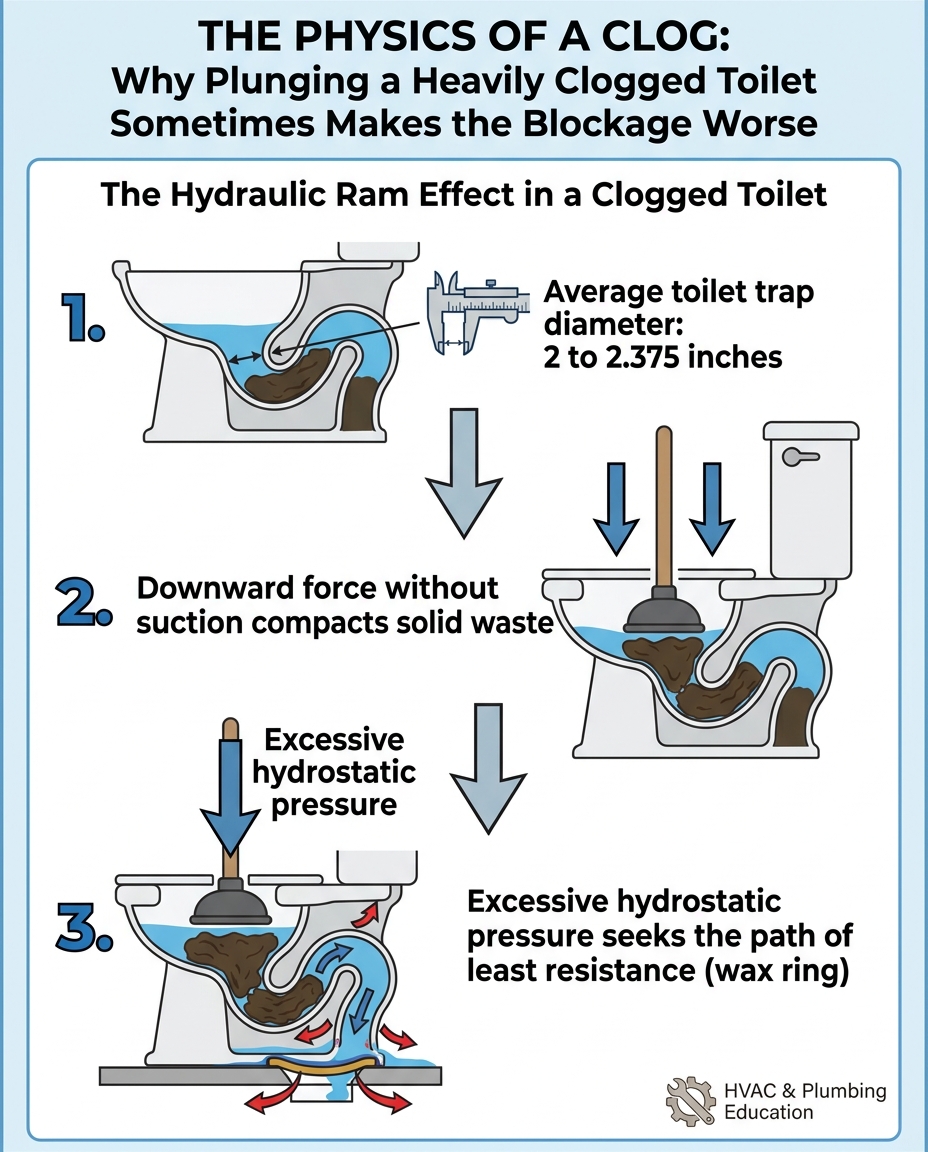
The average toilet trap diameter is only 2 to 2.375 inches wide. This narrow passageway is heavily regulated by modern EPA WaterSense design guidelines, which dictate specific flow rates to conserve water. Because newer toilets use significantly less water per flush (often 1.28 gallons or less), there is less natural water weight pushing the waste through the trap. When dense materials hit this 2-inch curve, they immediately lose momentum. This creates the perfect foundation for a severe blockage, and it explains why even a small amount of excess paper can bring your plumbing to a halt.
When you encounter a clog in that narrow 2-inch trap, your first instinct is usually to grab a plunger and push as hard as you can. We see this exact scenario play out on emergency calls every week. This is where the fluid dynamics of a closed plumbing loop work against you. Because the toilet bowl is filled with water and the trap is blocked by solid waste, you have essentially created a sealed, water-filled cylinder.
Water does not compress. When you apply downward plunging force without creating a proper suction seal, the water inside the bowl has nowhere to go. Instead of gently nudging the clog, the trapped water acts as a solid battering ram. This phenomenon is known as the hydraulic ram effect. The immense hydrostatic pressure transfers directly into the solid waste, forcing it deeper and tighter into the narrowest part of the S-trap or P-trap.
Rather than breaking up, the loose blockage transitions into a solid, impenetrable mass. At this stage, standard plunging will no longer work, and you will likely need professional sewer and main line clearing to safely resolve the issue.
Most homeowners misunderstand how a plunger is actually supposed to work. Effective plunging relies heavily on the pull (the upward suction) to dislodge the clog, not just the push.
• The wrong way: Aggressive downward pushing without letting the plunger reset simply packs the debris tighter into the porcelain curve.
• The right way: A gentle push to compress the plunger dome, followed by a sharp, forceful pull backward, creates a vacuum that pulls the compacted waste out of the tight bottleneck so it can break apart.

During our routine plumbing inspections, we notice that one of the primary reasons the hydraulic ram effect occurs is the use of the wrong tool. If you look in most bathrooms, you will find a standard cup plunger—the classic tool with a simple, flat rubber dome attached to a wooden handle. While this tool is excellent for certain tasks, it is virtually useless for clearing standard S-trap and P-trap internal toilet configurations.
The standard cup plunger is designed exclusively for flat surfaces, such as kitchen sinks and bathtubs. When you place a flat cup plunger into the sloped, curved bowl of a toilet, it is physically impossible to create a proper vacuum seal. Instead of generating organized push-pull fluid dynamics, the cup plunger merely splashes water around and generates disorganized downward pressure.
• Shape and Design — Standard Cup Plunger: Flat rubber dome with a wide, open bottom. — Toilet Flange Plunger: Bell-shaped dome with an extended rubber sleeve (flange) at the bottom.
• Best Used For — Standard Cup Plunger: Flat drains in sinks, bathtubs, and showers. — Toilet Flange Plunger: Curved toilet bowls and sloped drains.
• Seal Quality — Standard Cup Plunger: Cannot seal against the curved porcelain of a toilet. — Toilet Flange Plunger: The extended flange fits directly into the drain hole, creating an airtight vacuum seal.
• Plunging Action — Standard Cup Plunger: Generates disorganized splashing; compacts waste. — Toilet Flange Plunger: Generates powerful, targeted suction to pull the clog loose.
If you want to avoid compacting a clog, you must use a flange plunger. The extended rubber flap fits snugly inside the drain opening, sealing off the trap. This allows you to utilize the upward suction required to safely dislodge the blockage without simply hammering it deeper into the pipe.
Compacting the waste is not the only risk associated with aggressive plunging. When you generate extreme hydrostatic pressure inside a closed plumbing loop, that pressure actively seeks the path of least resistance. If the compacted clog in the trap refuses to budge, the pressure will find another way to escape.
Directly beneath your toilet, sealing the porcelain fixture to the floor drain, sits a ring made of soft, pliable wax. This wax ring is designed to keep water and sewer gases safely contained as waste moves from the toilet into the drainpipe. It is a highly effective seal under normal flushing conditions, but as we frequently see when repairing subfloor damage, it is not designed to withstand the intense, localized pressure generated by a plunger acting as a hydraulic ram.
When you plunge too hard against an immovable object, the pressure can easily blow out the wax ring. Instead of moving the clog, you end up breaking the foundational seal of your toilet, which leads to severe collateral damage.
If you have been plunging heavily and notice any of the following symptoms, stop immediately—you have likely damaged the seal beneath the fixture:
• Water pooling around the base: If clean or dirty water slowly seeps out from under the toilet after a flush, the seal is broken.
• A persistent sewage smell: The wax ring keeps hazardous sewer gases out of your bathroom. If you smell sewage, the barrier is gone.
• An unstable fixture: If the toilet suddenly feels slightly rocky or unstable on the floor, the wax ring may have been compressed or blown out entirely.
• Subfloor water damage: Often, a blown wax ring leaks slowly into the subfloor, causing hidden rot and structural damage to the ceiling below before you ever see water on the bathroom tiles.
The dangers of improper plunging extend beyond the toilet itself, particularly depending on the age of your home. In older neighborhoods, such as those we service throughout the Sacramento area, homes frequently rely on legacy plumbing materials. These aging systems react very poorly to sudden, intense shifts in internal pressure.
When you aggressively plunge a toilet, the shockwaves of hydrostatic pressure do not just stop at the wax ring; they transfer down the line into the main sewer pipes. If your localized toilet trap clog is actually a symptom of a deeper main line backup, plunging will never fix the issue—it will only stress the aging infrastructure.
In one real-world scenario our team recently handled, a local homeowner experienced a severely backed-up sewer line overnight during the winter. Because the main line was completely blocked, plunging the toilets inside the house proved entirely ineffective. Our team of Sacramento area plumbers was dispatched within hours. We provided an affordable quote and successfully unclogged the main line, saving the homeowner from an expensive pipe replacement that other companies might have insisted upon. This highlights the importance of recognizing when a clog is beyond a plunger's capabilities.
Older plumbing systems have specific weaknesses that make them susceptible to pressure damage:
• Cast iron pipes: Over decades of use, cast iron corrodes internally. This corrosion creates rough, jagged surfaces called tubercules, which easily snag waste. When you force a compacted clog through these rough pipes using a plunger, the friction can cause brittle pipe joints to separate or crack.
• Clay sewer lines: Legacy clay pipes are notoriously prone to root intrusion. Tree roots seek out the moisture inside the pipe, creating massive, dense blockages. Pushing a battering ram of water against a root-filled clay pipe can cause the fragile clay to shatter under the sudden pressure shift.
Given the risks of compacting waste, blowing out wax rings, and stressing old pipes, every homeowner needs a definitive, scientific threshold for when to stop DIY efforts. You need to know exactly when to step away from the plunger and transition to professional solutions.
The Rule of Thumb: If the water level in the bowl has not dropped after three to five proper push-pull cycles with a correctly fitted flange plunger, the clog is officially compacted. Continuing past this point will not clear the blockage; it will only increase your risk of hydraulic damage.
When you reach this threshold, it is time to call an expert. Professional plumbers utilize transparent pricing, which eliminates the fear of hidden fees and reassures you that calling a pro is a cost-effective choice compared to repairing a flooded subfloor. In one instance our crew responded to, an emergency call was placed for an elderly customer dealing with an immovable toilet clog. Our professional technician arrived within hours, correctly diagnosed the compacted blockage, fixed the problem quickly, and even cleaned up the spilled water—all without causing further damage to the plumbing system.
When a plunger fails, professionals rely on specialized tools designed to physically break up the mass rather than relying on fluid pressure. Understanding when a toilet auger becomes necessary over a standard plunger is key to protecting your porcelain.
• Professional toilet augers: Unlike a standard drain snake, a closet auger features a protective rubber sleeve that prevents the metal cable from scratching the porcelain bowl. The cable corkscrews directly into the compacted waste, breaking it apart from the inside out.
• Comprehensive assessment: If the auger does not clear the line, a professional can perform a camera inspection to determine if the issue is actually further down the main sewer line, preventing you from wasting time on a localized fix.
If your toilet remains clogged after plunging, you have likely compacted the solid waste into the tightest curve of the internal trap. Excessive downward force without proper suction packs the debris into a dense, solid mass. Once the waste is tightly wedged in the 2-inch porcelain bottleneck, standard fluid pressure is no longer enough to dislodge it, and specialized augering tools are required.
When a plunger fails to work, the next safest step is to use a professional-grade toilet auger (also known as a closet auger). This tool features a flexible metal cable that navigates the standard S-trap and P-trap internal toilet configurations without damaging the porcelain. The auger physically corkscrews into the blockage to break it apart, bypassing the need for hydrostatic pressure entirely.
Yes, aggressive plunging can absolutely blow out the wax ring seal located at the base of the toilet. When you plunge a completely blocked drain, the water has nowhere to go, creating immense hydrostatic pressure. This pressure seeks the path of least resistance, which is often the soft wax ring, leading to hidden leaks and subfloor water damage.
Once solid waste is heavily compacted in the trap, you must stop plunging to avoid causing structural pipe damage. The best approach is to contact a professional who can use a specialized closet auger to carefully break up the mass. Attempting to force a compacted plug through the plumbing using harsh chemical drain cleaners or excessive force is highly discouraged and often makes the problem worse.
Yes, plunging too much can cause significant damage, especially in older homes with legacy cast iron or clay sewer lines. The hydraulic ram effect creates shockwaves of pressure that travel down the pipe system. If the pipes are brittle or corroded, this sudden, repeated pressure can cause joint separation, cracking, or severe leaks hidden behind your walls.
The hydraulic ram effect occurs when you apply forceful downward pressure to a closed plumbing loop filled with water and a solid blockage. Because water cannot be compressed, it acts like a solid battering ram. The force transfers directly into the clog, compacting it further into the pipe rather than breaking it apart.
Understanding the basic physics of your household plumbing can save you from turning a simple, localized clog into a major structural repair. The internal traps of your fixtures are designed to keep you safe from sewer gases, but their narrow curves make them highly susceptible to compaction when the wrong forces are applied. The hydraulic ram effect is a powerful force, and using a standard cup plunger incorrectly is a guaranteed way to make a stubborn blockage completely immovable.
Recognizing the exact threshold of when to stop plunging is the smartest move any homeowner can make. If the water level hasn't dropped after a few proper attempts with a flange plunger, put the tool down. Stepping away protects your wax ring, preserves your older pipes, and prevents hidden leaks. If you are facing an immovable blockage that refuses to budge, relying on professional, transparently priced clearing options ensures your plumbing is treated safely, effectively, and without unnecessary risk.
See what our satisfied customers have to say about their experience with Always Affordable
Plumbing & HVAC.

"Chappy was very skilled in his knowledge of my HVAC unit. I greatly appreciate the quick response and experienced tech. The whole endeavor was made less stressful by his humor and honest conversation. I find comfort in knowing I now have a shop i trust for the next time."
"Tony, James, Ronnie did an amazing job setting up our new AC! They were quick, efficient, considerate, and polite! We appreciate them scheduling us in on such short notice. Definitely recommend this company!"
"Prompt, professional service with kindness and care. They came out to address both plumbing and AC issues. I received a courtesy call before they arrived. All issues were resolved the same day with integrity and respect. Thankful for businesses like this. Absolutely recommend to those that I love."
"Excellent service! Jason came out promptly and in addition to doing my outside faucet he also put in new irrigation equipment! All done perfectly! Jason was lovely"
"Honest with the assessment; friendly and good manners. No high pressure sales. Just good to honest "tell it like you see it" Thought my kitchen disposer needed an overhaul. But Jason, there Plumber gave me an honest lesson on what was really happening. Saved me hundreds, if I went the route of replacing. Thank you!"
"Absolutely 5 stars. If you are looking for affordable ,professional and kind. Chappy was excellent and very knowledgeable . I called in the morning because my air conditioner stopped working he was here within hours and fixed my air with a smile. I highly recommend Chappy and Always Affordable plumbing and Hvac."
"Scott and James were great. They got there quickly and diagnosed the problem with my A/C.They did a very thorough job testing everything. Sent me pictures and called to keep me informed. Got it done the next day and everything is working fine. Be glad when I get home so I can enjoy my new system. Thanks guys for a great job."
"Chappy was very helpful. He knew our issue right away, cleaned our coils. He also came on the same day we called and got our AC blowing cold air again."
"After some timing ’curfuffles’ the Tech Jason arrived and not only completed a speedy install on my toilet, he was personable & professional. Because of the timing issues Jason was attentive and showed up with everything needed! No extra store runs 😊 I was very comfortable with having this Tech in my Daughter’s home. We will definitely use this Service again."