
AC vs. Heat Pump: Options Comparisons for Homeowners Facing a System Failure
When your AC fails, choosing a replacement is a major choice. Review these options comparisons for homeowners to weigh SEER2 ratings and decide with confidence.



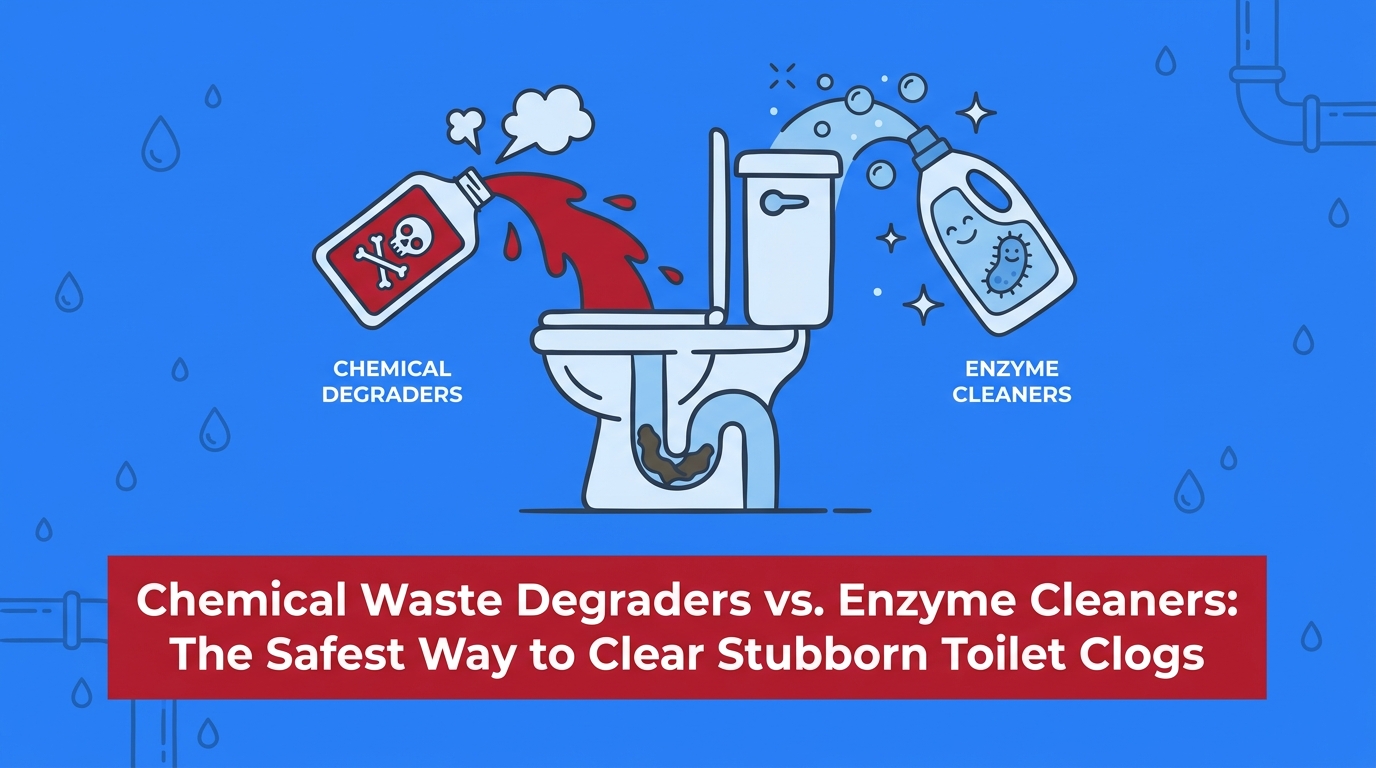
A common myth is that the strongest, fastest-acting liquid is always your best bet when comparing chemical waste degraders vs. enzyme cleaners for stubborn toilet clogs. When your toilet is backed up with solid waste and a standard plunger fails to clear the bowl, panic usually sets in. You might assume a heavy-duty chemical solvent will melt the problem away instantly. However, reaching for the most aggressive bottle on the shelf often creates a much larger, more expensive disaster behind your walls.
When a plumbing system is heavily clogged, the right next step involves understanding what these liquids actually do inside your pipes. The core decision comes down to balancing the immediate gratification of harsh chemicals against the long-term safety of biological treatments. Before you pour anything down the bowl, you need to understand the mechanics of an enzyme vs chemical drain cleaner.
For expert plumbing services and professional sewer and drain clearing, the team at Always Affordable Plumbing & HVAC is always ready to safely restore your home's flow.
Acid-based chemical drain cleaners do not simply wash waste away. They rely on severe exothermic—or heat-generating—reactions to force their way through blockages. When these harsh solvents hit sitting water and trapped solid waste, the chemical reaction immediately begins to boil the surrounding liquid.
The problem: Solid waste and toilet paper create an impassable barrier in the curved trap of your toilet, leaving standing water in the bowl.
The cause of damage: When you pour a chemical solvent into the bowl, the resulting exothermic reaction can quickly generate heat exceeding 200 degrees Fahrenheit inside the bowl and pipes. Porcelain toilets are simply not designed to handle boiling temperatures. The sudden, extreme spike in heat causes the ceramic to expand rapidly, risking severe thermal shock. This can crack the porcelain right down the middle, turning a clogged toilet into a flooded bathroom.
The solution: Avoiding high-heat chemical reactions entirely protects your fixtures from permanent structural damage.
The intense heat and corrosive nature of chemical solvents impact different plumbing materials in unique ways. When comparing PVC vs. older cast iron plumbing, neither material is truly safe from repeated chemical exposure. In our experience responding to plumbing emergencies across the local area, we frequently see modern PVC pipes soften, warp, or even melt at the joints under extreme heat, leading to hidden leaks behind drywall. Older cast iron plumbing, which is already prone to internal rust, suffers accelerated corrosion when exposed to highly acidic solvents. The chemicals eat away at the weakened metal, turning a simple clog into a structural failure.
If harsh chemicals carry so much risk, what is the alternative? The answer lies in biological drain treatments. Enzyme cleaners are natural bacteria cultures specifically designed to digest organic matter. Instead of burning through a clog with acid, these treatments use nature to break down the blockage safely.
When you introduce an enzyme cleaner to a clogged toilet, the biological mechanism begins immediately. The active bacteria literally consume toilet paper and solid waste. As they feed on the organic material, the bacteria multiply, creating a growing colony that continues to work until the food source is entirely gone.
Because this is a natural biological process, patience is necessary. The time requirement for an enzyme cleaner to fully digest a stubborn clog typically ranges from 12 to 24 hours. While you sacrifice the immediate gratification of a chemical solvent, you gain complete peace of mind regarding your plumbing infrastructure.
The most significant advantage of the biological approach is what it does not do. Enzyme cleaners generate absolutely zero heat. This makes them completely safe for all pipe materials, from aging cast iron to modern PVC, as well as the delicate porcelain of your toilet bowl.
• No thermal shock: Your toilet bowl remains at room temperature throughout the process.
• Septic system safe: Unlike chemicals that kill beneficial bacteria in a septic tank, enzyme cleaners actually support a healthy septic ecosystem.
• Pipe preservation: Biological cleaners leave a biofilm of helpful bacteria on the pipe walls, helping to prevent future organic buildup.
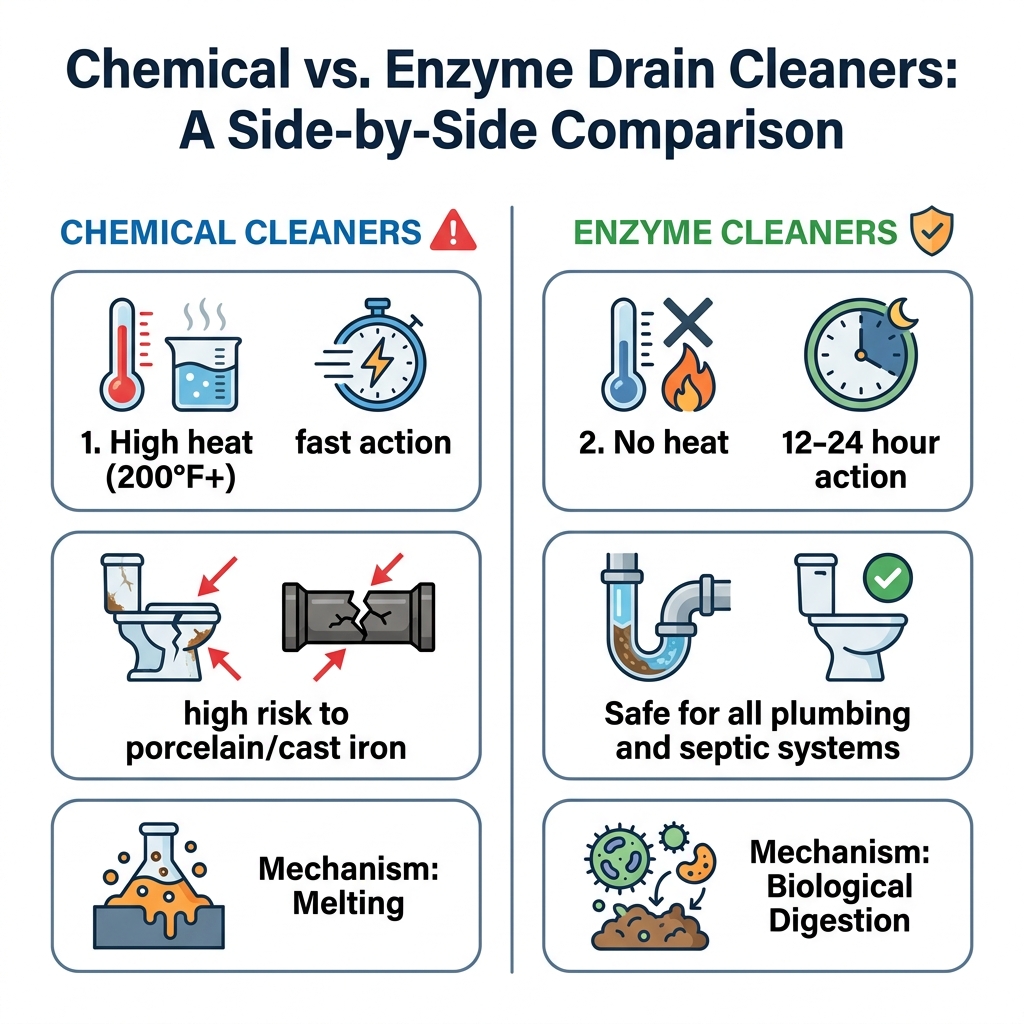
Homeowners frequently search for what breaks down poop in a toilet fast, hoping for a miracle product that works instantly without causing damage. Directly comparing the two primary methods helps clarify why speed often comes at a high cost to your home's infrastructure.
• Reaction Type — Chemical Solvents: Chemical melting (exothermic) — Enzyme Cleaners: Biological digestion
• Heat Generated — Chemical Solvents: Extreme (200°F+) — Enzyme Cleaners: None (Room temperature)
• Action Speed — Chemical Solvents: Fast (15-30 minutes) — Enzyme Cleaners: Slow (12-24 hours)
• Pipe & Fixture Safety — Chemical Solvents: High risk of cracking porcelain and warping PVC — Enzyme Cleaners: 100% safe for all materials and septic systems
• Long-Term Impact — Chemical Solvents: Accelerates corrosion and pipe degradation — Enzyme Cleaners: Coats pipes to prevent future organic buildup
When you evaluate the long-term infrastructure impact of both choices, the winner becomes clear. While chemical solvents offer the illusion of a quick fix, they aggressively degrade your plumbing. Enzyme cleaners require more time to work, but their thoroughness and safety profile make them superior.
Our focus is always on cost-effective, long-term solutions for your home. Choosing the slower, safer enzyme cleaner prevents expensive, premature pipe replacements down the road. If you are dealing with organic blockages and want to explore other household alternatives, you might also consider comparing Liquid Plumber vs. Dish Soap for Severe Organic Toilet Clogs. Ultimately, prioritizing long-term pipe health saves you from massive reconstruction costs.

Aging housing stock often features original cast iron plumbing that has faithfully carried wastewater away for decades. However, these older pipes are already susceptible to internal corrosion. Over time, the constant flow of water and waste naturally wears down the iron, creating a rough interior surface where clogs easily form.
Our technicians at Always Affordable Plumbing & HVAC frequently service older homes in the Sacramento and Central Valley region, where aging plumbing faces significant stress from shifting soils and drought-seeking root intrusion. During dry spells, tree roots actively seek out moisture, often wrapping around and penetrating aging cast iron and clay pipes. Using corrosive chemicals adds unnecessary internal damage to these already vulnerable systems.
When you introduce acidic chemical solvents to an older pipe, the acid settles in the low spots and accelerates pitting. This eats through the remaining metal, leading to structural failure and collapsed sewer lines. Preserving pipe integrity by using gentle, biological drain care is the most cost-effective approach to home maintenance, ensuring your original plumbing lasts as long as possible.
Sometimes, a solid waste clog is simply too severe for either enzymes or chemicals to resolve. If you have waited 24 hours after applying an enzyme treatment and the water level remains stubbornly high, or if you hear gurgling sounds from your shower drain when you flush the toilet, the blockage has moved deeper into your main sewer line.
Important safety warning: Never attempt DIY snaking or try to remove the toilet yourself. These tasks require a licensed professional. Improperly handling a plumbing auger can shatter the inside of your toilet trap, and removing a toilet without the right seals will cause hidden leaks that rot your subfloor.
When over-the-counter liquids fail, professional diagnostic tools are required to find the root cause of the blockage. A licensed plumber will use high-definition camera inspections to see exactly what is causing the backup—whether it is compacted solid waste, a foreign object, or invasive tree roots. Professional clearing physically removes the obstruction without risking chemical burns or pipe damage.
We recently helped a local homeowner who woke up during winter to a severely backed-up sewer line. When they needed immediate assistance, an Always Affordable Plumbing & HVAC technician was dispatched within hours. Our team provided an affordable assessment, worked quickly to physically unclog the line, and discussed future prevention options to keep the system flowing smoothly. If your drains are fighting back, it is time to seek comprehensive plumbing and HVAC solutions from a qualified team.
What breaks down poop in a toilet fast?
Chemical drain cleaners break down solid waste the fastest by using exothermic reactions to melt the blockage. However, this speed comes with severe risks, as the intense heat can crack porcelain toilet bowls and damage plumbing pipes. For a safer alternative, enzyme cleaners digest the waste over 12 to 24 hours without generating harmful heat.
Will enzyme drain cleaner unblock a toilet?
Yes, enzyme drain cleaners are highly effective at unblocking toilets clogged with organic solid waste and toilet paper. The natural bacteria in the cleaner consume the blockage until it is entirely gone. You simply need to allow the enzymes enough time—usually overnight—to complete the biological digestion process.
Is it safe to leave chemical drain cleaner in a toilet overnight?
No, leaving harsh chemical drain cleaners in a toilet overnight is incredibly dangerous for your plumbing. Prolonged exposure to highly acidic or caustic chemicals can severely corrode cast iron pipes and weaken PVC joints. Always follow the manufacturer's strict time limits if you choose to use chemicals, though biological cleaners are much safer for overnight use.
Can chemical drain cleaners crack a toilet bowl?
Yes, chemical drain cleaners can easily crack a porcelain toilet bowl due to thermal shock. The chemical reaction generates rapid, intense heat that the ceramic material cannot withstand. If the porcelain expands too quickly, it will fracture, requiring a complete replacement of the toilet fixture.
How do enzyme cleaners break down solid waste?
Enzyme cleaners break down solid waste through a natural biological process rather than a chemical reaction. They introduce live bacteria cultures into the water, which literally eat the organic matter and toilet paper. As the bacteria feed, they multiply and continue digesting the clog until the pipe is clear.
Are chemical drain cleaners safe for older cast iron pipes?
Chemical drain cleaners are generally unsafe for older cast iron pipes. Aging cast iron is already vulnerable to natural rust and pitting, and adding highly acidic chemicals accelerates this corrosion. Over time, repeated chemical use will eat completely through the metal, leading to expensive structural pipe failures.
Dealing with a stubborn toilet clog can be incredibly frustrating, but choosing the right treatment protects your home's infrastructure. If enzyme cleaners haven't resolved the issue and you want to avoid the risks of harsh chemicals, professional help is the safest route. Schedule a service call with our team today to ensure you have a clear understanding of your plumbing's health and reliable, actionable solutions that keep your pipes flowing freely.
See what our satisfied customers have to say about their experience with Always Affordable
Plumbing & HVAC.

"Chappy was very skilled in his knowledge of my HVAC unit. I greatly appreciate the quick response and experienced tech. The whole endeavor was made less stressful by his humor and honest conversation. I find comfort in knowing I now have a shop i trust for the next time."
"Tony, James, Ronnie did an amazing job setting up our new AC! They were quick, efficient, considerate, and polite! We appreciate them scheduling us in on such short notice. Definitely recommend this company!"
"Prompt, professional service with kindness and care. They came out to address both plumbing and AC issues. I received a courtesy call before they arrived. All issues were resolved the same day with integrity and respect. Thankful for businesses like this. Absolutely recommend to those that I love."
"Excellent service! Jason came out promptly and in addition to doing my outside faucet he also put in new irrigation equipment! All done perfectly! Jason was lovely"
"Honest with the assessment; friendly and good manners. No high pressure sales. Just good to honest "tell it like you see it" Thought my kitchen disposer needed an overhaul. But Jason, there Plumber gave me an honest lesson on what was really happening. Saved me hundreds, if I went the route of replacing. Thank you!"
"Absolutely 5 stars. If you are looking for affordable ,professional and kind. Chappy was excellent and very knowledgeable . I called in the morning because my air conditioner stopped working he was here within hours and fixed my air with a smile. I highly recommend Chappy and Always Affordable plumbing and Hvac."
"Scott and James were great. They got there quickly and diagnosed the problem with my A/C.They did a very thorough job testing everything. Sent me pictures and called to keep me informed. Got it done the next day and everything is working fine. Be glad when I get home so I can enjoy my new system. Thanks guys for a great job."
"Chappy was very helpful. He knew our issue right away, cleaned our coils. He also came on the same day we called and got our AC blowing cold air again."
"After some timing ’curfuffles’ the Tech Jason arrived and not only completed a speedy install on my toilet, he was personable & professional. Because of the timing issues Jason was attentive and showed up with everything needed! No extra store runs 😊 I was very comfortable with having this Tech in my Daughter’s home. We will definitely use this Service again."


