Home Maintenance Tips and Troubleshooting: What to Do When Your AC Blows Warm Air
AC blowing warm air? Review essential home maintenance tips and troubleshooting to spot simple airflow issues. Decide with confidence when to call a pro.



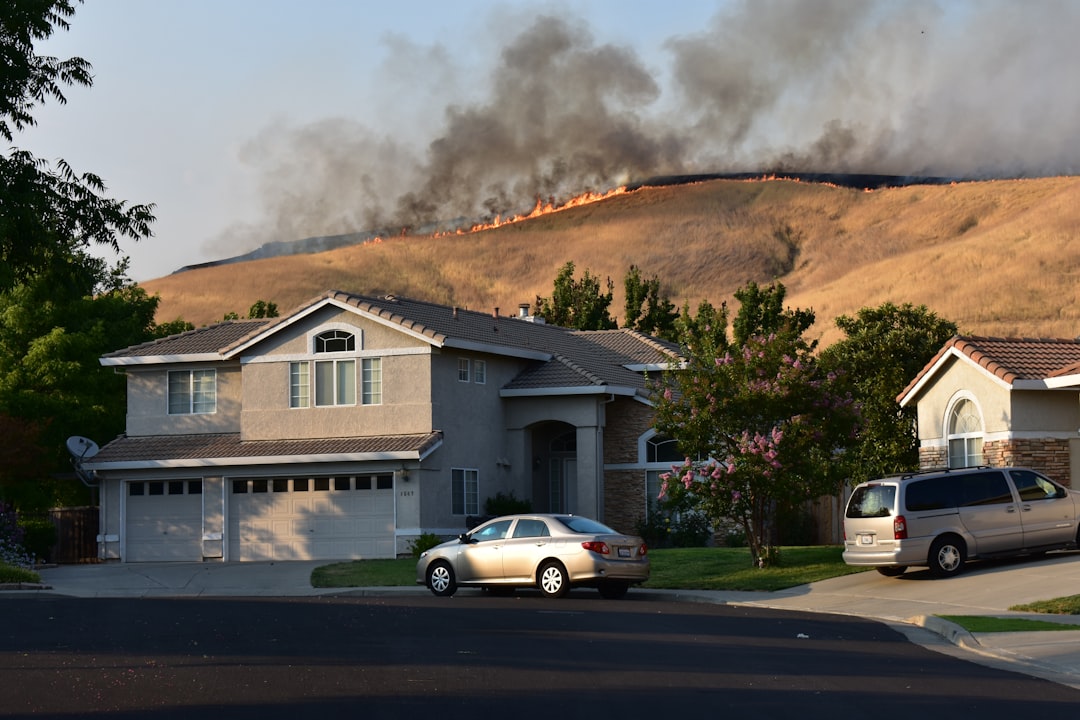
How wildfire smoke affects your indoor air quality is something every Sacramento-area homeowner needs to understand — especially as wildfire seasons grow longer and more intense each year. You might assume that staying indoors keeps you safe. But the reality is more complicated: smoke doesn't stop at your front door.
Research shows that indoor PM2.5 levels during wildfire smoke events can reach a median of 31.5 µg/m³ — more than six times higher than typical indoor background levels of 4.7 µg/m³. Even with windows closed, outdoor smoke still finds its way inside through gaps, vents, and HVAC systems.
Here's a quick summary of how wildfire smoke impacts your indoor air:
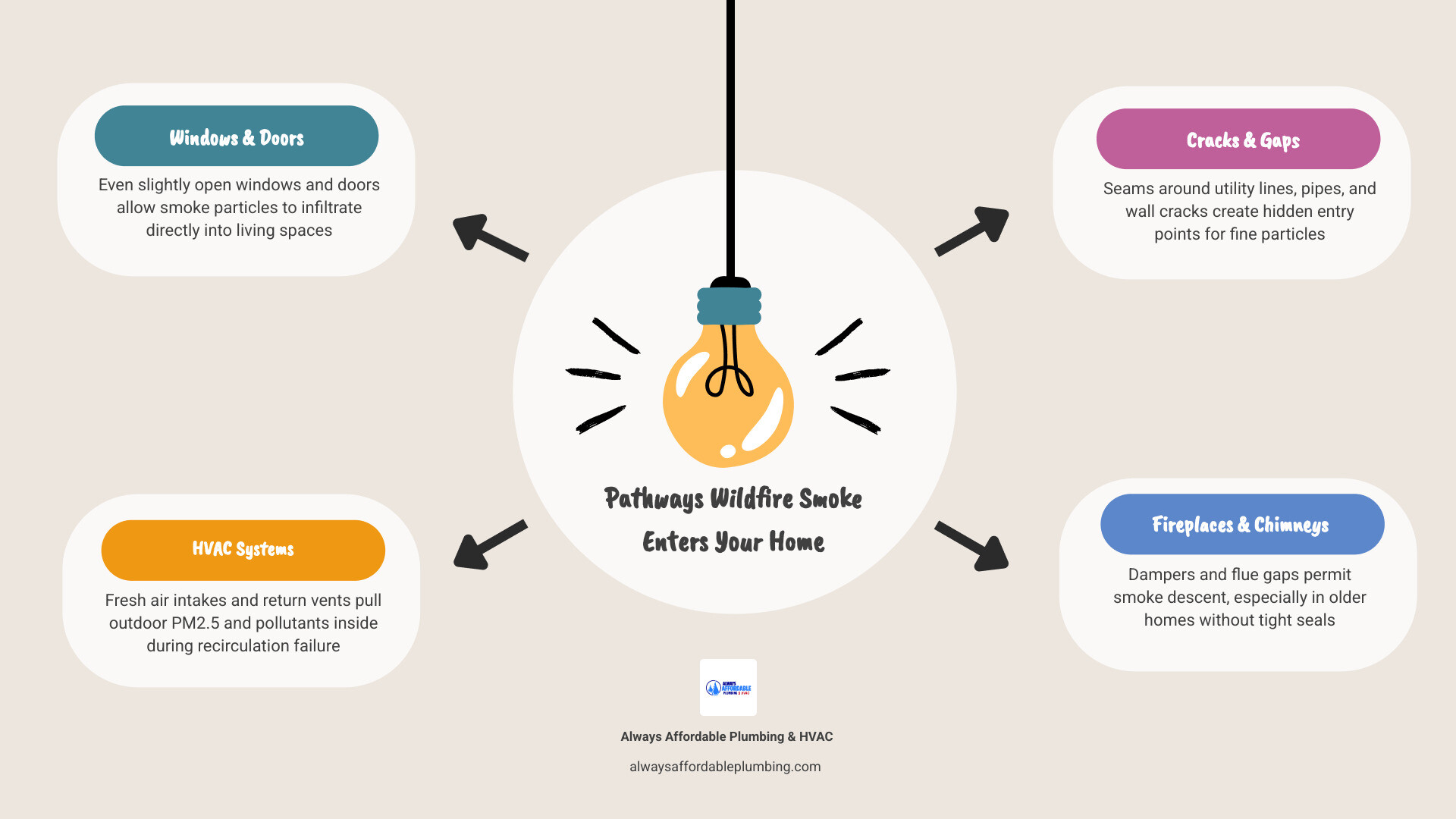
• Smoke infiltrates through multiple pathways — open windows and doors, HVAC fresh air intakes, cracks, gaps around utility lines, and even fireplaces
• PM2.5 particles are the biggest threat — fine particles less than 2.5 microns wide penetrate deep into your lungs and can't be seen with the naked eye
• Other pollutants travel in too — including volatile organic compounds (VOCs), polycyclic aromatic hydrocarbons (PAHs), carbon monoxide, nitrogen oxides, and trace metals
• Buildings offer real but incomplete protection — the median ratio of indoor-to-outdoor PM2.5 during smoke events is around 0.75, meaning indoor air is still significantly polluted
• Older homes are more vulnerable — homes built before 1975 allow roughly 50% more PM2.5 infiltration than newer, tighter construction
• Pollutants linger long after smoke clears — VOCs and PAHs can off-gas from surfaces and soft materials for weeks to months after a wildfire event
• Vulnerable groups face higher risk — children, elderly adults, pregnant individuals, and those with heart or lung conditions are disproportionately affected
The good news is that the right combination of strategies — from sealing your home to upgrading your HVAC filtration — can dramatically reduce your exposure. This guide walks you through everything you need to know.
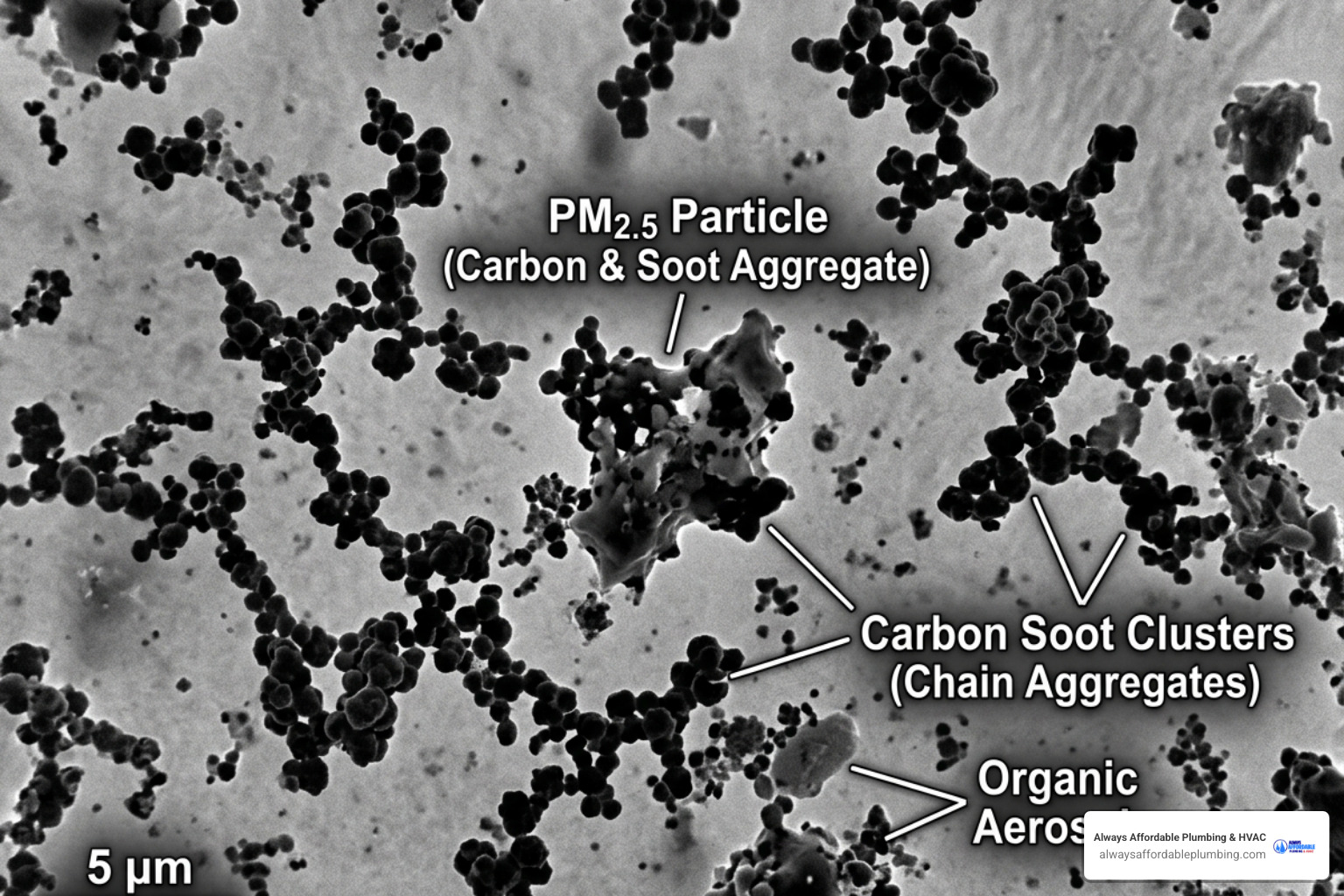
When we talk about wildfire smoke, we aren't just talking about a "campfire smell." We are dealing with a complex chemical soup. Understanding how wildfire smoke affects your indoor air quality starts with identifying the microscopic invaders that cross your threshold.
The primary concern is PM2.5 (particulate matter smaller than 2.5 microns). These particles are so small they can stay suspended in the air for days and travel thousands of miles on wind currents. Along with PM2.5, smoke carries PM10 (larger soot), carbon monoxide, nitrogen oxides, and volatile organic compounds (VOCs).
Perhaps most concerning are the polycyclic aromatic hydrocarbons (PAHs) and trace metals like cadmium, lead, and arsenic. Research indicates that indoor concentrations of certain PAHs can increase by 3x to 6x during wildfire periods. Furthermore, indoor concentrations of ions and trace metals have been shown to double when smoke is heavy outdoors.
In the Sacramento region, we often see a median indoor/outdoor (I/O) ratio for PM2.5 of about 0.75. This means that if the air outside is "Unhealthy," the air inside your living room is likely reaching levels that would still be considered "Unhealthy for Sensitive Groups" unless you take active steps to filter it. For more specific local insights, you can check out our guide on Folsom Air Quality.
Not all homes are created equal when it comes to keeping smoke out. The "building envelope" — the physical barrier between your conditioned indoor air and the outdoor environment — plays a massive role in your safety.
If you live in a home built after 1975, you likely have a tighter building envelope. Data shows that post-1975 buildings have a lower PM2.5 infiltration factor (Finf) of 0.27, compared to 0.41 for older homes. This means newer homes are significantly better at resisting the "creep" of outdoor pollution. In fact, a tight building envelope can reduce PM2.5 infiltration by up to 68%, whereas a leakier, older envelope might only reduce it by 31%.
Common entry points in older Sacramento homes include:
• Gaps around window frames and door sweeps.
• Unsealed utility lines (where pipes or wires enter the home).
• Fireplaces and chimneys that lack a proper seal.
• Old-fashioned wall heaters or floor furnaces.
Why are we so focused on these tiny particles? Because they don't just stay in your nose or throat. PM2.5 is small enough to enter the bloodstream through the lungs, causing systemic inflammation. This can lead to asthma exacerbations, bronchitis, and increased cardiovascular stress.
The PAHs found in smoke are particularly nasty because many are known or probable carcinogens. During a smoke event, the "oxidative activity" of the air — its ability to cause cellular damage — is much higher than typical urban pollution.
• PM2.5 — Typical Indoor Level (Background): ~4.7 µg/m³ — Wildfire Event Indoor Level: ~31.5 µg/m³
• Trace Metals — Typical Indoor Level (Background): Baseline — Wildfire Event Indoor Level: 2x Increase
• PAHs (HMW) — Typical Indoor Level (Background): Baseline — Wildfire Event Indoor Level: 6x Increase
• Ions — Typical Indoor Level (Background): Baseline — Wildfire Event Indoor Level: 2x Increase
Certain neighbors in our community are at higher risk. Children breathe more air per pound of body weight than adults, and their lungs are still developing. The elderly and those with pre-existing heart or lung conditions may experience immediate distress when PM2.5 levels spike. Pregnant individuals also need to be cautious, as smoke exposure has been linked to lower birth weights.
When the sky turns orange and the AQI hits the triple digits, you need to act fast. The first rule of thumb is to create a "clean air fortress."
Start by closing all windows and doors. While this seems obvious, many people forget about smaller openings. If you have a fireplace, close the damper. If you have a window AC unit, ensure the seal around it is tight; you can use painters' tape or foam to close gaps temporarily.
One of the most important steps we recommend is managing your home's "pressure." Using exhaust fans in the kitchen or bathroom can actually pull smoke into the house through tiny cracks by creating negative pressure. During heavy smoke, limit the use of these fans.
If you must go outside, standard surgical masks or cloth masks do virtually nothing to stop PM2.5. You need a NIOSH-certified N95 or P100 respirator. These must be fitted tightly to your face to work. For indoor protection, we suggest keeping a "clean room" — a centralized bedroom or living area where you run an air purifier around the clock and keep the door closed.
Your HVAC system is your best friend during wildfire season, provided it’s set up correctly. Most people leave their thermostat on "Auto," which means the fan only runs when the AC is cooling. During a smoke event, you should switch your thermostat to the "On" or "Circulate" position. This ensures the air is constantly being pulled through your filter.
We strongly recommend upgrading to a MERV 13 filter if your system can handle it. Standard filters (MERV 8 or lower) are designed to catch "boulders" like pet hair and dust bunnies; they let PM2.5 sail right through. A MERV 13 filter can block at least 50% of the fine particles that make up wildfire smoke.
However, be careful: high-efficiency filters can sometimes cause a "pressure drop" that strains your blower motor. We can help you determine if your system is compatible with these upgrades. Additionally, check for "filter bypass" — if the filter doesn't fit snugly in its rack, smoke will simply go around it. We often use foam tape to seal those filter racks for our customers to ensure 100% of the air gets cleaned.
For more help with your system, you can explore More info about HVAC services provided by our team.
While your HVAC system does the heavy lifting for the whole house, portable air cleaners (PACs) are the "special forces" of indoor air quality. When used with windows closed, a high-quality portable air cleaner can reduce indoor PM2.5 by a staggering 71%.
When shopping for a purifier, look for:
• True HEPA Filtration: This captures 99.97% of particles as small as 0.3 microns.
• Activated Carbon: This is essential for removing the smell of smoke and the gaseous VOCs that HEPA filters can't catch.
• CADR Rating: Ensure the Clean Air Delivery Rate is sized correctly for your room.
• Ozone-Free Certification: Never use "ionizers" or "ozone generators" while you are in the room, as ozone is a lung irritant that can make respiratory issues worse.
If air purifiers are sold out at the store (which happens every summer!), you can build a highly effective alternative. The Corsi-Rosenthal Box is a DIY air cleaner made from a standard 20-inch box fan and four or five MERV 13 furnace filters taped into a cube.
Research has shown these DIY units can achieve up to a 99% reduction in particles in a small room within 60 minutes. While they aren't as pretty as a store-bought unit, they are a literal lifesaver during a crisis.
For a more permanent solution, we often install whole-home air purification systems directly into your ductwork. These can include UV light systems, which help neutralize biological contaminants, and advanced electronic air cleaners. We also recommend maintaining indoor humidity between 40% and 60%. Air that is too dry can irritate your airways, making you more susceptible to the effects of smoke.
Once the fires are contained and the sky clears, your work isn't quite done. How wildfire smoke affects your indoor air quality continues even after the smoke is gone because pollutants settle into your carpets, upholstery, and even your walls.
Ash is significantly more toxic than regular house dust. It often contains higher levels of lead, arsenic, and copper. When cleaning up:
1. Wear PPE: Put on your N95 mask, gloves, and long sleeves.
2. Avoid Dry Sweeping: This just kicks the particles back into the air. Instead, use a "mist and mop" approach. Lightly spray surfaces with water before wiping them down.
3. HEPA Vacuums Only: A standard vacuum cleaner will often catch the big stuff and blow the fine PM2.5 right back out the exhaust. You need a vacuum with a certified HEPA filter.
4. Wash Fabrics: Curtains and rugs act like "smoke sponges." Steam cleaning or washing these items is essential to remove lingering odors.
5. Soap and Water: You don't need harsh chemicals. Simple soap and water are often the most effective way to remove ash residue without adding more VOCs to your home.
Don't forget your HVAC system! After a major smoke event, your filters will be clogged and potentially "loaded" with toxic PAHs. Change your filters immediately once the outdoor air improves. We also recommend a professional duct inspection; if ash has settled deep in your vents, it will continue to circulate every time the heater or AC kicks on.
While everyone is affected, certain groups face higher risks. This includes infants and children, the elderly, and pregnant women. People with pre-existing conditions like asthma, COPD, or heart disease are the most likely to end up in the emergency room during a smoke event. We also see higher risks for outdoor workers who bring smoke residue home on their clothes, and those living in older, less-insulated housing.
Without active intervention, smoke particles can linger for days. Gaseous pollutants (VOCs) can actually "adsorb" into soft materials like sofas and carpets and then "desorb" (release back into the air) for weeks or even months. This is why a house might still smell like smoke long after the fire is extinguished. Proper ventilation (once the outdoor air is clean) and deep cleaning are the only ways to speed up this process.
N95 masks are highly effective at filtering out 95% of fine particles, but they are generally intended for short-term use or cleanup. They do not filter out gases like carbon monoxide or VOCs. For indoor protection, it is much more comfortable and effective to use air filtration (HVAC and PACs) than to wear a mask inside your own home. However, during the cleanup of ash and soot, an N95 is non-negotiable for your safety.
At Always Affordable Plumbing & HVAC, we’ve seen how much of an impact the California wildfire season can have on our neighbors in Sacramento, Elk Grove, Roseville, and beyond. Understanding how wildfire smoke affects your indoor air quality is the first step toward keeping your family healthy and comfortable.
Whether it’s upgrading your system to MERV 13 filters, installing a whole-home purifier, or performing a post-season HVAC tune-up, we are here to help. Our quality, transparent, and affordable solutions are designed to give you peace of mind when the air gets thick. Plus, members of our Member's Club enjoy priority service and exclusive discounts, ensuring your home is always a safe haven.
Don't wait until the next "Spare the Air" day to protect your home. Contact our HVAC experts for a home air quality assessment today, and let’s make sure your indoor air is as clean as it can be.
See what our satisfied customers have to say about their experience with Always Affordable
Plumbing & HVAC.

"Chappy was very skilled in his knowledge of my HVAC unit. I greatly appreciate the quick response and experienced tech. The whole endeavor was made less stressful by his humor and honest conversation. I find comfort in knowing I now have a shop i trust for the next time."
"Tony, James, Ronnie did an amazing job setting up our new AC! They were quick, efficient, considerate, and polite! We appreciate them scheduling us in on such short notice. Definitely recommend this company!"
"Prompt, professional service with kindness and care. They came out to address both plumbing and AC issues. I received a courtesy call before they arrived. All issues were resolved the same day with integrity and respect. Thankful for businesses like this. Absolutely recommend to those that I love."
"Excellent service! Jason came out promptly and in addition to doing my outside faucet he also put in new irrigation equipment! All done perfectly! Jason was lovely"
"Honest with the assessment; friendly and good manners. No high pressure sales. Just good to honest "tell it like you see it" Thought my kitchen disposer needed an overhaul. But Jason, there Plumber gave me an honest lesson on what was really happening. Saved me hundreds, if I went the route of replacing. Thank you!"
"Absolutely 5 stars. If you are looking for affordable ,professional and kind. Chappy was excellent and very knowledgeable . I called in the morning because my air conditioner stopped working he was here within hours and fixed my air with a smile. I highly recommend Chappy and Always Affordable plumbing and Hvac."
"Scott and James were great. They got there quickly and diagnosed the problem with my A/C.They did a very thorough job testing everything. Sent me pictures and called to keep me informed. Got it done the next day and everything is working fine. Be glad when I get home so I can enjoy my new system. Thanks guys for a great job."
"Chappy was very helpful. He knew our issue right away, cleaned our coils. He also came on the same day we called and got our AC blowing cold air again."
"After some timing ’curfuffles’ the Tech Jason arrived and not only completed a speedy install on my toilet, he was personable & professional. Because of the timing issues Jason was attentive and showed up with everything needed! No extra store runs 😊 I was very comfortable with having this Tech in my Daughter’s home. We will definitely use this Service again."