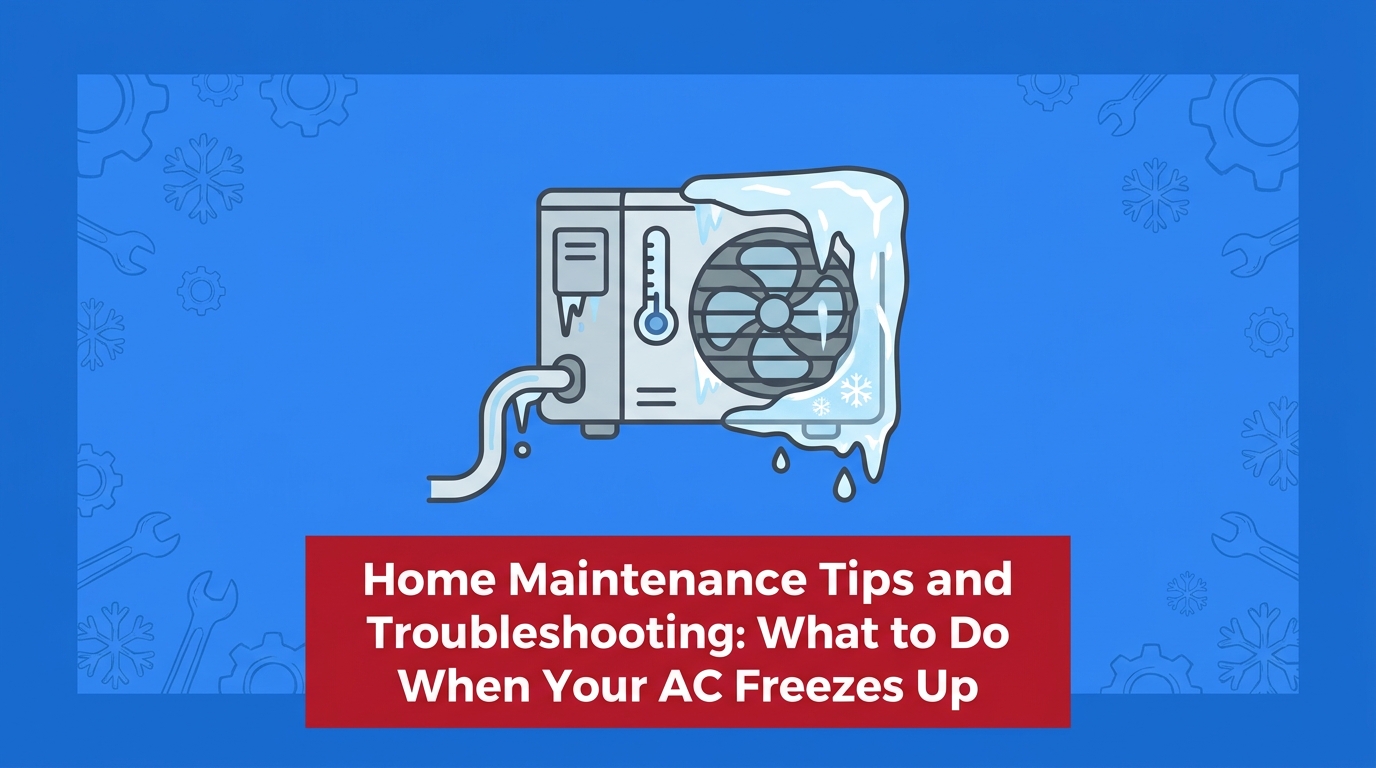
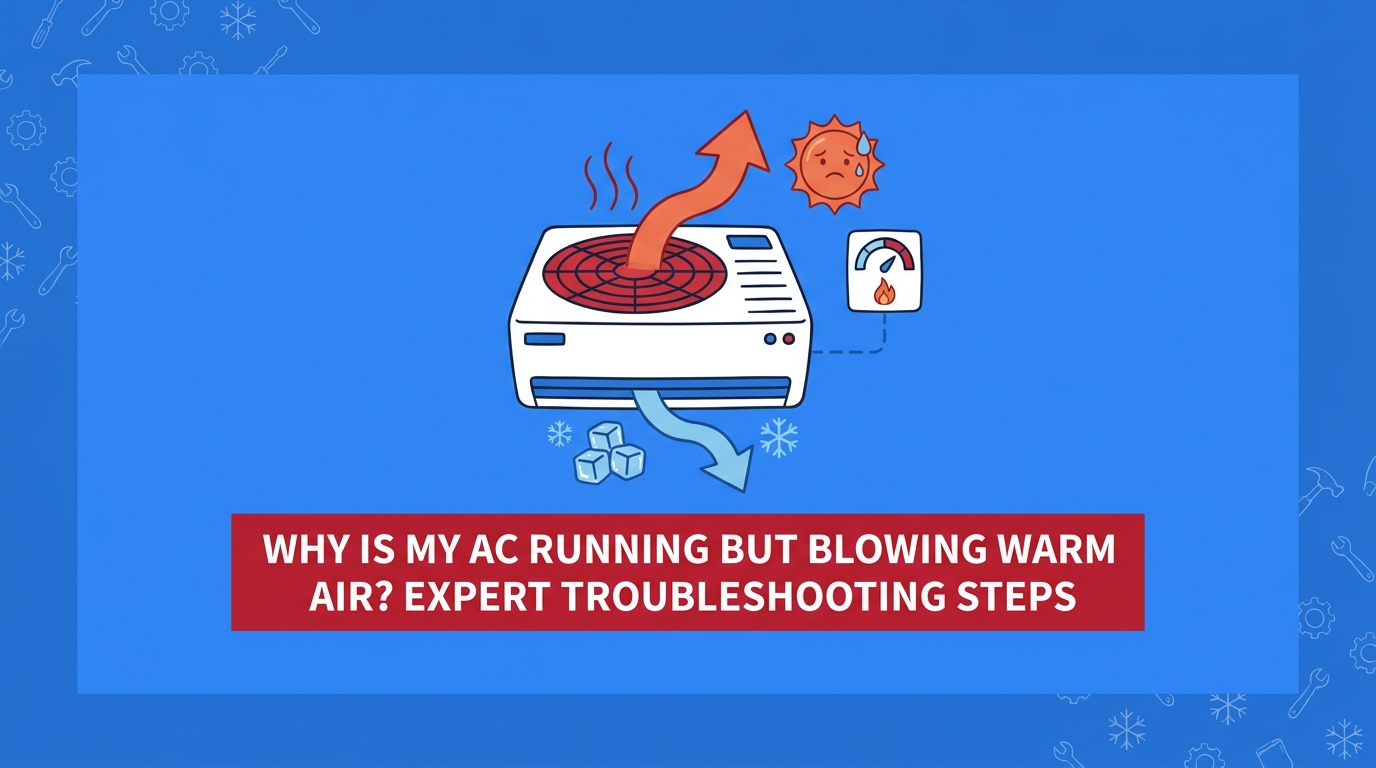
Home Maintenance Tips and Troubleshooting: What to Do When Your AC Freezes Up
Ice on your AC coil? Why we recommend turning it off immediately. Apply these home maintenance tips and troubleshooting steps to safely thaw it and avoid



Learning how to maintain your heating and cooling system is one of the smartest things you can do as a homeowner. Here's a quick overview of the essential steps:
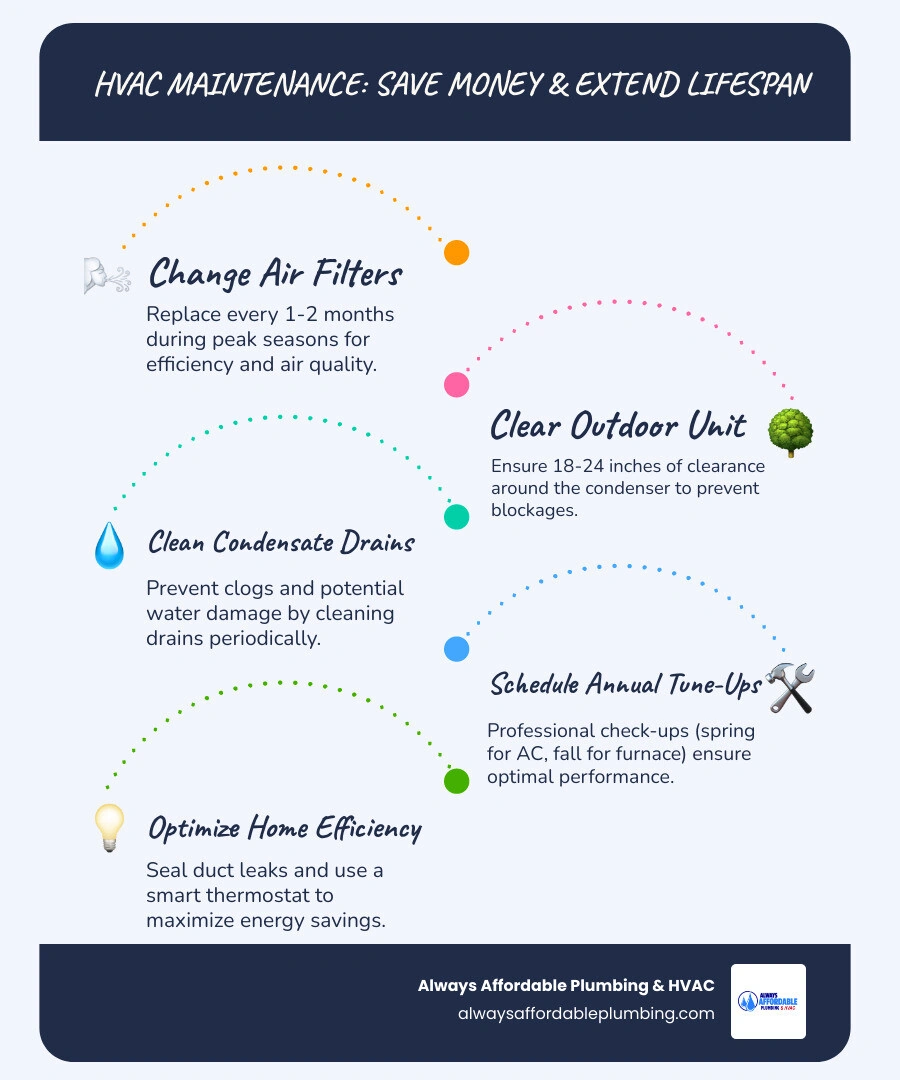
1. Replace air filters every 1–2 months during peak seasons
2. Clear debris from around your outdoor condenser unit, keeping at least 18–24 inches of clearance
3. Clean condensate drains periodically to prevent clogs and water damage
4. Schedule professional tune-ups once a year — spring for cooling, fall for heating
5. Seal duct leaks using mastic sealant or metal tape
6. Keep all vents open and unobstructed throughout your home
7. Install a smart thermostat to optimize energy use automatically
8. Watch for warning signs like strange noises, unusual smells, or rising energy bills
Think about the last time your AC gave out on the hottest day of summer. Not a great feeling. Yet for most homeowners, that kind of breakdown is completely preventable.
Nearly half of the average home's annual energy bill goes toward heating and cooling. That's a big chunk of your budget riding on equipment that most people never think about until something goes wrong. In a typical home, duct leaks alone can waste 20–30% of conditioned air before it ever reaches your living space — quietly inflating your bills month after month.
The good news? A consistent maintenance routine keeps your system running efficiently, extends its lifespan, and helps you catch small problems before they turn into expensive repairs. Whether you're a hands-on DIYer or someone who prefers to leave it to the pros, this guide covers everything you need to know.
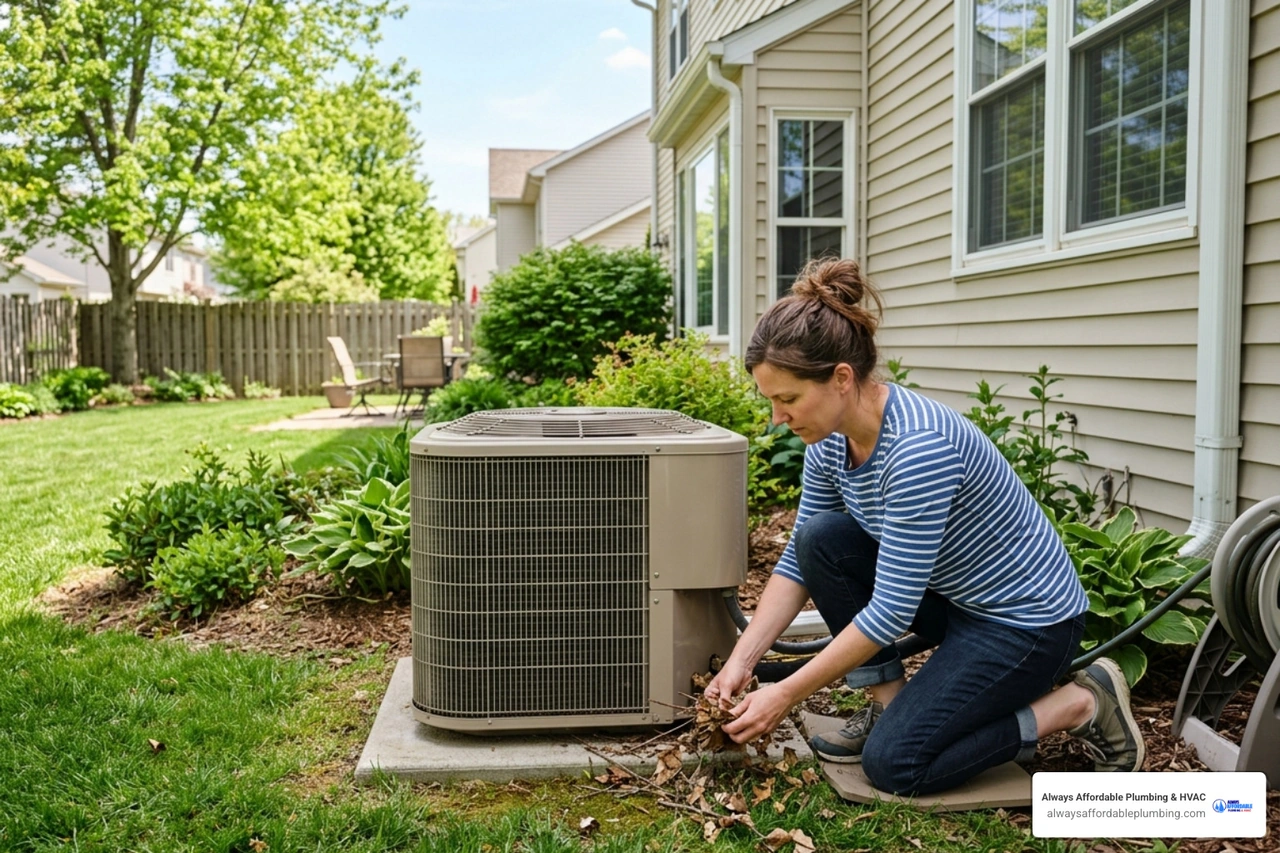
While some parts of your HVAC system require a licensed professional, there is a lot you can do yourself to keep things humming. We always tell our neighbors in the Sacramento area that the best defense against a mid-summer breakdown is a little bit of regular attention.
For those living in areas like Mather or North Highlands, keeping up with HVAC Maintenance in McClellan CA often starts with simple visual inspections. You don't need a tool belt to check if your vents are blocked or if your outdoor unit is buried in leaves. By staying proactive, you prevent dirt and neglect—the two leading causes of system failure—from taking hold of your equipment.
The single most important DIY task is managing your air filters. A dirty filter is like trying to breathe through a straw while running a marathon—it forces your motor to work harder, which spikes your energy bills and can lead to a premature system "heart attack."
• Filter Types: We recommend high-efficiency pleated or electrostatic filters. Avoid the cheap, thin fiberglass ones; they don't catch much more than large dust bunnies.
• Frequency: Check your filter once a month. If you have pets, live in a dusty area like Rio Linda, or have a household member who smokes, you may need to change it every 30 days. At a minimum, replace it every 90 days.
• Efficiency: Proper airflow can improve system efficiency by up to 15%. When the filter is clogged, dirt can bypass it and settle on your evaporator coils, which is a much bigger (and more expensive) problem to fix.
If you’re looking for Furnace Maintenance in Galt CA, even in the winter, your furnace needs that clean air to move effectively through your home.
Your outdoor condenser unit is a workhorse, but it needs room to breathe. It’s responsible for releasing the heat gathered from inside your home. If it’s crowded by shrubs or covered in grass clippings, it can’t do its job.
• Clearance: Maintain at least 18 to 24 inches of clear space around the unit. Trim back any bushes, weeds, or low-hanging branches.
• Cleaning: Use a garden hose (never a pressure washer!) to gently wash away dust and pollen from the exterior fins.
• Fin Straightening: Those thin aluminum fins on the side of the unit can get bent by hail or a rogue football. Bent fins block airflow. You can actually buy a "fin comb" at a hardware store to gently straighten them back out.
Regularly checking these exterior components is a key part of an AC Tune-Up in Rio Linda CA and helps prevent the system from overheating during our intense July heatwaves.
Your air conditioner doesn't just cool the air; it removes moisture. That moisture has to go somewhere, and that "somewhere" is the condensate drain line.
• Clog Prevention: Over time, algae and mold can grow in the drain line, causing a clog. If the water backs up, it can cause significant water damage to your home or trigger a safety switch that shuts your system down entirely.
• The Bleach Trick: Once a year, locate your drain line (usually a white PVC pipe near the indoor unit) and pour a cup of bleach mixed with water down it to kill off any growth.
• Evaporator Coils: While these are inside the unit, you can occasionally check them for dust. If they look fuzzy, it’s time for a professional cleaning. Dirty coils can’t absorb heat, meaning your AC will run forever without actually cooling the house.
For homeowners utilizing heat pumps, Heat Pump Maintenance in Newcastle CA must include checking these drains, as they are active during both the cooling and heating cycles.
As of April 2026, we are seeing more homeowners realize that "preventative" maintenance is much cheaper than "emergency" repair. While DIY tasks are great, a licensed technician has the tools to see things the naked eye can’t—like refrigerant leaks or failing capacitors.
The best time to schedule service is during the "shoulder seasons." Think of it as a pre-game checkup. You want your AC Tune-Up in Loomis CA in the late winter or early spring (before May) and your heating service in the late summer or early fall (before November). This ensures your system is ready for the peak demand months and helps you avoid the "busy season" wait times.
When we come out for a professional visit, we do more than just look at the unit. A comprehensive check-up includes:
• Electrical Connections: We tighten all terminals and measure voltage and current on motors. Faulty connections are a fire hazard and can kill expensive components.
• Lubrication: We oil all moving parts. Friction is the enemy of efficiency; unlubricated motors use more electricity and wear out faster.
• Refrigerant Levels: Too much or too little refrigerant makes your system work harder and can eventually destroy the compressor.
• Controls: We verify the starting cycle and ensure the heating and cooling systems aren't running at the same time (yes, it happens!).
Whether you need a Heat Pump Tune-Up in Davis CA or a standard furnace check, these professional steps are what keep your warranty valid and your home safe.
Sometimes, despite your best efforts, the system sends out a "mayday" signal. If you notice any of the following, it’s time to call for HVAC Repair in Sacramento CA immediately:
• Strange Noises: Banging, screeching, or grinding sounds usually mean a belt has slipped or a motor bearing is failing.
• Unusual Odors: A "burning" smell could indicate electrical issues, while a "rotten egg" smell might mean a gas leak.
• Frequent Cycling: If your unit turns on and off every few minutes (short-cycling), it’s under immense stress and likely has a sensor or airflow issue.
• The "Blue Flame" Test: For furnace owners, your burner flame should be a crisp blue. If it’s yellow or orange, it’s a sign of poor combustion and potential carbon monoxide danger.
Maintaining the HVAC unit itself is only half the battle. Your home acts as a container for that conditioned air. If the container is "leaky," your HVAC system has to work twice as hard to keep you comfortable.
• User Effort — Manual Thermostat: High (must change manually) — Smart Thermostat: Low (learns your habits)
• Energy Savings — Manual Thermostat: Minimal — Smart Thermostat: Significant (up to 10-12%)
• Remote Access — Manual Thermostat: No — Smart Thermostat: Yes (via smartphone)
• Maintenance Alerts — Manual Thermostat: No — Smart Thermostat: Yes (filter and service reminders)
Did you know that in a typical house, about 20% to 30% of the air moving through the ducts is lost due to leaks? That’s air you’ve paid to heat or cool that is simply escaping into your attic or crawlspace.
• The Fog Test: You can check for leaks by feeling around duct joints while the fan is running. Professionals often use smoke pencils or fog machines to find the tiny cracks.
• Sealant: Don't use "duct tape"—ironically, it’s not great for ducts. Use mastic sealant or metal-backed tape.
• Clear Vents: Ensure that at least 80% of your registers are open. Closing too many vents increases pressure in the system, which can blow out your heat exchanger or cause duct leaks.
For those in rural areas like Sloughhouse, ensuring your Heating and Air Conditioning in Sloughhouse CA system isn't fighting leaky ducts is the fastest way to lower your monthly utility bill.
Upgrading your home’s "envelope" supports your HVAC system's performance.
• Smart Thermostats: These devices can automatically adjust the temperature when you’re away or asleep. Many models also provide energy reports and remind you when it’s time for Heat Pump Service in Orangevale CA.
• Insulation: If your attic insulation is thin, your heater is basically trying to warm up the whole outdoors. Adding insulation keeps the heat where it belongs.
• Gutters and Roofs: It might seem unrelated, but clogged gutters can lead to moisture buildup in your walls, which increases indoor humidity and forces your AC to work harder to "dry" the air.
Everything has an expiration date. While we pride ourselves on keeping older units running, there comes a point where repairing an old system is like putting a new engine in a 1990 sedan—it might not be the best use of your money.
If you find yourself constantly calling for HVAC Replacement in Roseville CA, it might be because your unit has reached the end of its natural life.
How do you know when to pull the plug? We generally follow the "10-Year Rule."
• Age: Most air conditioners last 10–15 years, while furnaces can go 15–25 years. If your unit is over a decade old and requires a major repair (like a new compressor or heat exchanger), replacement is often the better investment.
• Efficiency: Older systems might operate at 80% efficiency or less. New ENERGY STAR certified models can reach 95% efficiency, saving you hundreds of dollars a year.
• Inconsistent Comfort: If one room is an ice box and the other is a sauna, your system is likely failing to distribute air properly.
When considering a Furnace Replacement in Citrus Heights CA, we look at the total cost of ownership. Sometimes, the energy savings from a new unit can pay for the installation over just a few years.
You should have a professional look at your system twice a year: once for the cooling system and once for the heating system. Regular check-ups prevent about 95% of emergency breakdowns and keep your manufacturer's warranty valid.
The "sweet spots" are Spring (March/April) for your air conditioner and Fall (September/October) for your furnace or heat pump. This ensures your system is ready before the extreme temperatures of Sacramento's summer and winter arrive.
Homeowners can safely replace air filters, clear debris from the outdoor unit, pour a bleach/water mixture down the condensate drain, and keep vents clear of furniture or drapes. Anything involving electrical wiring, gas lines, or refrigerant should always be left to a licensed technician.
At Always Affordable Plumbing & HVAC, we believe that a comfortable home shouldn't be a luxury. By following this guide on how to maintain your heating and cooling system, you are taking the most important step toward lower bills and a longer-lasting system. Whether you are in Elk Grove, Folsom, or right here in Sacramento, we are here to help with the technical stuff so you can get back to enjoying your home.
Don't wait for the next heatwave to find out your system is struggling. A little bit of preventative care today goes a long way toward a worry-free tomorrow.
Contact our experts for professional HVAC service
See what our satisfied customers have to say about their experience with Always Affordable
Plumbing & HVAC.

"Chappy was very skilled in his knowledge of my HVAC unit. I greatly appreciate the quick response and experienced tech. The whole endeavor was made less stressful by his humor and honest conversation. I find comfort in knowing I now have a shop i trust for the next time."
"Tony, James, Ronnie did an amazing job setting up our new AC! They were quick, efficient, considerate, and polite! We appreciate them scheduling us in on such short notice. Definitely recommend this company!"
"Prompt, professional service with kindness and care. They came out to address both plumbing and AC issues. I received a courtesy call before they arrived. All issues were resolved the same day with integrity and respect. Thankful for businesses like this. Absolutely recommend to those that I love."
"Excellent service! Jason came out promptly and in addition to doing my outside faucet he also put in new irrigation equipment! All done perfectly! Jason was lovely"
"Honest with the assessment; friendly and good manners. No high pressure sales. Just good to honest "tell it like you see it" Thought my kitchen disposer needed an overhaul. But Jason, there Plumber gave me an honest lesson on what was really happening. Saved me hundreds, if I went the route of replacing. Thank you!"
"Absolutely 5 stars. If you are looking for affordable ,professional and kind. Chappy was excellent and very knowledgeable . I called in the morning because my air conditioner stopped working he was here within hours and fixed my air with a smile. I highly recommend Chappy and Always Affordable plumbing and Hvac."
"Scott and James were great. They got there quickly and diagnosed the problem with my A/C.They did a very thorough job testing everything. Sent me pictures and called to keep me informed. Got it done the next day and everything is working fine. Be glad when I get home so I can enjoy my new system. Thanks guys for a great job."
"Chappy was very helpful. He knew our issue right away, cleaned our coils. He also came on the same day we called and got our AC blowing cold air again."
"After some timing ’curfuffles’ the Tech Jason arrived and not only completed a speedy install on my toilet, he was personable & professional. Because of the timing issues Jason was attentive and showed up with everything needed! No extra store runs 😊 I was very comfortable with having this Tech in my Daughter’s home. We will definitely use this Service again."