Seasonal Home Maintenance Checklist: Preventing HVAC and Plumbing Emergencies
Prevent HVAC emergencies with a seasonal home maintenance checklist. Why proactive scheduling beats waiting for sudden failures. See what needs attention now.



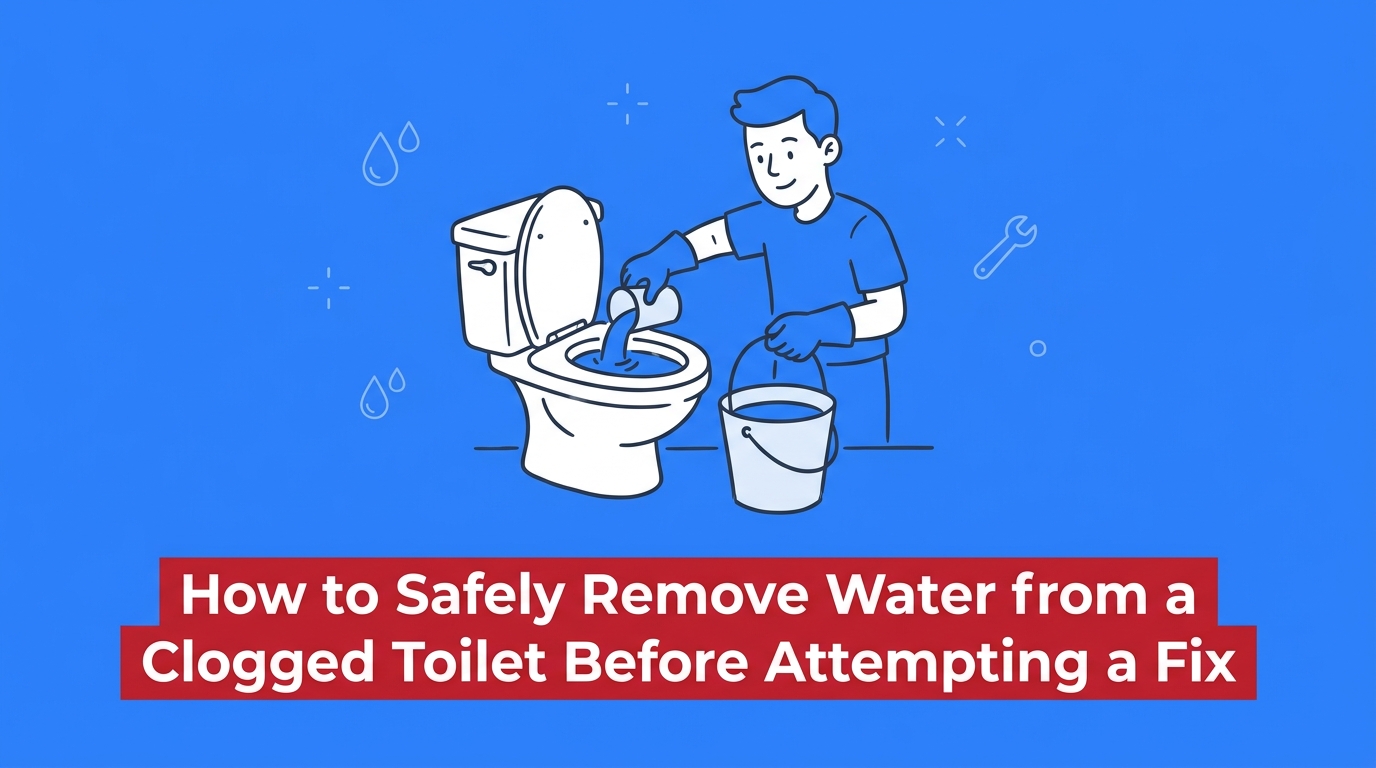
Knowing exactly how to safely remove water from a clogged toilet before attempting a fix is critical when you flush and watch the contaminated water rise rapidly, stopping with the water level within 1-2 inches of the rim. This specific moment strikes panic into the heart of any homeowner. You are suddenly facing a bowl filled with waste, and the immediate instinct is usually the worst possible choice: grabbing the plunger and going to work.
When you encounter a bowl filled to the brim, you have a serious hygienic hazard on your hands. The water has nowhere to go but out, and any downward force will push that wastewater directly onto your bathroom floor. Before you can even think about clearing the actual blockage, you must address the excess water. Bailing out a toilet is an unpleasant reality, but handling this gross situation requires a calm, step-by-step hygienic approach.
Taking the time to prep the area and lower the water level protects your home from unsanitary overflows. If you are ever unsure about handling contaminated water or suspect a larger issue, reaching out for professional plumbing services is always a smart backup plan. However, for a standard localized clog, mastering this initial bailing process is the mandatory first step toward getting your bathroom back in working order.
To understand why plunging a completely full bowl fails, you have to look at the basic mechanics of how a plunger actually works. A standard flange plunger relies on a specific ratio of air and water displacement to force a blockage through the toilet's trapway. When you push down on the plunger handle, you are sending a concentrated wave of pressure down the pipe.
The problem arises when the water level within 1-2 inches of the rim leaves absolutely zero room for that displacement. When you plunge a bowl that has no extra volume capacity, the water takes the path of least resistance. Instead of pushing down into the drain, the pressure forces the contaminated water up and over the edge of the porcelain.
• Half-full (Normal level) — Plunging Action Result: Pressure forces water down the trapway — Risk to Bathroom: Low risk of overflow
• Water level within 1-2 inches of the rim — Plunging Action Result: Water displaces upward over the bowl edge — Risk to Bathroom: High risk of unsanitary flooding
• Completely empty — Plunging Action Result: No water seal to create pressure vacuum — Risk to Bathroom: Plunger fails to move the clog
Understanding what happens when you leave a waste-clogged toilet overnight shows us that sitting wastewater is bad enough, but actively pushing it onto your floors is a disaster. Reducing the water volume is the only way to safely restore the pressure balance needed for effective plunging.
Contaminated toilet water harbors bacteria that quickly seeps into unsealed grout lines, causing permanent discoloration and lingering odors. If you have laminate flooring, baseboards, or exposed drywall near the toilet, the damage happens even faster. Warping of laminate planks or rot in the subflooring occurs rapidly if wastewater sits for even a short period. Protecting these porous surfaces is exactly why bailing the water first is non-negotiable.
Modern plumbing fixtures are engineered very differently than the toilets installed a few decades ago. Today's fixtures use significantly less water to operate. In fact, many standard models use just 1.28 gallons per flush or less. While these toilets are highly efficient and excellent for reducing utility bills, they require specific maintenance approaches when they become clogged.
Because of strict local water conservation efforts in the Sacramento area, low-flow toilets are extremely common in modern homes. This means local homeowners frequently encounter situations where reduced water volume struggles to clear heavy solid waste through the trapway. When that heavy waste gets stuck, the next flush fills the bowl, often leaving the water level within 1-2 inches of the rim.
The trapway design: Low-flow toilets rely on gravity and a specially designed, narrower trapway to create a siphon effect. Heavy solid waste: When excess paper or heavy waste interrupts that siphon, the water simply backs up into the bowl.
If you find yourself frequently dealing with this issue, it is a common characteristic of modern fixtures. However, if the toilet seems to clog on almost every use regardless of what is flushed, it is wise to contact our plumbing experts to inspect the trapway for mineral buildup or foreign objects.
Before you attempt to remove any water, you need the right tools. Attempting to bail out a toilet with improper equipment usually results in splashing, cross-contamination, and a much bigger mess. At Always Affordable Plumbing & HVAC, our commitment to clean, hygienic home solutions means we always recommend treating this prep phase as a professional standard for protecting your home environment.
When the water level within 1-2 inches of the rim threatens to spill over, gather these items before you begin:
• A disposable plastic cup: Choose a sturdy plastic cup (like a large fast-food cup or a party cup) that you can throw away immediately after use. Never use kitchen drinkware.
• A small utility bucket: A standard 2-gallon or 5-gallon bucket works perfectly to hold the displaced water.
• Heavy-duty trash bags: You will use the "bag-in-bucket" method. Line the bucket with a thick, leak-proof trash bag to ensure the bailed waste never actually touches the inside of your bucket.
• Personal Protective Equipment (PPE): Wear long rubber cleaning gloves that reach up your forearms, and put on safety glasses to protect your eyes from accidental micro-splashes.
• Absorbent floor protection: Lay down old, washable towels or a thick layer of paper towels entirely around the base of the toilet to catch any accidental drips during the transfer process.
Taking five minutes to gather these sanitary supplies will save you hours of deep cleaning and sanitizing later.
With your supplies gathered and your bathroom floor protected, you are ready to begin the bailing process. This method ensures you remove the excess liquid safely, even when the water level within 1-2 inches of the rim makes the situation precarious.
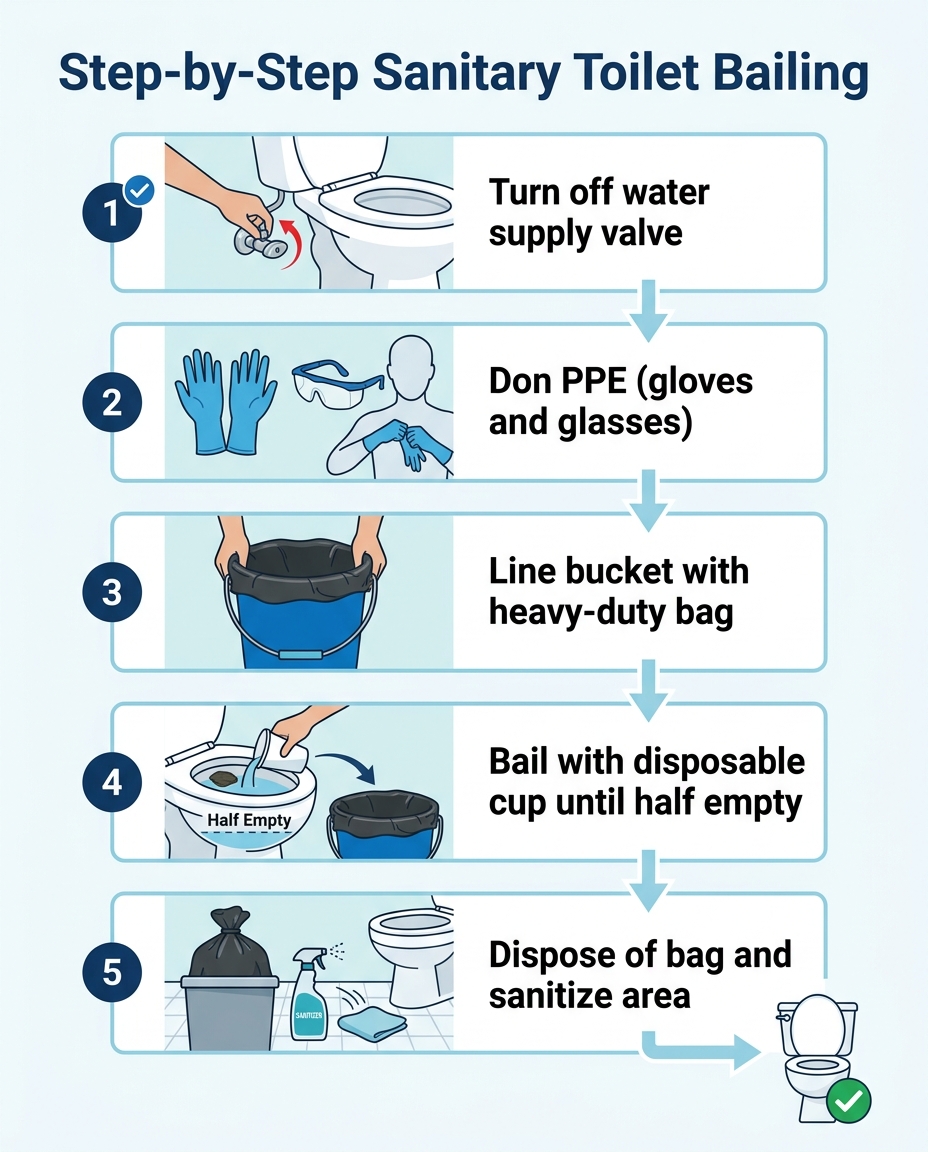
1. Turn off the water supply valve: Locate the oval-shaped valve on the wall or floor right behind the toilet. Turn it clockwise until it stops. This prevents the tank from accidentally refilling the bowl if the flapper leaks or the handle is bumped.
2. Don your protective gear: Put on your long rubber gloves and safety glasses. Ensure your sleeves are rolled up well above the elbow.
3. Prepare the collection bucket: Line your utility bucket with the heavy-duty trash bag. Place the bucket on the floor directly next to the toilet bowl to minimize the distance you have to move the cup.
4. Begin bailing carefully: Submerge the disposable cup slowly into the bowl to avoid creating ripples. Scoop the water and carefully pour it into the trash-bag-lined bucket.
5. Maintain a slow, steady pace: Avoid aggressive scooping. Moving too fast will aerosolize bacteria and cause splashing. Treat the transfer process gently.
6. Stop at the half-way mark: Continue bailing until the water level drops to at least half-full. This provides the necessary safe clearance to finally use a plunger without causing an overflow.
By following these exact steps, you eliminate the immediate flood risk and create the perfect conditions for your plunger to actually do its job.

Once you have successfully reduced the water level, you are left with a bucket full of contaminated wastewater. Proper disposal is just as important as the bailing process itself. Because the water level within 1-2 inches of the rim contained raw waste, you cannot simply pour this bag down a bathtub or sink drain without causing severe cross-contamination in your home.
Securing the waste: Carefully pull the edges of the heavy-duty trash bag up, squeezing out excess air, and tie it off with a tight, secure knot. Double-bagging is highly recommended if the original bag feels thin.
Disposal routing: Carry the sealed bag directly outside to your main garbage receptacle. Do not leave it sitting in the bathroom or garage.
Sanitizing the tools: Throw the disposable cup directly into the trash. Wash your long rubber gloves thoroughly with hot, soapy water and a splash of bleach while they are still on your hands, then rinse and hang them to dry.
Surface disinfection: Finally, gather up the protective towels from the floor. Wipe down the toilet rim, the seat, and the surrounding hard floors with a high-quality disinfecting spray to neutralize any invisible micro-splashes that may have occurred during the transfer.
Sometimes, even after you successfully bail the water and use a plunger, the problem persists. If you plunge the toilet and flush, only to watch the bowl immediately fill back up with the water level within 1-2 inches of the rim, the clog is likely located further down the line.
A localized toilet clog sits in the fixture's trapway. A main line clog sits deep in your home's sewer piping, affecting multiple fixtures at once. During one winter emergency, a homeowner faced a backed-up sewer line overnight. After standard plunging failed, technicians had to be called in to unclog the deep sewer line, ultimately resolving the issue and avoiding a full line replacement.
If you suspect a deeper issue, avoid pouring harsh chemical drain cleaners into the bowl. These chemicals generate immense heat, can crack the porcelain of your toilet, damage older pipes, and consistently fail to clear heavy solid waste blockages.
• Shower backups: Water backing up into the bathtub or shower drain when the toilet is flushed indicates a blocked main line.
• Gurgling sounds: Hearing bubbling or gurgling noises from the sink when the toilet drains points to severe venting or sewer issues.
• Persistent odors: Foul sewage odors persisting in the bathroom even after the visible clog is removed.
• Frequent recurrence: Repeated clogs happening on a weekly basis despite careful, normal use of the fixture.
When bailing and plunging fail to restore normal flow, it is time to look into professional sewer line services to diagnose the root cause of the blockage.
Safely removing excess water is the critical first step to resolving a nasty clog without damaging your bathroom floors or exposing your family to raw sewage. When you are faced with a water level within 1-2 inches of the rim, taking a few minutes to prep hygienically with a disposable cup, a lined bucket, and proper gloves saves hours of stressful cleanup later.
By understanding how to safely remove water from a clogged toilet before attempting a fix, you put yourself in control of a chaotic situation. Remember to work slowly, sanitize thoroughly, and never hesitate to seek expert help if the clog proves too stubborn for standard DIY plunging methods.
The safest way to remove standing water is by using a disposable plastic cup to manually bail the water into a bucket lined with a heavy-duty trash bag. You should wear long rubber gloves and safety glasses to protect yourself from bacteria. Once you have removed enough water to lower the level to half-full, you can safely attempt to plunge the toilet without causing an overflow.
No, plunging a toilet that is completely full of water is highly discouraged. A plunger requires empty space in the bowl to displace water downward into the drain pipe. If the bowl is full to the brim, the downward pressure of the plunger will simply force the contaminated wastewater up and over the sides, flooding your bathroom floor.
First, turn off the water supply valve behind the toilet to prevent any accidental flushing. Next, put on protective gloves and use a disposable cup to scoop out the excess liquid into a lined bucket, leaving the solid waste behind if possible. Once the water level is reduced by half, use a flange plunger to firmly push the remaining solid waste through the trapway.
Sometimes, a minor clog caused by easily degradable toilet paper will slowly seep and drain over a few hours as the paper breaks down in the water. However, if the clog is caused by heavy solid waste, flushable wipes, or foreign objects, it will not drain on its own and requires manual intervention to clear the blockage.
Yes, a wet/dry shop vacuum can safely remove water from a toilet bowl, provided you remove the paper filter first to avoid ruining the motor. However, you must thoroughly clean and disinfect the vacuum canister and hose immediately after use with a bleach solution to prevent bacterial growth and severe odors from developing inside the machine.
If contaminated water spills onto the floor, immediately soak up the bulk of the liquid using old towels or heavy paper towels that you can throw away. Once the floor is dry, mop the entire area thoroughly using hot water and a strong antibacterial floor cleaner or a diluted bleach solution to ensure all bacteria from the wastewater is neutralized.
See what our satisfied customers have to say about their experience with Always Affordable
Plumbing & HVAC.

"Chappy was very skilled in his knowledge of my HVAC unit. I greatly appreciate the quick response and experienced tech. The whole endeavor was made less stressful by his humor and honest conversation. I find comfort in knowing I now have a shop i trust for the next time."
"Tony, James, Ronnie did an amazing job setting up our new AC! They were quick, efficient, considerate, and polite! We appreciate them scheduling us in on such short notice. Definitely recommend this company!"
"Prompt, professional service with kindness and care. They came out to address both plumbing and AC issues. I received a courtesy call before they arrived. All issues were resolved the same day with integrity and respect. Thankful for businesses like this. Absolutely recommend to those that I love."
"Excellent service! Jason came out promptly and in addition to doing my outside faucet he also put in new irrigation equipment! All done perfectly! Jason was lovely"
"Honest with the assessment; friendly and good manners. No high pressure sales. Just good to honest "tell it like you see it" Thought my kitchen disposer needed an overhaul. But Jason, there Plumber gave me an honest lesson on what was really happening. Saved me hundreds, if I went the route of replacing. Thank you!"
"Absolutely 5 stars. If you are looking for affordable ,professional and kind. Chappy was excellent and very knowledgeable . I called in the morning because my air conditioner stopped working he was here within hours and fixed my air with a smile. I highly recommend Chappy and Always Affordable plumbing and Hvac."
"Scott and James were great. They got there quickly and diagnosed the problem with my A/C.They did a very thorough job testing everything. Sent me pictures and called to keep me informed. Got it done the next day and everything is working fine. Be glad when I get home so I can enjoy my new system. Thanks guys for a great job."
"Chappy was very helpful. He knew our issue right away, cleaned our coils. He also came on the same day we called and got our AC blowing cold air again."
"After some timing ’curfuffles’ the Tech Jason arrived and not only completed a speedy install on my toilet, he was personable & professional. Because of the timing issues Jason was attentive and showed up with everything needed! No extra store runs 😊 I was very comfortable with having this Tech in my Daughter’s home. We will definitely use this Service again."