Seasonal Home Maintenance Checklist: Preventing HVAC and Plumbing Emergencies
Prevent HVAC emergencies with a seasonal home maintenance checklist. Why proactive scheduling beats waiting for sudden failures. See what needs attention now.



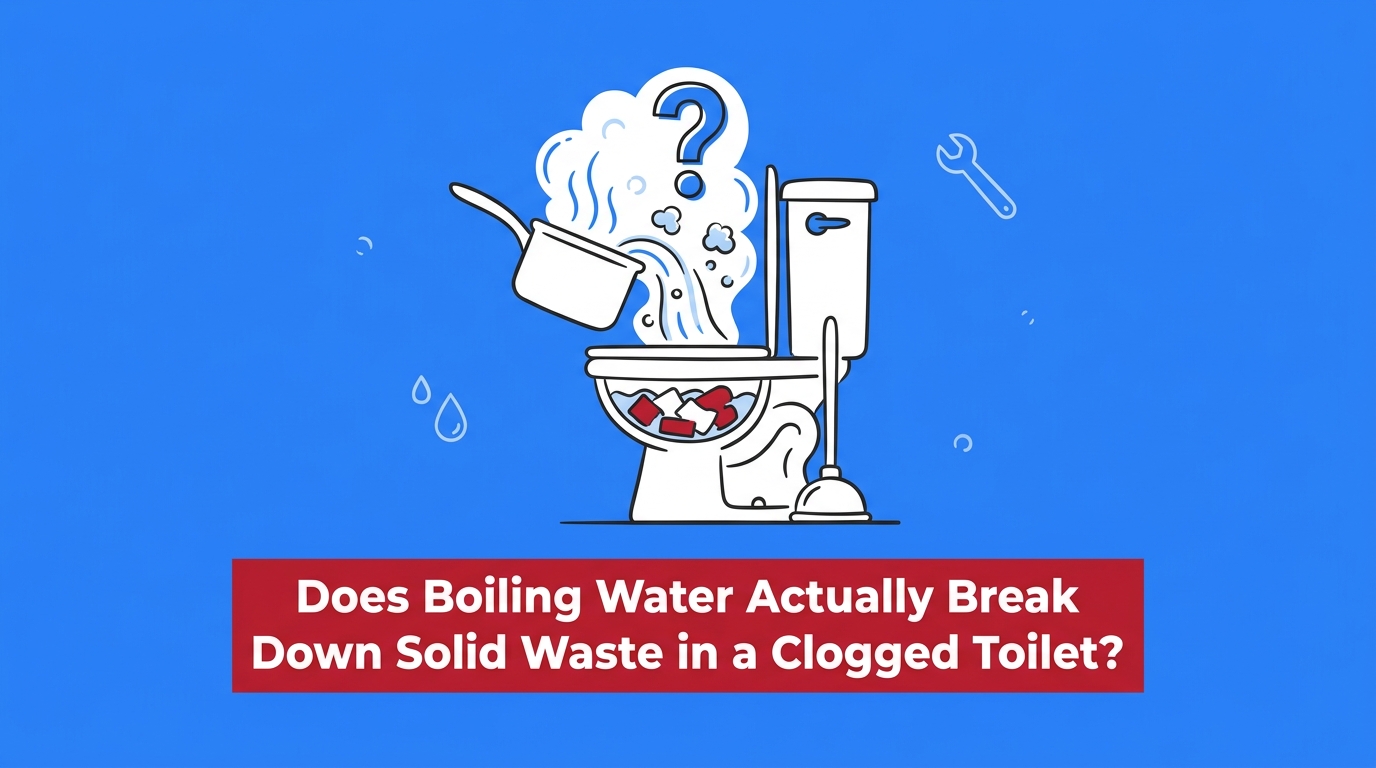
If you are staring at a bowl full of rising, contaminated water, you might be frantically wondering: does boiling water actually break down solid waste in a clogged toilet? It is a question that crosses the mind of nearly every homeowner when standard plunging fails to clear a stubborn obstruction. The panic sets in as the water level creeps toward the rim, and the immediate urge is to find a fast, effective household remedy to dissolve the blockage before it overflows onto the bathroom floor.
A quick internet search will reveal dozens of DIY tricks, with one of the most common suggestions being to pour a massive pot of boiling water directly into the bowl. The logic seems sound on the surface—heat melts fats and softens organic matter, so it should theoretically clear the pipe. However, standing in your bathroom with a kettle of boiling water places you at a critical decision point. You must decide whether this quick fix is a safe solution or if it risks catastrophic damage to the fixture itself. Based on our years of experience at Always Affordable Plumbing & HVAC, we can warn you that pouring boiling water into a cold porcelain bowl is highly risky and can instantly turn a simple clog into a massive bathroom flood.
Before you take any drastic measures that could permanently damage your plumbing, it is crucial to understand the physics of your bathroom fixtures. If you are dealing with a severe blockage that will not budge, reaching out to our team for comprehensive plumbing and home services is always a safer bet than risking the structural integrity of your toilet.
The short answer is no. Boiling water should never be used to break down solid waste in a toilet. While it is true that extreme heat can soften certain types of organic waste and lipids, the structural risk to the toilet itself far outweighs any potential drain-clearing benefits. Exposing a cold porcelain bowl to sudden, extreme heat can cause the material to crack instantly, destroying the toilet and sending gallons of water pouring across your floor.
Many homeowners assume that because a toilet is heavy and durable, it can withstand anything. Toilets are indeed built to last for decades under normal use, but they are engineered to handle room-temperature tap water, not boiling liquids. The sudden introduction of intense heat causes the material to expand rapidly and unevenly. Because porcelain is brittle, it cannot flex to accommodate this rapid expansion, resulting in a sudden and often violent fracture.
In our experience serving the local area, we can tell you firsthand that if your toilet bowl cracks, there is no patching or repairing it. The entire fixture must be replaced immediately, and you will likely have to deal with extensive water damage to your flooring, baseboards, and the ceiling of the room below. Instead of gambling with the integrity of your fixtures, relying on professional plumbing repair ensures the clog is removed safely and effectively without putting your property at risk.
To understand why this DIY method is so dangerous, you have to look at the physics of thermal shock. Thermal shock occurs when a material is exposed to a sudden, extreme change in temperature, causing different parts of the object to expand or contract at different rates. This uneven stress literally tears the material apart from the inside out.
Consider the exact temperature differential at play. The standard measurement for the 212°F (boiling point of water) vs standard porcelain temperature creates a massive gap. Most indoor porcelain sits at ambient room temperature, usually around 68°F to 72°F. However, with AC-cooled indoor air during the summer or chilly winter temperatures seeping through exterior bathroom walls, the porcelain can be chilled significantly further. This drastically widens the temperature delta. If your bathroom is a cool 65°F and you introduce 212°F water, the porcelain experiences a sudden temperature spike of nearly 150 degrees in a fraction of a second.
Standard vitreous china and porcelain toilet bowls are highly susceptible to this rapid expansion. They are fired in kilns during manufacturing to create a hard, waterproof, and sanitary surface, but that exact hardening process makes them rigid and completely unforgiving to thermal stress.
When our team responds to thermal shock damage, we typically see it manifest in several ways:
• Hairline fractures: Microscopic cracks form inside the bowl or along the base. These may not leak immediately but will slowly seep water over weeks or months, causing hidden rot.
• Webbing cracks: A network of visible cracks spreads across the bowl, compromising its strength and making it unsafe to sit on.
• Complete structural failure: The bowl audibly pops and splits open entirely, instantly releasing all the standing water and waste onto the bathroom floor.
The risk simply is not worth the potential reward. Understanding these mechanics is the first step in protecting your home from accidental, self-inflicted water damage.
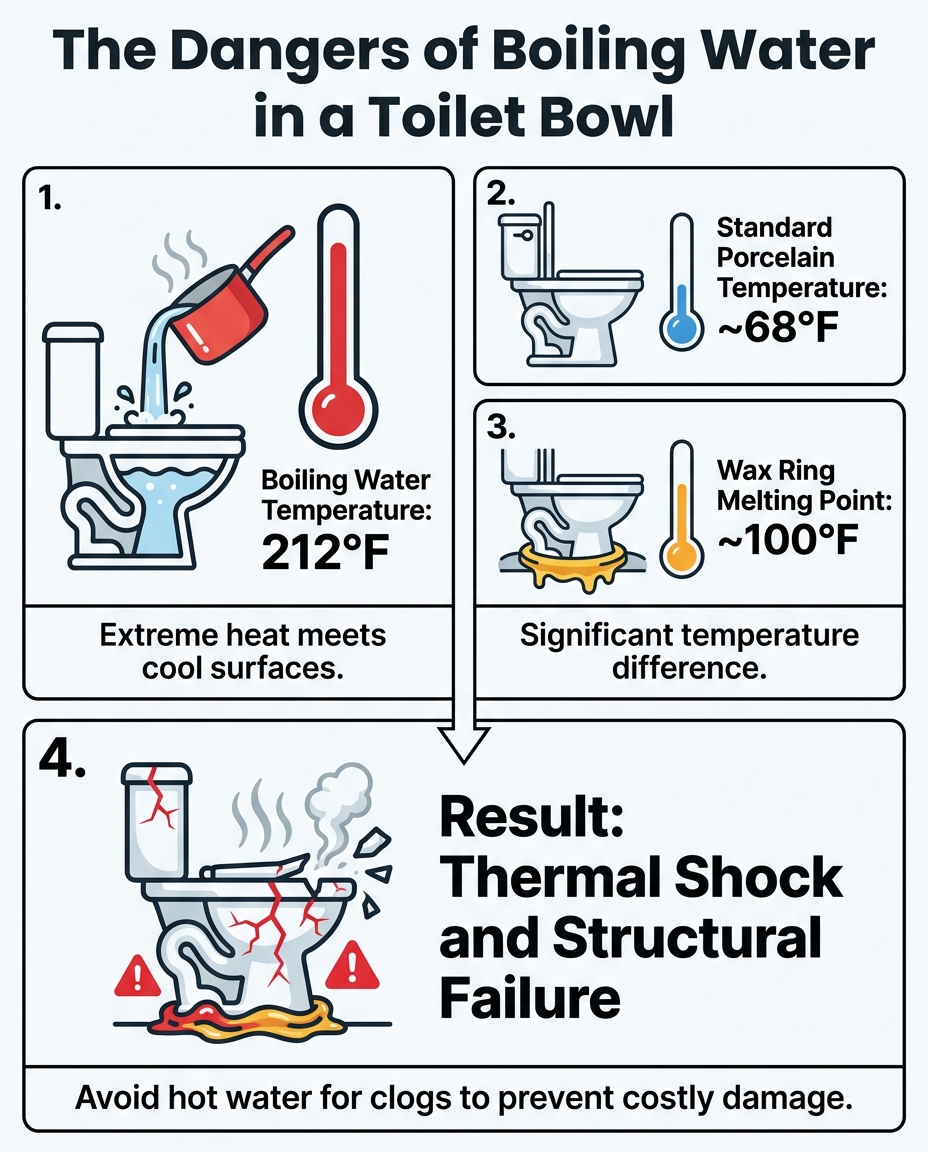

Even if you manage to pour boiling water into the bowl without cracking the porcelain, you are likely causing severe damage to a component you cannot even see. Every toilet is connected to the floor drain via a closet flange, and the watertight seal between the toilet and that drain is maintained by a thick ring of molded wax.
The Problem: Toilet wax rings typically begin to soften or melt at temperatures exceeding 100°F. They are designed to withstand the ambient temperature of a home and the passage of cold or lukewarm tap water. They are absolutely not designed to endure boiling water.
The Cause: Standard vitreous china and porcelain toilet bowls transfer heat efficiently. When you dump a kettle of 212°F water into the bowl, that heat travels down through the trapway and directly into the flange area. The extreme temperature instantly liquefies the wax ring, destroying the watertight and airtight seal that protects your home.
The Consequence: Once the wax ring melts, every subsequent flush will force wastewater out of the gap between the toilet base and the floor drain. This causes unseen leaks that pool under your flooring, rotting the subfloor, warping floorboards, and encouraging mold growth. Furthermore, a broken wax ring allows foul, hazardous sewer gases to drift up from the main line and into your bathroom.
Our plumbers see the aftermath of this mistake frequently. As an advocate for your home's safety and your budget, Always Affordable Plumbing & HVAC strongly advises against this method. Debunking this myth prevents a supposedly "free" DIY trick from turning into a massive expense. A melted wax ring requires a professional plumber to completely remove the toilet, scrape away the ruined wax, install a new seal, and reseat the heavy fixture—to say nothing of the costs associated with repairing a rotted subfloor.
If boiling water is off the table, you are likely still looking for an answer to the exact query: what breaks down poop in toilet fast? Fortunately, there are highly effective, completely safe alternatives that utilize common household items without putting your porcelain or wax ring at risk.
The most effective and safest method involves a combination of hot tap water (not boiling) and liquid dish soap. Dish soap is formulated to break down heavy lipids, fats, and organic matter on cookware, and it performs the exact same function on solid waste in a plumbing trap.
Here is the safe, step-by-step process to clear a stubborn clog:
1. Add a surfactant: Squeeze approximately half a cup of heavy-duty liquid dish soap directly into the toilet bowl. Allow it to sink to the bottom. The soap acts as a powerful surfactant and lubricant, coating the porcelain trapway and beginning to break down the organic matter.
2. Prepare warm tap water: Turn on your bathtub or sink faucet to its hottest setting and fill a bucket. Tap water typically maxes out between 120°F and 130°F. This is warm enough to soften the waste and activate the soap, but cool enough that it will not cause thermal shock to the porcelain or melt the wax ring.
3. Pour from waist height: Carefully pour the bucket of warm water into the bowl from about waist height. The physical force of the falling water helps push the soapy mixture deeper into the trapway.
4. Let it sit: Patience is key. Allow the mixture to sit for 20 to 30 minutes. This gives the soap time to emulsify the fats and the warm water time to soften the solid mass. If you are curious about the timeline of organic breakdown, you can learn more about what happens to waste left in a clogged toilet overnight.
5. Plunge gently: After the mixture has had time to work, use a high-quality flange plunger (one with an extended rubber sleeve at the bottom, not a flat cup plunger) to gently push the softened clog through the system.
• Boiling Water — Temperature: 212°F — Effect on Waste: Softens matter quickly — Risk to Toilet Fixture: Extreme risk of cracking and melting wax ring
• Warm Water + Dish Soap — Temperature: ~120°F — Effect on Waste: Emulsifies and lubricates — Risk to Toilet Fixture: Completely safe for porcelain and seals
• Chemical Drain Cleaners — Temperature: Varies (Exothermic) — Effect on Waste: Dissolves matter chemically — Risk to Toilet Fixture: High risk of pipe damage and toxic fumes
Sometimes, despite your best efforts with warm water, dish soap, and a high-quality flange plunger, the water simply will not recede. If you have repeated the safe DIY steps and the toilet remains completely backed up, it is time to step back. Continuing to force water into the bowl will only result in an overflow, and the root cause of the problem likely sits much deeper in your plumbing system than a simple bowl clog.
One spring, a local resident called our team at Always Affordable Plumbing & HVAC for urgent help when an elderly friend's toilet became severely clogged. Because the situation was urgent and standard plunging wasn't working, our technicians arrived within hours, successfully cleared a deep blockage that DIY methods could never have reached, and cleaned up the overflowing water, restoring the bathroom to full working order without any collateral damage to the fixture. This highlights a pattern we see often: knowing when a clog is beyond a household fix can save you from a major disaster.
If the blockage is located in the main sewer line, no amount of plunging in the bathroom will clear it. You can identify a main line issue by watching for these specific symptoms:
• Water backing up in other fixtures: If you flush the toilet and water bubbles up into the bathtub or shower drain, the main line is blocked.
• Gurgling sounds: If the sink or shower drain gurgles loudly when the toilet is flushed, air is being trapped by a deep obstruction.
• Multiple clogged fixtures: If the toilet, sink, and shower are all draining slowly at the same time, the central exit pipe for the house is compromised.
Under no circumstances should you pour chemical drain cleaners into a toilet to clear a deep clog. These caustic chemicals create an exothermic (heat-producing) chemical reaction that can cause the same thermal shock as boiling water, and they can severely damage older pipes. Furthermore, if the chemicals fail to clear the clog, the plumber who eventually arrives will have to work through a bowl full of toxic acid.
Instead, severe blockages require professional tools like a closet auger (a specialized snake that protects the porcelain) or high-pressure hydro-jetting to scour the main line clean. If you suspect the problem is deeper than the bathroom trap, reaching out for sewer and drain services is the only safe way to restore your home's plumbing.
No, you should never pour boiling water down a toilet. The extreme temperature difference between 212°F water and a room-temperature porcelain bowl causes rapid thermal expansion, known as thermal shock. This can instantly crack the vitreous china, completely destroying the toilet and causing an immediate flood. Additionally, the extreme heat can melt the wax ring seal at the base of the toilet, leading to hidden leaks and sewer gas odors.
Time, warm tap water, and liquid dish soap are the safest and most effective household methods for breaking down solid waste. The dish soap acts as a surfactant to break down lipids and lubricate the porcelain trapway, while the warm water naturally softens the mass. Allowing this mixture to sit for 30 minutes to an hour will usually degrade the waste enough that a standard flange plunger can easily push it through the system.
Hot tap water can be very helpful in unclogging a toilet, provided it is not boiling. Water from your sink or bathtub faucet generally reaches a maximum of 120°F to 130°F, which is warm enough to soften organic matter and toilet paper without posing a thermal shock risk to the porcelain. Always pair hot tap water with a lubricant like dish soap and follow up with proper plunging technique for the best results.
Dish soap is chemically formulated to cut through heavy grease, fats, and organic matter, making it highly effective at breaking down the components of solid waste in a plumbing trap. Furthermore, it is a thick, slippery substance that coats the inside of the unglazed porcelain trapway. This lubrication reduces friction, allowing the softened clog to slide through the curved pipes much more easily when you apply pressure with a plunger.
To safely dissolve hard stool without damaging your plumbing, use a combination of warm tap water and a generous amount of liquid dish soap. Pour half a cup of soap into the bowl, follow it with a bucket of hot tap water (never boiling), and let the solution sit for at least 30 minutes. Once the mass has softened and the trapway is lubricated, use a flange plunger to gently push the obstruction through the drain.
Dealing with a backed-up bathroom is a stressful experience, but letting panic dictate your actions can turn a minor inconvenience into a major plumbing disaster. The next time you find yourself wondering, "does boiling water actually break down solid waste in a clogged toilet?" remember the severe risks of thermal shock. Protecting the structural integrity of your porcelain bowl and the hidden wax ring beneath it should always be your top priority.
By relying on safe alternatives like warm tap water, liquid dish soap, and a high-quality flange plunger, you can resolve the vast majority of household clogs without risking your property. However, if these safe methods fail to restore flow, it is a strong indicator that the blockage is lodged deep within your main sewer line. Do not escalate to dangerous temperatures or harsh chemicals; instead, schedule an inspection with a professional to clear the line safely, protect your fixtures, and ensure your home's plumbing operates flawlessly.
See what our satisfied customers have to say about their experience with Always Affordable
Plumbing & HVAC.

"Chappy was very skilled in his knowledge of my HVAC unit. I greatly appreciate the quick response and experienced tech. The whole endeavor was made less stressful by his humor and honest conversation. I find comfort in knowing I now have a shop i trust for the next time."
"Tony, James, Ronnie did an amazing job setting up our new AC! They were quick, efficient, considerate, and polite! We appreciate them scheduling us in on such short notice. Definitely recommend this company!"
"Prompt, professional service with kindness and care. They came out to address both plumbing and AC issues. I received a courtesy call before they arrived. All issues were resolved the same day with integrity and respect. Thankful for businesses like this. Absolutely recommend to those that I love."
"Excellent service! Jason came out promptly and in addition to doing my outside faucet he also put in new irrigation equipment! All done perfectly! Jason was lovely"
"Honest with the assessment; friendly and good manners. No high pressure sales. Just good to honest "tell it like you see it" Thought my kitchen disposer needed an overhaul. But Jason, there Plumber gave me an honest lesson on what was really happening. Saved me hundreds, if I went the route of replacing. Thank you!"
"Absolutely 5 stars. If you are looking for affordable ,professional and kind. Chappy was excellent and very knowledgeable . I called in the morning because my air conditioner stopped working he was here within hours and fixed my air with a smile. I highly recommend Chappy and Always Affordable plumbing and Hvac."
"Scott and James were great. They got there quickly and diagnosed the problem with my A/C.They did a very thorough job testing everything. Sent me pictures and called to keep me informed. Got it done the next day and everything is working fine. Be glad when I get home so I can enjoy my new system. Thanks guys for a great job."
"Chappy was very helpful. He knew our issue right away, cleaned our coils. He also came on the same day we called and got our AC blowing cold air again."
"After some timing ’curfuffles’ the Tech Jason arrived and not only completed a speedy install on my toilet, he was personable & professional. Because of the timing issues Jason was attentive and showed up with everything needed! No extra store runs 😊 I was very comfortable with having this Tech in my Daughter’s home. We will definitely use this Service again."