Navigating the Spring-to-Summer HVAC Transition: A Safe Homeowner's Maintenance Guide
Why do HVAC systems fail on the first 80-degree day? See what belongs on your seasonal home maintenance checklist and when to call a pro before summer hits.



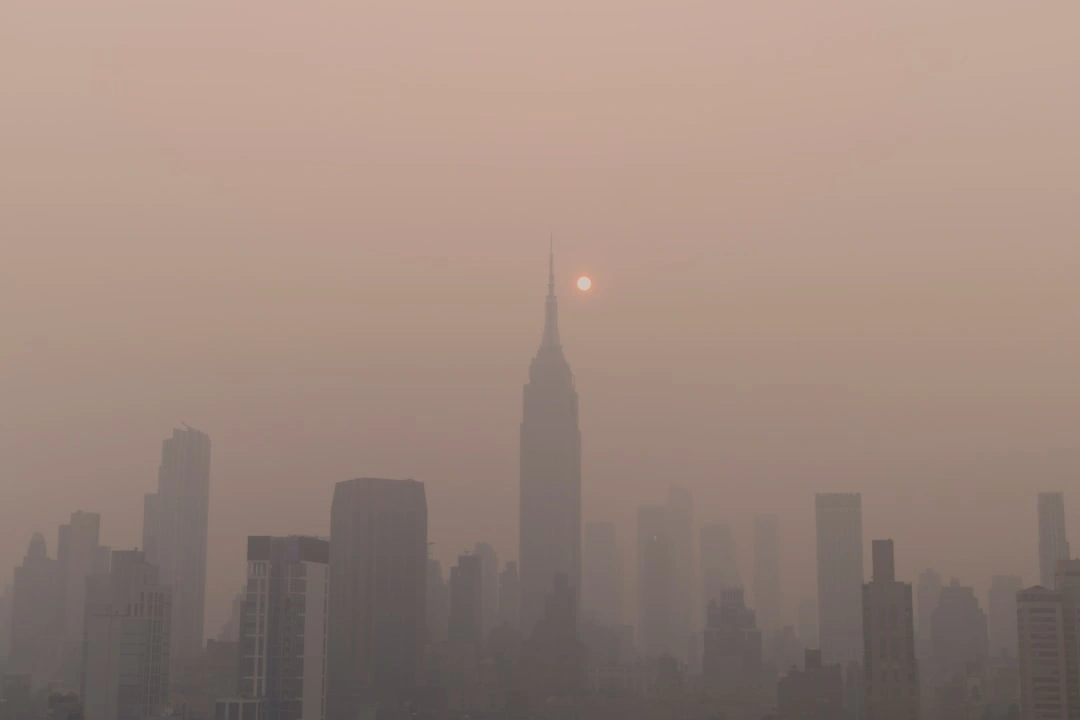
How extreme heat and wildfire smoke stress your systems — both your body and your home — is one of the most urgent health and safety questions facing Sacramento-area residents today. When scorching summer temperatures collide with smoke-filled skies, the combined threat is significantly worse than either hazard on its own. Research shows that roughly 8% of respiratory hospitalizations, 5.5% of cardiovascular cases, and 6.2% of renal cases in California are directly attributable to the interaction of these two forces — not just their individual effects.
Here is a quick breakdown of how each hazard stresses your systems:
• Respiratory — Extreme Heat Impact: Increased breathing rate, airway stress — Wildfire Smoke Impact: PM2.5 inflames lungs, worsens asthma and COPD — Combined Risk: Up to 8% more hospitalizations from interaction alone
• Cardiovascular — Extreme Heat Impact: Elevated heart rate, blood pressure spikes — Wildfire Smoke Impact: PM2.5 enters bloodstream, triggers inflammation — Combined Risk: 5.5% more cardiovascular cases from combined exposure
• Renal (Kidneys) — Extreme Heat Impact: Dehydration, fluid/electrolyte imbalance — Wildfire Smoke Impact: Systemic inflammation from absorbed particles — Combined Risk: 6.2% more renal morbidities from interaction
• Immune System — Extreme Heat Impact: Heat suppresses normal immune response — Wildfire Smoke Impact: Smoke disrupts immune cell populations — Combined Risk: Greater vulnerability to infection and organ stress
• HVAC & Plumbing — Extreme Heat Impact: Overloads AC systems, stresses water heaters — Wildfire Smoke Impact: Clogs filters rapidly, degrades indoor air quality — Combined Risk: Compounded strain on home mechanical systems
In the Sacramento region — where wildfire season runs from spring through fall and summer temperatures regularly exceed 100°F — this isn't a hypothetical risk. During the 2020 wildfire season alone, more than 43 million people across the western U.S. were exposed to both ground-level ozone extremes and wildfire PM2.5 in a single day. That kind of compound exposure puts intense pressure on your lungs, heart, kidneys, and the mechanical systems inside your home that are supposed to keep you safe.
This guide walks you through everything you need to know — from what is happening inside your body to what is happening inside your HVAC system — and what you can do about it.
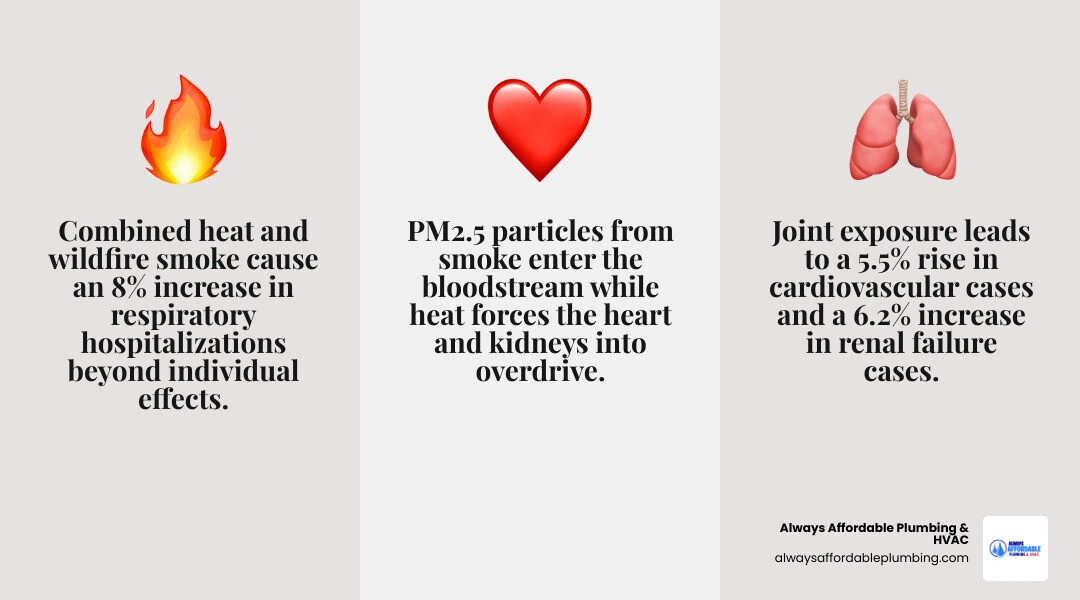
When we talk about how extreme heat and wildfire smoke stress your systems, we are looking at a multi-front assault on your biology. Extreme heat forces your heart to work overtime to pump blood to the skin for cooling. Simultaneously, wildfire smoke introduces fine particulate matter (PM2.5) that is small enough to travel deep into your lungs and even cross into your bloodstream.
Research indicates that this combination triggers systemic inflammation and oxidative stress. Your body’s core temperature rises, and while your lungs are already fighting off microscopic toxins, your kidneys (renal system) begin to struggle with fluid and electrolyte imbalances. In California, the statistics are sobering: joint exposure is linked to an 8% increase in respiratory morbidities, a 5.5% jump in cardiovascular issues, and a 6.2% increase in renal failure. Ensuring your home remains a sanctuary is vital, which is why understanding How to Improve Indoor Air Quality at Home is your first line of defense.
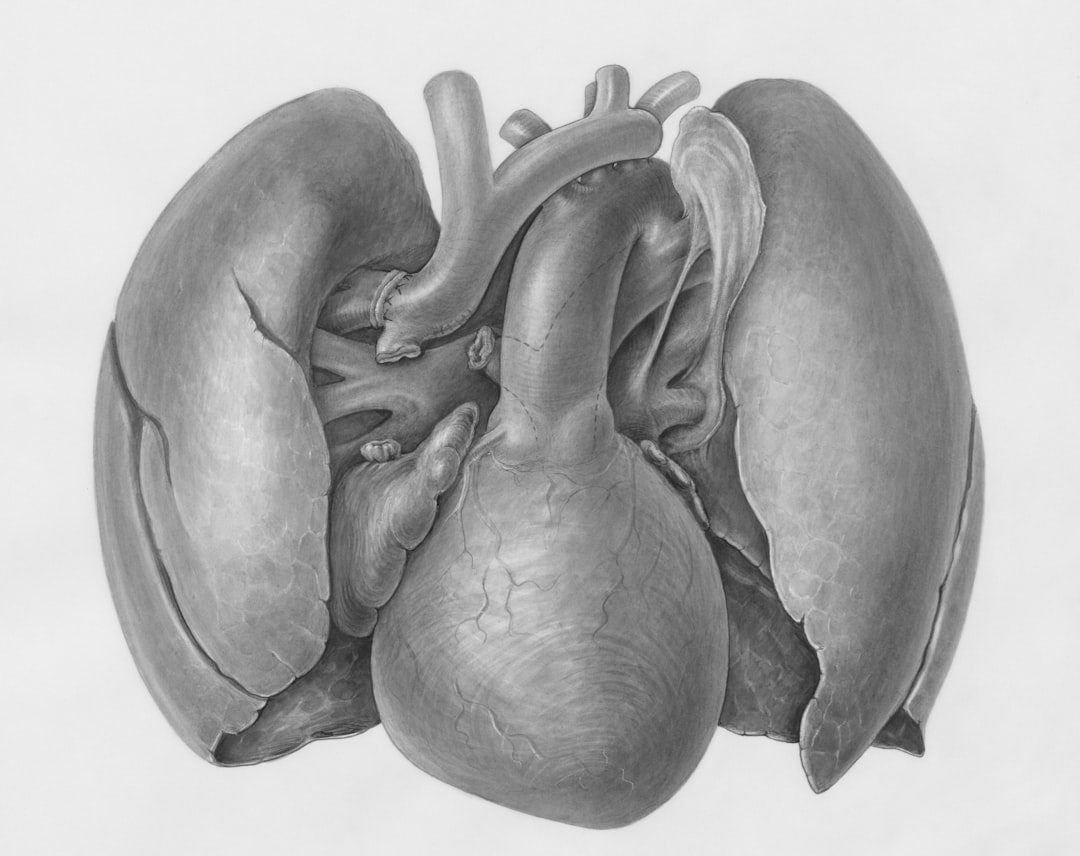
The danger of "synergistic effects" means the total damage is greater than the sum of the parts. Extreme heat acts as a catalyst for ground-level ozone formation, which further irritates the airways. When this occurs within a short 4-day exposure window, the immune system can become dysfunctional. Instead of fighting off the smoke particles, the immune response can become overactive, leading to secondary organic aerosols causing further damage to your internal organs. This is a common concern for residents monitoring the Folsom Air Quality during the peak of summer.
Not all smoke is created equal. As wildfire smoke travels from the Sierra Nevada into the Sacramento Valley, it undergoes chemical reactions. This "aged smoke" can become up to four times more toxic than fresh smoke. Atmospheric oxidation creates harmful substances like nitrous acid, which has been linked to DNA damage. Because smoke can remain in the atmosphere for over 10 days without rain, these secondary organic aerosols continue to pose a threat long after the initial fire has been suppressed.
While everyone is affected, some of our neighbors in the Central Valley face much higher risks. Outdoor workers, especially farmworkers, face a staggering 35 times greater risk of death from heat exposure than other professions. Older adults, children, and pregnant women are also at the top of the list for vulnerability. Interestingly, new research from May 2026 highlights that individuals with schizophrenia or those on certain medications for circulation are at an exponentially higher risk during "heat dome" events. To keep these vulnerable groups safe, ensuring a functional cooling system through HVAC Maintenance Sacramento CA is a non-negotiable safety step.
It is crucial to know when "just being hot" turns into a medical emergency. Watch for these signs:
• Heat Exhaustion: Heavy sweating, rapid pulse, dizziness, and fatigue.
• Heat Stroke: This is a life-threatening emergency. Symptoms include confusion, a body temperature above 103°F, fainting, and a lack of sweating despite the heat.If your cooling system is struggling to keep up, you might need the Best Heat Pump Maintenance Elk Grove Guide to ensure your home stays below the critical 81°F safety threshold.
Smoke exposure often starts with "nuisance" symptoms like itchy eyes or a scratchy throat, but it can escalate quickly. Serious signs include:
• Persistent coughing or wheezing.
• Chest tightness or pain (a sign of cardiovascular stress).
• Shortness of breath.
• Elevated carboxyhemoglobin levels (carbon monoxide in the blood).If you notice your home feels "smoky" even with the windows shut, it’s one of the Top Signs You Need HVAC Repair to fix seals or filtration gaps.
Your home should be a "clean air shed." To achieve this, you need to create a "clean room"—a specific area in the house with the fewest windows and doors where you can run a high-efficiency air purifier. Setting your HVAC system to "recirculate" mode prevents it from pulling in that toxic outside air. For those looking for long-term protection, Is an HVAC Maintenance Plan Worth It? Absolutely, especially when it includes regular filter checks and system sealing.
The battle is won or lost at the filter. We recommend upgrading to a MERV 13 filter if your system can handle it. During these events, keep your windows sealed and use thermal curtains to block out the sun's radiant heat. If you live in Elk Grove, following a Heat Pump Maintenance Elk Grove CA Guide can help you manage humidity, which makes the heat feel even more oppressive. For those on a budget, an Affordable Heat Pump Maintenance Elk Grove Guide can provide tips on keeping your system efficient without breaking the bank.
To maximize protection, run your HVAC fan continuously, even when the cooling isn't actively running. This ensures the air is constantly passing through your filters. If you use an evaporative cooler (swamp cooler), be careful; these systems pull in massive amounts of outdoor air. If you must use one, consider covering the intake with a MERV 13 filter if it's safe to do so. Our Heat Pump Maintenance Guide Elk Grove CA offers more specifics on these modifications. When in doubt, consulting a professional Elk Grove HVAC Company is the safest way to ensure your modifications don't damage your equipment.
We often forget that our home’s "organs" are also under stress. Extreme heat causes metal components to expand and can lead to cracked heat exchangers in furnaces (which are often part of your central air unit). This is dangerous because a cracked heat exchanger can leak carbon monoxide into your home. Understanding Why HVAC Replacement is Necessary becomes clear when these critical safety components fail. Additionally, Heater Maintenance Save Money by catching these small cracks before they become a total system failure.
Your plumbing isn't immune, either. Extreme heat can cause water heaters to overheat, especially if they have sediment buildup from Sacramento’s hard water. This sediment acts as an insulator, forcing the unit to work harder and potentially tripping the T&P (Temperature and Pressure) relief valve. Regular checks via an HVAC Maintenance Elk Grove Guide should include an inspection of all mechanical systems. Proper Importance Home HVAC Installation ensures that your units are sized correctly to handle these extreme "peak load" days without burning out.
When you are forced to choose between staying cool and keeping the smoke out, cooling must take precedence. Overheating can lead to heat stroke and death much faster than smoke inhalation in most cases.
• 1. Temperature Control — Strategy: Keep the home below 81°F — Action: Use AC, fans, or move to a cooling center if indoor temps spike.
• 2. Air Filtration — Strategy: Reduce PM2.5 levels — Action: Run MERV 13 filters and portable HEPA cleaners.
• 3. Hydration — Strategy: Protect Renal Systems — Action: Drink water and electrolytes to help kidneys flush toxins.
• 4. Activity Level — Strategy: Reduce System Stress — Action: Reschedule all physical activity to the early morning or late evening.
If you cannot keep your home cool with the windows closed, you must prioritize your body's temperature, even if it means letting in some smoke. In these cases, wearing an N95 respirator indoors can help bridge the gap. For expert help in balancing these needs, your local Elk Grove HVAC Company can recommend specialized filtration that works alongside your cooling.
You should prioritize cooling. If your home is becoming dangerously hot, open the windows at night when it is cooler, even if it is smoky. Use wet towels, fans, and stay hydrated. If temperatures indoors exceed 81°F, seek out a local cooling center or a public space with air conditioning.
In normal conditions, we say every 90 days. During a wildfire event, you should check it every 30 days. If the filter looks grey or dark, it is clogged and is restricting airflow. This puts massive strain on your blower motor and can lead to a system breakdown right when you need it most.
Set your AC to "recirculate" so it doesn't pull in outside smoke. Use portable HEPA air purifiers in the rooms you spend the most time in. Seal any visible gaps around windows and doors with painter's tape or damp towels.
At Always Affordable Plumbing & HVAC, we’ve seen how the Sacramento climate has shifted. How extreme heat and wildfire smoke stress your systems is a challenge we take seriously. Whether it’s ensuring your AC is ready for a 110-degree day or installing high-level filtration to keep your family’s lungs clear, we are here to help. Don't wait for the next "heat dome" or smoke plume to prepare. From Sacramento to Elk Grove and Folsom, we provide the professional optimization your home needs to stay resilient.
More info about Sacramento HVAC services
See what our satisfied customers have to say about their experience with Always Affordable
Plumbing & HVAC.

"Chappy was very skilled in his knowledge of my HVAC unit. I greatly appreciate the quick response and experienced tech. The whole endeavor was made less stressful by his humor and honest conversation. I find comfort in knowing I now have a shop i trust for the next time."
"Tony, James, Ronnie did an amazing job setting up our new AC! They were quick, efficient, considerate, and polite! We appreciate them scheduling us in on such short notice. Definitely recommend this company!"
"Prompt, professional service with kindness and care. They came out to address both plumbing and AC issues. I received a courtesy call before they arrived. All issues were resolved the same day with integrity and respect. Thankful for businesses like this. Absolutely recommend to those that I love."
"Excellent service! Jason came out promptly and in addition to doing my outside faucet he also put in new irrigation equipment! All done perfectly! Jason was lovely"
"Honest with the assessment; friendly and good manners. No high pressure sales. Just good to honest "tell it like you see it" Thought my kitchen disposer needed an overhaul. But Jason, there Plumber gave me an honest lesson on what was really happening. Saved me hundreds, if I went the route of replacing. Thank you!"
"Absolutely 5 stars. If you are looking for affordable ,professional and kind. Chappy was excellent and very knowledgeable . I called in the morning because my air conditioner stopped working he was here within hours and fixed my air with a smile. I highly recommend Chappy and Always Affordable plumbing and Hvac."
"Scott and James were great. They got there quickly and diagnosed the problem with my A/C.They did a very thorough job testing everything. Sent me pictures and called to keep me informed. Got it done the next day and everything is working fine. Be glad when I get home so I can enjoy my new system. Thanks guys for a great job."
"Chappy was very helpful. He knew our issue right away, cleaned our coils. He also came on the same day we called and got our AC blowing cold air again."
"After some timing ’curfuffles’ the Tech Jason arrived and not only completed a speedy install on my toilet, he was personable & professional. Because of the timing issues Jason was attentive and showed up with everything needed! No extra store runs 😊 I was very comfortable with having this Tech in my Daughter’s home. We will definitely use this Service again."