AC Compressor Repair vs. Heat Pump Replacement: Evaluating Your Options
When a 10-year-old AC compressor fails, making the right choice matters. See clear options comparisons for homeowners weighing repair vs replacement today.



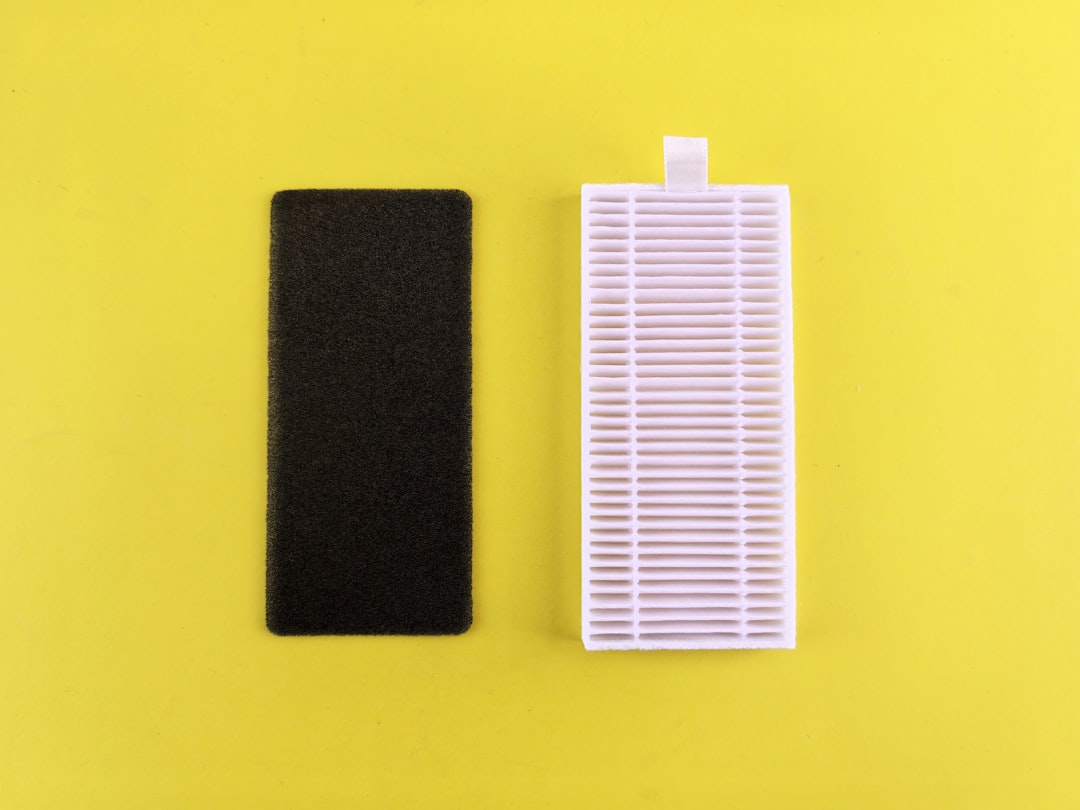
Finding the best air filter for your home is one of the simplest and most impactful steps you can take to protect your family's health — especially in the Sacramento Valley, where seasonal pollen, dust, and wildfire smoke can push indoor air pollution to levels 2 to 5 times higher than outdoors.
Here are the top filter types most recommended for Sacramento homes:
1. MERV 13 Pleated Filter — Best overall for most homes; captures over 90% of particles as small as 3 microns, including pollen, pet dander, dust, and mold spores
2. MERV 11 Pleated Filter — Good balance of filtration and airflow for older HVAC systems
3. MERV 13 with Activated Carbon — Best for odor control and homes with pets or smokers
4. 4-inch or 5-inch Media Filter (MERV 13) — Best for whole-home filtration with less frequent replacement
5. Standalone HEPA Air Purifier — Best supplement for bedrooms or spaces needing extra particle removal
Most Sacramento homeowners will get the best results from a MERV 13 pleated filter replaced every 1 to 3 months, paired with regular HVAC maintenance to keep airflow strong and the system running efficiently.
Your air filter is a small component that does a big job. It traps the dust, allergens, and microscopic particles that would otherwise cycle through your home every time your heating or cooling system runs. Yet it's one of the most overlooked parts of HVAC care — often ignored until airflow drops, energy bills climb, or allergy symptoms flare up.
If you live in the Sacramento area, this challenge is especially real. Valley heat means your HVAC system runs hard for much of the year, which means your filter is constantly at work. Choosing the right one — and changing it on time — makes a measurable difference in your home's comfort and your family's health.
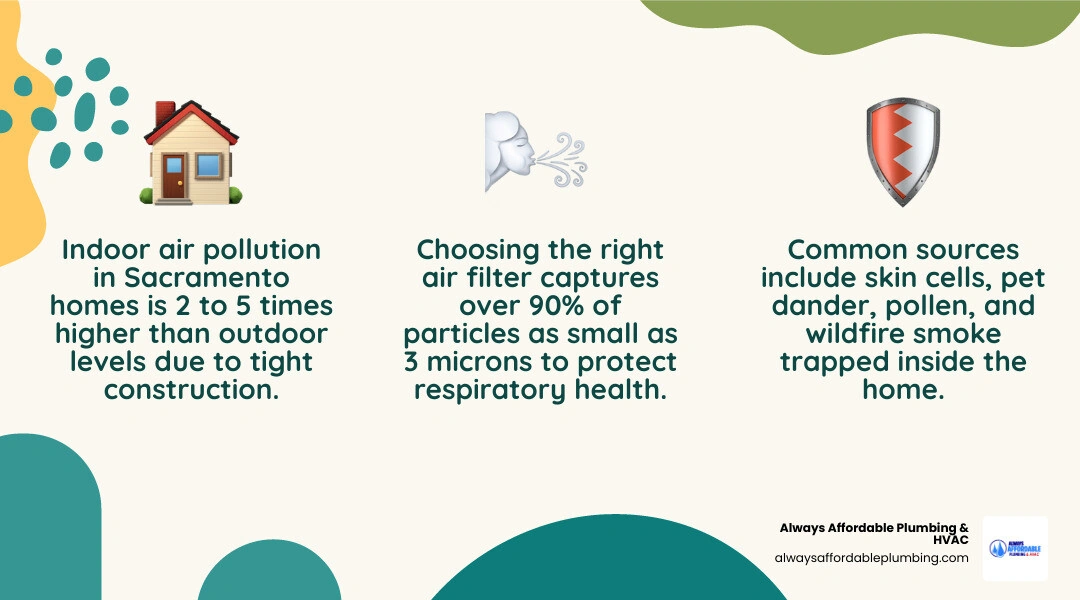
To win the battle against indoor dust, we first have to understand what it is and where it comes from. Many homeowners are surprised to learn that indoor air pollution can actually be two to five times higher than outdoor levels. Because modern homes in areas like Elk Grove, Citrus Heights, and Roseville are built tight to maximize energy efficiency, they often trap airborne contaminants inside.
So, what exactly is floating around in your living room? Indoor dust is a complex mixture of several sources:
• Human Skin Cells: Humans shed roughly 500 million dead skin cells every single day. These microscopic flakes make up a massive portion of the dust settling on your furniture and floors.
• Pet Dander and Hair: Our beloved dogs and cats constantly shed fur and microscopic skin flakes (dander). This "pet glitter" easily stays airborne, settling deep into carpets and upholstery.
• Textile Fibers: Tiny fibers break off from carpets, blankets, clothing, and upholstered furniture every time we move, contributing to the gray lint you see on flat surfaces.
• Outdoor Infiltrators: Every time a door or window opens in Davis or Rancho Cordova, outdoor particles slip inside. This includes heavy agricultural soil, road dust, and seasonal pollen.
In the Sacramento Valley, our regional geography acts like a giant bowl, trapping airborne particulates, agricultural dust, and seasonal allergens. Furthermore, summer and autumn often bring severe smoke challenges. Understanding How Wildfire Smoke Affects Your Indoor Air Quality is essential for local families, as these fine combustion particles easily bypass standard, low-efficiency fiberglass filters.
By upgrading to a high-quality pleated filter, you can actively pull these irritating particles out of circulation. For a complete look at practical lifestyle changes you can pair with a great filter, check out our guide on How to Improve Indoor Air Quality at Home.
When shopping for the best air filter for your home, the sheer number of ratings, sizes, and brands can feel overwhelming. You will typically see three different rating systems printed on filter packaging:
• MERV (Minimum Efficiency Reporting Value): The industry standard developed by ASHRAE. It rates filters on a scale of 1 to 16 based on how effectively they trap particles of various sizes.
• MPR (Microparticle Performance Rating): A rating system used by 3M brands (ranging from 300 to 2800) that focuses specifically on a filter's ability to capture the tiniest microparticles (0.3 to 1.0 microns).
• FPR (Filter Performance Rating): A 1-to-10 rating scale used primarily by Home Depot brands to evaluate overall filtration efficiency.
To make things simple, we recommend focusing on the MERV scale, as it is the universal standard used by HVAC professionals. When selecting a filter, you must balance filtration efficiency with airflow resistance. A filter that is too restrictive can choke your HVAC system, increasing your energy bills and putting unnecessary strain on the blower motor.
• Basic Fiberglass — MERV Rating: MERV 1–4 — Particle Sizes Captured: Only large particles (>10 microns) like lint and heavy dust — Best Suited For: Protecting the HVAC equipment itself; virtually no health benefit — Airflow Impact: Extremely low resistance
• Standard Pleated — MERV Rating: MERV 8–11 — Particle Sizes Captured: Captures mold spores, pet dander, and fine dust (1.0 to 3.0 microns) — Best Suited For: Average households without severe allergies or indoor pets — Airflow Impact: Moderate resistance; safe for almost all systems
• High-Efficiency Pleated — MERV Rating: MERV 13–14 — Particle Sizes Captured: Captures over 90% of particles down to 3 microns, plus bacteria and virus carriers — Best Suited For: Homes with pets, allergy sufferers, or wildfire smoke concerns — Airflow Impact: High resistance; requires regular replacement to prevent system strain
For the vast majority of households in Sacramento, Folsom, and Fair Oaks, a MERV 13 pleated filter strikes the absolute perfect balance between superior air cleaning and system compatibility.
MERV 13 filters are highly effective because they can trap up to 99% of common household allergens like dust, pollen, and pet dander. More importantly, they capture over 90% of fine microscopic contaminants down to 3 microns—and up to 98% of particles as small as 0.3 microns. This includes smoke particles, bacteria, and the tiny respiratory droplets that carry viruses.
If anyone in your home suffers from asthma, seasonal allergies, or respiratory vulnerabilities, upgrading to a MERV 13 filter can significantly reduce their daily symptoms. Because these filters trap airborne dust before it has a chance to settle, you will also notice less dust building up on your furniture, baseboards, and electronics.
The thickness of your filter plays a massive role in how well it cleans your air and how often you need to change it.
• 1-Inch Filters: This is the standard size found in most traditional ceiling grilles and furnace closets. Because they are thin, they have a smaller overall surface area. This means they clog faster and must be replaced every 1 to 3 months to prevent airflow restriction.
• 4-Inch and 5-Inch Media Filters: These thick, accordion-style filters are designed to sit in a dedicated media cabinet built directly into your ductwork. Because they have a massive surface area, they can filter out tiny particles incredibly well without restricting your system's airflow. Even better, they only need to be replaced every 6 to 9 months.
If your system is currently built for a 1-inch filter, you cannot simply shove a 4-inch filter into the slot. However, if you are looking to upgrade your home’s indoor air quality permanently, our team can easily retrofit your ductwork with a dedicated media cabinet to accommodate these highly efficient, thicker filters.
Even the highest-quality, most expensive air filter will fail if it is left in the system too long. As a filter does its job, it accumulates a thick layer of dust, hair, and debris. Over time, this buildup acts like a solid wall, choking off the airflow your heating and cooling system needs to function.
When airflow is restricted by a dirty filter, several things go wrong:
1. Higher Energy Bills: Your blower motor has to work twice as hard to push air through the clogged filter, consuming far more electricity.
2. Uneven Heating and Cooling: You will notice weak airflow coming from your vents, leading to hot and cold spots throughout your home.
3. System Overheating and Freezing: In the summer, restricted airflow can cause your AC evaporator coils to freeze over into a block of ice. In the winter, it can cause your furnace to overheat and shut down via its high-limit switch.
To avoid costly repairs, we recommend reading up on When to Replace Your Furnace or AC Filter and understanding exactly How Clogged Air Filters Damage AC systems.
If you want to take your home's air quality to the next level, look for filters that incorporate advanced materials:
• Activated Carbon: Standard filters only trap physical particles, letting gases and odors pass right through. Filters with an activated carbon layer utilize a process called adsorption to chemically trap volatile organic compounds (VOCs), kitchen cooking smells, pet odors, and wildfire smoke gases. This is a game-changer for pet owners and homes in high-traffic areas of Sacramento or West Sacramento.
• Antimicrobial Technology: Because air filters trap organic matter like skin cells and pet dander, they can occasionally become breeding grounds for mold spores and bacteria if moisture is present in the system. Filters treated with antimicrobial technology prevent these pathogens from multiplying on the filter media, keeping your air smelling fresh and clean.
A common question we receive from homeowners in Roseville and Rocklin is whether they should rely on their central HVAC filter or purchase standalone air purifiers. The truth is, these two systems serve complementary purposes.
Central HVAC filters provide whole-house filtration. Every time your system cycles on, it pulls air from every room, runs it through the central filter, and distributes clean air back through your vents. This is highly efficient for general dust control, mold spores, and pet dander.
On the other hand, standalone air purifiers are designed to clean the air in a single, localized space, such as a bedroom or home office. These portable units typically use True HEPA filters, which trap 99.97% of particles down to 0.3 microns. While they are incredibly effective for localized allergy relief, they cannot clean your whole house.
For the ultimate clean-air strategy, we recommend pairing a high-quality MERV 11 or 13 filter in your central HVAC system with standalone purifiers in high-traffic bedrooms, especially if you have family members with severe respiratory issues. For more tips on maintaining a healthy, balanced home environment, explore our curated list of HVAC Maintenance Tips.
To find your filter size, look at the cardboard frame of your current filter. You will see three numbers printed on it (for example, 20x25x1). This is the nominal size, which is rounded up for easy shopping.
If the numbers are missing or faded, grab a measuring tape and measure the length, width, and depth of the filter slot yourself. This will give you the actual dimensions, which are usually about a quarter to a half-inch smaller than the nominal size. Having a snug, proper fit is crucial; if a filter is too small, unfiltered air will simply bypass the filter entirely, allowing dust to coat your expensive HVAC coils and circulate back into your home.
As a general rule of thumb, standard 1-inch pleated filters should be replaced every 90 days (about 3 months). However, several factors can accelerate this schedule:
• Pets: If you have dogs or cats, their dander and fur will clog filters quickly. Plan to change your filter every 60 days.
• Allergies and Asthma: To keep indoor triggers to an absolute minimum, replace your filter every 30 to 45 days.
• Wildfire Season: During active wildfire events in the Sacramento region, filters can become completely saturated with ash and soot in as little as 2 to 3 weeks. Inspect your filter weekly during these times.
It can if you aren't careful. High-efficiency filters (like MERV 13 or 14) are made of dense fibers designed to catch tiny particles. This density naturally increases static pressure within your system. If your HVAC unit has an older, weaker blower motor, a highly restrictive filter can cause the motor to burn out prematurely or cause your system to short-cycle.
To prevent this, always choose high-quality pleated filters designed to maintain high airflow, and never leave a high-MERV filter in your system past its recommended lifespan. Regular professional tune-ups are the best way to ensure your system is handling your chosen filter safely.
Choosing the best air filter for your home is a simple, cost-effective way to protect your family's health and prolong the life of your heating and cooling equipment. Whether you live in Sacramento, Elk Grove, Roseville, Folsom, or any of the surrounding communities, clean indoor air starts with the right filtration and consistent maintenance.
At Always Affordable Plumbing & HVAC, we are dedicated to helping our neighbors breathe easier. From indoor air quality assessments to professional system tune-ups, our licensed technicians are always here to provide transparent, affordable, and high-quality solutions.
Curious about how to keep your system running smoothly year-round while saving money? Read about whether Is an HVAC Maintenance Plan Worth It and discover How HVAC Maintenance Prevents Emergencies before they start. If you are in our neighboring communities, check out our localized guides like our HVAC Maintenance Guide Folsom or learn about scheduling your Annual HVAC Service Roseville CA.
Don't wait until your system struggles or your allergies flare up. For more details on system care, read How Often Should You Service Your HVAC.
Ready to upgrade your home's air quality? Schedule professional indoor air quality services with Always Affordable Plumbing & HVAC today!
See what our satisfied customers have to say about their experience with Always Affordable
Plumbing & HVAC.

"Chappy was very skilled in his knowledge of my HVAC unit. I greatly appreciate the quick response and experienced tech. The whole endeavor was made less stressful by his humor and honest conversation. I find comfort in knowing I now have a shop i trust for the next time."
"Tony, James, Ronnie did an amazing job setting up our new AC! They were quick, efficient, considerate, and polite! We appreciate them scheduling us in on such short notice. Definitely recommend this company!"
"Prompt, professional service with kindness and care. They came out to address both plumbing and AC issues. I received a courtesy call before they arrived. All issues were resolved the same day with integrity and respect. Thankful for businesses like this. Absolutely recommend to those that I love."
"Excellent service! Jason came out promptly and in addition to doing my outside faucet he also put in new irrigation equipment! All done perfectly! Jason was lovely"
"Honest with the assessment; friendly and good manners. No high pressure sales. Just good to honest "tell it like you see it" Thought my kitchen disposer needed an overhaul. But Jason, there Plumber gave me an honest lesson on what was really happening. Saved me hundreds, if I went the route of replacing. Thank you!"
"Absolutely 5 stars. If you are looking for affordable ,professional and kind. Chappy was excellent and very knowledgeable . I called in the morning because my air conditioner stopped working he was here within hours and fixed my air with a smile. I highly recommend Chappy and Always Affordable plumbing and Hvac."
"Scott and James were great. They got there quickly and diagnosed the problem with my A/C.They did a very thorough job testing everything. Sent me pictures and called to keep me informed. Got it done the next day and everything is working fine. Be glad when I get home so I can enjoy my new system. Thanks guys for a great job."
"Chappy was very helpful. He knew our issue right away, cleaned our coils. He also came on the same day we called and got our AC blowing cold air again."
"After some timing ’curfuffles’ the Tech Jason arrived and not only completed a speedy install on my toilet, he was personable & professional. Because of the timing issues Jason was attentive and showed up with everything needed! No extra store runs 😊 I was very comfortable with having this Tech in my Daughter’s home. We will definitely use this Service again."