Seasonal Home Maintenance Checklist: Preventing HVAC and Plumbing Emergencies
Prevent HVAC emergencies with a seasonal home maintenance checklist. Why proactive scheduling beats waiting for sudden failures. See what needs attention now.



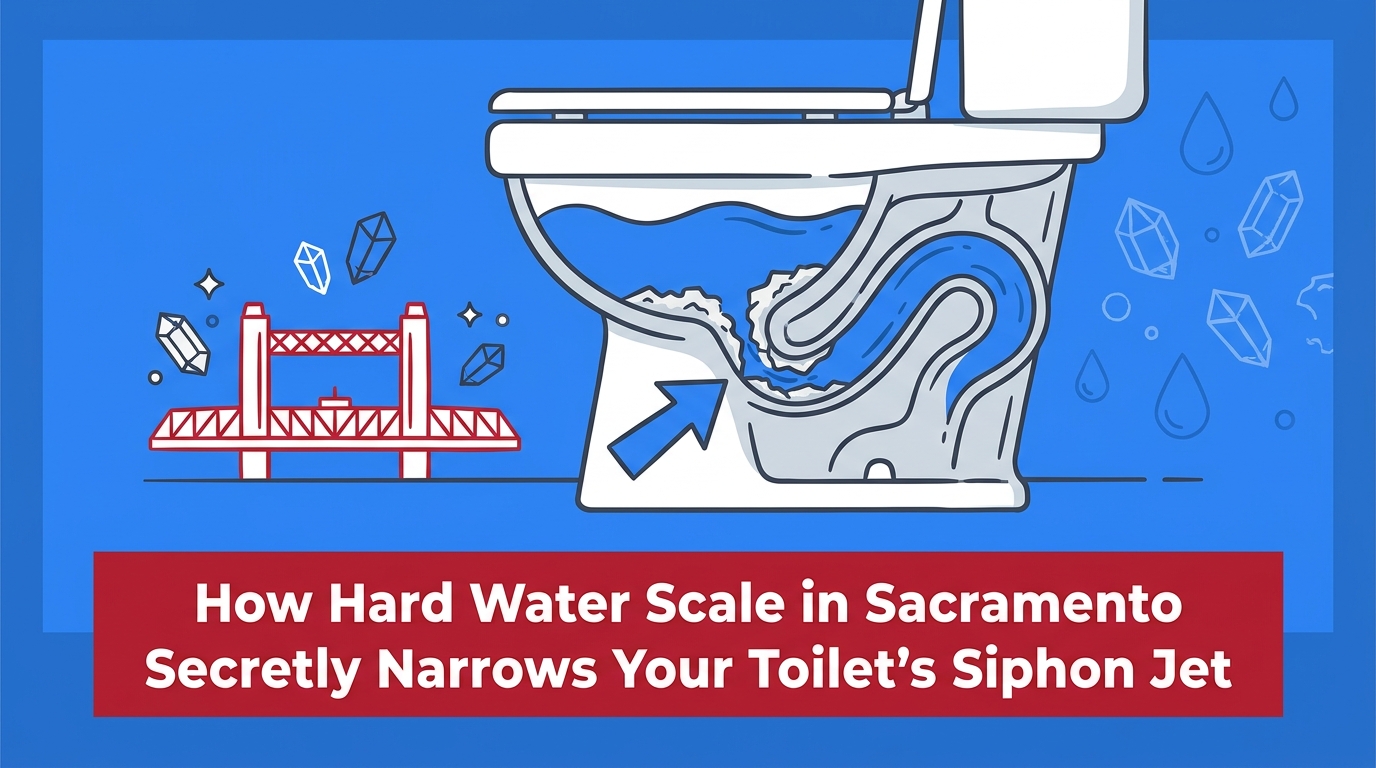
When you are trying to figure out how hard water scale in Sacramento secretly narrows your toilet's siphon jet, you are usually staring at a bowl that just will not clear, no matter how many times you flush. Your toilet is losing its flush power, and the water lazily swirls around the bowl before slowly draining away, leaving solid waste behind. Most homeowners immediately reach for the plunger, assuming a standard blockage is choking the drain line. You plunge, you flush, and the water level rises ominously before receding again, but the core problem remains completely unchanged.
This is the frustrating reality of the "fake clog." Plunging repeatedly fails to resolve the issue because the problem isn't actually located in your drain pipe. The true culprit is often hidden within the porcelain fixture itself, requiring a complete shift in your troubleshooting strategy. Identifying whether a weak flush is caused by mineral scale rather than a wad of paper dictates the correct intervention. Until you understand what is happening inside the bowl, you will be fighting a losing battle against an invisible barrier. For comprehensive help with issues like this, explore our plumbing and HVAC services to find the right solution for your home.
To understand why your toilet is struggling, you first need to understand how it is supposed to work. Most homes are equipped with standard siphon jet toilets, which rely on precise fluid dynamics rather than just dropping a large volume of water into a bowl. The flushing mechanism is a carefully engineered system designed to move waste efficiently using gravity and water pressure.
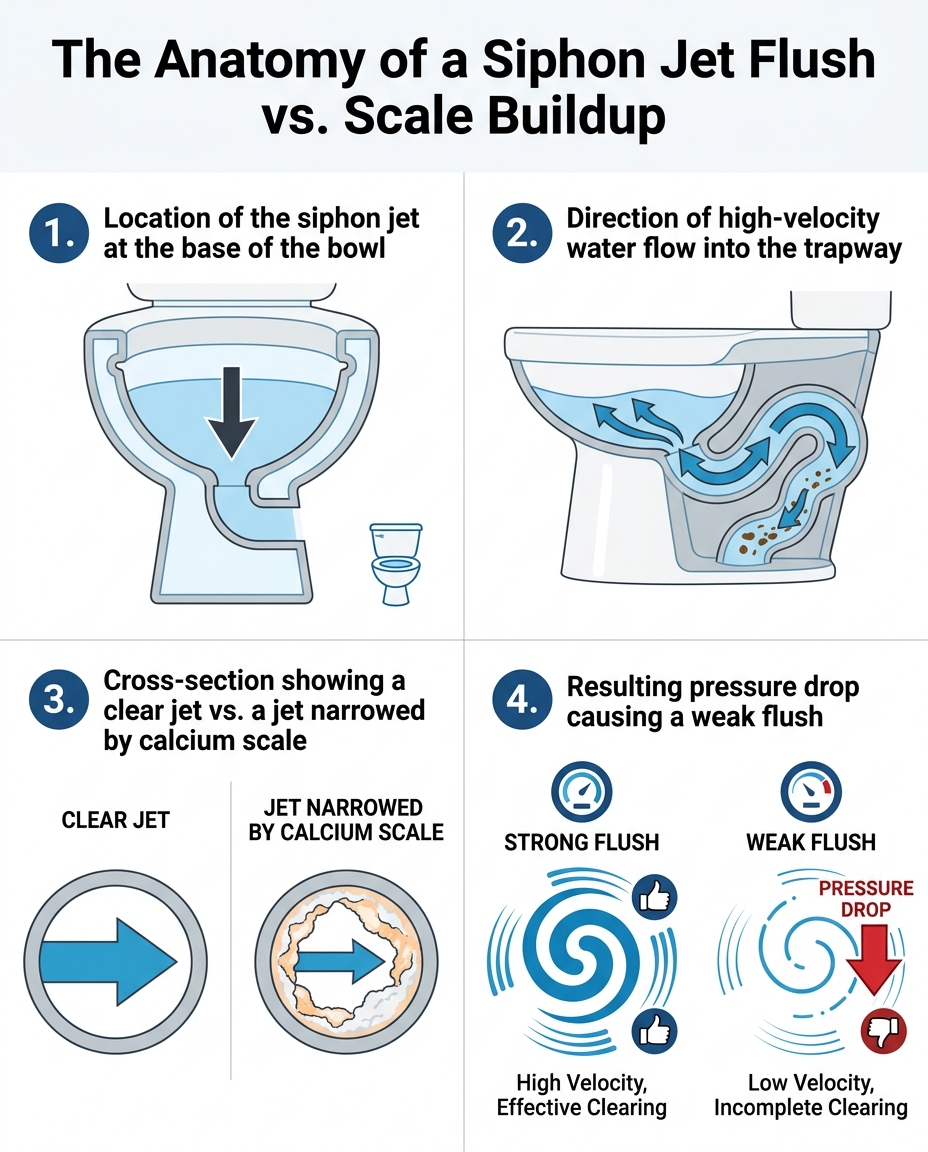
When you press the handle, water rushes from the tank into the bowl through two main pathways. The first pathway is the series of small holes under the rim, which wash the sides of the bowl. The second, much more critical pathway is the siphon jet. The siphon jet is a small, strategically placed opening located at the very bottom of the bowl, pointing directly into the trapway (the curved pipe at the back of the toilet).
When flushed, water is forced through this jet to initiate the siphoning action in the trapway. This high-velocity stream is what actually pulls solid waste out of the bowl and down the line. It acts as the engine of the flush. If this engine is compromised, the entire system fails, and you may find yourself searching for professional plumbing repairs to fix what seems like a broken toilet.
The physics behind a successful flush are fascinating and highly sensitive to disruption. Here is a breakdown of the problem, the underlying cause, and the mechanical solution required for a proper flush.
The Problem: You flush the toilet, and the water simply rises in the bowl and drains slowly, failing to create the powerful "whoosh" needed to clear waste. The bowl eventually empties, but the flush lacks the force to pull anything solid with it.
The Cause: The siphon effect depends entirely on a rapid change in water pressure within the trapway. When water is pushed through the siphon jet, it moves at a high velocity, displacing the air in the curved pipe and creating a vacuum. This vacuum is what literally sucks the water and waste out of the bowl. Manufacturers design the jet opening to a specific millimeter width to maximize this water velocity. If the opening is restricted, the velocity of the water drops significantly. Without that high-speed jet stream, the air in the trapway isn't displaced rapidly enough, the vacuum never forms, and gravity alone is left to slowly drain the water.
The Solution: Restoring the exact, manufactured diameter of the jet opening. Understanding this mechanical requirement explains why partial obstructions severely impact performance in standard siphon jet toilets. It also perfectly explains why your toilet flushes water but leaves solid waste behind. The water can still flow, but the velocity required to move mass is gone.
The mechanical vulnerability of the siphon jet collides directly with our regional water quality. Sacramento's municipal water supply utilizes a blend of surface water from local rivers and groundwater pumped from deep aquifers. As water travels through the earth, it naturally dissolves and absorbs minerals, primarily calcium and magnesium. This results in what we call "hard water," a prevalent local issue that wreaks havoc on plumbing fixtures.
As this hard water sits in your toilet bowl and passes through the small internal openings, the dissolved minerals begin to precipitate out of the water. Evaporation plays a huge role here; as water evaporates between flushes, it leaves trace amounts of calcium behind on the porcelain. Over time, this precipitation forms a hard, rock-like crust known as scale along the surfaces of the toilet.
Because the siphon jet is permanently submerged at the bottom of the bowl and constantly exposed to this mineral-heavy water, it is highly susceptible to buildup. The constant cycle of flushing fresh hard water through the jet, followed by periods of sitting idle, creates the perfect environment for accelerated calcification. The water in Sacramento is actively working against the precise engineering of your plumbing fixtures.
The loss of flush power is rarely a sudden event. It is a gradual decline caused by the slow, silent accumulation of minerals. Here is how scale slowly chokes standard siphon jet toilets:
1. Microscopic accumulation begins: Scale buildup is not an overnight event; it accumulates layer by microscopic layer. Every time you flush, a tiny amount of calcium is left behind on the edges of the jet opening.
2. The diameter narrows: Over months and years, these microscopic layers harden into a thick crust. A reduction of just a few millimeters in the jet's diameter drastically restricts water flow.
3. Velocity drops dramatically: Because the opening is smaller, the same volume of water from the tank cannot push through as quickly. This restriction drops the water pressure, transforming a powerful jet stream into a weak, ineffective trickle.
4. Symptoms mimic a blockage: The result is a toilet that requires multiple flushes to clear waste. The water swirls slowly, mimicking the exact symptoms of a physical blockage in the drain pipe, leading homeowners to waste time plunging a pipe that is already clear.

Before you spend hours fighting with a plunger, you need to determine what you are actually dealing with. A scaled siphon jet behaves differently than a clogged sewer line, and knowing the difference saves a massive amount of frustration. If you are dealing with a severe blockage deep in your pipes, you may ultimately need professional sewer line clearing, but if the issue is in the jet, clearing the sewer line won't help.
• Water Level Behavior — True Drain Blockage: Water backs up significantly, threatens to overflow, and recedes very slowly. — Scaled Siphon Jet: Water rises slightly but drains at a normal or slightly slower pace without overflowing.
• Flush Action — True Drain Blockage: Water hits a wall of waste and stops. — Scaled Siphon Jet: Water swirls weakly but fails to evacuate solid waste.
• Plunging Result — True Drain Blockage: Often dislodges the clog and restores normal flow immediately. — Scaled Siphon Jet: Yields absolutely no improvement in flush power.
• Visual Inspection — True Drain Blockage: Bowl may contain backed-up debris. — Scaled Siphon Jet: Inspecting the siphon jet hole with a small mirror reveals visible white or crusty buildup.
If plunging and standard clearing methods yield no improvement, the issue is likely mechanical or mineral-based in standard siphon jet toilets. Stop plunging if you notice:
• Water drains fine, eventually: The water level rises slightly but always drains normally after a weak flush.
• Visible crust: You can see crusty white buildup around the water line, under the rim, or deep in the bowl opening.
• Isolated issue: No other fixtures in the bathroom (like the sink or shower) are experiencing backup or slow drainage issues.
When plunging fails, many homeowners turn to the internet for quick fixes. Unfortunately, DIY chemical hacks often do more harm than good. Pouring harsh industrial acids into a toilet bowl is incredibly risky; these chemicals can quickly etch the porcelain, permanently degrading the smooth, glazed finish. Once the glaze is damaged, the toilet will stain rapidly and become impossible to keep clean.
Physical scraping is just as dangerous. Using abrasive tools like wire brushes, screwdrivers, or metal picks inside the siphon jet can permanently scratch or chip the delicate porcelain fixture. These scratches actually give future mineral scale a rough surface to cling to, meaning the scale will return faster and thicker the next time around.
Furthermore, many over-the-counter liquid drain cleaners are completely useless against Sacramento hard water scale. Standard drain cleaners use lye (a strong base) designed to dissolve organic clogs like hair, soap scum, and grease. Calcium scale is an inorganic rock. Pouring a basic drain cleaner onto a mineral deposit will not dissolve it. Improper chemical use poses safety risks, wastes money, and rarely dissolves thick calcification effectively.
Waiting for a fixture to completely fail is a frustrating way to manage your home's plumbing. Professional descaling treatments or, in severe cases where the internal pathways are entirely choked, fixture replacement, are necessary once scale heavily restricts the jet. However, routine plumbing checkups can identify early signs of mineral buildup well before flush power is completely lost.
Monitoring water quality and maintaining fixtures proactively extends the lifespan of standard siphon jet toilets. A typical pattern we see involves catching these issues during routine visits. For instance, one local homeowner reached out last fall regarding a leaky bathtub faucet. A technician arrived the same day, provided a free estimate, and fixed the faucet. During that visit, they also performed a whole-house plumbing checkup, catching early signs of hard water wear on other fixtures before they caused major disruptions.
A structured maintenance plan ensures all household plumbing remains resilient against local water conditions. This is where a plumbing maintenance membership proves invaluable. It is the ideal way to proactively monitor and maintain fixtures against hard water wear, providing affordable, transparent oversight rather than just waiting for a total failure.
You do not have to settle for a toilet that requires multiple flushes just to clear the bowl. If your standard siphon jet toilets are struggling to keep up, the issue is likely rooted in the slow accumulation of mineral scale.
Professional diagnosis can accurately confirm whether mineral scale choking the siphon jet or a hidden blockage deep in the drain line is the actual culprit. By identifying the exact cause of the weak flush, you can explore the right options to restore your fixture's performance safely and effectively, ensuring your plumbing functions exactly as it should.
A weak flush without a clog usually points to a restricted water flow within the toilet itself. The most common culprit is mineral scale buildup inside the siphon jet or the rim jets. When these small openings are narrowed by calcium, the water velocity drops, preventing the toilet from creating the necessary vacuum to pull waste down the drain. Without that vacuum, the water simply swirls lazily in the bowl.
Hard water contains high levels of dissolved minerals like calcium and magnesium. When this water sits in fixtures or evaporates, it leaves those minerals behind as a hard, crusty scale. Over time, this scale builds up layer by layer, clogging small water passages, degrading rubber seals, and restricting overall water flow throughout the home.
You can usually tell by observing the water level and using a plunger. If the drain is clogged, the water level will rise significantly and threaten to overflow, and plunging will often clear it. If the siphon jet is scaled, the water will drain slowly without overflowing, plunging will have zero effect, and you may see visible white crust around the small hole at the bottom of the bowl.
Yes, severe hard water scale can permanently compromise a toilet. If the scale builds up thickly inside the internal trapway or the siphon jet where it cannot be safely dissolved or scraped away, the toilet will permanently lose its flush power. In extreme cases of neglect, replacing the fixture becomes the only viable option to restore normal function.
Plunging relies on forcing air and water pressure down the drain pipe to dislodge a physical mass of waste or paper. If the toilet is flushing slowly due to mineral scale in the siphon jet, the drain pipe is already clear. Plunging does nothing to dissolve the hard calcium crust restricting the water flow inside the porcelain fixture itself.
It is highly risky to scrape scale using metal tools like wire brushes or screwdrivers. Metal will easily scratch and chip the porcelain glaze. Once the protective glaze is damaged, the toilet becomes highly susceptible to permanent staining, and the rough scratches actually give future mineral deposits a better surface to cling to, making the problem worse over time.
See what our satisfied customers have to say about their experience with Always Affordable
Plumbing & HVAC.

"Chappy was very skilled in his knowledge of my HVAC unit. I greatly appreciate the quick response and experienced tech. The whole endeavor was made less stressful by his humor and honest conversation. I find comfort in knowing I now have a shop i trust for the next time."
"Tony, James, Ronnie did an amazing job setting up our new AC! They were quick, efficient, considerate, and polite! We appreciate them scheduling us in on such short notice. Definitely recommend this company!"
"Prompt, professional service with kindness and care. They came out to address both plumbing and AC issues. I received a courtesy call before they arrived. All issues were resolved the same day with integrity and respect. Thankful for businesses like this. Absolutely recommend to those that I love."
"Excellent service! Jason came out promptly and in addition to doing my outside faucet he also put in new irrigation equipment! All done perfectly! Jason was lovely"
"Honest with the assessment; friendly and good manners. No high pressure sales. Just good to honest "tell it like you see it" Thought my kitchen disposer needed an overhaul. But Jason, there Plumber gave me an honest lesson on what was really happening. Saved me hundreds, if I went the route of replacing. Thank you!"
"Absolutely 5 stars. If you are looking for affordable ,professional and kind. Chappy was excellent and very knowledgeable . I called in the morning because my air conditioner stopped working he was here within hours and fixed my air with a smile. I highly recommend Chappy and Always Affordable plumbing and Hvac."
"Scott and James were great. They got there quickly and diagnosed the problem with my A/C.They did a very thorough job testing everything. Sent me pictures and called to keep me informed. Got it done the next day and everything is working fine. Be glad when I get home so I can enjoy my new system. Thanks guys for a great job."
"Chappy was very helpful. He knew our issue right away, cleaned our coils. He also came on the same day we called and got our AC blowing cold air again."
"After some timing ’curfuffles’ the Tech Jason arrived and not only completed a speedy install on my toilet, he was personable & professional. Because of the timing issues Jason was attentive and showed up with everything needed! No extra store runs 😊 I was very comfortable with having this Tech in my Daughter’s home. We will definitely use this Service again."