Seasonal Home Maintenance Checklist: Preventing HVAC and Plumbing Emergencies
Prevent HVAC emergencies with a seasonal home maintenance checklist. Why proactive scheduling beats waiting for sudden failures. See what needs attention now.



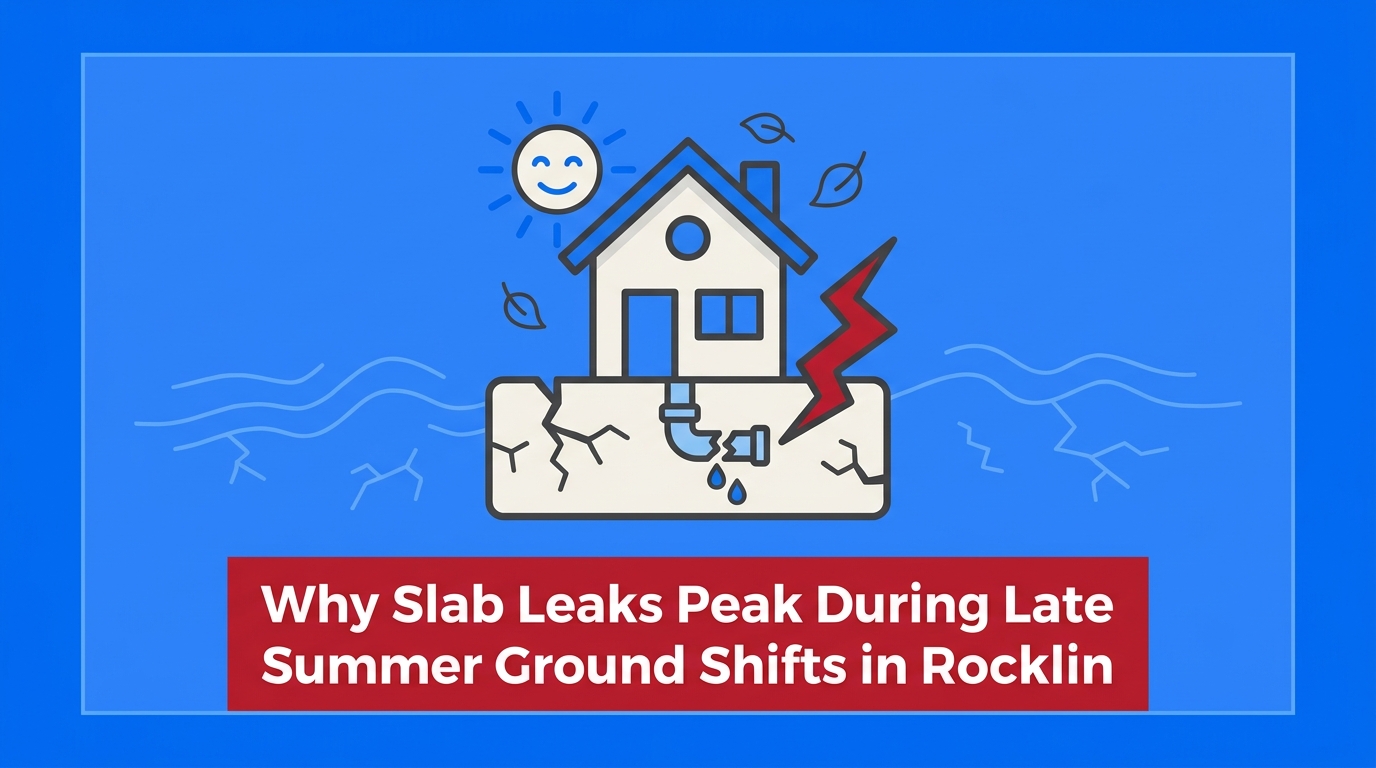
Before the first fall breeze arrives, many homeowners wonder why slab leaks peak during late summer ground shifts in Rocklin. In our years of serving the Sacramento Valley, our team at Always Affordable Plumbing & HVAC has seen firsthand how the late August heat consistently bakes the region, causing the ground beneath local homes to undergo severe physical changes. This sets the stage for unexpected and highly destructive plumbing emergencies. When the soil aggressively dries out, it physically pulls away from your foundation, bringing hidden slab leaks along with it. Recognizing these subtle signs early is the critical decision point that separates a manageable repair from catastrophic structural and water damage. If you suspect your foundation is hiding a ruptured pipe due to this extreme weather cycle, securing professional plumbing services and expert plumbing repair is your best defense against the late summer drought.
To understand why your plumbing is under attack, you first have to look at the ground your home is built on. Rocklin and the surrounding areas sit on large deposits of expansive clay soils, frequently referred to by locals as hardpan or adobe clay. This specific type of soil is highly reactive to environmental moisture levels, acting much like a giant geological sponge beneath your foundation.
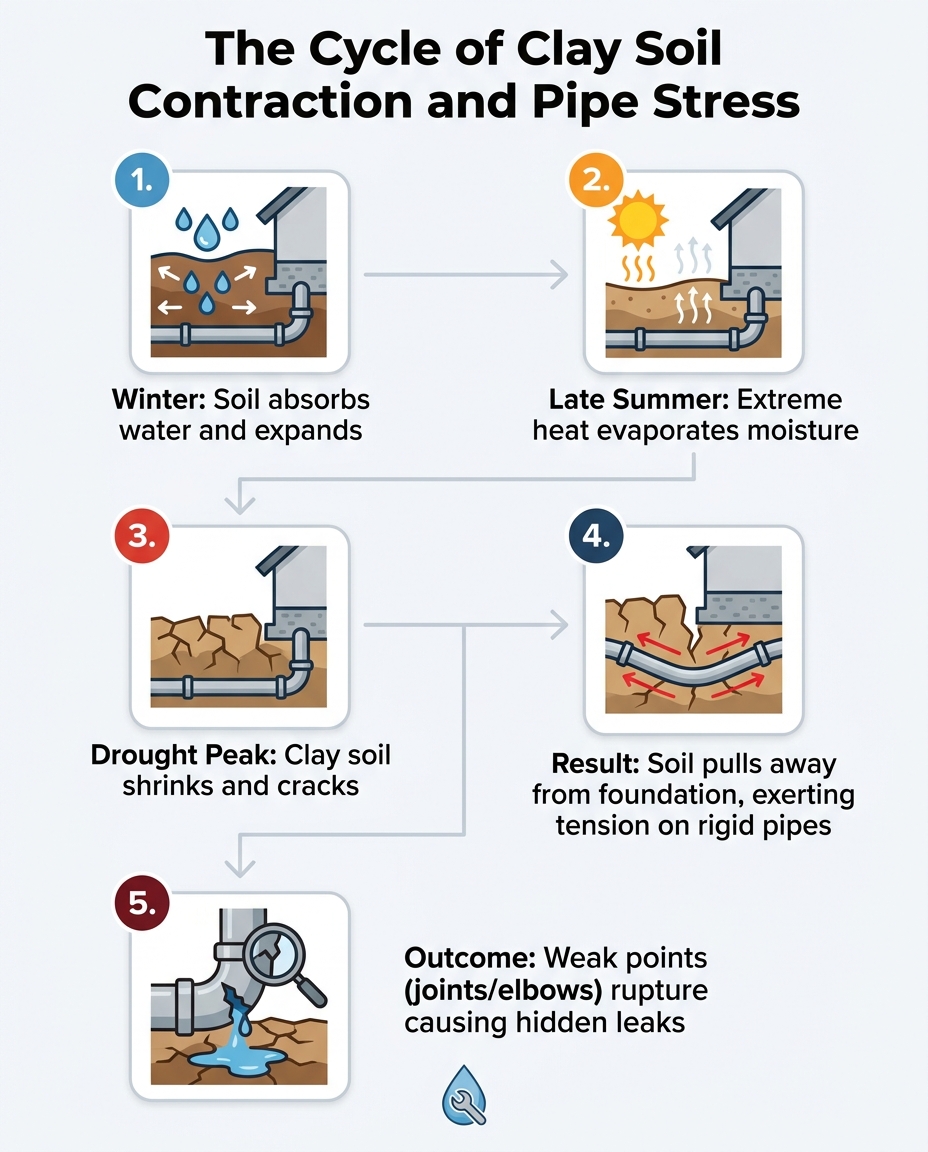
During the wet winter months, this clay absorbs rainwater and swells significantly, pushing upward against your concrete slab. However, as the region enters prolonged dry spells, the "sponge effect" reverses. The intense late summer heat causes peak soil desiccation. As the moisture evaporates, the clay shrinks, condenses, and cracks. According to regional geological data, expansive soils are one of the leading causes of foundation movement in California, creating an environment where the ground is in a constant state of motion.
This dramatic loss of volume removes the physical support beneath your home. When the soil drops away, the heavy concrete slab is left suspended or unevenly supported, placing immense weight on the underground infrastructure. Understanding how local climate affects your plumbing is the first step in protecting your property from these invisible forces.
• Winter / Spring — Soil Condition: Saturated and swollen — Impact on Foundation: Upward heaving and pressure — Plumbing Risk Level: Moderate (compression stress)
• Early Summer — Soil Condition: Drying and stabilizing — Impact on Foundation: Slight settling — Plumbing Risk Level: Low
• Late Summer (August/Sept) — Soil Condition: Severely desiccated and cracked — Impact on Foundation: Downward dropping and loss of support — Plumbing Risk Level: High (tensile and shear stress)
The mechanical cause-and-effect relationship between the contracting earth and your home's water lines is a matter of pure physics. When clay soil contraction and ground shifting occur, the soil doesn't just gently fall away. As the clay dries and cracks, it physically grips the concrete foundation and the buried pipes, dragging them downward as it shrinks.
Underground water lines are typically made of rigid materials like copper or thick PVC. These pipes are designed to handle high internal water pressure, but they are not engineered to bend, stretch, or support the sheer weight of a settling concrete slab. When the ground drops, the pipes are subjected to immense tension (being pulled apart) and shear stress (being pushed in opposite directions). This is an environmental inevitability in certain terrain, not necessarily a sign that your home has poorly installed or aging plumbing.
Water lines rarely snap in the middle of a straight, solid pipe. Instead, the intense stress of ground shifting targets the weakest points in your plumbing system. Joints, elbows, T-connections, and the vertical sections where pipes rise through the concrete slab bear the brunt of the tension. When the pressure exceeds the structural limit of the joint's solder or glue, the fitting ruptures, releasing pressurized water directly beneath your home.

Because these ruptures happen entirely out of sight, beneath inches of solid concrete, homeowners rarely see a dramatic spray of water. Instead, a hidden foundation leak announces itself through subtle, easily overlooked symptoms. Catching these early indicators during late August or late summer is critical to minimizing the fallout.
For example, a local homeowner recently reached out to our team regarding a water leak from an unknown source that turned out to be beneath their foundation. One of our technicians arrived within hours, identified the issue, fixed the problem efficiently, and even cleaned up the water. This scenario highlights a pattern we see often: mysterious water issues frequently trace back to hidden underground failures. If you don't know what to look for, a slab leak can run continuously for weeks before the damage becomes obvious.
Here are the primary signs that ground shifting has compromised your plumbing:
• Unexplained warm spots on flooring: If a hot water line ruptures beneath the slab, the heat transfers upward. You might feel a distinct, unnatural warmth walking barefoot on tile, hardwood, or carpet.
• The sound of running water: Hearing a faint hissing or rushing water sound inside your walls or floors when all faucets, toilets, and appliances are completely turned off is a major red flag.
• Sudden spikes in water bills: A pressurized leak under a slab can waste thousands of gallons of water a month. If your usage habits haven't changed but your bill has doubled, an underground leak is highly likely.
• Exterior pooling: Water from an unknown source will eventually seek the path of least resistance. This often results in muddy puddles, excessively green patches of grass, or water pooling around the exterior foundation during dry weather.
• Interior seepage: In severe cases, the water will build enough pressure to seep up through the porous concrete, causing damp carpets, warped floorboards, or peeling linoleum.
The quick fix: The easiest way to confirm a suspected leak is the water meter test. Turn off all water inside and outside the house. Locate your water meter and check the leak indicator dial (often a small triangle or star). If it is spinning while the water is off, you have an active leak.
Hoping a suspected slab leak will simply resolve itself is a dangerous gamble. Leaving a ruptured pipe unchecked in Rocklin creates a compounding disaster that threatens the structural integrity of your entire home. The initial water damage is often just the beginning.
Accelerated Soil Degradation:
When a pressurized pipe bursts under your slab, it continuously injects water into the already unstable soil. This constant flow washes away dirt and creates a localized sinkhole beneath the concrete. Without the earth to support it, the heavy slab will eventually crack and collapse into the void, leading to catastrophic foundation failure.
Secondary Property Damage:
Moisture trapped between the concrete slab and your flooring creates the perfect breeding ground for toxic black mold. Within days, continuous seepage will ruin expensive hardwood floors, rot baseboards, and wick up into drywall, requiring extensive and costly remediation.
Compromised Drainage Systems:
The same ground shifting that tears apart your incoming water lines can also wreak havoc on your drainage system. As the foundation settles, rigid sewer pipes can become misaligned, bellied, or completely crushed. If you notice slow drains or sewage backups alongside slab leak symptoms, you may also require professional underground sewer line services to restore safe sanitation to your home. Early intervention is the only way to prevent exponential repair complexities.
When clay soil contraction and ground shifting cause a rupture, locating the exact stress point requires highly specialized technology. Because the leak is buried under concrete, guessing its location is not an option. Professional precision leak detection is required to find the problem without unnecessary and destructive guesswork.
Pressurized water escaping from a cracked pipe creates a distinct, high-frequency sound wave that travels through the concrete. Professionals use highly sensitive acoustic listening discs and ground microphones to trace the path of the plumbing and pinpoint the loudest point of the hiss. This allows technicians to locate the leak within inches.
If a hot water line is compromised, thermal imaging cameras can visually map the heat bloom spreading beneath the floorboards. This non-invasive technology allows plumbers to see exactly where the water is pooling without moving furniture or pulling up carpets.
We see the value of this technology regularly. Another customer called us during the fall with a broken pipe hidden inside a wall. The repair required cutting into the drywall to access the rupture, but because our technician used precision detection to pinpoint the exact spot, they were able to cut cleanly and complete the repair quickly and affordably without unnecessary demolition. This same principle applies to concrete slabs. By pinpointing the leak, our professionals can minimize the amount of flooring and concrete that must be removed.
We strongly advise against any DIY exploratory demolition. Taking a jackhammer or sledgehammer to your own floor can cause severe, costly damage to the home's structural integrity, hit electrical lines, or strike intact plumbing, making the disaster far worse. Once a professional accesses the leak safely, they can offer targeted repair options, such as replacing the broken section, applying an epoxy lining, or completely rerouting the pipe through the walls or attic to bypass the unstable ground entirely.
If you discover the signs of a slab leak in your Rocklin home, acting quickly can significantly reduce the amount of water damage your property sustains. While you wait for professional dispatch, take these immediate, safe steps to mitigate the disaster:
1. Shut off the main water valve: This is the single most important action you can take. Locate your home's main water shut-off valve (usually located on the side of the house, in the garage, or near the street curb box) and turn it completely off to stop the flow of water beneath the foundation.
2. Relieve system pressure: Once the main valve is off, open the lowest faucet in your home (often an outside spigot) and the highest faucet (like a second-story shower). This allows the remaining water in the pipes to drain out safely rather than leaking under the slab.
3. Document the damage: Take clear photos and videos of any visible water damage, pooling, warped floorboards, or wet spots on the foundation. This documentation is incredibly helpful for the plumbing technician and may be required for your homeowners insurance claim.
4. Clear the area: Move rugs, furniture, electronics, and valuables away from suspected indoor leak zones to prevent further property loss.
5. Call a licensed professional: Contact a local emergency plumbing service immediately to schedule comprehensive diagnostics and leak detection.
Yes. In late summer, clay-heavy soil dries out and contracts. This ground shifting pulls down on concrete foundations and underground plumbing, creating severe physical stress that can rupture water lines and cause hidden slab leaks. The lack of moisture removes the physical support beneath the pipes, leaving them vulnerable to the sheer weight of the settling house.
Expansive soil swells heavily with moisture and shrinks drastically when dry. This continuous, seasonal cycle exerts immense pressure and tension on rigid pipes. Over time, the repeated pushing and pulling frequently leads to cracks, misalignments, and catastrophic leaks at the weakest joints beneath the foundation.
Early indicators include a sudden, unexplained increase in your monthly water bills and the audible sound of running water inside walls when all fixtures are off. You may also notice unexplained warm spots on the floor, damp carpets, or water pooling around the exterior foundation during dry weather. Catching these signs early in late August or late summer prevents extensive structural damage.
California's unique geology, which includes large deposits of expansive clay soils, combined with long, extremely dry summers, creates the perfect environment for extreme ground shifting. This geological reality constantly stresses underground infrastructure, making foundation leaks a frequent environmental hazard rather than just a symptom of aging pipes.
No. Once a pipe has cracked or ruptured from ground stress, the physical damage to the plumbing is permanent. Returning moisture may cause the soil to swell again, but this will only exert upward pressure on the broken pipe, potentially worsening the break or shifting the foundation further out of alignment.
Understanding that clay soil contraction and ground shifting are the root causes of your plumbing emergency is the first step to properly resolving it. When the earth moves beneath your home, you need a team that understands the specific geological challenges of the region. At Always Affordable Plumbing & HVAC, our local experts are equipped to handle the unique stress that late summer heat places on residential foundations.
Dealing with a foundation leak is highly stressful, which is why working with a company that offers transparent pricing and a 100% satisfaction guarantee provides much-needed peace of mind during an emergency. We ensure you know exactly what to expect before any work begins. If you want to know why slab leaks peak during late summer ground shifts in Rocklin—and more importantly, how to fix them—don't wait for the damage to spread. Schedule a comprehensive inspection today to secure expert plumbing repair and protect your home's foundation.
Ready to locate and resolve your hidden water leak? Reach out to our team for expert plumbing repair before the ground shifting causes permanent structural damage to your home.
See what our satisfied customers have to say about their experience with Always Affordable
Plumbing & HVAC.

"Chappy was very skilled in his knowledge of my HVAC unit. I greatly appreciate the quick response and experienced tech. The whole endeavor was made less stressful by his humor and honest conversation. I find comfort in knowing I now have a shop i trust for the next time."
"Tony, James, Ronnie did an amazing job setting up our new AC! They were quick, efficient, considerate, and polite! We appreciate them scheduling us in on such short notice. Definitely recommend this company!"
"Prompt, professional service with kindness and care. They came out to address both plumbing and AC issues. I received a courtesy call before they arrived. All issues were resolved the same day with integrity and respect. Thankful for businesses like this. Absolutely recommend to those that I love."
"Excellent service! Jason came out promptly and in addition to doing my outside faucet he also put in new irrigation equipment! All done perfectly! Jason was lovely"
"Honest with the assessment; friendly and good manners. No high pressure sales. Just good to honest "tell it like you see it" Thought my kitchen disposer needed an overhaul. But Jason, there Plumber gave me an honest lesson on what was really happening. Saved me hundreds, if I went the route of replacing. Thank you!"
"Absolutely 5 stars. If you are looking for affordable ,professional and kind. Chappy was excellent and very knowledgeable . I called in the morning because my air conditioner stopped working he was here within hours and fixed my air with a smile. I highly recommend Chappy and Always Affordable plumbing and Hvac."
"Scott and James were great. They got there quickly and diagnosed the problem with my A/C.They did a very thorough job testing everything. Sent me pictures and called to keep me informed. Got it done the next day and everything is working fine. Be glad when I get home so I can enjoy my new system. Thanks guys for a great job."
"Chappy was very helpful. He knew our issue right away, cleaned our coils. He also came on the same day we called and got our AC blowing cold air again."
"After some timing ’curfuffles’ the Tech Jason arrived and not only completed a speedy install on my toilet, he was personable & professional. Because of the timing issues Jason was attentive and showed up with everything needed! No extra store runs 😊 I was very comfortable with having this Tech in my Daughter’s home. We will definitely use this Service again."