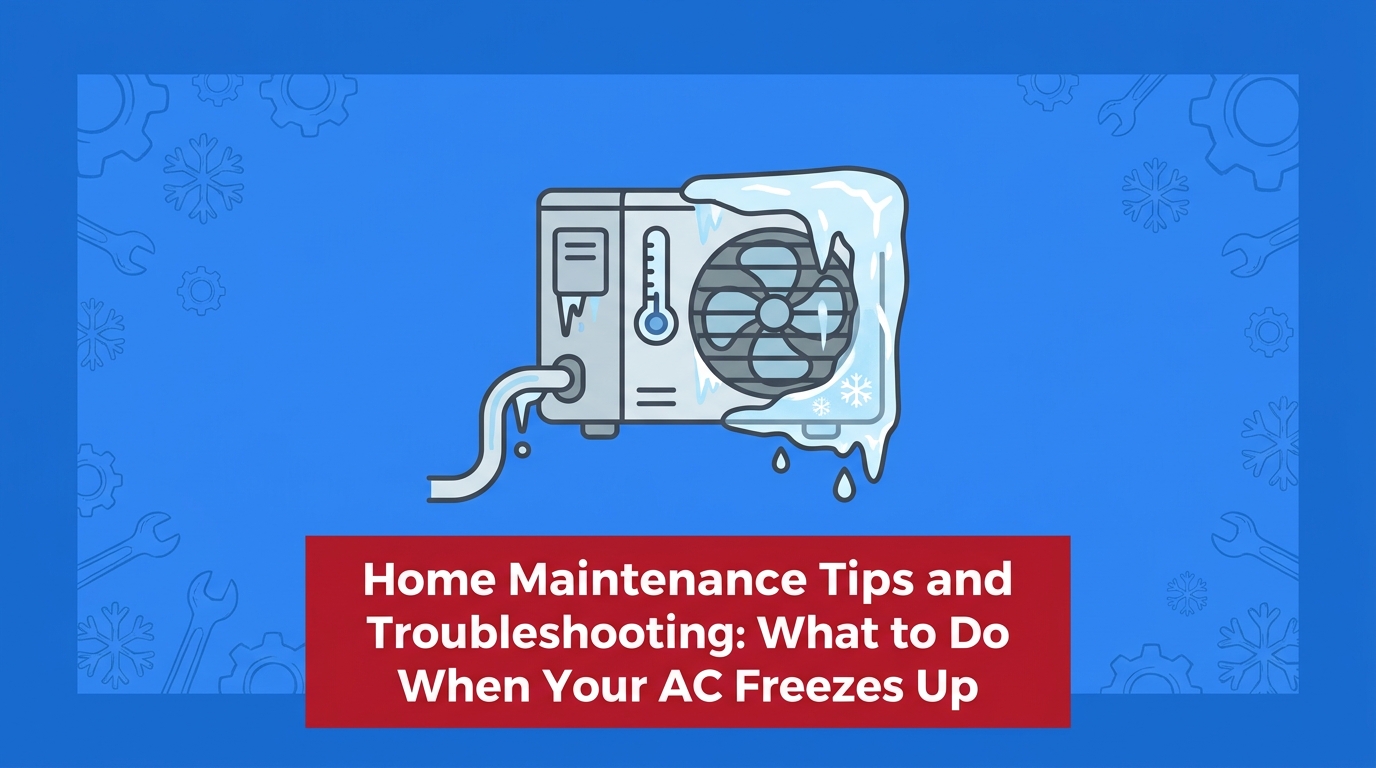
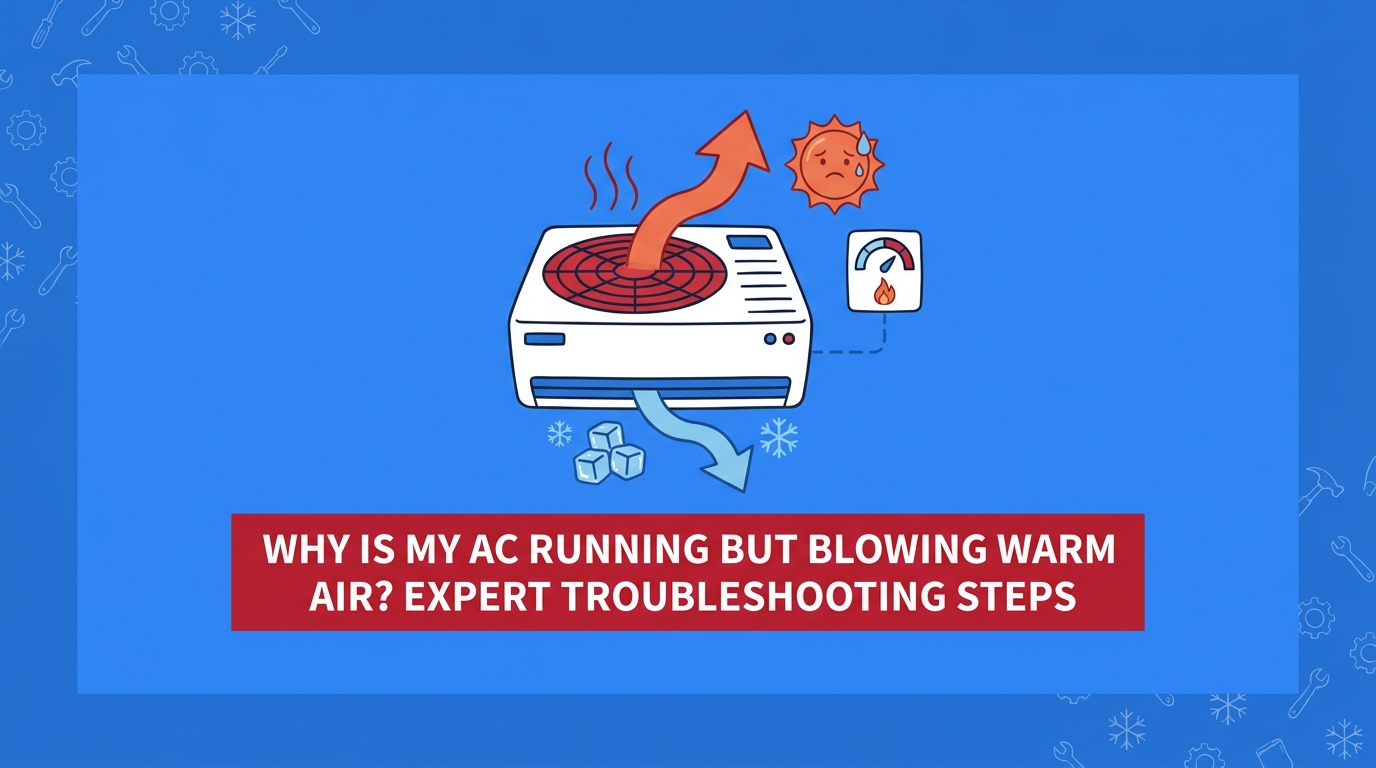
Home Maintenance Tips and Troubleshooting: What to Do When Your AC Freezes Up
Ice on your AC coil? Why we recommend turning it off immediately. Apply these home maintenance tips and troubleshooting steps to safely thaw it and avoid




How Sacramento climate affects your HVAC and plumbing is something every local homeowner should understand, because this region's weather is harder on home systems than most people realize. From record-breaking summer heat to soggy winters, the Sacramento Valley throws a remarkable range of stressors at your pipes, coils, and ductwork — often without obvious warning signs until something breaks.
Here's a quick overview of the key ways Sacramento's climate creates problems:
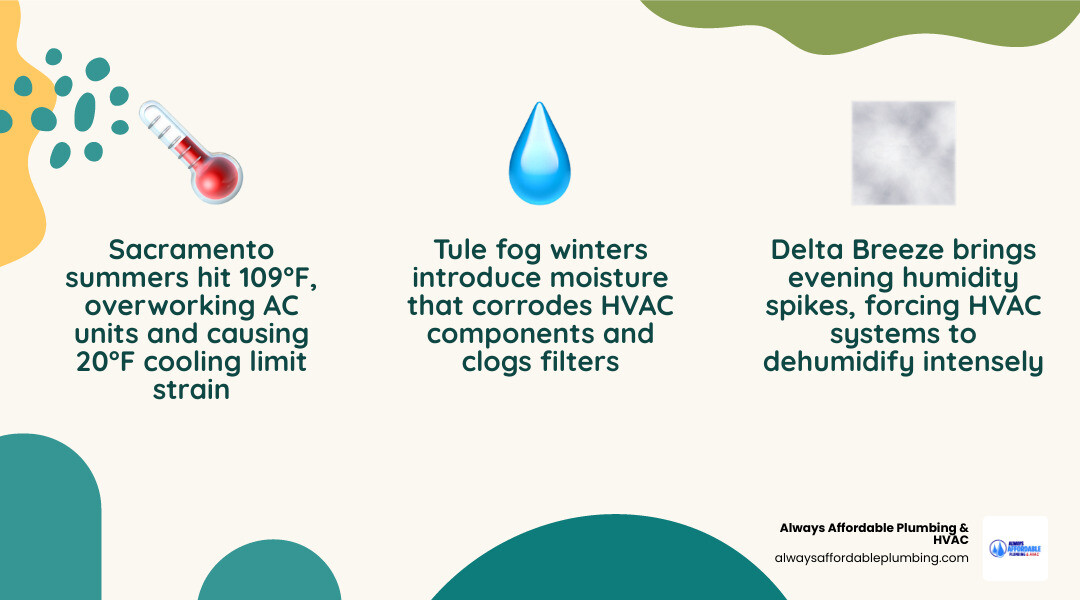
• Extreme summer heat — Temperatures regularly exceed 90°F and have reached 109°F, pushing cooling systems to their limits and accelerating wear
• Urban heat island effect — Downtown Sacramento temperatures can run up to 8°F hotter than surrounding areas, increasing the demand on HVAC units
• Delta Breeze humidity — Evening moisture spikes after hot days force HVAC systems to work harder on dehumidification, even when it feels cooler outside
• Tule fog in winter — Dense seasonal fog introduces moisture that clogs filters and corrodes HVAC components
• Heavy winter rainfall — Saturated soil shifts pressure on underground sewer lines, leading to slow drains and backups
• Very hard water — Sacramento's water supply carries 150–300 parts per million (ppm) of dissolved minerals, causing scale buildup in pipes, water heaters, and HVAC components like evaporator coils and condensate drains
Sacramento's Mediterranean climate means your home systems never really get a break. Summer bakes them. Winter soaks them. And the water flowing through your pipes quietly coats everything in mineral deposits year-round. If you live here, understanding these patterns is the first step toward avoiding expensive, avoidable repairs.
When we talk about Sacramento summers, we aren't just talking about "nice pool weather." We are talking about sustained triple-digit heat waves that can reach a staggering 109°F. This isn't just uncomfortable for you; it is a brutal stress test for your home infrastructure.
The urban heat island effect in places like downtown Sacramento or even parts of Citrus Heights and Elk Grove means that asphalt and concrete trap heat during the day and radiate it back at night. This can boost local temperatures by up to 8°F compared to rural neighbors. For your Air Conditioning, this means the "cool down" period it expects at night never truly comes, forcing the unit to run almost 24/7.
Most systems are designed around a "20-degree rule," meaning they can efficiently cool your home to about 20 degrees below the outdoor temperature. When it’s 105°F outside, your AC is fighting a losing battle to keep your living room at 70°F. This constant strain is the leading cause of HVAC Repair Sacramento calls during July and August. Furthermore, HVAC Regulatory Changes in 2023 have updated efficiency standards (SEER2), making it even more important to ensure your system is up to modern code to handle these loads.
A proper HVAC Installation Sacramento must account for the local "peak load." If a system is improperly sized, you’ll experience short-cycling, where the unit turns on and off rapidly. This doesn't just waste energy; it prevents the system from removing humidity.
Many homeowners are switching to a Heat Pump because they handle Sacramento’s specific temperature swings efficiently. However, even the best heat pump can suffer from pressure imbalances. If your home has had additions or if your ductwork wasn't designed for our 100°F+ days, you might find one room is a refrigerator while another is a sauna. This imbalance forces the thermostat to keep the system running longer than necessary, driving up those SMUD or PG&E bills.
It isn't just the air that’s hot; the ground is reacting too. Sacramento sits on expansive clay soil. During a hot, dry summer, this soil dries out and contracts, causing the ground to shift. This movement puts immense physical stress on your underground pipes, potentially leading to cracks or offset joints.
Inside the home, the Sacramento Hard Water issue is amplified by heat. As water sits in your water heater, high temperatures cause minerals like calcium and magnesium to settle faster, creating a thick layer of sediment. This acts as an insulator, meaning your heater has to work twice as hard to warm the water, eventually leading to tank failure.
We all love the Delta Breeze when it knocks 20 degrees off a sweltering afternoon, but your HVAC system has a different opinion. This breeze brings in a surge of humidity from the San Francisco Bay. While the air is cooler, your AC or heat pump now has to shift gears from "temperature control" to "moisture control."
Following the breeze, the winter months bring the infamous Tule fog. This isn't just a driving hazard; it’s a plumbing and HVAC nightmare. This thick, ground-hugging moisture stays trapped in the valley, leading to high humidity levels that can cause mold in ductwork and accelerate the corrosion of metal components in your Heating system. Regular HVAC Maintenance Tips suggest checking your system for rust and moisture buildup specifically after a long foggy spell. If you notice a musty smell when the heat kicks on, it’s time to call for HVAC Services Sacramento.
When humidity spikes, your evaporator coils become magnets for moisture. If your air filter is even slightly dirty—a common issue in our dusty valley—the moisture mixes with the dust to create a "mud" that clogs the fins. In some cases, this leads to frozen coils, where the HVAC unit literally turns into a block of ice because it can’t breathe.
To combat this, we recommend smart thermostats that can monitor indoor humidity levels. Proper ventilation is also key; without it, that Sacramento moisture stays trapped inside your walls, leading to poor air quality and potential structural damage.
While summer dries the soil out, our wet winters do the opposite. Saturated soil becomes heavy and expands, putting "heave" pressure on your sewer lines. This is when many homeowners in older neighborhoods like Land Park or East Sac start noticing sewer backups and slow drains.
Winter Plumbing Warning Signs:
• Gurgling noises from toilets or drains during heavy rain.
• Multiple drains backing up at the same time (usually the lowest fixtures first).
• A sudden sewage smell in the yard or crawl space.
• Water pooling around floor drains in the garage or basement.
To protect your home, ensure your crawl space is well-ventilated and that your pipes are properly insulated to prevent the rare but damaging "flash freeze" that can occur on those 35°F Roseville or Folsom nights.
Sacramento’s water is officially classified as "very hard," measuring between 150 and 300 ppm of minerals. If you’ve seen white, chalky spots on your dishes or a crusty buildup on your faucets, you are seeing Sacramento Hard Water in action. This isn't just an aesthetic problem; it’s a "slow-motion wrecking ball" for your plumbing.
Installing water softeners is one of the most effective ways to prolong the life of your home. Without one, these minerals act like "arterial plaque" in your pipes, slowly narrowing the opening until you experience a total blockage. This is why we emphasize HVAC Services Sacramento as part of a whole-home health plan—because hard water doesn't stop at the sink.
Your HVAC system uses water in more ways than you might think. Whole-home humidifiers and evaporative coolers are particularly vulnerable to mineral clogging. Even your AC’s condensate drain—the little pipe that drips water outside—can get "constipated" with mineral scale and dust, leading to water backing up into your house and causing ceiling damage.
Water heaters, especially the modern tankless versions, are highly sensitive to scale. A thin layer of mineral deposit can reduce efficiency by 15% or more. This makes HVAC Repair Sacramento and regular plumbing flushes essential. If you have a tankless heater, a professional descaling once a year is non-negotiable in the Sacramento Valley.
When the "Atmospheric Rivers" hit, Sacramento’s drainage systems are put to the ultimate test. It isn't just about the rain falling on your roof; it’s about where that water goes. Saturated ground can cause older clay or concrete sewer pipes to settle or crack. Once a crack forms, thirsty tree roots—which have been searching for moisture all summer—will invade the pipe, causing a massive blockage just when you need the drain most.
Preventive Drainage Measures:
• Gutter Cleaning: Keep debris out so water doesn't pool at your foundation.
• Downspout Extensions: Direct water at least 5-10 feet away from the home.
• Sewer Camera Inspections: Check for root intrusion before the rainy season starts.
• Sump Pump Testing: Ensure your pump is ready for a basement or crawl space deluge.
If a line is damaged, we often utilize trenchless repair methods to fix the pipe without destroying your beautiful Sacramento landscaping.
While they are only 20 miles apart, the climate in Sacramento and Roseville can vary enough to change how you maintain your home.
• Summer Avg High — Sacramento: 93-100°F — Roseville / Rocklin: 95-103°F
• Humidity — Sacramento: Higher (Delta Breeze) — Roseville / Rocklin: Lower (Dry Heat)
• Winter Avg Low — Sacramento: 38-42°F — Roseville / Rocklin: 35-39°F
• Air Quality — Sacramento: Traps more Valley smoke — Roseville / Rocklin: Slightly better airflow
The "Valley effect" means that Folsom Air Quality and Sacramento air quality can plummet during wildfire season. Smoke particles are incredibly fine and can bypass standard cheap air filters, settling on your HVAC components and reducing their lifespan.
During a wildfire event, your HVAC system is your first line of defense. We recommend using MERV 13 filters during these times. These filters are dense enough to catch smoke particles but require a system that is powerful enough to push air through them.
Because the Sacramento Valley traps pollution, your filters will likely need replacement every 30 to 60 days during the summer, rather than the standard 90 days. Proper duct sealing is also vital; if your ducts have leaks in the attic, you are sucking in smoky, 150°F air and blowing it directly into your bedrooms.
In Roseville, the heat is often drier, which makes whole-house fans an incredible energy-saving tool. You can flush the hot air out in the evening very effectively. In Sacramento, the lingering humidity from the Delta Breeze can sometimes make a whole-house fan less effective at night, meaning a high-efficiency Air Conditioning unit or a Heat Pump is your primary tool for comfort.
When we perform an HVAC Installation Sacramento, we don't just look at square footage. We look at the microclimate. A home in the "urban heat island" of downtown needs a different cooling strategy than a home shaded by the oak trees of Orangevale or Granite Bay. Proper HVAC Maintenance Tips always start with understanding your specific neighborhood's demands.
During a heat wave, your HVAC system often hits its "20-degree limit," meaning it struggles to keep the house cool if it's over 100°F outside. This leads to constant running and potential part failure, requiring HVAC Repair Sacramento. Simultaneously, the soil dries out and shrinks, which can cause underground pipes to shift and leak.
The Delta Breeze brings welcome relief from the heat but introduces a spike in humidity. This increases the dehumidification load on your HVAC system. If the system isn't maintained, this extra moisture can lead to frozen coils and internal corrosion. You should follow HVAC Maintenance Tips like changing filters more often during these humid transitions.
We recommend a "bi-annual" approach. Schedule an AC tune-up in the spring (March/April) before the first heat wave hits, and a heating inspection in the fall (September/October) before the Tule fog sets in. Additionally, flushing your water heater once a year is essential to combat the effects of hard water. Our HVAC Services Sacramento team can help you stay ahead of these seasonal shifts.
At Always Affordable Plumbing & HVAC, we’ve seen how the Sacramento climate can "plot" against your home. Whether it’s the mineral-heavy water clogging your heater or the triple-digit heat straining your AC, these issues are a part of life in the Valley.
Our mission is to provide quality, transparent, and affordable solutions to keep your home running smoothly regardless of what the weather report says. For those who want the ultimate peace of mind, our Member's Club offers exclusive discounts and priority scheduling—because we know that when your AC goes out on a 109°F day, you don't want to wait in line.
Don't let the climate win. Whether you need a simple filter change or a complex HVAC installation, we are here to help. From Galt to Auburn and everywhere in between, we are your local experts in climate-ready home services.
See what our satisfied customers have to say about their experience with Always Affordable
Plumbing & HVAC.

"Chappy was very skilled in his knowledge of my HVAC unit. I greatly appreciate the quick response and experienced tech. The whole endeavor was made less stressful by his humor and honest conversation. I find comfort in knowing I now have a shop i trust for the next time."
"Tony, James, Ronnie did an amazing job setting up our new AC! They were quick, efficient, considerate, and polite! We appreciate them scheduling us in on such short notice. Definitely recommend this company!"
"Prompt, professional service with kindness and care. They came out to address both plumbing and AC issues. I received a courtesy call before they arrived. All issues were resolved the same day with integrity and respect. Thankful for businesses like this. Absolutely recommend to those that I love."
"Excellent service! Jason came out promptly and in addition to doing my outside faucet he also put in new irrigation equipment! All done perfectly! Jason was lovely"
"Honest with the assessment; friendly and good manners. No high pressure sales. Just good to honest "tell it like you see it" Thought my kitchen disposer needed an overhaul. But Jason, there Plumber gave me an honest lesson on what was really happening. Saved me hundreds, if I went the route of replacing. Thank you!"
"Absolutely 5 stars. If you are looking for affordable ,professional and kind. Chappy was excellent and very knowledgeable . I called in the morning because my air conditioner stopped working he was here within hours and fixed my air with a smile. I highly recommend Chappy and Always Affordable plumbing and Hvac."
"Scott and James were great. They got there quickly and diagnosed the problem with my A/C.They did a very thorough job testing everything. Sent me pictures and called to keep me informed. Got it done the next day and everything is working fine. Be glad when I get home so I can enjoy my new system. Thanks guys for a great job."
"Chappy was very helpful. He knew our issue right away, cleaned our coils. He also came on the same day we called and got our AC blowing cold air again."
"After some timing ’curfuffles’ the Tech Jason arrived and not only completed a speedy install on my toilet, he was personable & professional. Because of the timing issues Jason was attentive and showed up with everything needed! No extra store runs 😊 I was very comfortable with having this Tech in my Daughter’s home. We will definitely use this Service again."