Seasonal Home Maintenance Checklist: Preventing HVAC and Plumbing Emergencies
Prevent HVAC emergencies with a seasonal home maintenance checklist. Why proactive scheduling beats waiting for sudden failures. See what needs attention now.



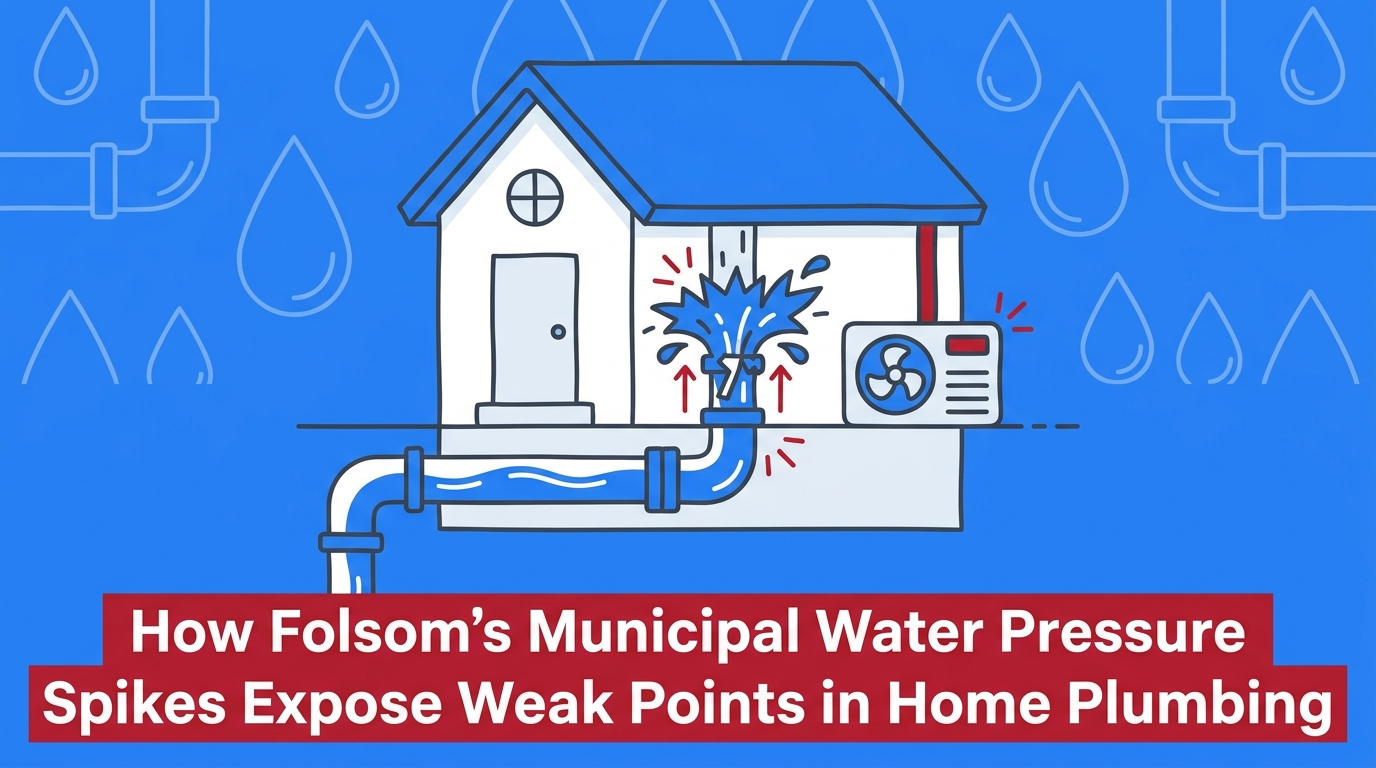
Nearly 70% of unexplained residential leaks trace back to a hidden municipal factor, which is exactly how Folsom's water pressure spikes expose weak points in home plumbing. Normal residential water pressure sits comfortably between 40 and 80 PSI (pounds per square inch). Within this range, your pipes, fixtures, and appliances operate exactly as designed. However, at Always Affordable Plumbing & HVAC, our team typically sees that municipal water delivery is rarely perfectly static. Shifts in city water demand, pumping station cycles, and local infrastructure changes can push this baseline significantly higher, sending dangerous shockwaves through your home's water lines.
Sudden spikes stress aging pipes, exploiting microscopic weaknesses in copper joints, PEX fittings, and valve seals. What begins as a minor fluctuation quickly translates into unexplained fixture leaks, running toilets, and ongoing plumbing anxiety. A pattern we see often is homeowners finding themselves trapped in a frustrating cycle of fixing one leak only to have another spring up a week later in a different room.
This puts you at a critical decision point: you can continue treating individual leaks as they appear, or you can test the home's baseline pressure to see if a Pressure Reducing Valve (PRV) is needed. Addressing the root cause requires comprehensive plumbing and HVAC services rather than temporary band-aids. When you experience PSI spikes above 80, the structural integrity of your entire plumbing network is compromised, making proactive pressure management an absolute necessity for long-term home maintenance.
Understanding why your home experiences these extreme variations requires looking beyond your property line. In our years serving the local area, we've observed how local topography and the specific distribution of municipal pumping stations result in highly varied water delivery pressures across different neighborhoods. Folsom features rolling terrain, meaning municipal water must be pumped at extremely high pressures to reach homes at higher elevations. Consequently, homes located at lower elevations or closer to the main pumping stations often bear the brunt of this force, receiving water at a much higher velocity than intended.
With hot, dry summers leading to massive spikes in municipal water demand for lawn irrigation, Folsom's infrastructure is put under immense strain. Every morning, thousands of automated sprinkler systems activate simultaneously. During these periods of high demand, pressure in the municipal mains can drop significantly. However, the real danger occurs when those irrigation cycles end. As valves slam shut across the city, the sudden cessation of demand causes the water pressure to surge violently backward through the lines.
Standard residential plumbing systems are simply not engineered to withstand these rapid, unpredictable shifts in municipal delivery. While a copper pipe might hold up to static pressure, the dynamic force of water rapidly accelerating and decelerating acts like a hammer against the pipe walls and joints. Understanding these local infrastructure quirks is the first step in diagnosing persistent plumbing issues. If your home is subjected to these daily municipal stress tests, standard repairs will continually fail until the underlying pressure volatility is neutralized.
Because municipal water lines are buried underground, the physical symptoms of high water pressure often manifest internally before a major failure occurs. Learning to read these warning signs allows you to intervene before a catastrophic blowout forces you into handling burst pipes in Folsom.
If your home regularly experiences PSI spikes above 80, our technicians note that you will likely observe one or more of the following symptoms:
• Water hammer (banging pipes): Loud banging or clanking noises in the walls when faucets or appliances are turned off quickly. This occurs because the high-velocity water slams into the closed valve, sending a physical shockwave through the pipe.
• Ghost flushing: Toilets that constantly run or seemingly flush themselves. The delicate fill valves inside toilet tanks are easily overpowered by high pressure, causing water to continuously bleed into the overflow tube.
• Intermittent faucet drips: Faucets that drip or leak intermittently, especially late at night. Municipal demand is lowest during the overnight hours, which means the baseline pressure in the city mains is at its absolute highest.
• Spitting aerators: When you turn on the kitchen or bathroom sink, the water blasts out forcefully and splashes everywhere before settling into a steady stream.
Fixing these individual leaks without addressing the underlying pressure is just a temporary fix. Replacing a toilet fill valve will only solve the ghost flushing until the next major pressure surge damages the new valve.
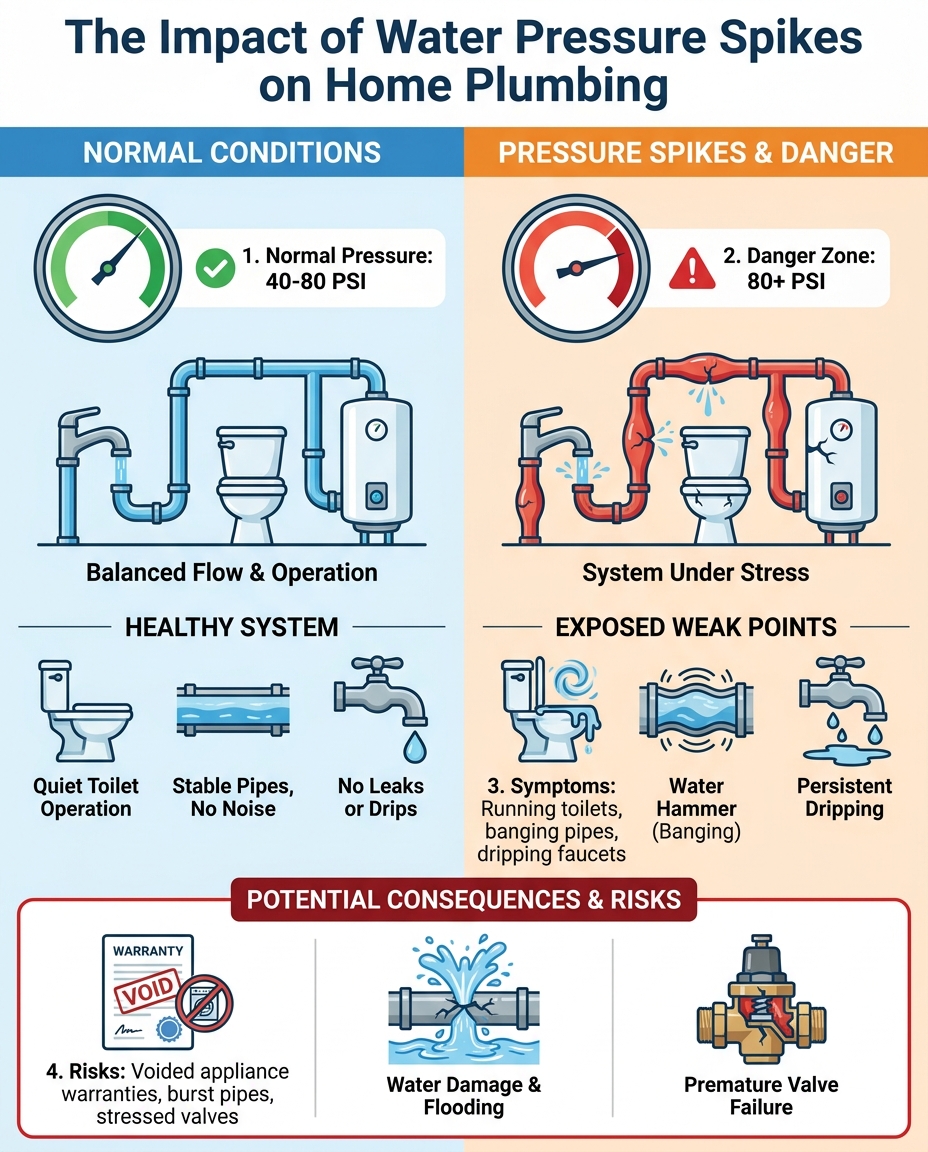

The mechanical risks of ignoring high water pressure extend far beyond dripping faucets. Your home's major water-using appliances are sophisticated machines with precise internal tolerances. When subjected to PSI spikes above 80, these appliances become highly vulnerable to premature failure.
Water heaters are particularly vulnerable to prolonged high pressure. As water heats up inside the tank, it expands. In a system already burdened by high municipal pressure, this thermal expansion has nowhere to go. We frequently see this cause premature tank failure, cracked glass linings, or continuous weeping from the Temperature and Pressure (T&P) relief valve. Protecting these investments requires proactive water heater stress and maintenance checks. Furthermore, many manufacturers explicitly state in their fine print that they will void a water heater warranty if the home's baseline pressure is documented above 80 PSI without a regulator in place.
Your washing machine and dishwasher rely on internal solenoid valves to control water flow. These valves are designed to open and close against a standard residential pressure load. Under excessive force, the plastic and rubber components inside these valves degrade rapidly. This leads to hidden internal leaks that can slowly destroy the appliance's electrical board or flood your laundry room floor. Replacing a washing machine is an expensive consequence of a plumbing issue that could have been mitigated at the main water line.
Before you can protect your home, you need accurate data. Testing pressure is a simple diagnostic step that allows you to see exactly what your pipes are enduring. While interpreting the results and designing a mitigation strategy requires professional insight from our licensed plumbers, gathering the initial reading is a straightforward homeowner task.
1. Purchase a pressure gauge: We recommend obtaining a standard water pressure gauge that threads onto a standard hose bib. For the most accurate diagnostics, look for a gauge with a "lazy hand" (a red secondary needle that stays at the highest recorded pressure).
2. Locate an unregulated exterior bib: Attach the gauge to an exterior hose bib that is close to where the main water line enters your Folsom home. Ensure no other water is running inside the house (no washing machines, dishwashers, or sprinklers).
3. Open the valve: Turn the hose bib on all the way. The black needle will instantly jump to show the current static pressure.
4. Test at multiple times: Because municipal pressure fluctuates, our team advises testing at different times of the day. Check it during peak summer irrigation hours (early morning) and late at night when municipal demand is lowest.
5. Leave it overnight: If you have a gauge with a lazy hand, leave it attached and open overnight. The red needle will record the absolute peak pressure spike that occurred while you were sleeping.
A reading consistently near or above the 80 PSI danger zone indicates that the home's internal system is at severe risk. Once you verify these elevated numbers, it is time to bring in one of our professionals to implement a permanent solution.
When our diagnostics confirm that your home is subjected to PSI spikes above 80, the standard professional protocol is to install or replace a Pressure Reducing Valve (PRV). The Uniform Plumbing Code (UPC) mandates the installation of a pressure regulator whenever the street main pressure exceeds 80 PSI. This is not merely a recommendation; it is a fundamental building code requirement designed to prevent catastrophic property damage.
A PRV acts as a shock absorber for your entire plumbing system. Installed on the main water line just after the shutoff valve, it uses a spring-loaded internal diaphragm to step down the high municipal pressure to a safe, consistent level (usually calibrated to around 50-60 PSI) before the water ever reaches your internal pipes. Even if the city main surges to 120 PSI during a late-night demand drop, the PRV restricts the flow, ensuring your home never feels the impact.
• Without a PRV — Impact of Municipal Spikes: Full force of spikes hits fixtures and appliances. — Long-Term Outcome: Frequent leaks, voided warranties, water hammer.
• With a Functioning PRV — Impact of Municipal Spikes: Spikes are absorbed at the main line entrance. — Long-Term Outcome: Extended appliance life, quiet pipes, stable system.
Installing a PRV is a protective investment that extends the lifespan of all downstream pipes, fixtures, and appliances. Comprehensive home protection also involves ensuring outgoing systems are clear, which is why our experts often recommend concurrent sewer line inspections to verify total system health. By stabilizing the incoming water and ensuring the outgoing lines are clear, you secure the entire plumbing lifecycle.
One of the biggest pitfalls homeowners face when dealing with persistent leaks is misdiagnosis. Many plumbing issues caused by high pressure are misdiagnosed as failing pipes, leading to recommendations for expensive, full-home repiping. If a technician simply looks at an aging copper pipe that has sprung a pinhole leak and declares the whole system bad, they are missing the forest for the trees.
Finding the true root cause—such as municipal pressure spikes—saves homeowners from repeated, costly visits. At Always Affordable Plumbing & HVAC, our transparent diagnostic approach ensures that simple solutions, like a PRV installation or adjustment, are prioritized over unnecessary overhauls. We believe that protecting your plumbing shouldn't be a stressful burden. You deserve a clear, data-backed explanation of why your pipes are failing, anchored by actual PSI readings from your property.
Reliable professional plumbing solutions focus on long-term system stability rather than quick, expensive symptom treatments. By addressing the specific challenges of Folsom's water infrastructure head-on, you protect your property, preserve your appliance warranties, and regain peace of mind.
What is normal water pressure for a house?
Normal residential water pressure should consistently measure between 40 and 80 PSI. Pressures below 40 PSI result in weak showerheads and slow-filling appliances, while anything above 80 PSI puts dangerous stress on pipe joints and internal appliance valves.
How do you fix high water pressure in a house?
The most effective and code-compliant way to fix high water pressure is by having a licensed professional install a Pressure Reducing Valve (PRV) on your main water line. This device acts as a regulator, automatically stepping down the high municipal pressure to a safe, steady flow for your home.
Can high municipal water pressure cause pipes to burst?
Yes, prolonged exposure to high municipal water pressure can cause pipes to burst. The excessive force exploits microscopic weaknesses in pipe joints, degrades rubber seals, and can trigger severe water hammer that physically shakes the plumbing until a connection fails.
What are the symptoms of a bad water pressure regulator?
Symptoms of a failing PRV include suddenly experiencing low water pressure, hearing loud banging or vibrating noises in the walls, or noticing that your faucets are spitting and surging. If your pressure gauge reads above 80 PSI even with a PRV installed, the internal diaphragm has likely failed.
How does summer weather affect my home's water pressure?
During hot, dry summer weather, massive municipal water demand for lawn irrigation causes the overall city pressure to drop. When those automated irrigation systems shut off, the sudden halt in demand creates a powerful backward surge, sending extreme pressure spikes directly into residential homes.
Ignoring the warning signs of high water pressure only leads to more severe fixture damage and voided appliance warranties down the road. If you are tired of dealing with unexplained leaks and banging pipes, it is time to address the root cause. Reach out to Always Affordable Plumbing & HVAC today for professional plumbing solutions, and let our team provide the clear diagnostics and actionable PRV solutions you need to protect your home permanently.
See what our satisfied customers have to say about their experience with Always Affordable
Plumbing & HVAC.

"Chappy was very skilled in his knowledge of my HVAC unit. I greatly appreciate the quick response and experienced tech. The whole endeavor was made less stressful by his humor and honest conversation. I find comfort in knowing I now have a shop i trust for the next time."
"Tony, James, Ronnie did an amazing job setting up our new AC! They were quick, efficient, considerate, and polite! We appreciate them scheduling us in on such short notice. Definitely recommend this company!"
"Prompt, professional service with kindness and care. They came out to address both plumbing and AC issues. I received a courtesy call before they arrived. All issues were resolved the same day with integrity and respect. Thankful for businesses like this. Absolutely recommend to those that I love."
"Excellent service! Jason came out promptly and in addition to doing my outside faucet he also put in new irrigation equipment! All done perfectly! Jason was lovely"
"Honest with the assessment; friendly and good manners. No high pressure sales. Just good to honest "tell it like you see it" Thought my kitchen disposer needed an overhaul. But Jason, there Plumber gave me an honest lesson on what was really happening. Saved me hundreds, if I went the route of replacing. Thank you!"
"Absolutely 5 stars. If you are looking for affordable ,professional and kind. Chappy was excellent and very knowledgeable . I called in the morning because my air conditioner stopped working he was here within hours and fixed my air with a smile. I highly recommend Chappy and Always Affordable plumbing and Hvac."
"Scott and James were great. They got there quickly and diagnosed the problem with my A/C.They did a very thorough job testing everything. Sent me pictures and called to keep me informed. Got it done the next day and everything is working fine. Be glad when I get home so I can enjoy my new system. Thanks guys for a great job."
"Chappy was very helpful. He knew our issue right away, cleaned our coils. He also came on the same day we called and got our AC blowing cold air again."
"After some timing ’curfuffles’ the Tech Jason arrived and not only completed a speedy install on my toilet, he was personable & professional. Because of the timing issues Jason was attentive and showed up with everything needed! No extra store runs 😊 I was very comfortable with having this Tech in my Daughter’s home. We will definitely use this Service again."