Seasonal Home Maintenance Checklist: Preventing HVAC and Plumbing Emergencies
Prevent HVAC emergencies with a seasonal home maintenance checklist. Why proactive scheduling beats waiting for sudden failures. See what needs attention now.



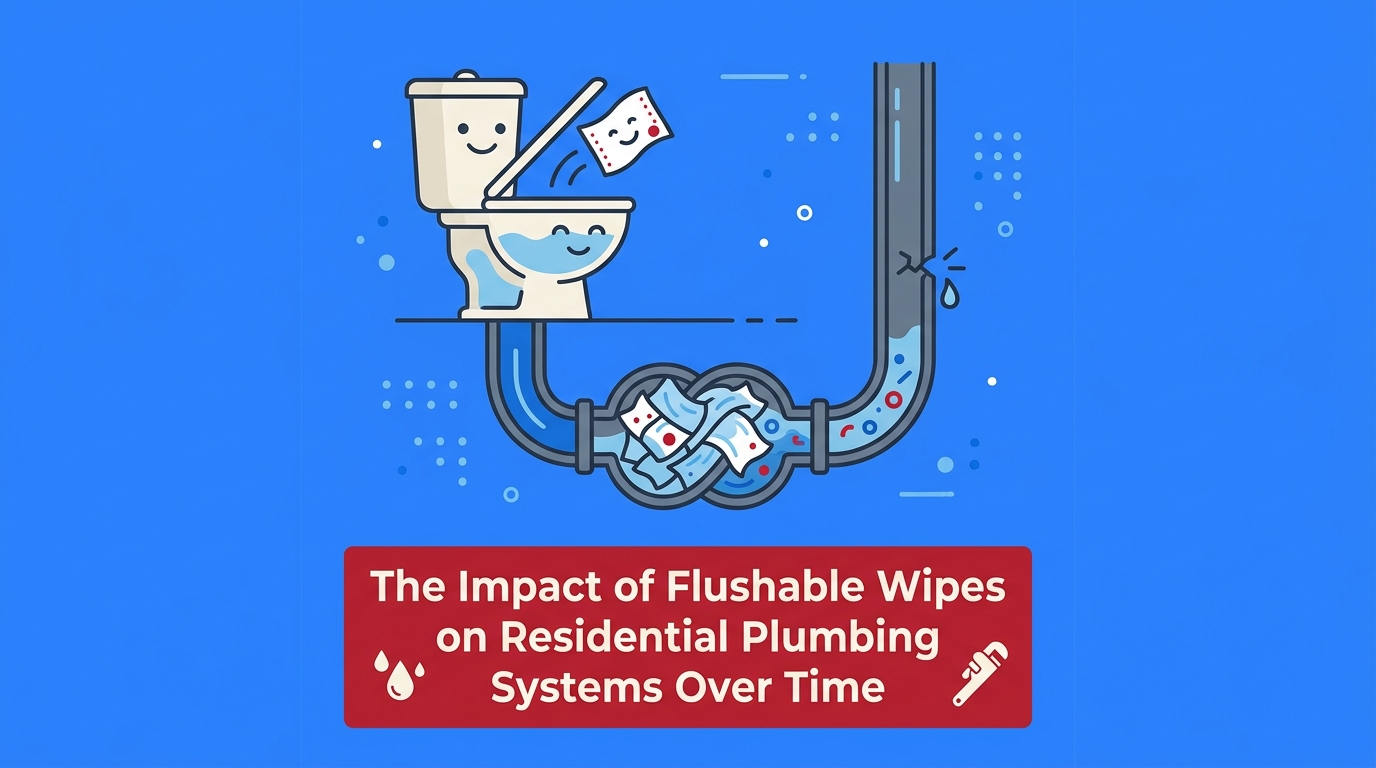
Your drains are moving in slow motion, the toilet gurgles every time you run the sink, and you are starting to see the impact of flushable wipes on residential plumbing systems over time. Many homeowners assume that if a product is marketed as safe to flush, it will travel through their pipes just as seamlessly as normal bathroom tissue. Unfortunately, this common misconception leads to severe blockages and costly damage deep within your home's infrastructure.
The concrete problem lies in the mechanical reality of how these products behave once they leave your toilet bowl. Synthetic wipes do not disintegrate. Instead, they remain entirely intact as they travel through your sewer lateral. This becomes especially dangerous for older cast iron and clay sewer lines prone to scaling and minor root intrusion, where even a single intact wipe can snag and anchor a massive clog. Understanding this physical reality is the first step toward protecting your home. If you are already experiencing recurring backups, stopping the use of these products and seeking professional residential plumbing services is the only way to restore your system's proper flow.
The problem: You flush a wipe down the toilet, and it disappears from the bowl instantly. This creates a false sense of security, leading you to believe the wipe has safely navigated your entire plumbing system. However, clearing the porcelain bowl is completely different from successfully navigating the long, horizontal journey through your main sewer lateral to the municipal connection.
The cause: Standard toilet paper is specifically engineered to break down in water within minutes. When you drop normal tissue into a bowl of water, it immediately begins to dissolve into a soft pulp. Conversely, the material disintegration time of wipes versus standard toilet paper is vastly different. Even those labeled "flushable" are typically woven with synthetic fibers, plastics, or reinforced materials designed to hold up during use. According to standards established by the Water Environment Federation (WEF) and the International Water Services Flushability Group (IWSFG), these durable materials can remain completely intact for weeks or even months while submerged in water.
The solution: Educating yourself on the physical differences between these materials helps you make safer choices for your home. If you want to dive deeper into the marketing claims versus the scientific reality, you can learn more about the truth about whether flushable wipes are actually safe to flush. By understanding how these materials behave, you can avoid introducing indestructible fabrics into a system designed only for water and rapidly degrading organic matter.
Modern personal hygiene wipes are manufactured to be strong and tear-resistant. To achieve this, manufacturers use a process called hydroentanglement, blending natural wood pulp with synthetic polymers like polyester or rayon. While this makes the product highly effective for cleaning, it makes it disastrous for plumbing.
Water saturation does not equal material degradation. When synthetic fibers become saturated, they simply become heavy, wet cloth. They do not lose their tensile strength. This means that as they travel through your pipes, they maintain their shape, size, and structural integrity, ready to catch on the first obstacle they encounter.
• Disintegration Time — Standard Toilet Paper: 1 to 3 minutes in agitated water — Synthetic "Flushable" Wipes: Weeks to months (often remaining fully intact)
• Material Composition — Standard Toilet Paper: Short-fiber wood pulp — Synthetic "Flushable" Wipes: Woven synthetic polymers and reinforced fibers
• Tensile Strength When Wet — Standard Toilet Paper: Extremely low (breaks apart easily) — Synthetic "Flushable" Wipes: High (resists tearing and stretching)
• Interaction with Pipe Snags — Standard Toilet Paper: Dissolves and washes past obstructions — Synthetic "Flushable" Wipes: Hooks onto jagged edges and anchors in place
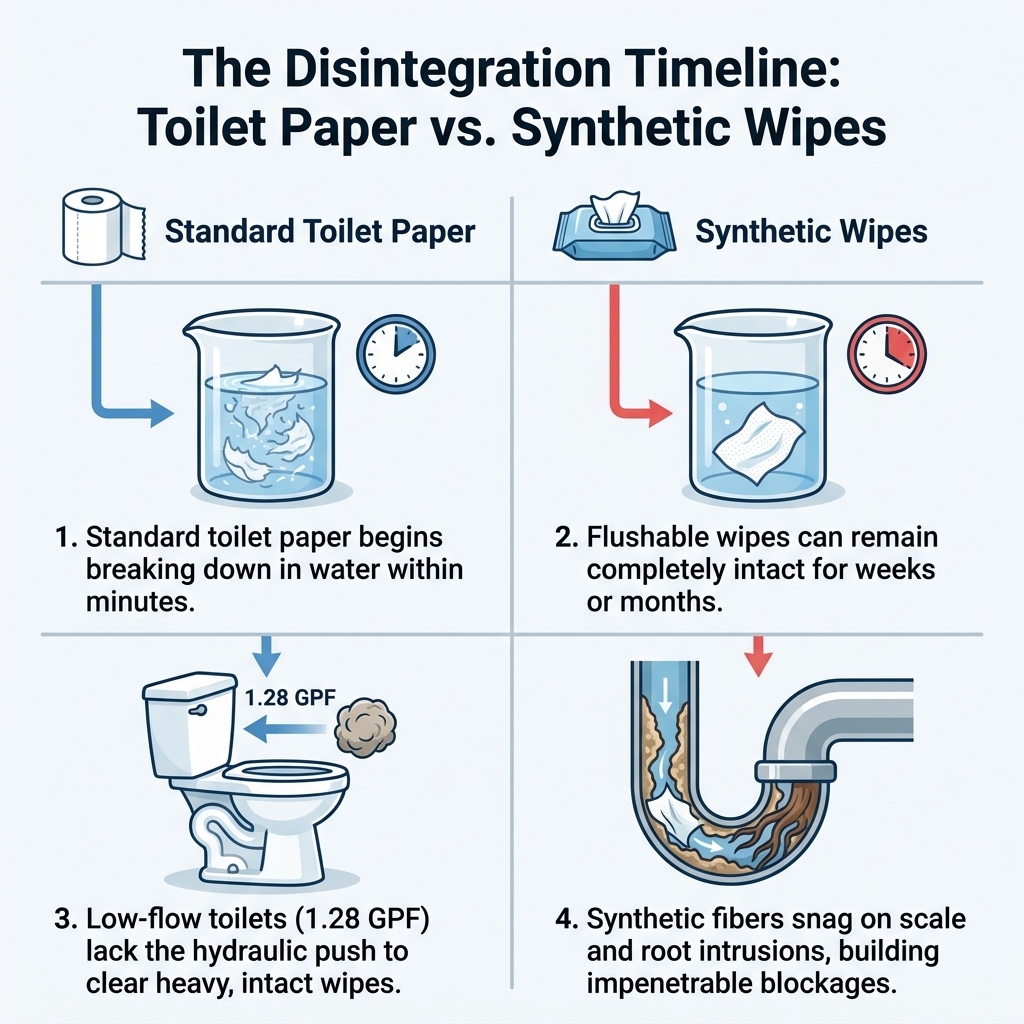

To understand why non-degrading materials are so dangerous, you have to look at the internal environment of your home's plumbing. While PVC pipes in brand-new homes are relatively smooth, the vast majority of established neighborhoods rely on aging infrastructure. The interior walls of these pipes are rarely perfectly smooth, and even microscopic jagged edges act like hooks for synthetic materials.
Because wipes maintain their tensile strength, a single wipe catching on a rough patch creates a stationary net. This is a slow, cumulative process. The first wipe might not cause a noticeable backup, but it creates an anchor point for everything else that follows. This mechanical trapping is especially prevalent in older cast iron and clay sewer lines prone to scaling and minor root intrusion. When this accumulation reaches a critical mass, you will inevitably need professional main sewer line repair and clearing to restore function.
If your home was built before the 1980s, you likely have cast iron sewer pipes. Over decades of use, cast iron undergoes a natural oxidation process. This creates tuberculation—a buildup of rust, minerals, and organic matter that forms a rough, sandpaper-like interior crust known as scaling.
The snagging effect: When a heavy, intact wipe drags along this scaled surface, the synthetic fibers easily hook onto the sharp, calcified mineral deposits. Because the wipe does not dissolve, it stays pinned against the pipe wall, waiting to catch the next piece of debris.
Many mid-century and older homes feature vitrified clay sewer laterals. While clay is highly durable, it is installed in short sections, meaning there are dozens of joints connecting the pipe under your yard. Over time, the ground shifts, and these joints weep tiny amounts of moisture.
The root barrier: Thirsty trees and shrubs seek out this moisture, sending hair-like feeder roots directly into the pipe joints. Standard toilet paper turns to mush and flows right through these fine root webs. Synthetic wipes, however, tangle directly into the roots, weaving an impenetrable, reinforced barrier that completely chokes off the flow of wastewater.
The problem: The plumbing industry has made massive strides in water conservation, but these advancements inadvertently compound the dangers of flushing synthetic materials. In drought-conscious environments like the Sacramento region, homeowners and builders heavily utilize low-flow and ultra-low-flow fixtures to conserve vital resources.
The cause: Modern low-flow toilets typically use 1.28 gallons per flush (GPF) or less. While this is fantastic for saving water and lowering utility bills, it fundamentally changes the physics of how waste moves through your pipes. The concept of "hydraulic push" dictates that a specific volume and velocity of water is required to carry solid waste all the way down the lateral line to the city sewer. Older, high-volume toilets (using 3.5 to 5 gallons per flush) generated a massive wave of water that could sometimes force heavy, intact wipes past pipe imperfections. Today's low-flow toilets simply do not provide the water volume needed to push heavy, non-degrading wipes through older sewer laterals.
The solution: You must recognize that the material disintegration time of wipes versus standard toilet paper makes them entirely incompatible with modern water-saving fixtures. Saving water is essential, but it makes the use of "flushable" wipes significantly more dangerous for your plumbing system. The less water you use per flush, the more critical it is that you only flush rapidly dissolving organic tissue.
A severe main line blockage rarely happens overnight. It is the result of a compounding effect that builds silently over months or even years. Because the material doesn't break down, the problem only grows worse with every flush. This timeline illustrates exactly how older cast iron and clay sewer lines prone to scaling and minor root intrusion eventually fail under the strain of synthetic materials.
The process begins innocently enough. A single synthetic wipe is flushed and travels out of the house into the main lateral line. It encounters a patch of rough cast iron scale or a tiny tree root intrusion at a clay pipe joint. The durable fibers hook onto the imperfection. Because the water flow from the toilet is not strong enough to tear the synthetic fabric, the wipe acts as a permanent anchor point on the pipe wall.
Once the first wipe is anchored, the pipe diameter is slightly reduced. More importantly, a sticky surface has been created. Over the following weeks, additional flushed wipes catch onto the first one. Fats, oils, grease, soap scum, and organic waste all adhere to this growing synthetic net. This forms the beginning of a residential "fatberg"—a solid, hardened mass of non-biodegradable waste. During this stage, your drains may still seem to work normally, giving you a false sense of security that flushing wipes is perfectly fine.
As the mass continues to grow, it severely restricts the inner diameter of the pipe. Water struggles to pass through the narrowed opening. Eventually, a final flush of debris completely plugs the remaining gap. The mass hardens into an impenetrable plug, blocking the main lateral line entirely. At this stage, wastewater has nowhere to go but backward, resulting in raw sewage backing up into your lowest tubs, showers, or floor drains.
When faced with a slow drain or a backup, many homeowners immediately reach for a bottle of liquid drain cleaner. While these products are heavily marketed as a quick fix, they are completely ineffective against the specific type of blockage caused by synthetic wipes.
The wrong chemistry: Commercial drain cleaners rely on highly caustic or acidic chemicals designed to generate heat and dissolve organic matter. They are formulated to eat through hair, grease, and basic food waste. They are absolutely not designed to dissolve synthetic plastics, reinforced polymers, or the woven polyester blends found in personal hygiene wipes. The material disintegration time of wipes versus standard toilet paper remains unchanged even when soaked in these harsh chemicals.
The hidden danger: Pouring chemical cleaners onto a synthetic wipe clog simply traps corrosive liquids inside your pipes. Because the clog will not dissolve, the chemicals sit stagnant against the pipe walls. If you have older cast iron or galvanized steel pipes, these trapped chemicals will rapidly accelerate corrosion, eating away at the metal and potentially causing a pipe collapse. Furthermore, mechanical blockage requires mechanical removal. If you pour chemicals down the drain, you are creating a hazardous, toxic environment for the professional plumber who eventually has to open the line to physically extract the blockage.
The problem: Because synthetic clogs build up slowly, they often go unnoticed until a catastrophic failure occurs. If you know what to look for, you can catch an accumulating wipe clog before it forces raw sewage into your home.
The cause: As the synthetic mass grows inside older cast iron and clay sewer lines prone to scaling and minor root intrusion, it restricts the venting and flow of the entire house. You will begin to notice early warning signs: recurring slow drains across multiple fixtures, gurgling sounds coming from the toilet when the bathtub drains, and unpleasant sewage odors lingering near low-lying drains. Plunging a toilet might push a localized clog through the trap, but it only provides temporary relief if the massive wipe accumulation is sitting deep in the main sewer lateral.
The solution: Pay attention to how your home sounds and drains, especially during periods of heavy use. One local homeowner woke up on a freezing winter morning to find their main sewer line completely backed up. Because the system was stressed from heavy holiday use, it failed suddenly overnight. A technician arrived within hours, diagnosed a massive blockage deep in the line, and successfully cleared it while going over future prevention options. If you notice persistent gurgling or slow drains in a home where wipes have been used, do not wait for a total failure—advise immediate professional inspection.
When a plumbing system backs up because of an accumulated synthetic mass, chemical liquids and basic plunging will not solve the problem. Resolving this issue requires professional mechanical intervention designed to physically break apart and extract the indestructible materials.
Mechanical clearing tools: Professionals utilize heavy-duty equipment to tackle these severe blockages. Specialized motorized augers (plumber's snakes) are used to cut through the synthetic mass and retrieve the tangled wipes. For more stubborn accumulations, hydro-jetting is often employed. This process uses highly pressurized water to scour the interior walls of the pipe, slicing through root intrusions and blasting away the sticky buildup of scale, grease, and synthetic fibers.
The value of camera inspections: Once the line is clear, a high-definition sewer camera inspection is critical. This allows the technician to identify the exact underlying pipe imperfections—like cast iron scaling or clay pipe root intrusions—that caused the wipes to snag in the first place.
Honest, budget-conscious solutions: The goal of professional intervention is not just to clear the immediate emergency, but to provide honest, budget-conscious education. By understanding how to properly care for older cast iron and clay sewer lines prone to scaling and minor root intrusion, you can avoid the massive expense of a full sewer line replacement. Routine maintenance and proper flushing habits are your best defense. Exploring options like a preventative plumbing maintenance membership ensures your system is regularly inspected and cleared before minor snags turn into major disasters.
The convenience of a personal hygiene wipe is never worth the devastating impact it can have on your home's infrastructure. The science is clear: the material disintegration time of wipes versus standard toilet paper proves that "flushable" does not mean degradable. These synthetic fibers resist breakdown, snag on the rough interior walls of aging pipes, and slowly build impenetrable blockages that chemical cleaners cannot touch.
Protecting your home requires a shift in daily habits. Keep a small wastebasket next to the toilet for all synthetic products, and only flush human waste and standard toilet paper. If your home has a history of wipe usage and you are noticing the early warning signs of a sluggish system, proactive care is essential. Reach out for professional mechanical clearing today to restore your pipes, protect your property, and keep your plumbing flowing smoothly for years to come.
How long does it take for flushable wipes to break down?
Flushable wipes can take weeks, months, or even years to break down in a residential plumbing system. Unlike standard toilet paper, which dissolves into a pulp within minutes, wipes are manufactured with durable synthetic fibers that resist water degradation. This allows them to remain completely intact as they travel through your sewer lines.
Why is my toilet clogged after using flushable wipes?
Your toilet is clogged because flushable wipes do not dissolve, allowing them to catch on minor imperfections inside your pipes. When a wipe snags on rust, scale, or a tiny tree root, it acts as a net that catches subsequent wipes and waste. Over time, this builds a solid mass that completely blocks the flow of water.
How to unclog a toilet backed up by non-degrading wipes?
Unclogging a toilet backed up by non-degrading wipes requires physical mechanical removal, such as using a professional-grade plumbing auger. Plunging often fails because it cannot break apart the strong synthetic fibers, and chemical cleaners will not dissolve the plastic materials. If the clog is deep in the main line, you will need a professional to clear the blockage safely.
Can you use flushable wipes if you have older plumbing?
It is highly recommended that you never use flushable wipes if you have older plumbing. Older homes typically have cast iron or clay sewer lines that develop rough scaling or root intrusions over the decades. These rough interiors act like hooks, easily snagging intact wipes and causing severe, recurring blockages.
Do low-flow toilets increase the risk of flushable wipe clogs?
Yes, low-flow toilets significantly increase the risk of wipe-induced clogs. Because these fixtures use 1.28 gallons per flush or less, they lack the high volume of water (hydraulic push) needed to force heavy, intact synthetic materials all the way through a long horizontal sewer lateral.
Why do chemical drain cleaners fail on flushable wipe clogs?
Chemical drain cleaners fail because they are formulated to dissolve organic matter like hair, grease, and food waste, not synthetic plastics or reinforced polymers. Pouring chemicals onto a wipe clog will not break down the fabric; it simply traps highly corrosive liquids inside your pipes, which can cause severe damage to older metal plumbing.
See what our satisfied customers have to say about their experience with Always Affordable
Plumbing & HVAC.

"Chappy was very skilled in his knowledge of my HVAC unit. I greatly appreciate the quick response and experienced tech. The whole endeavor was made less stressful by his humor and honest conversation. I find comfort in knowing I now have a shop i trust for the next time."
"Tony, James, Ronnie did an amazing job setting up our new AC! They were quick, efficient, considerate, and polite! We appreciate them scheduling us in on such short notice. Definitely recommend this company!"
"Prompt, professional service with kindness and care. They came out to address both plumbing and AC issues. I received a courtesy call before they arrived. All issues were resolved the same day with integrity and respect. Thankful for businesses like this. Absolutely recommend to those that I love."
"Excellent service! Jason came out promptly and in addition to doing my outside faucet he also put in new irrigation equipment! All done perfectly! Jason was lovely"
"Honest with the assessment; friendly and good manners. No high pressure sales. Just good to honest "tell it like you see it" Thought my kitchen disposer needed an overhaul. But Jason, there Plumber gave me an honest lesson on what was really happening. Saved me hundreds, if I went the route of replacing. Thank you!"
"Absolutely 5 stars. If you are looking for affordable ,professional and kind. Chappy was excellent and very knowledgeable . I called in the morning because my air conditioner stopped working he was here within hours and fixed my air with a smile. I highly recommend Chappy and Always Affordable plumbing and Hvac."
"Scott and James were great. They got there quickly and diagnosed the problem with my A/C.They did a very thorough job testing everything. Sent me pictures and called to keep me informed. Got it done the next day and everything is working fine. Be glad when I get home so I can enjoy my new system. Thanks guys for a great job."
"Chappy was very helpful. He knew our issue right away, cleaned our coils. He also came on the same day we called and got our AC blowing cold air again."
"After some timing ’curfuffles’ the Tech Jason arrived and not only completed a speedy install on my toilet, he was personable & professional. Because of the timing issues Jason was attentive and showed up with everything needed! No extra store runs 😊 I was very comfortable with having this Tech in my Daughter’s home. We will definitely use this Service again."