Seasonal Home Maintenance Checklist: Preventing HVAC and Plumbing Emergencies
Prevent HVAC emergencies with a seasonal home maintenance checklist. Why proactive scheduling beats waiting for sudden failures. See what needs attention now.



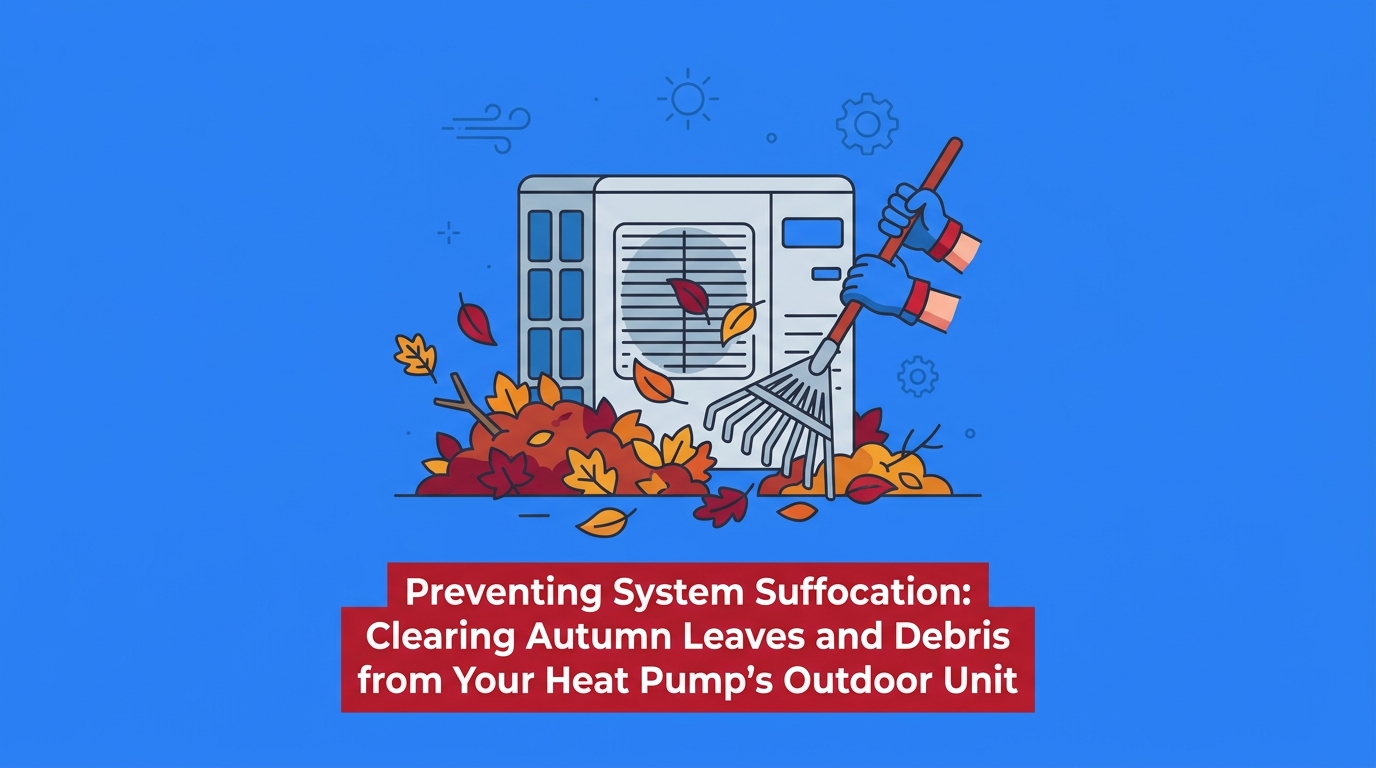
The sudden arrival of crisp weather brings beautiful changing colors, but that heavy autumn foliage drop signals a critical vulnerability for your home comfort equipment. Clearing Autumn Leaves and Debris from Your Heat Pump's Outdoor Unit is the single most important step you can take to protect your system as the seasons change. When leaves, twigs, and pine needles accumulate around your exterior equipment, they create a dense barrier that blocks the airflow your system desperately needs to operate. This leads directly to heat pump outdoor coil suffocation, a condition that forces your unit to work twice as hard to produce the same amount of heat.
While some basic exterior clearing is perfectly safe for homeowners to tackle on a weekend, understanding the strict boundaries of do-it-yourself maintenance is critical for the long-term health of your system. Knowing exactly what you can safely brush away—and what requires a professional touch—prevents accidental damage and costly mid-winter breakdowns. For comprehensive care, exploring professional Heat Pump Services ensures your equipment is fully prepared for the heavy lifting of the heating season.
To understand why leaf buildup is so destructive, you have to look at how your system actually generates heat. Unlike a traditional gas furnace that burns fuel to create warmth, a heat pump absorbs ambient heat from the outside air and transfers it inside your home. This relies entirely on a massive volume of air passing over the outdoor condenser coils. When leaves block those coils, the system experiences severe airflow clearance and system suffocation. The unit can no longer breathe, which triggers a cascade of mechanical failures and efficiency drops.
The Problem: A layer of dead leaves acts as an unwanted, highly effective insulator. Instead of drawing in fresh air, the outdoor unit is choked by a blanket of organic material. Because the system cannot extract enough heat from the restricted airflow, the indoor air remains lukewarm, and the thermostat keeps calling for heat.
The Cause: This constant demand places immense mechanical stress on the compressor. The compressor is the heart of your heat pump, responsible for pumping refrigerant through the lines. When the system is suffocating, the compressor runs continuously, overheating and consuming vast amounts of electricity. Furthermore, this relentless operation puts dangerous strain on the reversing valve, the component responsible for switching the system between cooling and heating modes. If you are currently transitioning your heat pump for autumn, a suffocated coil is the fastest way to cause that valve to fail.
The Solution: Maintaining pristine airflow clearance allows the system to transfer heat efficiently, keeping energy consumption low and protecting the compressor from premature burnout.
The relationship between airflow volume and heating efficiency is absolute. Consider the specific impacts of restricted coils:
• Clear Coils — Airflow Volume: Optimal (100%) — Compressor Strain: Normal operating temperature — Energy Consumption: Standard baseline
• Light Leaf Buildup — Airflow Volume: Reduced (75-85%) — Compressor Strain: Elevated operating temperature — Energy Consumption: Noticeable increase
• Severe Suffocation — Airflow Volume: Critically Low (<50%) — Compressor Strain: High risk of overheating/burnout — Energy Consumption: Spiking utility bills
When leaves trap moisture against the outdoor coil, they also interfere with the system's defrost cycle. Heat pumps naturally build up a light layer of frost in cold weather, which they melt away automatically. If a thick layer of wet, decaying leaves is plastered against the unit, the defrost cycle cannot effectively clear the ice, leading to a completely frozen system.
The threat of autumn foliage drop isn't just about leaves falling gently from the trees directly above your unit. Regional weather patterns play a massive role in how quickly your system can become suffocated. In areas like the Sacramento Valley, dry, breezy autumns create high-velocity debris movement. The wind acts as a funnel, sweeping leaves, dirt, and loose vegetation from across the neighborhood and driving them directly into the louvered side panels of your outdoor unit.
This wind-driven accumulation happens remarkably fast. A heat pump that looked perfectly clear on a Tuesday afternoon can be completely choked by debris by Wednesday morning following a strong overnight windstorm. The force of the wind packs the yard debris tightly against the condenser coils, creating a dense mat that restricts airflow far more severely than a loose pile of leaves would.
• The Plastering Effect: When dry, windblown leaves settle against the unit and are subsequently dampened by morning dew or light autumn rain, they form a papier-mâché-like crust over the intake vents.
• Fire Hazards: Extremely dry, brittle leaves packed tightly around electrical components and high-voltage wiring present a distinct fire hazard during unseasonably warm, windy autumn days.
• Trapped Moisture and Corrosion: Wet debris sitting against the metal casing for weeks accelerates rust and corrosion, prematurely aging the exterior housing of your expensive equipment.
Because of these rapid changes, homeowners must perform frequent visual inspections during peak wind events. Checking the unit once at the beginning of the season is never enough. You should make it a habit to walk past the outdoor unit after every significant breezy day to ensure the vents remain unobstructed.
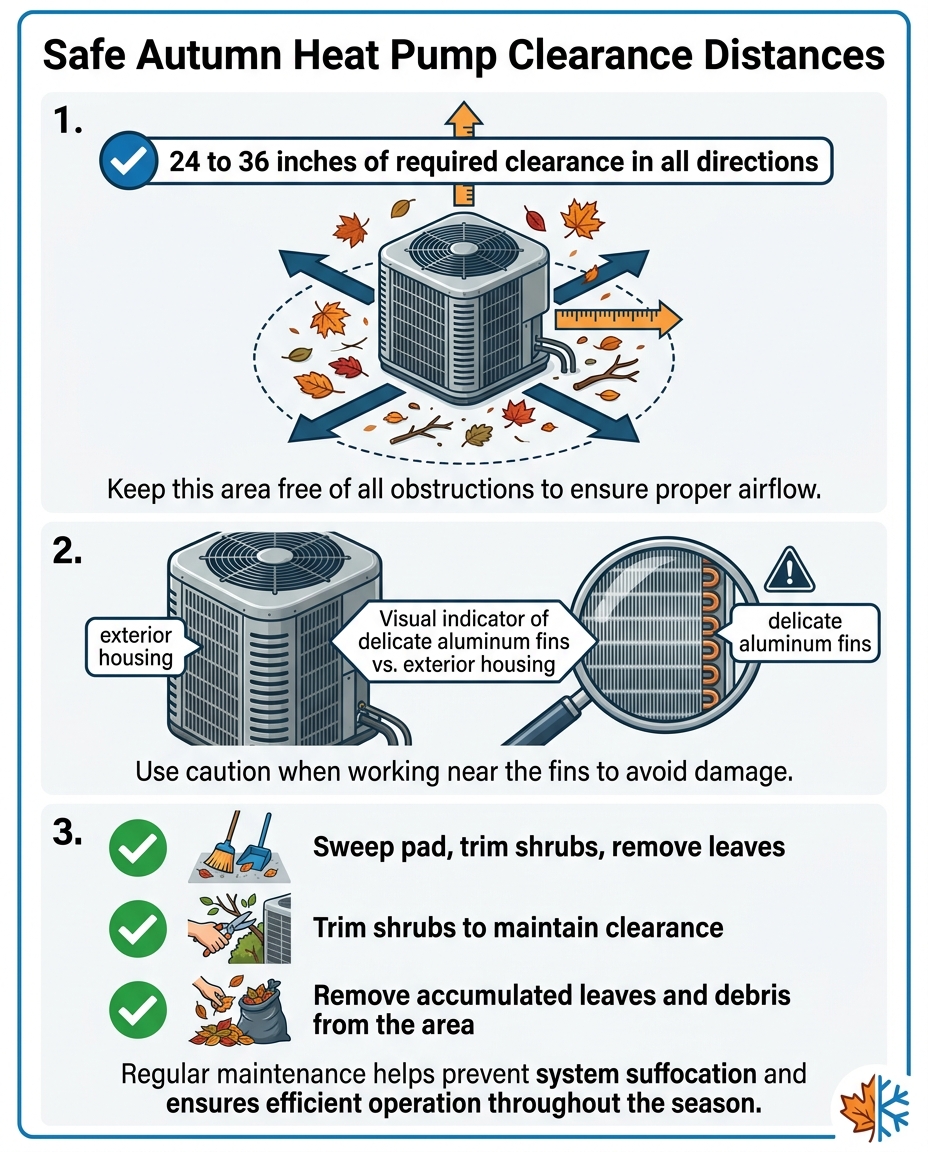
Maintaining proper airflow clearance and system suffocation prevention is a collaborative effort between the homeowner and the HVAC technician. While internal maintenance is strictly for professionals, the exterior environment is your responsibility. The U.S. Department of Energy explicitly recommends maintaining a 24 to 36-inch clear space in all directions around your outdoor heat pump unit. This perimeter ensures the system has access to the massive volume of ambient air required for efficient heat transfer.
Here is a safe, actionable checklist for maintaining your unit's exterior clearance:
1. Establish the Perimeter: Measure a two-foot to three-foot radius around the entire unit. This zone must remain entirely free of vegetation, stored items, and yard debris.
2. Hand-Pick Large Debris: Put on a pair of heavy gardening gloves and carefully pick up large accumulations of leaves, twigs, and pinecones from the base of the unit. Never use a rake or a shovel near the equipment, as one slip can dent the casing or puncture a line.
3. Brush Away Loose Leaves: Use a soft-bristled hand broom (like a car snow brush) to gently sweep away leaves clinging to the outside of the louvered panels. Always brush in the direction of the metal slats to avoid bending them.
4. Clear the Overhead Space: Ensure there is at least five feet of vertical clearance above the unit. Trim back any overhanging branches that threaten to drop debris directly into the top fan grille.
The perimeter rule applies to more than just fallen leaves. As you prepare your yard for winter, you must actively manage the space around the heat pump. Trim back any encroaching shrubs, ornamental grasses, or autumn vegetation that has grown too close during the summer. Relocate stacked firewood, yard tools, garden hoses, or seasonal decorations well away from the unit. Finally, regularly sweep the concrete mounting pad or composite base to prevent dirt and small organic matter from washing under the unit during rainstorms.
The Hosing vs. Dry Brushing Debate: Many homeowners wonder if they should hose down the outside of the unit to clear stubborn dirt. As a general rule, dry brushing with a soft tool is always safer for a homeowner. While light hosing of the exterior cabinet is sometimes permissible, high-pressure water can easily bend delicate fins or drive dirt and wet leaves deeper into the unit. When in doubt, stick to dry removal methods and leave the deep washing to the professionals.

While clearing the exterior perimeter is a safe and necessary homeowner task, the line between helpful maintenance and dangerous DIY interference is sharply drawn at the unit's outer casing. You should never, under any circumstances, open the cabinet, remove the protective grilles, or attempt to clean the internal components of your heat pump yourself.
The Fragility of Aluminum Fins: Just beneath the protective metal louvers sits the condenser coil, which is wrapped in thousands of paper-thin aluminum fins. These fins are responsible for facilitating heat transfer. They are incredibly delicate and can be bent or crushed by the slightest pressure from a stiff brush, a vacuum nozzle, or even a strong spray of water. Once these fins are flattened, airflow is permanently blocked in that section, leading to the exact system suffocation you were trying to prevent. Technicians use specialized tools, called fin combs, to carefully straighten them—a process that requires extensive training.
Electrical and Refrigerant Hazards: Beyond the fragile fins, the interior of a heat pump is a highly hazardous environment. The system operates on high-voltage electricity (typically 240 volts) and houses a massive capacitor that stores a lethal electrical charge even after the power is disconnected at the breaker. Additionally, the unit contains copper lines filled with refrigerant under extreme pressure. Accidentally bumping or stressing a refrigerant line while trying to clean out wet leaves can cause a catastrophic leak, resulting in severe chemical exposure and a massive repair bill.
Internal coil cleaning, debris removal from the base pan, and fan motor inspections are strictly jobs for licensed HVAC professionals. Crossing this boundary not only voids your manufacturer warranty but puts your physical safety at serious risk.
Once you have secured the exterior perimeter, the next logical step for long-term system health is addressing the internal buildup that naturally occurs over time. Even with the best exterior maintenance, fine dirt, pollen, and pulverized leaf matter will eventually make their way inside the cabinet, coating the coils and settling in the base pan.
This is where professional preventative maintenance becomes invaluable. During an internal coil cleaning, a licensed technician safely powers down the unit, discharges the electrical components, and opens the cabinet. They manually remove any organic debris that has bypassed the outer guards. Then, they apply a specialized, non-acidic foaming chemical cleaner to the condenser coils. This cleaner pushes dirt out from the inside of the fin structure without damaging the delicate aluminum. Finally, they gently rinse the system, check the fan motor, clear the defrost drainage holes, and verify the amp draw on the compressor.
Proactive interior cleaning is the most effective way to prevent sudden, expensive heating failures in the dead of winter. It frames the tune-up not as an unneeded expense, but as a critical investment that protects the lifespan of your most expensive components—namely the compressor and the reversing valve. Always Affordable Plumbing & HVAC champions a transparent, budget-conscious approach to preventative maintenance, emphasizing homeowner empowerment over aggressive upselling. We want you to handle the free, safe exterior clearing yourself, so you only pay for the technical internal maintenance that truly requires a license.
For homeowners looking to keep their systems running efficiently year after year without unexpected costs, enrolling in a Routine Maintenance Plan ensures these vital internal cleanings happen on schedule, right before the heaviest seasonal demands.
An outdoor heat pump requires a minimum of 24 to 36 inches of clear space in all directions to ensure proper airflow. This two-to-three-foot perimeter allows the system to pull in the vast amounts of ambient air needed for efficient heat transfer. Additionally, you should maintain at least five feet of vertical clearance above the unit so the exhaust fan can push air up and away without restriction. Failing to maintain this clearance forces the compressor to overwork and drives up your energy costs.
Yes, it is perfectly safe to remove leaves from the exterior perimeter of your heat pump. You should hand-pick large debris away from the base and gently brush loose leaves off the outside of the metal louvers using a soft-bristled brush. However, you must never open the cabinet, remove the grilles, or attempt to clean the delicate internal aluminum fins yourself, as this can cause severe damage and presents significant electrical hazards.
No, you should never cover your heat pump while it is operational. Covering a heat pump severely restricts the airflow required for the system to extract heat from the outside air, leading to immediate system suffocation and potential compressor burnout. Even during periods when the system is off, wrapping the unit in a tarp can trap moisture inside the casing, accelerating rust and creating an inviting environment for rodents and pests seeking winter shelter.
While gentle rinsing of the exterior casing is sometimes permissible according to certain manufacturer guidelines, it is generally discouraged for homeowners. High-pressure hosing can easily bend the delicate aluminum fins located just inside the louvers, permanently blocking airflow. Furthermore, spraying water incorrectly can drive wet leaves and dirt deeper into the unit's base pan. It is always safer to use dry brushing for the exterior and consult a professional for thorough internal wet cleaning.
You should visually inspect your outdoor heat pump unit at least once a week during the autumn months. This frequency should increase to daily checks immediately following heavy windstorms, heavy rains, or peak foliage drop periods. Windblown debris can accumulate and pack tightly against the intake louvers overnight, so frequent quick visual checks are the best defense against sudden airflow restriction and unexpected system strain.
Maintaining a clear perimeter around your outdoor unit is a straightforward task that pays massive dividends in reliability and energy efficiency. By keeping autumn foliage drop away from the exterior louvers, you prevent the mechanical strain and system suffocation that cause premature compressor failure. Take a few minutes this weekend to walk around your property, clear away encroaching vegetation, and sweep the concrete pad clean.
Once you have handled the exterior, it is time to secure the internal health of your equipment. Don't wait until the first freezing night to discover your system is struggling to breathe. Talk to an expert today to schedule your professional internal coil cleaning and comprehensive Heating System Maintenance, ensuring your home stays reliably warm all winter long.
See what our satisfied customers have to say about their experience with Always Affordable
Plumbing & HVAC.

"Chappy was very skilled in his knowledge of my HVAC unit. I greatly appreciate the quick response and experienced tech. The whole endeavor was made less stressful by his humor and honest conversation. I find comfort in knowing I now have a shop i trust for the next time."
"Tony, James, Ronnie did an amazing job setting up our new AC! They were quick, efficient, considerate, and polite! We appreciate them scheduling us in on such short notice. Definitely recommend this company!"
"Prompt, professional service with kindness and care. They came out to address both plumbing and AC issues. I received a courtesy call before they arrived. All issues were resolved the same day with integrity and respect. Thankful for businesses like this. Absolutely recommend to those that I love."
"Excellent service! Jason came out promptly and in addition to doing my outside faucet he also put in new irrigation equipment! All done perfectly! Jason was lovely"
"Honest with the assessment; friendly and good manners. No high pressure sales. Just good to honest "tell it like you see it" Thought my kitchen disposer needed an overhaul. But Jason, there Plumber gave me an honest lesson on what was really happening. Saved me hundreds, if I went the route of replacing. Thank you!"
"Absolutely 5 stars. If you are looking for affordable ,professional and kind. Chappy was excellent and very knowledgeable . I called in the morning because my air conditioner stopped working he was here within hours and fixed my air with a smile. I highly recommend Chappy and Always Affordable plumbing and Hvac."
"Scott and James were great. They got there quickly and diagnosed the problem with my A/C.They did a very thorough job testing everything. Sent me pictures and called to keep me informed. Got it done the next day and everything is working fine. Be glad when I get home so I can enjoy my new system. Thanks guys for a great job."
"Chappy was very helpful. He knew our issue right away, cleaned our coils. He also came on the same day we called and got our AC blowing cold air again."
"After some timing ’curfuffles’ the Tech Jason arrived and not only completed a speedy install on my toilet, he was personable & professional. Because of the timing issues Jason was attentive and showed up with everything needed! No extra store runs 😊 I was very comfortable with having this Tech in my Daughter’s home. We will definitely use this Service again."