
AC vs. Heat Pump: Options Comparisons for Homeowners Facing a System Failure
When your AC fails, choosing a replacement is a major choice. Review these options comparisons for homeowners to weigh SEER2 ratings and decide with confidence.



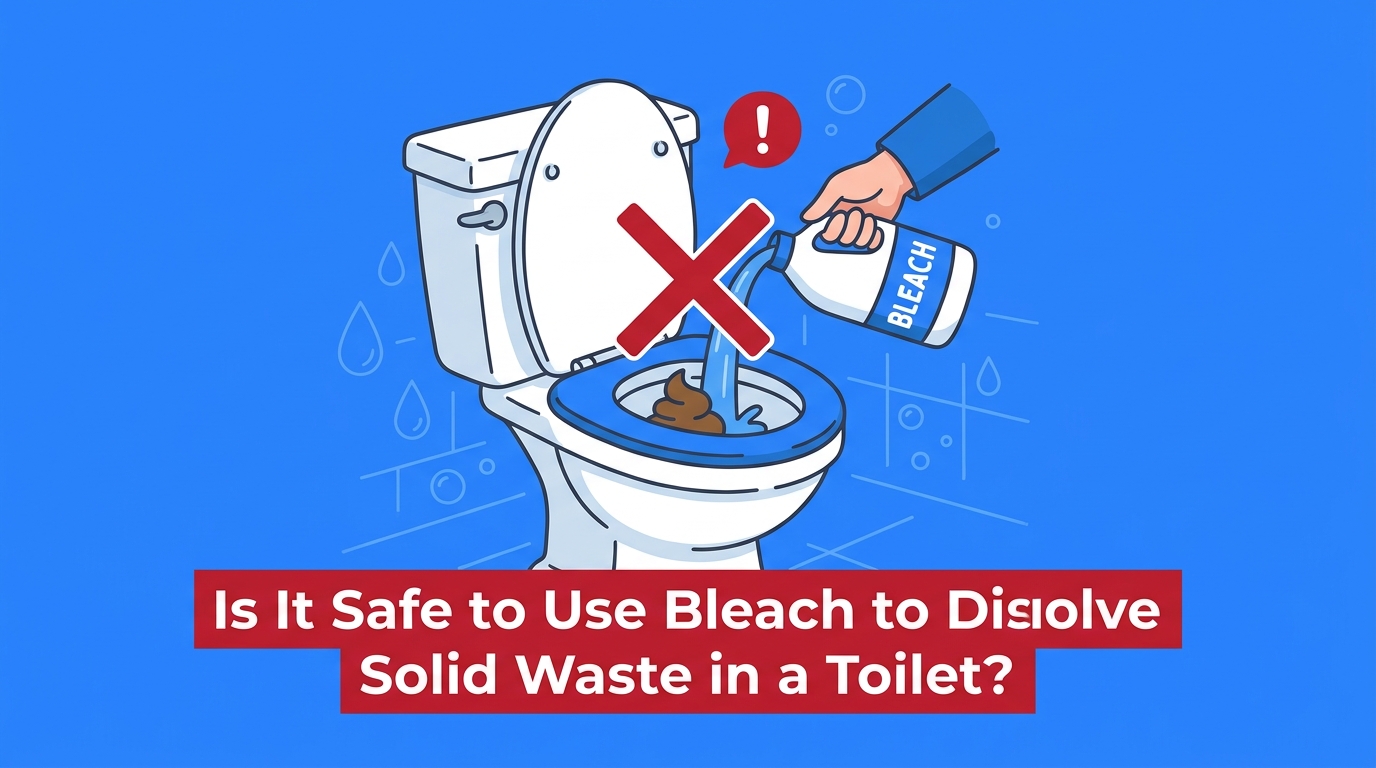
Pouring a standard 8-ounce cup of household laundry chemical into a stubborn bowl with a typical 2-inch trapway is a widely shared internet hack, but it is actually one of the most dangerous mistakes a homeowner can make. If you are standing in your bathroom wondering, is it safe to use bleach to dissolve solid waste in a toilet?, the answer is a definitive and urgent no. This common misconception stems from the idea that strong chemicals will melt away any blockage, but the reality of household plumbing is very different.
When you are dealing with a frustrating solid waste clog, the decision point usually comes down to grabbing a plunger or reaching for a bottle of bleach. Reaching for the chemical shortcut will not dissolve the blockage. Instead, it creates a stagnant, hazardous environment inside your bathroom. Mixing sodium hypochlorite with human waste initiates toxic chloramine gas production when mixed with ammonia in urine, presenting an immediate respiratory danger to anyone in the house.
Beyond the severe health risks, relying on caustic liquids causes irreversible damage to your home's infrastructure. When mechanical methods fail, turning to proper home plumbing services is the only safe and effective way to protect your property and your family from the fallout of chemical damage.
No, it is never safe to put bleach in a clogged toilet. If you are trying to figure out how to unclog a toilet with poop in it, you must use mechanical force, not chemical additives. Standard household bleach, which typically contains a 5% to 6% sodium hypochlorite concentration, is a powerful disinfectant designed strictly to kill bacteria and sanitize surfaces. It is not a solvent, meaning it lacks the chemical properties required to break down dense organic matter or toilet paper.
Pouring this chemical into a backed-up bowl creates two immediate, severe problems. First, it triggers toxic chloramine gas production when mixed with ammonia in urine, which can quickly overwhelm a poorly ventilated bathroom. Second, the caustic nature of the liquid begins eating away at the vital rubber flappers and wax ring seals that keep your system watertight.
Instead of clearing the pipe, you are left with a bowl full of highly toxic, corrosive water that still will not drain. Because the blockage remains completely intact, your only remaining option is to plunge a dangerous chemical mixture or call for professional plumbing repair to safely extract the mass and neutralize the hazard.
To understand why this popular hack fails, it helps to look at the basic science of household cleaners. Homeowners frequently search for what breaks down poop in toilet systems, assuming that any harsh liquid will do the job. However, chemicals fall into specific categories based on how they react with other substances.
A chemical solvent is designed to break the molecular bonds of a solid, effectively melting it into a liquid state that can wash away. Sodium hypochlorite—the active ingredient in household bleach—is a disinfectant. Its primary function is to rupture the cell walls of microscopic bacteria and viruses. It does absolutely nothing to dissolve bulk organic mass.
The Reality of Chemical Reactions:
• Disinfectants (Bleach): Kill germs, sanitize surfaces, and whiten fabrics. They do not melt solids.
• Biological Enzymes: Utilize natural bacteria to slowly digest organic waste over a 24 to 48-hour period, which is far too slow for an overflowing 1.6-gallon bowl.
• Mechanical Force: Uses water pressure and suction to physically dislodge the mass, which is the only immediate solution.
When you pour bleach onto a solid waste clog, it simply sits on top of the blockage. Because the water cannot drain, you have now created a stagnant, toxic pool. The longer this chemical sits in the bowl, the more time it has to attack the rubber flappers and wax ring seals connected to your system.
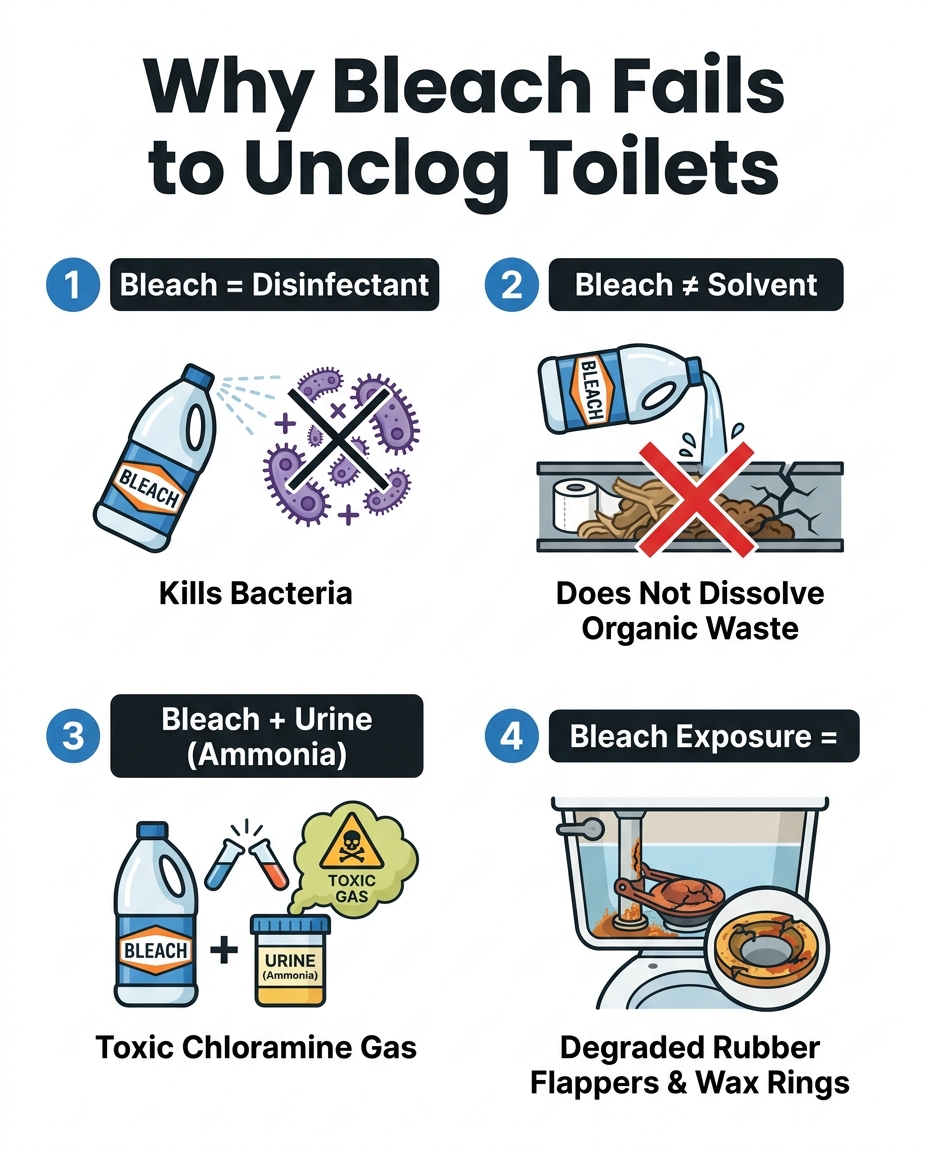

The most critical reason to keep bleach away from your plumbing is the immediate danger it poses to your respiratory system. Human urine naturally contains ammonia. When sodium hypochlorite meets ammonia, it triggers a rapid chemical reaction—often within seconds—that results in toxic chloramine gas production when mixed with ammonia in urine.
Symptoms of Chloramine Gas Exposure:
• Respiratory irritation: Coughing, wheezing, and shortness of breath.
• Eye and mucous membrane damage: Watery, burning eyes and a stinging sensation in the throat.
• Nausea: Dizziness and lightheadedness in enclosed spaces.
Bathrooms are typically small, enclosed spaces (often measuring just 40 to 50 square feet) with limited ventilation. Even if you run an exhaust fan, the gas can accumulate quickly, creating a highly hazardous environment. The situation often worsens when homeowners realize the bleach isn't working. A common, incredibly dangerous instinct is to pour a different cleaner into the bowl—such as an ammonia-based glass cleaner or an acidic drain clearing liquid—hoping a combination will work. Mixing these chemicals can produce chlorine gas, which is even more dangerous and can be fatal.
If you have already poured bleach into a clogged bowl, do not add anything else. Close the bathroom door, turn on the exhaust fan, open a window if possible, and wait for professional assistance. Never attempt to plunge a bowl filled with reactive chemicals, as the splashing can cause severe chemical burns to your skin and eyes.
Beyond the severe health risks, using caustic chemicals as a shortcut will systematically destroy the physical components of your fixture. Toilets are not solid porcelain all the way through; they rely on a network of flexible, vulcanized rubber parts to maintain watertight seals.
Continuous exposure to harsh disinfectants chemically degrades vulcanized rubber, often reducing the standard 5-year lifespan of a typical flapper to just a few months. When bleach sits in a clogged bowl, or when tablets are dropped into the upper tank, the chemical slowly eats away at the elasticity of these parts.
Critical Components at Risk:
• Rubber Flapper — Function: Seals the tank water from the bowl until flushed. — Result of Chemical Damage: Becomes brittle and warps, causing continuous "ghost flushing" and massive water waste.
• Wax Ring Seal — Function: Seals the base of the toilet to the floor's sewer pipe. — Result of Chemical Damage: Dries out and cracks, allowing sewer gases to escape and causing catastrophic sub-floor water leaks.
• Fill Valve Seals — Function: Regulates water entering the tank after a flush. — Result of Chemical Damage: Deteriorates, leading to a tank that never stops filling and constantly runs into the overflow tube.
A failed rubber flapper means your system will run constantly, driving up your monthly utility bills. A compromised wax ring is even worse. When the seal at the base of the fixture fails, every flush pushes a small amount of wastewater under your flooring. Over time, this rots the subfloor and creates a massive structural repair project that requires a professional to pull the entire fixture to fix. Protecting your rubber flappers and wax ring seals means keeping harsh chemicals out of the bowl entirely.
If you find yourself constantly battling stubborn blockages, the problem might not be excess waste at all. Frequent clogs are often a symptom of weak flush velocity. A toilet requires a fast, powerful surge of water to create the siphon action necessary to pull solid mass down the drain. When that surge is weakened, waste gets left behind in the trapway.
Municipal water quality plays a massive role in how well your plumbing performs over time. Sacramento's hard water often measures between 5 and 9 grains per gallon (gpg), containing high levels of calcium and magnesium, which accumulate in toilet siphon jets, reducing flush velocity and increasing the likelihood of solid waste clogs. The siphon jets are the small holes located under the rim of the bowl, along with a larger jet at the bottom.
As hard water flows through these jets day after day, mineral scale builds up and calcifies, effectively choking off the water supply. You might notice the water trickling straight down the sides of the bowl instead of swirling vigorously.
When the flush velocity drops, even a normal amount of tissue and waste will fail to clear the trap. Reaching for chemicals does absolutely nothing to remove this hardened mineral scale. The long-term solution requires proactive maintenance, such as professional descaling or jet cleaning, to restore the original water pressure. By addressing the root cause of the weak flush, you protect your rubber flappers and wax ring seals from unnecessary chemical exposure and stop the cycle of frequent backups.
When faced with a severe blockage, the safest approach is always mechanical agitation. If you are researching what breaks down poop in toilet fast, the answer is water pressure and suction.
The most effective tool for a homeowner is a 6-inch flange plunger. Unlike a standard cup plunger (which is flat and meant for sinks), a flange plunger has an extended rubber sleeve that fits perfectly into the drain opening. This creates a tight vacuum seal. By pushing down gently and pulling up forcefully, you force water back and forth against the mass, physically breaking it apart without introducing dangerous liquids into your home.
If you do not have the right tools on hand, there are alternative mechanical methods for unclogging a toilet without a plunger, such as using hot (not boiling) water and dish soap to lubricate the trapway. However, there is a distinct line between a simple DIY fix and a complex sewer issue.
During the heavy usage window of the winter holiday season, a typical pattern we see is homeowners trying to force a blockage that is actually located 10 to 15 feet deeper in the main sewer line. One local homeowner woke up on a cold winter night to a completely backed-up sewer line. Instead of pouring harsh chemicals down the drain, they called for help. Technicians Chris and Curtis arrived and used mechanical methods to successfully unclog the main line, rather than immediately recommending a costly replacement. This highlights the importance of diagnosing the real issue rather than guessing with store-bought liquids.
Knowing when to stop trying DIY methods is crucial for protecting your plumbing infrastructure. Stop plunging and call an expert if:
• Water backs up elsewhere: If flushing causes water to bubble up in your bathtub or shower, you have a main sewer line blockage, not a localized clog.
• Mechanical plunging fails: If a flange plunger yields no results after several vigorous attempts, the mass is likely lodged too deep or is too dense for manual suction.
• The bowl is completely full: If the water level is at the rim, further DIY attempts risk an unsanitary overflow that will damage your bathroom flooring.
Before exploring the answers below, if you are dealing with a severe blockage right now and need immediate Sacramento drain cleaning solutions, skip the DIY experiments and reach out for expert assistance. Otherwise, here are the direct answers to the most common questions regarding chemical use in plumbing.
No, bleach is a disinfectant, not a solvent, and cannot dissolve organic solid waste. Its chemical makeup is designed to rupture the cell walls of bacteria to sanitize surfaces, but it lacks the properties required to melt or break down dense organic matter. Pouring it on a clog will only create a stagnant pool of toxic water.
Mechanical force from a plunger or a closet auger is the fastest and safest method to break down a blockage. Chemical enzymes can technically digest waste, but they take 24 to 48 hours to work and are not meant for immediate, overflowing clogs. Physical agitation is the only immediate solution.
Never pour bleach down a clogged fixture due to the severe risk of toxic gas formation and damage to internal seals. Mixing this chemical with the ammonia naturally present in human waste creates dangerous chloramine gas, and the caustic liquid will rapidly degrade your vital rubber flappers and wax ring seals.
While safer than harsh chemicals, this mixture creates a weak fizzing reaction that is generally insufficient to break through a dense solid mass. The expanding bubbles look impressive, but they do not generate enough sustained pressure or solvent action to clear a tightly lodged blockage in the trapway.
Use a flange plunger to create a tight seal and force water pressure directly against the clog. If plunging fails, a professional closet auger can be used to physically break up the mass or hook the obstruction and pull it out. Both methods rely on safe, effective mechanical force.
The definitive verdict on household hacks is clear: bleach is never the answer for a clogged toilet. Reaching for a chemical shortcut will not dissolve the blockage, but it will put your respiratory health at risk and systematically destroy the rubber flappers and wax ring seals that keep your bathroom watertight.
When mechanical plunging fails to clear the line, it is time to step back and let an expert handle the situation. Always Affordable Plumbing emphasizes transparent, cost-effective professional solutions that safely clear clogs without ruining your plumbing infrastructure or risking your health. By relying on proper mechanical extraction for your home's 3-inch or 4-inch sewer lines and addressing root causes like hard water scale, you can restore your home's comfort quickly and safely.
See what our satisfied customers have to say about their experience with Always Affordable
Plumbing & HVAC.

"Chappy was very skilled in his knowledge of my HVAC unit. I greatly appreciate the quick response and experienced tech. The whole endeavor was made less stressful by his humor and honest conversation. I find comfort in knowing I now have a shop i trust for the next time."
"Tony, James, Ronnie did an amazing job setting up our new AC! They were quick, efficient, considerate, and polite! We appreciate them scheduling us in on such short notice. Definitely recommend this company!"
"Prompt, professional service with kindness and care. They came out to address both plumbing and AC issues. I received a courtesy call before they arrived. All issues were resolved the same day with integrity and respect. Thankful for businesses like this. Absolutely recommend to those that I love."
"Excellent service! Jason came out promptly and in addition to doing my outside faucet he also put in new irrigation equipment! All done perfectly! Jason was lovely"
"Honest with the assessment; friendly and good manners. No high pressure sales. Just good to honest "tell it like you see it" Thought my kitchen disposer needed an overhaul. But Jason, there Plumber gave me an honest lesson on what was really happening. Saved me hundreds, if I went the route of replacing. Thank you!"
"Absolutely 5 stars. If you are looking for affordable ,professional and kind. Chappy was excellent and very knowledgeable . I called in the morning because my air conditioner stopped working he was here within hours and fixed my air with a smile. I highly recommend Chappy and Always Affordable plumbing and Hvac."
"Scott and James were great. They got there quickly and diagnosed the problem with my A/C.They did a very thorough job testing everything. Sent me pictures and called to keep me informed. Got it done the next day and everything is working fine. Be glad when I get home so I can enjoy my new system. Thanks guys for a great job."
"Chappy was very helpful. He knew our issue right away, cleaned our coils. He also came on the same day we called and got our AC blowing cold air again."
"After some timing ’curfuffles’ the Tech Jason arrived and not only completed a speedy install on my toilet, he was personable & professional. Because of the timing issues Jason was attentive and showed up with everything needed! No extra store runs 😊 I was very comfortable with having this Tech in my Daughter’s home. We will definitely use this Service again."


