Seasonal Home Maintenance Checklist: Preventing HVAC and Plumbing Emergencies
Prevent HVAC emergencies with a seasonal home maintenance checklist. Why proactive scheduling beats waiting for sudden failures. See what needs attention now.



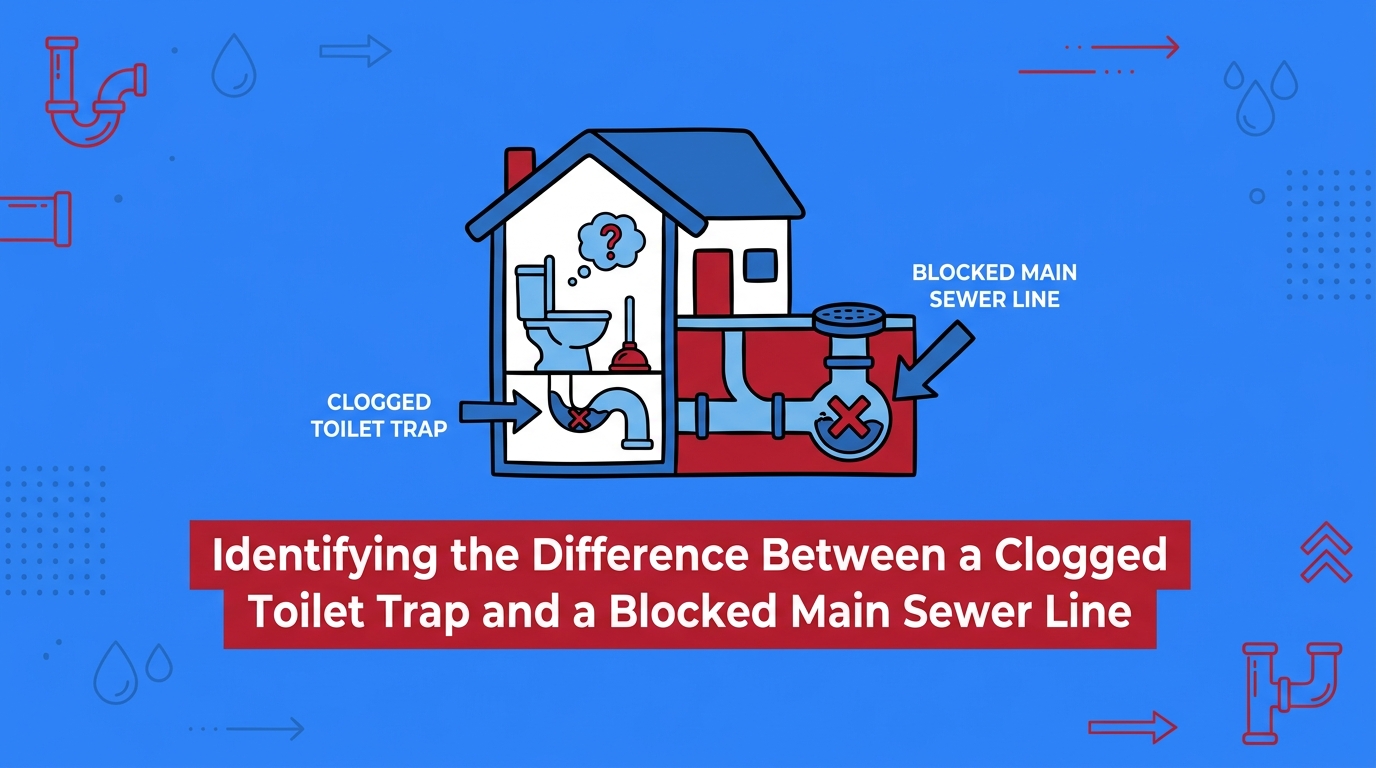
You flush the toilet, and instead of the water swirling down the drain, it begins rising rapidly toward the rim. Identifying the difference between a clogged toilet trap and a blocked main sewer line is the critical first step when this sudden plumbing backup strikes. Panic often sets in as you reach for the water shutoff valve, wondering if you are dealing with a simple, isolated fix or a massive, whole-house drainage emergency. This specific decision point determines your next move: whether it is safe to attempt clearing the blockage with a standard plunger, or if you must immediately stop all water usage in the home to prevent raw sewage from overflowing onto your floors.
If you are dealing with a severe backup, professional residential plumbing services are essential to accurately diagnose the issue and determine if you need a main sewer line repair or just a simple trap clearing. A localized trap clog is a common nuisance that usually requires a quick fix, while a full blockage in the primary drainage system represents a severe failure that affects every fixture in your home. Understanding the difference prevents massive biohazard overflows and helps you take the right corrective action safely.
To understand why a toilet backs up, it helps to look at how the fixture is built. A standard residential toilet trap has an internal diameter of about 2 to 2.5 inches, making it a natural bottleneck in your home's plumbing system. This trap features a curved, S-shaped or P-shaped design that holds a small amount of water at all times. This water barrier is essential because it prevents harmful and foul-smelling sewer gases from rising back up into your bathroom.
Because of its narrow diameter and curved shape, the trap is the most common place for blockages to form. Excessive amounts of toilet paper, dense paper towels, or products falsely marketed as "flushable" wipes typically get stuck right in this bend. Once a partial blockage forms, subsequent flushes pack the material tighter until water can no longer pass through.
The defining characteristic of a trap clog is complete isolation. If the blockage is localized entirely to the toilet's internal trap, no other fixtures in the bathroom or the rest of the house will be affected. You can turn on the bathroom sink, and the water will drain perfectly. You can run the shower, and the basin will remain empty. When the problem is strictly isolated to one fixture, it is generally safe to attempt a basic plunge to dislodge the material. However, if you find yourself dealing with constant, recurring clogs in the same fixture, you might be looking at signs it's time for a toilet replacement rather than just a stubborn blockage.
Your main sewer line is the primary exit route for all wastewater generated in your home. Every toilet, sink, shower, and washing machine connects to branch lines that eventually feed into this single, large-diameter pipe leading out to the municipal sewer or your private septic tank. When this critical pathway fails, the wastewater has nowhere to go.
Because water naturally seeks the lowest point due to gravity, a blockage in the main line causes wastewater to reverse course and back up into the lowest elevation drains in the house. This is a whole-house drainage failure, not a single-fixture issue. According to the Environmental Protection Agency (EPA), tree root intrusion is the leading cause of main sewer line blockages in homes older than 20 years. Roots seek out the moisture and nutrients inside the pipes, entering through tiny hairline cracks and expanding until they completely choke off the flow.
Regional climate plays a massive role in the health of underground plumbing. The Sacramento area's dry summers and heavy winter rains cause rapid soil shifting. As the ground expands and contracts with the extreme moisture changes, underground pipes are subjected to immense physical stress. This shifting leads to broken, bellied, or separated pipes, creating the perfect entry point for aggressive tree root intrusion that initially mimics the symptoms of simple clogs.
When these systemic failures happen, they require urgent attention. In one real-world scenario, a local homeowner woke up on a weekday to find their entire sewer system completely backed up overnight. Because the issue was systemic, a technician was dispatched within hours to unclog the main sewer line and map out a comprehensive plan for future prevention, proving that rapid professional response is vital when the main line is compromised.
Diagnosing a plumbing issue safely relies on observational cues rather than requiring the homeowner to use specialized tools or dismantle pipes. By watching how different fixtures interact, you can accurately determine the scope of the problem.
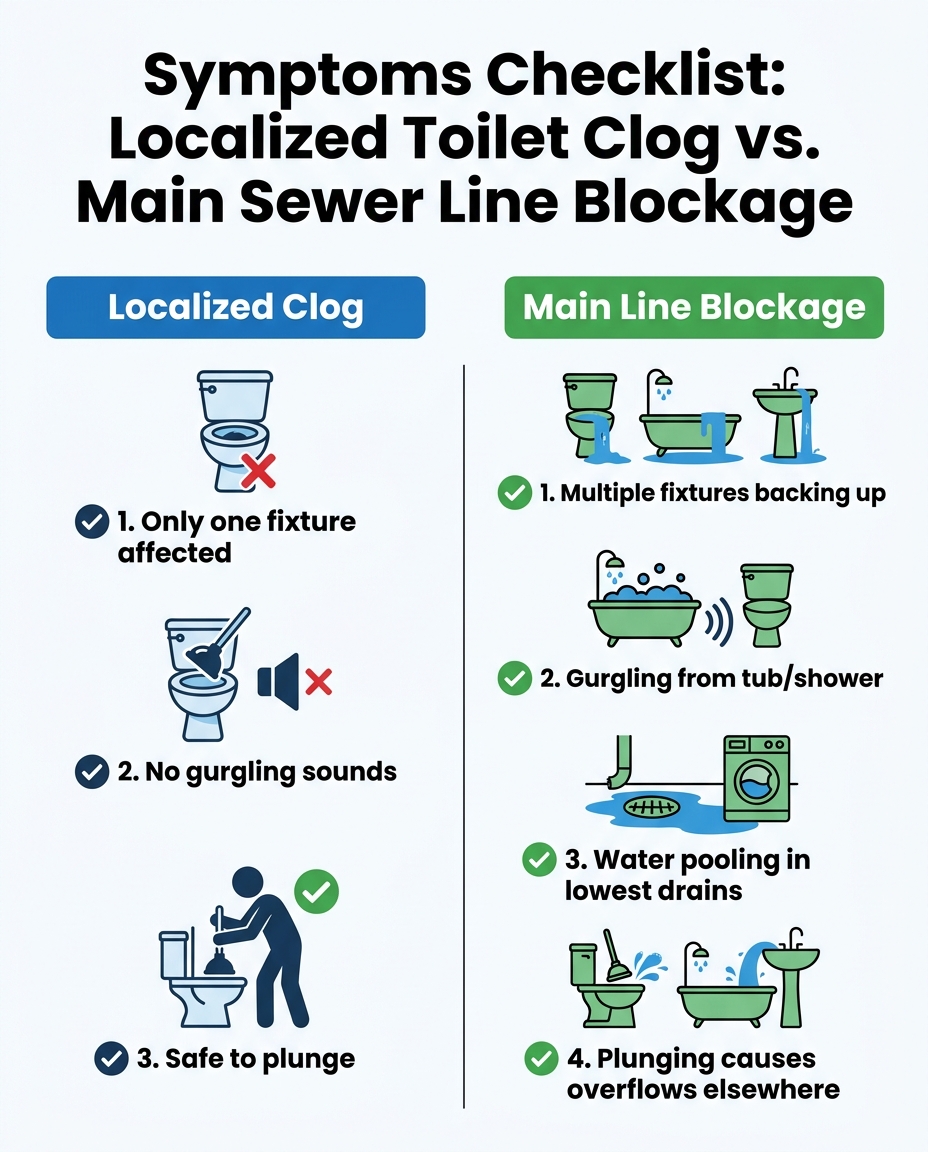
• Multiple fixtures acting up simultaneously: The most definitive sign of a systemic issue is seeing the toilet and shower backing up at the same time. If flushing the toilet causes water to rise in the shower pan, the blockage is deep in the shared piping.
• Water pooling in lower-elevation drains: Wastewater will always exit at the lowest point of resistance. If you have a basement floor drain, a first-floor bathtub, or a ground-level shower, check these areas first. Puddles forming around these drains indicate a main line restriction.
• Cross-fixture reactions: Using one fixture should never cause a reaction in another. If running the washing machine causes the downstairs toilet to overflow, the massive volume of water from the washer is hitting a blockage and forcing its way up the nearest available exit.
• Cleanout pipe overflows: If you locate the exterior sewer cleanout pipe in your yard and see water pooling around the cap, the blockage is definitively in the main line outside the home.
• Number of fixtures affected — Localized Toilet Clog: Only the toilet — Main Sewer Line Blockage: Multiple fixtures across the home
• Running the bathroom sink — Localized Toilet Clog: Drains normally — Main Sewer Line Blockage: Causes toilet or shower to gurgle/rise
• Lowest elevation drains — Localized Toilet Clog: Clear and dry — Main Sewer Line Blockage: Pooling water or raw sewage
• Plunging the toilet — Localized Toilet Clog: Clears the blockage safely — Main Sewer Line Blockage: Forces wastewater into the shower/tub

Your plumbing system communicates its health through sound as much as it does through visual cues. A healthy drainage system relies on proper venting and pressure equalization. Every time water flows down a drain, air must be allowed to enter the pipes through the roof vents to prevent a vacuum from forming, much like taking your thumb off the top of a drinking straw allows liquid to flow out.
When a severe blockage forms in the main sewer line, it traps a massive pocket of air between the wastewater trying to exit and the physical clog blocking its path. As water continues to pour into the system, that trapped air is compressed. Because the air cannot push past the heavy blockage, it takes the path of least resistance backward, forcing its way up through the water seals in your fixture traps.
This creates a very specific auditory warning sign: hearing loud gurgling sounds from the bathtub drain when the toilet is flushed. If you flush the toilet and immediately hear a "glug-glug" or bubbling noise coming from the nearby sink or shower, you are hearing trapped sewer gas escaping. This confirms that the system is experiencing a systemic airflow and pressure issue, meaning the problem is much deeper than the toilet bowl itself.
When faced with a rising toilet bowl, the instinctive reaction is to grab a plunger and apply as much force as possible. While this is the correct action for an isolated trap clog, plunging a blocked main sewer line can cause disastrous secondary damage.
A plunger works by creating a tight seal and forcing a column of pressure directly down the pipe to dislodge a localized obstruction. However, if the main sewer line is blocked, that pressure has nowhere to go. The water and air you are forcing down the toilet drain will simply hit the deep blockage, reverse direction, and shoot out of the nearest unblocked drain.
Because the toilet and the bathtub typically share the same branch line under the bathroom floor, the pressure from plunging the toilet will force raw sewage, bacteria, and wastewater directly up through the shower drain. This transforms a contained toilet issue into a massive biohazard spill in your bathing area, requiring extensive sanitization and cleanup.
If you observe any of the main line symptoms—such as multiple fixtures backing up or gurgling sounds—you must immediately stop all water usage in the house. Turn off washing machines, do not flush toilets, and avoid running sinks. Clearing a main line is never a DIY job. It requires specialized professional equipment, such as motorized drain augers or hydro-jetting machines, that can safely reach deep underground to obliterate tree roots and severe scale buildup without damaging the pipes.
Guesswork has no place in modern plumbing diagnostics. When you suspect a main line failure, a professional plumber will perform a high-resolution sewer camera inspection. By feeding a waterproof camera directly into the pipes, technicians can visually pinpoint the exact location, depth, and nature of the blockage. Whether it is a collapsed pipe, an aggressive root intrusion, or a severe grease buildup, the camera provides definitive proof.
This level of accuracy is vital for protecting your home and your wallet. Always Affordable Plumbing's commitment to honest, transparent pricing ensures homeowners receive accurate diagnostics, so they never pay for a main line repair when the issue is only a localized toilet clog. You get to see exactly what the camera sees on the monitor, ensuring complete transparency before any work begins.
Once the immediate emergency is resolved, the focus should shift to keeping the system healthy. Ongoing preventative plumbing maintenance is the most effective way to catch root intrusion or scale buildup early. Routine inspections and professional drain cleanings keep the main line flowing freely, preventing sudden backups and extending the lifespan of your entire plumbing system.
If only the toilet fails to drain while all other bathroom fixtures work perfectly, it is likely a localized trap clog. You can test this by running the bathroom sink; if the sink drains without issue and the toilet remains backed up, the blockage is isolated. However, if other fixtures like the sink or shower back up simultaneously when the toilet is flushed, the blockage is deeper in the shared pipes.
Your shower backs up because wastewater from the toilet hits a blockage in the main line and is forced to reverse course. Since the shower drain is typically the lowest elevation point in the bathroom, the returning wastewater seeks it out as the easiest exit point. This cross-fixture reaction is a definitive sign of a main sewer line restriction.
The most common early warning signs include gurgling sounds from drains, water pooling around the basement floor drain, and slow draining across multiple fixtures in the home. You may also notice foul sewer odors lingering near lower-level drains or outside near the sewer cleanout pipe before a full backup occurs.
A standard toilet clog involving normal toilet paper usually stays isolated to the toilet trap and will not affect the main line. However, if non-flushable wipes, feminine hygiene products, or severe debris are forcefully plunged past the trap, they can travel deeper into the system and contribute to a larger, much more severe blockage in the main sewer line over time.
A main sewer line clog sounds like a distinct gurgling or bubbling noise coming from drains, especially the bathtub or sink, when another fixture like the toilet is used. This sound is caused by trapped air being forced backward through the water seals in your plumbing traps because it cannot push past the blockage in the main pipe.
Knowing the difference between a simple toilet clog and a main sewer line blockage empowers you to make the safest choices for your home. Remember to look for the key observational signs: if the issue is isolated to a single toilet, it is likely a localized clog that can be safely plunged. But if you notice multiple fixtures backing up, hear gurgling sounds from the bathtub, or see water pooling in lower-elevation drains, you are facing a systemic main line failure.
With the right observational cues, you can avoid causing massive secondary overflows and protect your living spaces from biohazards. If your symptoms point to a systemic issue, stop all water usage immediately and reach out for a professional assessment. Accurate diagnostics and expert intervention ensure that your plumbing system is restored safely, effectively, and with total transparency.
See what our satisfied customers have to say about their experience with Always Affordable
Plumbing & HVAC.

"Chappy was very skilled in his knowledge of my HVAC unit. I greatly appreciate the quick response and experienced tech. The whole endeavor was made less stressful by his humor and honest conversation. I find comfort in knowing I now have a shop i trust for the next time."
"Tony, James, Ronnie did an amazing job setting up our new AC! They were quick, efficient, considerate, and polite! We appreciate them scheduling us in on such short notice. Definitely recommend this company!"
"Prompt, professional service with kindness and care. They came out to address both plumbing and AC issues. I received a courtesy call before they arrived. All issues were resolved the same day with integrity and respect. Thankful for businesses like this. Absolutely recommend to those that I love."
"Excellent service! Jason came out promptly and in addition to doing my outside faucet he also put in new irrigation equipment! All done perfectly! Jason was lovely"
"Honest with the assessment; friendly and good manners. No high pressure sales. Just good to honest "tell it like you see it" Thought my kitchen disposer needed an overhaul. But Jason, there Plumber gave me an honest lesson on what was really happening. Saved me hundreds, if I went the route of replacing. Thank you!"
"Absolutely 5 stars. If you are looking for affordable ,professional and kind. Chappy was excellent and very knowledgeable . I called in the morning because my air conditioner stopped working he was here within hours and fixed my air with a smile. I highly recommend Chappy and Always Affordable plumbing and Hvac."
"Scott and James were great. They got there quickly and diagnosed the problem with my A/C.They did a very thorough job testing everything. Sent me pictures and called to keep me informed. Got it done the next day and everything is working fine. Be glad when I get home so I can enjoy my new system. Thanks guys for a great job."
"Chappy was very helpful. He knew our issue right away, cleaned our coils. He also came on the same day we called and got our AC blowing cold air again."
"After some timing ’curfuffles’ the Tech Jason arrived and not only completed a speedy install on my toilet, he was personable & professional. Because of the timing issues Jason was attentive and showed up with everything needed! No extra store runs 😊 I was very comfortable with having this Tech in my Daughter’s home. We will definitely use this Service again."