
AC vs. Heat Pump: Options Comparisons for Homeowners Facing a System Failure
When your AC fails, choosing a replacement is a major choice. Review these options comparisons for homeowners to weigh SEER2 ratings and decide with confidence.



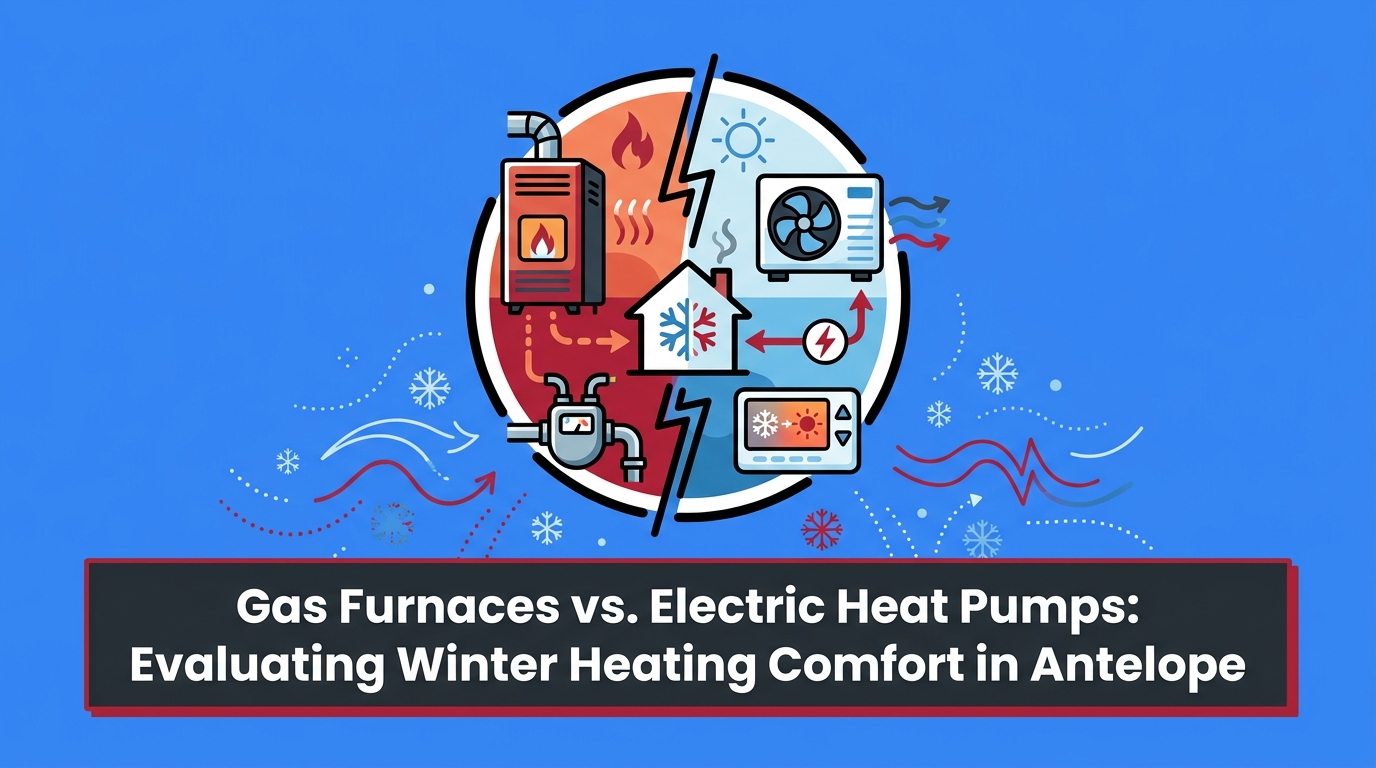
Many homeowners believe that electric heating means weak, lukewarm air, making the debate between Gas Furnaces vs. Electric Heat Pumps for Winter Heating in Antelope feel like a choice between actual comfort and mere efficiency. If you are living with an aging natural gas unit that struggles to keep up on chilly nights, you might be wondering if a modern electric replacement can truly handle the job. The decision to switch away from fossil fuels is a big one, and evaluating operational efficiency against actual heating comfort is the most critical step you will take.
A typical pattern we see is homeowners assuming that because electric systems do not burn fuel, they cannot combat a true winter chill. This misconception stems from older technology that often struggled in freezing temperatures. However, modern systems are engineered differently. Understanding how these distinct units deliver heat is the foundation for making a smart replacement choice. Whether you are looking for general heating services or planning a full system overhaul, knowing the mechanics behind your warmth changes the conversation.
Both natural gas and electric systems offer reliable warmth, but they achieve that warmth through completely different thermodynamic processes. Understanding this difference helps clarify why they feel so different inside your living room.
• Combustion heating: A gas furnace burns fuel to create a literal fire inside a heat exchanger. Air blows over this extremely hot metal and carries that intense heat directly into your home.
• Heat transfer: An electric heat pump does not generate heat by burning anything. Instead, it absorbs ambient thermal energy from the outside air, compresses it to raise the temperature, and moves that gathered heat indoors.
Because they operate on fundamentally different principles, comparing them requires looking beyond just the thermostat setting. You have to look at the delivery method, the cycle length, and how that impacts your daily comfort.
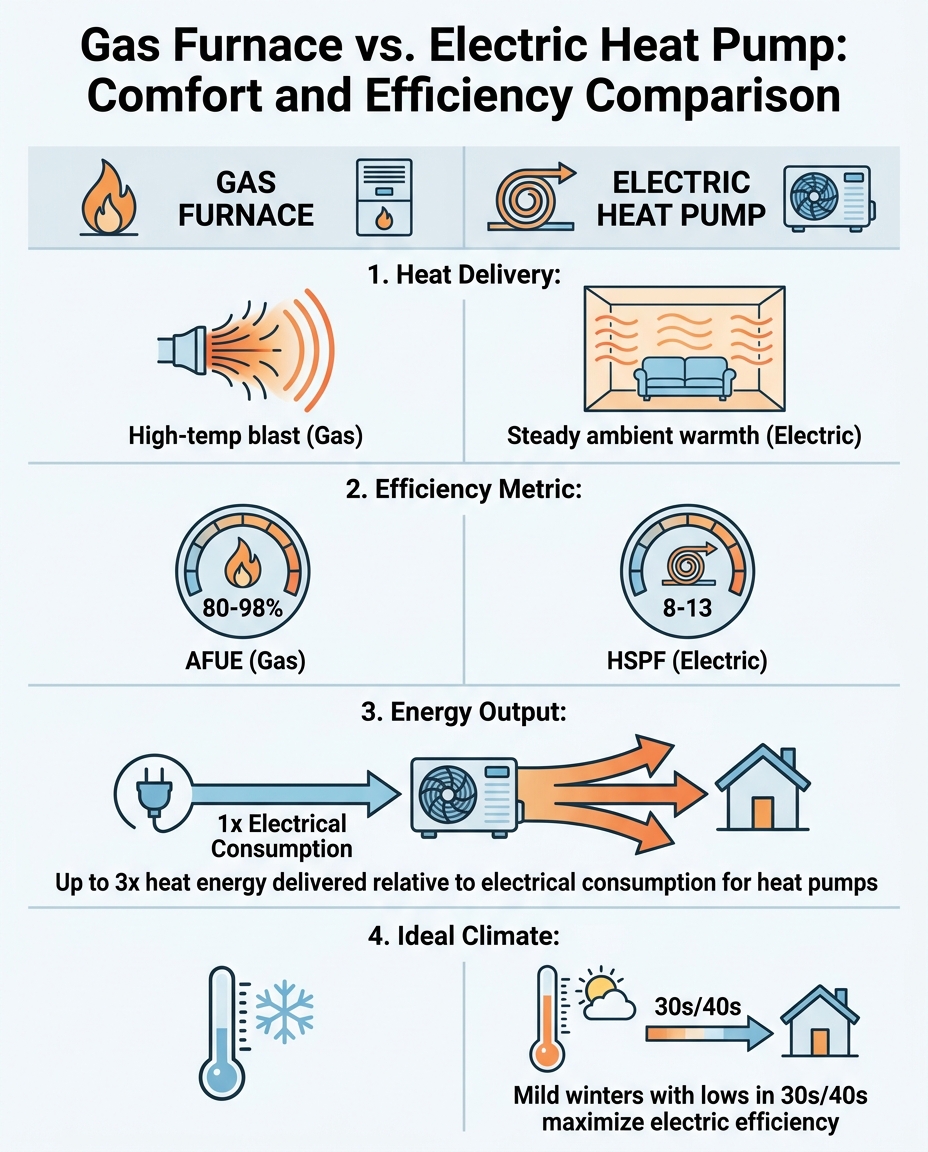
When you dive into the physical comfort provided by these two systems, the differences become immediately apparent. Gas furnaces are known for delivering a high-temperature blast of heat at the register. The air coming out of your vents might reach temperatures of 120 degrees Fahrenheit or more. This creates a fast, intense, and undeniably "cozy" feeling that many homeowners have grown accustomed to over decades of winter heating season use.
Heat pumps, on the other hand, operate by providing steady, even ambient warmth. The air leaving an electric system's vent is typically closer to 90 or 100 degrees Fahrenheit. Because human body temperature is around 98.6 degrees, this air might not feel "hot" to the touch if you hold your hand right up to the register. Homeowners transitioning from gas often misinterpret this steady airflow as a malfunction, calling for heat pump installation and repair because they think the system is broken. In reality, it is simply working exactly as designed.
While the intense blast of a gas furnace feels great initially, it often results in dramatic temperature swings. The furnace blasts heat, the house warms up quickly, the system shuts off, and the house slowly cools down until the cycle repeats. This can create noticeable hot and cold spots throughout your home.
The steady approach: Electric systems run longer, slower cycles at a lower output temperature. This continuous operation mixes the air more thoroughly, maintaining a consistent ambient temperature across every room. Instead of a rollercoaster of hot blasts and chilly lulls, your home stays at a steady, even temperature all day long. For many, this consistent ambient heating ultimately provides a higher level of overall comfort.
National averages and online forums often skew heat pump data by factoring in extreme sub-zero climates where their efficiency naturally drops. If you read an article based on winters in the upper Midwest, you will get a very different picture of electric heating performance. However, in Antelope, the local overnight lows typically hover in the upper 30s to low 40s. This specific temperature band is the exact optimal operating range for air-source technology.
Because temperatures in this part of Northern California rarely plummet to freezing extremes, local electric systems operate at peak efficiency almost all winter long. They rarely need to activate their built-in auxiliary heat strips, which are the less efficient backup heaters that kick on during severe cold snaps in other parts of the country.
The true magic of modern electric heating lies in its coefficient of performance. Under our mild local conditions, modern electric systems can deliver up to three times more heat energy to a home than the electrical energy they consume to run the compressor and fans.
The efficiency breakdown:
• A high-efficiency gas furnace might convert up to 98 percent of its fuel into usable heat, with the remaining 2 percent lost as exhaust.
• An electric heat pump can achieve effectively 300 percent efficiency because it is moving existing heat rather than creating it from scratch.
This massive gap in operational efficiency makes electric systems highly attractive for homeowners looking to reduce their long-term energy consumption without sacrificing their winter comfort.
Making a confident replacement decision requires evaluating secondary factors beyond just the temperature of the air. You must weigh efficiency metrics, safety profiles, and long-term maintenance expectations. Comparing a winter-only heating appliance against a dual-season system requires a broad perspective.
• Efficiency Metric — Natural Gas Furnace: AFUE (Annual Fuel Utilization Efficiency) — Electric Heat Pump: HSPF (Heating Seasonal Performance Factor)
• Heat Delivery — Natural Gas Furnace: High-temperature, intermittent blasts — Electric Heat Pump: Lower-temperature, continuous ambient warmth
• Safety Profile — Natural Gas Furnace: Requires carbon monoxide monitoring and flue venting — Electric Heat Pump: Fully electric operation with no combustion risks
• Environmental Impact — Natural Gas Furnace: Burns fossil fuels directly at the home — Electric Heat Pump: Reduces household carbon footprint, grid-dependent
• Maintenance Needs — Natural Gas Furnace: Annual check-up before winter — Electric Heat Pump: Biannual check-ups (handles both heating and cooling)
As you review these differences, it becomes clear that switching technologies impacts more than just your thermostat. You will need to account for modern heat pump electrical requirements to ensure your home can safely support the new equipment.
Furnaces only run during the cold months. Because they sit dormant for half the year, they can often boast a slightly longer overall lifespan, assuming they are properly maintained. Electric systems, however, handle both heating in the winter and air conditioning in the summer. Because they run year-round, they endure more total operating hours. This dual-season duty requires consistent biannual maintenance—once in the spring and once in the fall—to sustain performance and protect the compressor.
Removing a gas line from your home eliminates the risk of carbon monoxide leaks entirely. You no longer have to worry about cracked heat exchangers or blocked flue ventilation pipes during the winter heating season. However, fully electric systems rely entirely on the local power grid. If your neighborhood experiences frequent winter power outages, grid reliability becomes a significant factor in your decision, potentially requiring a backup generator to maintain warmth during storms.

Switching heating sources is rarely a simple one-to-one swap. It requires a thoughtful evaluation of your home's current infrastructure. If you are preparing to make the leap from fossil fuels to full electrification in Antelope, there is a specific sequence of evaluations that must take place to ensure a successful installation.
1. Evaluate your electrical panel: Older homes often have 100-amp electrical panels. Modern electric heating equipment typically requires dedicated 240-volt circuits. You may need a panel upgrade to safely handle the increased electrical load.
2. Assess your existing ductwork: Gas furnaces push a smaller volume of very hot air. Electric systems push a larger volume of moderately warm air. Your existing ducts may need to be assessed, sealed, or modified to handle the different airflow requirements without creating noise or pressure issues.
3. Review electrification incentives: There are numerous statewide electrification initiatives and general federal tax credits available to support homeowners transitioning away from natural gas. While specific programs fluctuate, these general incentives can help offset the initial investment of upgrading your home's energy infrastructure.
4. Consult an expert: Because every house is built differently, it is highly recommended to consult with a professional who can assess the entire home's infrastructure. Partnering with a team that offers comprehensive HVAC solutions ensures no detail is overlooked during the transition.
Taking these steps ensures that your new system operates efficiently from day one, preventing unexpected tripped breakers or weak airflow issues.
One of the most common anxieties homeowners express is the fear that an electric system will leave them freezing during a rare, severe cold snap. It is a valid concern, especially if you remember the older generation of air-source technology that would freeze up and blow cold air when the temperature dropped below 40 degrees.
The reality is that modern technology limits have drastically improved. Today's variable-speed inverter compressors are capable of extracting ambient heat from the outside air even when temperatures approach freezing. The refrigerant used in modern systems boils at extremely low temperatures, allowing it to capture thermal energy on days that feel bitterly cold to humans.
In the rare event that temperatures drop too low for the compressor to maintain your desired indoor temperature efficiently, modern units feature built-in auxiliary heating strips. These electric resistance heaters safely bridge the gap, ensuring your home never drops below a comfortable temperature during the winter heating season.
Targeted comfort: For homes with specific layout challenges, such as a converted garage, an isolated primary suite, or a room with vaulted ceilings that never seems to stay warm, supplemental solutions can be integrated seamlessly. Adding ductless mini split systems to these hard-to-heat areas provides targeted, highly efficient warmth without requiring major ductwork modifications.
Ultimately, both systems have distinct advantages depending on your home's infrastructure, your local climate, and your personal comfort preferences. A clear, regionally accurate comparison helps ensure you aren't paying for extreme-weather technology you simply do not need in Antelope.
The best choice balances operational efficiency with the reality of your current electrical panel and ductwork setup. Always Affordable Plumbing & HVAC maintains a strong commitment to transparent, budget-conscious pricing and honest recommendations. Our goal is to ensure homeowners get the exact right system for their specific setup rather than pushing a blind upsell into a technology that might not fit their home.
Professional insight can clarify the transition process, helping you weigh your options effectively. By understanding the thermodynamic differences, the climate advantages, and the infrastructure requirements, you can make a confident decision that keeps your family warm for years to come.
Will a heat pump keep my house warm in Antelope winters?Yes, modern electric systems are highly effective in our local climate. Because local winter temperatures rarely drop below freezing for extended periods, these systems can easily extract enough ambient heat to maintain a comfortable indoor temperature. They operate in their ideal efficiency range throughout most of the season.
What is the comfort difference between a furnace and a heat pump?The main difference is the temperature and consistency of the airflow. A furnace delivers short blasts of very hot air, which can cause temperature swings between cycles. An electric system delivers a steady, continuous stream of moderately warm air, keeping the home at a consistent ambient temperature all day.
Is it worth switching from gas to electric heat in Northern California?For many homeowners, switching is highly beneficial due to the region's mild winters and the exceptional efficiency of modern air-source technology. Removing fossil fuels from the home eliminates carbon monoxide risks and often qualifies for general energy incentives. However, the exact value depends on your current electrical infrastructure and ductwork.
Does an electric heating system use a lot of electricity in winter?While it will increase your winter electrical usage compared to a gas unit, it uses electricity very efficiently. Instead of generating heat, it uses electricity to move heat, often delivering up to three times more thermal energy than the electrical energy it consumes. Your overall utility costs will shift, but the system operates with high operational efficiency.
At what temperature does an air-source system become inefficient?Older models struggled below 40 degrees, but modern variable-speed units maintain strong efficiency well below freezing. In our region, temperatures almost never reach the extreme sub-zero lows required to cause a significant drop-off in performance. If it does get unusually cold, built-in auxiliary strips automatically assist.
What electrical upgrades are required to switch away from natural gas heating?Transitioning typically requires a dedicated 240-volt circuit for the new air handler and compressor. If your home has an older 100-amp electrical panel, you may need a panel upgrade to safely support the additional load. A professional assessment is necessary to determine exactly what your specific home requires before installation.
Choosing the right heating system for your home is a major decision that impacts your comfort for the next decade. By evaluating the operational efficiency and comfort differences specific to our local climate, you can transition with confidence. Schedule an assessment today to find the perfect fit for your home's unique needs.
See what our satisfied customers have to say about their experience with Always Affordable
Plumbing & HVAC.

"Chappy was very skilled in his knowledge of my HVAC unit. I greatly appreciate the quick response and experienced tech. The whole endeavor was made less stressful by his humor and honest conversation. I find comfort in knowing I now have a shop i trust for the next time."
"Tony, James, Ronnie did an amazing job setting up our new AC! They were quick, efficient, considerate, and polite! We appreciate them scheduling us in on such short notice. Definitely recommend this company!"
"Prompt, professional service with kindness and care. They came out to address both plumbing and AC issues. I received a courtesy call before they arrived. All issues were resolved the same day with integrity and respect. Thankful for businesses like this. Absolutely recommend to those that I love."
"Excellent service! Jason came out promptly and in addition to doing my outside faucet he also put in new irrigation equipment! All done perfectly! Jason was lovely"
"Honest with the assessment; friendly and good manners. No high pressure sales. Just good to honest "tell it like you see it" Thought my kitchen disposer needed an overhaul. But Jason, there Plumber gave me an honest lesson on what was really happening. Saved me hundreds, if I went the route of replacing. Thank you!"
"Absolutely 5 stars. If you are looking for affordable ,professional and kind. Chappy was excellent and very knowledgeable . I called in the morning because my air conditioner stopped working he was here within hours and fixed my air with a smile. I highly recommend Chappy and Always Affordable plumbing and Hvac."
"Scott and James were great. They got there quickly and diagnosed the problem with my A/C.They did a very thorough job testing everything. Sent me pictures and called to keep me informed. Got it done the next day and everything is working fine. Be glad when I get home so I can enjoy my new system. Thanks guys for a great job."
"Chappy was very helpful. He knew our issue right away, cleaned our coils. He also came on the same day we called and got our AC blowing cold air again."
"After some timing ’curfuffles’ the Tech Jason arrived and not only completed a speedy install on my toilet, he was personable & professional. Because of the timing issues Jason was attentive and showed up with everything needed! No extra store runs 😊 I was very comfortable with having this Tech in my Daughter’s home. We will definitely use this Service again."


