Seasonal Home Maintenance Checklist: Preventing HVAC and Plumbing Emergencies
Prevent HVAC emergencies with a seasonal home maintenance checklist. Why proactive scheduling beats waiting for sudden failures. See what needs attention now.




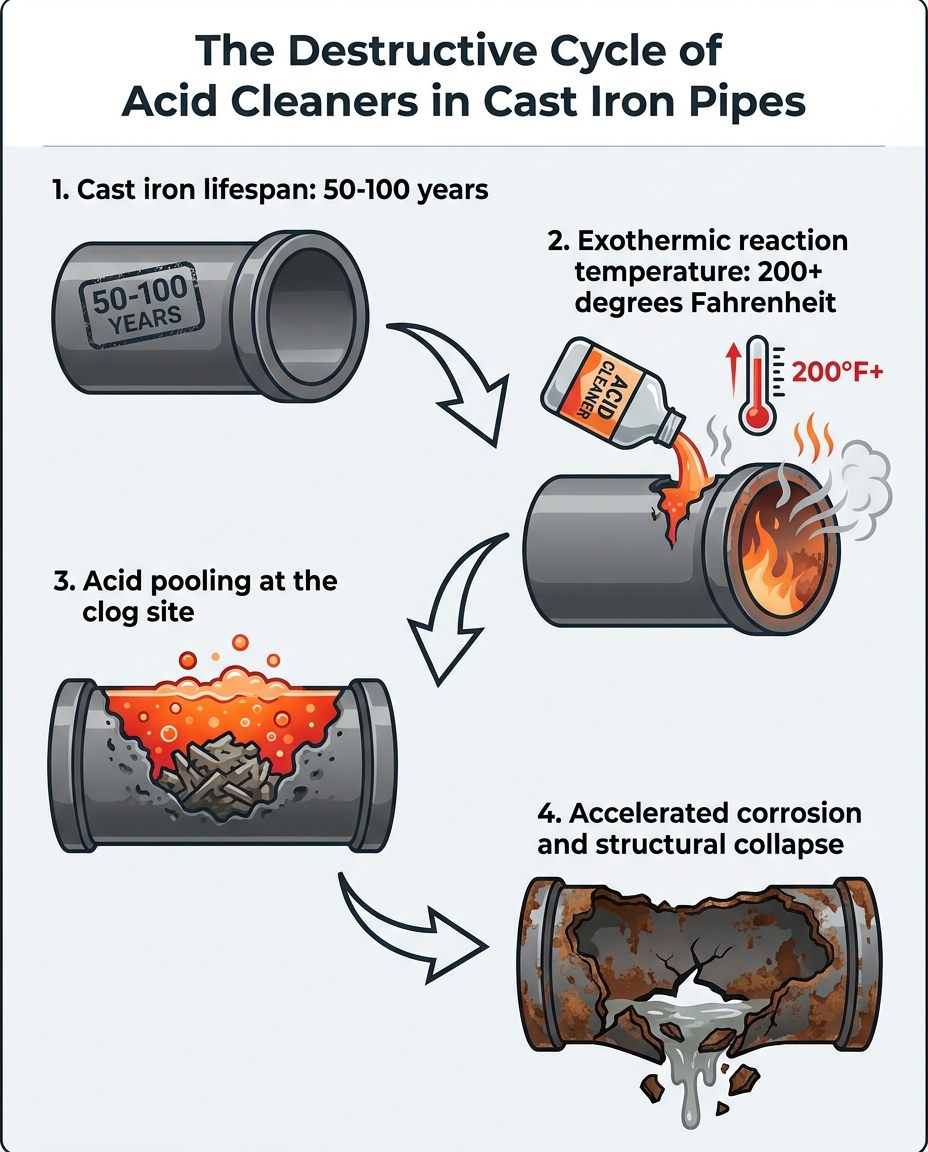
Nearly every cast iron waste pipe installed in pre-1980s construction is already operating on borrowed time, with a functional lifespan of just 50 to 100 years. When a stubborn clog strikes, the hidden dangers of using acid-based drain cleaners on older cast iron pipes become a sudden, expensive reality for many homeowners. At Always Affordable Plumbing & HVAC, our team frequently sees homeowners face an immediate decision point: do you pour a store-bought bottle of harsh sulfuric acid down the drain for a quick fix, or do you rely on mechanical clearing to protect your aging infrastructure?
Many homeowners naturally reach for chemical drain cleaners because they are heavily marketed as a universal solution for slow drains. However, these harsh chemicals are not a cure-all. In fact, introducing highly reactive acids into aging metal pipes often leads to catastrophic structural failure. When you need reliable solutions that will not dissolve your home from the inside out, turning to professional plumbing services ensures your home's infrastructure remains intact.
Cast iron was the gold standard for plumbing for decades, prized for its durability and sound-dampening qualities. If your home was built before the 1980s, there is a very high probability that cast iron still carries wastewater away from your sinks, showers, and toilets. While the material is incredibly strong when new, it is not immune to the constant flow of water, waste, and time.
The core problem: Decades of continuous use naturally compromise the structural integrity of these pipes long before you ever unscrew a bottle of liquid drain cleaner. By the time a severe clog forms, the pipe walls are often paper-thin in certain sections. Pouring a highly corrosive acid into this already weakened environment does not just clear the blockage—it attacks the pipe itself, turning a routine plumbing backup into a full-scale replacement project.
To understand why chemical cleaners are so destructive, you first have to understand the baseline condition of older plumbing systems. In our experience servicing historic homes across established neighborhoods like East Sac and Midtown, we frequently find this highly vulnerable, original pre-1980s plumbing still in use. Homeowners often do not realize their pipes are fragile until a major issue occurs, assuming that because the pipes are made of metal, they are indestructible.
Cast iron degrades from the inside out. Over decades of use, wastewater creates a constant state of oxidation. This natural rusting process causes the interior walls of the pipe to flake away slowly. As the iron oxidizes, two distinct problems develop that make the pipe highly susceptible to chemical damage:
• Channeling: Constant water flow wears a groove or "channel" into the bottom of the horizontal pipe. Over time, the bottom of the pipe becomes significantly thinner than the top.
• Scale Buildup: Rust and minerals combine to form a rough, jagged texture on the inside of the pipe. This scale catches hair, grease, and paper, acting as a magnet for severe clogs.
• Micro-fractures: Decades of ground shifting and temperature fluctuations create microscopic cracks in the brittle metal.
The difference between a new pipe and an aging one dictates how it reacts to stress. Here is a breakdown of how cast iron changes over its 50 to 100-year lifespan:
• New Cast Iron — Wall Thickness: Uniform and dense — Interior Surface: Smooth and slick — Vulnerability Level: Low (highly resilient)
• 30-Year-Old Pipe — Wall Thickness: Mild thinning at the base — Interior Surface: Developing minor scale — Vulnerability Level: Moderate (starting to catch debris)
• 50+ Year-Old Pipe — Wall Thickness: Severe channeling, paper-thin spots — Interior Surface: Heavy rust and jagged scale — Vulnerability Level: High (prone to cracking and chemical burns)
The takeaway: By the time your historic home experiences a stubborn backup, the pipes are already fighting a losing battle against nature. The jagged scale causes the clog, and the thinned walls mean the pipe has zero defense against harsh chemicals.
When you pour a chemical drain cleaner into a clogged sink or toilet, you are initiating a violent chemical process. The active ingredient in many heavy-duty drain openers is sulfuric acid. This chemical does not gently dissolve organic matter; it destroys it through a highly aggressive process known as an exothermic reaction.
An exothermic reaction is a chemical process that releases energy in the form of extreme heat. When sulfuric acid makes contact with water and organic matter (like hair, grease, or waste), it reacts violently. Temperatures inside your pipe can rapidly exceed 200 degrees Fahrenheit during this chemical process.
This intense, localized heat is devastating to pre-1980s construction materials. Cast iron is a rigid, brittle metal. When a small section of a cold pipe is suddenly subjected to boiling temperatures, the metal rapidly expands. This thermal shock can easily crack older, thinned-out pipes right down the middle.
Furthermore, chemical drain cleaners are specifically formulated to be heavier than water. This allows them to sink through standing water to reach the clog. However, if the clog is dense and impenetrable, the acid simply sits directly on top of the blockage. Instead of clearing the drain, the acid pools in one spot, continuously eating away at the already weakened metal pipe walls.
The extreme heat and high acidity rapidly accelerate the corrosion of the cast iron. A pipe that might have lasted another ten years can have its bottom completely eaten out in a matter of hours by a single bottle of acid.

Homeowners frequently wonder what breaks down severe organic clogs in toilets, hoping that a strong chemical will dissolve the problem without the need for physical labor. Unfortunately, using acid in a toilet is one of the most dangerous and ineffective approaches you can take.
While acid may dissolve some minor organic matter in a dry environment, toilets present a unique fluid dynamic. The volume of water in a toilet bowl instantly dilutes the chemical. Because the acid is heavy, it sinks straight to the bottom of the bowl and settles into the curved cast iron trap beneath the fixture. The chemical becomes too diluted to break apart a massive, solid clog, but it remains acidic enough to slowly burn through the metal trap.
The result: Severe blockages require physical removal. Chemicals simply cannot dissolve large, dense obstructions fast enough to prevent pipe damage. The acid sits in the trap, generating heat and slowly corroding the iron, while the clog remains firmly in place.
Using chemicals on complete blockages creates a secondary hazard: trapping toxic, corrosive water in your plumbing system. If the acid fails to clear the drain, you are now left with a toilet bowl or sink full of highly dangerous, chemically treated water. This makes it incredibly hazardous for anyone attempting to plunge or physically remove the clog later, as splashing this caustic water can cause severe chemical burns to the skin and eyes.
If you or a previous owner have relied on chemical drain cleaners in the past, your aging pipes may have already been compromised by corrosion or chemical damage. Recognizing the early warning signs can help you address the issue before a catastrophic collapse occurs.
Cast iron rarely fails silently. It usually gives off several warning signals as the walls thin and the system begins to leak into the surrounding soil or building structure. Watch for these common indicators:
• Frequent slow drains: A sign that heavy scale buildup has severely narrowed the interior of the pipe.
• Persistent foul odors: Sewer gas escaping through micro-fractures or small holes eaten away by acid.
• Discolored water: Dark, rusty water backing up into tubs or sinks indicates severe internal pipe flaking.
• Foundation leaks or lush patches of grass: Wastewater escaping through a collapsed pipe and pooling under your home or in your yard.
Once a pipe collapses from chemical damage, the only solution is often extensive trenching and replacement. In one real-world instance, our team at Always Affordable Plumbing & HVAC helped a local homeowner who faced major sewer line issues that required total replacement after the line structurally failed. Unforeseen additional problems emerged during the repair process, ultimately requiring our technicians to replace 140 feet of sewer line, install new cleanouts, and repair the driveway to fully restore the property.
Because unforeseen problems often arise when inspecting damaged lines, requiring comprehensive repair strategies, it is always better to address slow drains safely before they escalate. If you suspect your pipes are failing, scheduling a professional sewer line repair and inspection is the most reliable way to assess the damage.
When dealing with pre-1980s construction, safe, physical methods of drain clearing are the only necessary alternative to chemicals. Mechanical clearing physically removes the obstruction without introducing dangerous heat or corrosive agents into your fragile plumbing system.
Trained technicians rely on specialized equipment to physically break apart or extract clogs. Depending on the condition of your pipes, professionals will use one of the following methods:
1. Camera Inspection: A high-definition camera is fed into the line to visually assess the pipe's structural integrity before any clearing begins. This ensures the pipe can withstand the clearing process.
2. Professional Augering (Snaking): A flexible steel cable with a specialized cutting head is fed through the pipe to physically break up the clog, cut through tree roots, and scrape away scale buildup.
3. Hydro-Jetting: If the camera inspection confirms the cast iron is still structurally sound, high-pressure water is used to scour the inside of the pipe, washing away grease, scale, and debris without using chemicals.
Fast, mechanical action is always superior to waiting for chemicals to work. In another local case, a resident woke up to a completely backed-up sewer line and called us for immediate help. We dispatched our technicians within hours, provided a clear quote, unclogged the line safely using mechanical methods, and offered options for future prevention to keep the system flowing.
Exploring the safest ways to clean your drain pipes ensures you never put your home's vital infrastructure at risk just to clear a temporary blockage.
Transitioning from immediate clog resolution to long-term systemic care is the key to extending the life of your historic plumbing. Pre-1980s construction requires a proactive approach, not a reactive one.
Regular professional check-ups can identify thinning pipe walls before they collapse entirely. By utilizing routine camera inspections, technicians can spot the early signs of channeling, heavy scale buildup, or acid damage. This allows you to plan for repairs or descaling services on your own schedule, rather than dealing with an emergency sewer backup in the middle of the night.
The quick fix vs. long-term integrity: True plumbing care is about a commitment to honest, cost-effective solutions that protect long-term integrity rather than offering quick, destructive fixes. While a bottle of acid seems cheap today, the resulting pipe collapse will cost exponentially more tomorrow.
Discussing the benefits of joining a routine plumbing maintenance plan is an excellent way to keep your drains flowing safely year-round. These programs ensure your aging pipes receive the gentle, professional attention they need to maximize their remaining lifespan.
Protecting your aging infrastructure means avoiding harsh chemical shortcuts at all costs. The extreme heat and corrosive nature of sulfuric acid create a devastating environment for older cast iron pipes, turning a simple organic clog into a massive structural failure.
The hidden dangers of using acid-based drain cleaners on older cast iron pipes simply outweigh any temporary convenience they might offer. By relying on expert mechanical clearing for stubborn clogs, you physically remove the blockage without sacrificing the integrity of your plumbing. If your historic home is suffering from slow drains or frequent backups, skip the chemical aisle and reach out for safe, professional inspection and repair options to keep your water flowing smoothly.
Yes, sulfuric acid is highly destructive to cast iron pipes, especially in older homes. The chemical creates an exothermic reaction that generates intense heat, which can cause brittle cast iron to crack from thermal shock. Furthermore, the acid rapidly accelerates the corrosion of the metal, eating away at the pipe walls and leading to structural collapse.
Severe toilet clogs should only be broken down using physical, mechanical methods. A professional toilet auger (or closet auger) is designed to navigate the curves of the toilet trap to physically hook and extract the blockage. Chemical cleaners are ineffective in toilets because the large volume of water dilutes the chemical, while the heavy acid sinks and damages the cast iron trap beneath.
The safest way to unclog old plumbing is through mechanical snaking or hydro-jetting, performed after a thorough camera inspection. Our professional plumbers insert a specialized cable to physically break apart the blockage and scrape away interior scale. This clears the pipe entirely without introducing corrosive elements or extreme heat to the fragile metal.
The best approach for old pipes is to avoid store-bought chemical drain cleaners entirely. Preventative maintenance using natural biological enzyme treatments can help keep pipes clear of organic buildup without damaging the metal. For an actual blockage, physical removal via professional snaking is always the safest and most effective "cleaner" for aging plumbing.
Cast iron sewer pipes typically have a functional lifespan of 50 to 100 years, depending on usage, soil conditions, and water quality. This means that homes built before the 1980s are already housing pipes that are nearing or past the end of their reliable lifespan. Regular camera inspections are highly recommended to monitor the thinning of the pipe walls.
Yes, chemical drain cleaners can directly cause a pipe to collapse. When heavy acids pool on top of a dense clog, they continuously eat away at the bottom of the pipe. In older cast iron systems that are already thinned out from decades of natural channeling, this rapid chemical corrosion can completely dissolve the bottom of the pipe, resulting in a total structural collapse.
See what our satisfied customers have to say about their experience with Always Affordable
Plumbing & HVAC.

"Chappy was very skilled in his knowledge of my HVAC unit. I greatly appreciate the quick response and experienced tech. The whole endeavor was made less stressful by his humor and honest conversation. I find comfort in knowing I now have a shop i trust for the next time."
"Tony, James, Ronnie did an amazing job setting up our new AC! They were quick, efficient, considerate, and polite! We appreciate them scheduling us in on such short notice. Definitely recommend this company!"
"Prompt, professional service with kindness and care. They came out to address both plumbing and AC issues. I received a courtesy call before they arrived. All issues were resolved the same day with integrity and respect. Thankful for businesses like this. Absolutely recommend to those that I love."
"Excellent service! Jason came out promptly and in addition to doing my outside faucet he also put in new irrigation equipment! All done perfectly! Jason was lovely"
"Honest with the assessment; friendly and good manners. No high pressure sales. Just good to honest "tell it like you see it" Thought my kitchen disposer needed an overhaul. But Jason, there Plumber gave me an honest lesson on what was really happening. Saved me hundreds, if I went the route of replacing. Thank you!"
"Absolutely 5 stars. If you are looking for affordable ,professional and kind. Chappy was excellent and very knowledgeable . I called in the morning because my air conditioner stopped working he was here within hours and fixed my air with a smile. I highly recommend Chappy and Always Affordable plumbing and Hvac."
"Scott and James were great. They got there quickly and diagnosed the problem with my A/C.They did a very thorough job testing everything. Sent me pictures and called to keep me informed. Got it done the next day and everything is working fine. Be glad when I get home so I can enjoy my new system. Thanks guys for a great job."
"Chappy was very helpful. He knew our issue right away, cleaned our coils. He also came on the same day we called and got our AC blowing cold air again."
"After some timing ’curfuffles’ the Tech Jason arrived and not only completed a speedy install on my toilet, he was personable & professional. Because of the timing issues Jason was attentive and showed up with everything needed! No extra store runs 😊 I was very comfortable with having this Tech in my Daughter’s home. We will definitely use this Service again."