
AC vs. Heat Pump: Options Comparisons for Homeowners Facing a System Failure
When your AC fails, choosing a replacement is a major choice. Review these options comparisons for homeowners to weigh SEER2 ratings and decide with confidence.



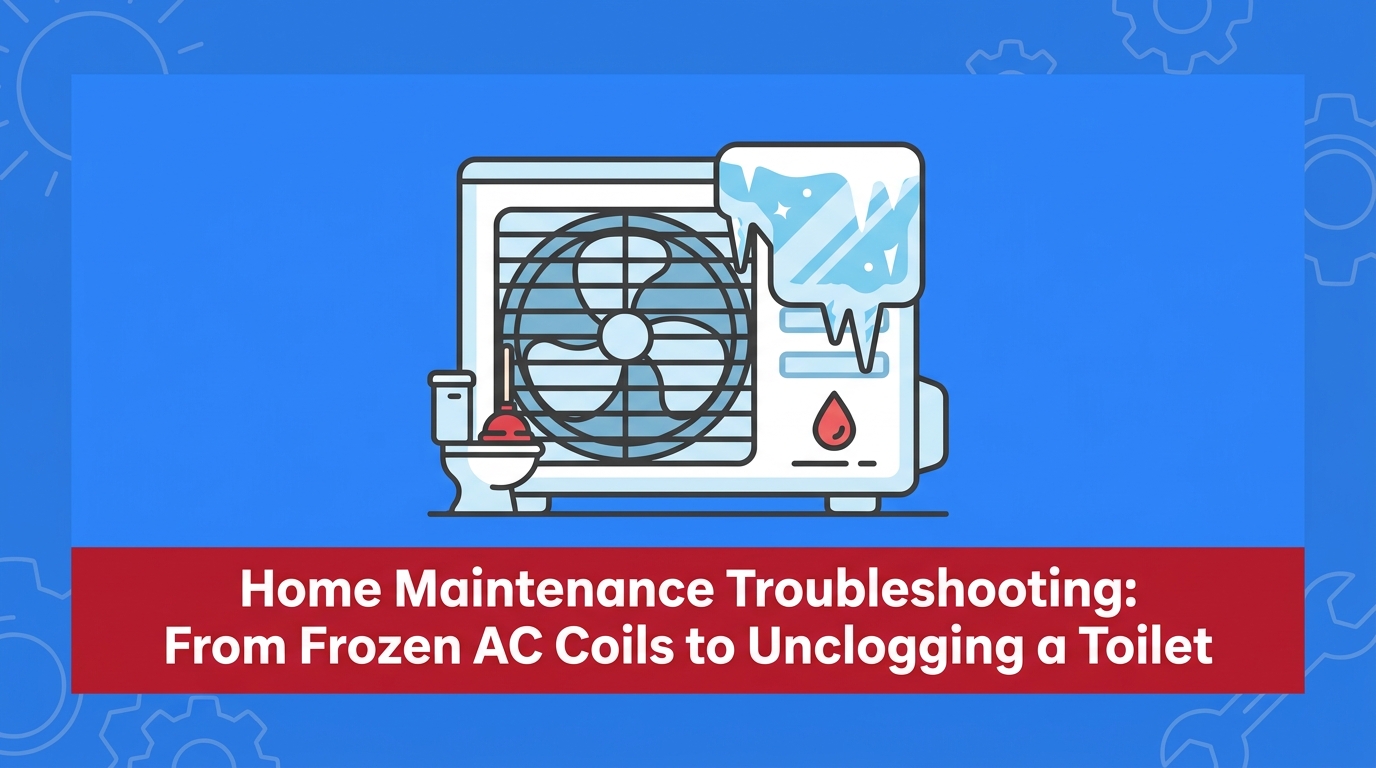
You walk into your living room expecting a blast of cold relief, but the air blowing from the vents feels suspiciously warm. At Always Affordable Plumbing & HVAC, we know that mastering home maintenance tips and troubleshooting means recognizing that few things are more frustrating than an air conditioner that runs constantly without actually cooling your space. You check the wall and see the thermostat set to 70°F but indoor temp rising above 75°F. Outside, the condenser unit is humming, but inside, the evaporator coil is completely encased in a solid block of ice. This is a critical decision point for any homeowner. Do you simply turn off the unit and swap out a dirty air filter, or is it time to call in a licensed professional for complex mechanical diagnostics?
Navigating these sudden home system failures requires a basic understanding of how your house operates. Whether you are dealing with a frozen HVAC system in July or a stubborn bathroom backup that threatens to overflow, having reliable residential plumbing services and HVAC expertise on your side is essential. By learning the early warning signs of system starvation and drainage blockages, you can prevent minor inconveniences from spiraling into catastrophic property damage.
A common misconception our technicians see among homeowners is that a frozen air conditioner means the unit is working exceptionally well or "overcooling" the house. The reality is exactly the opposite. Ice on an AC unit is a glaring symptom of "system starvation." This occurs when the equipment is starved of either adequate airflow or sufficient refrigerant. Without enough warm air blowing over the indoor coil, or without enough refrigerant to absorb the heat, the temperature of the coil drops below freezing. The natural humidity in your home's air then condenses on the freezing metal and rapidly turns to ice.
Air conditioners do not actually "make" cold air; they remove heat from the indoor air and transfer it outside. This delicate balance relies entirely on unrestricted airflow. A dirty, clogged air filter or blocked return vents are the most frequent culprits behind restricted airflow. When the blower motor struggles to pull air through a wall of dust, the evaporator coil cannot absorb enough heat. In our experience serving the local area through Sacramento's extreme summer heat, which drives extended cooling cycles, your AC unit is forced to run for hours on end. Under these grueling conditions, even a slightly restricted filter rapidly accelerates coil freezing.
We always warn our customers that operating an air conditioner while the coil is frozen is incredibly risky. The ice acts as an insulator, completely halting the heat transfer process. Because the refrigerant is no longer absorbing heat, it remains in a liquid state as it travels back outside to the compressor. Compressors are designed to pump vapor, not liquid. If liquid refrigerant hits the compressor—a condition known as "slugging"—it can cause irreversible mechanical failure, destroying the heart of your HVAC system during the peak summer cooling season.
• Normal Operation — Airflow Status: Unrestricted and steady — Evaporator Coil Temperature: Above freezing (approx. 40°F) — Resulting Symptom: Cool, comfortable air from vents
• Airflow Starvation — Airflow Status: Blocked by dirty filter or furniture — Evaporator Coil Temperature: Drops below 32°F — Resulting Symptom: Ice buildup, warm air from vents
• Refrigerant Starvation — Airflow Status: Low charge due to a leak — Evaporator Coil Temperature: Drops below 32°F — Resulting Symptom: Ice on lines, system runs constantly
Finding ice on your indoor coil or outdoor refrigerant lines can be alarming, but panicking is unnecessary if you know the right steps to take. At Always Affordable Plumbing & HVAC, our team believes in providing honest, transparent guidance that empowers you to safely check the basics while clearly defining the exact criteria for when a licensed professional must step in. This prevents unnecessary panic and protects your equipment. If you notice your thermostat set to 70°F but indoor temp rising above 75°F alongside frozen coils, follow this safe DIY checklist immediately.
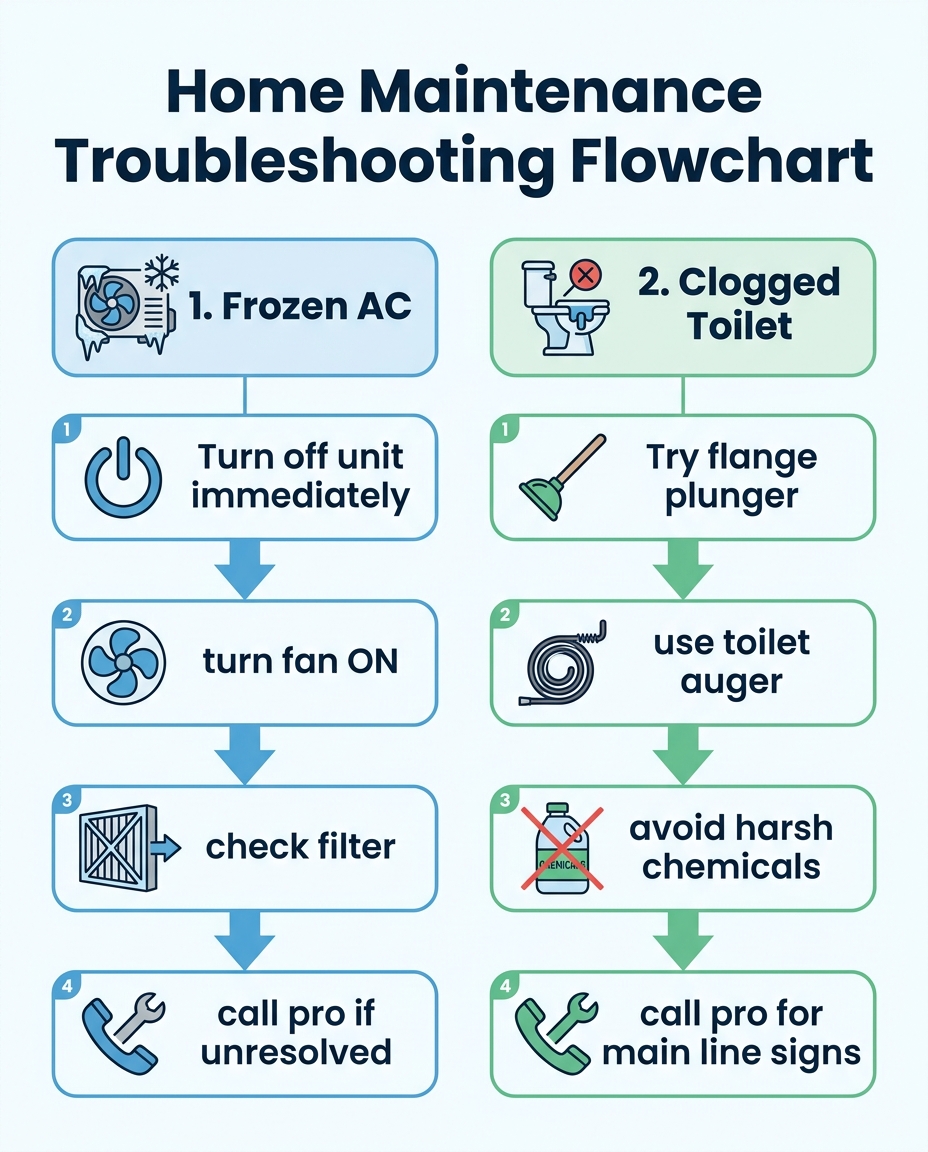
1. Turn off the AC immediately: Switch your thermostat from "COOL" to "OFF." This is the single most important step you can take. Stopping the cooling cycle immediately protects the compressor from liquid slugging and prevents a total system breakdown.
2. Turn the thermostat fan setting to "ON": Leave the cooling off, but switch the fan setting from "AUTO" to "ON." This forces the blower motor to continuously push warm ambient indoor air over the frozen coil, helping the ice melt safely and naturally. Never use a hairdryer, heat gun, or sharp tools to chip away the ice, as you can easily puncture the delicate refrigerant lines.
3. Inspect and replace the air filter: While the ice is melting, locate your return air filter. Pull it out and hold it up to a light. If you cannot see light shining through the pleats, the filter is severely clogged and must be replaced. Slide a fresh, clean filter into the rack.
4. Check all return vents for blockages: Walk through every room in your house. Ensure that no heavy furniture, thick rugs, or heavy curtains are blocking the large return grilles. The system needs to breathe freely to function.
5. Call a licensed professional if the issue persists: Once the ice has completely melted (which can take several hours) and you have installed a clean filter, turn the AC back on. If the system freezes again, or if the airflow was never restricted in the first place, you have reached the limit of safe DIY troubleshooting. A freezing unit with a clean filter almost always indicates a refrigerant leak or a failing blower motor, both of which require professional mechanical diagnostics.

While an HVAC system relies on unrestricted airflow, your home's plumbing relies entirely on unrestricted water flow. Transitioning from ductwork to drain lines reveals a similar principle our plumbers see daily: when the pathway is blocked, the system backs up. During the peak summer cooling season, homes often host more guests, leading to increased usage of all facilities. This heightened demand frequently exposes underlying weaknesses in your bathroom plumbing, resulting in stubborn toilet clogs.
To understand why a toilet clogs, you have to understand how it flushes. When you press the handle, water rushes from the tank into the bowl through small rim jets and a larger siphon jet located at the bottom of the bowl. This sudden influx of water creates a vacuum in the curved trapway (the S-shaped pipe behind the bowl), initiating a siphon effect that pulls waste down into the main drain line. If any part of this process is hindered, you get a weak flush or a complete blockage.
Our team frequently deals with Sacramento's notorious hard water, which plays a significant role in this process. Over time, calcium and magnesium deposits build up inside the hidden siphon jets. This scale buildup restricts the water flow, robbing the toilet of its flushing power. A toilet with a weak siphon is much more susceptible to clogging, even from normal usage.
• Excessive toilet paper: Using too much paper in a single flush easily overwhelms the trapway.
• Non-flushable wipes: Even wipes marketed as "flushable" do not break down in water and frequently snag on minor pipe imperfections.
• Foreign objects: Small toys, dental floss, and cotton swabs often get lodged in the curved trapway, creating a net that catches other debris.
• Hard water scale: Mineral buildup reduces the diameter of the jets, resulting in a lazy flush that fails to clear the bowl completely.
Just as finding your thermostat set to 70°F but indoor temp rising above 75°F serves as an early warning sign for your AC, a slow-draining bowl warns you that a total plumbing blockage is imminent. Addressing a clogged toilet quickly and safely is a crucial skill. However, using the wrong tools can damage your porcelain or harm older pipes. The goal is to clear the blockage without creating a bigger plumbing disaster.
Most homeowners reach for a standard cup plunger, but those are actually designed for flat surfaces like sink and shower drains. For a toilet, you need a flange plunger. A flange plunger has an extra rubber sleeve extending from the bottom cup, allowing it to form a tight, secure seal inside the curved drain opening of the toilet bowl.
1. Prepare the area: Lay down old towels around the base of the toilet to catch any splashes. Ensure there is enough water in the bowl to cover the plunger cup; if not, add a little water from a bucket.
2. Seat the plunger: Insert the flange plunger at an angle so the cup fills with water, not air. Fit the rubber flange snugly into the drain hole to create a vacuum seal.
3. Apply steady pressure: Push down gently at first to expel any remaining air, then pull up and push down vigorously without breaking the seal. The push-and-pull action creates hydraulic pressure that dislodges the clog.
4. Use a toilet auger: If plunging fails, step up to a toilet auger (also known as a closet auger). This specialized snake has a protective rubber sleeve that prevents the metal cable from scratching the porcelain bowl. Feed the cable into the drain and crank the handle to break up deeper blockages.
5. Avoid harsh chemicals: Never pour caustic chemical drain cleaners into a clogged toilet. These chemicals generate intense heat that can crack the porcelain bowl and severely degrade older metal or PVC pipes. Instead, use natural enzyme treatments for routine maintenance.
If you find yourself in an emergency situation without the proper equipment, knowing what to do if you have a clogged toilet but no plunger can save the day using simple household items like dish soap and hot water.
Sometimes, what appears to be a simple bathroom clog is actually the first symptom of a much larger, systemic failure. If you successfully plunge a toilet only to have it back up again the next day, or if plunging the toilet causes water to gurgle up into the bathtub, the blockage is not in the toilet itself. These are classic signs of a main sewer line backup that our technicians diagnose regularly. The main line is the primary artery that carries all wastewater from your home out to the municipal sewer or septic tank.
Unlike a localized trapway clog, a main line blockage affects the entire house. You might notice water bubbling in the shower drain when the washing machine empties, or multiple ground-floor fixtures draining slowly at the same time. Tree root intrusion, collapsed older pipes, and heavy grease buildup are common causes of these deep blockages.
Our team recently helped a local mobile home park resident who experienced this firsthand during the winter. A renter faced an immediate, severe drainage backup that rendered the home's facilities unusable. One of our technicians arrived the same day, provided a clear quote, and supplied all necessary documentation to the property management while successfully working through the complex repairs. DIY methods like plunging or small hand augers are completely ineffective against these deep blockages because they cannot reach far enough or provide enough torque to clear roots or heavy sludge.
When you encounter multiple backing-up fixtures, you need professional sewer and main line clearing. Our licensed technicians use high-resolution sewer cameras to pinpoint the exact location and nature of the blockage. They can then deploy heavy-duty hydro-jetting equipment or industrial augers to scour the pipe walls clean, providing permanent options for future prevention rather than just a temporary patch.
The most effective strategy for managing your home's complex systems is stopping emergencies before they start. Routine maintenance synthesizes everything from airflow management to water flow protection. Just as you wouldn't ignore a thermostat set to 70°F but indoor temp rising above 75°F, we advise our customers never to ignore a slow-draining sink or a dusty HVAC return grille.
For your HVAC system, routine care means scheduling seasonal tune-ups, keeping the outdoor condenser unit free of debris, and strictly adhering to a monthly or quarterly air filter replacement schedule. This proactive approach prevents the system starvation that leads to frozen coils and blown compressors. For your plumbing, it means managing hard water scale, using natural enzyme drain cleaners monthly to break down organic buildup, and having your water pressure checked annually.
Routine professional checks often uncover hidden issues before they cause damage. Just last fall, our team responded to a homeowner's call for service regarding a leaky bathtub faucet and a suspected mouse problem near the pipes. While addressing the dripping faucet and sealing the entry points to stop the pests, our technician performed a comprehensive whole-house plumbing checkup. This proactive inspection caught minor wear on other fixtures before they could turn into major winter emergencies. Enrolling in a preventative plumbing maintenance plan ensures that an expert eye regularly evaluates your home, catching the small drips and pressure imbalances that lead to catastrophic failures.
Owning a home comes with its share of surprises, but sudden system failures don't have to ruin your week. By understanding the mechanics behind common issues—like why restricted airflow causes an AC coil to freeze during the peak summer cooling season, or how hard water scale weakens a toilet's flush—you can take immediate, safe action. The peace of mind that comes from knowing exactly how to troubleshoot safely is something we strive to give every customer.
Remember the clear criteria for when a professional must step in: if your AC freezes again after a filter change, or if plunging a toilet causes water to back up into the shower, it is time to put down the tools. Applying these home maintenance tips and troubleshooting strategies will protect your property and extend the lifespan of your equipment. Schedule your routine maintenance today to keep your home comfortable, safe, and fully functional year-round.
Yes, you must turn off the cooling cycle immediately. Switching the thermostat to "OFF" stops the compressor from running while the coil is frozen. If you allow the system to keep running with ice on the coils, liquid refrigerant can flow backward into the compressor. This causes a dangerous condition called slugging, which can permanently destroy the compressor motor.
Warm air from your vents usually indicates that the system is starved of airflow or refrigerant. When the evaporator coil freezes over, it blocks the air from passing through the cold fins, resulting in warm ambient air circulating through the house. It can also point to a failed compressor that is no longer pumping refrigerant through the system, or a severe refrigerant leak that has depleted the system's cooling capacity.
An evaporator coil freezes due to a lack of heat absorption, almost always caused by restricted airflow or low refrigerant. The most common culprit is a dirty, clogged air filter that prevents warm indoor air from blowing across the coil. Blocked return vents, failing blower motors, and slow refrigerant leaks also cause the coil's temperature to drop below freezing, turning natural condensation into solid ice.
Our plumbers recommend using a flange plunger to create a tight seal inside the toilet bowl drain. Ensure there is enough water in the bowl to cover the plunger cup, then apply steady, vigorous push-and-pull pressure to dislodge the waste. If plunging does not work, a toilet auger can be carefully fed into the trapway to break up the blockage without scratching the porcelain bowl.
Enzyme-based waste digesters are the safest and most effective way to break down organic matter in a toilet over time. If you need a faster household solution, pouring a generous amount of liquid dish soap into the bowl followed by a bucket of hot (not boiling) water can help lubricate the trapway. Let the soap and hot water sit for about 20 minutes to soften the waste before attempting to plunge again.
No, our team strongly advises against using harsh chemical drain cleaners in a toilet. These caustic chemicals create intense thermal reactions that can easily crack the porcelain bowl, leading to severe flooding. Furthermore, if the chemicals fail to clear the clog, they remain trapped in the bowl, creating a dangerous, toxic splashing hazard for whoever has to manually plunge or auger the toilet afterward.
See what our satisfied customers have to say about their experience with Always Affordable
Plumbing & HVAC.

"Chappy was very skilled in his knowledge of my HVAC unit. I greatly appreciate the quick response and experienced tech. The whole endeavor was made less stressful by his humor and honest conversation. I find comfort in knowing I now have a shop i trust for the next time."
"Tony, James, Ronnie did an amazing job setting up our new AC! They were quick, efficient, considerate, and polite! We appreciate them scheduling us in on such short notice. Definitely recommend this company!"
"Prompt, professional service with kindness and care. They came out to address both plumbing and AC issues. I received a courtesy call before they arrived. All issues were resolved the same day with integrity and respect. Thankful for businesses like this. Absolutely recommend to those that I love."
"Excellent service! Jason came out promptly and in addition to doing my outside faucet he also put in new irrigation equipment! All done perfectly! Jason was lovely"
"Honest with the assessment; friendly and good manners. No high pressure sales. Just good to honest "tell it like you see it" Thought my kitchen disposer needed an overhaul. But Jason, there Plumber gave me an honest lesson on what was really happening. Saved me hundreds, if I went the route of replacing. Thank you!"
"Absolutely 5 stars. If you are looking for affordable ,professional and kind. Chappy was excellent and very knowledgeable . I called in the morning because my air conditioner stopped working he was here within hours and fixed my air with a smile. I highly recommend Chappy and Always Affordable plumbing and Hvac."
"Scott and James were great. They got there quickly and diagnosed the problem with my A/C.They did a very thorough job testing everything. Sent me pictures and called to keep me informed. Got it done the next day and everything is working fine. Be glad when I get home so I can enjoy my new system. Thanks guys for a great job."
"Chappy was very helpful. He knew our issue right away, cleaned our coils. He also came on the same day we called and got our AC blowing cold air again."
"After some timing ’curfuffles’ the Tech Jason arrived and not only completed a speedy install on my toilet, he was personable & professional. Because of the timing issues Jason was attentive and showed up with everything needed! No extra store runs 😊 I was very comfortable with having this Tech in my Daughter’s home. We will definitely use this Service again."


