Common Homeowner Questions Answered: Troubleshooting AC Cooling Failures and Stubborn Clogs
Is your AC running nonstop but your house is still hot? We get these common homeowner questions answered. See when to check a filter vs when to call a pro.



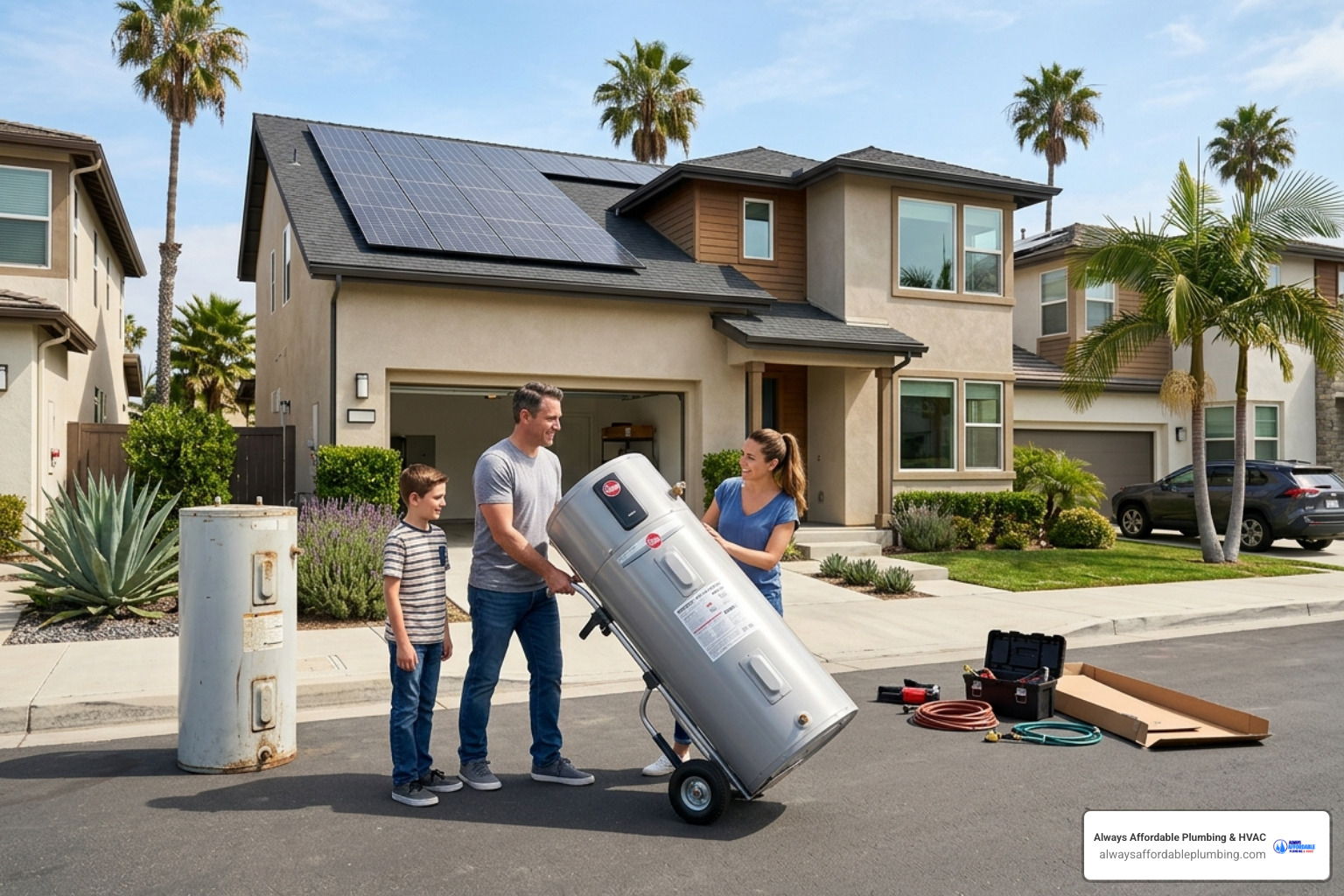
How to apply for energy rebates in California is simpler than most homeowners expect — and the savings can be significant. Here's a quick overview of the process:
1. Check your eligibility — based on your utility provider, income level, and property type
2. Choose qualifying equipment — such as heat pumps, heat pump water heaters, EV chargers, or induction ranges
3. Reserve your rebate before installation — many programs require pre-approval before work begins
4. Hire a qualified contractor — some programs, like HEEHRA, require TECH Clean California-certified contractors
5. Submit your claim — with receipts, photos, serial numbers, and proof of income if required
6. Receive your payment — typically within 4 to 8 weeks, via check or prepaid card
California homeowners have access to one of the most generous stacks of energy rebate programs in the country. Between utility programs from PG&E, SCE, SoCalGas, SDG&E, and SMUD, state-backed initiatives, and federal Inflation Reduction Act funding totaling $590 million allocated to California alone, the opportunities to offset the cost of energy-efficient upgrades are real and substantial.
That said, navigating multiple programs — each with its own eligibility rules, deadlines, and documentation requirements — can feel overwhelming. Some programs, like HEEHRA Phase I single-family rebates, were fully reserved as of February 2026. Others, like utility rebate marketplaces and local programs, remain open and actively accepting applications.
This guide walks you through exactly what's available, who qualifies, and how to apply — so you can claim what you're entitled to without missing a dollar.
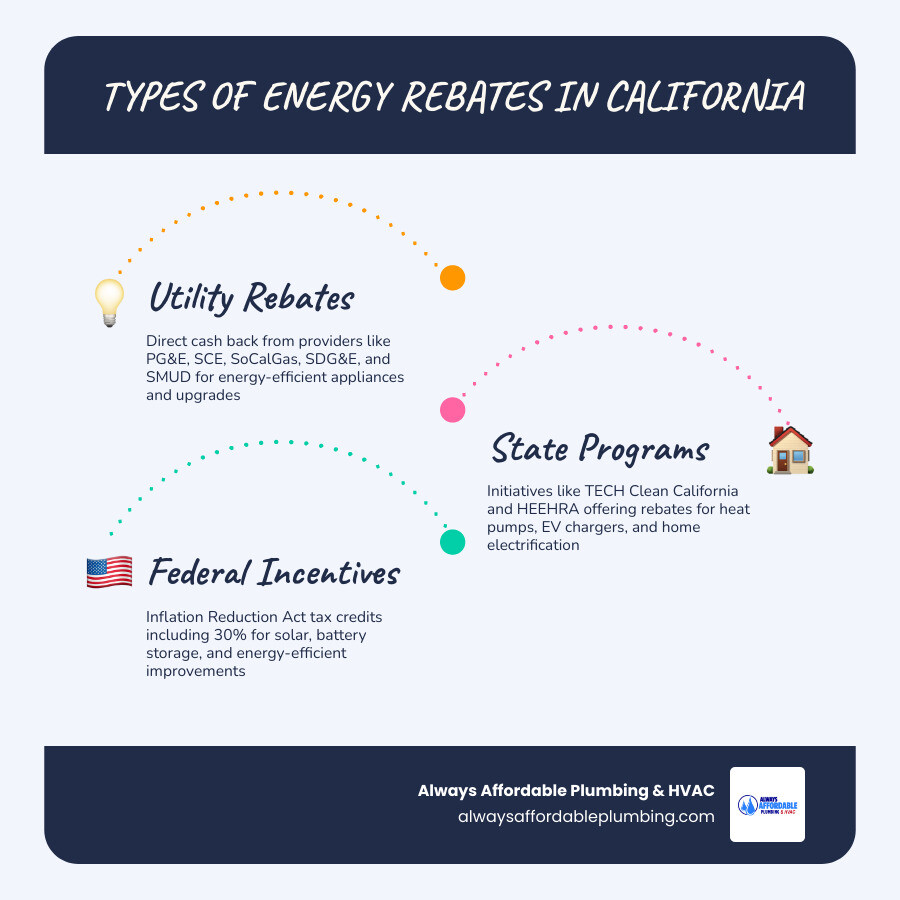
Navigating energy incentives in California can feel like looking at a giant jigsaw puzzle. To make it easier, we categorize these incentives into three main buckets: Utility-run programs, State-funded initiatives, and Federal tax credits.
In the Sacramento area and throughout the Central Valley, most of our neighbors are served by either PG&E or SMUD. These utilities offer "direct rebates," which are essentially cash back for buying specific energy-efficient appliances. On the other hand, federal incentives like those from the Inflation Reduction Act (IRA) often come in the form of tax credits or specialized grants for lower-income households.
• Source — Utility Rebates (PG&E/SMUD/SoCalGas): Ratepayer funds via CPUC — Federal IRA Incentives (HEEHRA/HOMES): U.S. Dept. of Energy ($590M for CA) — Federal Tax Credits (25C/ITC): Internal Revenue Service (IRS)
• Primary Goal — Utility Rebates (PG&E/SMUD/SoCalGas): Load reduction & efficiency — Federal IRA Incentives (HEEHRA/HOMES): Decarbonization & Equity — Federal Tax Credits (25C/ITC): Broad adoption of green tech
• Application — Utility Rebates (PG&E/SMUD/SoCalGas): Online portal or instant coupon — Federal IRA Incentives (HEEHRA/HOMES): Contractor-led reservation — Federal Tax Credits (25C/ITC): Filed with annual tax return
• Income Limits — Utility Rebates (PG&E/SMUD/SoCalGas): Usually none (except ESA) — Federal IRA Incentives (HEEHRA/HOMES): Strict AMI thresholds (80-150%) — Federal Tax Credits (25C/ITC): None
For those looking at solar power, the Federal Investment Tax Credit (ITC) is a heavy hitter, providing a 30% credit on qualifying costs for residential solar PV and battery storage systems. This is a dollar-for-dollar reduction in the taxes you owe, making high-tech storage much more accessible.

When you're ready to make a move, the process for how to apply for energy rebates in California generally follows a specific rhythm. We always tell our customers: don't buy the unit until you've checked the rebate portal!
1. Verify Eligibility: Visit your utility’s website (like the PG&E or SMUD marketplace) to see if your specific zip code and account type qualify.
2. Select a Certified Contractor: For many high-value rebates, such as those under the TECH Clean California umbrella, you must use a certified contractor. These professionals are trained to handle the paperwork and ensure the equipment meets strict efficiency standards.
3. Submit a Reservation Request: This is the most critical step. Programs like HEEHRA require a "reservation" before the old unit is even removed. If you install first and ask for money later, you might be out of luck.
4. Installation and Permitting: Ensure your contractor pulls the necessary building permits. Many rebate programs will audit your project and deny the claim if a permit wasn't issued by the city or county.
5. Final Claim Submission: Once the job is done, you’ll submit your proof of purchase, photos of the installed unit (including the make/model tag), and the final invoice.
The High-Efficiency Electric Home Rebate Act (HEEHRA) and the Home Owner Managing Energy Savings (HOMES) programs are the "big fish" of the IRA funding. California received nearly $291 million for HOMES and $290 million for HEEHRA.
However, as of February 24, 2026, HEEHRA Phase I single-family rebates reached a "fully reserved" status. This means the initial pot of money for single-family homes is currently spoken for. If you're applying now, you may be placed on a waitlist.
For those who are eligible, the rewards are massive:
• Under 80% Area Median Income (AMI): Up to $8,000 for heat pump HVAC.
• 80-150% AMI: Up to $4,000 for heat pump HVAC.
• Multifamily: Up to $14,000 per unit for qualifying upgrades.
The HOMES program operates differently, focusing on "Pay for Performance." This means the rebate is based on the actual measured energy savings at your utility meter after the upgrades are finished.
While the federal funds are highly sought after, don't overlook your local utility. They often have "Instant Rebates" that require zero paperwork.
• PG&E & SCE Marketplaces: You can often find "Golden State Rebates" which are instant coupons for smart thermostats or LED lighting.
• SoCalGas: They offer up to $1,500 for high-efficiency tankless water heaters and significant rebates for pool heaters.
• SMUD: For our friends in the Sacramento area, the SMUD Water Heater Rebate is a fantastic way to switch to a heat pump model. SMUD also offers up to $4,800 for HVAC heat pumps.
• PG&E Pre-Owned EV Rebate: If you're looking at a used electric vehicle, you could get up to $4,000 back, or up to $5,000 for home charging equipment if you meet income requirements.
The fastest way to get your application rejected is to miss a single piece of documentation. When we help our members club residents with their upgrades, we always recommend keeping a digital folder of the following:
• Proof of Property Type: Most rebates are for single-family homes, though multifamily programs exist. New construction homes usually do not qualify for these retrofit rebates.
• Income Verification: For HEEHRA, you must provide proof of gross annual household income through an official portal. This ensures the funds go to those who need them most.
• Equipment Details: You need the manufacturer name, model number, and serial number. Pro tip: Take a clear photo of the "silver tag" on the side of your new unit before the technician leaves!
• Receipts and Invoices: These must show the date of purchase, the itemized cost of the equipment, and the labor costs.
• Photos: Some programs require "before" and "after" photos of the installation site.
One of the best-kept secrets in California energy efficiency is "stacking." In many cases, you can combine a utility rebate with a federal tax credit. For example, you might get a $2,000 rebate from your utility for a heat pump water heater and then claim a 30% federal tax credit (under Section 25C) on the remaining cost when you file your taxes.
Local programs, like those from Silicon Valley Clean Energy (SVCE), offer even more. SVCE customers can access up to $13,000 in total rebates for all-electric upgrades, including add-ons like $1,000 for a panel upgrade or $500 for gas meter removal.
A Word of Caution: Avoid ScamsWith hundreds of millions of dollars on the table, scammers are active.
• Never share your financial info with someone who calls you out of the blue claiming to represent the California Energy Commission (CEC).
• Only use TECH-certified contractors found through official sites like "The Switch Is On."
• Avoid "Free" offers that require you to sign over your rebate rights before the work is explained.
Common pitfalls include failing to get a permit (which voids the rebate) or choosing a model that is almost efficient enough but doesn't quite meet the Energy Star "Most Efficient" rating required for the top-tier cash back.
For most utility programs like SoCalGas or PG&E, you can expect your payment in about 6 to 8 weeks. Many utilities now offer digital payments via a virtual Mastercard, which can arrive even faster. You can usually check your status online using an enrollment number provided at the time of submission.
Absolutely! The Energy Savings Assistance (ESA) program provides no-cost weatherization and energy-efficient appliances to income-qualified renters and homeowners. Additionally, the "Green Tariff" program offers a 20% discount on clean energy for those in disadvantaged communities. Renters can also benefit from "Direct Install" programs where the utility handles the contractor and the costs entirely.
Don't panic. While Phase I single-family funds were reserved as of February 2026, Phase II is currently under development with an additional $152 million expected to be released. In the meantime, look toward your local utility (like SMUD or PG&E) or the 30% federal tax credits, which do not have a "funding cap" in the same way rebates do.
Transitioning to a more energy-efficient home isn't just about helping the environment; it’s about making your home more comfortable and keeping more of your hard-earned money. Whether you’re looking for a new water heater in Sacramento or a full HVAC overhaul in Elk Grove, understanding how to apply for energy rebates in California is the first step toward a smarter home.
At Always Affordable Plumbing & HVAC, we pride ourselves on being more than just technicians—we’re your partners in home efficiency. From navigating the complexities of permit requirements to ensuring you choose the right Energy Star-rated equipment, we’re here to help our community members in Roseville, Folsom, and beyond.
Ready to upgrade your home's comfort and efficiency? Explore our HVAC Services today and let us help you find the best path to savings!
See what our satisfied customers have to say about their experience with Always Affordable
Plumbing & HVAC.

"Chappy was very skilled in his knowledge of my HVAC unit. I greatly appreciate the quick response and experienced tech. The whole endeavor was made less stressful by his humor and honest conversation. I find comfort in knowing I now have a shop i trust for the next time."
"Tony, James, Ronnie did an amazing job setting up our new AC! They were quick, efficient, considerate, and polite! We appreciate them scheduling us in on such short notice. Definitely recommend this company!"
"Prompt, professional service with kindness and care. They came out to address both plumbing and AC issues. I received a courtesy call before they arrived. All issues were resolved the same day with integrity and respect. Thankful for businesses like this. Absolutely recommend to those that I love."
"Excellent service! Jason came out promptly and in addition to doing my outside faucet he also put in new irrigation equipment! All done perfectly! Jason was lovely"
"Honest with the assessment; friendly and good manners. No high pressure sales. Just good to honest "tell it like you see it" Thought my kitchen disposer needed an overhaul. But Jason, there Plumber gave me an honest lesson on what was really happening. Saved me hundreds, if I went the route of replacing. Thank you!"
"Absolutely 5 stars. If you are looking for affordable ,professional and kind. Chappy was excellent and very knowledgeable . I called in the morning because my air conditioner stopped working he was here within hours and fixed my air with a smile. I highly recommend Chappy and Always Affordable plumbing and Hvac."
"Scott and James were great. They got there quickly and diagnosed the problem with my A/C.They did a very thorough job testing everything. Sent me pictures and called to keep me informed. Got it done the next day and everything is working fine. Be glad when I get home so I can enjoy my new system. Thanks guys for a great job."
"Chappy was very helpful. He knew our issue right away, cleaned our coils. He also came on the same day we called and got our AC blowing cold air again."
"After some timing ’curfuffles’ the Tech Jason arrived and not only completed a speedy install on my toilet, he was personable & professional. Because of the timing issues Jason was attentive and showed up with everything needed! No extra store runs 😊 I was very comfortable with having this Tech in my Daughter’s home. We will definitely use this Service again."