
AC vs. Heat Pump: Options Comparisons for Homeowners Facing a System Failure
When your AC fails, choosing a replacement is a major choice. Review these options comparisons for homeowners to weigh SEER2 ratings and decide with confidence.



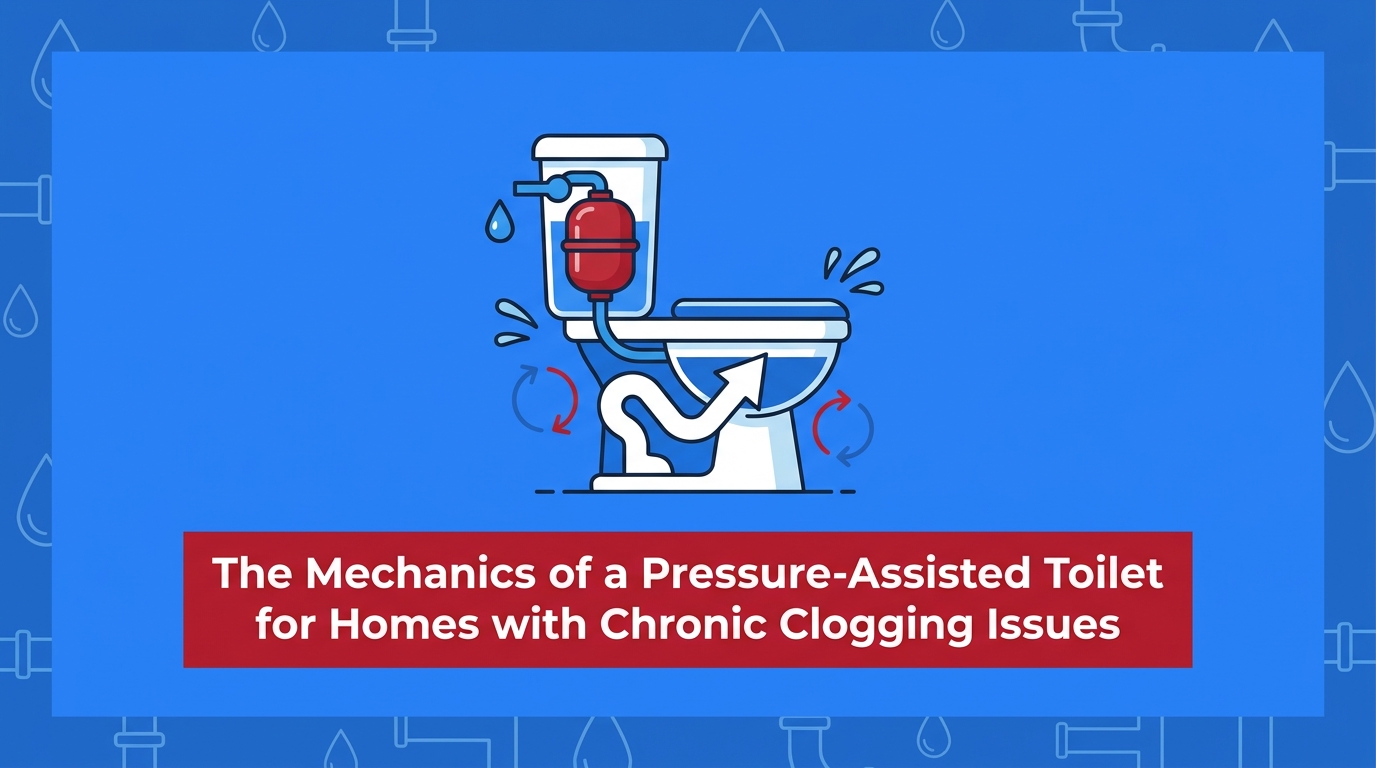
Your bathroom fixture is supposed to handle daily use without issue, but instead, you find yourself reaching for the plunger multiple times a week. Understanding the mechanics of a pressure-assisted toilet for homes with chronic clogging issues is the first step toward breaking this exhausting cycle. When a standard residential toilet repeatedly fails to handle large waste volumes, it is easy to assume someone in the household is using too much paper or that the drain line itself is irreparably flawed. However, in our years of serving the local area, our team at Always Affordable Plumbing & HVAC has found that the root of the problem often lies in the basic physical limitations of traditional, gravity-fed bathroom fixtures.
Standard gravity toilets are essentially passive devices. They rely entirely on the natural weight of water dropping from the upper tank into the lower bowl to create a siphoning action. When that natural drop is not forceful enough, the flush fails, leaving you with a frustrating mess. Upgrading to a pressure-assisted system introduces a definitive mechanical solution that actively forces waste down the drain. By exploring how these advanced systems operate, you can make an informed decision about upgrading your home's infrastructure. For homeowners looking to resolve these ongoing frustrations, integrating this upgrade into your comprehensive plumbing services plan ensures you receive true professional plumbing solutions rather than just temporary fixes.
To understand why your current fixture keeps failing, you have to look at the baseline mechanics and vulnerabilities of traditional gravity-flush systems. For over a century, the standard residential toilet has operated on a very simple physical principle: water displacement and gravity. When you press the flush lever, a flapper lifts, and the water stored in the tank rushes down into the bowl. This sudden influx of water is supposed to raise the water level in the bowl fast enough to activate the trapway—the curved channel at the base of the toilet.
The real heavy lifting in a gravity toilet is done by a small, hidden component called the siphon jet. Located near the bottom of the bowl, the siphon jet directs a concentrated stream of water directly into the trapway. This creates a vacuum, or a siphoning effect, which pulls the waste out of the bowl and down into your home's main drain line. However, this delicate balance of water volume and vacuum pressure is highly vulnerable to disruption, especially in regions with specific water quality challenges.
In the Sacramento area, hard water is a known issue. Our technicians see firsthand how this hard water, packed with minerals, accelerates calcium and mineral scale buildup inside the small openings of standard gravity toilet siphon jets. This is a leading invisible cause of weakening flushes. As the scale slowly chokes off the siphon jet, the water cannot enter the trapway fast enough to create a strong vacuum. The result is a sluggish, weak flush that simply lacks the kinetic energy to move large waste volumes.
When a gravity toilet begins to fail, it usually follows a predictable pattern of mechanical degradation. Understanding this anatomy helps explain why plunging becomes a daily chore:
• Loss of water volume: Internal scaling restricts the flow from the tank to the bowl, meaning less water is available to push the waste.
• Weakened trapway vacuum: Without a clear, powerful stream from the siphon jet, the toilet cannot create the suction necessary to pull heavy material over the curve of the trapway.
• The compounding effect: When large waste meets a compromised siphon, the water simply swirls around the bowl and rises, leaving the solid material trapped at the base. Once the flush velocity drops to this level, chronic clogging becomes inevitable.
If standard gravity toilets rely on a passive pool of water, how does the mechanical upgrade differ? The secret lies in a completely different approach to water storage and energy release. When you lift the lid on a standard toilet, you see a pool of standing water, a flapper, and a fill valve. When you lift the lid on a pressure-assisted model, you will not see standing water at all. Instead, you will find a sealed, usually black or white, inner vessel.
This component is the pressure-assisted internal air tank, and it is the core technology that differentiates this system from traditional models. This sealed vessel is connected directly to your home's water supply line. As water flows from your pipes into this sealed tank, it occupies space. Because the tank is completely airtight, the air that was already inside the vessel has nowhere to go. As more water enters, the trapped air becomes highly compressed at the top of the tank.
This compression creates stored kinetic energy. The water inside the vessel absorbs the pressure from your home's main water line—typically between 40 and 60 pounds per square inch (PSI). The system sits in this pressurized state, holding a tightly coiled spring of air and water, waiting for the flush lever to be activated. Contrast this sealed, pressurized environment with the passive water storage of gravity models, which rely solely on the few inches of vertical drop from the tank to the bowl to generate force. The pressure-assisted internal air tank transforms the toilet from a passive basin into an active, mechanical pump.
The true advantage of this system becomes visible the moment you press the flush handle. Instead of a gentle, swirling cascade of water, you get an immediate, powerful surge. This forceful evacuation is the result of specific physical reactions that happen in fractions of a second.
Here is exactly how the high-velocity flush pressure dynamics operate to clear large waste without clogging:
1. The Trigger Release: When you press the flush lever, it opens a specialized flush cartridge valve on the pressurized vessel, rather than lifting a simple rubber flapper.
2. The Compressed Air Expansion: The highly compressed air trapped at the top of the vessel instantly expands, violently forcing the stored water out of the tank and down into the bowl.
3. The High-Velocity Surge: Water enters the bowl at a significantly higher velocity than gravity alone could ever achieve. This creates an immediate, turbulent surge that blasts the bowl clean.
4. The Trapway Evacuation: Because the water is moving with such intense kinetic energy, it does not need to slowly build up a vacuum in the siphon jet. The sheer force of the water pushes large waste directly through the trapway.
5. The Drain Line Carry: The high PSI force of a pressure-assisted flush not only clears the bowl but pushes the waste much further down your home's main sewer line, reducing the risk of downstream clogs.
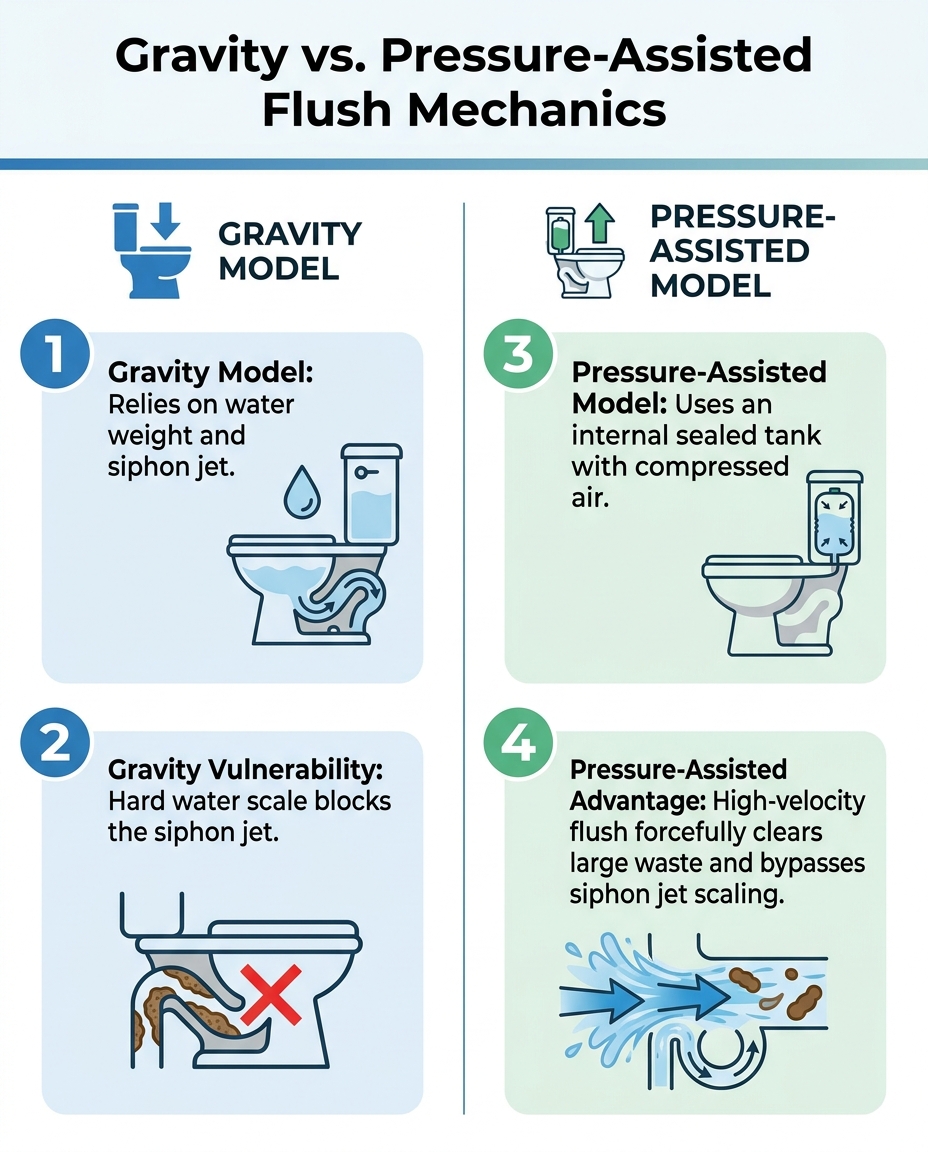

The mechanical differences between these two systems do more than just clear immediate clogs; they actually solve regional plumbing challenges. As discussed earlier, traditional toilets rely heavily on a small siphon jet at the base of the bowl. When that jet becomes encrusted with calcium and mineral deposits, the toilet loses its ability to flush effectively.
The forceful delivery of water in a pressure-assisted system fundamentally changes this dynamic. Because the water is blasted into the bowl under high pressure, the system does not need to rely on a delicate siphon jet to initiate the flush. The sheer volume and speed of the water entering from the main rim are enough to evacuate the bowl entirely.
Bypassing the siphon jet is the ultimate defense against Sacramento's hard water. By removing the primary vulnerability that plagues standard models, a pressure-assisted system becomes highly resistant to calcium and mineral scale buildup. There are no tiny, submerged jet holes to get clogged with calcium carbonate. This resistance ensures that the flush power remains consistent year after year, even in challenging water conditions, preventing the slow, frustrating degradation of flush power that leads to chronic clogging.
Dealing with chronic clogs often traps homeowners in a cycle of reactive maintenance. You buy heavier-duty plungers, pour harsh chemical drain cleaners down the pipes, or call out emergency plumbers on weekends. These hidden costs of relying on repeated plunging or emergency drain clearing services add up quickly, both in financial terms and in the sheer stress of dealing with an unreliable bathroom fixture.
One local homeowner called us late on a winter night with a completely backed-up sewer line. While our technicians worked diligently to unclog the line right then and there—rather than immediately pushing for a costly replacement—we also provided them with options for future prevention. At Always Affordable Plumbing & HVAC, this is our core philosophy. We are committed to providing long-term, cost-effective solutions as a professional partner who diagnoses the root cause and recommends structural upgrades, rather than just charging for repeated emergency plunge visits.
Framing the installation of a pressure-assisted toilet as a permanent, structural solution shifts your home maintenance from reactive to proactive. However, this is not a simple swap that can be done on a Saturday afternoon. It requires a professional assessment to ensure your home's water pressure can actually support the new system. Our installers typically verify that your home meets the minimum static water line pressure of 20 to 25 PSI needed to properly compress the air inside the inner tank. Installing these specialized units requires a licensed professional—never attempt it as a DIY project, as improperly handling pressurized water vessels can lead to severe leaks or structural damage. If you are ready to make the switch, exploring financing options for plumbing upgrades can make this permanent mechanical solution highly accessible.
Before committing to a new installation, it helps to weigh the objective criteria of these advanced fixtures. While they offer incredible clearing power, they operate differently than the standard toilets most homeowners are used to. Evaluating these differences ensures the upgrade perfectly matches your household's needs.
• Water efficiency standards: You might assume that a more powerful flush requires more water. In reality, despite their power, these models typically use a highly efficient 1.1 to 1.6 gallons per flush (GPF). The compressed air does the work, allowing the system to conserve water while still delivering a massive kinetic surge.
• Acoustic profile and flush noise: The most common adjustment for new owners is the sound. Because the water is released under pressure, the flush produces a characteristic "whoosh" sound, which is noticeably louder and more abrupt than the quiet, passive trickle of silent gravity models.
• Maintenance differences: Pressure-assisted models do not use traditional flappers, chains, or standard fill valves. Instead, they rely on specialized internal cartridges. These cartridges boast excellent longevity, but when they do eventually wear out, they require specific replacement parts. Maintaining these systems is easy when you are part of a preventative maintenance membership.
• Fixture condition assessment: Sometimes, chronic clogging is a sign of a cracked bowl or a failing flange, not just a weak flush. Our plumbers always recommend a professional inspection of your current fixture's condition to rule out these underlying issues. If you are noticing leaks around the base or persistent wobbling, review the signs it's time for a toilet replacement to determine your next steps.
• Flush Mechanism — Standard Gravity Toilet: Passive water drop and siphon jet vacuum — Pressure-Assisted Toilet: Active compressed air and high-velocity surge
• Hard Water Vulnerability — Standard Gravity Toilet: High (Scale blocks the delicate siphon jet) — Pressure-Assisted Toilet: Low (Bypasses the siphon jet entirely)
• Clog Resistance — Standard Gravity Toilet: Moderate (Struggles with large waste volumes) — Pressure-Assisted Toilet: Exceptional (Forces large waste through trapway)
• Internal Components — Standard Gravity Toilet: Flapper, chain, float, standard fill valve — Pressure-Assisted Toilet: Sealed air vessel, flush cartridge, pressure valve
• Noise Level — Standard Gravity Toilet: Quiet, prolonged water swirling — Pressure-Assisted Toilet: Loud, abrupt "whoosh" sound
A pressure-assisted toilet works by using your home's water line pressure to compress air inside a sealed inner tank. When you flush, this highly compressed air forcefully pushes the water into the bowl at a high velocity. This rapid surge of water blasts waste through the trapway much more effectively than a standard gravity drop.
While no plumbing fixture is entirely immune to blockages, pressure-assisted toilets are highly resistant to clogging. The intense kinetic energy generated by the compressed air forces large waste volumes and heavy paper usage down the drain line. They are specifically designed to eliminate the chronic clogging issues that plague standard gravity models.
You cannot simply drop a pressurized tank into a standard gravity toilet. Pressure-assisted systems require specially designed porcelain bowls that can handle the forceful water delivery and specific trapway configurations. Upgrading requires entirely replacing the existing fixture with a purpose-built pressure-assisted unit.
For homes struggling with chronic clogging, repeated plunging, or constant calls for emergency drain clearing, they are a worthwhile structural upgrade. They provide a permanent mechanical solution to large waste management and bypass the hard water scaling issues that slowly destroy standard gravity toilets.
The flush is noticeably louder than a standard gravity toilet, often described as a sharp, abrupt "whoosh" sound. Because the water is being forced out by compressed air rather than gently falling, the acoustic profile is similar to the commercial toilets you might hear in public restrooms or airplanes.
Yes, pressure-assisted models handle hard water much better than standard toilets. Gravity toilets rely on a small siphon jet that easily gets choked by calcium and mineral scale, weakening the flush over time. Pressure-assisted models bypass the need for a siphon jet entirely, making them highly resistant to hard water degradation.
Constant plunging shouldn't be a normal part of your weekly routine. Upgrading to a pressure-assisted system offers a clear mechanical solution that actively powers through large waste and resists hard water scaling. If you are tired of temporary fixes, reach out to schedule a professional assessment and secure a definitive solution for your home's plumbing.
See what our satisfied customers have to say about their experience with Always Affordable
Plumbing & HVAC.

"Chappy was very skilled in his knowledge of my HVAC unit. I greatly appreciate the quick response and experienced tech. The whole endeavor was made less stressful by his humor and honest conversation. I find comfort in knowing I now have a shop i trust for the next time."
"Tony, James, Ronnie did an amazing job setting up our new AC! They were quick, efficient, considerate, and polite! We appreciate them scheduling us in on such short notice. Definitely recommend this company!"
"Prompt, professional service with kindness and care. They came out to address both plumbing and AC issues. I received a courtesy call before they arrived. All issues were resolved the same day with integrity and respect. Thankful for businesses like this. Absolutely recommend to those that I love."
"Excellent service! Jason came out promptly and in addition to doing my outside faucet he also put in new irrigation equipment! All done perfectly! Jason was lovely"
"Honest with the assessment; friendly and good manners. No high pressure sales. Just good to honest "tell it like you see it" Thought my kitchen disposer needed an overhaul. But Jason, there Plumber gave me an honest lesson on what was really happening. Saved me hundreds, if I went the route of replacing. Thank you!"
"Absolutely 5 stars. If you are looking for affordable ,professional and kind. Chappy was excellent and very knowledgeable . I called in the morning because my air conditioner stopped working he was here within hours and fixed my air with a smile. I highly recommend Chappy and Always Affordable plumbing and Hvac."
"Scott and James were great. They got there quickly and diagnosed the problem with my A/C.They did a very thorough job testing everything. Sent me pictures and called to keep me informed. Got it done the next day and everything is working fine. Be glad when I get home so I can enjoy my new system. Thanks guys for a great job."
"Chappy was very helpful. He knew our issue right away, cleaned our coils. He also came on the same day we called and got our AC blowing cold air again."
"After some timing ’curfuffles’ the Tech Jason arrived and not only completed a speedy install on my toilet, he was personable & professional. Because of the timing issues Jason was attentive and showed up with everything needed! No extra store runs 😊 I was very comfortable with having this Tech in my Daughter’s home. We will definitely use this Service again."


