Why Is My AC Running But Blowing Warm Air? Expert Troubleshooting Steps
Why is your AC blowing warm air? Get clear answers on thermostat settings to check and see common homeowner questions answered before calling for a repair.



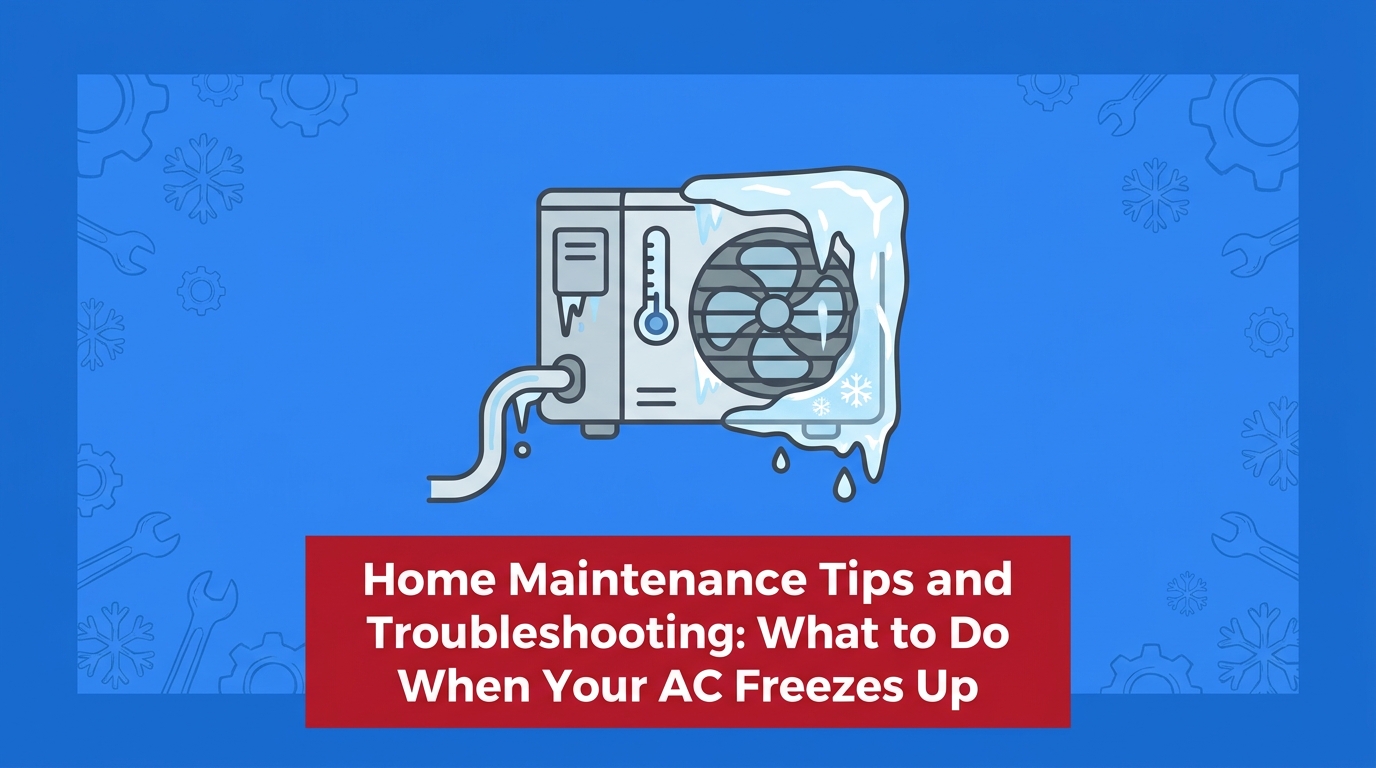
Effective home maintenance tips and troubleshooting often begin the moment you realize a critical system has stopped working the way it should. You walk past your thermostat, notice the indoor temperature climbing, and feel warm air and noticeably reduced airflow at the supply vents. Upon further inspection, you discover a layer of solid ice forming on your indoor evaporator coil or wrapping around the outdoor refrigerant lines. This is a highly alarming scenario for any homeowner, as an air conditioner is designed to cool your home, not turn into a block of ice.
Addressing a frozen AC system requires immediate, safe action to prevent catastrophic damage to the equipment. While this guide focuses heavily on diagnosing and mitigating HVAC issues, comprehensive home care means looking after all your vital systems. For water and pipe-related issues, relying on professional plumbing services for affordable plumbing repair ensures that your entire house remains in top condition. This guide will provide a strict, safety-first diagnostic framework so you know exactly what to do—and what to leave to the professionals—when your air conditioner freezes over.
Recognizing a frozen air conditioning system early can save you from catastrophic equipment failure and extensive repair bills. The signs of a freezing unit usually appear long before you actually see ice accumulating on the copper pipes outside.
In our experience at Always Affordable Plumbing & HVAC, the earliest indicator of a freezing evaporator coil is a distinct change in the air coming from your registers. You will likely experience warm air and noticeably reduced airflow at the supply vents. Because ice physically blocks the tiny fins of the evaporator coil, the blower motor struggles to push air through the system. You might also hear a straining sound from the indoor unit as the motor works harder against this restriction, or notice an unusual amount of water pooling around your indoor unit as the base layer of ice begins to melt and overwhelm the condensate drain pan.
To understand why this happens, you have to understand how your air conditioner actually cools your home. Your system does not simply "make" cold air; it removes heat from the indoor air. The refrigerant inside the evaporator coil absorbs this heat. However, when a layer of ice forms on the coil, that ice acts as a powerful insulator. It creates a physical barrier between the warm indoor air and the cold refrigerant. Because the refrigerant can no longer absorb heat, it remains dangerously cold, causing even more moisture from the air to freeze onto the coil. This creates a compounding cycle that rapidly encases the entire indoor unit in solid ice.
If you allow a frozen system to continue running, you risk severe mechanical failure. Refrigerant is designed to transition from a liquid to a gas as it absorbs heat in the indoor coil. If the ice prevents heat absorption, the refrigerant remains a liquid as it travels back outside to the compressor. Compressors are built to pump gas, not liquid. When liquid refrigerant hits the compressor—a condition known as "slugging"—it can instantly destroy the internal valves, leading to a total system breakdown. Early detection and immediate shutdown are the only ways to prevent this costly damage.
• Normal Operation — Airflow Quality: Strong, consistent breeze — Temperature at Vents: 15-20 degrees cooler than room temp — Visible Signs: Condensation dripping normally outside
• Early Freezing Stage — Airflow Quality: Weak, restricted airflow — Temperature at Vents: Slightly cool or room temperature — Visible Signs: Frost forming on the indoor copper line
• Fully Frozen Unit — Airflow Quality: Barely any air moving — Temperature at Vents: Warm air blowing steadily — Visible Signs: Solid ice block on indoor/outdoor lines
The physics of air conditioning rely on a delicate balance of temperature, pressure, and airflow. When that balance is disrupted, the system malfunctions rapidly. The most common trigger for a frozen air conditioner is severely restricted airflow across the indoor evaporator coil.
The Need for Constant Warm Air
Your evaporator coil operates at a temperature just above freezing. It requires a constant, steady volume of warm indoor air blowing across it to keep the coil warm enough to prevent condensation from turning into ice. When airflow is blocked or reduced, the heat exchange process stops. The temperature of the refrigerant inside the coil plummets below 32°F. The natural humidity in your home's air then condenses on the freezing metal fins and instantly turns to frost, which quickly builds into a thick block of ice.
Common Culprits of Restricted Airflow
Our technicians routinely see several everyday household issues that can restrict airflow enough to freeze a system:
• Dirty Air Filters: In our years of servicing HVAC systems across the local area, we've found that a clogged filter is the number one cause of frozen coils. It acts as a wall, stopping warm air from reaching the system.
• Blocked Return Vents: Furniture, rugs, or curtains placed over your intake vents starve the system of the air it needs to function.
• Closed Supply Registers: Closing too many vents in unused rooms increases static pressure and drastically slows down air circulation.
• Failing Blower Motors: If the fan motor is dying or covered in a thick layer of dust, it cannot move enough air to keep the coil above freezing.
The Impact of Extreme Weather
These airflow issues become especially critical during periods of intense heat. For example, in our experience keeping homes comfortable through the Sacramento Valley's high summer temperatures, we know these conditions demand maximum AC efficiency. During the peak summer cooling season, systems run for much longer cycles to combat the extreme outdoor heat. If a system has restricted airflow while running continuously for hours, it is highly susceptible to freezing rapidly. The longer the cycle, the faster the ice accumulates.
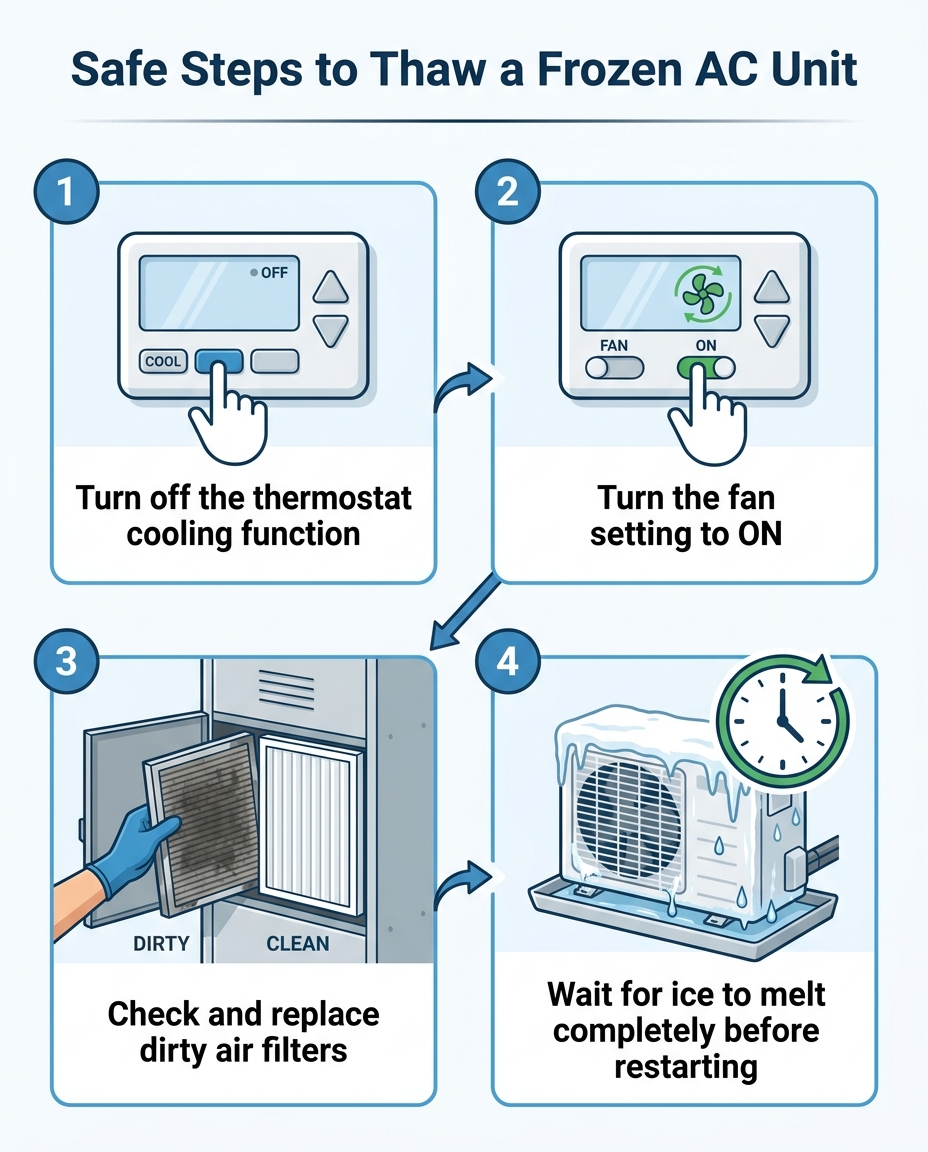
If you have identified a frozen AC system—characterized by warm air and noticeably reduced airflow at the supply vents—you must take immediate action. Continuing to run the system will only cause further damage. Follow this strict, safety-first diagnostic framework to mitigate the problem safely.
1. Turn off the thermostat's cooling function immediately: Go to your thermostat and switch the primary setting from "COOL" to "OFF." This stops the outdoor compressor from running and halts the flow of cold refrigerant to the indoor coil. This is the single most important step to prevent liquid slugging and compressor death.
2. Switch the fan setting to 'ON': On your thermostat, change the fan setting from "AUTO" to "ON." This forces the indoor blower motor to run continuously, blowing warm, unconditioned indoor air over the frozen coil. This warm air acts as a natural hairdryer, safely accelerating the melting process.
3. Check and replace the air filter: While the system is thawing, locate your HVAC air filter. Pull it out and inspect it by holding it up to a light. If you cannot see light through it, or if it is visibly caked in dust and debris, replace it immediately with a clean filter of the correct size.
4. Wait for the ice to melt completely: This process requires patience. Depending on the severity of the ice block, thawing can take anywhere from four to twenty-four hours. Do not attempt to chip, scrape, or break the ice with any tools, as the aluminum fins and copper tubes are incredibly fragile and easily punctured. Keep an eye on the indoor unit, as the melting ice may overwhelm your condensate drain pan and cause minor water pooling.

If you have safely thawed your system, replaced a dirty air filter, and turned the air conditioner back on, only to find it freezing up again a few hours later, you have ruled out basic airflow issues. At this point, the problem is likely a low refrigerant charge or a complex mechanical failure, both of which require professional intervention.
The Danger of Low Refrigerant
It seems counterintuitive, but low refrigerant actually causes an air conditioner to freeze. When a system lacks the proper volume of refrigerant, the pressure inside the evaporator coil drops significantly. According to the laws of thermodynamics, a drop in pressure results in a drop in temperature. The remaining refrigerant becomes excessively cold, freezing the moisture in the air just as a blocked filter would.
Strict Legal and Safety Boundaries
Air conditioners do not "consume" refrigerant like a car consumes gas. If your system is low, it means there is a physical leak in the copper lines or coils. State and federal laws dictate that handling, recovering, and charging refrigerant requires an EPA Section 608 certification. Never attempt a DIY refrigerant patch or recharge. Over-the-counter sealant kits often cause irreversible damage to the compressor, and handling pressurized chemical refrigerants without proper training poses severe physical risks.
The Value of Professional Diagnostics
Professional technicians use specialized electronic leak detectors, pressure gauges, and thermal imaging to locate the exact source of a leak. Our team at Always Affordable Plumbing & HVAC offers transparent, budget-conscious solutions with a 100% satisfaction guarantee, alleviating the fear of escalating from DIY troubleshooting to calling a pro. By relying on a licensed expert during the peak summer cooling season, you eliminate the guesswork and ensure your system is repaired safely, legally, and permanently.
Understanding how to troubleshoot an HVAC system is just one part of holistic home care. Proactive home maintenance prevents unexpected emergencies across all household systems, and the principles of keeping your air conditioner running smoothly apply directly to your home's plumbing infrastructure as well.
In an HVAC system, a clogged air filter restricts airflow, causing the system to choke and freeze. In a plumbing system, a buildup of grease, hair, or debris restricts water flow, causing backups and pipe damage. Both systems rely on clear, unobstructed pathways to function properly. Just as you should regularly check your air filters, you should also monitor how quickly your sinks and tubs drain. Slow drainage is the plumbing equivalent of weak airflow—it is an early warning sign of a larger blockage forming deeper in the pipes.
To avoid massive disruptions during the peak summer cooling season or the depths of winter, our team highly recommends scheduling routine inspections for your home's critical infrastructure. This includes having a professional evaluate your underground pipes through main sewer line services. Tree roots, ground shifting, and age can compromise these hidden lines, leading to severe backups that are far more disruptive than a frozen AC coil.
Part of a comprehensive home care strategy involves knowing how to handle minor plumbing issues safely before they escalate. For instance, if you encounter a bathroom backup, knowing the safest way to clear stubborn toilet clogs without using harsh, pipe-destroying chemical drain cleaners is just as important as knowing not to chip ice off an AC coil with a screwdriver. Treating your home as an interconnected ecosystem of airflow and water flow ensures long-lasting comfort and safety.
Maintaining a comfortable and functional home requires knowing the difference between safe DIY mitigation and the absolute necessity of professional repairs. When faced with a frozen air conditioner, your immediate priority is to stop the damage by turning off the cooling function and allowing the system to thaw naturally. Checking your air filter and ensuring your vents are open are safe, effective steps every homeowner should take.
However, if those basic home maintenance tips and troubleshooting steps do not resolve the issue, prompt professional action is required. Ignoring a recurring freeze-up during the peak summer cooling season will inevitably turn a minor refrigerant leak or a failing blower motor into a catastrophic compressor failure. By exploring professional maintenance options and scheduling routine tune-ups for both your HVAC and plumbing systems, you protect your investment, lower your monthly utility costs, and ensure your home remains a safe, comfortable haven year-round.
What is the immediate safe action to take when an AC freezes?
The most critical step is to turn your thermostat from "COOL" to "OFF" immediately. This stops the compressor from running and prevents catastrophic internal damage from liquid refrigerant. Next, turn the fan setting to "ON" to blow warm indoor air over the coil and accelerate the melting process safely.
Why does restricted airflow cause ice on refrigerant lines?
Your air conditioner's indoor coil needs a constant supply of warm room air to keep its temperature above freezing. When a dirty filter or blocked vent restricts that airflow, the refrigerant inside the coil drops below 32°F. The natural humidity in the surrounding air then condenses and freezes directly onto the metal components.
How long does it take for a frozen AC coil to thaw?
Thawing a frozen coil typically takes anywhere from 4 to 24 hours, depending on how thick the ice block is and the temperature of your home. Leaving the indoor fan running on the "ON" setting will speed up the process. You must wait until the ice is 100% melted before attempting to run the cooling cycle again.
Can a dirty filter cause an AC to freeze?
Yes, a dirty air filter is the most common cause of a frozen air conditioning system. A clogged filter acts like a solid wall, preventing warm indoor air from reaching the cold evaporator coil. Our team recommends checking and replacing your filter every 30 to 90 days as the best way to prevent this issue.
Should I turn off my AC if it's frozen?
Absolutely. You must turn off the cooling function the moment you notice ice on the system or warm air blowing from the vents. Running a frozen air conditioner forces the compressor to work under extreme stress, which can lead to permanent motor failure and extensive replacement costs.
Why is my AC freezing up in the summer?
During extreme summer heat, air conditioners run for much longer cycles to keep the house cool. If there is even a minor airflow restriction or a slight dip in refrigerant levels, these extended run times give ice the perfect opportunity to accumulate rapidly and overwhelm the system.
See what our satisfied customers have to say about their experience with Always Affordable
Plumbing & HVAC.

"Chappy was very skilled in his knowledge of my HVAC unit. I greatly appreciate the quick response and experienced tech. The whole endeavor was made less stressful by his humor and honest conversation. I find comfort in knowing I now have a shop i trust for the next time."
"Tony, James, Ronnie did an amazing job setting up our new AC! They were quick, efficient, considerate, and polite! We appreciate them scheduling us in on such short notice. Definitely recommend this company!"
"Prompt, professional service with kindness and care. They came out to address both plumbing and AC issues. I received a courtesy call before they arrived. All issues were resolved the same day with integrity and respect. Thankful for businesses like this. Absolutely recommend to those that I love."
"Excellent service! Jason came out promptly and in addition to doing my outside faucet he also put in new irrigation equipment! All done perfectly! Jason was lovely"
"Honest with the assessment; friendly and good manners. No high pressure sales. Just good to honest "tell it like you see it" Thought my kitchen disposer needed an overhaul. But Jason, there Plumber gave me an honest lesson on what was really happening. Saved me hundreds, if I went the route of replacing. Thank you!"
"Absolutely 5 stars. If you are looking for affordable ,professional and kind. Chappy was excellent and very knowledgeable . I called in the morning because my air conditioner stopped working he was here within hours and fixed my air with a smile. I highly recommend Chappy and Always Affordable plumbing and Hvac."
"Scott and James were great. They got there quickly and diagnosed the problem with my A/C.They did a very thorough job testing everything. Sent me pictures and called to keep me informed. Got it done the next day and everything is working fine. Be glad when I get home so I can enjoy my new system. Thanks guys for a great job."
"Chappy was very helpful. He knew our issue right away, cleaned our coils. He also came on the same day we called and got our AC blowing cold air again."
"After some timing ’curfuffles’ the Tech Jason arrived and not only completed a speedy install on my toilet, he was personable & professional. Because of the timing issues Jason was attentive and showed up with everything needed! No extra store runs 😊 I was very comfortable with having this Tech in my Daughter’s home. We will definitely use this Service again."