
AC vs. Heat Pump: Options Comparisons for Homeowners Facing a System Failure
When your AC fails, choosing a replacement is a major choice. Review these options comparisons for homeowners to weigh SEER2 ratings and decide with confidence.



The first autumn chill has arrived, and it is finally time to switch the thermostat from cool to heat. But within moments of the system firing up, a noticeable, alarming odor fills the house. You might immediately wonder, what does a burning smell from the furnace mean when turned on for the first time? Experiencing this exact concrete problem forces a stressful decision: do you shut the system down immediately and evacuate the house, or do you let it run to see if the odor clears up?
If you are concerned about persistent or dangerous odors, scheduling a professional heating system inspection is the safest way to protect your home and gain peace of mind.
It is completely understandable to feel anxious about fire safety when dealing with home heating systems. According to the National Fire Protection Association (NFPA), heating equipment is a leading cause of home fires, making your vigilance entirely appropriate. However, context is critical. During the very first autumn heating cycle, this initial odor is usually a harmless, normal process rather than a catastrophic system failure.
This guide is designed to help you distinguish between normal seasonal operation and a true emergency. By understanding the mechanics of your heating system, you can confidently evaluate the odors in your home, knowing exactly when to wait it out and when to call a licensed professional for help.
To understand why your heating system produces a burning odor initially, it helps to look at what happens inside the unit during the warmer months. Your central heating equipment contains a component called a heat exchanger. This metal chamber is responsible for heating the air that circulates throughout your home.
During the spring and summer, your heat exchanger sits completely idle. Even if you run your air conditioning daily, the heating components remain unheated and inactive. Over these months, typical household airborne particles—such as pet dander, lint, pollen, and everyday dust—settle on the surface of the heat exchanger and the internal burners. This is especially true for homes in the Sacramento valley, where prolonged, dry summer inactivity periods lead to heavier dust accumulation on HVAC components compared to regions with year-round heating needs.
When the first autumn heating cycle begins and the thermostat calls for heat, the burners fire up, and the heat exchanger rapidly reaches extreme temperatures. The intense heat instantly incinerates the layer of dust that has settled on the metal surfaces over the summer. Because the blower motor immediately pushes air over this heated metal and into your ductwork, the smell of that incinerated dust is quickly distributed into every room of your house.
The key takeaway: This is a superficial burn-off. It does not mean the internal electrical components or the structural housing of the furnace are actually on fire. Almost all central heating systems experience this exact phenomenon during their initial startup, regardless of their age or efficiency rating. If you want to ensure your system is clean and operating safely before this seasonal transition, exploring comprehensive HVAC services can help eliminate this dust buildup proactively.
Knowing exactly how long to wait before taking action is the most important part of troubleshooting a burning odor. Setting a baseline expectation helps you evaluate the situation calmly and objectively.
For standard dust burn-off, the smell dissipates within 15 to 30 minutes of continuous operation. Once the superficial layer of settled particles has been incinerated, the odor should peak quickly and then steadily fade until it is completely gone. To monitor the situation safely, follow these actionable steps:
1. Stay alert and active: Do not leave the house to run errands, and do not go to sleep while the system is completing its first cycle. You need to be present to monitor changes in the odor.
2. Ventilate the space: Keep a window slightly cracked in the main living area. This not only helps clear the harmless odor faster but also gives your nose a baseline of fresh air so you can accurately judge if the burning smell is fading or growing stronger.
3. Track the time: Note the exact time the thermostat triggered the heating cycle. If the smell dissipates within 15 to 30 minutes, the system is functioning normally.
4. Watch for escalation: If the smell intensifies, changes in character, or persists beyond the expected timeframe, it escalates from normal operation to a potential hazard.
Monitoring your system closely during seasonal transitions is just as important as preventing furnace damage during winter cold snaps. A well-monitored system ensures that minor, harmless occurrences do not mask developing mechanical issues.
You do not need to open the furnace cabinet or possess technical expertise to diagnose the type of burning smell in your home. Your sense of smell is highly effective at distinguishing between harmless dust and dangerous mechanical failures. Use the specific sensory descriptions below to evaluate the situation.
• Harmless Dust — What It Smells Like: Dry, dusty, slightly musty. Very similar to the smell of a hot hair dryer or a space heater turning on. — Likely Cause: Summer dust burning off the heat exchanger. — Required Action: Monitor. Ensure the smell dissipates within 15 to 30 minutes.
• Electrical Overheating — What It Smells Like: Sharp, acrid, metallic, or resembling the smell of ozone. — Likely Cause: Overheating wires, a failing blower motor, or a seized bearing. — Required Action: Shut off immediately at the thermostat. Call a professional.
• Melting Plastic — What It Smells Like: Toxic, harsh, chemical odor that irritates the throat or eyes. — Likely Cause: Foreign object in the ductwork or internal wire casings melting. — Required Action: Shut off immediately. Do not run the system until inspected.
Always trust your instincts. Normal dust smells fade quickly and remain relatively mild. Electrical or plastic smells are sharp, invasive, and will persist or worsen as long as the system continues to run.
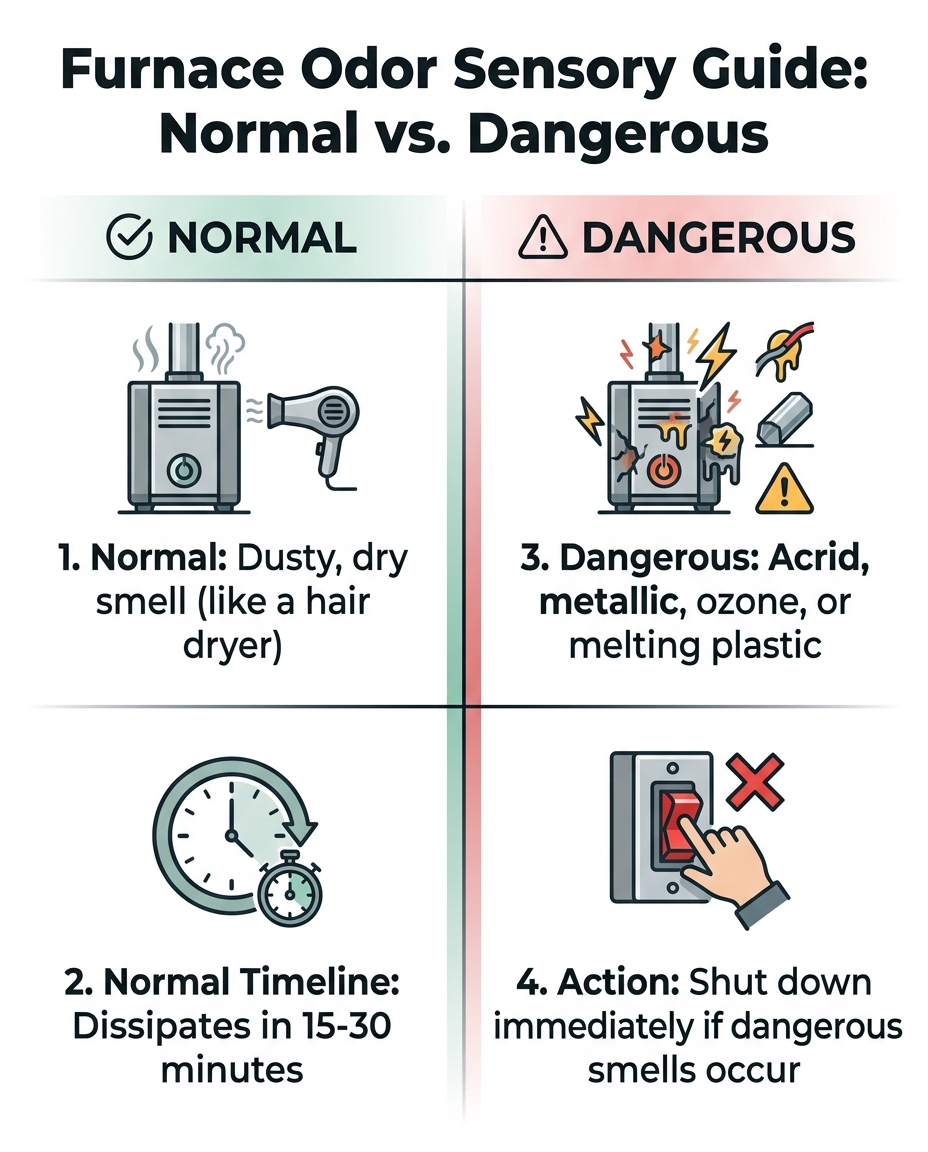

While the first autumn heating cycle usually brings harmless odors, there are clear safety directives you must follow if the situation falls outside the normal parameters. If you detect electrical, plastic, or persistent burning smells that last longer than half an hour, you must take immediate action to protect your home.
Turn off the furnace at the thermostat immediately. Do not wait for the cycle to finish. Switching the thermostat to the "off" position stops the flow of gas or electricity to the heating components and halts the blower motor, preventing further circulation of dangerous fumes.
Check your safety alarms. Ensure your home's smoke detectors and carbon monoxide detectors are functioning correctly. A cracked heat exchanger or a severe electrical short can trigger these alarms, and they are your primary defense against invisible hazards.
Strictly avoid opening the furnace cabinet to perform internal electrical diagnostics. Modern heating equipment utilizes high-voltage components, complex circuit boards, and combustible gas lines. Attempting to trace a melted wire or test a failing capacitor without proper licensing is extremely dangerous. Always Affordable Plumbing & HVAC's commitment to honest, transparent diagnosis means you can rely on a professional evaluation to prevent unnecessary panic or premature system replacements, without putting your own safety at risk.
If a professional evaluation reveals that your current unit has suffered catastrophic electrical failure, it might be necessary to evaluate alternative heating systems. Upgrading to modern heat pump heating solutions can offer safer, more efficient performance moving forward.
Transitioning from reactive troubleshooting to proactive maintenance is the best way to ensure a stress-free start to winter. By taking a few simple steps before the cold weather hits, you can eliminate the anxiety of burning odors entirely.
• Change the air filter before startup: A fresh, clean air filter reduces the amount of loose dust and debris circulated through the home and prevents the blower motor from straining against airflow restrictions.
• Clear the mechanical room: Ensure the area around the furnace is completely clear of stored summer items, cardboard boxes, cleaning supplies, or any flammable materials. Furnaces require proper clearance to draw in combustion air safely.
• Schedule professional cleaning: A technician can clean the heat exchanger and burners directly, removing the settled summer dust before it ever has a chance to burn off and circulate through your ductwork.
• Inspect electrical components early: Preventative care catches frayed wires, loose connections, or failing blower motors before they turn into mid-winter emergencies.
Enrolling in a routine HVAC maintenance plan ensures these proactive steps are handled automatically by professionals, guaranteeing your system is clean, safe, and ready for the first autumn heating cycle.
Yes, during the initial startup after months of inactivity, it is completely normal for accumulated dust to burn off the heat exchanger. This process creates a distinct, dry burning odor that often catches homeowners off guard. Because the heating components sit idle all summer, airborne particles naturally settle on the metal surfaces. When the system fires up, these particles are instantly incinerated, creating a temporary smell that is circulated by the blower fan. It is a standard operational phase for almost all central heating systems.
The standard dust burn-off odor should begin to fade quickly and completely dissipate within 15 to 30 minutes of continuous operation. Once the superficial layer of dust is gone, the source of the smell is eliminated. If the odor persists beyond this half-hour window, or if it grows significantly stronger instead of fading, it is no longer considered normal dust burn-off. At that point, the system should be shut down and inspected by a professional.
If the smell is akin to dusty hair, let it run for 15 to 30 minutes to allow the natural burn-off to complete. Monitoring the system closely during this time is essential. However, if the smell is acrid, chemical, resembles melting plastic, or lasts longer than half an hour, turn it off immediately at the thermostat. These specific sensory profiles indicate electrical failure or foreign objects in the ductwork, which require the system to be deactivated to prevent damage or fire hazards.
While rare, heating equipment is a leading cause of home fires, underscoring the need for professional inspections and regular maintenance. Fires are typically due to compromised electrical components, cracked heat exchangers, or flammable items stored too close to the unit. A well-maintained system operating normally poses very little risk, but ignoring persistent electrical or chemical burning odors can allow a minor component failure to escalate into a serious safety threat.
A burning plastic smell is not normal dust burn-off and usually indicates a foreign object in the ductwork, a failing capacitor, or melting wire insulation. This toxic, chemical odor requires an immediate shutdown of the system. Continuing to run the heater when it smells like plastic can circulate harmful fumes throughout your home and cause extensive damage to the internal electrical board. A licensed technician must isolate the melted component and replace it safely before the system is used again.
Understanding the root cause of seasonal HVAC odors is the key to maintaining a safe and comfortable home. A brief, dusty smell during the first autumn heating cycle is usually just the system waking up from its long summer hibernation. By keeping the 30-minute rule in mind and paying attention to the specific type of odor, you can confidently distinguish between harmless dust and a situation requiring attention.
Peace of mind is paramount when dealing with home heating. You deserve immediate reassurance that your family is safe and your equipment is functioning properly. If you ever have doubts about the safety of the odors coming from your vents, or if the smell dissipates within 15 to 30 minutes but returns later in the season, reaching out to a local expert for a transparent, honest evaluation is always the best course of action.
See what our satisfied customers have to say about their experience with Always Affordable
Plumbing & HVAC.

"Chappy was very skilled in his knowledge of my HVAC unit. I greatly appreciate the quick response and experienced tech. The whole endeavor was made less stressful by his humor and honest conversation. I find comfort in knowing I now have a shop i trust for the next time."
"Tony, James, Ronnie did an amazing job setting up our new AC! They were quick, efficient, considerate, and polite! We appreciate them scheduling us in on such short notice. Definitely recommend this company!"
"Prompt, professional service with kindness and care. They came out to address both plumbing and AC issues. I received a courtesy call before they arrived. All issues were resolved the same day with integrity and respect. Thankful for businesses like this. Absolutely recommend to those that I love."
"Excellent service! Jason came out promptly and in addition to doing my outside faucet he also put in new irrigation equipment! All done perfectly! Jason was lovely"
"Honest with the assessment; friendly and good manners. No high pressure sales. Just good to honest "tell it like you see it" Thought my kitchen disposer needed an overhaul. But Jason, there Plumber gave me an honest lesson on what was really happening. Saved me hundreds, if I went the route of replacing. Thank you!"
"Absolutely 5 stars. If you are looking for affordable ,professional and kind. Chappy was excellent and very knowledgeable . I called in the morning because my air conditioner stopped working he was here within hours and fixed my air with a smile. I highly recommend Chappy and Always Affordable plumbing and Hvac."
"Scott and James were great. They got there quickly and diagnosed the problem with my A/C.They did a very thorough job testing everything. Sent me pictures and called to keep me informed. Got it done the next day and everything is working fine. Be glad when I get home so I can enjoy my new system. Thanks guys for a great job."
"Chappy was very helpful. He knew our issue right away, cleaned our coils. He also came on the same day we called and got our AC blowing cold air again."
"After some timing ’curfuffles’ the Tech Jason arrived and not only completed a speedy install on my toilet, he was personable & professional. Because of the timing issues Jason was attentive and showed up with everything needed! No extra store runs 😊 I was very comfortable with having this Tech in my Daughter’s home. We will definitely use this Service again."


