
AC vs. Heat Pump: Options Comparisons for Homeowners Facing a System Failure
When your AC fails, choosing a replacement is a major choice. Review these options comparisons for homeowners to weigh SEER2 ratings and decide with confidence.



Before the first major heat wave of the season arrives, our team at Always Affordable Plumbing & HVAC wants to help you understand why your AC condensate drain line keeps clogging with algae. During peak summer cooling months, we know it is incredibly frustrating to discover water pooling around your indoor air handler or furnace right when your family relies on the system the most. You might wipe up the mess, try a quick household fix, and hope for the best, only to have the system shut down again a few days later. This recurring issue is rarely just a buildup of physical dust or dirt; it is almost always an active biological infection taking hold inside your plumbing. Understanding the root cause of this aggressive growth is the crucial decision point for moving beyond failed DIY attempts and breaking the cycle of constant water backups for good.
To ensure your HVAC system operates flawlessly, investing in professional air conditioning maintenance is the most effective step you can take.
To understand why biological growth happens, you first have to look at the sheer volume of moisture your cooling system handles every single day. An air conditioner does not just lower the temperature of your home; it also acts as a powerful dehumidifier. As warm, humid indoor air blows across the freezing cold evaporator coils, the moisture in that air condenses into liquid water. This is the exact same scientific process that causes water droplets to form on the outside of a cold glass of ice water on a humid afternoon.
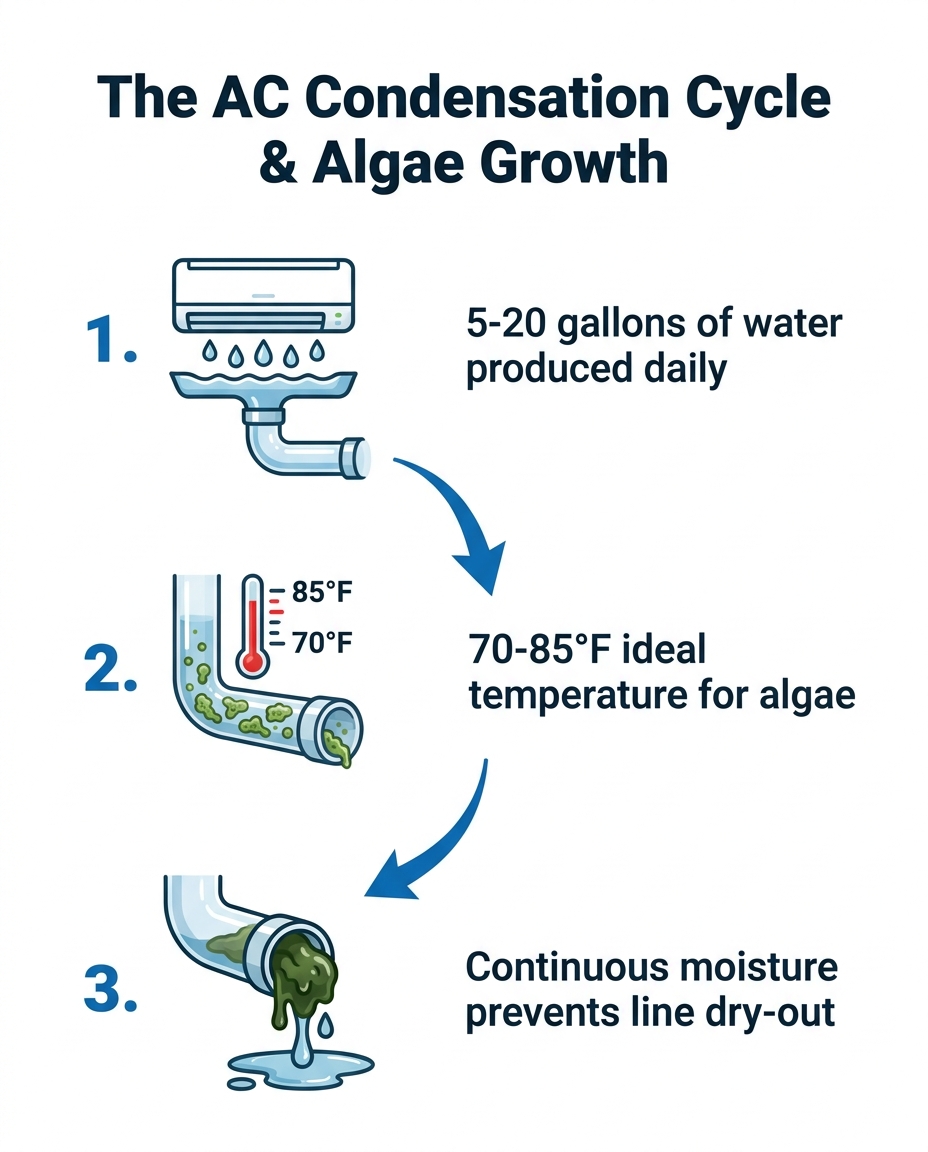
In our experience servicing homes throughout the local area, we find that most homeowners severely underestimate how much water their system produces. During peak summer cooling months, a standard residential central air conditioning system can produce between 5 and 20 gallons of condensate water daily.
• High indoor humidity: Cooking, showering, and natural weather patterns increase the moisture load, pushing water production closer to that 20-gallon mark.
• System sizing: Larger systems processing more air will naturally extract more moisture per hour.
• Continuous operation: The longer the unit runs to maintain your target temperature, the more water is generated.
The takeaway: You are essentially pouring several large buckets of water down a narrow PVC pipe every single day your AC runs.
Once the moisture condenses on the cold coils, gravity takes over. The water drips down into a primary drain pan located directly beneath the evaporator coil inside your indoor unit. From this pan, the water funnels into the condensate drain line—typically a three-quarter-inch white PVC pipe—which carries the water safely outside your home or into a designated plumbing drain.
However, the journey is not always perfectly smooth. The water flow naturally slows down at elbows, traps, and slight dips in the piping. These slow-moving zones create microscopic pools of standing water inside the dark pipe, setting the stage for future problems.
When we respond to calls for an air conditioner failing to drain properly, homeowners often assume the pipe is blocked by dirt, just like a clogged sink. Based on what our team typically sees in the field, shifting your perspective to recognize the difference between a mechanical blockage and a biological infection is critical for solving the problem permanently.
• Primary Cause — Mechanical Blockage: Dust, pet hair, dirt, and construction debris. — Biological Infection (Algae/Mold): Airborne spores taking root and multiplying.
• Texture & Appearance — Mechanical Blockage: Dry, gritty, or matted material. — Biological Infection (Algae/Mold): Slimy, thick, jelly-like substance (often white, green, or brown).
• Growth Rate — Mechanical Blockage: Builds up slowly over years of neglected filter changes. — Biological Infection (Algae/Mold): Expands rapidly within days under the right conditions.
• Response to Clearing — Mechanical Blockage: Once physically removed, the pipe stays clear. — Biological Infection (Algae/Mold): Will aggressively regrow if microscopic spores are left behind.
A biological clog is fundamentally different from a dirt clog. When airborne algae, mold, or mildew spores get sucked into your return vents, they eventually wash down into the drain pan and enter the condensate line. As they multiply, they secrete a thick, sticky biofilm to protect themselves. This creates a jelly-like or slimy sludge that adheres tightly to the inside walls of the PVC pipe. Because this sludge is alive and actively growing, simply poking a hole through it will only provide temporary relief. The remaining colony will quickly close the gap and form a solid blockage again.
Algae and biological slime do not just survive in your condensate line; they thrive there because the environment is perfect. These microorganisms require three specific elements to multiply rapidly: moisture, darkness, and warmth. The inside of a condensate pipe provides total darkness and a constant supply of water. Furthermore, algae prefers temperatures between 70 and 85 degrees Fahrenheit. Since your condensate line usually runs through an attic, garage, or interior wall cavity, the ambient temperature surrounding the pipe sits perfectly in this biological sweet spot during the warmer months.

The severity of biological clogs is heavily influenced by the local climate and how hard your system has to work. When the outside temperature spikes, the dynamics inside your plumbing change drastically, accelerating the growth rate of any microscopic spores present in the system.
With intense summer temperatures regularly exceeding 100°F in the Sacramento Valley, our technicians see firsthand how your air conditioner is forced to run in nearly continuous cycles just to keep your home comfortable. This relentless operation means there is a constant, never-ending trickle of moisture flowing into the drain pan and down the pipe.
In milder climates, an air conditioner might cycle off for several hours, giving the inside of the condensate line a brief chance to dry out. This drying period naturally suppresses algae growth. However, during extreme heat waves, the system rarely takes a break. Without any downtime, the inside of the pipe remains permanently damp. This turns the entire length of the condensate line into a high-moisture incubator, feeding the biological growth without interruption throughout the peak summer cooling months.
When faced with a clogged drain line, we often see homeowners turn to the internet for quick fixes. A pattern we see constantly is the attempt to pour a cup of white vinegar or a diluted bleach solution down the access tee of the condensate line. While this might seem like a harmless, proactive step, it is scientifically insufficient for dealing with a mature biological infection.
Vinegar is a mild acetic acid. If you have a brand-new system and pour vinegar down the line monthly as a preventative measure, it can help deter spores from settling. However, once a thick, jelly-like algae blockage has formed, household vinegar simply does not have the chemical strength to penetrate it.
1. Surface-level impact: The vinegar will kill the very top layer of the algae it touches, but it usually flows right over the top of the sludge without breaking up the core of the blockage.
2. Rapid regrowth: Because the thickest part of the biological mass remains intact inside the pipe, the surviving spores will multiply and rebuild the blockage within a matter of days.
3. The difference between clearing and sanitizing: A true solution requires physical removal of the mass followed by professional-grade sanitization to eradicate the microscopic spores completely.
Resort to harsher chemicals, and you introduce significant risk to your system. Our team has had to repair extensive damage caused by homeowners pouring undiluted bleach or heavy-duty drain cleaners into an AC system, which can be disastrous. The fumes and harsh liquids can easily back up into the drain pan, corroding the delicate metal of the evaporator coil and degrading the plastic components of the air handler. Furthermore, attempting to dismantle the indoor unit or use high-pressure air compressors without a license can void your manufacturer warranty, damage sensitive low-voltage wiring, or push the blockage deeper into an inaccessible section of the pipe.
Because the condensate line is largely hidden from view, a biological clog usually announces itself through secondary symptoms. Knowing what to look for can help you catch the issue before it causes extensive damage to your drywall, flooring, or ceiling.
Modern HVAC systems are equipped with a crucial safety device called a float switch. This small, buoyant switch is installed either in the primary drain pan or on the condensate line itself.
How it protects your home: When algae completely blocks the pipe, the 5 to 20 gallons of water your system produces daily has nowhere to go. The water level in the drain pan begins to rise. As the water lifts the float switch, it trips a low-voltage circuit that instantly cuts power to your thermostat, shutting down the entire air conditioning system.
This sudden shutdown is often mistaken for an electrical failure or a broken compressor. In reality, the system is working exactly as designed—it is shutting itself off to prevent a massive indoor flood. If you notice your system frequently turning off and on, or if your thermostat goes completely blank, a tripped float switch is a highly likely culprit.
Secondary drain pans: If your indoor unit is located in an attic, it will sit inside a larger, secondary drain pan. If the primary line clogs and the float switch fails, water will spill into this backup pan. If you ever see water accumulating in this outer pan, or if you notice an AC unit leaking water in your garage, our technicians highly recommend calling for immediate professional attention to avoid costly water damage.
Treating a biological clog is not about finding a temporary workaround; it is about completely eradicating the infection from your plumbing. A professional approach focuses on both immediate physical removal and long-term biological prevention.
When our licensed technicians at Always Affordable Plumbing & HVAC address a clogged condensate line, they do not just pour a liquid down the pipe and hope for the best. The process involves specialized, multi-step sanitization:
• Physical extraction: Technicians use specialized suction equipment to pull the thick, jelly-like algae mass out of the pipe entirely, rather than risking pushing it further down the line.
• Deep flushing: The line is thoroughly flushed to remove residual sludge from the elbows and joints of the PVC piping.
• Commercial-grade treatment: Once the physical debris is gone, the technician applies professional-grade algaecides and biocides. These treatments are specifically formulated to coat the inside of the pipe, killing the remaining microscopic spores and actively preventing new growth for months.
The best way to handle a clogged drain line is to stop the algae from forming a solid mass in the first place. This is where proactive care becomes invaluable. By enrolling in a routine maintenance plan, your system receives scheduled check-ups before the peak summer cooling months begin. During these visits, technicians clear out minor biological growth before it ever reaches the point of tripping your float switch. This proactive strategy eliminates the stress of unexpected system shutdowns and protects your home from the silent, expensive threat of hidden water damage.
Your AC drain line keeps clogging because the blockage is likely biological, not just dirt. Airborne algae and mold spores enter the system and thrive in the dark, constantly wet environment of the pipe. If the line is only partially cleared, the remaining living spores will rapidly multiply and rebuild the thick, jelly-like blockage within a few days or weeks.
The most effective way to stop algae growth is through routine professional maintenance. A technician will physically clear the line and apply commercial-grade biocides that coat the inside of the pipe, actively deterring spore growth. Ensuring your home's air filters are changed regularly also helps reduce the amount of organic dust that feeds the algae.
Vinegar is generally ineffective at clearing a mature, solid biological clog. While it is a mild acid that can kill surface-level spores in a clean pipe, it cannot penetrate or dissolve the thick, protective slime that a mature algae colony creates. Attempting to clear a heavy blockage with vinegar usually results in the clog returning very quickly.
The thick, jelly-like substance in your AC drain line is a biological biofilm created by multiplying algae, mold, or mildew. As these microorganisms grow in the dark, wet pipe, they secrete this sticky slime to protect themselves and anchor to the PVC walls. This jelly traps additional dust and debris, eventually forming a complete blockage.
Yes, a clogged AC drain line is a leading cause of severe indoor water damage. If the safety float switch fails to shut off the system, the indoor unit will continue to produce gallons of water that will overflow the drain pan. This can quickly ruin drywall, warp hardwood floors, and cause extensive ceiling damage if the unit is located in an attic.
An AC condensate line should be professionally inspected and cleaned at least once a year, ideally in the spring before heavy usage begins. In climates with extreme summer heat where the air conditioner runs constantly, a twice-yearly check is recommended to ensure the line remains sanitized and completely clear of biological buildup.
Algae growth inside your plumbing is a natural consequence of heavy system usage, but as our team always tells our customers, it is entirely preventable. During the peak summer cooling months, the constant flow of moisture creates the perfect incubator for biological blockages. Instead of fighting a losing battle against recurring clogs with household vinegar, it is time to address the root cause of the infection. By relying on professional sanitization, you can completely eradicate the microscopic spores and ensure your drain line flows freely all season long. Take a proactive approach to your home's comfort and safety by exploring comprehensive maintenance options to keep your system clean, efficient, and free from unexpected water backups.
See what our satisfied customers have to say about their experience with Always Affordable
Plumbing & HVAC.

"Chappy was very skilled in his knowledge of my HVAC unit. I greatly appreciate the quick response and experienced tech. The whole endeavor was made less stressful by his humor and honest conversation. I find comfort in knowing I now have a shop i trust for the next time."
"Tony, James, Ronnie did an amazing job setting up our new AC! They were quick, efficient, considerate, and polite! We appreciate them scheduling us in on such short notice. Definitely recommend this company!"
"Prompt, professional service with kindness and care. They came out to address both plumbing and AC issues. I received a courtesy call before they arrived. All issues were resolved the same day with integrity and respect. Thankful for businesses like this. Absolutely recommend to those that I love."
"Excellent service! Jason came out promptly and in addition to doing my outside faucet he also put in new irrigation equipment! All done perfectly! Jason was lovely"
"Honest with the assessment; friendly and good manners. No high pressure sales. Just good to honest "tell it like you see it" Thought my kitchen disposer needed an overhaul. But Jason, there Plumber gave me an honest lesson on what was really happening. Saved me hundreds, if I went the route of replacing. Thank you!"
"Absolutely 5 stars. If you are looking for affordable ,professional and kind. Chappy was excellent and very knowledgeable . I called in the morning because my air conditioner stopped working he was here within hours and fixed my air with a smile. I highly recommend Chappy and Always Affordable plumbing and Hvac."
"Scott and James were great. They got there quickly and diagnosed the problem with my A/C.They did a very thorough job testing everything. Sent me pictures and called to keep me informed. Got it done the next day and everything is working fine. Be glad when I get home so I can enjoy my new system. Thanks guys for a great job."
"Chappy was very helpful. He knew our issue right away, cleaned our coils. He also came on the same day we called and got our AC blowing cold air again."
"After some timing ’curfuffles’ the Tech Jason arrived and not only completed a speedy install on my toilet, he was personable & professional. Because of the timing issues Jason was attentive and showed up with everything needed! No extra store runs 😊 I was very comfortable with having this Tech in my Daughter’s home. We will definitely use this Service again."


