Seasonal Home Maintenance Checklist: Preventing Furnace Failure on the First Freeze
Don't wake up to an icy house on the first freeze. Use this seasonal home maintenance checklist to see what to check before calling a heating professional.



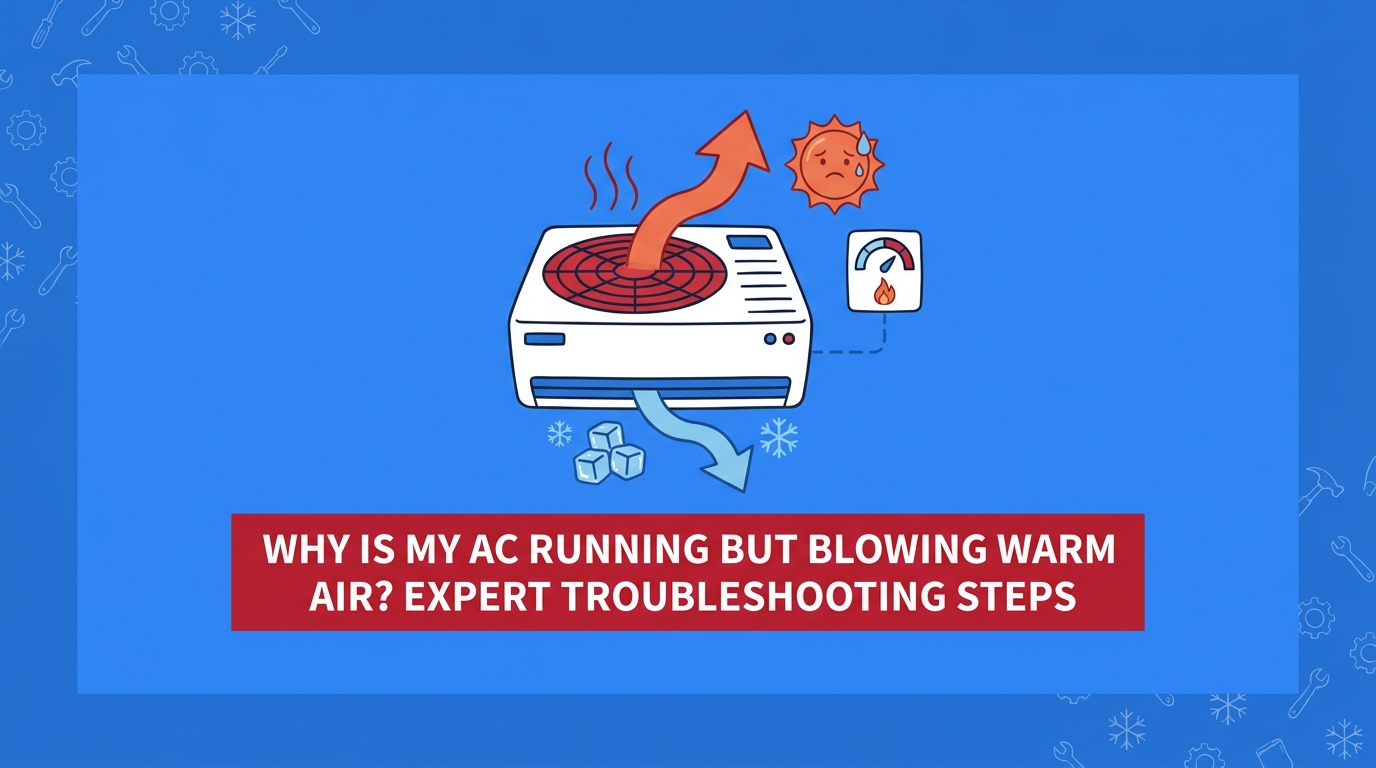
Your air conditioner is running nonstop, but the house still feels warm. You check the vents, and instead of a crisp, refreshing breeze, you feel room-temperature air blowing back at you. This frustrating scenario is exactly why one of the most common homeowner questions answered by our team at Always Affordable Plumbing & HVAC revolves around systems that sound like they are working but fail to actually cool the home.
In our years of serving the local area, we've found that hearing the familiar hum of your HVAC system provides a false sense of security when the indoor temperature continues to climb. Before panic sets in about a total system failure, it helps to understand that a unit blowing warm air does not always require a massive repair. Often, the issue stems from a simple setting or a minor airflow restriction that you can safely check yourself.
As a comprehensive home service provider handling everything from expert HVAC diagnostics to professional plumbing services, we believe in empowering homeowners with safe, non-technical triage steps. The goal of this guide is to walk you through exactly what to check on your own, how to do it safely, and precisely when it is time to step back and let our licensed professionals take over.
To troubleshoot effectively, you first need a basic understanding of how a split central air conditioning system operates. Most residential HVAC setups feature two primary halves: the indoor air handler and the outdoor condenser. Our technicians always explain to customers that these two halves perform very different jobs, and understanding this division is the key to figuring out why your vents are pushing warm air.
The indoor unit, usually located in a closet, garage, or attic, houses the blower fan and the evaporator coil. The blower fan's only job is to pull warm air from your rooms, push it across the evaporator coil, and blow it back out through your ductwork. The outdoor unit contains the compressor and the condenser coil. The compressor is the engine of the cooling process—it pumps chemical refrigerant back and forth, absorbing heat from inside your home and releasing it outside.
The core problem: When you hear your system "running," you are usually just hearing the indoor blower fan circulating air. If the outdoor compressor fails to turn on, or if the cooling process is restricted, that indoor fan simply continues to pull warm room air and push it right back into the house unconditioned.
• Indoor Blower Fan — Primary Function: Circulates air through the ductwork and across the coils. — What Happens When It Fails: No air comes out of the vents at all, regardless of temperature.
• Outdoor Compressor — Primary Function: Pumps refrigerant to remove heat from the indoor air. — What Happens When It Fails: System blows room-temperature or warm air continuously.
• Evaporator Coil — Primary Function: Absorbs ambient heat from the indoor air. — What Happens When It Fails: Coil freezes over, blocking airflow and stopping the cooling cycle.
Establishing this baseline knowledge makes the troubleshooting process much clearer. If air is moving but not cooling, the indoor fan is doing its job, but the heat extraction process has failed. The next steps will help you determine if that failure is due to a simple user error or a mechanical breakdown.
The single most common and easily fixable reason for an AC blowing warm air requires zero tools and takes only seconds to check. In fact, our dispatchers frequently walk homeowners through this exact issue over the phone because it all comes down to a small switch on your thermostat.
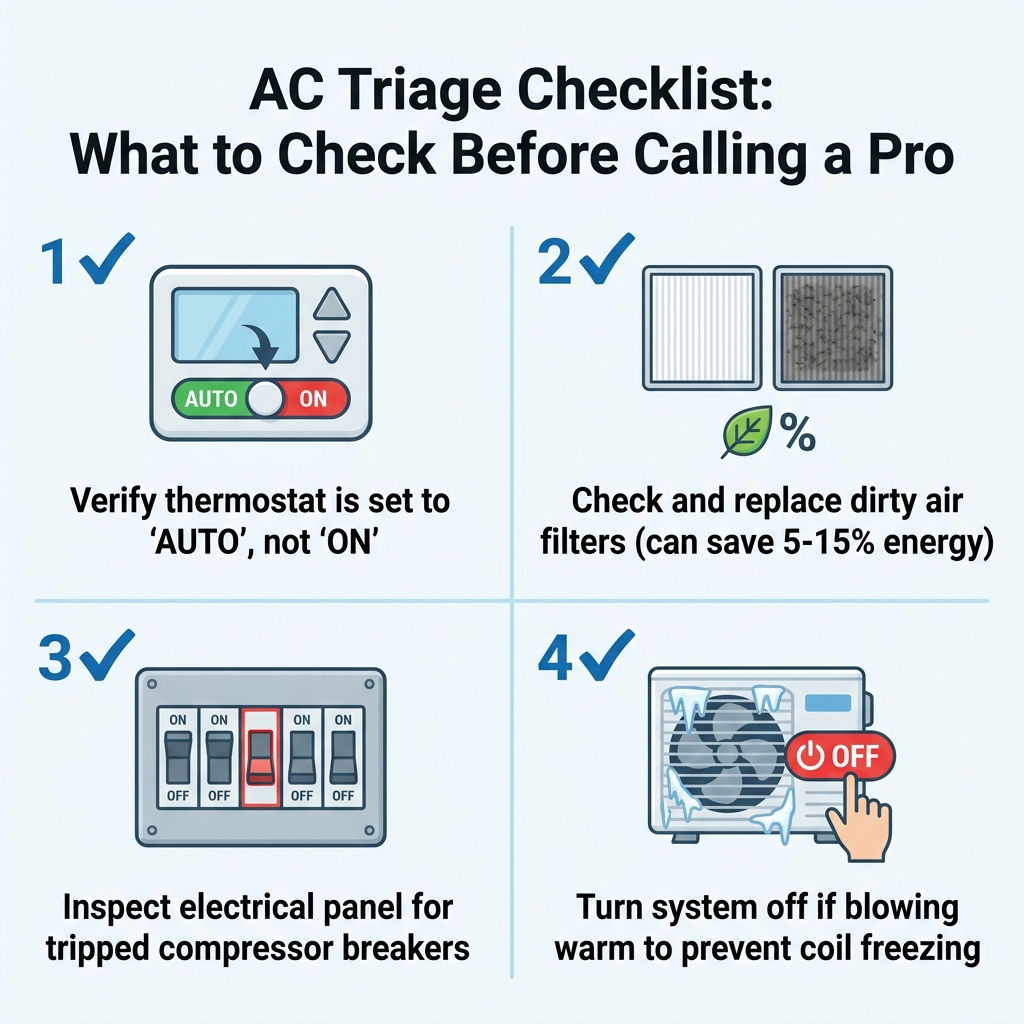
1. Locate your thermostat settings: Walk over to your central thermostat and look at the fan setting. This is usually a physical switch on older models or a digital menu option on smart thermostats.
2. Check the fan configuration: Look to see if the fan is set to "ON" or "AUTO".
3. Understand the difference: When the switch is set to "AUTO", the indoor blower fan only activates when the outdoor compressor is actively cooling the air. They work in tandem. When the switch is set to "ON", the indoor blower fan runs 24/7, regardless of whether the outdoor unit is running.
4. Make the correction: If you find the thermostat fan switch set to 'ON' instead of 'AUTO', simply switch it back to "AUTO". Wait a few minutes for the system to cycle, and check the vents again.
Having the fan switch set to 'ON' means that between active cooling cycles, the blower is just pushing unconditioned, room-temperature air through your vents. To a homeowner standing under a vent, this feels exactly like the AC is broken and blowing warm air. We always advise verifying this setting as your safest, first step in any HVAC triage.
If your thermostat is set correctly but the air is still warm, the next suspect our technicians look for is airflow restriction. Air conditioning systems require a precise volume of air moving across the indoor coils to function properly. When that airflow is choked off, the entire cooling process breaks down.
Your HVAC air filter is designed to catch dust, pet dander, and debris before it enters the sensitive mechanical components of the blower. Over time, this filter becomes saturated. A severely dirty air filter acts like a wall, suffocating the system and preventing adequate air from reaching the evaporator coil. Without enough warm air passing over the cold coil, the coil cannot absorb heat. Eventually, the system runs longer and harder without actually lowering the temperature in your home.
The energy impact: The strain of a clogged filter does more than just make you uncomfortable. According to data from the U.S. Department of Energy, replacing a dirty, clogged filter with a clean one can significantly lower your air conditioner's energy consumption. This simple maintenance task directly impacts your monthly utility bills and may even help your system qualify for efficiency standards tied to generic energy rebates or utility incentive programs (always verify current programs with your utility provider).
How to check safely:
• Turn the system off: Always turn the thermostat to the "OFF" position before checking the filter to prevent the blower from sucking loose debris into the ductwork.
• Locate the filter: Filters are typically found in return air grilles on the wall or ceiling, or in a slot directly next to the indoor air handler.
• Inspect the media: Pull the filter out and hold it up to a light source. If you cannot see light shining through the material, it is fully clogged and must be replaced.
• Install the new filter: Ensure the arrows printed on the edge of the new filter point toward the HVAC unit (in the direction of airflow).
Because the indoor blower and the outdoor compressor are two separate pieces of equipment, they are usually wired to two separate circuit breakers in your electrical panel. This dual-breaker setup explains why your system might sound like it is running while failing to cool.
If the breaker for the outdoor compressor trips due to a power surge or a temporary overload, the outdoor unit shuts down completely. However, the indoor blower fan remains powered by its own breaker. The result? The fan keeps running, blowing unconditioned, warm air through the house.
1. Locate your main electrical panel: Find the breaker box, usually located in a garage, basement, or on an exterior wall.
2. Look for the HVAC breakers: Search the labeled switches for ones marked "AC", "Compressor", or "Condenser". These are typically large, double-pole breakers.
3. Check for a tripped switch: A tripped breaker will not be fully in the "ON" or "OFF" position; it usually rests somewhere in the middle, feeling slightly spongy.
4. Reset safely: If you find a tripped breaker, push it firmly to the "OFF" position until it clicks, then push it back to the "ON" position.
5. Observe the system: Turn the thermostat back to cool and wait. If the outdoor unit kicks on and cool air returns, you may have just experienced a temporary power anomaly.
A critical warning from our experts: If the breaker trips again immediately after resetting it, or trips a second time later that day, you must stop immediately. A repeatedly tripping breaker indicates a serious electrical short or a failing compressor. Do not attempt to force the breaker to stay on, as this can cause catastrophic electrical damage or a fire.

When basic troubleshooting fails, leaving a malfunctioning air conditioner running is one of the worst things a homeowner can do. Our repair crews see this pattern often during the extreme summer heat in the Sacramento region, which places peak load on AC compressors.
It sounds contradictory, but a system struggling in 100-degree heat can actually freeze solid. If your system is low on refrigerant (due to a leak) or suffering from restricted airflow, the temperature of the indoor evaporator coil drops rapidly. Condensation from the humid air collects on the freezing coil and turns to ice. As the ice builds up, it completely blocks the flow of air.
Meanwhile, the outdoor compressor keeps running continuously, desperately trying to satisfy the thermostat setting. Because the heat transfer process is blocked by ice, the compressor overheats. If left running in this condition during a peak Sacramento heatwave, we've seen compressors suffer fatal burnout—turning a moderate repair into a total system replacement.
The solution: If you have checked the thermostat, filter, and breaker, and the system is still blowing warm air, turn the thermostat to the "OFF" position immediately. Local utility guidelines in the Sacramento region often recommend careful thermostat management during peak hours to prevent system overloads, and part of that management is knowing when to shut a failing system down to protect it from self-destruction.
There is a definitive line between safe homeowner maintenance and dangerous DIY attempts. Handling chemical refrigerants, testing high-voltage electrical capacitors, or performing deep mechanical diagnostics requires specialized tools, EPA certification, and professional training.
Once you have ruled out the thermostat fan switch set to 'ON' instead of 'AUTO', a dirty filter, and a tripped breaker, the underlying issue is likely a mechanical failure. Common culprits we encounter include a slow refrigerant leak, a dead dual-run capacitor, or a failing condenser fan motor. Attempting to fix these issues without proper training can void your equipment warranty and put your safety at risk.
We understand that homeowners often hesitate to call for help out of fear of unknown diagnostic costs. That is why our team at Always Affordable Plumbing & HVAC offers budget-conscious, transparently priced emergency plumbing and HVAC solutions with a 100% satisfaction guarantee, easing the fear of unknown diagnostic costs. We believe in straightforward assessments without high-pressure sales tactics.
We approach HVAC emergencies with the same persistence and dedication that we apply to severe home plumbing disasters. For example, during a recent cold winter morning, our technicians responded urgently when one local customer discovered an overnight drainage failure caused by a backed-up sewer line. Our team persisted with the blockage until it was completely cleared, and provided future maintenance options. The line was successfully unclogged without requiring a costly replacement. Whether you are dealing with main sewer line clearing or a failed AC compressor, prompt, licensed intervention is the most reliable way to restore your home's comfort safely.
In our professional experience, the best way to handle a system blowing warm air is to prevent the failure before it happens. Proactive maintenance prevents sudden breakdowns across all your essential home systems, from your cooling equipment to your plumbing network.
Unfortunately, many homeowners rely on internet myths for home repairs instead of professional maintenance. You might read a blog and wonder does boiling water actually break down solid waste in your drains, or watch a video suggesting you can top off your AC refrigerant with a cheap kit. We routinely get called out to fix these DIY attempts, which frequently lead to worse damage, cracked pipes, or over-pressurized compressors.
A comprehensive preventative maintenance approach is the smartest investment a homeowner can make. Routine professional check-ups ensure everything from optimal AC cooling to clear, functional drains. Last spring, for instance, a homeowner dealt with a clogged kitchen drain that was severely backing up normal water flow. One of our technicians arrived on time, efficiently cleared the clog, and fully restored the drain's functionality before it could cause water damage. You can secure this level of ongoing protection and peace of mind by enrolling in a preventative plumbing maintenance membership, ensuring your home's vital systems are evaluated by professionals year-round.
Why is my AC running but blowing warm air?
When your AC runs but blows warm air, it usually means the indoor blower fan is working, but the outdoor compressor is not actively cooling. This can be caused by a thermostat set to "ON" instead of "AUTO", a severely dirty air filter, a tripped circuit breaker, or a loss of refrigerant. Checking your basic settings and filters is the best first step.
Should my thermostat fan be on ON or AUTO?
Your thermostat fan should almost always be set to "AUTO". In the "AUTO" position, the fan only runs when the system is actively heating or cooling the air. Setting it to "ON" forces the fan to run continuously, which will cause it to blow unconditioned, room-temperature air between cooling cycles.
How do I fix my AC not cooling?
Start by performing safe, non-technical triage: verify the thermostat is set to cool and "AUTO", replace any dirty air filters, and check your electrical panel for a tripped breaker. If these basic steps do not restore cold air, you must turn the system off and contact a licensed HVAC technician to diagnose potential mechanical or refrigerant issues.
Can a dirty filter stop my AC from cooling?
Yes, a severely clogged air filter restricts the airflow necessary for the cooling process to work. Without enough warm air passing over the indoor evaporator coil, the system cannot absorb heat, which can lead to the coil freezing over and the system blowing warm air.
What does it mean when the thermostat is set to auto but blowing warm air?
If the fan is on "AUTO" but the air is warm, it indicates a breakdown in the heat extraction process. The outdoor compressor may have lost power, a capacitor may have failed, or the system could be low on refrigerant due to a leak. This scenario usually requires professional diagnostics.
Is it safe to leave my AC running if it's blowing warm air?
No, it is not safe for the equipment. Leaving a malfunctioning AC running can cause the indoor evaporator coil to freeze solid or force the outdoor compressor to overheat and burn out. It is always safer to turn the system to the "OFF" position until the root cause is identified.
At what point should I stop troubleshooting and call an HVAC professional?
You should call a professional as soon as you have verified the thermostat settings, checked for a clean filter, and ensured the breakers are not tripped. Any troubleshooting that involves opening the equipment panels, handling high-voltage wiring, or checking refrigerant levels must be left to a licensed expert.
Dealing with an air conditioner that runs nonstop without actually cooling your home is incredibly frustrating, but knowing how to check the basics can save you a service call. If you have verified your thermostat settings and filters but still feel warm air, shut the system down to prevent further damage. Contact our licensed team at Always Affordable Plumbing & HVAC today for transparent, expert diagnostics to get your cooling restored quickly and safely.
See what our satisfied customers have to say about their experience with Always Affordable
Plumbing & HVAC.

"Chappy was very skilled in his knowledge of my HVAC unit. I greatly appreciate the quick response and experienced tech. The whole endeavor was made less stressful by his humor and honest conversation. I find comfort in knowing I now have a shop i trust for the next time."
"Tony, James, Ronnie did an amazing job setting up our new AC! They were quick, efficient, considerate, and polite! We appreciate them scheduling us in on such short notice. Definitely recommend this company!"
"Prompt, professional service with kindness and care. They came out to address both plumbing and AC issues. I received a courtesy call before they arrived. All issues were resolved the same day with integrity and respect. Thankful for businesses like this. Absolutely recommend to those that I love."
"Excellent service! Jason came out promptly and in addition to doing my outside faucet he also put in new irrigation equipment! All done perfectly! Jason was lovely"
"Honest with the assessment; friendly and good manners. No high pressure sales. Just good to honest "tell it like you see it" Thought my kitchen disposer needed an overhaul. But Jason, there Plumber gave me an honest lesson on what was really happening. Saved me hundreds, if I went the route of replacing. Thank you!"
"Absolutely 5 stars. If you are looking for affordable ,professional and kind. Chappy was excellent and very knowledgeable . I called in the morning because my air conditioner stopped working he was here within hours and fixed my air with a smile. I highly recommend Chappy and Always Affordable plumbing and Hvac."
"Scott and James were great. They got there quickly and diagnosed the problem with my A/C.They did a very thorough job testing everything. Sent me pictures and called to keep me informed. Got it done the next day and everything is working fine. Be glad when I get home so I can enjoy my new system. Thanks guys for a great job."
"Chappy was very helpful. He knew our issue right away, cleaned our coils. He also came on the same day we called and got our AC blowing cold air again."
"After some timing ’curfuffles’ the Tech Jason arrived and not only completed a speedy install on my toilet, he was personable & professional. Because of the timing issues Jason was attentive and showed up with everything needed! No extra store runs 😊 I was very comfortable with having this Tech in my Daughter’s home. We will definitely use this Service again."