Seasonal Home Maintenance Checklist: Preventing HVAC and Plumbing Emergencies
Prevent HVAC emergencies with a seasonal home maintenance checklist. Why proactive scheduling beats waiting for sudden failures. See what needs attention now.



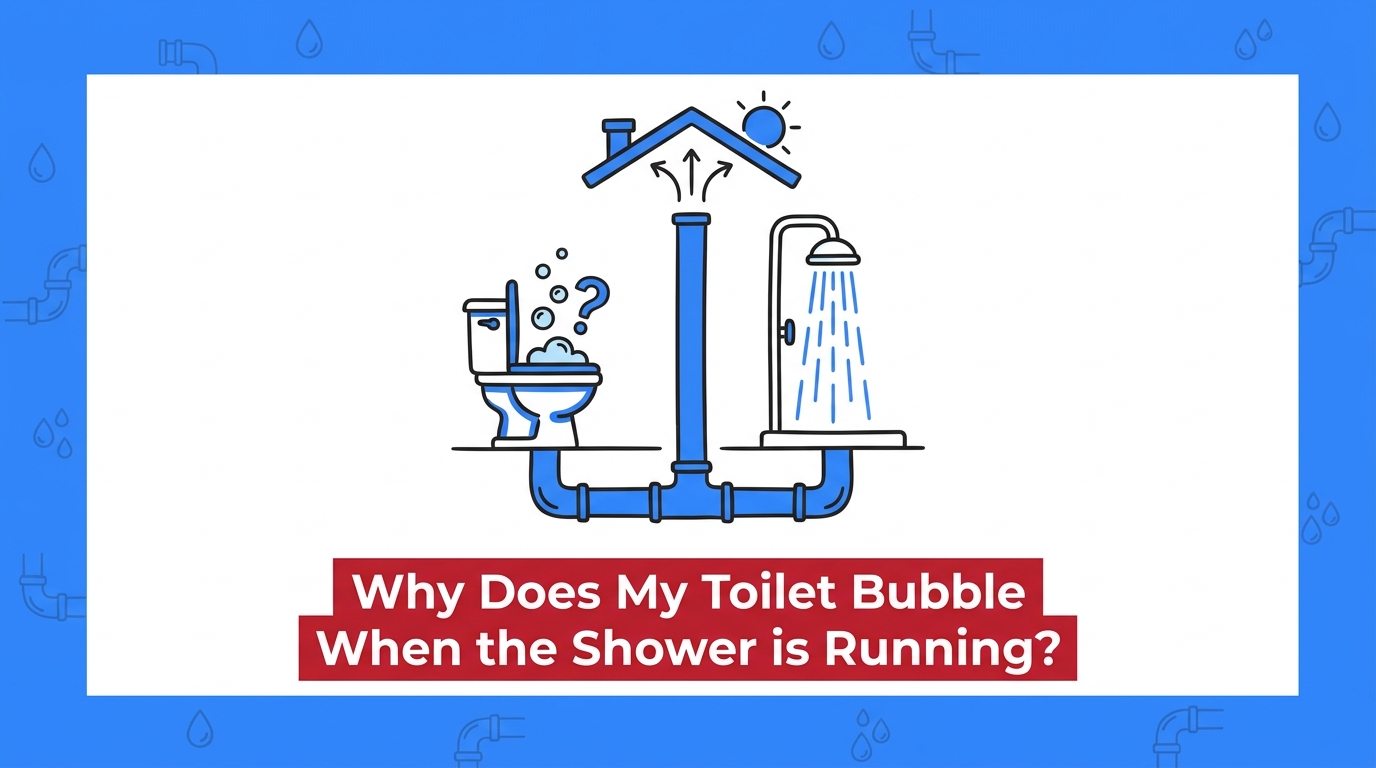
You step into the bathroom, turn on the water, and suddenly hear a strange gurgling sound—leaving you wondering, why does my toilet bubble when the shower is running? It is a sound that immediately triggers panic for most homeowners, often bringing up worst-case scenarios about an impending sewage backup ruining the bathroom floors. When you hear that distinct bubbling noise, your first instinct might be to grab a plunger or reach for a bottle of harsh chemical drain cleaner. However, before you panic or attempt a quick fix, it helps to understand that this specific symptom usually points to unseen plumbing mechanics rather than a simple clog in the toilet bowl. Because the root cause is often tied to the way your home breathes, reaching out for professional plumbing services is the safest and most effective way to accurately diagnose the problem.
The search pattern we see frequently—a toilet bubbles when shower is running—is actually a classic indicator of an airflow problem within your home's plumbing system. To keep water flowing smoothly down your drains and into the municipal sewer or septic tank, your plumbing relies on a delicate balance of water and atmospheric air pressure. When this balance is disrupted, the air has to go somewhere, and it often chooses the water in your toilet bowl as its escape route. Understanding this root cause is absolutely critical before you attempt any do-it-yourself fixes. Aggressive plunging or pouring chemicals down the drain will not solve a systemic air pressure issue, and in some cases, it can actually cause further damage to your pipes or the wax ring sealing your toilet to the floor. By stepping back and looking at the system as a whole, you can make informed decisions about when to call a professional.
To truly understand why your fixtures are interacting with each other, we have to look behind the walls and under the floors. Residential plumbing systems require a constant supply of atmospheric air pressure to allow wastewater to flow freely. Without this air, the water would create a vacuum as it moves down the pipes, leading to a condition known as negative air pressure in the drain line. This negative pressure is powerful enough to siphon the water right out of your plumbing traps, which is exactly what your system is designed to prevent.
The essential components of this balancing act include:
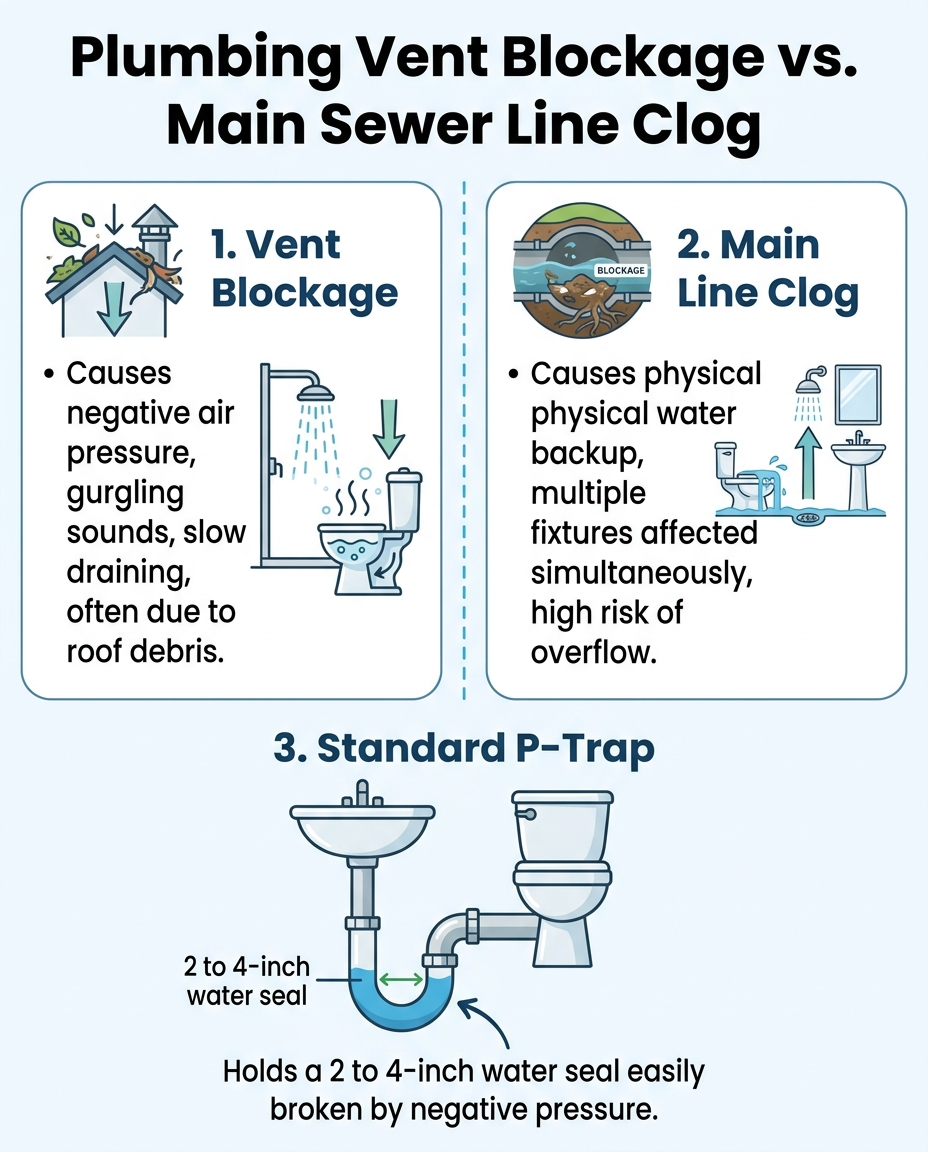
1. The P-Trap: Every plumbing fixture in your home, including sinks, showers, and toilets, has a curved section of pipe called a P-trap (or an S-trap in older homes). Standard toilet traps are designed to hold a 2 to 4-inch water seal. This standing water serves a vital purpose: it acts as a physical barrier that keeps toxic and foul-smelling sewer gases from entering your living space.
2. Wastewater Movement: When you drain a large volume of water—like emptying a bathtub or running a shower—that water forms a solid slug as it moves down the drain pipe. As it travels, it pushes the air ahead of it and pulls air behind it.
3. The Vent Stack: To replace the air being pulled down the pipe and to allow the pushed air to escape, your plumbing system features a vent stack. This is a vertical pipe that runs up through your roof, open to the outside air. It equalizes the pressure, ensuring the water flows smoothly without creating a vacuum.
4. The Pressure Disruption: If the vent stack cannot provide enough air, the moving water creates a vacuum. This negative air pressure in the drain line is strong enough to pull air through the easiest available inlet—which is often the water seal inside your toilet's P-trap.
When you understand these physics, the bubbling sound makes perfect sense. It is not necessarily a sign of a blockage in the water's path, but rather a struggle for air. The bubbling you hear is literally atmospheric air being sucked through the water in the toilet bowl to satisfy the vacuum created by the draining shower water.
In most residential bathroom layouts, the shower, sink, and toilet do not have their own separate, independent pipes running all the way to the street. Instead, they share a common drain line and a common venting system. This branching architecture is efficient and standard in modern construction, but it also means that an issue in one part of the system can easily manifest as a symptom in another fixture. When you turn on the shower, you are sending a high volume of water down that shared branch line. If the system is breathing properly, the displaced air moves up the vent stack and out of the house.
Showers and bathtubs displace a significant amount of air in a very short period. When this high-volume fixture drains, the air in the shared pipe must get out of the way. If the plumbing vent is blocked, that displaced air is trapped. It cannot escape through the roof, and it cannot easily push past the heavy column of water moving down the main sewer line. The trapped air becomes pressurized, and according to the laws of fluid dynamics, it will always seek the path of least resistance to escape.
You might wonder why the air doesn't just bubble up through the sink drain. The answer lies in the design of the fixtures. A bathroom sink has a relatively small P-trap with a tight column of water. A toilet, on the other hand, has a large, wide trap with a broad surface area. While the water seal in a toilet is incredibly effective at blocking ambient sewer gas, it offers the least resistance to a sudden surge of negative or positive air pressure in a shared line. The air forces its way through the toilet's water seal, creating the distinct gurgling or bubbling sound. If you are experiencing this frequently, along with other issues like poor flushing performance, it might be one of the signs it's time for a toilet replacement, though the venting issue must be addressed first.
When a homeowner reports that their toilet bubbles when the shower is running, the most common culprit is a blockage in the main vent stack. The main vent stack is the unsung hero of your plumbing system. It is the large pipe that extends vertically from your main sewer line, up through the walls of your home, and protrudes through the roof. Because it is completely open to the elements, it is highly susceptible to natural blockages.
Common causes of a blocked plumbing vent include:
• Natural Debris: Fall and winter storms in the area blow leaves, twigs, and other debris onto roofs, which frequently clog plumbing vent stacks. Over time, this organic matter can build up and completely seal off the pipe.
• Bird and Animal Nests: Small birds, squirrels, and rodents often find the warmth and shelter of a vent stack highly appealing, building nests inside the pipe during the colder months.
• Snow and Ice: In freezing weather, heavy snow accumulation or ice dams can temporarily cap the vent, leading to winter-specific bubbling issues.
• Deteriorating Pipe Materials: In older homes, cast iron vent pipes can rust and scale from the inside out, causing the pipe to narrow and eventually block itself with flaking metal.
To visualize how a blocked vent affects your drains, think of the classic "finger over a straw" analogy. If you dip a drinking straw into a glass of water, place your thumb tightly over the top opening, and lift the straw out of the glass, the water stays trapped inside the straw. The water cannot drain because no air can enter from the top to replace it. The moment you remove your thumb, the water flows freely. A blocked roof vent acts exactly like your thumb on the straw, holding the water back and forcing the system to gasp for air through your toilet.
It is crucial to note that clearing a roof vent is absolutely not a DIY job. Climbing onto a pitched roof, especially when it might be wet or covered in debris, presents a severe fall hazard. Furthermore, simply shining a flashlight down the pipe rarely reveals the clog, which can be lodged several feet below the roofline. Licensed professionals use specialized equipment, such as long augers and inspection cameras, to safely and effectively clear vent stacks without risking injury or damaging the roofing materials.
While a blocked vent is the most common reason for a bubbling toilet, it is not the only possibility. The other major culprit is a partial or complete clog in the home's main sewer line. Differentiating between the two is vital, as a main line clog is a much more severe issue that can lead to catastrophic property damage if left unaddressed. Honest, transparent diagnostics are essential here to identify whether the issue is a simple vent blockage or a more serious main line clog, ensuring homeowners only pay for necessary repairs rather than being pushed into immediate, expensive replacements.
One homeowner recently woke up to a backed-up sewer line, terrified of the potential damage. Because other local companies could not arrive until the next day, our technicians were dispatched within hours. Instead of immediately pushing for a full sewer line replacement, they performed a thorough diagnostic check, unclogged the line efficiently, and provided clear, low-pressure options for future prevention. This kind of diagnostic honesty is what separates a minor repair from a major financial burden.
If your toilet is bubbling because of a blocked vent, the issue is strictly related to air pressure. The water from your shower will still drain, albeit perhaps a little slower than usual. However, if your toilet is bubbling because of a main sewer line clog, the water itself is physically backing up. Because the main line is blocked, the wastewater from your shower cannot reach the street. It fills the pipe and eventually seeks the lowest point of escape in the house—which is usually a ground-floor shower drain or bathtub.
• Primary Cause of Bubbling — Vent Stack Blockage: Negative air pressure seeking an inlet — Main Sewer Line Clog: Wastewater physically pushing air upward
• Water Backup — Vent Stack Blockage: Rare; water usually continues to drain — Main Sewer Line Clog: Common; shower/tub fills with wastewater
• Fixtures Affected — Vent Stack Blockage: Usually limited to one shared bathroom group — Main Sewer Line Clog: Multiple slow drains across the entire house
• Risk of Overflow — Vent Stack Blockage: Low risk of sewage entering the home — Main Sewer Line Clog: High risk of raw sewage backing up indoors
• Diagnostic Method — Vent Stack Blockage: Roof-level inspection and vent snaking — Main Sewer Line Clog: Camera inspection via the main cleanout
Because the symptoms can overlap in the early stages of a main line blockage, scheduling a professional sewer line inspection is the best way to verify the exact location and nature of the problem. Plumbers can run high-definition cameras down your pipes to see exactly what is happening, taking the guesswork out of the repair process.

When faced with a toilet that is acting strangely, a homeowner's first instinct is almost always to grab a plunger. Plunging is a highly effective, time-tested method for clearing localized clogs—such as too much toilet paper or solid waste trapped directly in the toilet's internal trapway. The plunger works by creating a localized hydraulic seal, forcing water back and forth to dislodge the physical obstruction.
However, if your toilet is bubbling because the shower is running, the obstruction is not in the toilet. The blockage is either high up on the roof in the vent stack or deep underground in the main sewer line. A standard plunger cannot reach, pressurize, or clear a blockage located twenty feet above you on the roof. Continuing to plunge a clear toilet is not only frustrating and ineffective, but it can also be counterproductive.
Aggressive plunging when the vent is blocked can sometimes exacerbate pressure issues in shared lines. By forcefully pushing air and water down a line that cannot breathe, you risk blowing out the water seals in neighboring sinks or bathtubs, allowing sewer gases to enter those rooms. Even worse, excessive plunging force on a blocked system can compromise the wax ring that seals the base of your toilet to the floor flange, leading to hidden leaks and water damage around the base of the fixture. The right next step is always to put the plunger down and seek a professional evaluation for complete plumbing and HVAC services to address the systemic airflow issue.
Fixing a gurgling toilet requires identifying if the issue is a local clog, a blocked roof vent, or a main sewer line issue. Because the bubbling is a symptom of trapped air or backing-up water, simple plunging rarely works. Professional snaking or hydro-jetting of the vent stack or the main sewer line is usually required to restore proper airflow and drainage. A licensed plumber will diagnose the exact location of the blockage before applying a targeted fix.
It is not an immediate emergency if the water from your shower and toilet is still draining normally, but it is a serious warning sign that should not be ignored. If the bubbling is accompanied by dirty water backing up into your tubs or showers when you flush, it instantly becomes an urgent issue. Ignoring these signs can lead to a complete main line stoppage, resulting in raw sewage damaging your floors and walls.
A localized shower clog—such as one caused by hair and soap scum right below the drain cover—usually only affects the shower itself, causing water to pool around your feet. If the toilet bubbles when the shower runs, it indicates a shared systemic issue like a vent blockage or a main line clog further down the pipe. The interaction between the two distinct fixtures proves that the problem lies beyond the shower's individual P-trap.
Look for signs like gurgling toilets, slow drains across multiple fixtures in the home, and sometimes a lingering sewage smell inside or outside the house. You might also notice that drains empty slowly but don't completely stop, as the water struggles against the vacuum. However, because these symptoms mimic a main line clog, professional diagnostics using cameras and roof-level inspections are the only definitive way to confirm a vent clog.
If the bubbling is caused solely by a vent blockage, it is unlikely to overflow from bubbling alone, as the issue is just displaced air escaping through the water. However, if the bubbling is an early symptom of a main sewer line backup, an overflow is a significant and immediate risk. If you notice the water level in the bowl rising dangerously high while the shower is running, shut off the water immediately and call a professional.
Ultimately, a bubbling toilet is a clear symptom of negative air pressure in the drain line, not just a simple clog that can be plunged away. Whether your home is struggling to breathe due to storm debris in the roof vent or you are seeing the early warning signs of a main sewer line blockage, ignoring the gurgling sound will only lead to larger, more stressful plumbing failures down the road. Proper, honest diagnostics prevent unnecessary and expensive repairs by pinpointing the exact cause of the airflow disruption.
If you hear your toilet bubbling every time you turn on the shower, do not wait for the system to back up completely. Scheduling a professional inspection allows technicians to safely evaluate your vent stacks and main lines, providing a clear, non-alarmist explanation of exactly what is happening behind your walls. By addressing the root cause early, you can restore proper drainage, protect your home from potential water damage, and enjoy the peace of mind that comes with knowing exactly when to call a plumber before a backup occurs.
See what our satisfied customers have to say about their experience with Always Affordable
Plumbing & HVAC.

"Chappy was very skilled in his knowledge of my HVAC unit. I greatly appreciate the quick response and experienced tech. The whole endeavor was made less stressful by his humor and honest conversation. I find comfort in knowing I now have a shop i trust for the next time."
"Tony, James, Ronnie did an amazing job setting up our new AC! They were quick, efficient, considerate, and polite! We appreciate them scheduling us in on such short notice. Definitely recommend this company!"
"Prompt, professional service with kindness and care. They came out to address both plumbing and AC issues. I received a courtesy call before they arrived. All issues were resolved the same day with integrity and respect. Thankful for businesses like this. Absolutely recommend to those that I love."
"Excellent service! Jason came out promptly and in addition to doing my outside faucet he also put in new irrigation equipment! All done perfectly! Jason was lovely"
"Honest with the assessment; friendly and good manners. No high pressure sales. Just good to honest "tell it like you see it" Thought my kitchen disposer needed an overhaul. But Jason, there Plumber gave me an honest lesson on what was really happening. Saved me hundreds, if I went the route of replacing. Thank you!"
"Absolutely 5 stars. If you are looking for affordable ,professional and kind. Chappy was excellent and very knowledgeable . I called in the morning because my air conditioner stopped working he was here within hours and fixed my air with a smile. I highly recommend Chappy and Always Affordable plumbing and Hvac."
"Scott and James were great. They got there quickly and diagnosed the problem with my A/C.They did a very thorough job testing everything. Sent me pictures and called to keep me informed. Got it done the next day and everything is working fine. Be glad when I get home so I can enjoy my new system. Thanks guys for a great job."
"Chappy was very helpful. He knew our issue right away, cleaned our coils. He also came on the same day we called and got our AC blowing cold air again."
"After some timing ’curfuffles’ the Tech Jason arrived and not only completed a speedy install on my toilet, he was personable & professional. Because of the timing issues Jason was attentive and showed up with everything needed! No extra store runs 😊 I was very comfortable with having this Tech in my Daughter’s home. We will definitely use this Service again."