Seasonal Home Maintenance Checklist: Preventing HVAC and Plumbing Emergencies
Prevent HVAC emergencies with a seasonal home maintenance checklist. Why proactive scheduling beats waiting for sudden failures. See what needs attention now.



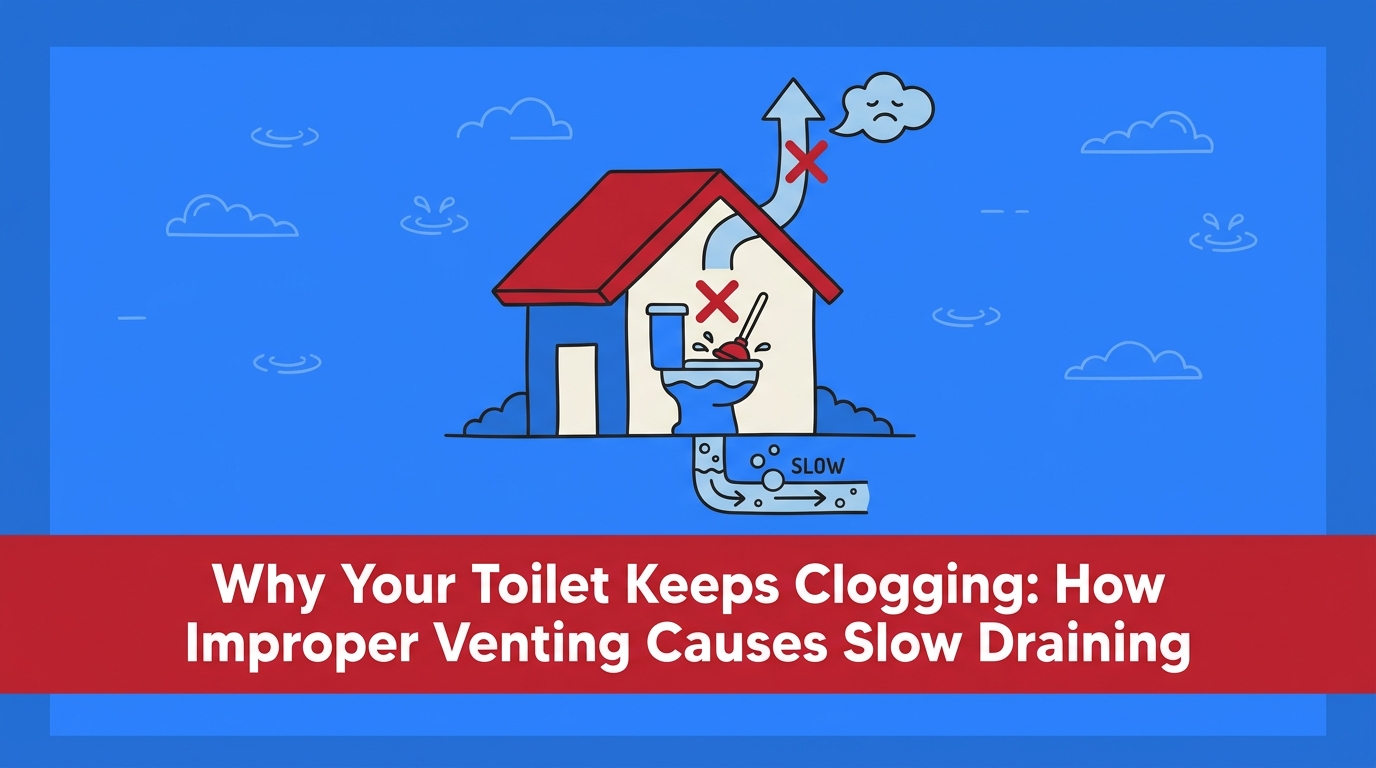
You grab the plunger for the third time this week, but the water in the bowl still refuses to go down. If you are constantly battling bathroom backups, understanding how improper venting causes slow draining and frequent toilet clogs can save you hours of frustration. A toilet that continuously clogs despite your best efforts is a clear sign of a deeper systemic issue. At a certain point, you have to stop plunging and start looking beyond the bathroom itself to find the true root cause.
If you need immediate assistance to restore your home's drainage, explore our professional plumbing services for expert diagnostic care.
Most homeowners naturally assume that a recurring clog means there is a physical blockage directly inside the toilet trap or the immediate drain pipe beneath the floor. However, your home's plumbing system is a highly interconnected network of pipes, traps, and vents. The actual problem often lies far away from the porcelain bowl. Proper airflow is just as critical as water flow for maintaining a healthy, functional drainage system. If you hear gurgling sounds from the tub or sink when the toilet is flushed, you are highly likely dealing with an airflow problem rather than a standard pipe blockage. Recognizing this critical distinction is the first step toward a permanent, effective solution.
Plungers are specifically designed to clear localized, soft blockages near the drain opening. They work by forcing water back and forth to dislodge toilet paper or waste trapped in the immediate P-trap. When a plunger fails repeatedly, it indicates that the obstruction is either too far down the main sewer line or that the system is suffering from a complete lack of air. A residential plumbing network relies entirely on gravity and atmospheric pressure to move wastewater safely away from your home. When that delicate balance of air and water is disrupted, no amount of plunging will restore normal function.
Every modern plumbing system features a vertical pipe known as the vent stack. This crucial architectural component extends upward from your main waste pipes, passes through the attic space, and protrudes directly through the roof to the outdoors. While it carries absolutely no water, it is fundamentally essential for the overall health and safety of your home's drainage infrastructure.
The vent stack performs two primary, non-negotiable functions for your home:
1. Releasing harmful sewer gases: It allows toxic, foul-smelling sewer gases (like hydrogen sulfide and methane) to escape safely outdoors rather than backing up into your living spaces and compromising your indoor air quality.
2. Introducing fresh atmospheric air: It pulls fresh atmospheric air into the plumbing system to equalize pressure, ensuring that heavy wastewater can flow smoothly and rapidly down the drain lines.
When searching for solutions online, standard "how to unclog a toilet" methods completely miss this critical component. They focus entirely on the water-carrying pipes, ignoring the scientific fact that without an adequate air intake, water simply cannot flow efficiently. If a vent stack becomes compromised—which often occurs during Spring (bird nesting) or Autumn (falling leaves)—the entire drainage system suffers.
Without this vital airflow, the pipes become starved for oxygen, leading to sluggish drainage across the entire house. If you suspect your roof vent stack is compromised, relying on professional sewer and drain services is the safest way to inspect the roofline and restore the necessary air intake.
Think of the plumbing network in your home as a respiratory system. It literally needs to breathe. When you flush a toilet, a large volume of heavy water rushes down the pipe, pushing the air ahead of it. To prevent a vacuum from forming behind that rushing water, the vent stack immediately pulls fresh air in from the roof. Without this immediate air replacement, the water slows down, struggles to move against the negative pressure, and eventually stops entirely, mimicking the exact symptoms of a severe physical clog.
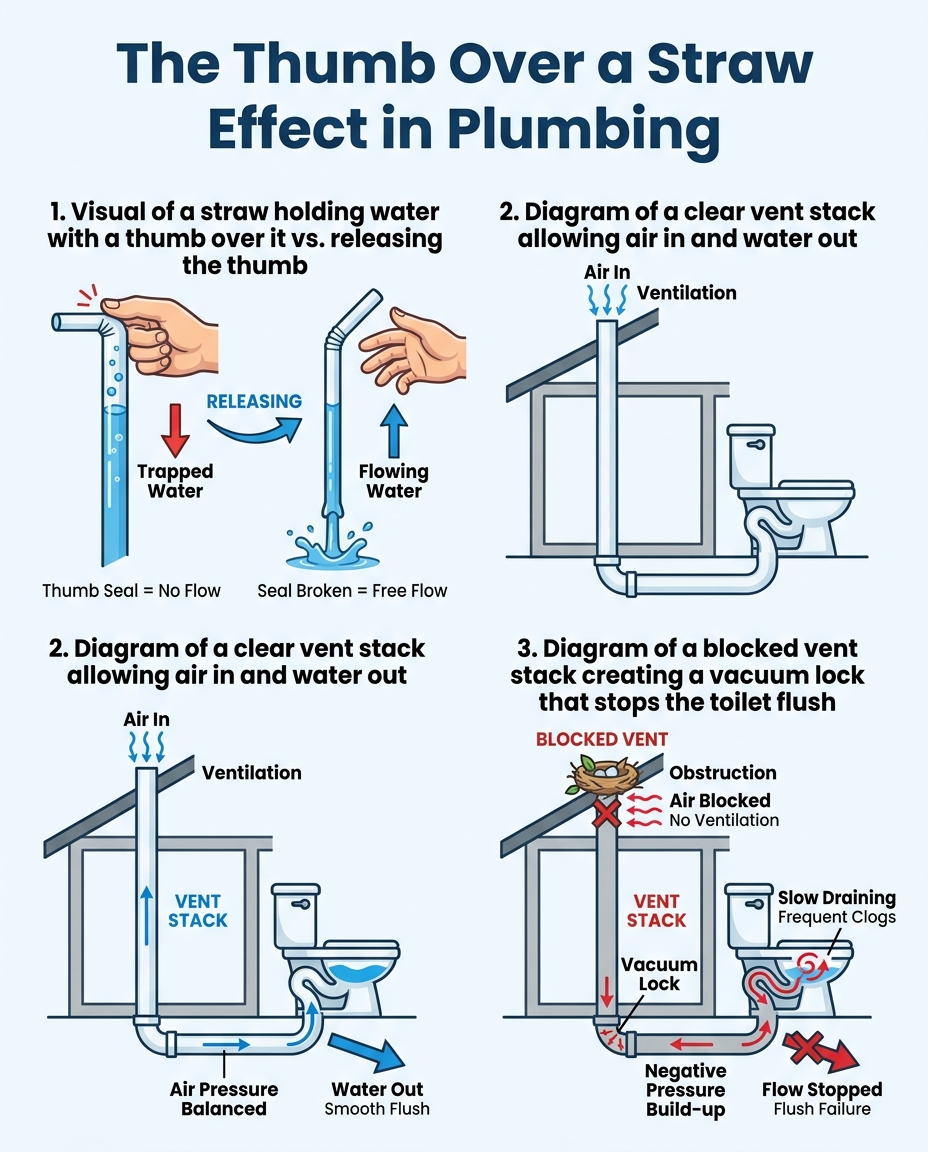
To truly understand why a lack of airflow stops a toilet from flushing, you have to look at the basic physics of vacuum pressure. The easiest way to visualize this phenomenon is the classic thumb over a straw analogy. If you dip a drinking straw into a glass of water, place your thumb tightly over the top opening, and lift the straw out of the glass, the water stays trapped inside the plastic tube. Even though the bottom of the straw is completely open to the air, the water will not drop until you remove your thumb to let atmospheric pressure flow in from the top.
A blocked roof vent stack acts exactly like a giant thumb over your home's plumbing system. It creates a powerful vacuum lock that traps wastewater in the pipes.
According to standard Uniform Plumbing Code (UPC) requirements, residential and commercial plumbing systems require atmospheric pressure equalization to allow water to flow freely and to keep P-traps properly sealed. When the vent is blocked, the rushing water from a toilet flush attempts to pull air from anywhere it possibly can. This immense vacuum pressure physically prevents the toilet from flushing properly, regardless of how clear the actual drain pipe might be.
Because the system cannot pull fresh air from the roof, it forcefully starts pulling air from other plumbing fixtures inside the house. This violent suction is exactly why you might notice loud gurgling sounds from the tub or sink when the toilet is flushed. The vacuum is literally sucking air backward through the protective water seals in nearby drains. This suction disrupts the entire bathroom's drainage capability, turning a simple, routine flush into a slow, bubbling, frustrating mess.

If the vent stack is located high up on the roof, far away from everyday household waste, what causes it to become obstructed? The answer almost always comes down to environmental factors. Nature is the primary cause of roof vent blockages, quietly compromising your plumbing system from the outside in while you remain unaware inside the home.
Because these vertical pipes emit warm air from the home's interior, they become highly attractive to local wildlife seeking shelter, especially during the cooler months. Animals build dense obstructions inside the pipe, completely cutting off the air supply. Furthermore, environmental debris accumulates slowly over time. In our region, the Sacramento Valley's dry winds frequently blow heavy dust, dirt, and dry leaves onto local roofs, exacerbating vent blockages as this debris settles into the open pipes. Moisture from seasonal rain or heavy morning dew mixes with this dust, creating a thick, sludge-like barrier that eventually solidifies into a hard plug inside the stack.
Because these blockages happen entirely out of sight on the roofline, they are incredibly difficult for homeowners to spot early. Most people only realize there is a problem during Spring (bird nesting) or Autumn (falling leaves) when the unmistakable symptoms of a vacuum lock suddenly appear in the bathroom.
When a professional inspects a problematic vent stack, they typically find one of several common culprits blocking the airway:
• Bird and rodent nests: Built deep inside the warm, sheltered pipe, these nests create a dense, impenetrable plug of twigs, mud, and animal debris.
• Fallen foliage: An accumulation of dry leaves, pine needles, and twigs that blow across the roofline and drop directly into the vertical opening.
• Compacted dirt and sludge: Heavy dust and dirt buildup mixing with condensation or rainwater to form a concrete-like seal inside the pipe walls.
• Tennis balls or toys: Occasionally, objects thrown onto the roof can roll perfectly into the vent opening, instantly blocking airflow.
The solution requires safely accessing the roofline and using specialized plumbing equipment to physically break apart and extract the obstruction, restoring the vital airway without damaging the pipe itself.
Differentiating between a standard localized clog and a systemic venting issue can save you significant time and frustration. If you know exactly what to look and listen for, you can accurately diagnose a vacuum lock before you waste effort on incorrect fixes. While a standard bowl blockage usually only affects one specific fixture, a venting problem creates a cascade of auditory and visual signs throughout the entire bathroom.
Here are the primary symptoms indicating your roof vent stack is compromised:
• Gurgling sounds: Hearing distinct gurgling sounds from the tub or sink when the toilet is flushed is the most definitive sign of a venting issue. The system is gasping for air and pulling it through nearby water traps.
• Sluggish flushing: The toilet bowl fills with water but drains incredibly slowly, lacking the powerful, swirling suction needed for a normal, efficient flush.
• Sewer gas odors: A vacuum lock can pull the protective water out of nearby P-traps, leaving the pipes completely open and allowing unpleasant, hazardous sewer gas odors to drift indoors.
• Multiple fixtures acting up: If the bathroom sink drains slowly at the exact same time the toilet refuses to flush, the common denominator is the shared vent stack behind the wall.
• Unexplained bubbles: Large bubbles rising in the toilet bowl when no one is using it indicate trapped air attempting to escape upward through the water seal.
• Scope of Problem — Standard Pipe Clog: Isolated to one specific fixture in the home — Blocked Vent Stack (Vacuum Lock): Affects multiple fixtures simultaneously across rooms
• Auditory Signs — Standard Pipe Clog: Silent draining or minor splashing — Blocked Vent Stack (Vacuum Lock): Loud gurgling from nearby tubs or sinks
• Odors — Standard Pipe Clog: Usually no smell unless the clog is severe — Blocked Vent Stack (Vacuum Lock): Strong sewer gas odors from dry P-traps
• Plunging Result — Standard Pipe Clog: Often successfully clears the soft blockage — Blocked Vent Stack (Vacuum Lock): Completely ineffective; actively increases pipe pressure
If you are experiencing several of these symptoms simultaneously, standard plunging will not resolve the issue. In some cases, persistent drainage issues might even mimic the signs it's time for a toilet replacement, but a thorough professional inspection will reveal that the porcelain hardware is perfectly fine—it is the hidden airflow that is broken.
When faced with a stubborn bathroom backup, the natural instinct is to escalate from a standard plunger to harsh, store-bought liquid drain cleaners. However, when the root cause is a blocked roof vent, these DIY methods are completely ineffective and can even cause severe, irreversible damage to your home's plumbing infrastructure.
A plunger simply pushes against a trapped vacuum. Because the air cannot escape through the blocked roof vent, forcing water down the drain only increases the pressure inside the pipes. You are essentially fighting against the fundamental laws of physics, which is why the blockage cannot be cleared from the bathroom floor. Similarly, chemical drain cleaners will simply sit stagnant in the pipes. These harsh chemicals create an exothermic reaction that can cause severe corrosion to older cast iron pipes or warp modern PVC pipes, all without ever reaching the actual roof vent obstruction.
There is also a significant safety warning to consider: DIY roof vent clearing is inherently dangerous. Climbing onto a pitched roof requires proper safety gear, fall protection training, and a licensed professional. Attempting to snake a vent stack yourself can lead to serious falls, severe injury, or expensive damage to your roofing materials and flashing.
This is why a proper diagnostic approach is so critical. A typical pattern we see is homeowners struggling with frequent, messy backups during the colder months. One local homeowner reached out during the winter when they woke up to a backed-up sewer line and intense gurgling sounds from the tub or sink when the toilet is flushed. While other companies couldn't arrive until the next day, technicians were dispatched within hours. By utilizing a transparent, budget-conscious diagnostic process, the team quickly identified the true systemic issue, provided an affordable quote, unclogged the line safely, and offered future prevention options. This diagnostic-first approach identifies hidden problems—like blocked vents—rather than just repeatedly charging a customer for basic, ineffective plunging that fails to address the root cause.
Once your vent stack is professionally cleared and normal atmospheric pressure is restored, the goal shifts heavily toward prevention. Proactive plumbing maintenance is the most effective way to catch environmental debris before it fully blocks the stack and causes a catastrophic vacuum lock inside your home.
Homeowners can take several practical steps to protect their plumbing airflow long-term:
1. Perform seasonal visual inspections: Safely inspect your roofline from the ground using binoculars, particularly during Spring (bird nesting) or Autumn (falling leaves). Look carefully for overhanging tree branches that could drop debris directly into the vent opening, or excessive bird activity near the pipes.
2. Trim overhanging foliage: Keep large trees trimmed well back away from the roof to minimize the amount of leaves, twigs, and sticky sap that can fall into the open plumbing stack.
3. Schedule professional evaluations: Regular professional inspections evaluate both the water flow and the critical air flow in your system. Plumbers can use advanced tools to spot partial blockages before they cause a complete, messy backup.
4. Consider protective screening: A licensed plumber can install specialized, code-compliant vent caps or screens that allow air to flow freely while keeping wildlife, birds, and large debris completely out of the pipe.
Maintaining the system actively prevents sudden, unhygienic backups and significantly extends the life of your entire plumbing infrastructure. Enrolling in a preventative home maintenance plan ensures that these critical, out-of-sight components are regularly checked, keeping your drains flowing smoothly and efficiently year-round.
Ultimately, a plumbing system needs to breathe to function properly. When the vent stack is blocked by debris or wildlife, the resulting vacuum lock will turn every single flush into a frustrating, messy battle. Treating a venting vacuum like a standard pipe clog wastes your valuable time, money, and effort, as plungers and harsh chemicals simply cannot fix an obstruction located high up on your roof.
If you are constantly dealing with slow drains, foul sewer odors, or gurgling sounds from the tub or sink when the toilet is flushed, it is time to stop fighting the symptoms and address the true root cause. Seek professional diagnostics to safely inspect and clear the roof stack. By relying on expert diagnostic care, you can understand the physics behind the problem, restore proper airflow to the system, and ensure your plumbing operates flawlessly for years to come.
Can a blocked vent cause a toilet to clog?
Yes, a blocked vent can absolutely cause a toilet to mimic a severe physical clog. Without proper airflow, a vacuum lock forms inside the pipes, physically preventing wastewater from draining away from the bowl. No amount of plunging or chemical use will resolve this issue until the air intake is fully restored on the roof.
Why does my tub gurgle when I flush the toilet?
A gurgling tub is a classic, definitive sign that your plumbing system is starved for air. When the toilet flushes, the heavy rushing water creates a suction that pulls air backward through the nearby tub drain to compensate for the blocked vent. This violent suction breaks the water seal in the P-trap, resulting in a distinct bubbling or gurgling noise.
How do you know if your roof vent is clogged?
The most common indicators of a clogged roof vent are slow draining fixtures, loud gurgling sounds, and persistent sewer gas odors drifting indoors. You may also notice that multiple drains in the exact same bathroom are acting up simultaneously. If vigorously plunging the toilet has no effect on the water level, the roof vent is highly likely the culprit.
Will a toilet flush if the vent is clogged?
A toilet will struggle significantly to flush if the vent is completely clogged. The bowl may fill with water and drain at a painfully slow rate, or it may not drain at all, leaving waste trapped in the bowl. The severe lack of atmospheric pressure equalization physically prevents the gravity-fed flush from completing its normal cycle.
Why are standard 'how to unclog a toilet' methods failing for my bathroom?
Standard unclogging methods fail because they are specifically designed to clear localized, physical blockages in the lower drain pipe. A venting issue is a fundamental problem with the system's air supply, not the water pipe. Plungers and liquid chemical cleaners cannot reach, dissolve, or clear an obstruction located high up in the roof vent stack.
See what our satisfied customers have to say about their experience with Always Affordable
Plumbing & HVAC.

"Chappy was very skilled in his knowledge of my HVAC unit. I greatly appreciate the quick response and experienced tech. The whole endeavor was made less stressful by his humor and honest conversation. I find comfort in knowing I now have a shop i trust for the next time."
"Tony, James, Ronnie did an amazing job setting up our new AC! They were quick, efficient, considerate, and polite! We appreciate them scheduling us in on such short notice. Definitely recommend this company!"
"Prompt, professional service with kindness and care. They came out to address both plumbing and AC issues. I received a courtesy call before they arrived. All issues were resolved the same day with integrity and respect. Thankful for businesses like this. Absolutely recommend to those that I love."
"Excellent service! Jason came out promptly and in addition to doing my outside faucet he also put in new irrigation equipment! All done perfectly! Jason was lovely"
"Honest with the assessment; friendly and good manners. No high pressure sales. Just good to honest "tell it like you see it" Thought my kitchen disposer needed an overhaul. But Jason, there Plumber gave me an honest lesson on what was really happening. Saved me hundreds, if I went the route of replacing. Thank you!"
"Absolutely 5 stars. If you are looking for affordable ,professional and kind. Chappy was excellent and very knowledgeable . I called in the morning because my air conditioner stopped working he was here within hours and fixed my air with a smile. I highly recommend Chappy and Always Affordable plumbing and Hvac."
"Scott and James were great. They got there quickly and diagnosed the problem with my A/C.They did a very thorough job testing everything. Sent me pictures and called to keep me informed. Got it done the next day and everything is working fine. Be glad when I get home so I can enjoy my new system. Thanks guys for a great job."
"Chappy was very helpful. He knew our issue right away, cleaned our coils. He also came on the same day we called and got our AC blowing cold air again."
"After some timing ’curfuffles’ the Tech Jason arrived and not only completed a speedy install on my toilet, he was personable & professional. Because of the timing issues Jason was attentive and showed up with everything needed! No extra store runs 😊 I was very comfortable with having this Tech in my Daughter’s home. We will definitely use this Service again."