Seasonal Home Maintenance Checklist: Preventing HVAC and Plumbing Emergencies
Prevent HVAC emergencies with a seasonal home maintenance checklist. Why proactive scheduling beats waiting for sudden failures. See what needs attention now.


There is a widespread myth that replacing a single broken part is always the most cost-effective solution, making options comparisons for homeowners incredibly difficult when major systems fail. When your air conditioning stops working on a sweltering afternoon, the immediate instinct is to find the fastest fix possible. However, when the diagnosis points to a failed compressor on older equipment, a quick fix is rarely the most sensible long-term strategy. You are suddenly faced with a critical decision point: weighing a major component repair against a full system upgrade.
Navigating this choice requires objective information, not high-pressure sales tactics. Just as local families trust us for professional plumbing services and rely on our technicians for expert plumbing repair, they also depend on our team for honest, criteria-based HVAC evaluations. When dealing with 10-plus-year-old AC systems, the calculation shifts dramatically. The age of the unit, its declining efficiency, and the overall wear and tear on the mechanical components mean that a major repair might just be a temporary bandage on a failing system. Understanding the mechanics behind the failure is the first step toward making an informed choice that protects your home's comfort and your long-term budget.
To understand why a compressor failure is such a catastrophic event for an air conditioner, it helps to know what this component actually does. The compressor is essentially the "heart" of your HVAC system. Its primary job is to circulate chemical refrigerant through the system, compressing warm, low-pressure gas into a hot, high-pressure gas before sending it to the condenser coil to release heat outside. Because it performs heavy mechanical lifting every time the system cycles on, it endures an immense amount of physical and thermal stress.
Over a decade of operation, this continuous wear and tear takes a toll. In 10-plus-year-old AC systems, the internal motors, valves, and electrical windings inside the compressor begin to degrade. The system loses its original efficiency, forcing the compressor to run longer and harder to achieve the same indoor temperatures. Eventually, this compounding mechanical stress leads to total failure.
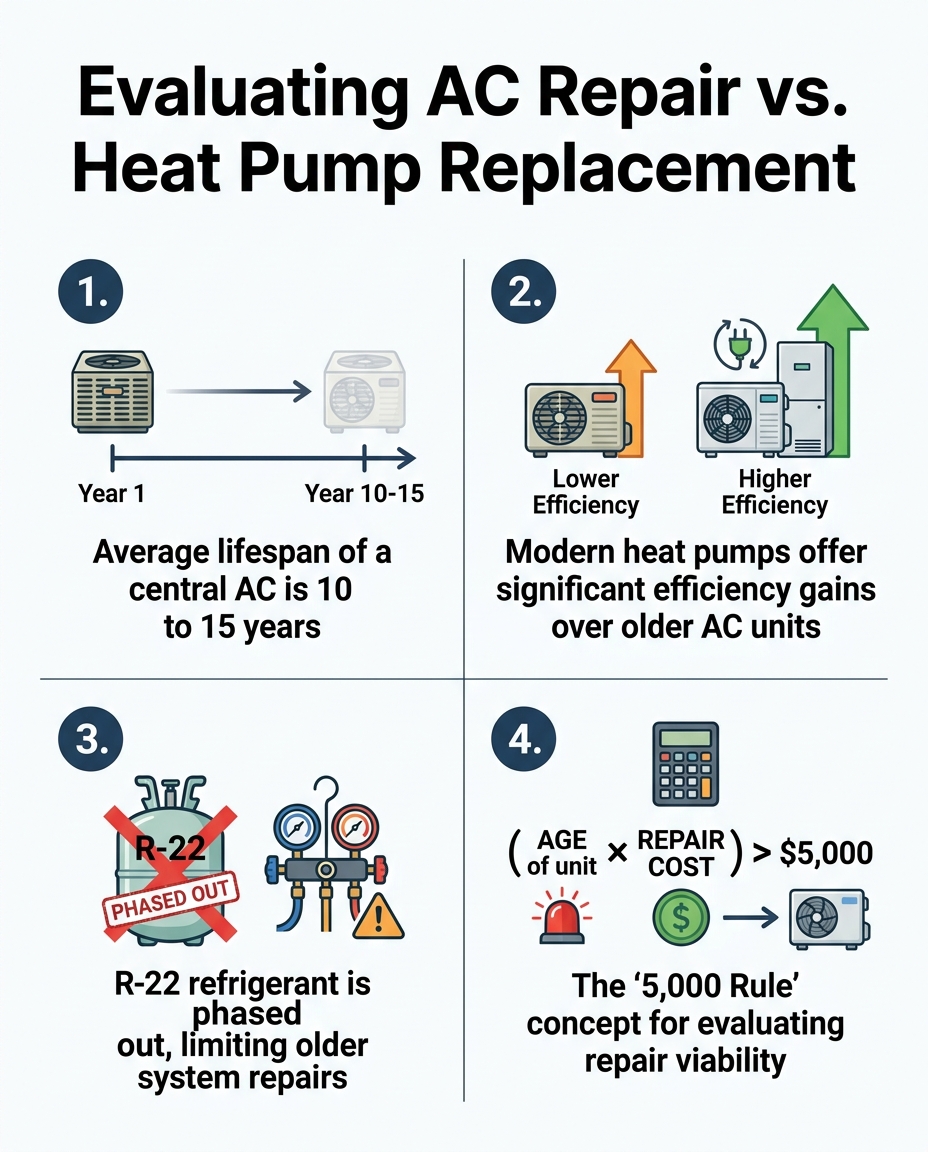
Furthermore, older systems face significant environmental and regulatory hurdles. Many units manufactured over a decade ago utilize R-22 refrigerant. The Environmental Protection Agency (EPA) has completely phased out the production and import of R-22 due to its ozone-depleting properties. Because new R-22 is no longer manufactured, servicing an older unit that requires a refrigerant recharge after a compressor replacement is exceptionally difficult and resource-intensive. Diagnosing and replacing a compressor involves handling high-voltage electricity and regulated chemicals, meaning it requires a licensed professional and is never a DIY project.
Compressors rarely fail without giving a few warning signs. Catching these symptoms early can give you time to evaluate your options before you are left completely without cooling:
• Loud, unusual noises: Grinding, clanking, or harsh squealing sounds during startup or operation usually indicate that the internal hardware of the compressor is failing or that the motor mounts have broken.
• System tripping circuit breakers: If your air conditioner repeatedly trips your electrical panel's breaker when it tries to turn on, the compressor is likely pulling too much amperage due to an internal electrical short or severe mechanical binding.
• Warm air from registers: If the blower fan is running but the air coming from your vents is warm despite a low thermostat setting, the compressor is likely failing to circulate refrigerant through the system.
• Hard starting: A noticeable shudder or a dimming of the house lights when the AC kicks on suggests the compressor is struggling to overcome mechanical resistance to start its cycle.
When faced with a major repair on a declining unit, the most viable alternative is upgrading to a modern high-efficiency heat pump. While the name "heat pump" sometimes causes confusion, this technology is actually a comprehensive, all-in-one climate control solution. A heat pump operates on the exact same refrigeration cycle as a standard air conditioner to cool your home in the summer. The crucial difference is that a heat pump contains a reversing valve, allowing it to run the cycle backward to draw ambient heat from the outside air and move it indoors during the winter.
The technological leaps made in the HVAC industry over the past decade are substantial. A modern high-efficiency heat pump utilizes variable-speed compressors and advanced blower motors that adjust their output in tiny increments. Instead of blasting on at 100% capacity and shutting completely off like older AC units, modern heat pumps run continuously at lower speeds. This method requires significantly less electricity, resulting in remarkable energy efficiency improvements compared to technology from over a decade ago.
Beyond energy conservation, upgrading improves your overall indoor comfort and air quality. Because a variable-speed heat pump runs longer cycles at lower speeds, it pulls significantly more humidity out of the indoor air. It also pushes air through your filtration system more consistently, capturing more dust, pollen, and airborne contaminants than an older system that constantly cycles on and off.
Finally, there are often financial incentives designed to encourage homeowners to adopt this greener technology. Qualifying installations may be eligible for generic federal tax credits or local utility incentives aimed at reducing grid strain. We always advise readers to verify current programs with a tax professional or their local utility provider to understand exactly what incentives apply to their specific situation.
Making a confident decision requires an objective, criteria-based framework. When you compare the short-term viability of replacing a single part against the long-term value of a new system, several distinct factors emerge. Repairing a 10-plus-year-old system might seem appealing initially, but it leaves you with an aging coil, an old blower motor, and outdated efficiency levels. Upgrading to a modern high-efficiency heat pump resets the clock on your entire home comfort system.
One of the most reliable frameworks for this decision is the "5,000 rule." This is a conceptual guideline used by HVAC professionals to evaluate repair viability. To use it, you multiply the age of your equipment by the estimated cost of the repair. If the resulting number exceeds 5,000, replacing the unit is generally considered the wiser financial choice. For example, applying a major compressor repair cost to a 12-year-old system almost always yields a number well over this threshold, signaling that the equipment has reached the end of its economically useful life.
Warranty coverage is another critical differentiator. When a single component like a compressor is replaced on an old unit, the warranty usually only covers that specific part for a limited time. If the blower motor fails a month later, you are entirely responsible for that subsequent repair. Conversely, a new installation comes with comprehensive manufacturer warranties that protect the entire system for years.
• Energy Efficiency — Repairing an Aging Compressor: Remains at outdated, declining levels; higher monthly energy consumption. — Upgrading to a Heat Pump: Significantly improved efficiency; utilizes variable-speed technology.
• Warranty Coverage — Repairing an Aging Compressor: Limited coverage strictly on the replaced part; no protection for other aging components. — Upgrading to a Heat Pump: Comprehensive, multi-year manufacturer warranty on the entire system.
• Refrigerant Type — Repairing an Aging Compressor: Often relies on phased-out R-22, making future servicing increasingly difficult. — Upgrading to a Heat Pump: Utilizes modern, environmentally friendly refrigerants.
• Long-Term Reliability — Repairing an Aging Compressor: High risk of subsequent part failures (motors, coils, capacitors). — Upgrading to a Heat Pump: Resets the lifespan of your home comfort system entirely.
• Indoor Comfort — Repairing an Aging Compressor: Standard on/off cycling; less effective humidity control. — Upgrading to a Heat Pump: Consistent temperatures, superior dehumidification, and better air filtration.

Equipment age is only one part of the equation; the environment in which that equipment operates plays an equally massive role in its lifespan. The dry, intense heat of Sacramento area summers significantly increases the operational hours required to keep a home comfortable. Unlike milder coastal climates where an air conditioner might only run for a few hours in the late afternoon, inland valley systems often run continuously from mid-morning until well after sunset.
This sustained strain accelerates wear on aging components. For 10-plus-year-old AC systems, the prolonged high temperatures mean the compressor rarely gets a chance to cool down between cycles. The thermal breakdown of internal lubricants and the continuous electrical load make major component failure highly likely right around the decade mark, often triggering complete breakdowns during peak heat waves when you need the system the most.
Interestingly, this intense regional climate affects multiple home systems in similar ways. The same dry conditions that bake the soil and cause ground shifting can wreak havoc on underground utilities, sometimes requiring main sewer line clearing when pipes shift or crack. Just as your plumbing requires infrastructure suited to the local soil, your HVAC system requires technology suited to the local weather.
A modern high-efficiency heat pump is uniquely tailored for these regional weather patterns. Because they are designed to run continuously at low capacities, they handle the sustained heat of a Sacramento summer with ease, maintaining a steady indoor temperature without the violent mechanical stops and starts that destroy older compressors.
Whether you choose to repair an existing system or invest in a new heat pump, proactive maintenance is the only way to protect that investment. Routine maintenance is essential for extending the lifespan of any major home system and ensuring it operates at peak efficiency year-round.
The principle of preventative care applies universally across your property. Just as a homeowner might research how long enzyme cleaners take to work on a clogged toilet to avoid harsh chemical damage to their pipes, taking a gentle, proactive approach to HVAC care prevents catastrophic mechanical failures. Consistent professional evaluations catch minor issues—like a failing capacitor or a dirty condenser coil—before they escalate into major component failures.
To keep your home running smoothly, we recommend a holistic approach to property maintenance. Joining a preventative plumbing maintenance membership and keeping up with annual HVAC tune-ups ensures that trained eyes are regularly inspecting your most critical infrastructure.
Essential Whole-Home Maintenance Steps:
1. Frequent Filter Changes: Replace your HVAC air filters every 30 to 90 days. A clogged filter restricts airflow, forcing the blower motor and compressor to work harder, which drastically reduces the lifespan of a modern high-efficiency heat pump or an older AC unit.
2. Keep the Outdoor Unit Clear: Ensure there is at least two feet of clearance around your outdoor condenser. Remove leaves, overgrown shrubs, and debris so the system can effectively exhaust heat.
3. Schedule Bi-Annual HVAC Tune-Ups: Have a licensed professional inspect your cooling system in the spring and your heating system in the fall to verify electrical connections, check refrigerant levels, and clean the coils.
4. Monitor Plumbing Health: Have your water pressure checked and your drains professionally cleared to prevent sudden pipe bursts or hazardous sewage backups.
5. Listen for Changes: Pay attention to how your systems sound. New rattles, hums, or grinding noises are early warning signs that require immediate professional attention.
Generally, replacing a compressor on a system this old is not recommended. At the 10-year mark, the unit has likely reached the end of its most efficient life, and other major components are also at risk of failing. Furthermore, 10-plus-year-old AC systems often use outdated R-22 refrigerant, making repairs highly impractical. Investing that repair money into a new system usually provides better long-term value.
The decision depends heavily on the age of your current system and the cost of the repair. If your AC is relatively new and the repair is minor, fixing it is the logical choice. However, if you are facing a major component failure on an aging unit, upgrading to a heat pump provides superior energy efficiency, better indoor air quality, and comprehensive warranty protection.
A central air conditioning compressor typically lasts between 10 and 15 years under normal operating conditions. Factors such as regional climate, the frequency of preventative maintenance, and proper initial installation sizing play a massive role in reaching that upper limit. Once a system passes a decade of use, the likelihood of mechanical failure increases significantly.
An air conditioner is designed strictly to remove heat from your home and cool the indoor air. A heat pump operates exactly like an air conditioner in the summer, but it features a reversing valve that allows it to pull ambient heat from the outside air and bring it indoors during the winter. This makes a heat pump a versatile, all-in-one heating and cooling solution.
The EPA has completely phased out the production of R-22 refrigerant due to environmental concerns. If your older AC unit develops a leak or requires a compressor replacement, sourcing the necessary R-22 to recharge the system is increasingly difficult and resource-intensive. This regulatory shift makes replacing the system with one that uses modern refrigerant the most practical long-term choice.
Yes, absolutely. A modern heat pump cools a home using the exact same refrigeration cycle as a traditional air conditioner. In fact, because modern units often feature variable-speed technology, they are exceptionally good at handling sustained, dry heat. They provide consistent cooling and superior dehumidification without the harsh energy spikes of older equipment.
Deciding between repairing a failed component and replacing your entire system is never a choice to take lightly. The right path depends entirely on the age of your equipment, its overall health, and your long-term goals for your property. While repairing a minor issue on a newer unit makes sense, attempting to revive 10-plus-year-old AC systems with a major compressor replacement often leads to diminishing returns and future breakdowns.
Upgrading to a modern high-efficiency heat pump offers a fresh start for your home's climate control, delivering superior comfort, improved energy consumption, and peace of mind through comprehensive warranties. We understand that this is a significant decision, which is why we provide objective, criteria-based evaluations to help you understand all your options.
Our commitment to transparent, budget-conscious solutions and a 100% satisfaction guarantee means you can trust our team to give you the honest facts about your system's health. If you are struggling with a failing compressor, reach out for a professional assessment. We are here to help you explore your options safely and accurately, ensuring your home remains comfortable for years to come.
See what our satisfied customers have to say about their experience with Always Affordable
Plumbing & HVAC.

"Chappy was very skilled in his knowledge of my HVAC unit. I greatly appreciate the quick response and experienced tech. The whole endeavor was made less stressful by his humor and honest conversation. I find comfort in knowing I now have a shop i trust for the next time."
"Tony, James, Ronnie did an amazing job setting up our new AC! They were quick, efficient, considerate, and polite! We appreciate them scheduling us in on such short notice. Definitely recommend this company!"
"Prompt, professional service with kindness and care. They came out to address both plumbing and AC issues. I received a courtesy call before they arrived. All issues were resolved the same day with integrity and respect. Thankful for businesses like this. Absolutely recommend to those that I love."
"Excellent service! Jason came out promptly and in addition to doing my outside faucet he also put in new irrigation equipment! All done perfectly! Jason was lovely"
"Honest with the assessment; friendly and good manners. No high pressure sales. Just good to honest "tell it like you see it" Thought my kitchen disposer needed an overhaul. But Jason, there Plumber gave me an honest lesson on what was really happening. Saved me hundreds, if I went the route of replacing. Thank you!"
"Absolutely 5 stars. If you are looking for affordable ,professional and kind. Chappy was excellent and very knowledgeable . I called in the morning because my air conditioner stopped working he was here within hours and fixed my air with a smile. I highly recommend Chappy and Always Affordable plumbing and Hvac."
"Scott and James were great. They got there quickly and diagnosed the problem with my A/C.They did a very thorough job testing everything. Sent me pictures and called to keep me informed. Got it done the next day and everything is working fine. Be glad when I get home so I can enjoy my new system. Thanks guys for a great job."
"Chappy was very helpful. He knew our issue right away, cleaned our coils. He also came on the same day we called and got our AC blowing cold air again."
"After some timing ’curfuffles’ the Tech Jason arrived and not only completed a speedy install on my toilet, he was personable & professional. Because of the timing issues Jason was attentive and showed up with everything needed! No extra store runs 😊 I was very comfortable with having this Tech in my Daughter’s home. We will definitely use this Service again."