Why Is My AC Running But Blowing Warm Air? Expert Troubleshooting Steps
Why is your AC blowing warm air? Get clear answers on thermostat settings to check and see common homeowner questions answered before calling for a repair.



Thermostat calibration folsom ca is essential for maintaining home comfort and keeping energy bills under control, especially given Folsom's hot summers and mild winters. When your thermostat isn't reading the correct temperature, your HVAC system runs longer than necessary—wasting energy and money.
Quick Answer: What You Need to Know About Thermostat Calibration
• What it is: Adjusting your thermostat so it accurately reads and controls your home's temperature
• Why it matters: A miscalibrated thermostat can increase energy costs by up to 10% and cause your HVAC system to overwork
• Common signs: Inconsistent room temperatures, higher energy bills, and your system cycling on and off frequently
• DIY testing: Place a thermometer near your thermostat for 15 minutes—if readings differ by more than 1-2 degrees, calibration is needed
• When to call a pro: Persistent issues after DIY attempts, wiring problems, or very old thermostats
Living in Folsom means relying on your HVAC system year-round. When temperatures climb into the 90s and beyond during summer, the last thing you want is a thermostat that thinks your home is cooler than it actually is. The same goes for those chilly winter evenings—if your thermostat reads incorrectly, you'll never feel truly comfortable.
Here's the real problem: Most homeowners don't realize their thermostat is inaccurate until they notice something's wrong. You might feel too hot or too cold despite setting the thermostat to your preferred temperature. Or you might notice your energy bills creeping up without explanation.
A properly calibrated thermostat is the control center for your entire HVAC system. When it's accurate, your system runs efficiently, your home stays comfortable, and your energy bills stay manageable. When it's not, you're essentially letting your HVAC system guess when to turn on and off.

Something feels off in your Folsom home lately. You've set the thermostat to your usual comfortable temperature, but you're still reaching for a sweater in one room while sweating in another. Or maybe you nearly choked on your coffee when you opened last month's energy bill. Before you blame your HVAC system, take a closer look at your thermostat—it might be telling your heating and cooling equipment the wrong story.
Most of us assume our thermostats are always accurate, but here's the thing: they can drift out of calibration over time. It's not something you notice overnight, but gradually, that little device on your wall starts reporting temperatures that don't match reality. And when your thermostat "lies" to your HVAC system, you end up uncomfortable and paying more than you should.
Inconsistent temperatures are often the first clue. You set the thermostat to 72 degrees, expecting even comfort throughout your home. Instead, the living room feels like you're relaxing in a sauna while the bedroom could double as a walk-in freezer. These hot and cold spots in your home happen because your thermostat isn't accurately sensing what's really going on temperature-wise, so your HVAC system keeps guessing wrong about when to kick on or shut off.
Then there are those high energy bills that seem to appear out of nowhere. You haven't changed your habits—you're not suddenly running the AC all day or cranking the heat at night—but your utility costs keep climbing. A miscalibrated thermostat forces your HVAC system to run longer than necessary, constantly chasing a temperature reading that's just not accurate. Picture this: your system thinks your home is 68 degrees when it's actually 72, so it keeps heating for an extra hour every day. That's real money disappearing from your wallet, and it adds up fast. In fact, thermostat calibration folsom ca homeowners often find they can save up to 10% on their annual energy costs just by getting their thermostat reading correctly again.
Frequent cycling is another major red flag. Your air conditioner or heater shouldn't sound like it's having an identity crisis, turning on and off every few minutes. This short cycling behavior—where your system runs briefly, shuts down, then fires up again moments later—puts enormous stress on your equipment. It's like doing sprints instead of a steady jog; your HVAC system wears out much faster. When your thermostat can't get a stable temperature reading, it sends confused signals to your equipment, creating this stop-start pattern that wastes energy and shortens your system's lifespan.
The most straightforward sign? Your thermostat display is inaccurate compared to what you're actually experiencing. Grab a reliable thermometer and place it near your thermostat. If your thermostat cheerfully displays 70 degrees while your thermometer insists it's 75, you've caught your thermostat in the act. This mismatch means you'll never quite achieve the comfort level you're aiming for, no matter how much you fiddle with the settings.
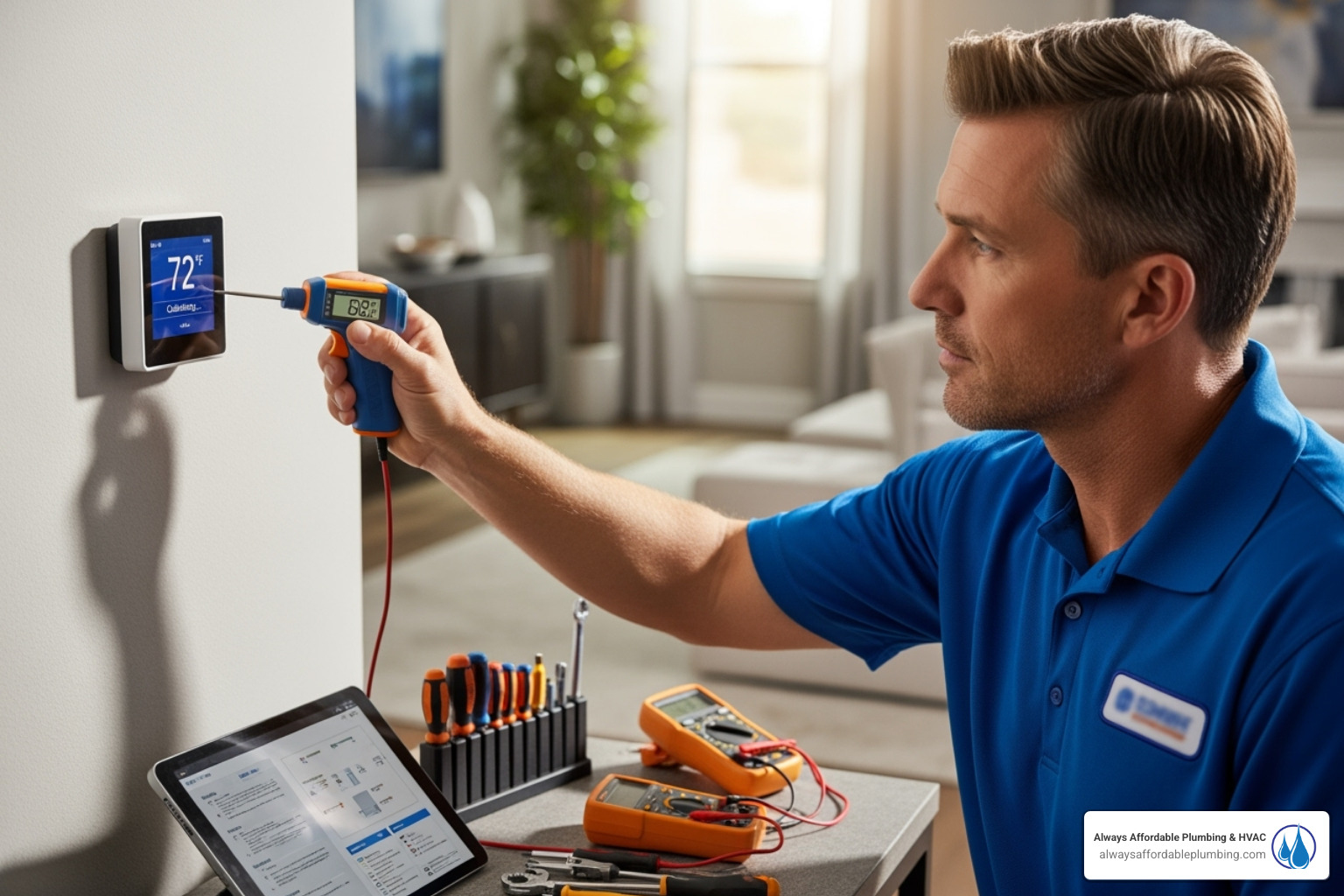
Here's something that surprises many Folsom homeowners: even a perfectly calibrated thermostat will fail you if it's installed in the wrong spot. Your thermostat needs to sense the average temperature of your living space, not the temperature of one problem area. Think of it as taking your home's temperature—you want an accurate reading of the whole body, not just one spot that happens to be warmer or cooler than everywhere else.
Direct sunlight is one of the biggest troublemakers. When afternoon sun streams through your windows and hits your thermostat, it heats up the sensor and "thinks" your entire home is warmer than it really is. Your air conditioner then kicks into overdrive trying to cool down a house that's actually comfortable. The same principle applies to drafts from windows or doors—a breezy hallway makes your thermostat believe your home is cooler than it is, so your heater runs longer than necessary.
Heat sources like lamps or TVs sitting near your thermostat create similar confusion. That lamp might feel cozy to you, but it's warming up your thermostat's sensor and throwing off readings for your entire home. Exterior walls present their own challenges because they're more affected by outdoor temperatures. In Folsom's hot summers, an exterior wall gets much warmer than the interior of your home, skewing your thermostat's perception of reality.
The sweet spot for accurate temperature sensing is a central location on an interior wall, away from windows, doors, direct sunlight, and any appliances that generate heat. This central position gives your thermostat a fair chance to measure what your living space actually feels like, leading to more consistent comfort and a more efficient HVAC system. When your thermostat is in the right place and properly calibrated, your whole home benefits—including the air quality. Speaking of which, maintaining good indoor air quality goes hand-in-hand with HVAC efficiency. For more insights on keeping the air in your Folsom home healthy and comfortable, check out our resource on Folsom air quality.
Ready to take control of your home's comfort? The good news is that many thermostat calibration issues are surprisingly straightforward to fix yourself. With just a few basic tools and about thirty minutes of your time, you can restore accuracy to your thermostat and start enjoying consistent temperatures again.
Before we dive in, though, let's talk about safety first. Always turn off the power to your HVAC system at the circuit breaker before you start working on your thermostat. This simple step protects you from electrical shocks and keeps your equipment safe while you work. Trust us—it's worth the extra trip to the breaker box.

Think of this as gathering your ingredients before cooking. Having everything ready makes the whole process smoother and less frustrating. Here's what you'll need:
• Accurate glass or digital thermometer: This is your truth-teller, the baseline you'll use to check your thermostat's accuracy. Make sure it's a reliable model, not just something decorative from a gift shop.
• Small screwdriver set: Most thermostats require either a small Phillips or flathead screwdriver to open the cover or make adjustments. Keep both types handy.
• Soft brush or canned air: You'd be surprised how much dust accumulates inside a thermostat over time, and that grime can interfere with sensitive temperature sensors.
• Thermostat user manual: This is your secret weapon. Every thermostat model is slightly different, and your manual will tell you exactly where to find calibration settings or adjustment screws. Can't find the paper copy? A quick internet search for your thermostat's make and model usually brings up a PDF version.
• Level: While not essential for the calibration itself, a level helps ensure your thermostat is mounted straight—which can matter for older mechanical models with mercury switches.
Now comes the hands-on part. Don't worry—this isn't as complicated as it might sound. The process differs slightly depending on whether you have an older mechanical thermostat or a modern digital model, but we'll walk you through both.
Testing Your Thermostat's Accuracy
Start by figuring out just how far off your thermostat really is. Turn off your HVAC system at the thermostat itself, then tape your accurate thermometer to the wall right next to it. Use a small piece of folded paper towel or cloth underneath to prevent the wall temperature from affecting the reading. Now comes the hard part: waiting. Give it a full 15 to 30 minutes for the thermometer to adjust to your room's actual temperature.
Once that time has passed, compare the two readings. If your external thermometer and your thermostat disagree by more than one or two degrees, you've confirmed that thermostat calibration folsom ca is needed.
For Mechanical Thermostats
These older models—often with a round dial or a small mercury switch inside—require a more hands-on approach. After switching off the power at your circuit breaker, gently remove the thermostat cover. It might snap off, or you might need to loosen a small screw. Inside, you'll find the thermostat's inner workings, which are simpler than they look.
Look for a small screw labeled "CAL" or something similar. This is your calibration screw. Using your small screwdriver, turn it in tiny increments—we're talking quarter-turns here—until the thermostat's internal indicator matches your external thermometer's reading. If you have a mercury-switch model, you might instead need to adjust a tiny level to center the mercury vial properly.
While you're in there, take a moment to clean things up. Use your soft brush or canned air to gently clear away any dust from the internal components. Years of dust buildup can affect how well those sensors work. When you're satisfied with the adjustment, carefully replace the cover.
For Digital and Smart Thermostats
Modern thermostats make calibration a bit easier—no screwdrivers required for the actual adjustment. After turning off power at the breaker, access your thermostat's menu system. Most digital models have a setting called "temperature offset" or "calibration" buried somewhere in the settings menu. Your user manual will tell you exactly how to find it, but it usually involves pressing and holding certain buttons or navigating through touchscreen options.
Once you've found the calibration setting, you can adjust the displayed temperature up or down to match your external thermometer. It's essentially telling your thermostat, "Hey, when you think it's 72 degrees, it's actually 74, so adjust accordingly."
If you have a smart thermostat, check for firmware updates while you're in the settings. Manufacturers sometimes include calibration improvements in their software updates. You can also use canned air to gently clean around the external temperature sensor if it's accessible.
For additional guidance on calibrating different thermostat types, you might find this resource helpful: A guide on how to calibrate a thermostat.
You're almost done! Carefully reassemble everything—replace the cover, make sure it's secure, and restore power to your HVAC system at the breaker. Now set your thermostat to your preferred temperature and watch what happens. Your system should respond more accurately now.
But don't just set it and forget it. Over the next few days, pay attention to how your home feels. Check for consistent temperatures from room to room. Notice whether your HVAC system is cycling on and off at more reasonable intervals. If you still notice minor temperature discrepancies, you might need to fine-tune your calibration adjustment slightly.
Make regular cleaning part of your routine, too. Every few months, turn off the power and gently clean any dust from your thermostat's sensors with a soft brush or canned air. This simple maintenance step helps maintain accuracy over time.
If you're wondering whether upgrading to a smart thermostat might make your life easier, we've got you covered: Learn if a smart thermostat can save you money. And remember, proper thermostat calibration is just one piece of the puzzle. Regular maintenance of your entire HVAC system keeps everything running smoothly. For comprehensive care, check out our AC maintenance in Folsom services.
Look, we love a good DIY project as much as anyone. There's something satisfying about fixing things yourself. But when it comes to your home's comfort and safety, sometimes the smartest move is knowing when to put down the screwdriver and pick up the phone.
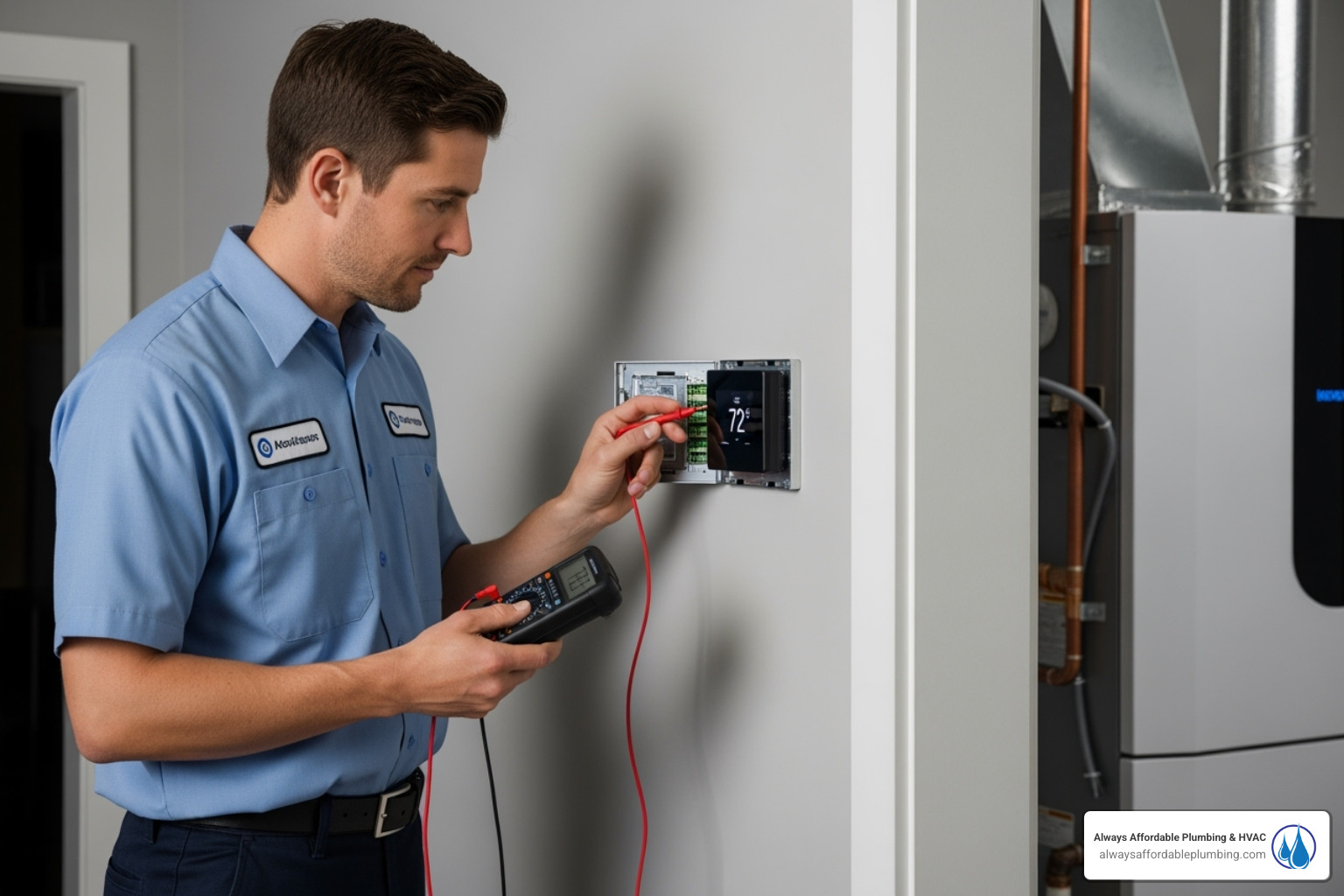
You've tried calibrating your thermostat following our guide, waited a few days to monitor the results, and... nothing's changed. Your home still feels like a sauna in one room and an icebox in another. Your energy bills are still climbing. Your HVAC system is still cycling on and off like it can't make up its mind. When persistent issues continue after DIY calibration, it's telling you something: the problem runs deeper than a simple adjustment can fix.
Maybe your thermostat's internal components are worn out. Maybe there's an issue with your HVAC system's sensors or controls. Whatever the cause, a professional technician has the diagnostic tools and experience to pinpoint exactly what's going wrong.
Here's another scenario that should send you straight to the phone: your thermostat has no power or display. A completely blank screen isn't a calibration issue—it's a sign that something's seriously wrong. This could mean a blown fuse, a tripped breaker that won't reset, or failed internal components. While checking your breaker is safe enough, anything beyond that ventures into territory where professional expertise becomes essential.
Wiring problems are absolutely a professional-only zone. If you've opened your thermostat cover and noticed loose wires, frayed insulation, discolored connections, or anything that looks burnt or melted, stop right there. Electrical issues aren't just frustrating—they're genuinely dangerous. They can cause fires, damage your expensive HVAC equipment, or give you a nasty shock. Our licensed technicians have the proper training and tools to safely diagnose and repair electrical problems in your thermostat calibration folsom ca needs.
Sometimes the kindest thing you can do for a very old thermostat is let it retire gracefully. If your thermostat has been faithfully serving your Folsom home for fifteen or twenty years, its internal mechanisms have likely degraded beyond what calibration can fix. Mechanical parts wear out. Mercury switches become less reliable. Even early digital models can fail. A professional can assess whether your old thermostat is worth calibrating or if upgrading to a newer, more efficient model makes better sense for your comfort and wallet.
And here's something that keeps us up at night: system damage concerns. A miscalibrated thermostat doesn't just waste energy—it can actually harm your HVAC system by making it work way too hard. If you've noticed your furnace or air conditioner making strange noises, struggling to heat or cool effectively, or showing signs of wear like leaks or frozen coils, your system may have been overworking for months. A thorough professional inspection can catch problems before they turn into complete system failures that leave you sweltering through a Folsom summer or shivering through winter.
At Always Affordable Plumbing & HVAC, we've seen it all. Our experienced technicians can handle everything from tricky calibration issues to complex system diagnostics. We'll figure out what's actually wrong, explain it to you in plain English, and fix it right the first time. If you're dealing with any of these situations—or you're just not comfortable tackling thermostat issues yourself—we're here to help. Schedule professional HVAC repair in Folsom, CA and get your home's comfort back on track.
We talk to Folsom homeowners every day about their HVAC systems, and certain questions about thermostats come up time and again. Let's tackle the most common ones so you can make informed decisions about your home's comfort.
Think of thermostat calibration like changing the oil in your car—it's preventive maintenance that keeps everything running smoothly. We recommend checking and calibrating your thermostat at least once a year. The ideal time? Right before you really need your system, like in spring before the summer heat kicks in or fall before those chilly winter nights arrive.
That said, don't treat this as a rigid schedule. If you notice any warning signs—inconsistent temperatures, higher bills, or your system cycling on and off constantly—calibrate it right away. Your thermostat is telling you something's off, and waiting until your annual checkup could mean months of wasted energy and reduced comfort.
The smartest approach is making thermostat calibration part of your regular HVAC maintenance routine. When a professional technician comes out for your seasonal tune-up, they'll check your thermostat along with everything else. It's one less thing for you to worry about, and it ensures your entire system stays in sync. For comprehensive care that keeps your AC running efficiently through Folsom's hot summers, consider regular AC maintenance in Folsom.
Here's the short answer: Yes, it absolutely can. And the damage can be more serious than most homeowners realize.
When your thermostat is off by even a few degrees, it's essentially lying to your HVAC system about what's happening in your home. Your furnace or air conditioner responds to that false information, running longer than it should or cycling on and off repeatedly. This isn't just annoying—it causes excessive wear and tear on the most expensive components of your system.
Think about it this way: if you had to sprint up a hill every time you thought you needed to walk around the block, you'd wear yourself out pretty quickly. That's what your HVAC system experiences with a miscalibrated thermostat. The compressor, blower motor, and other critical parts work overtime, and frequent cycling shortens their lifespan dramatically.
What starts as a simple calibration issue can snowball into bigger, more expensive problems. A system that's constantly stressed is more likely to break down unexpectedly, often at the worst possible time—like during a heat wave or cold snap. The extra strain accelerates aging and can knock years off your equipment's expected lifespan. Eventually, what could have been prevented with simple calibration leads to the need for major repairs or even full system replacement. To understand when these larger issues become unavoidable, take a look at our article on why HVAC replacement is sometimes necessary.
A properly calibrated thermostat might seem like a small detail, but it delivers benefits that touch every aspect of your home comfort and household budget.
Energy savings up to 10% is the headline benefit, and in Folsom's climate, that's nothing to sneeze at. When your thermostat accurately reads your home's temperature, your HVAC system runs only when it needs to—not a minute more. Over a year, especially with our hot summers requiring constant AC use, that efficiency translates directly into lower utility bills. The savings add up month after month.
Improved home comfort is what you'll notice day to day. No more walking from a stuffy bedroom into a freezing living room. No more constantly adjusting the thermostat trying to find that sweet spot. When calibration is spot-on, you get consistent temperatures throughout your home, exactly where you set them. Your home feels comfortable, predictable, and pleasant.
There's also the longer HVAC system life that comes from proper calibration. When your equipment isn't straining to compensate for inaccurate readings, it lasts longer—sometimes years longer. The components experience less stress, less wear, and fewer breakdowns. You're essentially adding life to an expensive investment.
Finally, accurate thermostat calibration folsom ca homeowners invest in means reduced repair needs overall. Many HVAC problems start small and grow over time. A properly calibrated thermostat prevents that initial stress that leads to component failures. You'll spend less time dealing with repair calls and more time simply enjoying a comfortable home. It's one of those small preventive measures that pays dividends for years to come.
Living in Folsom means experiencing the full spectrum of California's climate—those blazing summer days when your AC is your best friend, and those cooler winter evenings when you just want to feel cozy at home. Through it all, your thermostat quietly works behind the scenes, making sure your HVAC system knows exactly when to kick in and when to take a break.
When your thermostat is properly calibrated, everything just works better. You'll enjoy accurate temperature control that keeps every room comfortable, not just the one where your thermostat happens to be mounted. You'll see lower utility bills because your system isn't wasting energy trying to hit a temperature target based on faulty readings. And perhaps most importantly, you'll extend your HVAC system's lifespan by preventing all that unnecessary wear and tear that comes from constant cycling and overwork.
Think about it this way: a miscalibrated thermostat is like having a broken speedometer in your car. You might think you're cruising at 65, but you're actually doing 75—and paying for the extra gas without even knowing it. The same principle applies to your home's heating and cooling. When your thermostat calibration folsom ca needs attention, you're literally throwing money away while sacrificing comfort.
The good news? Whether you tackle a DIY calibration using our step-by-step guide or decide to bring in the professionals, fixing this issue is straightforward and the benefits are immediate. You'll feel the difference in your home's comfort, and you'll definitely notice it when your next energy bill arrives.
For reliable and expert service, trust Always Affordable Plumbing & HVAC. We've been helping Folsom homeowners stay comfortable year-round with quality, transparent, and affordable solutions. Our experienced technicians understand the unique challenges of maintaining home comfort in our local climate, and we're always here when you need us.
Ready to stop letting a "lying" thermostat cost you comfort and money? Whether you need a quick calibration check, a full system tune-up, or you're considering upgrading to a newer model, we've got you covered. Contact us for expert HVAC services and installation today and let's make sure your Folsom home is as comfortable and energy-efficient as it should be!
See what our satisfied customers have to say about their experience with Always Affordable
Plumbing & HVAC.

"Chappy was very skilled in his knowledge of my HVAC unit. I greatly appreciate the quick response and experienced tech. The whole endeavor was made less stressful by his humor and honest conversation. I find comfort in knowing I now have a shop i trust for the next time."
"Tony, James, Ronnie did an amazing job setting up our new AC! They were quick, efficient, considerate, and polite! We appreciate them scheduling us in on such short notice. Definitely recommend this company!"
"Prompt, professional service with kindness and care. They came out to address both plumbing and AC issues. I received a courtesy call before they arrived. All issues were resolved the same day with integrity and respect. Thankful for businesses like this. Absolutely recommend to those that I love."
"Excellent service! Jason came out promptly and in addition to doing my outside faucet he also put in new irrigation equipment! All done perfectly! Jason was lovely"
"Honest with the assessment; friendly and good manners. No high pressure sales. Just good to honest "tell it like you see it" Thought my kitchen disposer needed an overhaul. But Jason, there Plumber gave me an honest lesson on what was really happening. Saved me hundreds, if I went the route of replacing. Thank you!"
"Absolutely 5 stars. If you are looking for affordable ,professional and kind. Chappy was excellent and very knowledgeable . I called in the morning because my air conditioner stopped working he was here within hours and fixed my air with a smile. I highly recommend Chappy and Always Affordable plumbing and Hvac."
"Scott and James were great. They got there quickly and diagnosed the problem with my A/C.They did a very thorough job testing everything. Sent me pictures and called to keep me informed. Got it done the next day and everything is working fine. Be glad when I get home so I can enjoy my new system. Thanks guys for a great job."
"Chappy was very helpful. He knew our issue right away, cleaned our coils. He also came on the same day we called and got our AC blowing cold air again."
"After some timing ’curfuffles’ the Tech Jason arrived and not only completed a speedy install on my toilet, he was personable & professional. Because of the timing issues Jason was attentive and showed up with everything needed! No extra store runs 😊 I was very comfortable with having this Tech in my Daughter’s home. We will definitely use this Service again."