
AC vs. Heat Pump: Options Comparisons for Homeowners Facing a System Failure
When your AC fails, choosing a replacement is a major choice. Review these options comparisons for homeowners to weigh SEER2 ratings and decide with confidence.



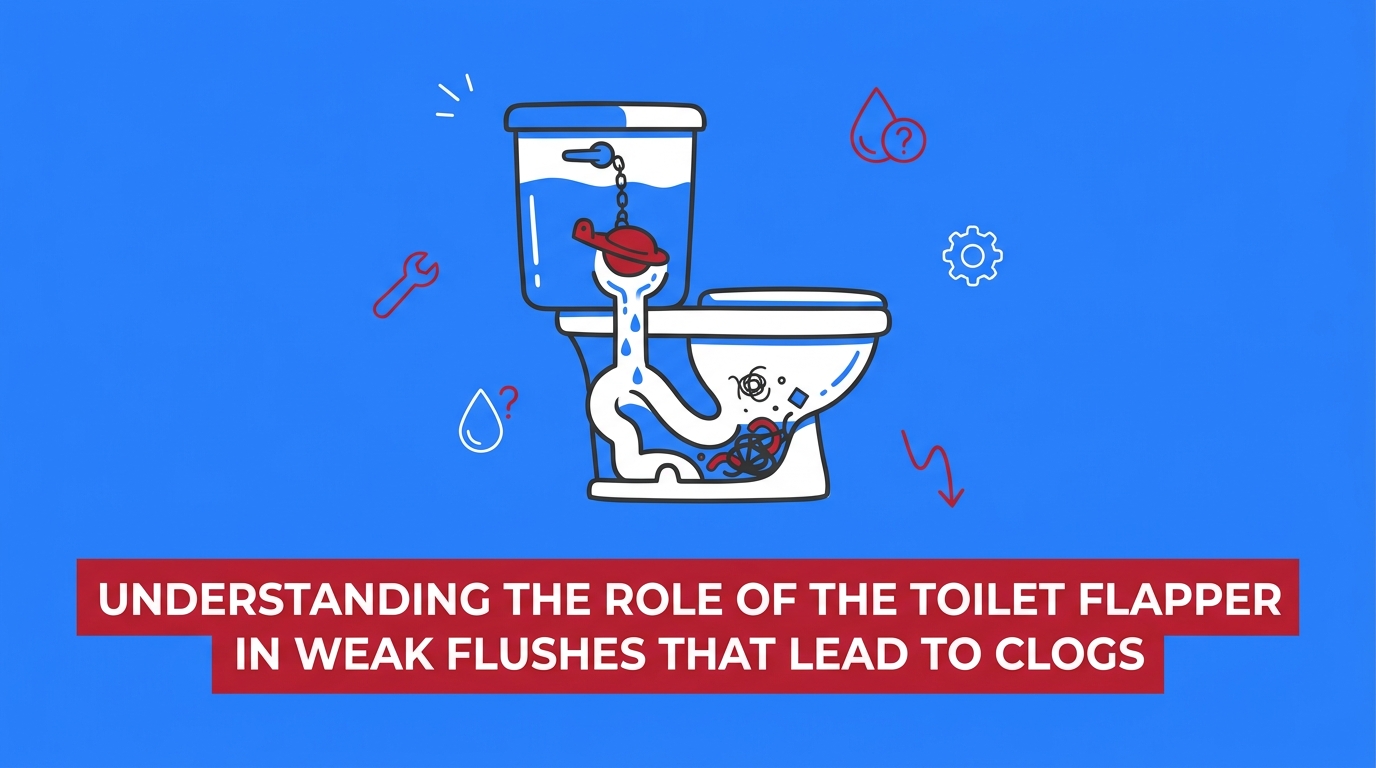
You plunge the bowl, watch the water finally drain, and breathe a sigh of relief—but unless you understand the role of the toilet flapper in weak flushes that lead to clogs, that same backup will likely return in a few days. Homeowners often face this frustrating cycle of plunging a clogged fixture, only for the issue to reappear almost immediately. When faced with a stubborn backup, instinct usually suggests a deep pipe blockage is to blame. However, the true culprit is frequently a lack of water volume during the flush itself. If you are tired of battling the plunger, reaching out for reliable plumbing services is the best way to secure a permanent fix.
Diagnosing the true cause of a recurring clog requires looking inside the tank before assuming the drain is the problem. In a standard gravity-flush toilet, the mechanics of the tank dictate everything that happens in the bowl. When a fixture clogs repeatedly but clears easily with a plunger, our plumbers at Always Affordable Plumbing & HVAC refer to this as a "phantom clog." The pipe isn't actually blocked by roots or scale; rather, the waste was never given enough momentum to clear the plumbing trap in the first place.
Understanding this mechanical relationship helps you avoid treating the wrong issue. Many homeowners waste time and energy pouring harsh chemicals down the drain or aggressively plunging the bowl, hoping to dislodge a blockage that doesn't actually exist. The problem isn't what is stopping the water from going down—it is the lack of water pushing from above. By recognizing how the internal tank components function, you can identify a mechanical failure early and make a confident decision about how to proceed with repairs.
A standard gravity-flush toilet relies on a precise combination of water volume and speed to function correctly. It is not enough for water to simply enter the bowl; it must arrive with enough force to alter the fluid dynamics within the porcelain trapway. When these dynamics fail, securing professional plumbing repairs ensures the system is restored to factory specifications.
The mechanics of a proper flush follow a strict sequence of events. If any part of this sequence is interrupted, the flush will fail to evacuate the bowl.
1. The Volume Requirement: Typically, 1.28 to 1.6 gallons of water must enter the bowl to initiate a complete cycle. This specific volume is calculated to match the size of the trapway.
2. The Velocity Factor: This water cannot trickle in slowly. The entire 1.28 to 1.6 gallons must dump into the bowl in roughly three seconds. Speed is what generates the necessary force.
3. The Siphon Activation: As this rapid dump of water enters the bowl, it displaces the air and water currently sitting in the trapway. This sudden displacement creates a powerful vacuum, known as the siphon effect.
4. The Evacuation: The vacuum pulls the waste and water up and over the curve of the trapway, pulling it down into the main drain line. Once the tank is empty, air enters the trapway, breaking the siphon with a familiar gurgling sound.
Without this exact volume and velocity, the vacuum is simply too weak to pull waste through the trapway. The water will swirl around the bowl, perhaps draining slowly, but it will lack the pulling power required to pull heavy material up the internal incline of the plumbing fixture. This reliance on rapid water delivery is exactly why the internal valves of the tank must operate flawlessly.
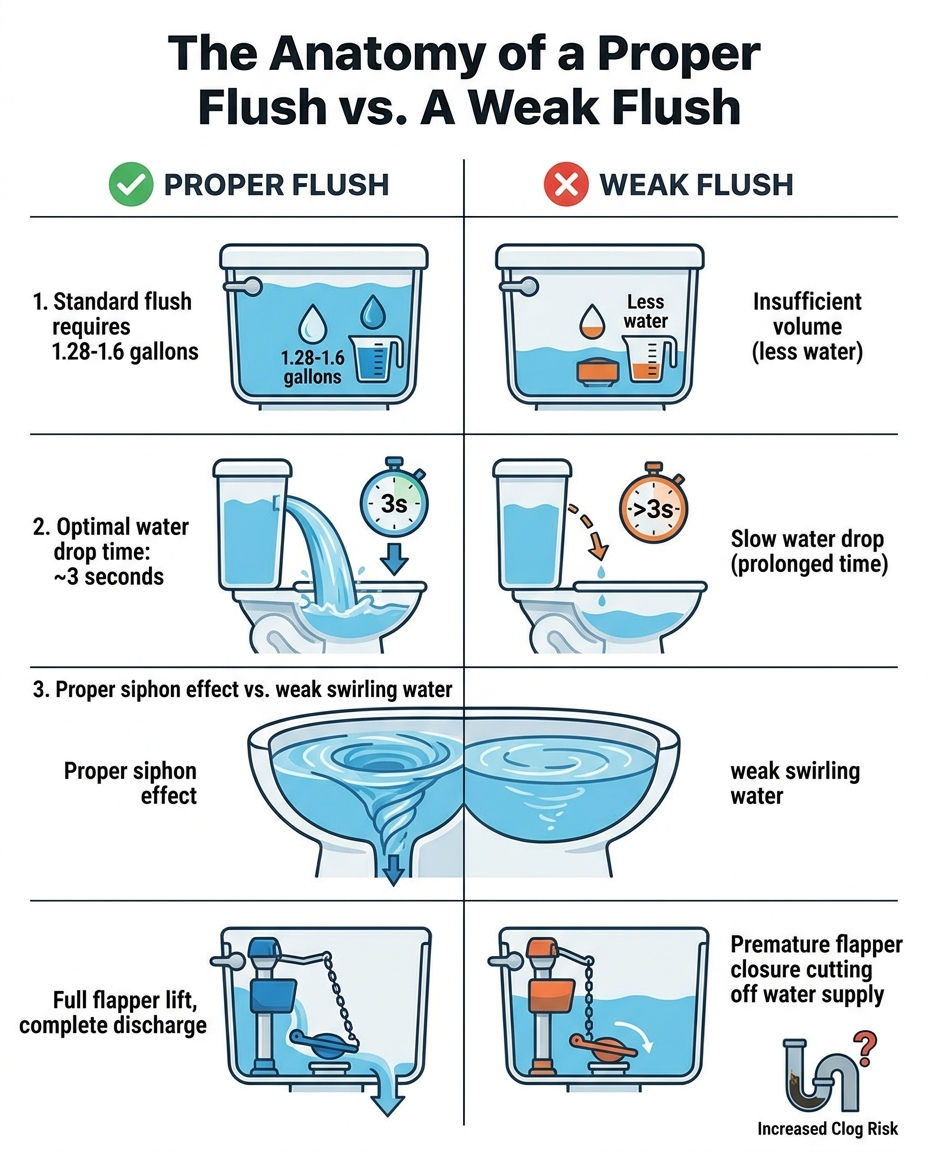

The Problem: You push the handle, the water swirls weakly, and the bowl fails to empty completely. The flush sounds short, and you find yourself having to hold the handle down for several seconds just to get a complete flush.
The Cause: The rubber flapper sitting at the bottom of your toilet tank is designed to remain buoyant just long enough for the necessary water volume to escape into the bowl. It is essentially a hollow rubber bulb that traps air. When you press the handle, the chain lifts the flapper, and its buoyancy keeps it floating while the water rushes out. However, over time, the rubber degrades. This degradation is heavily influenced by local water conditions. In our years of servicing the local area, we consistently see how Sacramento's hard water—which contains high levels of calcium and magnesium—calcifies and stiffens rubber plumbing seals much faster than treated soft water. As the rubber hardens, it loses its flexibility and its ability to trap air. The calcified flapper becomes heavy and drops prematurely, slamming shut and cutting off the water supply to the bowl long before the required 1.6 gallons can escape.
The Solution: The resulting flush is sluggish and weak. Because the water was cut off early, the siphon effect never fully forms. Replacing the degraded rubber seal with a new, flexible component restores the proper timing of the flush. A fresh flapper will remain buoyant for the full three seconds, allowing the complete volume of water to enter the bowl and re-establishing the powerful vacuum needed to clear the trapway.
Liquid waste requires very little vacuum pressure to exit the bowl. Because liquids are easily displaced, a weak flush will often successfully clear liquid waste, masking the underlying issue. Homeowners might go days or weeks without realizing their toilet is underperforming, simply because the fixture appears to be working during light use.
The Challenge of Solid Waste
Heavy solid waste demands the full force of the siphon effect to navigate the curved trapway. The internal plumbing of a toilet is shaped like an "S" or a "P" to hold standing water, which prevents sewer gases from entering the home. To push heavy solids up and over this curve, the water must create a strong, unbroken vacuum. If the flush lacks velocity, gravity wins, and the heavy material remains at the bottom of the bowl.
The Compounding Effect
When the flapper cuts the water volume short, the solid waste becomes stranded at the trapway entrance. The homeowner may not notice the waste is stuck just out of sight. Subsequent flushes compound the problem. More paper and waste are added to the bowl, and with each weak flush, the material packs tighter into the trapway. Eventually, the bowl fills to the brim.
The Phantom Clog
This leads to a clog that appears to be a severe pipe blockage but is actually a lack of flush power. Plunging forces the stranded waste through the trapway, temporarily "fixing" the issue. However, because the tank is still delivering a weak flush, the very next time heavy solid waste is introduced, it will get stranded again. This cycle will continue indefinitely until the mechanical failure inside the tank is addressed.
Ruling out simple mechanical failures in the tank is a critical first step in proper plumbing diagnostics. At Always Affordable Plumbing & HVAC, our commitment to honest, budget-conscious diagnostics means our team checks the flapper first—this simple step helps homeowners avoid paying for unnecessary deep-drain clearing or aggressive hydro-jetting when the real issue is just a degraded piece of rubber.
A simple visual test inside the tank can reveal if the flapper is closing before the water level drops appropriately. Take off the tank lid and press the flush handle. Watch the rubber valve at the bottom. It should stay open until the tank is nearly empty. If it drops shut while the tank is still half full, you have found your problem.
• Water swirls weakly but doesn't drain; holding the handle down forces a normal flush. — Likely Cause: Premature flapper closure (Mechanical Tank Failure). — Recommended Action: Inspect and replace the rubber tank seals.
• Bowl fills with water to the rim and drains very slowly over several minutes. — Likely Cause: Localized trapway or branch line blockage. — Recommended Action: Use a flange plunger or closet auger to clear the localized clog.
• Multiple fixtures back up simultaneously (e.g., tub fills when toilet flushes). — Likely Cause: Deep drain or main sewer line blockage. — Recommended Action: Requires professional camera inspection and main line clearing.
True sewer line backups often affect multiple fixtures, not just a single toilet. Contrasting a localized flapper issue with a whole-house drainage problem is key to knowing when to call for emergency help. For instance, during a recent winter freeze, one of our local customers woke up overnight to a completely backed-up sewer line. Our technicians arrived within hours, provided an affordable quote, unclogged the main line, and discussed options for future prevention. Professional sewer line inspections are required when the main line is compromised. If your backup is strictly isolated to one bowl and holding the handle down makes it flush perfectly, the sewer line is likely fine—the tank is the problem.
Repeated weak flushes do more than just cause frustrating daily clogs; they can allow scale and debris to build up inside the trapway over time. When a toilet operates with full volume and velocity, the rushing water scours the inside of the porcelain, keeping the pathway clear. A chronic weak flush allows hard water minerals, waste particles, and paper residue to cling to the walls of the trapway. Over months or years, this buildup narrows the passage, making the fixture even more prone to blockages.
Stress on the Wax Ring
Constantly plunging a toilet puts unnecessary stress on the wax ring located beneath the base of the fixture. The wax ring creates a watertight and airtight seal between the porcelain horn and the sewer pipe in the floor. Aggressive, repeated plunging generates immense hydrostatic pressure. Eventually, this pressure can blow out a section of the wax ring, causing contaminated water to leak unseen beneath the floorboards, potentially rotting the subfloor.
Fixture Lifespan
Sometimes, chronic mechanical failures indicate that the entire fixture is reaching the end of its lifespan. If the flush valve seat is deeply pitted, or if the internal jets under the rim are heavily calcified and blocked, replacing the flapper might only offer a temporary marginal improvement. Recognizing when a fixture is too degraded to repair is critical, which is one of the clearest signs it's time for a toilet replacement.
Understanding the mechanics of a flush empowers homeowners to make informed maintenance decisions. When you know that the siphon effect relies entirely on the rapid delivery of water from the tank, you can look past the bowl and diagnose the root cause of the problem. Accurate diagnostics prevent minor tank issues from becoming major plumbing headaches, saving you from the frustration of constant plunging and the worry of unexpected overflows.
Professional guidance ensures that the root cause of recurring clogs is resolved permanently. By addressing the role of the toilet flapper in weak flushes that lead to clogs, you restore the precise vacuum needed to clear solid waste. A clear, mechanical explanation of how these components dictate flush power removes the guesswork, allowing you to maintain a reliable, efficient plumbing system year-round.
Can a bad flapper cause a weak flush?
Yes, a bad flapper is one of the most common causes of a weak flush. If the rubber hardens and loses its buoyancy, it will drop shut too early. This cuts off the water supply before the bowl receives the volume required to create a strong siphon effect.
How long should a toilet flapper stay open?
A toilet flapper should stay open for approximately three seconds during a flush. This brief window allows the standard 1.28 to 1.6 gallons of water to empty from the tank into the bowl. If it closes in one second or less, the flush will be inadequate.
Why does my toilet keep clogging with poop?
Heavy solid waste requires a powerful vacuum to be pulled up and over the curved trapway of the toilet. If your flush lacks water volume due to a prematurely closing tank valve, the vacuum fails to form. The solid waste is left stranded at the entrance of the trapway, causing repeated clogs.
How do I fix a weak flushing toilet?
Fixing a weak flush usually starts with inspecting the tank components. Ensure the chain has the proper amount of slack and watch the rubber valve to see if it stays open long enough. If the rubber is warped or dropping too fast, having the component replaced will typically restore full flush power.
Does hard water damage toilet tank parts?
Yes, hard water significantly accelerates the degradation of internal tank parts. The high concentrations of calcium and magnesium calcify rubber seals, causing them to stiffen, warp, and lose their ability to trap air. This leads to both constant running and prematurely weak flushes.
How do I know if I need a drain cleaning or just a tank repair?
You can test this by holding the flush handle down manually until the tank completely empties. If holding the handle results in a powerful, successful flush that clears the bowl perfectly, your drain is clear and you only need a tank repair. If the bowl still fills to the brim and drains slowly even with a full tank of water, you likely need a professional drain cleaning.
See what our satisfied customers have to say about their experience with Always Affordable
Plumbing & HVAC.

"Chappy was very skilled in his knowledge of my HVAC unit. I greatly appreciate the quick response and experienced tech. The whole endeavor was made less stressful by his humor and honest conversation. I find comfort in knowing I now have a shop i trust for the next time."
"Tony, James, Ronnie did an amazing job setting up our new AC! They were quick, efficient, considerate, and polite! We appreciate them scheduling us in on such short notice. Definitely recommend this company!"
"Prompt, professional service with kindness and care. They came out to address both plumbing and AC issues. I received a courtesy call before they arrived. All issues were resolved the same day with integrity and respect. Thankful for businesses like this. Absolutely recommend to those that I love."
"Excellent service! Jason came out promptly and in addition to doing my outside faucet he also put in new irrigation equipment! All done perfectly! Jason was lovely"
"Honest with the assessment; friendly and good manners. No high pressure sales. Just good to honest "tell it like you see it" Thought my kitchen disposer needed an overhaul. But Jason, there Plumber gave me an honest lesson on what was really happening. Saved me hundreds, if I went the route of replacing. Thank you!"
"Absolutely 5 stars. If you are looking for affordable ,professional and kind. Chappy was excellent and very knowledgeable . I called in the morning because my air conditioner stopped working he was here within hours and fixed my air with a smile. I highly recommend Chappy and Always Affordable plumbing and Hvac."
"Scott and James were great. They got there quickly and diagnosed the problem with my A/C.They did a very thorough job testing everything. Sent me pictures and called to keep me informed. Got it done the next day and everything is working fine. Be glad when I get home so I can enjoy my new system. Thanks guys for a great job."
"Chappy was very helpful. He knew our issue right away, cleaned our coils. He also came on the same day we called and got our AC blowing cold air again."
"After some timing ’curfuffles’ the Tech Jason arrived and not only completed a speedy install on my toilet, he was personable & professional. Because of the timing issues Jason was attentive and showed up with everything needed! No extra store runs 😊 I was very comfortable with having this Tech in my Daughter’s home. We will definitely use this Service again."


