
AC vs. Heat Pump: Options Comparisons for Homeowners Facing a System Failure
When your AC fails, choosing a replacement is a major choice. Review these options comparisons for homeowners to weigh SEER2 ratings and decide with confidence.



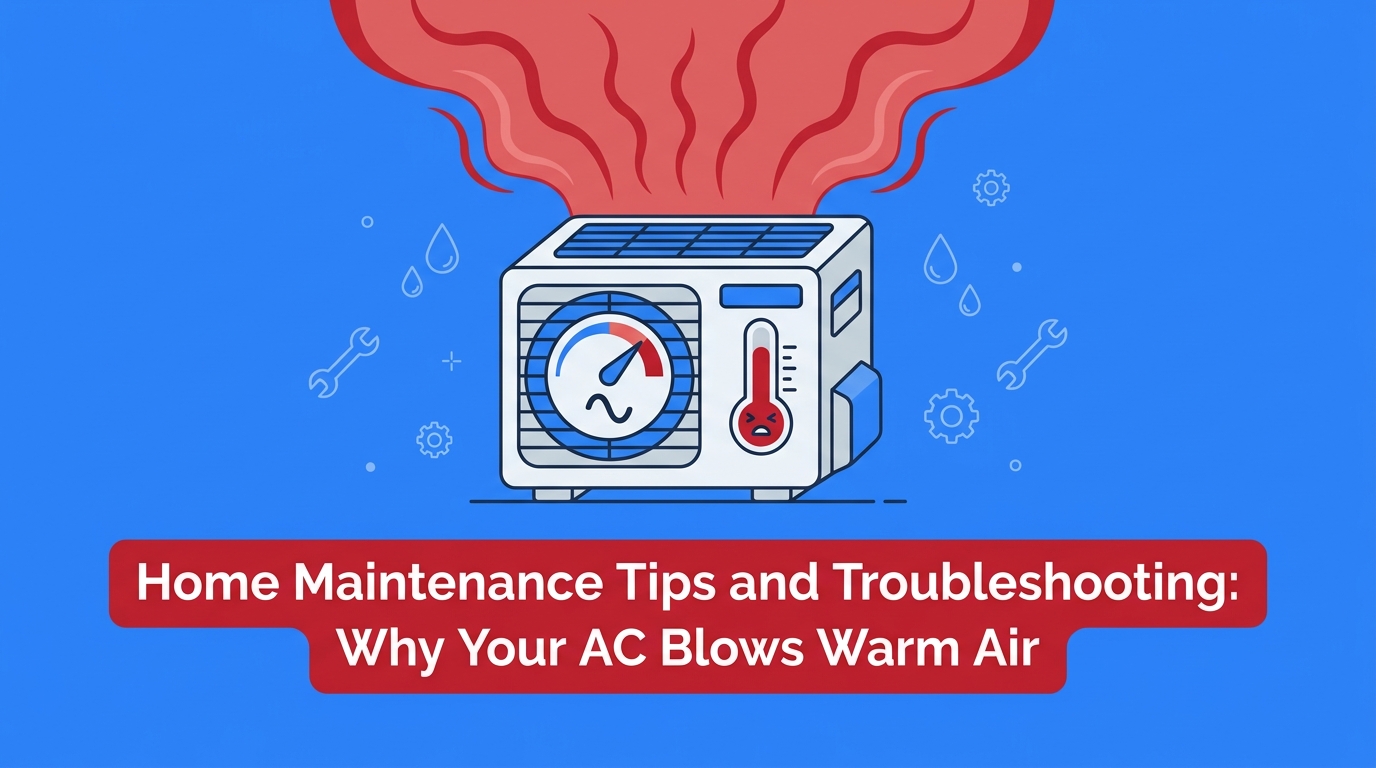
Your air conditioner has been running continuously for hours, but the indoor temperature continues to climb—a situation that makes finding accurate home maintenance tips and troubleshooting essential. When an HVAC system fails unexpectedly, the immediate discomfort can quickly escalate into frustration, especially as the heat of the day sets in. Instead of the refreshing, crisp breeze you expect, you suddenly feel warm air from supply registers, signaling that something has fundamentally shifted in your system's operation. This sudden change is one of the most stressful experiences a homeowner can face, leaving you wondering if you are dealing with a minor hiccup or a major mechanical failure.
The critical decision point you face right now is distinguishing between a simple airflow restriction that you can resolve yourself and a severe mechanical breakdown that requires professional intervention. When a system blows warm air, the root cause is often hidden within the ductwork or the indoor air handler, requiring a systematic approach to diagnose. Just as homeowners rely on our team for comprehensive plumbing services and professional plumbing repair, they also trust our years of hands-on experience and expert HVAC diagnostics to accurately identify and resolve complex cooling issues.
In this comprehensive guide, we will walk through the mechanical causes of cooling failures, specifically focusing on the phenomenon of frozen evaporator coils. We will explore the physics of how heat transfer fails, identify the most common airflow restrictions, and provide a clear framework for safe, effective homeowner checks you can perform right now.
To understand why your air conditioner is suddenly blowing warm air, it helps to look at the science of how your system actually cools your home. An air conditioner does not simply "create" cold air; rather, it absorbs heat from the indoor air and pumps that heat outside. This heat extraction process happens at the evaporator coil, a critical component located inside your indoor air handler or furnace. During peak summer cooling demand, this coil becomes incredibly cold as liquid refrigerant expands into a gas inside the copper tubing.
When the system is operating correctly, warm, unconditioned air from your home is pulled across this freezing-cold coil. The refrigerant absorbs the heat, and the newly cooled air is pushed back into your living spaces. At the same time, humidity in the air condenses on the cold coil, dripping safely into a drain pan below. However, this delicate balance of thermodynamics relies entirely on a constant, uninhibited volume of airflow.
When airflow drops below the required minimums, the entire cooling process destabilizes. With extreme summer temperatures frequently pushing systems to their limits, your air conditioner is already working at maximum capacity. If the air volume passing over the coil is restricted, the heat transfer process breaks down in a predictable, mechanical sequence:
1. The Coil Temperature Plummets: Without enough warm indoor air washing over the evaporator coil to provide heat, the temperature of the refrigerant inside the coil drops rapidly below the freezing point of water.
2. Condensation Turns to Ice: The natural moisture and humidity that normally condenses on the coil and drips away no longer remains liquid. Instead, it instantly freezes to the surface of the metallic fins.
3. The Ice Block Forms: As the system continues to run, layer upon layer of ice builds up. Within hours, the entire evaporator coil can become encased in a solid block of ice.
4. Airflow is Completely Choked: The ice physically blocks the tiny gaps between the coil fins. The blower motor continues to push air, but the air bypasses the frozen coil entirely, resulting in warm, unconditioned air circulating through your home.
This sequence explains the frustrating paradox of a frozen air conditioner: the internal components are literally encased in ice, yet the air coming out of your vents feels uncomfortably warm.
Understanding that a frozen coil is usually an airflow problem rather than a refrigerant problem is a crucial step in diagnosing your system. When you feel warm air from supply registers, the most common, homeowner-resolvable culprit is a physical blockage somewhere in the air circulation path. Identifying and removing these blockages can restore the necessary heat transfer and save your system from unnecessary wear and tear.
The Problem: Dirty, Clogged Air Filters
In our years of responding to summer cooling emergencies throughout the local area, our team typically sees that the number one cause of restricted airflow in residential HVAC systems is a neglected air filter. The filter's primary job is to protect the sensitive evaporator coil from dust, pet dander, and debris. However, as the filter traps these particles, it becomes increasingly dense. If left unchanged, a heavily soiled filter acts like a solid wall, starving the blower motor of the air it needs to push across the coil.
The Solution: Routine Filter Replacement
Checking and changing your air filter is the single most important maintenance task you can perform. According to data from the U.S. Department of Energy, simply replacing a dirty, clogged filter with a clean one can lower your air conditioner's energy consumption by 5% to 15%. More importantly, a clean filter ensures the required volume of air reaches the evaporator coil, preventing the devastating freeze-and-thaw cycles that lead to mechanical breakdowns.
The Problem: Blocked Return Grilles and Closed Vents
Another frequent cause of airflow restriction involves the vents themselves. Homeowners often inadvertently block large return grilles with heavy furniture, bookshelves, or area rugs. Additionally, there is a persistent myth that closing supply vents in unused rooms will save energy by forcing cold air into the occupied spaces.
The Solution: Maintaining Open Airways
Modern HVAC systems are carefully balanced to operate at a specific static pressure. Closing supply vents in unused rooms actually harms the system's static pressure rather than saving energy. When vents are closed, the blower motor faces increased resistance, which slows down the overall volume of air moving over the coil. To maintain proper airflow, ensure that all supply vents are fully open and that return grilles have at least two feet of clear, unobstructed space around them.
• Weak airflow from vents — Likely Cause: Clogged air filter or blocked return — Immediate Action Required: Inspect and replace filter; clear furniture from grilles
• Warm air from supply registers — Likely Cause: Frozen evaporator coil or thermostat issue — Immediate Action Required: Check thermostat settings; turn system off to thaw
• Ice visible on outdoor refrigerant lines — Likely Cause: Severe airflow restriction or low refrigerant — Immediate Action Required: Shut off cooling immediately; leave fan on; call professional
• System runs constantly but doesn't cool — Likely Cause: Closed supply vents altering static pressure — Immediate Action Required: Open all vents fully, even in unoccupied rooms
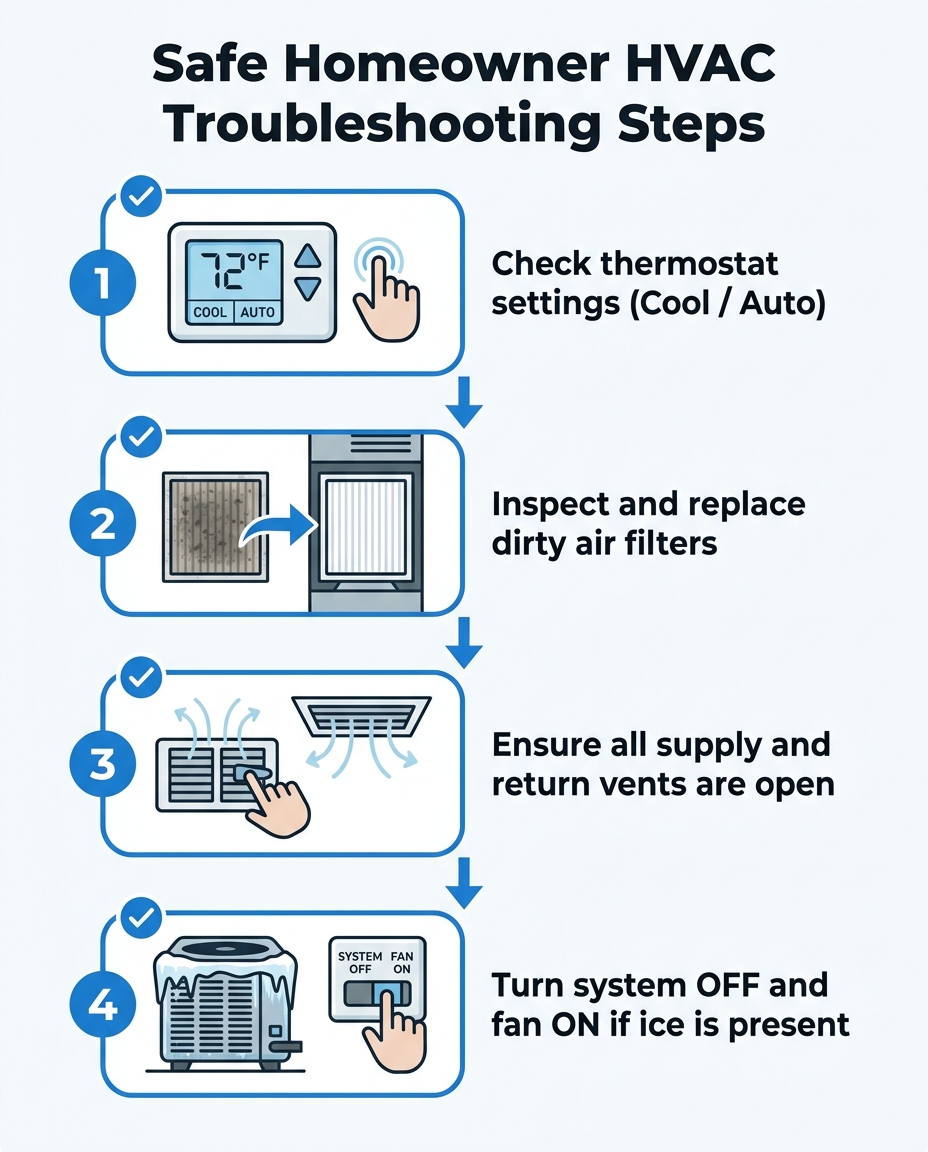
When your system fails during peak summer cooling demand, taking immediate, safe action is critical. There is a strict boundary between basic maintenance and dangerous DIY repairs. You should never attempt to handle chemical refrigerants, open sealed electrical compartments, or bypass system safety switches. However, there are several highly effective, safe troubleshooting steps you can take before scheduling a professional service call.
1. Verify the Thermostat Settings: Begin at the control center. Ensure the thermostat is explicitly set to "Cool" and that the fan is set to "Auto." It is incredibly common for a thermostat to be accidentally bumped to "Heat" or "Fan Only" during cleaning, which will immediately result in warm air blowing from the vents.
2. Inspect and Replace the Air Filter: Locate your HVAC air filter, which is typically found in the main return grille or right at the indoor air handler. Pull the filter out and hold it up to a light source. If you cannot see light passing through the media, the filter is clogged and must be replaced immediately.
3. Check All Indoor Vents: Walk through every room in your home to inspect both the supply vents (where air comes out) and the return grilles (where air is pulled in). Ensure all louvers are fully open and that no rugs, curtains, or pieces of furniture are blocking the airflow.
4. Inspect the Electrical Panel: Check your home's main electrical panel for a tripped circuit breaker dedicated to the AC compressor or air handler. If a breaker is tripped, you may reset it exactly once. If it immediately trips again, do not repeatedly reset it; this indicates a serious electrical short that requires a professional to safely resolve.

One of the most destructive mistakes a homeowner can make is ignoring the symptoms of a frozen system. A pattern we see often at Always Affordable Plumbing & HVAC is that when you feel warm air from supply registers, human nature dictates lowering the thermostat temperature in a desperate attempt to force the system to cool. This action is not only ineffective, but it actively puts your entire HVAC system at risk of catastrophic failure.
Continuing to run the system will not magically fix the temperature output. Because the evaporator coil is encased in ice, the heat transfer process has completely halted. If the system continues to operate in this state, the liquid refrigerant traveling through the indoor coil will not absorb enough heat to transition back into a gas. This creates a highly dangerous mechanical situation known as liquid slugging.
The outdoor compressor is designed exclusively to pump vapor. If liquid refrigerant travels backward through the suction line and enters the compressor, it can violently destroy the internal valves and scroll mechanisms. This event, known as compressor burnout, is a catastrophic mechanical failure. A destroyed compressor is often the most expensive component in the entire system, and in many cases, a burnout requires the complete replacement of the outdoor condensing unit.
To protect your equipment, the moment you suspect the coil is frozen, you must intervene. Instruct the thermostat to turn the cooling cycle "Off" while switching the fan setting from "Auto" to "On." This configuration stops the flow of cold refrigerant but forces warm indoor air over the frozen coil, initiating a safe and steady thawing process that protects the delicate internal components.
While resolving a sudden HVAC failure is a top priority, true home health requires a broader perspective. HVAC maintenance is just one part of a healthy home ecosystem. During peak summer cooling demand, your home's infrastructure is under tremendous stress, and the heavy usage affects other critical systems, particularly your plumbing.
For instance, an air conditioner working overtime pulls gallons of humidity out of your indoor air every day. This condensation must drain safely away through the primary condensate line, which often ties directly into your home's main plumbing drainage system. If your household drains are sluggish, the added volume of AC condensation can contribute to localized backups or water damage around the indoor air handler.
Taking a proactive stance on household drainage is essential during these high-usage months. We highly recommend scheduling proactive checks on your entire plumbing system. In our experience, utilizing professional services like main sewer line clearing prevents messy backups before they occur, ensuring that both your plumbing waste and your HVAC condensation have a clear path away from your property.
Furthermore, summer is an excellent time to evaluate older fixtures that may be nearing the end of their functional lifespan. An overworked home can quickly expose weaknesses in aging plumbing. By monitoring your bathrooms and recognizing the signs it's time for a toilet replacement, you can upgrade inefficient fixtures before hidden leaks cause extensive water damage to your subflooring and drywall. A comprehensive approach to maintenance ensures that your entire property remains safe, dry, and comfortable.
If your AC is running but blowing warm air, the system is likely suffering from a frozen evaporator coil or a tripped outdoor compressor breaker. When you feel warm air from supply registers, the indoor blower is working, but the heat transfer process has failed. Check your air filter immediately, ensure your thermostat is set correctly, and verify that the outdoor unit has not lost power.
Yes, a dirty air filter is the most common cause of a frozen air conditioning system. A heavily soiled filter restricts the volume of warm indoor air flowing over the cold evaporator coil. Without that warm air, the temperature of the coil drops below freezing, causing natural condensation to turn into solid ice across the metal fins.
The immediate action required for a frozen coil is to turn the system's cooling function completely off at the thermostat. Next, switch the fan setting from "Auto" to "On" to force unconditioned air over the ice block. You must allow the system to thaw completely before attempting to run the air conditioner again or having a technician perform diagnostics.
A completely frozen evaporator coil typically takes between 12 to 24 hours to thaw entirely, depending on the ambient temperature of the home and the severity of the ice buildup. Leaving the indoor fan running continuously will significantly speed up this process. Never attempt to restart the cooling cycle until all visible ice on the indoor coil and outdoor refrigerant lines has melted.
You should never attempt to scrape, chip, or pry ice off a frozen evaporator coil. The aluminum fins and internal copper tubing are incredibly delicate and highly pressurized. Using a tool to remove ice will almost certainly puncture the coil, resulting in a rapid loss of chemical refrigerant and necessitating a highly expensive coil replacement.
Mastering basic home maintenance tips and troubleshooting empowers you to protect your property and ensure your comfort during the hottest months of the year. By understanding the safe limits of homeowner troubleshooting—such as regularly replacing air filters, ensuring vents remain open, and verifying thermostat settings—you can prevent the majority of airflow restrictions that lead to frozen evaporator coils during peak summer cooling demand.
However, it is equally important to recognize when a problem exceeds the scope of safe DIY checks. If you have replaced a dirty filter and allowed the system to thaw completely, but the unit still fails to produce cold air, you must keep the system turned off to protect the compressor from catastrophic burnout. Persistent warm air, repeated electrical breaker trips, or the suspicion of a chemical refrigerant leak are clear criteria that demand professional intervention.
When mechanical failures arise, you need a team that prioritizes your safety and the longevity of your equipment. Working with Always Affordable Plumbing & HVAC means you benefit from our commitment to honest, transparent pricing and a 100% satisfaction guarantee when professional diagnostics are required. Our technicians will thoroughly investigate the root cause of the failure without resorting to high-pressure sales tactics.
If your system is struggling to keep up with the summer heat, do not risk permanent damage by forcing it to run. By applying these foundational home maintenance tips and troubleshooting strategies, you can confidently evaluate the situation, take immediate protective action, and know exactly when it is time to call in the trusted local experts to restore your home's comfort.
See what our satisfied customers have to say about their experience with Always Affordable
Plumbing & HVAC.

"Chappy was very skilled in his knowledge of my HVAC unit. I greatly appreciate the quick response and experienced tech. The whole endeavor was made less stressful by his humor and honest conversation. I find comfort in knowing I now have a shop i trust for the next time."
"Tony, James, Ronnie did an amazing job setting up our new AC! They were quick, efficient, considerate, and polite! We appreciate them scheduling us in on such short notice. Definitely recommend this company!"
"Prompt, professional service with kindness and care. They came out to address both plumbing and AC issues. I received a courtesy call before they arrived. All issues were resolved the same day with integrity and respect. Thankful for businesses like this. Absolutely recommend to those that I love."
"Excellent service! Jason came out promptly and in addition to doing my outside faucet he also put in new irrigation equipment! All done perfectly! Jason was lovely"
"Honest with the assessment; friendly and good manners. No high pressure sales. Just good to honest "tell it like you see it" Thought my kitchen disposer needed an overhaul. But Jason, there Plumber gave me an honest lesson on what was really happening. Saved me hundreds, if I went the route of replacing. Thank you!"
"Absolutely 5 stars. If you are looking for affordable ,professional and kind. Chappy was excellent and very knowledgeable . I called in the morning because my air conditioner stopped working he was here within hours and fixed my air with a smile. I highly recommend Chappy and Always Affordable plumbing and Hvac."
"Scott and James were great. They got there quickly and diagnosed the problem with my A/C.They did a very thorough job testing everything. Sent me pictures and called to keep me informed. Got it done the next day and everything is working fine. Be glad when I get home so I can enjoy my new system. Thanks guys for a great job."
"Chappy was very helpful. He knew our issue right away, cleaned our coils. He also came on the same day we called and got our AC blowing cold air again."
"After some timing ’curfuffles’ the Tech Jason arrived and not only completed a speedy install on my toilet, he was personable & professional. Because of the timing issues Jason was attentive and showed up with everything needed! No extra store runs 😊 I was very comfortable with having this Tech in my Daughter’s home. We will definitely use this Service again."


