Why Is My AC Running But Blowing Warm Air? Expert Troubleshooting Steps
Why is your AC blowing warm air? Get clear answers on thermostat settings to check and see common homeowner questions answered before calling for a repair.



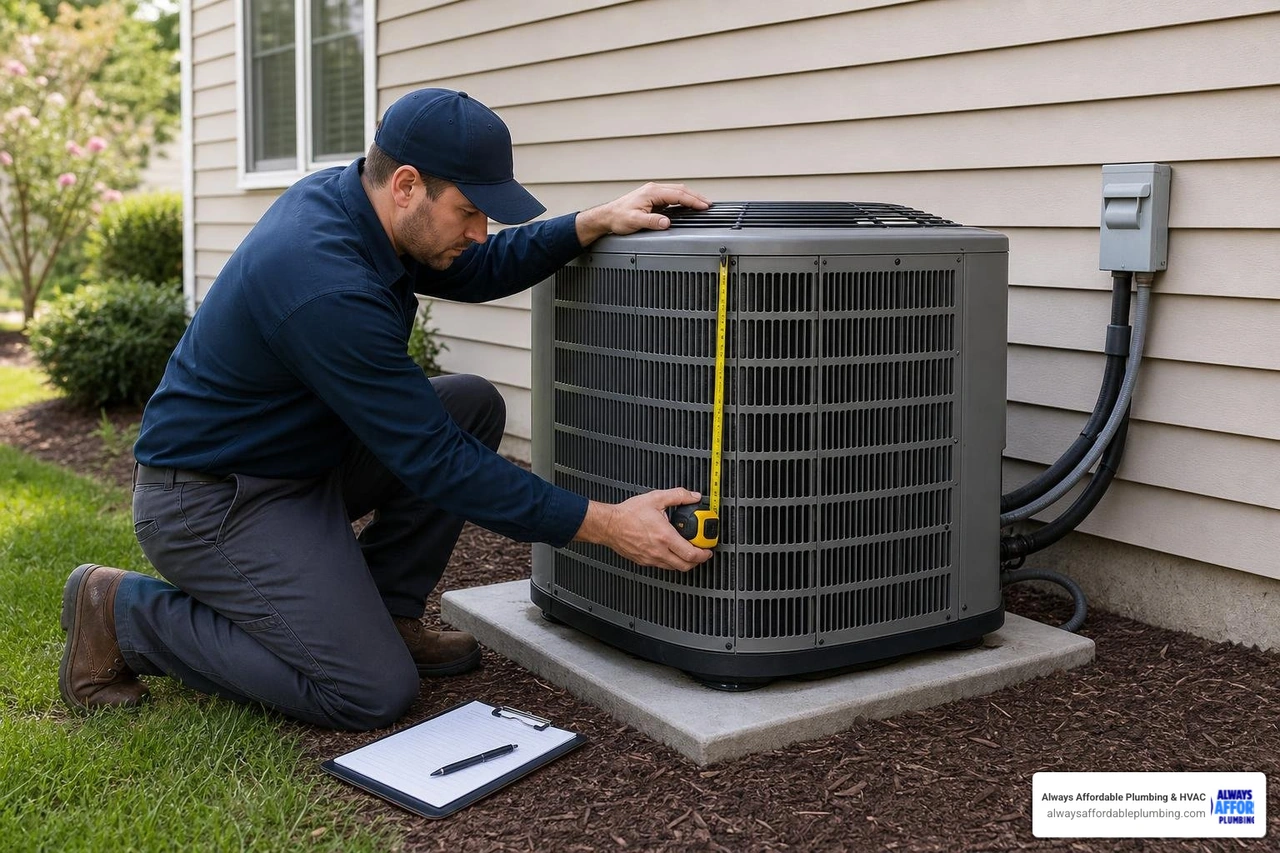
How improperly sized systems shorten equipment life is one of the most overlooked causes of early HVAC failure in homes across Sacramento, Roseville, and the surrounding area. Most homeowners expect a new system to last 15 to 20 years. But when the equipment is the wrong size — too big or too small — that lifespan can be cut nearly in half, often failing between years 8 and 10.
Here is a quick summary of how sizing errors destroy equipment ahead of schedule:
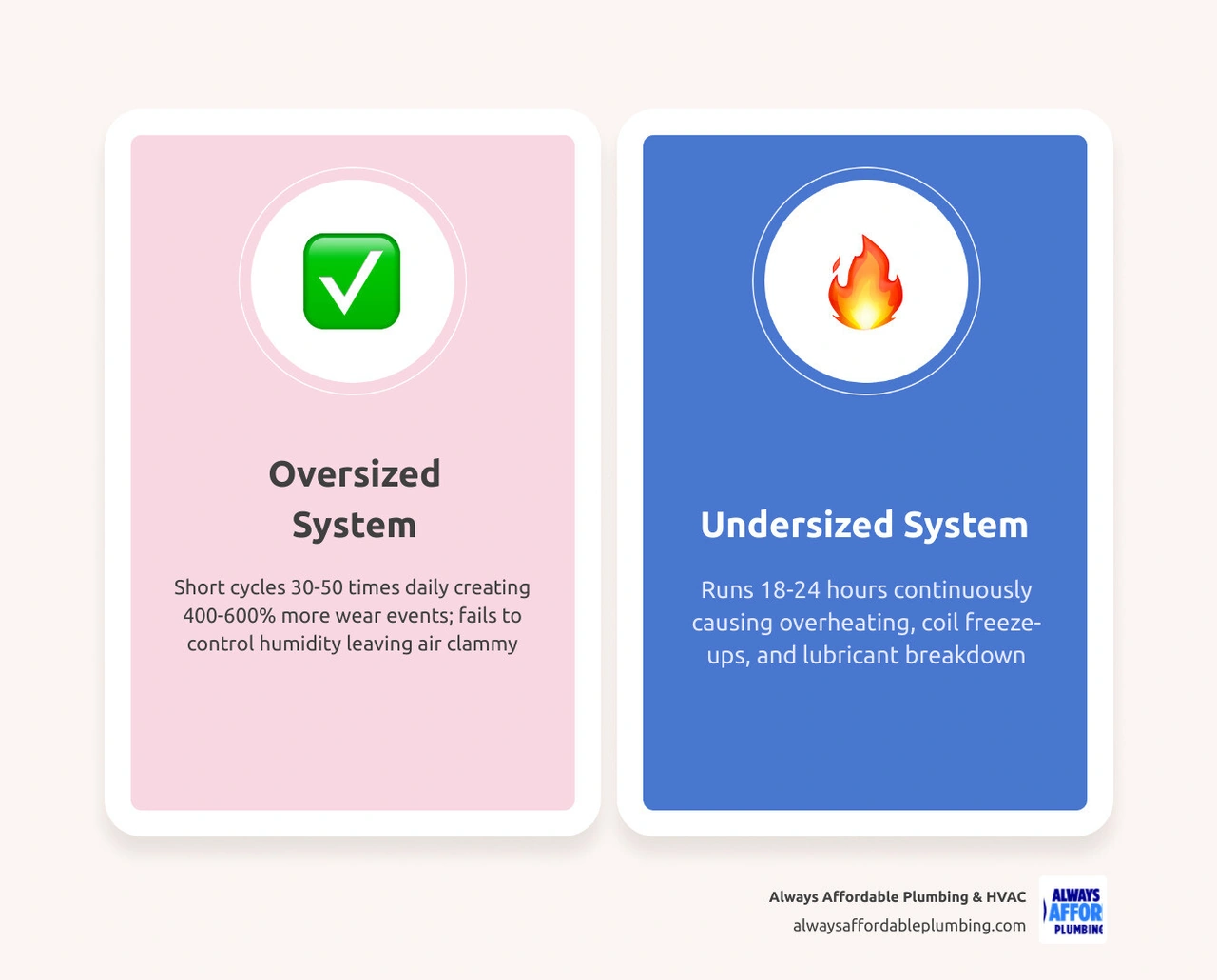
• Oversized systems short-cycle on and off 30 to 50 times per day (versus a normal 6 to 8), creating 400 to 600% more wear events on compressors, contactors, and capacitors
• Undersized systems run almost continuously, overheating motors, starving compressors of lubrication, and freezing evaporator coils
• Both problems drive utility bills up by 25 to 30% and push systems toward premature failure years before they should need replacement
• According to Department of Energy data, over 60% of residential HVAC systems are incorrectly sized — meaning the majority of homeowners may already be on this path without knowing it
The root cause is almost always the same: systems sized by guesswork or simple square-footage rules instead of a proper load calculation. Whether your system is blasting your home cold in five minutes or running all day without reaching your set temperature, the mechanical damage is happening either way.
How improperly sized systems shorten equipment life word guide:
• getting the right size hvac for the sacramento area homes
• how hvac load calculations work
• how proper hvac sizing affects comfort and efficiency
Before diving into the mechanical details, we must understand what "improperly sized" actually means. In the HVAC industry, capacity is not measured by physical dimensions, but by how much heat a system can move out of (or into) a home. This capacity is measured in British Thermal Units per hour (BTUh) or "tons." One ton of cooling capacity equals 12,000 BTUh.
When an HVAC contractor installs a system, they must match this capacity to the thermal load of the home. Unfortunately, Department of Energy data reveals that over 60% of residential HVAC systems in the United States are incorrectly sized. In fact, research shows that the average residential system is up to three times larger than necessary.
Under normal conditions, a properly sized heating and cooling system is designed to run for 10 to 20 minutes per cycle to steadily reach its target temperature and maintain a balanced climate. This steady operation allows the system to reach its maximum efficiency while allowing protective lubricants to circulate evenly.
When a system is sized correctly, homeowners can expect a reliable 15-to-20-year lifespan for central air conditioners and heat pumps, and up to 20 to 25 years for gas furnaces. However, when a system is either oversized or undersized, this expected lifespan is slashed to just 8 to 10 years.
To learn more about the direct relationship between capacity and home comfort, check out our guide on How Proper HVAC Sizing Affects Comfort and Efficiency.
Many homeowners in Sacramento and Roseville fall victim to the "bigger is better" myth. It is easy to assume that a larger, more powerful system will cool or heat a home faster and work less. In reality, the exact opposite is true.
An oversized system satisfies the thermostat setting too quickly. It blasts cold air into the home, reaches the target temperature in a matter of minutes, and immediately shuts down. This phenomenon is known as short cycling.
Instead of running a healthy 2 to 3 cycles per hour, an oversized system will cycle on and off 30 to 50 times per day. This represents a massive 400% to 600% increase in daily start-and-stop wear events.
This constant cycling is incredibly destructive. The startup phase is the most stressful part of an HVAC system’s operation. During startup, the electrical current drawn by the compressor and blower motor (known as inrush current) is 6 to 10 times higher than its normal running current. This massive surge of electricity generates intense heat within the motor windings and places heavy stress on the electrical components.
Furthermore, oversized systems fail to control humidity. An air conditioner must run continuously for at least 10 to 15 minutes for the evaporator coil to reach its optimal temperature and begin condensing moisture out of the air. Because an oversized unit shuts off after only 5 to 7 minutes, it leaves the indoor air cold and clammy, which can eventually lead to mold and mildew growth in your home.
If you suspect your current unit is showing these signs of advanced age and wear, it may be time to read about When to Upgrade Outdated AC Unit.
The rapid, repetitive start-and-stop behavior of an oversized system acts as a direct catalyst for premature mechanical and electrical failure.
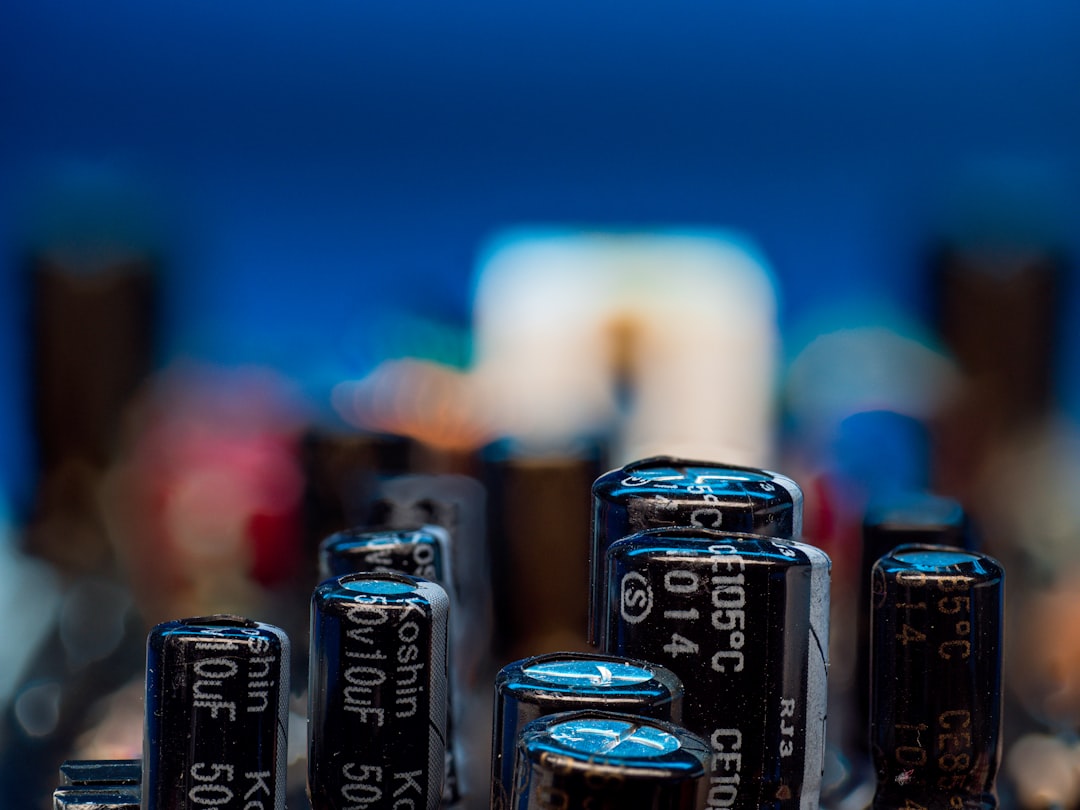
Every time the system starts up, the electrical contacts in your system's contactors slam shut. This creates a small electrical arc that, over time, pits, burns, and welds the metal contacts together. The capacitors—which store electrical energy to help the motors start—are also pushed to their limits by the constant demand for inrush current, leading to early failure.
Beyond electrical components, short cycling subjects the compressor and heat exchanger to severe thermal expansion and contraction stress. When metal components heat up and cool down too rapidly and too frequently, they experience structural fatigue, leading to cracked heat exchangers and internal compressor damage.
While oversized systems suffer from starting too often, undersized systems suffer from never stopping. An undersized system lacks the capacity to handle the thermal load of your home, especially during hot Sacramento summer afternoons or cold winter nights.
To keep up with the thermostat’s demands, an undersized system will run continuously for 18 to 24 hours a day. This non-stop operation places immense strain on every moving part.
Because the system never gets a break, the motors and compressor operate at elevated temperatures for extended periods. This continuous thermal stress accelerates the breakdown of motor winding insulation and causes bearings to wear out prematurely.
Additionally, continuous operation often leads to frozen evaporator coils. When a system runs non-stop with low airflow or slightly off-refrigerant levels, the moisture on the evaporator coil freezes, turning the coil into a solid block of ice. This completely blocks heat transfer, further overworking the system and potentially causing liquid refrigerant to flood back into the compressor.
To keep your system running smoothly through seasonal extremes, regular professional maintenance is key. Explore our local services for HVAC Maintenance Sacramento CA to ensure your system is operating under correct pressure and airflow parameters.
The relentless operation of an undersized system leads to a severe drop-off in mechanical integrity.
The blower motor, responsible for circulating air throughout your home, is designed for intermittent duty. Running constantly causes the motor windings to overheat, melting their protective varnish and causing an electrical short-circuit (motor burnout).
Inside the compressor, extreme operating temperatures cause the compressor oil to lose its viscosity. When the oil becomes too thin, it can no longer provide a protective barrier between moving metal parts. This lack of lubrication leads to internal metal grinding, creating microscopic metal shavings that contaminate the entire refrigerant circuit.
Furthermore, this can lead to liquid slugging—a highly destructive event where liquid refrigerant enters the compressor's compression chamber, shattering the internal valves because liquids cannot be compressed.
To protect your system from these catastrophic failures, we recommend reading our comprehensive Annual HVAC Maintenance Guide 2026.
To visualize how critical sizing is to the individual parts of your heating and cooling system, let's look at the average lifespans of key components when subjected to the stresses of improper sizing.
• Compressor — Expected Lifespan (Properly Sized): 10 - 15 Years — Lifespan in Oversized System (Short-Cycling): 5 - 8 Years — Lifespan in Undersized System (Constant Running): 6 - 8 Years — Primary Failure Mechanism: Lubrication loss, electrical burnout, liquid slugging
• Heat Exchanger — Expected Lifespan (Properly Sized): 15 - 20 Years — Lifespan in Oversized System (Short-Cycling): 8 - 10 Years — Lifespan in Undersized System (Constant Running): 10 - 12 Years — Primary Failure Mechanism: Thermal stress cracking, overheating
• Blower Motor — Expected Lifespan (Properly Sized): 10 - 15 Years — Lifespan in Oversized System (Short-Cycling): 7 - 9 Years — Lifespan in Undersized System (Constant Running): 5 - 7 Years — Primary Failure Mechanism: Bearing wear, winding insulation breakdown
• Contactors & Capacitors — Expected Lifespan (Properly Sized): 5 - 10 Years — Lifespan in Oversized System (Short-Cycling): 2 - 4 Years — Lifespan in Undersized System (Constant Running): 4 - 6 Years — Primary Failure Mechanism: Electrical arcing, high inrush current fatigue
In gas furnaces, an oversized system can cause the heat exchanger to overheat rapidly because the airflow through the ducts may not be sufficient to carry away the massive amount of heat generated. Conversely, an undersized furnace runs continuously, keeping the heat exchanger at peak temperatures for too long.
In both cases, the metal undergoes extreme thermal stress, leading to cracks. A cracked heat exchanger is a severe safety hazard, as it can leak toxic carbon monoxide gas directly into your home's breathing air.
How do we prevent these costly system failures? The answer lies in professional, scientific sizing.
Historically, many contractors used lazy "rules of thumb," such as installing one ton of cooling for every 500 square feet of home. This approach is highly inaccurate. It completely ignores critical home factors such as:
• The quality and thickness of insulation
• The number, type, and orientation of windows
• Local climate design temperatures (such as Sacramento's triple-digit summer days)
• Ceiling heights and total indoor volume
• The layout and condition of the ductwork
To size a system correctly, we perform a Manual J load calculation, which is the industry standard established by the Air Conditioning Contractors of America (ACCA). This calculation determines the exact amount of heating and cooling your home actually needs.
Following the Manual J calculation, we use Manual S to select the specific equipment that matches those loads, and Manual D to design or verify that your ductwork can handle the necessary airflow without creating high static pressure. High static pressure acts like clogged arteries in your HVAC system, choking airflow and placing even more strain on your blower motor.
To understand this process in depth, check out our article on How HVAC Load Calculations Work. If you are preparing for a new system, you can also read our HVAC Installation Roseville CA Complete Guide to see how we ensure a perfect match.
The most common signs of an oversized system include short cycles that last less than 10 minutes, high indoor humidity levels (above 50% to 60%), and a cold, clammy feeling indoors.
For an undersized system, the most obvious sign is a system that runs continuously throughout the day without ever reaching the temperature set on your thermostat, alongside uneven temperatures and hot or cold spots in different rooms.
Regular maintenance is highly beneficial for keeping coils clean and electrical connections tight, but it cannot change the laws of physics. Maintenance is a temporary band-aid on a sizing issue; it cannot alter the physical capacity of the equipment.
While minor adjustments like blower speed calibration or refrigerant optimization can slightly reduce stress, replacement with a correctly sized unit is the only long-term solution. To keep your current system as healthy as possible in the meantime, follow our Annual HVAC Maintenance Guide 2026.
Manufacturers expect their equipment to be installed according to ACCA standards. If a system fails prematurely due to short-cycling or continuous running and the manufacturer discovers that no Manual J load calculation was performed, they may deny your warranty claim.
Furthermore, many energy-efficiency rebates and federal tax credits require documented proof of proper sizing and AHRI-certified equipment matching to qualify.
Investing in a new heating and cooling system is one of the most significant decisions you will make for your home. Getting the sizing right is the single most important factor in protecting that investment, keeping your utility bills low, and ensuring your system lives a long, healthy life.
A properly sized system not only keeps you comfortable but also preserves your home's market value. To see how your comfort systems impact your property, read about How a New HVAC System Increases Home Value and How HVAC Condition Affects Home Appraisals.
At Always Affordable Plumbing & HVAC, we are committed to providing transparent, professional, and scientifically accurate heating and air solutions. We serve homeowners throughout Sacramento, Roseville, Elk Grove, Folsom, Citrus Heights, and the surrounding communities.
Don't let an improperly sized system quietly destroy your comfort and your wallet. Schedule a professional sizing assessment with Always Affordable Plumbing & HVAC today, and let us help you find the perfect fit for your home.
See what our satisfied customers have to say about their experience with Always Affordable
Plumbing & HVAC.

"Chappy was very skilled in his knowledge of my HVAC unit. I greatly appreciate the quick response and experienced tech. The whole endeavor was made less stressful by his humor and honest conversation. I find comfort in knowing I now have a shop i trust for the next time."
"Tony, James, Ronnie did an amazing job setting up our new AC! They were quick, efficient, considerate, and polite! We appreciate them scheduling us in on such short notice. Definitely recommend this company!"
"Prompt, professional service with kindness and care. They came out to address both plumbing and AC issues. I received a courtesy call before they arrived. All issues were resolved the same day with integrity and respect. Thankful for businesses like this. Absolutely recommend to those that I love."
"Excellent service! Jason came out promptly and in addition to doing my outside faucet he also put in new irrigation equipment! All done perfectly! Jason was lovely"
"Honest with the assessment; friendly and good manners. No high pressure sales. Just good to honest "tell it like you see it" Thought my kitchen disposer needed an overhaul. But Jason, there Plumber gave me an honest lesson on what was really happening. Saved me hundreds, if I went the route of replacing. Thank you!"
"Absolutely 5 stars. If you are looking for affordable ,professional and kind. Chappy was excellent and very knowledgeable . I called in the morning because my air conditioner stopped working he was here within hours and fixed my air with a smile. I highly recommend Chappy and Always Affordable plumbing and Hvac."
"Scott and James were great. They got there quickly and diagnosed the problem with my A/C.They did a very thorough job testing everything. Sent me pictures and called to keep me informed. Got it done the next day and everything is working fine. Be glad when I get home so I can enjoy my new system. Thanks guys for a great job."
"Chappy was very helpful. He knew our issue right away, cleaned our coils. He also came on the same day we called and got our AC blowing cold air again."
"After some timing ’curfuffles’ the Tech Jason arrived and not only completed a speedy install on my toilet, he was personable & professional. Because of the timing issues Jason was attentive and showed up with everything needed! No extra store runs 😊 I was very comfortable with having this Tech in my Daughter’s home. We will definitely use this Service again."