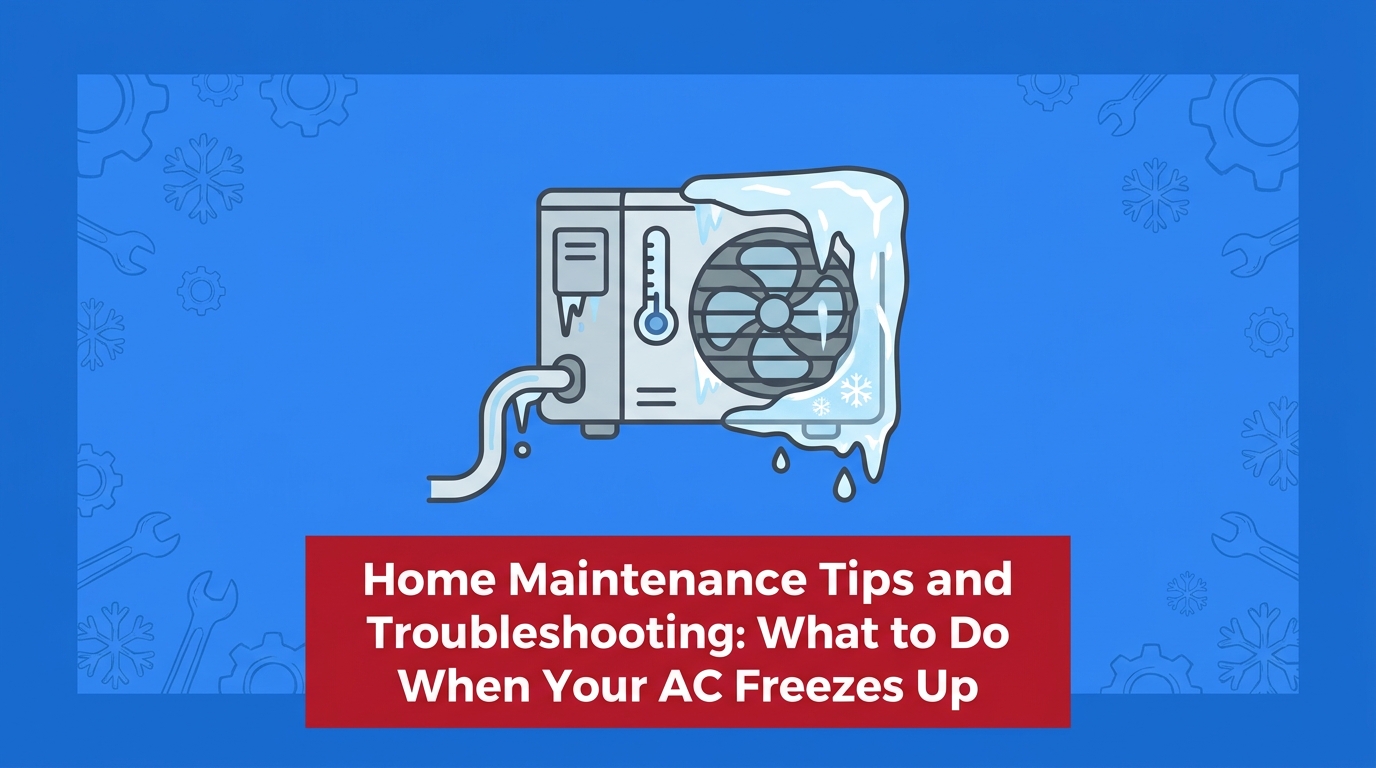
Home Maintenance Tips and Troubleshooting: What to Do When Your AC Freezes Up
Ice on your AC coil? Why we recommend turning it off immediately. Apply these home maintenance tips and troubleshooting steps to safely thaw it and avoid



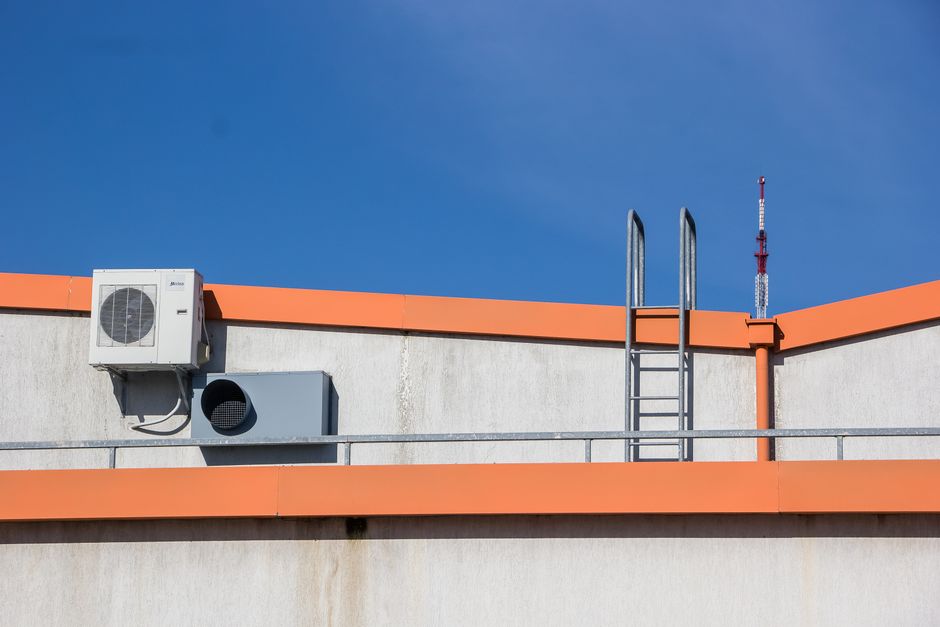
The most common hvac maintenance mistakes homeowners make are easy to overlook — but they quietly drive up energy bills, shorten system life, and lead to expensive breakdowns. Here's a quick look at the top mistakes to avoid:
1. Skipping air filter replacements — a dirty filter can raise energy use by 5% to 15%
2. Missing professional tune-ups — neglected systems can fail years ahead of schedule
3. Closing or blocking air vents — creates pressure imbalances and strains the blower motor
4. Ignoring the outdoor condenser unit — obstructions can increase energy consumption by up to 20%
5. Overlooking warning signs — strange noises, musty odors, and moisture signal real problems
6. Misusing the thermostat — poor placement or constant adjustments hurt efficiency
7. Attempting DIY repairs — refrigerant and electrical work carry serious safety and legal risks
Most HVAC systems are built to last 15 years or more — but only when they're properly cared for. A neglected system can fail in as little as 8 to 10 years. In Sacramento, where summers are brutally hot and wildfire smoke adds extra strain on filters, the stakes are even higher. The good news? Most of these mistakes are completely preventable with a little awareness and routine attention.
Hvac maintenance mistakes homeowners make word roundup:
• benefits of regular furnace and ac tune ups
• how to maintain your heating and cooling system
When we think of home maintenance, we often focus on highly visible issues like a leaky roof or a squeaky door. Because your heating and cooling system operates largely behind the scenes, it is incredibly easy to adopt an "out of sight, out of mind" attitude. However, treating your HVAC system like an appliance that only needs attention when it breaks is one of the most expensive errors you can make.
Your HVAC system handles close to half of your home's total energy consumption. When minor operational issues are left unaddressed, they trigger a cascading effect of poor airflow, sky-high energy bills, and accelerated mechanical wear. Think of your heating and cooling setup like a car: if you never change the oil, check the coolant, or replace the filters, the engine will eventually seize.
By understanding how to maintain your heating and cooling system, you can keep your home perfectly comfortable, preserve your system's lifespan, and keep your hard-earned money in your wallet.
If you ask any experienced technician what the number one cause of system failures is, they will point to a dirty air filter. Many homeowners believe that HVAC filters are designed solely to purify the indoor air we breathe. In reality, their primary job is to protect the sensitive internal components of your heating and cooling system from airborne dust, hair, and debris.
When you allow a filter to become clogged with dust and pet dander, it acts like a wall blocking the air your system needs to breathe. This restriction forces the blower motor to work twice as hard to circulate air throughout your home, causing energy consumption to spike by 5% to 15%.
Over time, this lack of proper airflow leads to a highly disruptive issue called short cycling, where the system constantly turns on and off in rapid, inefficient bursts. Even worse, restricted airflow over the evaporator coils can cause them to drop below freezing, leading to a completely frozen system that refuses to cool.
To prevent these issues, you should inspect your filter every 30 days and replace it every 30 to 90 days. If you have pets, live in a dusty area, or deal with seasonal allergies, you may need to change it even more frequently.
It is also vital to choose the right filter type. While high-efficiency filters with high MERV (Minimum Efficiency Reporting Value) ratings trap tiny particles, they can also restrict airflow if your system isn't designed to handle them. Always consult with a professional to find the perfect balance between clean air and healthy system pressure.
It is easy to assume that if your air conditioner or furnace is running, everything is perfectly fine. However, skipping professional annual tune-ups is one of the most critical hvac maintenance mistakes homeowners make. During a professional inspection, a certified technician looks for hidden issues that you cannot see, such as failing capacitors, worn electrical connections, or minor refrigerant leaks.
The capacitor is the most common HVAC part to fail. It acts like a battery that gives your system the electrical boost it needs to start running. When a capacitor begins to degrade, it forces other components to work under extreme stress. If left unchecked, a failing capacitor can burn out your compressor—the expensive heart of your air conditioning system.
Additionally, skipping professional tune-ups can shorten your system's overall lifespan by up to 30%. A system that should have easily lasted 15 years might fail in as little as 8 to 10 years.
Furthermore, most manufacturers explicitly state in their warranty terms that the system must receive annual professional maintenance to keep the warranty valid. If a major component fails and you cannot provide proof of professional service, you could be left paying for a costly replacement entirely out of pocket.
Investing in preventative care is always more affordable than dealing with emergency repairs, which often cost 30% to 50% more during peak summer heatwaves. To find out how to keep your system protected year-round, read our guide on is an hvac maintenance plan worth it.
There is a persistent myth that closing supply vents in unused rooms will redirect air to the rest of the house and save money on your energy bills. This is actually completely false and can cause severe damage to your heating and cooling system.
Your HVAC system is designed to operate with a highly balanced amount of internal air pressure. When you close or block air vents, you disrupt this balance. The system still produces the same volume of air, but now that air has fewer escape routes. This creates a massive pressure buildup inside your ductwork.
This extreme pressure backpressure strains the blower motor, forcing it to consume more electricity and eventually burn out. It also causes air to leak out of the joints in your ductwork, wasting up to 30% of your conditioned air into your attic or crawlspaces.
In the summer, the reduced airflow can cause the temperature of your evaporator coils to plummet, leading to frozen coils and a complete system shutdown. Keep all of your interior supply and return vents fully open and clear of furniture, curtains, or rugs to maintain healthy system circulation.
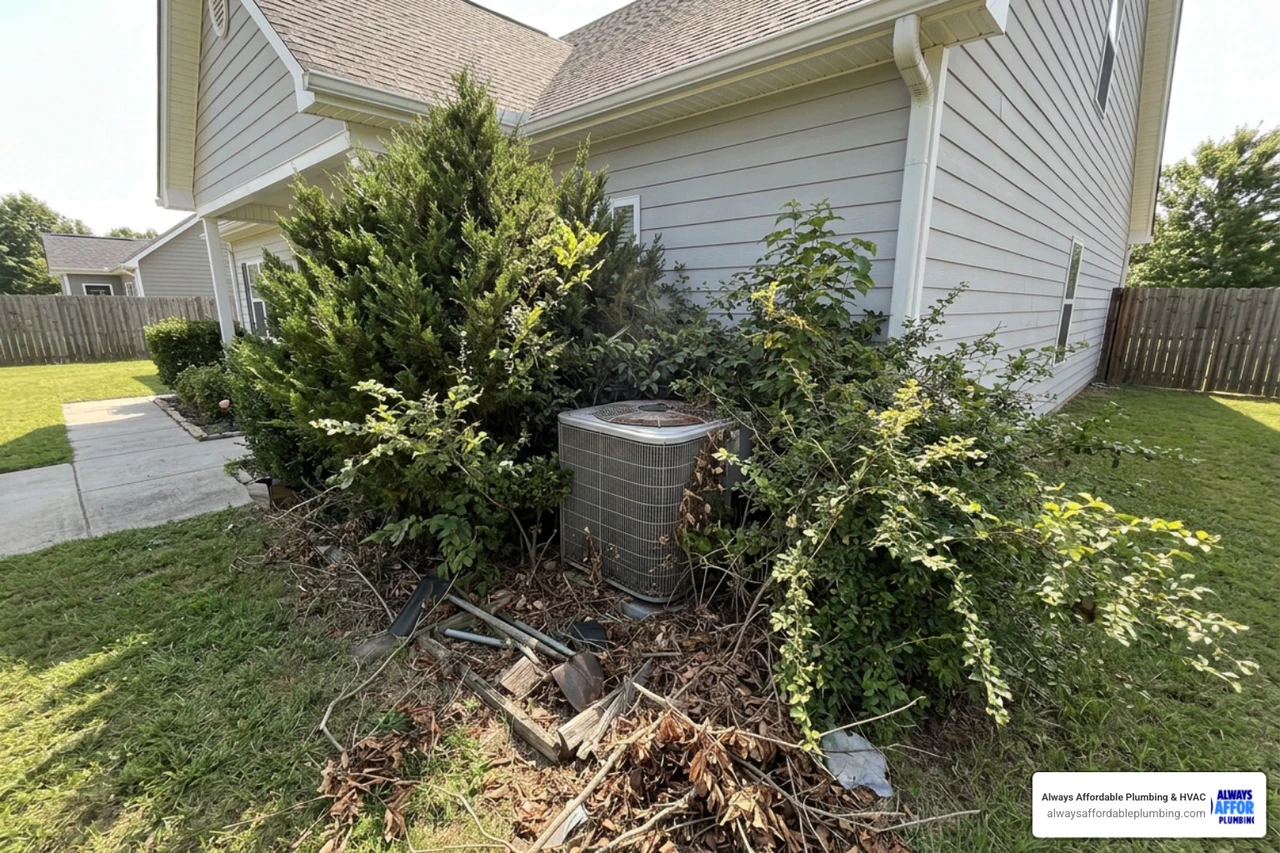
Your indoor comfort relies heavily on what is happening outside your home. The outdoor condenser unit is responsible for releasing the heat that was gathered from inside your house. To do this efficiently, the condenser coils need an absolute minimum of two feet of clear space on all sides.
Unfortunately, many homeowners treat the outdoor unit like an eyesore and try to hide it behind thick shrubs, decorative fences, or stacks of firewood. When you block the unit, the hot air it expels cannot dissipate. Instead, it gets recirculated back into the unit, raising the temperature of the air around the coils by up to 20 degrees.
This restriction forces your compressor to run longer and work much harder, increasing your home's energy consumption by up to 20%. Additionally, outdoor debris like grass clippings, dirt, leaves, and cottonwood seeds can clog the delicate metal fins on the unit.
If you own pets, keep in mind that dog urine is highly acidic and can quickly corrode the aluminum coils, causing permanent refrigerant leaks. Make it a habit to trim back vegetation, hose off the condenser fins with water (never use harsh chemical cleaners), and keep the area around your unit clean and clear.
Your HVAC system will almost always warn you before it experiences a major breakdown. Unfortunately, many homeowners ignore these red flags, assuming they are just normal quirks of an aging system.
If you hear strange noises—such as grinding, squealing, or rattling—you should call a professional immediately. A grinding noise, for example, often points to a failing motor bearing. If ignored, the motor can seize completely, turning a simple repair into an expensive replacement.
Musty odors coming from your vents are another clear warning sign. This usually indicates mold or mildew growth inside your ductwork or on your evaporator coils.
Moisture pooling around your indoor unit is also a major red flag that points to a clogged condensate drain line. As your air conditioner cools your home, it pulls moisture out of the humid air. This water drips into a pan and flows out of your home through a small drain line.
Over time, algae, mold, and dust can clog this line. If you do not clean it, the water will back up, leading to severe water damage in your ceilings or floors. Many modern systems feature a safety float switch that automatically shuts the system down when water backs up to prevent flooding, but older units may not.
Flushing your drain line with a cup of vinegar every few months is a simple way to keep the line clear and prevent costly water damage.
Your thermostat is the brain of your HVAC system, but improper placement or poor habits can quickly confuse it. Placing a thermostat in direct sunlight, near drafty windows, or close to heat-producing appliances like ovens will cause it to read your home's temperature incorrectly. This leads to short cycling, uneven temperatures, and unnecessary system strain.
Another common mistake is playing "thermostat whack-a-mole"—constantly adjusting the temperature up and down in hopes of cooling or heating the house faster. Your system heats and cools at one steady rate; setting your thermostat to 60°F will not cool your home any faster than setting it to 72°F, but it will force the system to run much longer than necessary, driving up your utility bills.
Instead of constantly adjusting the temperature manually, invest in a programmable or smart thermostat. This allows you to set efficient temperature setbacks for when you are asleep or away from home, saving you up to 15% on your energy bills. For professional help setting up your system, learn about our annual hvac service roseville ca to keep your controls running perfectly.
With the abundance of online tutorials, it can be tempting to try and fix HVAC issues yourself to save a quick buck. However, attempting complex DIY repairs is highly dangerous and is one of the most hazardous hvac maintenance mistakes homeowners make.
HVAC units are complex systems that utilize high-voltage electricity and highly pressurized chemical refrigerants. Working on electrical components without proper training can lead to severe shocks or electrical fires.
Furthermore, handling refrigerant requires specialized EPA Section 608 certification in the United States. Buying or handling refrigerant without this license is a federal violation. Attempting to add refrigerant yourself without finding and fixing the underlying leak can permanently damage your compressor.
DIY repairs also carry a high risk of voiding your manufacturer's warranty. If a mistake is made, you will be left paying for a professional to undo the damage, which often costs three times more than if you had called a licensed technician in the first place.
Keep your DIY tasks limited to basic filter changes and clearing debris around the outdoor unit, and leave the technical work to the certified experts. If you reside in the Folsom area, check out our hvac maintenance guide folsom to understand what tasks are safe for homeowners and which require professional assistance.
To get the absolute best performance out of your heating and cooling system, you have to look at your entire home as an interconnected system. The physical size of your unit, the condition of your ductwork, and the quality of your home's insulation all play massive roles in how hard your HVAC has to work.
When installing a new system, professional contractors must perform a highly detailed Manual J load calculation. This calculation takes into account your home's square footage, window placement, local climate, and insulation levels to determine the exact size system your home needs.
If a contractor skips this step and simply replaces your old unit with the "same size as before," you could end up locking in efficiency problems for the next 15 years.
• Cycle Length — Oversized HVAC System: Short, frequent cycles (short cycling) — Undersized HVAC System: Runs continuously without stopping
• Humidity Control — Oversized HVAC System: Poor (shuts off before removing moisture) — Undersized HVAC System: Ineffective (struggles to keep up)
• Component Wear — Oversized HVAC System: High wear on compressor and blower — Undersized HVAC System: High wear due to constant operation
• Energy Bills — Oversized HVAC System: High spikes from frequent starting — Undersized HVAC System: High due to non-stop run times
• Temperature — Oversized HVAC System: Uneven hot and cold spots — Undersized HVAC System: Struggles to reach target temperature
Many homeowners assume that when it comes to heating and cooling, "bigger is always better." However, an oversized system is a major issue.
Because the unit is too powerful for the space, it will quickly blast the home with conditioned air and shut off before completing a full cycle. This constant short cycling puts immense wear on the compressor, spikes your energy bills, and fails to run long enough to pull humidity out of the air, leaving your home feeling clammy and uncomfortable.
Conversely, an undersized system will struggle endlessly to reach your target temperature. It will run continuously without stopping, causing your energy bills to skyrocket and leading to premature component failure. Right-sizing your system is the only way to achieve true comfort and maximum efficiency.
Even the most efficient, perfectly sized HVAC system in the world will struggle if your home has leaky ductwork or poor insulation. Over time, the joints in your metal ductwork can separate, and flexible ducts can tear.
According to energy industry data, leaky or poorly insulated ducts can waste up to 30% of your conditioned air. This means you are paying to heat or cool your unoccupied attic or crawlspace instead of your living areas.
Poor attic insulation also allows heat to easily transfer into your home during hot summer days, forcing your air conditioner to run much longer to keep up. Ensuring your home has a tight seal and proper insulation levels is one of the most effective ways to support your HVAC system. To learn more about how these upgrades affect your property, read about the energy efficient hvac and home value connection.
In the Sacramento valley, we deal with unique environmental factors like high summer heat, agricultural dust, and seasonal wildfire smoke. Because of this, we recommend checking your filter every 30 days.
During heavy use in the summer or winter, or if you have pets or allergies, replace your filter every 30 to 60 days. During milder spring and fall seasons, you can typically stretch this to every 90 days, but never go longer than three months without a fresh filter.
If you neglect your condensate drain line, algae, mold, and dust will eventually create a thick clog. When this happens, the condensation pulled from your indoor air has nowhere to go.
It will back up and overflow the drain pan, leading to severe water damage in your ceilings, walls, or flooring. To prevent this, flush your drain line with a cup of distilled white vinegar every three months to kill any algae growth before a clog can form.
An effective seasonal checklist should focus on two main transition periods: spring (preparing for cooling) and fall (preparing for heating).
• Every Month: Check your air filter and inspect the area around your outdoor unit.
• Every Spring: Clear a two-foot space around your outdoor condenser, flush your condensate drain line, check your thermostat batteries, and schedule a professional AC tune-up.
• Every Fall: Clean your indoor vents and registers, check your windows and doors for drafts, test your carbon monoxide detectors, and schedule a professional furnace tune-up.
For a complete, step-by-step breakdown of how to care for your system year-round, read our hvac maintenance plan complete guide.
Your heating and cooling system is a major investment in your family's comfort and safety. Avoiding these common hvac maintenance mistakes homeowners make is the easiest way to prevent unexpected breakdowns, lower your monthly energy bills, and ensure your system lasts for many years to come.
At Always Affordable Plumbing & HVAC, we are proud to provide high-quality, transparent, and affordable HVAC and plumbing solutions to our neighbors in Sacramento, Elk Grove, Roseville, Folsom, and the surrounding areas. Whether you need a routine seasonal tune-up, an emergency repair, or a complete system replacement, our licensed technicians are here to help.
Want to take the guesswork out of home maintenance? Join our Member's Club to receive exclusive discounts, priority scheduling, and scheduled annual tune-ups that keep your systems running perfectly. Contact Always Affordable Plumbing & HVAC today to schedule your service!
See what our satisfied customers have to say about their experience with Always Affordable
Plumbing & HVAC.

"Chappy was very skilled in his knowledge of my HVAC unit. I greatly appreciate the quick response and experienced tech. The whole endeavor was made less stressful by his humor and honest conversation. I find comfort in knowing I now have a shop i trust for the next time."
"Tony, James, Ronnie did an amazing job setting up our new AC! They were quick, efficient, considerate, and polite! We appreciate them scheduling us in on such short notice. Definitely recommend this company!"
"Prompt, professional service with kindness and care. They came out to address both plumbing and AC issues. I received a courtesy call before they arrived. All issues were resolved the same day with integrity and respect. Thankful for businesses like this. Absolutely recommend to those that I love."
"Excellent service! Jason came out promptly and in addition to doing my outside faucet he also put in new irrigation equipment! All done perfectly! Jason was lovely"
"Honest with the assessment; friendly and good manners. No high pressure sales. Just good to honest "tell it like you see it" Thought my kitchen disposer needed an overhaul. But Jason, there Plumber gave me an honest lesson on what was really happening. Saved me hundreds, if I went the route of replacing. Thank you!"
"Absolutely 5 stars. If you are looking for affordable ,professional and kind. Chappy was excellent and very knowledgeable . I called in the morning because my air conditioner stopped working he was here within hours and fixed my air with a smile. I highly recommend Chappy and Always Affordable plumbing and Hvac."
"Scott and James were great. They got there quickly and diagnosed the problem with my A/C.They did a very thorough job testing everything. Sent me pictures and called to keep me informed. Got it done the next day and everything is working fine. Be glad when I get home so I can enjoy my new system. Thanks guys for a great job."
"Chappy was very helpful. He knew our issue right away, cleaned our coils. He also came on the same day we called and got our AC blowing cold air again."
"After some timing ’curfuffles’ the Tech Jason arrived and not only completed a speedy install on my toilet, he was personable & professional. Because of the timing issues Jason was attentive and showed up with everything needed! No extra store runs 😊 I was very comfortable with having this Tech in my Daughter’s home. We will definitely use this Service again."