Why Your AC Can Only Cool 20 Degrees Below the Outside Temperature
AC running continuously but failing to cool? See how high ambient temperatures reduce cooling capacity and when to call a pro on this before panicking.



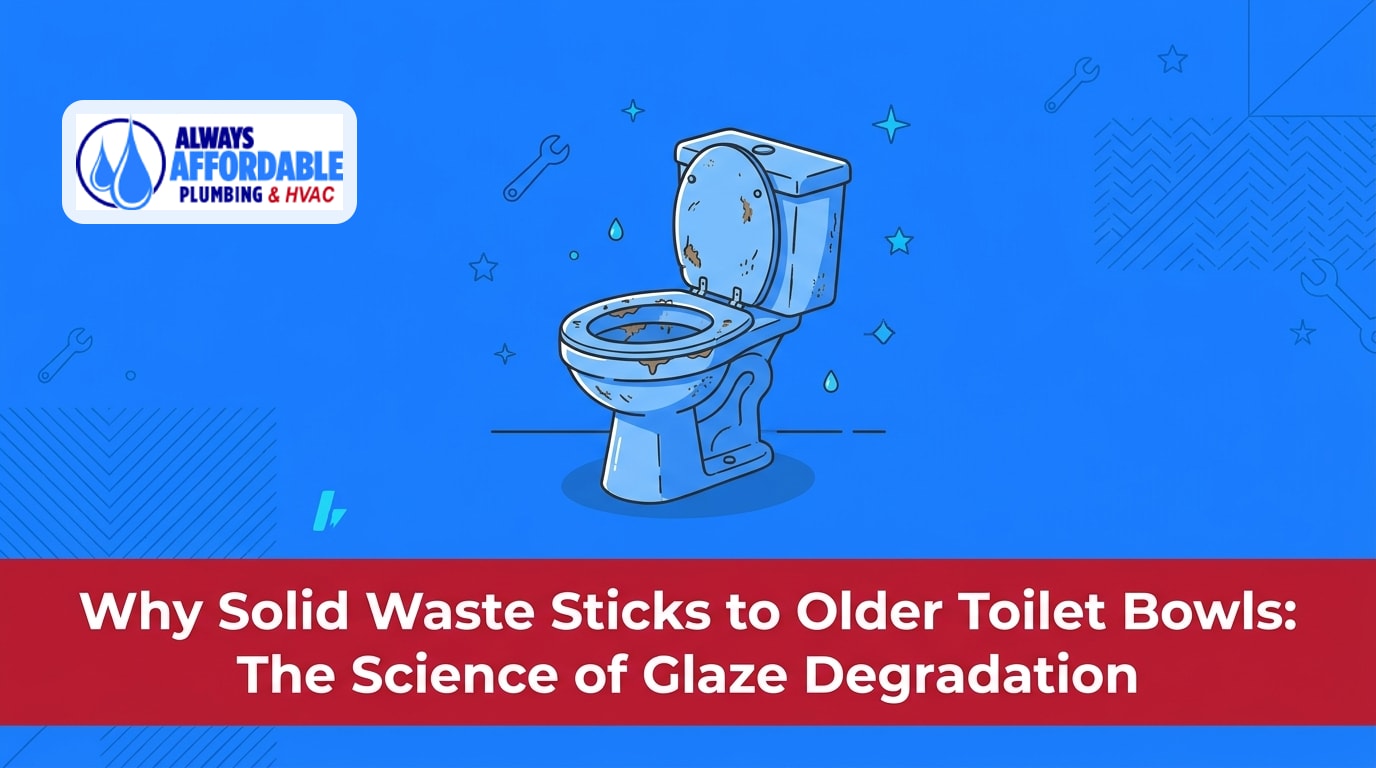
Are you finding yourself reaching for the toilet brush after every single flush? If your daily routine now involves scrubbing the bowl just to keep it presentable, you are likely wondering why solid waste sticks to older toilet bowls with such stubborn persistence. At Always Affordable Plumbing & HVAC, our team hears this exact frustration from homeowners across the local area every week. You might assume that the flushing mechanism is failing, or that the water pressure has suddenly dropped in your home. However, when a fixture that used to stay sparkling clean suddenly requires constant manual intervention, the root cause rarely lies within the tank or the pipes. Instead, the issue is almost always a fundamental change in the surface material of the bowl itself.
As standard porcelain toilet bowls age, they endure thousands of flushes, countless chemical cleanings, and years of exposure to mineral-heavy water. Over time, these environmental factors physically alter the texture of the bowl. What was once a slick, frictionless surface gradually transforms into a porous, sandpaper-like texture that acts like a physical trap. This creates a frustrating daily reality for homeowners, forcing a difficult decision: is there a secret cleaning method to smooth the surface back out, or has the fixture reached the end of its usable lifespan? Evaluating whether to attempt aggressive descaling or to seek out professional residential plumbing services for a replacement requires understanding exactly what has happened to the protective layer of your fixture.
When you first install a brand-new fixture, the bowl feels smooth to the touch, almost like a piece of high-quality glass. This is not an accident; it is a highly engineered feature designed specifically for sanitation. Water glides over it effortlessly, and solid matter slides down without leaving a trace. But as years go by, you might notice a faint ring at the water line that becomes harder and harder to scrub away. Soon after, the sides of the bowl start to look dull, losing their original high-gloss shine. This dullness is the first visual indicator that the protective barrier is failing.
Once that barrier is compromised, the mechanical force of the flush is no longer enough to clear the bowl. The water simply washes over the trapped matter, leaving the physical bonds intact. This is the exact moment when most homeowners instinctively reach for harsher chemicals and stiffer brushes, inadvertently accelerating the very damage they are trying to fix. Understanding the material science behind this degradation is the first step in breaking the cycle of endless scrubbing.
To understand why an older fixture fails to stay clean, you first have to understand how a new one achieves its remarkable non-stick properties. Modern toilets are not carved from stone or molded from standard plastics; they are manufactured using a specialized ceramic material known as vitreous china. The term "vitreous" means glass-like, and achieving this state requires an intense, highly controlled manufacturing process that fundamentally alters the molecular structure of the clay.
During manufacturing, a mixture of clay, kaolin, quartz, and feldspar is molded into the shape of the bowl. Once the shape is set, the fixture is coated in a specialized liquid glaze. The entire unit is then pushed into a massive industrial kiln and fired at extreme temperatures, often exceeding 2,000 degrees Fahrenheit. At this intense heat, the raw materials undergo a profound chemical transformation. The glaze melts and fuses directly with the clay body underneath, creating a completely non-porous, waterproof, and glass-like outer shell.
• Non-porous structure: The high-heat fusion ensures there are zero microscopic holes or gaps where bacteria, water, or waste can penetrate the ceramic body.
• Frictionless surface: The melted glaze cures into an ultra-smooth finish, dropping the coefficient of friction to near zero.
• Chemical resistance: The glass-like barrier protects the underlying clay from the corrosive effects of urine and standard water exposure.
This flawless, frictionless surface works in perfect tandem with the mechanical design of the toilet. When you press the handle, a precise volume of water drops from the tank into the bowl. Part of this water enters through the rim jets to wash down the sides, while the rest forces the contents through the siphon jet at the bottom. Because the vitreous china glaze is so slick, the rim jet water easily sweeps away any matter touching the sides, while gravity and siphon action pull everything down the drain. If you are curious about how this specific water flow operates, you can learn more about why your toilet flushes water but leaves solid waste behind when the mechanics fail. However, when the mechanics are working perfectly but matter still remains, it means the material resistance of the bowl has overpowered the mechanical flow of the water.
If vitreous china is fired to be as tough as glass, what causes it to break down? The answer, in most homes, flows directly out of the tap. The water supplied to our homes is rarely pure H2O; it carries dissolved minerals picked up from the earth. In regions like the Sacramento Valley, hard water is a well-known household challenge. In our years of inspecting plumbing systems throughout the local area, we consistently see how this hard water specifically accelerates mineral scale buildup, causing local plumbing fixtures to degrade much faster than they would in soft-water regions.
Hard water contains high concentrations of dissolved calcium and magnesium. Every time the toilet tank refills, a fresh batch of these minerals is introduced into the bowl. When the water sits in the bowl between flushes, minor evaporation occurs, leaving trace amounts of these minerals behind on the porcelain surface. Over months and years, these microscopic deposits crystallize and bond directly to the glaze.
The sandpaper effect: This mineral scale does not form a smooth layer. It builds up unevenly, creating a jagged, microscopic mountain range across the surface of the bowl. While it might look like a faint white or brown stain to the naked eye, on a microscopic level, it transforms the slick glass-like glaze into a rough, porous texture. This rough texture physically grips solid waste, holding it tight against the sides of the bowl even when a powerful flush washes over it.
When homeowners notice this sticking issue, the first reaction is usually to apply standard liquid toilet bowl cleaners. Unfortunately, most everyday cleaning gels are formulated to remove organic stains and kill bacteria—they are not acidic enough to dissolve hardened calcium carbonate. You might succeed in sanitizing the bowl, but the physical mineral structure remains firmly attached to the glaze. Because the scale is porous, it immediately begins trapping new organic matter the very next time the fixture is used. As this scale thickens, it physically pushes against the delicate porcelain glaze, weakening the glass-like structure and setting the stage for permanent damage.

Frustrated by standard cleaners failing to remove the hard water stains and the persistent sticking issue, many people turn to heavy-duty DIY cleaning methods. Our technicians often walk into bathrooms where well-meaning homeowners have tried every internet "cleaning hack" available to restore a heavily stained bowl to a sparkling white finish. While some of these methods do indeed remove the visible stains, they do so at a catastrophic cost to the fixture's long-term viability.
One of the most commonly recommended tools for a stained bowl is a pumice stone. Pumice is a porous volcanic rock that is highly abrasive. When you rub a pumice stone against a hard water ring, it acts like heavy-grit sandpaper, physically grinding away the calcium deposits. The bowl looks brilliantly white afterward, leading the homeowner to believe the problem is solved.
The hidden cause of future sticking: The reality is much darker. Pumice is harder than the thin layer of porcelain glaze. While grinding away the mineral scale, the pumice stone also grinds away the vitreous china finish. This results in severe microscopic pitting and etching in porcelain glaze. You have effectively scratched off the non-stick coating, leaving the raw, porous ceramic body exposed to the water.
Pumice stones are not the only culprits. Several other common cleaning tools and chemicals cause irreversible damage to plumbing fixtures:
• Stiff-bristled wire brushes: Metal bristles easily scratch the glass-like surface of the glaze, creating tiny grooves where bacteria and waste can anchor.
• Harsh industrial acids: Muriatic acid and other extreme industrial descalers can chemically etch the porcelain if left sitting in the bowl too long, eating away the shiny finish.
• Abrasive scouring powders: Powders containing silica or heavy abrasives act like liquid sandpaper, slowly dulling the finish with every weekly cleaning.
Once the glaze is physically scratched or chemically etched away, no amount of scrubbing will ever make the bowl slick again. The microscopic valleys created by the abrasive tools become permanent traps. To stop the cycle, homeowners must shift their perspective from "needing to scrub harder" to "protecting the surface from the start."
When you are faced with a toilet bowl that constantly traps waste, you must determine what stage of degradation the fixture is in. Is the sticking caused by a removable layer of mineral scale sitting on top of a healthy glaze, or is the glaze itself permanently scratched and destroyed? Making this distinction is crucial for deciding your next steps.
If your fixture is relatively new and you suspect the issue is just hard water scale, you can attempt to dissolve the minerals chemically without scratching the bowl. The safest approach involves using a dedicated, non-abrasive liquid descaler formulated specifically for calcium and lime. White vinegar can also work for very mild buildup if left to sit overnight. The key is to let the chemical reaction do the work, using only a soft-bristled nylon brush to wipe away the dissolved minerals. If the glaze underneath is still intact, this gentle descaling should restore the bowl's non-stick properties.
However, if you have heavily scrubbed the bowl with pumice stones in the past, or if the fixture is decades old, chemical descaling will likely fail. You will know the bowl is beyond temporary fixes if it immediately begins trapping waste again just days after a deep cleaning, or if the surface feels physically rough and looks permanently dull even when completely dry.
At this stage, some homeowners look into DIY "reglazing" or epoxy paint kits. These are not viable long-term solutions. A toilet bowl is a high-friction environment constantly submerged in water. DIY paints and epoxies will inevitably peel, flake, and bubble under the hydrostatic pressure and daily cleaning, creating an even bigger mess.
When the protective layer is gone, the most logical step is to replace the unit. As a homeowner, you want to ensure your investments make sense. Leveraging the Always Affordable approach means prioritizing honest, cost-effective guidance. Based on the countless fixture assessments our team has performed, we always tell our customers: while temporary chemical fixes exist for minor scaling, pouring money and hours of labor into a severely degraded bowl is a losing battle. Investing in a brand-new, affordable, high-efficiency toilet is almost always the most economical long-term choice. It immediately resolves the sticking issue, lowers your water bill, and eliminates the daily frustration of scrubbing.
• Mild hard water ring, glaze still shiny — Recommended Action: Chemical descaling with non-abrasive cleaners — Expected Outcome: Dissolves scale, restores slick surface — Long-Term Viability: High, if maintained with soft brushes
• Dull finish, frequent sticking, no deep scratches — Recommended Action: Professional-grade chemical treatment — Expected Outcome: Temporary relief, but sticking will return faster — Long-Term Viability: Moderate, requires constant upkeep
• Visible scratches, heavy pumice use, constant sticking — Recommended Action: Full fixture replacement — Expected Outcome: Immediate restoration of non-stick properties — Long-Term Viability: Excellent, provides a permanent reset
• Attempting DIY epoxy reglazing kits — Recommended Action: Avoid entirely — Expected Outcome: Peeling, flaking, and severe bacterial trapping — Long-Term Viability: Poor, fails quickly under water pressure
If you are unsure whether your fixture can be saved, having a professional evaluate your system through comprehensive home plumbing services can provide clarity and save you from wasting money on ineffective cleaning supplies.
Understanding the specific interactions between water chemistry, ceramic materials, and cleaning habits can be complex. Below are detailed, objective answers to the most common questions homeowners have about declining toilet performance and surface degradation.
Solid waste sticks to older fixtures because the microscopic surface of the bowl has changed from a smooth, glass-like finish into a rough, porous texture. This happens due to a combination of hard water mineral scale building up on the surface and microscopic pitting in the porcelain glaze caused by years of abrasive cleaning. Once this rough texture develops, it physically traps solid matter, overpowering the mechanical force of the flushing water that would normally wash it away.
Permanent scratches in submerged vitreous china cannot be effectively or permanently repaired. While there are DIY epoxy and porcelain paint kits available on the market, these products are designed for cosmetic touch-ups on dry surfaces like the outside of a tank. When applied inside a bowl, these paints fail rapidly under constant water exposure, hydrostatic pressure, and the friction of flushing, eventually peeling off and making the sticking problem even worse.
Yes, over an extended period, hard water can severely damage toilet glaze. Hard water contains high levels of dissolved calcium and magnesium, which crystallize and adhere to the bowl as the water sits. The true damage often occurs during the removal process; because this hardened scale bonds so tightly to the porcelain, the aggressive scrubbing and harsh chemicals required to remove it often strip away the protective glaze beneath it, leaving the raw ceramic exposed.
Despite being a popular internet cleaning hack, pumice stones are not safe for the long-term health of your toilet bowl. Pumice is a highly abrasive volcanic rock that is physically harder than the thin layer of porcelain glaze. While rubbing a pumice stone on a hard water ring will quickly grind away the stain, it simultaneously causes microscopic etching in the glaze, permanently destroying the non-stick finish and guaranteeing that waste will stick more frequently in the future.
The only way to prevent matter from sticking is to maintain the integrity of the original porcelain glaze from the day the fixture is installed. This requires preventative measures such as using only soft-bristled nylon brushes, avoiding abrasive scouring powders, and using gentle liquid descalers to manage hard water buildup before it hardens. If the glaze has already been scratched or worn away on an older fixture, no cleaning method or chemical will ever restore its non-stick properties, and replacement is the only permanent solution.
Dealing with a toilet that requires constant manual cleaning is incredibly frustrating, but understanding the science behind the problem offers a clear path forward. Constant sticking is a material degradation issue caused by microscopic pitting and mineral scale, not a failure of your cleaning routine. Once the vitreous china glaze has been compromised by hard water and abrasive tools, the frictionless surface is gone for good.
Instead of fighting a losing battle with harsher chemicals and stiffer brushes, it may be time to evaluate a permanent solution. In our experience at Always Affordable Plumbing & HVAC, upgrading to a new, high-efficiency fixture will instantly restore the cleanliness and sanitation of your bathroom (and you may even qualify for local utility water-saving rebates, though you should verify current programs with your provider). If you are ready to stop scrubbing and want to explore your replacement options, our team can help you choose the right model for your home. For expert guidance and complete sewer and drain line solutions, reach out to our qualified local team to assess your plumbing needs today.
See what our satisfied customers have to say about their experience with Always Affordable
Plumbing & HVAC.

"Chappy was very skilled in his knowledge of my HVAC unit. I greatly appreciate the quick response and experienced tech. The whole endeavor was made less stressful by his humor and honest conversation. I find comfort in knowing I now have a shop i trust for the next time."
"Tony, James, Ronnie did an amazing job setting up our new AC! They were quick, efficient, considerate, and polite! We appreciate them scheduling us in on such short notice. Definitely recommend this company!"
"Prompt, professional service with kindness and care. They came out to address both plumbing and AC issues. I received a courtesy call before they arrived. All issues were resolved the same day with integrity and respect. Thankful for businesses like this. Absolutely recommend to those that I love."
"Excellent service! Jason came out promptly and in addition to doing my outside faucet he also put in new irrigation equipment! All done perfectly! Jason was lovely"
"Honest with the assessment; friendly and good manners. No high pressure sales. Just good to honest "tell it like you see it" Thought my kitchen disposer needed an overhaul. But Jason, there Plumber gave me an honest lesson on what was really happening. Saved me hundreds, if I went the route of replacing. Thank you!"
"Absolutely 5 stars. If you are looking for affordable ,professional and kind. Chappy was excellent and very knowledgeable . I called in the morning because my air conditioner stopped working he was here within hours and fixed my air with a smile. I highly recommend Chappy and Always Affordable plumbing and Hvac."
"Scott and James were great. They got there quickly and diagnosed the problem with my A/C.They did a very thorough job testing everything. Sent me pictures and called to keep me informed. Got it done the next day and everything is working fine. Be glad when I get home so I can enjoy my new system. Thanks guys for a great job."
"Chappy was very helpful. He knew our issue right away, cleaned our coils. He also came on the same day we called and got our AC blowing cold air again."
"After some timing ’curfuffles’ the Tech Jason arrived and not only completed a speedy install on my toilet, he was personable & professional. Because of the timing issues Jason was attentive and showed up with everything needed! No extra store runs 😊 I was very comfortable with having this Tech in my Daughter’s home. We will definitely use this Service again."