
Why Your AC Runs Constantly: Understanding Heat Transfer Degradation and Cooling Cycles
Why is your AC running constantly? We explain heat transfer degradation. Use our local service expertise and area tips to decide when to call a pro on this.



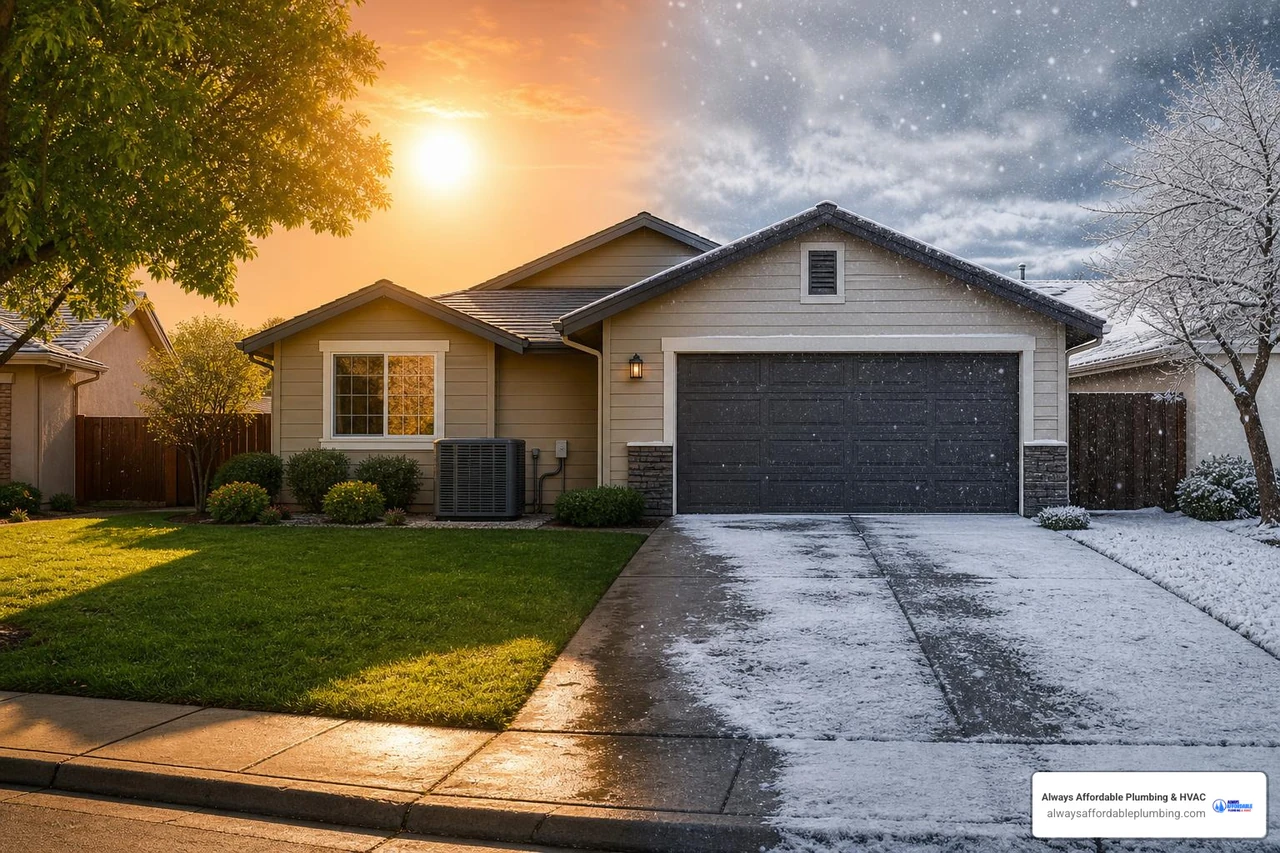
How seasonal temperature extremes create year-round demands on homes like yours is something Sacramento homeowners are feeling more and more with every passing season. Scorching summers push AC systems to their limits. Cold winter nights strain furnaces and pipes. And the swings between those two extremes? They wear down your home's systems faster than most people realize.
Here's a quick look at how this plays out:
• Summer heat waves drive up cooling demand, stress power grids, and accelerate wear on AC units
• Winter cold spells spike heating needs, increase the risk of frozen pipes, and push water heaters to work harder
• Rapid temperature swings between seasons cause thermal expansion and contraction in plumbing, which leads to leaks and joint failures
• Back-to-back extreme years leave HVAC systems less time to recover between heavy-use periods
• Year-round unpredictability means there's no true "off season" for home system maintenance anymore
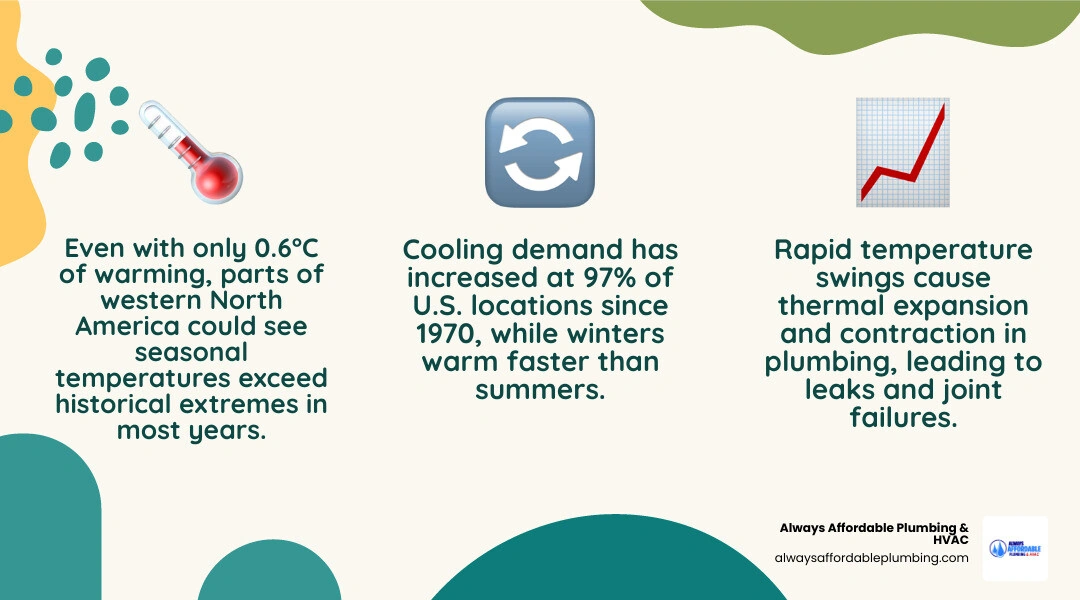
Research from Boston University confirms what Sacramento homeowners are already experiencing firsthand. Even if global warming is held to 2°C, seasonal temperatures will exceed historical extremes across 70-80% of the land surface in at least half of all years. And some regions — including parts of western North America — could see this shift with as little as 0.6°C of warming. Meanwhile, U.S. data shows winters are warming faster than summers, heat wave frequency has risen since the 1960s, and cooling demand at 97% of measured locations has increased since 1970.
For homeowners in Sacramento, Elk Grove, Roseville, and the surrounding area, this isn't a distant forecast. It's the reality shaping your energy bills, your comfort, and the lifespan of your plumbing and HVAC systems right now.
Must-know how seasonal temperature extremes create year round demands terms:
• how extreme heat and wildfire smoke stress your systems
• how sacramento climate affects your hvac and plumbing
To understand how seasonal temperature extremes create year round demands on our local homes, we have to look at the broader climate models. For years, scientists have focused on the 2°C global warming target as a critical threshold. However, recent climate modeling reveals that we don't have to wait for global averages to rise by a full two degrees to feel the impact.
Even with a modest 0.6°C increase in global-mean temperatures, certain regions—including western North America, parts of Africa, southeastern and central Asia, and the Amazon—are projected to experience median yearly-maximum seasonal-mean temperatures that surpass the 95% historical exceedance threshold. In plain terms, what used to be a once-in-a-generation hot summer or unusually harsh winter is rapidly becoming our baseline normal.
As warming ticks up to a 0.8°C global-mean increase, one-third to one-half of the land surface grids worldwide are projected to exceed that 95% historical threshold. If global temperatures do reach the 2°C target, seasonal-mean temperatures will exceed historical extremes across 70% to 80% of the global land surface in at least half of all years.
> Global Warming Level -> Impact on Land Surface (Exceeding Historical Extremes)------------------------------------------------------------------------------+0.6°C -> Extremes become the norm in Western North America & Asia+0.8°C -> 1/3 to 1/2 of all land grids exceed 95% threshold+2.0°C -> 70% to 80% of land surface exceeds extremes in half of all years
When climate scientists look at the future, they often compare different Representative Concentration Pathways (RCPs), such as RCP 4.5 (a moderate emissions scenario) and RCP 8.5 (a high emissions scenario). Under both pathways, the frequency, duration, and intensity of seasonal extremes are rising. However, under RCP 8.5, these trends accelerate dramatically.
For instance, the number of consecutive extreme summer days is projected to double along coastal regions and triple in mountainous terrains by 2050 compared to 2008 baselines. This rapid shift creates a continuous cycle of stress on residential systems. When extreme heat waves are followed by sudden, sharp cold snaps, your home's HVAC and plumbing systems never get a chance to recover. To see how these shifting baselines directly affect your indoor comfort and air quality, check out our guide on How Extreme Heat and Wildfire Smoke Stress Your Systems.
The pressure of these seasonal swings doesn't stop at your property line. It places an immense burden on our regional infrastructure. During peak summer heat waves in the Sacramento Valley, electricity demand spikes as hundreds of thousands of air conditioners run simultaneously. This massive load strains the local power grid, causing high-voltage powerlines to heat up, sag, and operate less efficiently.
At the same time, municipal water resources face double-sided pressure. Rising evaporative demands increase local irrigation needs by 5% to 20%, while reservoirs face earlier snowmelt runoff. This leaves less water available during the late summer months when public health and fire suppression needs are at their highest.
To help homeowners adapt to these grid pressures while keeping utility bills manageable, local energy providers offer excellent financial incentives. If you are planning an upgrade to high-efficiency systems, you can offset your initial costs by taking advantage of SMUD and PGE Rebates for Sacramento Area Homeowners. These programs make it much easier to transition to resilient, grid-friendly home comfort technology.
While global climate models give us a broad overview, they often use coarse resolutions (around 100 kilometers) that miss the unique geographic features of Northern California. High-resolution dynamic downscaling studies (down to 3 kilometers) are essential for capturing how local terrain influences weather patterns.

The Sacramento Valley is a prime example of complex terrain. Flanked by the Coast Ranges to the west and the Sierra Nevada Mountains to the east, our region experiences pronounced microclimates:
• Orographic Complexity: The surrounding mountains influence wind patterns, trap heat in the valley floor, and create sharp temperature variations over very short distances.
• The Delta Breeze: Coastal gaps allow cooler marine air to flow into some parts of the valley while leaving inland areas like Roseville, Rocklin, and Folsom significantly hotter.
• Thermal Belts: Mountainous and foothill regions can experience rapid nighttime cooling, while urban centers suffer from the heat island effect, keeping nighttime temperatures high.
Because of these unique regional features, a single summer afternoon can bring a comfortable breeze to Davis or West Sacramento, while Citrus Heights and Rancho Cordova bake in stagnant heat. This geographic variation means that your home's heating and cooling systems must be tailored specifically to your local microclimate.
When external temperatures fluctuate wildly, your home acts as a buffer. However, maintaining a steady, comfortable indoor environment under these conditions places a heavy physical toll on your HVAC and plumbing infrastructure.
During intense heat waves, your air conditioner must run almost continuously to combat the outdoor heat. This constant operation accelerates mechanical wear, dries out system lubricants, and stresses electrical components. Conversely, when winter cold snaps arrive, your heating system must work overtime to keep your living spaces warm.
Your plumbing system experiences similar stress. Temperature fluctuations cause pipes to expand and contract. Over time, this thermal movement weakens pipe joints, loosens fittings, and can lead to hidden pinhole leaks behind your walls. Understanding how seasonal temperature extremes create year round demands on these systems is the first step toward preventing unexpected breakdowns. To keep your equipment running smoothly through every seasonal shift, read our comprehensive guide on How to Maintain Your Heating and Cooling System.
One of the most interesting findings in recent climate data is that winter minimum temperatures are actually rising faster than summer maximums. While this might sound like winters are becoming milder, it actually creates a complex set of challenges for our region's water and energy systems:
1. Altered Snowmelt Patterns: Warmer winter minimums mean more precipitation falls as rain rather than snow in the Sierra Nevada foothills. This leads to earlier, faster snowmelt, which disrupts the natural water storage cycles we rely on during dry summers.
2. Disrupted Growing Seasons: Shorter, warmer winters can cause local flora to bloom prematurely, leaving crops vulnerable to late-season frost events and expanding the active season for agricultural pests.
3. High Humidity and Mold Risks: Warmer, wetter winters increase indoor humidity levels, creating ideal conditions for mold growth and reducing indoor air quality.
Even with warmer average winters, sudden Arctic air intrusions can still bring severe cold spells to the Sacramento basin. Preparing your heating system for these sudden drops is critical. If you live in Placer County, you can find tailored advice on choosing the right heating solutions in our article on finding an Energy Efficient Heating System Roseville CA.
For homeowners in communities like Elk Grove, Folsom, and Citrus Heights, the practical implication of these shifting climate patterns is clear: preventative maintenance is no longer optional.
When heat waves stretch longer into the autumn and cold snaps arrive earlier in the winter, the traditional "shoulder seasons"—spring and fall—shrink. This leaves a very narrow window to inspect, tune up, and repair your home systems before they are subjected to peak seasonal stress.
> Traditional Cycle:[Spring Tune-up] -> (Moderate Summer) -> [Fall Tune-up] -> (Moderate Winter)Modern Extreme Cycle:[Short Spring] -> (Extended, Intense Heat Waves) -> [Short Fall] -> (Sudden, Deep Cold Spells)
Neglecting maintenance during these shortened transitional periods significantly increases the risk of system failures when you need your HVAC and plumbing the most. Taking proactive steps is the best way to protect your home. You can learn how to avoid sudden, inconvenient system breakdowns by reading our expert tips on How to Prevent HVAC Emergencies with Maintenance.
As seasonal extremes intensify, relying on outdated, inefficient home systems becomes increasingly costly and unreliable. Modernizing your home with high-efficiency, climate-resilient technology is the most effective way to ensure year-round comfort and keep utility bills under control.
One of the most significant steps you can take is moving away from traditional fossil-fuel heating and separate cooling systems toward unified, electric solutions. Transitioning to modern heat pump technology provides both heating and cooling from a single, highly efficient unit that is specifically designed to handle rapid temperature swings.
To help you understand the differences, let's compare traditional heating and cooling setups with modern heat pump systems:
• Energy Source — Traditional HVAC Systems (Furnace + AC): Gas/Propane for heating; Electricity for cooling — Modern Heat Pump Systems: 100% Electricity for both heating and cooling
• Operational Method — Traditional HVAC Systems (Furnace + AC): Creates heat by burning fuel; removes heat via refrigerant — Modern Heat Pump Systems: Transfers heat indoors in winter and outdoors in summer
• Efficiency Rating — Traditional HVAC Systems (Furnace + AC): Typically 80% to 96% AFUE for heating — Modern Heat Pump Systems: Up to 300% to 400% efficient (uses less energy than it transfers)
• Year-Round Adaptability — Traditional HVAC Systems (Furnace + AC): Two separate systems with different maintenance needs — Modern Heat Pump Systems: A single, cohesive system built for rapid seasonal transitions
• Environmental Impact — Traditional HVAC Systems (Furnace + AC): Higher carbon footprint due to direct fossil fuel combustion — Modern Heat Pump Systems: Low carbon footprint, especially when paired with clean electricity
Making this transition is also highly supported by federal initiatives. Homeowners can take advantage of substantial financial incentives to reduce their upfront investment. You can find detailed information on how to save on these installations by reading our guide on Federal Tax Credits for Heat Pump and Water Heater Upgrades.
Heat pumps are uniquely suited to the Sacramento Valley's climate. Because our region experiences a high number of Cooling Degree Days (CDDs)—a metric used to measure how much and for how long outdoor air temperatures remain above 65°F—having an incredibly efficient cooling system is paramount. Since 1970, 97% of analyzed locations in the United States have seen a steady rise in annual CDDs, meaning our homes require more cooling energy every year.
Because heat pumps transfer heat rather than creating it, they can reduce household heating and cooling carbon emissions by up to 24% in single-family homes while delivering exceptional comfort. Whether you are in the middle of a hot Sacramento summer or a chilly Elk Grove winter, a properly sized heat pump system keeps your indoor climate perfectly controlled.
To ensure your system is installed and serviced correctly, it is vital to work with experienced, licensed local professionals. If you are ready to explore your options, check out our localized resources:
• Heat Pump Service Sacramento Guide
• Heat Pump Maintenance Elk Grove CA Guide
Investing in energy-efficient HVAC upgrades does more than just lower your monthly SMUD or PG&E bills—it also directly enhances your property's market appeal. Modern home buyers are highly focused on energy efficiency, climate resilience, and low operational costs. A home equipped with a certified, high-efficiency heat pump and updated plumbing is highly attractive in today's competitive real estate market.
To understand how these upgrades translate into long-term financial benefits, read our detailed analysis on the Energy Efficient HVAC and Home Value Connection.
Once you have upgraded your home, keeping those systems running at peak efficiency requires regular professional attention. Scheduling a seasonal tune-up ensures your system is clean, fully charged with refrigerant, and ready for whatever weather Northern California throws its way. Sacramento residents can prepare their systems by following our Heat Pump Tune Up Sacramento Guide 2026.
Seasonal temperature extremes cause building materials and pipes to expand and contract. During severe winter cold snaps, water inside exposed or poorly insulated pipes can freeze, expand, and cause the pipes to burst. In the summer, high water demands put extra pressure on your main water line and municipal systems. These constant shifts in pressure and temperature stress pipe joints and fittings, which can lead to hidden water leaks. Regular leak detection and proper pipe insulation are key to protecting your plumbing system year-round.
Heat pumps are incredibly versatile because they provide both heating and cooling through a single system. Instead of burning fuel to generate heat, they use electricity and refrigerant to move heat from one place to another. In the summer, they pull heat out of your home and release it outside. In the winter, they reverse the process, extracting heat from the outdoor air and bringing it indoors. This makes them highly efficient, adaptable to sudden daily temperature changes, and perfect for the Mediterranean climate of the Sacramento Valley.
Global climate projections are excellent for identifying broad, long-term trends, but they often lack the high-resolution detail needed to predict exact weather patterns in topographically complex areas like the Sacramento Valley. Microclimates created by the Sierra Nevada foothills, local rivers, and the Delta breeze mean that actual conditions can vary significantly from one neighborhood to another. Because of these localized uncertainties, the best approach for homeowners is proactive adaptation—ensuring your plumbing and HVAC systems are resilient, properly insulated, and regularly maintained to handle unexpected weather extremes.
Understanding how seasonal temperature extremes create year round demands on your home is the key to protecting your comfort, your property, and your wallet. Shifting climate patterns, rising cooling degree days, and intense seasonal swings mean our home systems are working harder than ever before.
At Always Affordable Plumbing & HVAC, we are dedicated to helping homeowners in Sacramento, Elk Grove, Roseville, Folsom, and the surrounding communities build resilient, efficient, and comfortable homes. From installing high-efficiency heat pumps to performing proactive plumbing maintenance and leak detection, our licensed team is here to provide the quality, transparent, and affordable solutions you need to stay comfortable in every season.
Don't wait for the next extreme heat wave or winter freeze to test your home's limits. Contact us today to ensure your systems are ready for year-round demands.
Schedule your HVAC service today with Always Affordable Plumbing & HVAC
See what our satisfied customers have to say about their experience with Always Affordable
Plumbing & HVAC.

"Chappy was very skilled in his knowledge of my HVAC unit. I greatly appreciate the quick response and experienced tech. The whole endeavor was made less stressful by his humor and honest conversation. I find comfort in knowing I now have a shop i trust for the next time."
"Tony, James, Ronnie did an amazing job setting up our new AC! They were quick, efficient, considerate, and polite! We appreciate them scheduling us in on such short notice. Definitely recommend this company!"
"Prompt, professional service with kindness and care. They came out to address both plumbing and AC issues. I received a courtesy call before they arrived. All issues were resolved the same day with integrity and respect. Thankful for businesses like this. Absolutely recommend to those that I love."
"Excellent service! Jason came out promptly and in addition to doing my outside faucet he also put in new irrigation equipment! All done perfectly! Jason was lovely"
"Honest with the assessment; friendly and good manners. No high pressure sales. Just good to honest "tell it like you see it" Thought my kitchen disposer needed an overhaul. But Jason, there Plumber gave me an honest lesson on what was really happening. Saved me hundreds, if I went the route of replacing. Thank you!"
"Absolutely 5 stars. If you are looking for affordable ,professional and kind. Chappy was excellent and very knowledgeable . I called in the morning because my air conditioner stopped working he was here within hours and fixed my air with a smile. I highly recommend Chappy and Always Affordable plumbing and Hvac."
"Scott and James were great. They got there quickly and diagnosed the problem with my A/C.They did a very thorough job testing everything. Sent me pictures and called to keep me informed. Got it done the next day and everything is working fine. Be glad when I get home so I can enjoy my new system. Thanks guys for a great job."
"Chappy was very helpful. He knew our issue right away, cleaned our coils. He also came on the same day we called and got our AC blowing cold air again."
"After some timing ’curfuffles’ the Tech Jason arrived and not only completed a speedy install on my toilet, he was personable & professional. Because of the timing issues Jason was attentive and showed up with everything needed! No extra store runs 😊 I was very comfortable with having this Tech in my Daughter’s home. We will definitely use this Service again."


